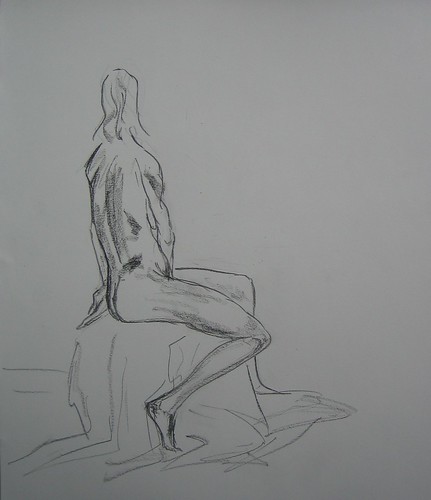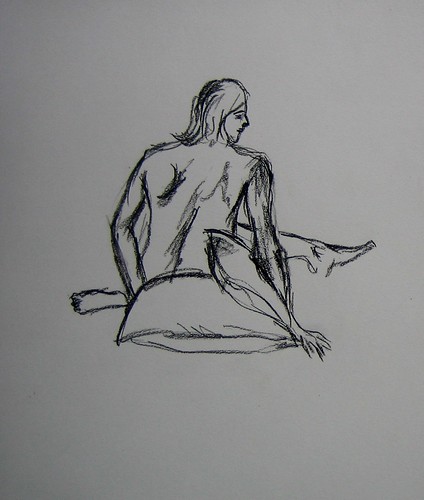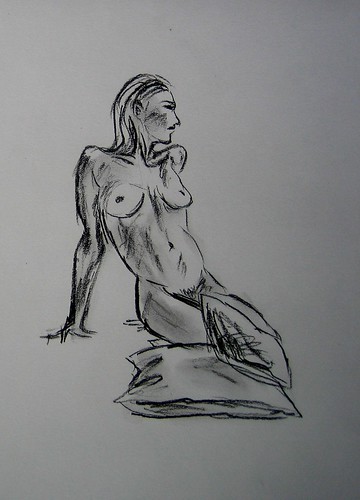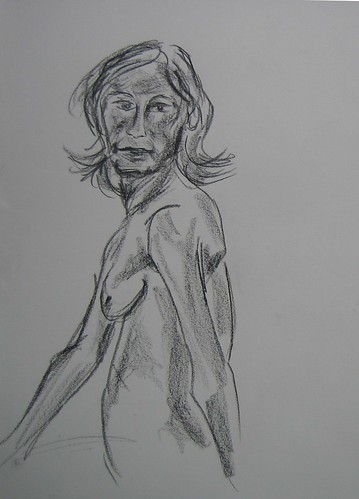
Friday, April 23, 2010

Scottish Painter Peter Doig

In June 2008, I was wondering around in Paris, trying to find a place to visit, after I'd done many major museums, churches, gardens, and chateaus.

While wandering in the city, I saw a poster of retrospective of a certain painter Peter Doig. The image was a melancholic young man or woman, sitting on a canoe, facing the viewer nonchalantly. Water below was dark and threatening. The atmosphere was tense. Immediately I was taken and rushed to Paris Museum of Modern Art for the exhibition, which completely blew me away with the scope, variety and intensive of his work.
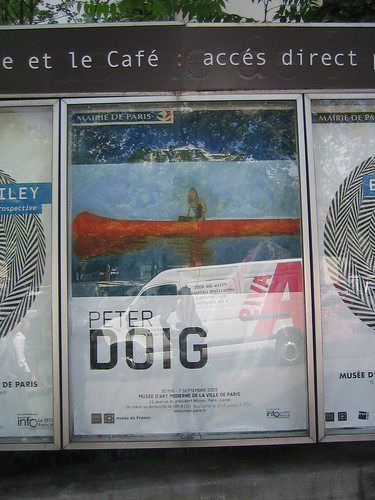
IMG_8926

According to Wikipedia,

Peter Doig was born in Edinburgh, and in 1962 moved with his family to Trinidad, where his father worked with a shipping and trading company, and then in 1966 to Canada. He went to London in 1979 to study fine art at the Wimbledon School of Art, St Martin's School of Art and Chelsea School of Art, where he received an MA. In the mid-1980s he lived and worked in Montreal.

In 1993 Doig won the first prize at the John Moores exhibition with his painting Blotter. This brought public recognition, cemented in 1994, when he was nominated for the Turner Prize. In 1999 he selected EASTinternational with Roy Arden. From 1995 to 2000 he was a trustee of the Tate Gallery.

In 2002, Doig moved back to Trinidad, where he set up a studio at the Caribbean Contemporary Arts centre near Port of Spain, and also became professor at the fine arts academy in Düsseldorf, Germany.

In 2008, a major retrospective of his work (entitled "Peter Doig") was held at Tate Britain (February-May) and the Paris Museum of Modern Art (June-September) and the Schirn Kunsthalle in Frankfurt (October 8-January , 2009).


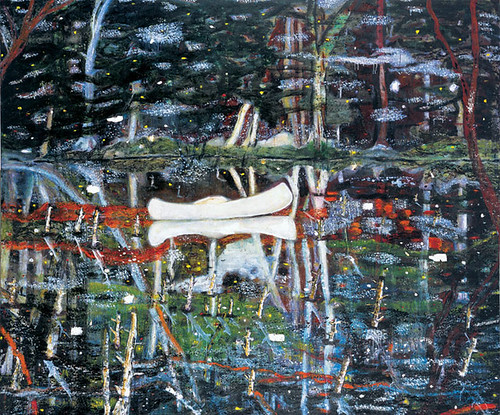
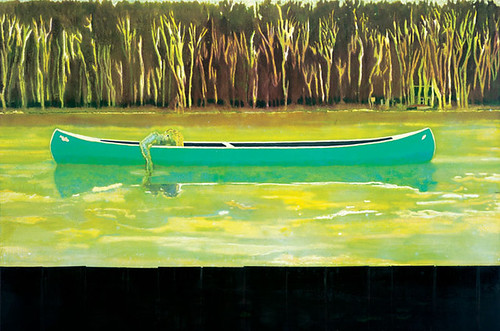
Boat motif played a significant role in Doig's paintings. Lonely landscape claimed another big legacy of his work. But his works cover much broader ground, due to his wandering on the earth, perhaps. Most overwhelming elements of his paintings and drawings are the muted sadness and melancholy. It lingered with me for a long time.

His bio and works can be viewed at Saatchi Gallery online:
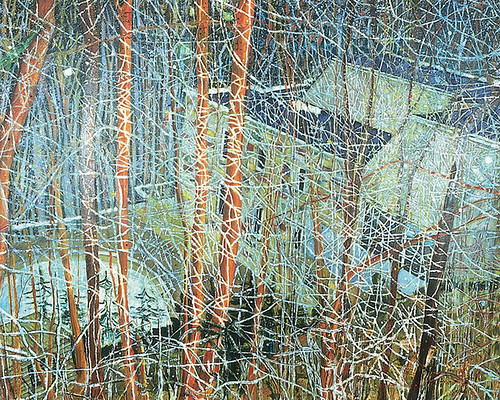
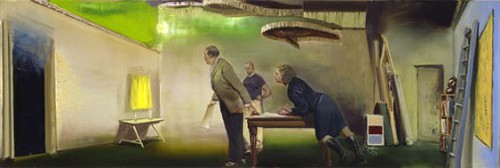
The Architects Home In The Ravine

Peter Doig White Canoe

Canoe-Lake by Peter Doig

Thursday, April 22, 2010

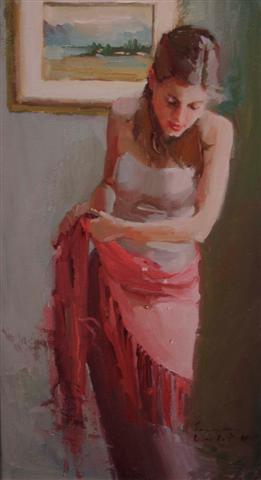
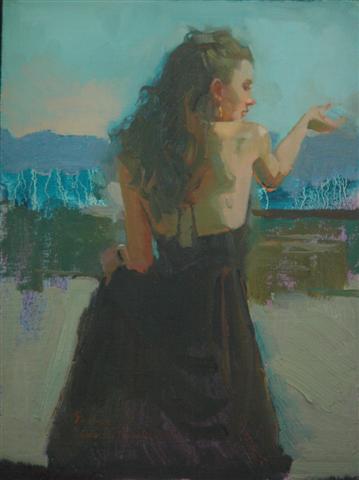
Potrait Painter Nancy Seamons Crookston

I have been admiring a fellow artist, Nancy Seamons Crookston, in my drawing session at University of California Berkeley very much. I not only like her fantastic drawings, I was very impressed by her kind encouragement to fellow artists.

She is a well-known portrait painter and is being presented by several well-respected galleries. Recently, she was invited to judge for the competition sponsored by Oil Painters of America, an organization dedicated to the preservation of representational art. Her works are rooted firmly in the realism tradition and her keen observation and draftsmanship can be savored at places such as:

Waterhouse Gallery:

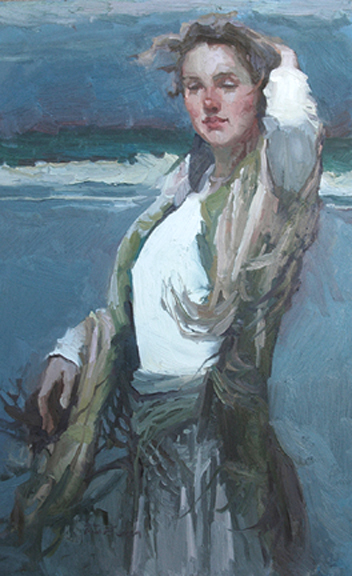
Crookston-No Looking Back 24x15
No Looking Back

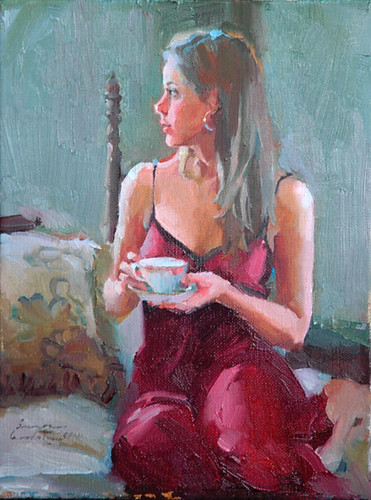
Seamons Crookston Quiet. 12x9
Quiet

Scottsdale Fine Art Gallery:

Crookston - She Was Of Course Ready For The Fireworks 16x9
She Was Of Course Ready For The Fireworks

Bella Donna - 12x9
Bella Donna - 12x9


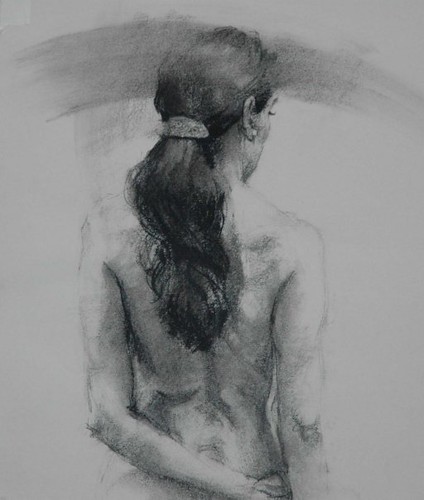
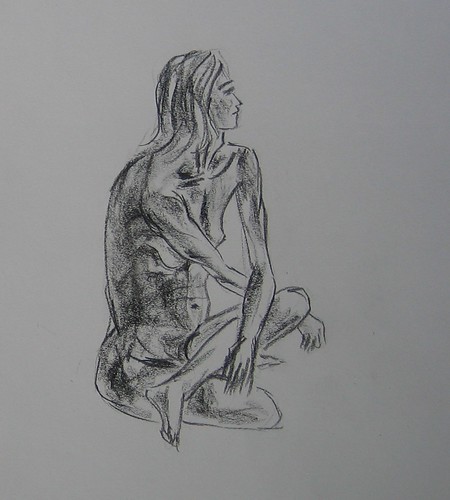
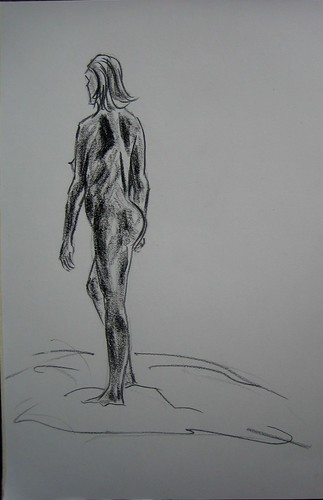
I had many opportunities observing her drawing from models. Within minutes, she created a fully developed drawing with shades of black charcoal, seemingly effortlessly. It was a joy just watching.

charcoal of Rachael

Wednesday, April 21, 2010

Modern German Master - Neo Rauch

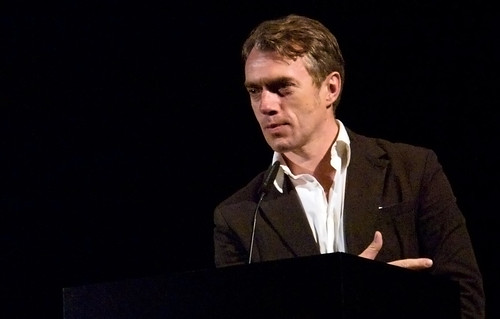
Leipzig, an eastern German city, has become an important art center lately. It even boasts a "New Leipzig School" centering around figures like the modern master Neo Rauch.

Neo Rauch

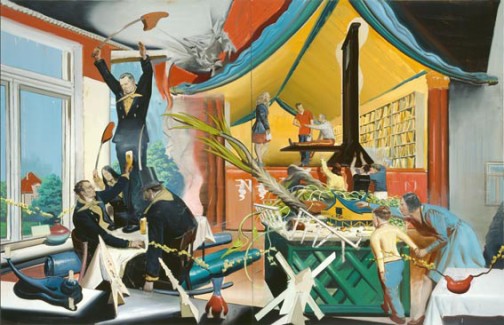
His canvases are often large, full of dynamic colors and figures, with style someone called "Pop Surrealism". His work do have a disorienting effect and the absurdity of Surrealism. However, his works also resemble the early and brutish mythical phase of Max Beckmann, therefore prevent them from falling into the camp of pure pop art.

His paintings are more vibrate and colorful than those true contemporary greats like Anselm Kiefer or William Kentridge, but the surface playfulness doesn't rub his works of disturbing effect of industrial alienation. In that perculiar mix, Rauch proves his worth.

I was able to find many of his works on David Zwiner website:

Paranoia 2007 Neo Rauch
Paranoia, 2007

Neue Rollen 2005 Neo Rauch
Neue Rollen, 2005

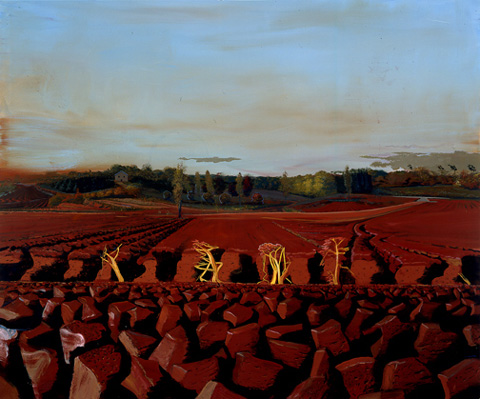
Acker 2002 Neo Rauch
Acker, 2002


Tuesday, April 20, 2010

There is No Democracy in Art

The former San Francisco Opera general director Kurt Adler was said to have said once that there was no democracy in opera. Obviously, Adler was talking about the conception and presentation of an operatic work, rather than forbidding the intermingle of opera and the democratic topic.

Stretching his argument a bit further, one can also say that there was no democracy in painting, sculpture, poetry, novel, and play, etc.

Artistic creation is a lonesome process. It requires the creator to conduct a deep dialog with oneself. A successful creation requires the brutal self-revelation from the creator and absolute honest. If not so, it would show and the audience, viewers or readers know. Artistic creation is not meant to be pleasurable or community bonding.

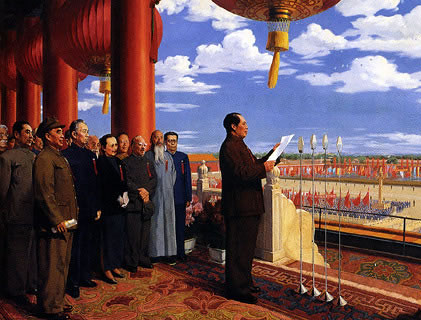
During The Great Culture Revolution in China, many works were created by committees and they are not artwork. The most absurd story I can tell was an oil painting depicting the declaration of the founding of the People's Republic of China, by Mao Zedong and his comrades. The work was officially finished in 1964. Over the years, several of his comrades who share this large canvas (233 cm x 400 cm) with him was denounced as traitors, foreign agents, or capitalists. Whenever his comrade fell into disgrace, the poor painter, Xiwen DONG (董希文) (1914-1973) had to erase that comrade-turned-enemy from the canvas. When the comrade was rehabilitated, the painting would have to put him back. The latest of such request to change, alas, came too late - the painter had passed away. His widow refused to allow other hands to temper with the painting - at least as it was, it was by her late husband's hands. Therefore, in the national museum, on display, was a stand-in painted by imitator completely. Even the State Founding Ceremony told no truth. If it is not honest, it cannot be art.

"State Founding Ceremony" by Xiwen DONG, 1964

Someone in this country, would love to have that authority over the artists, don't you think?

Monday, April 19, 2010

GPS for Art

Recently, a friend called my attention to an article about an effort to document of public art via Wikipedia. According to the article published by The Chronicle of Higher Education,

Documentation of public art, particularly digital documentation, lags behind other art forms. Jennifer Geigel Mikulay, an assistant professor and public scholar of visual culture at Indiana-Purdue, started the project, Wikipedia Saves Public Art, with Richard S. McCoy, an associate conservator at the Indianapolis Museum of Art. They taught a course together last fall at Indiana-Purdue, in which they asked students to write Wikipedia articles with a local and art-historical context about pieces of public art on the campus. The students used a GPS tracking device to obtain coordinates for each piece so that article readers could find it in real life.

Now Ms. Mikulay, Mr. McCoy, and some students are writing Wikipedia entries for pieces of public art around Indianapolis. They also tag pre-existing entries that fit the project with a Wikipedia Saves Public Art banner. So far, they've tagged more than 900. At this point, there aren't many members on the project's Wikipedia page, and participation hasn't moved much beyond Indianapolis. Still, those involved are hopeful that people across the globe will use Wikipedia to document the public art in their communities.

The list is not comprehensive but could be a good starting point for people who want to write Wikipedia articles about local sculptures, Ms. Mikulay said. In fact, the group in Indianapolis is attempting to convert the list for their city into Wikipedia entries.

It is a novel but logical idea and I hope its success will facilitate broader usage of modern technology in the art world.

I always want to have a system, maybe a GPS system, which can tell the locations of particular paintings, sculptures, or drawings at given period of time. Which is not only a great tool for museums and galleries to advertise their treasures, but a wonderful instrument for tourist industry as well, particularly for people like me who plan their trips to the hours.

Apple, Google, are you listening?

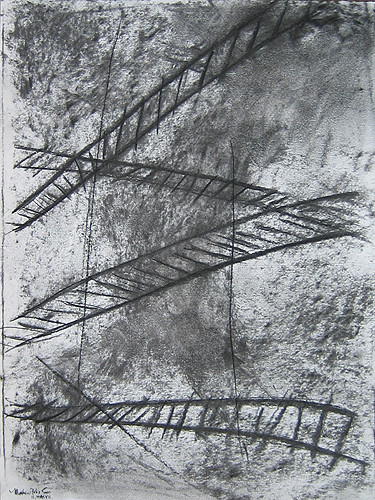
Matthew Felix Sun's Drawing_7231

Sunday, April 18, 2010

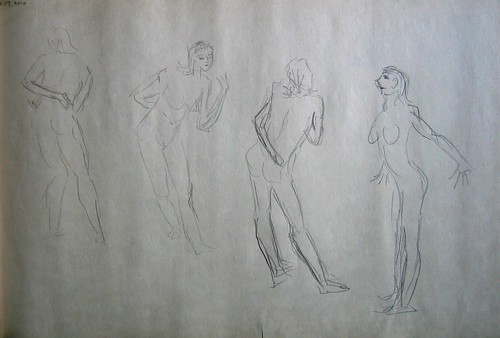
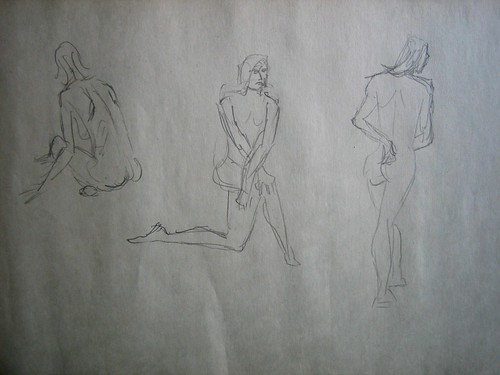
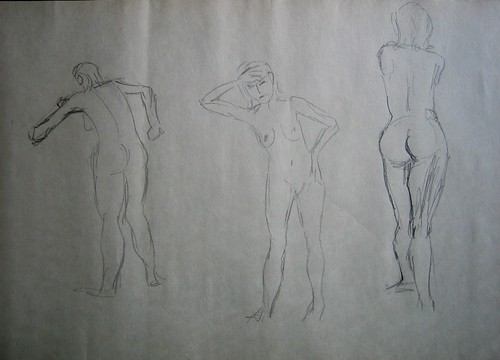
Back to the Drawing Session

After my international trip, I finally went back to the drawing session at University of California, Berkeley.

There are so many people there, that I had to settle with a spot facing the window, which was easy to see the model. A challenge I accepted without much ado.

IMG_1530

IMG_1531

IMG_1532

IMG_1534

IMG_1535

IMG_1536a

IMG_1536b

IMG_1537a

IMG_1537b

IMG_1538

IMG_1539

IMG_1540