Showing posts with label Ballet. Show all posts

Saturday, May 4, 2013

Christopher Wheeldon's Brilliant Cinderella at San Francisco Ballet

Yesterday, San Francisco Ballet (SFBallet) presented the US Premiere of Christopher Wheeldon's new ballet, Cinderella, to the music by Sergei Prokofiev.

Prokofiev's score was enchanting and often ravishing; however, that does not guarantee a success - many years ago, I sat through a very dull Romeo and Juliet, set to his brilliant score, in the same War Memorial Opera House, presented by the usually glorious SFBallet.  Based on that experience, I appreciate a good choreography and staging much more.  Ballet is more than flawless steps and beautiful music, it also needs to be a good theater and tell a coherent story.  Therefore, we must be grateful to Mr. Wheeldon for creating this magical new ballet, which was co-commissioned by SFBallet and Dutch National Ballet, who presented the world premiere in Amsterdam last December. According to the program, Wheeldon created this ballet working with dancers from both companies simultaneously, having one company's dancers visiting other company to rehearse and incorporating their thoughts into the creative process.

Christopher Wheeldon is an English international choreographer of contemporary ballet. In 1991, Wheeldon joined the Royal Ballet, London; and in that same year, he won the Gold Medal at the Prix de Lausanne competition. In 1993, at the age of 19, Wheeldon moved to New York City to join the New York City Ballet. Wheeldon began choreographing for the New York City Ballet in 1997, while continuing his career as a dancer. He retired as a dancer in 2000 in order to focus on his choreography. In recent years, he had emerged as one of the very best ballet choreographer of our time. 

This new Cinderella was not as grand as those old Russian Imperial story ballets by Marius Petipa, or as glistering as abstract ballets by George Balanchine.  Its style though grand at time, was predominantly intimate, warm, consoling, and also fun and hilarious.  It rooted deeply in classical ballet tradition, but was also thoroughly modern, in its new twist of the story and characters, and the steps and gestures of modern dance incorporated organically into the classical ones by Wheeldon, and with the modern stage crafts.  However, as inventive and wonderful it was, there was a bit of wanting in the transcendent dancing.  Perhaps the production was more successful in terms of theater than pure dance.  Sadly, this is more or less the norm nowadays.  Maybe next Alexei Ratmansky's all Shostakovich ballets in next season will brought us back the the glory similar to The Jewels by Balanchine. 

This production was heightened by the amazingly animated living breathing tree, which grew up from the grave of Cinderella's mother, by the famous San Francisco born, New York based puppeteer, Basil Twist, who had created some unforgettable effects for plays, operas and ballets.  It was a character in its own right, grand, magical and flashy, but readily to yield to the dancing characters in due time.  The whole show was an enveloping smile-inducing enchantment.

Below is a video trailer posted on SFBallet's website:


Since yesterday was the US premiere, there was much excitement.  Before the show, apparently there was a party and you can see some one dressed up to the ninth arriving at the opera house, waited by uniformed crew by the entrance:
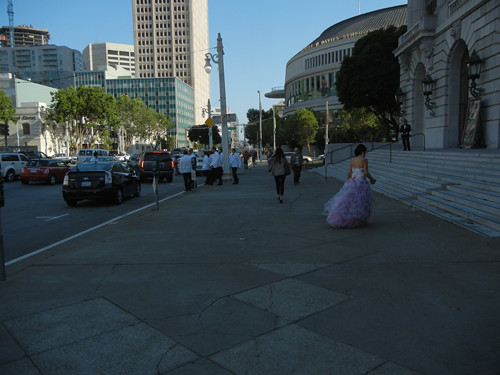
US Premiere of Cinderella by Christopher Wheeldon, San Francisco Ballet, 3 May 2013 _ DSCN6669

Besides the ball, there was the usual "Meeting the Artist" event before the show, and the principal dancer Rubén Martín Cintas was interviewed.  Cintas would dance the role of Cinderella's father in several performances during this run.

US Premiere of Cinderella by Christopher Wheeldon, San Francisco Ballet, 3 May 2013, Meet the Artist Rubén Martín Cintas before the performance _ DSCN6682
Meet the Artist Rubén Martín Cintas before the performance  

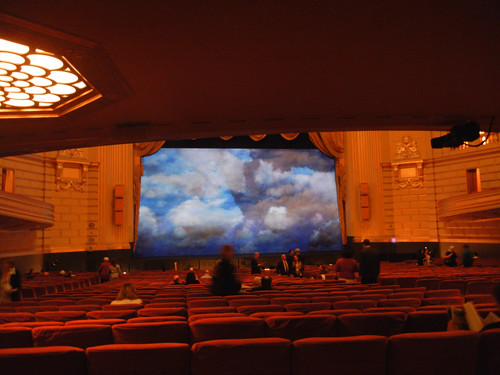
US Premiere of Cinderella by Christopher Wheeldon, San Francisco Ballet, 3 May 2013 - _ DSCN6689
Theater curtain before the performance

All the principals dance superbly and despite the drawback that he was not as personally endearing as Taras Domitro, who as the Prince's friend Benjamin was the personification of innocent charm and noble grace, Joan Boada won us over with his precise steps and his understated ardor, and his final pas de deux with Cinderella was sublime. Maria Kochetkova's Cinderella was strong, not easily cowed, and always understanding, forgiving.  Her Cinderella was also full of life and was a fun person to be with despite much adversaries in her young life.  Kochetkova's dancing was joyous, though not overtly extravagant and that suited Boada's Prince perfectly.  The main pairs' collective strength was their deep understanding of each other and life, and the understatement of their personality and performance.

Outright brilliance, though necessarily silly time to time, belonged to the stepmother and the two stepsisters.  I was very grateful that they were danced by brilliant and beautiful ballerinas, whose ugliness lay mostly in their actions, rather than often caricatured looks in many other productions, in which they were also often danced by men in drags.  Here, they danced their outrageous and intricate silly and fun steps, particularly those of the daughters, brilliantly by Katita Waldo, Sarah Van Patten and Frances Chung.  Chung's character of the younger stepsister Clementine was bullied into being a mean sister to Cinderella and once she found her young love in the adoring and adorable Domitro's Benjamin, she emerged a very sympathetic figure and won our blessing for her good fortune.  As for the tougher sister Edwina, we can see that she would step into her mother's shoes more easily than those of Cinderella's.

The audience was absolutely enchanted by the performance and had to fight against the urge to applaud ever so often, because the musical and choreographic structures demanded a continuous flow.  At the end of each of the three acts, audience was truly gratified for the opportunity to cheer prolongedly.

US Premiere of Cinderella by Christopher Wheeldon, San Francisco Ballet, 3 May 2013 - Lit City Hall _ DSCN6705
City Hall, seen from the balcony of the opera house during the intermission
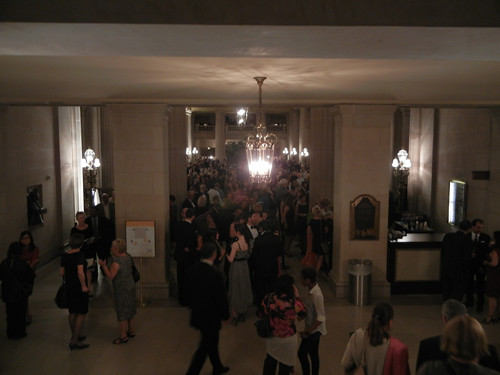
US Premiere of Cinderella by Christopher Wheeldon, San Francisco Ballet, 3 May 2013 - Intermission _ DSCN6712
Excited crowd during Intermission

Here are some images of last night's curtain calls:
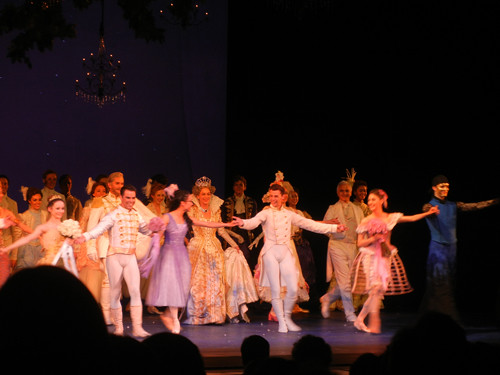


US Premiere of Cinderella by Christopher Wheeldon, San Francisco Ballet, 3 May 2013 - Curtain Calls _ DSCN6717
Curtain call of the principal dancers - Maria Kochetkova, Joan Boada, Frances Chung, Taras Domitro and Sarah Van Patten

US Premiere of Cinderella by Christopher Wheeldon, San Francisco Ballet, 3 May 2013 - Curtain Calls _ DSCN6723
Curtain call of the choreographer Wheeldon and production team


SFBallet announced that "All Performances SOLD OUT! Limited standing room tickets are available. There will be no rush tickets sold for this production."

Catch it if you can.  Or do yourself a favor and try to see it next season, which will include another run of this enchanting work.


Related posts on Art · 文化 · Kunst
- Teatro La Fenice di Venezia (La Fenice Theatre in Venice)
- San Francisco Ballet Banners
- Three-Course Cultural Feast - Tetzlaff, Amour and Nijinsky
- San Francisco's Swan Lake
- Rethinking Hans Christian Andersen's "The Little Mermaid"
- Theater Experiences in Wien (Vienna)
- High Romanticism - German Tenor Jonas Kaufmann's Recital in Berkeley
- Angelic Voice - Philippe Jaroussky at Hertz Hall, UC Berkeley 

Wednesday, May 1, 2013

Tianjin Grand Theatre's Heating Trouble

Less than a year ago, on May 31, 2012, New York Times reported the opening of a grand theater in Tianjin, a metropolis next to Beijing, China.  "The Tianjin Grand Theater cost $240 million to build, and is among many such arts complexes recently built in large Chinese cities.

Like most grand theaters, the Tianjin Grand Theater houses an opera house (1,600 seats), concert hall (1,200 seats) and multi-function hall (400 seats).

As is also the norm, it was designed by a prestigious foreign architecture firm — in this case the Germany firm gmp-Architekten — and has state-of-the-art everything, from mobile phone jammers and LED screens to the portable pipe organ commissioned from a Czech organ builder. Whereas most grand theaters are built as stand-alone structures, however, this one, in this city south of Beijing on the Chinese coast, is part of a massive new 90-hectare, or about 220-acre, cultural center that includes the Tianjin Museum, Natural History Museum, Library, Art Gallery and Youth Activity Center, as well as the requisite shopping mall."


A year later, the glitz chilled considerably when the visiting Royal New Zealand Ballet had to cancel its schedule two performances of "Giselle" at the last minute due to the cold temperature inside the theater.

According to the theater's statement, the theater is heated by the city and is dependent on the city's central heating planning.  The theater, with its glass panel walls, could not contain heat inside properly.  The central heating system in Chinese cities are generally governed by calendar, not the real temperature.  In my home city Shenyang, a far colder city, the central heating for residents stopped at March 31.  In mid April, when it snowed in Shenyang, my parents had to retreat to one room with a unit heater to fend off the chill.

Tianjin Grand Theatre did was just that.  According to some report, the temperature in the theater was only 23 Celsius (50 Fahrenheit) while the dance company requested for 23 Celsius (73.4 Fahrenheit).  The theater then borrowed dozens of industrial heater to pump up the temperature but they were only able to make it to 20 Celsius (68 Fahrenheit).

In order to avoid severe injuries to its dancers, reluctantly, Royal New Zealand Ballet cancelled the scheduled performances on 20 and 21 of April, 2013.  The theater then locked up the visiting troupe's costumes and other equipments and only released them when the New Zealand diplomats intervened.  The theater in turn, offered refunds or alternative performances to the disappointed ticket holders.

Most people in China reacted to this story by questioning the design and maintenance of this expensive theater.  Good question asked.

Tuesday, February 19, 2013

Three-Course Cultural Feast - Tetzlaff, Amour and Nijinsky

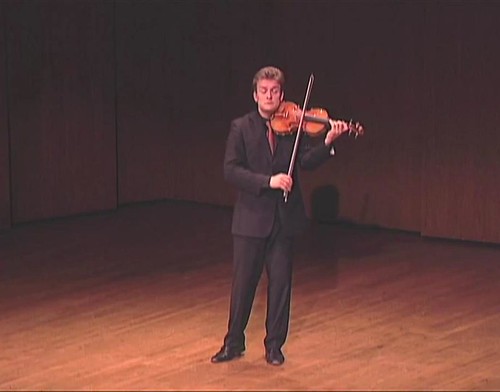
Last week, I attended three incredible cultural events - two live performances and one cinema, all were very stirring and thought-provoking in their distinctive ways, starting with a relative becalming night at Berkeley's First Congregational Church, on February 12, Tuesday, a solo violin recital by German artist Christian Tetzlaff, under the aegis of  Cal Performances.

Several years ago, I had heard Tetzlaff performing Brahms' Violin Concerto with San Francisco Symphony and was deeply impressed by his austere musicianship and for this recital, he offered something both familiar and more readily accessible, to me, (Bach and Ysaÿe), and something off the beaten track and more challenging (Kurtág and Bartók.  Of these music, I found Kurtág and Bartók most satisfying, perhaps due to the unfamiliarity and my joy of hearing these strange music fresh.  Kurtág's music consisted of strings of short fragments but very eloquent and coherent, and quite lyrical  Tetzlaff's virtuosity of playing these challenging music was extremely impressive, yet, what impressed even more was the stylistic accomplishment he demonstrated for the entire evening, and his seriousness, his unflagging concentration and intensity, though his playing was not without lighthearted humor at the appropriate moments.  He produced beautiful and sweet, and sometimes very unusual tones but these sounds all served a purpose, the coherent statement of the music.  His piano, pianissimo playing would live on forever.

The programed pieces he played were:
  • Eugène Ysaÿe - Sonata for Violin in G minor
  • György Kurtág: "A choice" out of Signs
  • Johann Sebastian Bach - Sonata for Violin in C major
  • Béla Bartók - Sonata for Violin
After the exhilarating but somewhat challenging program (even for some audience), he awarded us with a flashy Paganini 16, which and the lullaby of the “Heartbeat” movement from Bach’s A-Minor Sonata.

As for me, I'll start to listen to Kurtág when I paint.

Christian Tetzlaff plays Bach

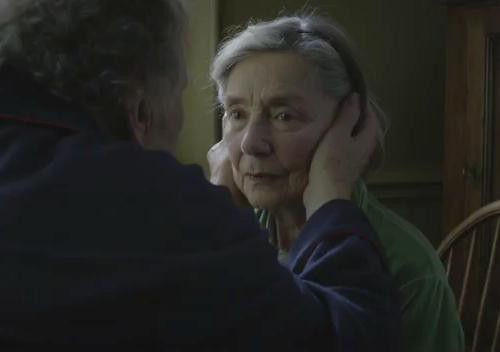
On Friday, I finally made time to see the much talked-about film Amour written and directed by Michael Haneke, who had made many unforgettable films such as Caché, The Piano Teacher, and The White Ribbon.

Amour, a story on love and death, was a beautiful movie, confidently made and very difficult to watch.  It stared at the difficult situation one is bound to face at certain time, unflinchingly, and the result was wrenching but not depressingly so.  We took comfort in the humanity and obvious love the main characters, a cultured old Parisian couple, demonstrated in front us, gesture by gesture, syllable by syllable.

Amour by Michael Haneke

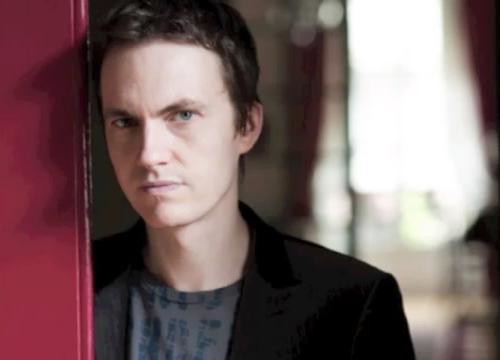
Since the main character was a piano teacher, we had several glimpse of her star pupil, the real-life great pianist, Alexandre Tharaud, who played himself in a very natural way and I kept wondering if this was his life story or not but was reluctant to find out.  One way or another, it wouldn't change the perception of this great movie about love and death in old age.  And if it was not Tharaud's teacher's story, it would be other people's stories. 

Was the movie depressing?  No.  Disturbing?  Yes; but a must-see.

Alexandre Tharaud in Amour

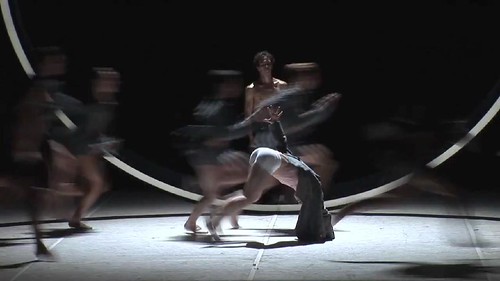
On Sunday, 17th, I dived into one of the most disturbed mind and heart of a great dancer - Vaslav Nijinsky, via the modern ballet by John Neumeier, who had created many modern classics and was touring with his Hamburg Ballet, as part of the regular season program offered by San Francisco Ballet.

I was very grateful to be able to see any full-length ballet created by John Neumeier.  If his ballets were not as pure balletic as those from Imperial Russia, they were unfailingly probing and intense, such as his dark-hued The Little Mermaid presented in San Francisco several seasons before.

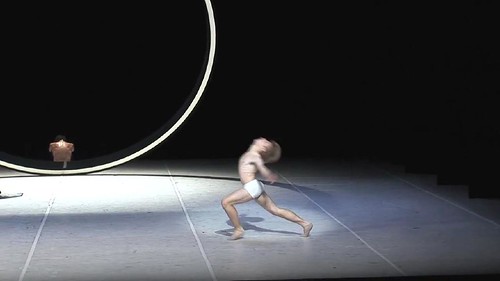
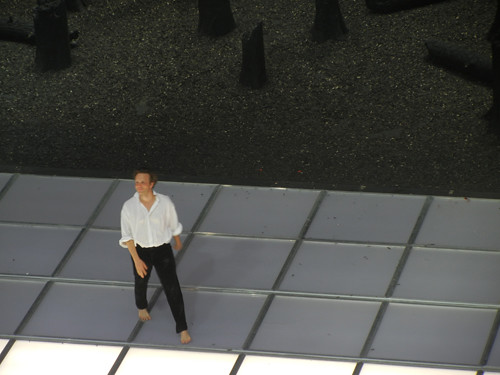
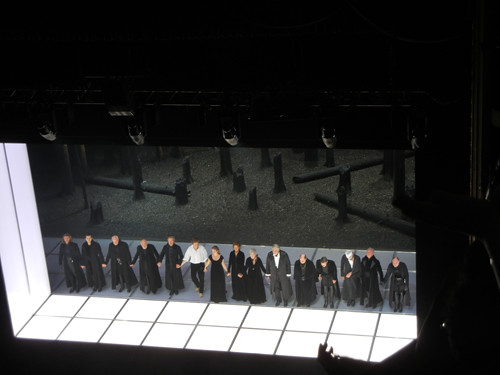
The first act of the ballet mostly concentrated on Nijinsky's life and creative experience, with many of his famous roles invoked by various dancers, juxtaposing with important people in his tumultuous relationships.  It was often amusing but somewhat prosaic.  Act two led us into his troubled inner world, with his mind descending to madness while the exterior world was a living hell of World War I.  I found the corps of soldiers and the solo turns of the pathetic Petrushka unbearably moving.  Another great creation was the shadow of Nijinsky (in white brief in the pictures below), whose surreal, insistent and twisted presence put both Nijinsky and the audience on edge.  The hallucination went on and on and I was utterly exhausted and became impatient for it to be over, despite the amazing dance on stage.  The gesture and motif did become repetitive and eventually monotonous.  Perhaps, that was by design?  The music of Chopin, Schumann, Rimsky-Korsakov and Shostakovich were played with thrilling brilliance.

Nijinsky by John Neumeier - Hamburg Ballet in San Francisco 3
Nijinsky by John Neumeier - Hamburg Ballet in San Francisco

Nijinsky by John Neumeier - Hamburg Ballet in San Francisco 2
Nijinsky by John Neumeier - Hamburg Ballet in San Francisco

What an exhaustive week, and what an extraordinary week. 


Related posts on Art · 文化 · Kunst:
- Angelic Voice - Philippe Jaroussky at Hertz Hall, UC Berkeley
- High Romanticism - German Tenor Jonas Kaufmann's Recital in Berkeley
- A Striking Film - "The White Ribbon"
- Rethinking Hans Christian Andersen's "The Little Mermaid"

Monday, December 31, 2012

Last Trip to a Museum in 2012 - The William S. Paley Collection: A Taste for Modernism at De Young Museum in San Francisco
My museum visits in this year (2012) have been greatly augmented by my trips to China, Austria and Italy in May and October, especially the one to Europe, which I have sporadically discussed in my previous blog entries

DSCN5626 _ De Young Museum, San Francisco, 30 December 2012Yesterday, 30 December 2012, I returned to De Young Museum in San Francisco for The William S. Paley Collection: A Taste for Modernism, on the very last day of the exhibit, of which The De Young Museum website informed us was "A selection of major works from the William S. Paley Collection at the Museum of Modern Art in New York.. A pioneering figure in the modern entertainment, communication and news industries, Mr. Paley (1901–1990) was a founder of the Columbia Broadcasting System (CBS), and a dedicated philanthropist and patron of the arts. The Paley Collection, which includes paintings, sculpture and drawings, ranges in date from the late 19th century through the early 1970s. Particularly strong in French Post-Impressionism and Modernism, the collection includes multiple works by Paul Cezanne, Henri Matisse and Pablo Picasso, as well as significant works by Edgar Degas, Henri Toulouse-Lautrec, Paul Gauguin, Andre Derain, Georges Rouault and artists of the Nabis School such as Pierre Bonnard and Edouard Vuillard."
It was an astonishingly rich collection and one highlight succeeded another.  Though I've seen most of them in New York's MOMA, it was wonderful to see them again, in our home museum.  Amongst those wonderful works, I particularly love these below:

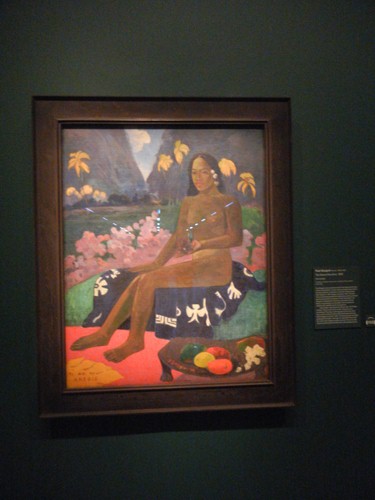
DSCN5627 _ The Seed of the Areoi, 1892, Paul Gauguin, NY MOMA at De Young
The Seed of the Areoi, 1892, Paul Gauguin

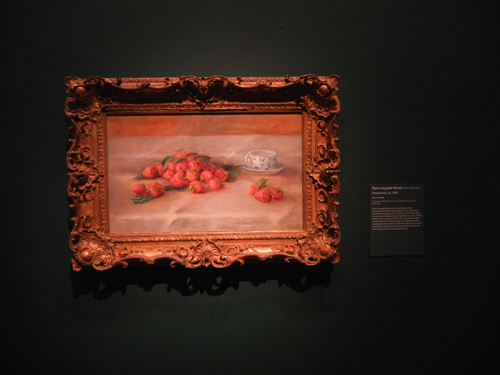
DSCN5629 _ Strawberries, c 1905, Pierre-Auguste Renoir, NY MOMA at De Young
Strawberries, c 1905, Pierre-Auguste Renoir

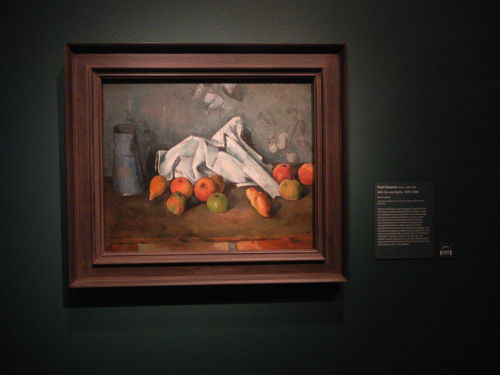
DSCN5638 _ Milk Can and Apples (1879-80), Paul Cezanne, NY MOMA at De Young
Milk Can and Apples (1879-80), Paul Cezanne

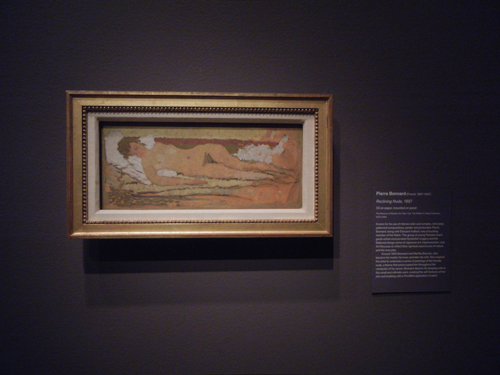
DSCN5645 _ Reclining Nude, 1897, Pierre Bonnard, NY MOMA at De Young
Reclining Nude, 1897, Pierre Bonnard

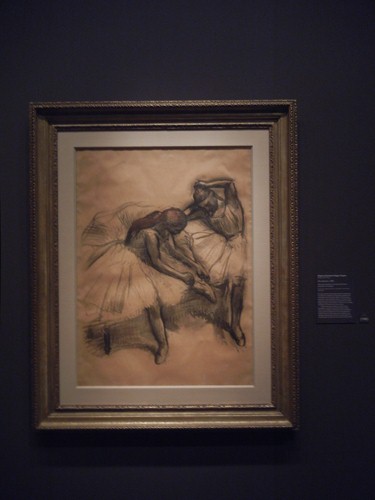
DSCN5653 _ Two Dancers, 1905, Edgar Degas, NY MOMA at De Young
Two Dancers, 1905, Edgar Degas

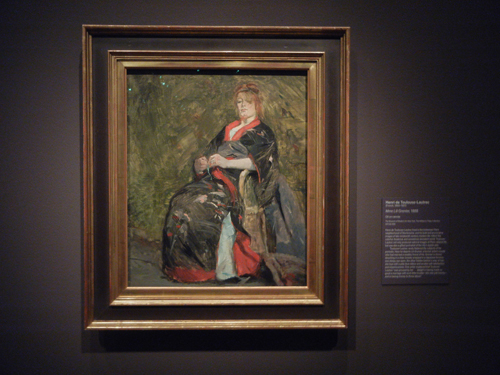
DSCN5652 _ Mme Lili Grenier, 1888, Henri de Toulouse-Lautrec, NY MOMA at De Young
Mme Lili Grenier, 1888, Henri de Toulouse-Lautrec

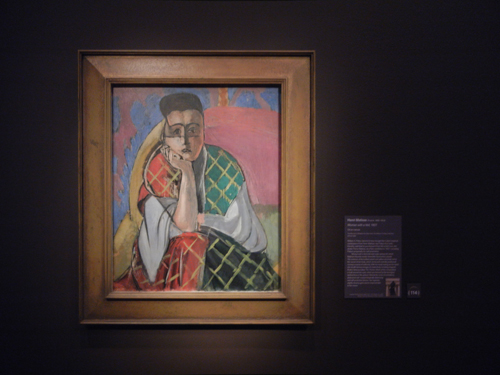
DSCN5659 _ Woman with a Veil, c 1907, Henri Matisse, NY MOMA at De Young
Woman with a Veil, c 1907, Henri Matisse

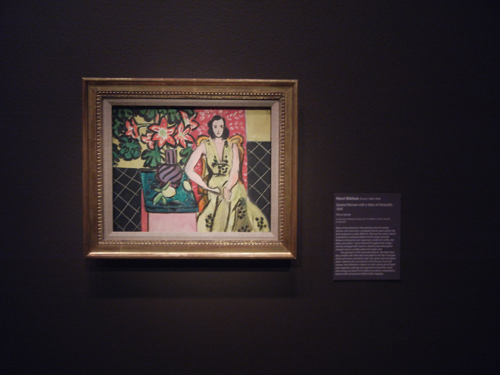
DSCN5661 _ Seated Woman with a Vase of Amaryllis, 1941, Henri Matisse, NY MOMA at De Young
Seated Woman with a Vase of Amaryllis, 1941, Henri Matisse

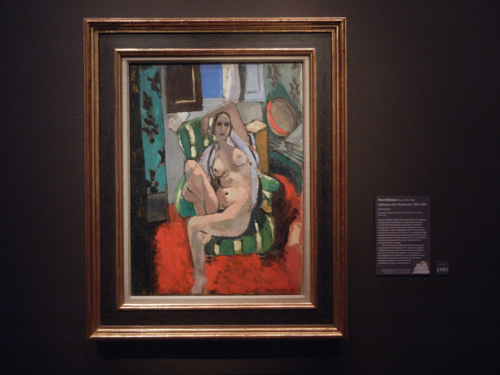
DSCN5663 _ Odalisque with a Tambourine, Matisse, NY MOMA at De Young
Odalisque with a Tambourine, Henri Matisse

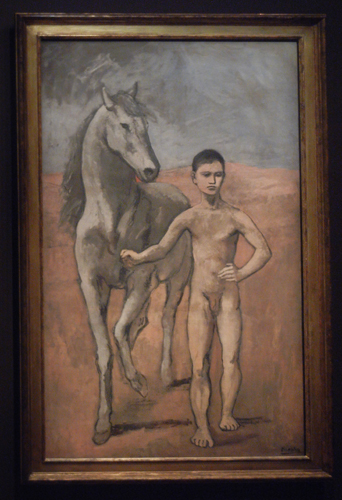
DSCN5676 _ Boy Leading a Horse, 1905-06, Pablo Picasso, NY MOMA at De Young - modified
Boy Leading a Horse, 1905-06, Pablo Picasso

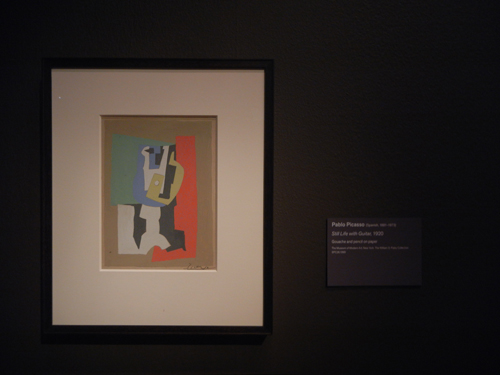
DSCN5686 _ Still Life with Guitar, 1920, Pablo Picasso, NY MOMA at De Young
Still Life with Guitar, 1920, Pablo Picasso

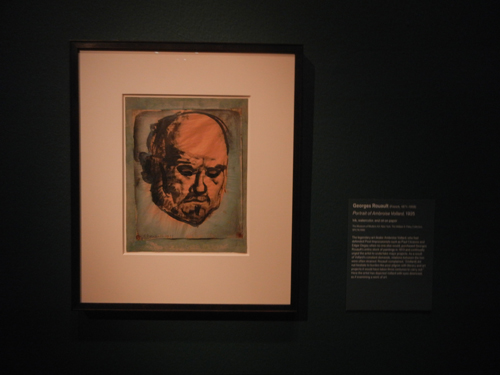
DSCN5715 _ Portrait of Ambroise Vollard, 1925, Georges Rouault, NY MOMA at De Young
Portrait of Ambroise Vollard, 1925, Georges Rouault

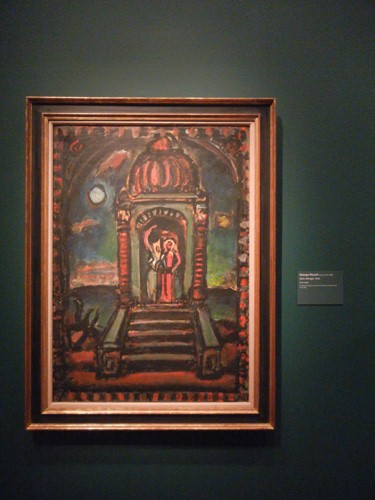
DSCN5721 _ Oasis (Mirage), 1944, Georges Rouault, NY MOMA at De Young
Oasis (Mirage), 1944, Georges Rouault

I also stopped by to see another special exhibit: Rudolf Nureyev: A Life in Dance, which featured photos, video clips and costumes of the great dancer, overwhelming in its opulence and extravagance with a tint of vulgarity, redeemed by his unapologetic conviction.


Wednesday, November 28, 2012

Theater Experiences in Wien (Vienna)

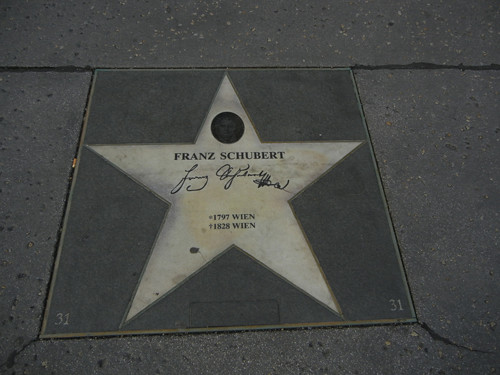
DSCN0643 _ Star of Schubert in front of Musikverein, Wien
Franz Schubert star near Musikverein, Wien
Wien (Vienna) means music and style.  In Vienna, the stars are given to composers and musicians - Schubert, Bach, Brahms, Berg, von Einem and von Karajan, etc., instead of film stars and starlets in Hollywood.

When I visited Vienna last month, my second trip to Vienna, I attended three different theatrical performances, all in renown venues, within a brief span of six nights.

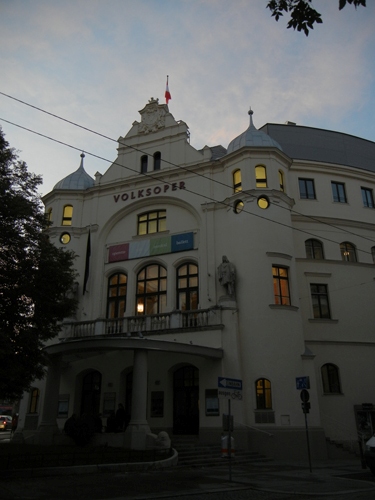
DSCN9467 _ Volksoper, Wien, 2 October
Volksoper Wien
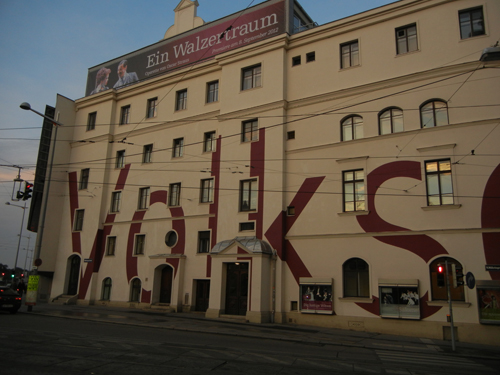
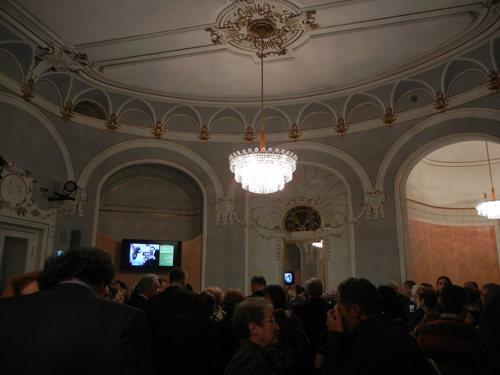
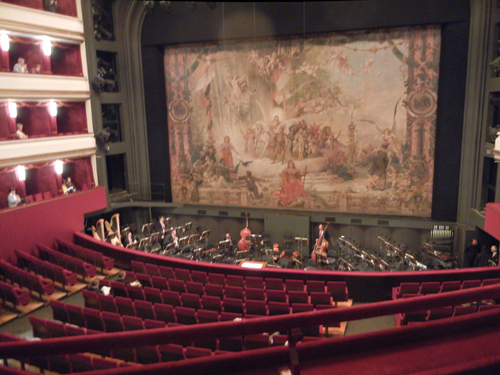
The first performance we attended was a night of three modern ballets at Volksoper.  The options then included Viennese operettas, such as Die lustige Witwe (The Merry Widow), a quintessential Viennese confection, but it was vetoed by my partner and we chose the ballet night instead, for its modernity and daring (see the preview video below).  It turned out to be a wonderful night of theater.  The three modern ballets were, in the order of performance and ascending scale of the pieces, Claude Debussy's "Nachmittag eines Fauns", Maurice Ravel's "Bolero" and Carl Orff's "Carmina Burana", performed by Wiener Staatsballett.

The first piece was intimate and small, with only two dancers, and the last was ambitious, set to a full orchestra, several choruses and multiple couples and corps, while the middle one was, in the middle of everything.  The first piece was lovely but just a tad underwhelming and the last one, hour long, had some muddy moments and sagging energy amongst generally very satisfying presentation and poignant choreographed dances; it was the middle piece made the strongest impact through its glorious choreography by Boris Nebyla, incredibly beautiful costume, and unflagging energy of the music.  It was one of the most satisfying theatrical pieces I have ever enjoyed.

DSCN9465 _ Volksoper, Wien, 2 October

DSCN9499 _ Volksoper, Wien, 2 October

DSCN9491 _ Volksoper, Wien, 2 October

DSCN9497 _ Volksoper, Wien, 2 October


Volksoper is the "second" or "third" opera house in Vienna.  The top one was the most exulted Wiener Staatsoper, and the other one might be "Theater an der Wien", where Beethoven's Fidelio premiered.  There were only Puccinis in those houses in the week I was in Vienna so I had to pass them over.  In 2002, I did enjoy a performance of Bellini's La Sonnambula at Wiener Staatsoper.  Standing section.  Cost 3 euros.  At that time, a guided tour of that house was 5 euros.  The house was much more grandiose and glamorous.  Formal too.  In the cafe inside the house, a server wore a name tag identifying her as Frau XXX.  Volksoper, in contrast, was a little smaller, more intimate and more down to earth.  After all, it was called "Folks' Opera".  Yet, it was in that "people's house" that my partner was made to check his quite nice-looking and almost formal black windbreaker, where in Staatsoper, a similar but more casual windbreaker cost no concern, and was also in the presence of Present Havel in Prague.  At Volksoper, My blazer was sanctioned by the usher.

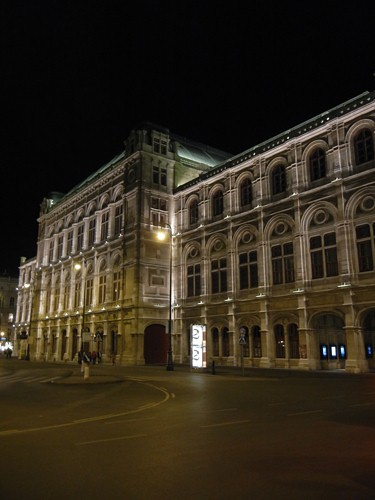
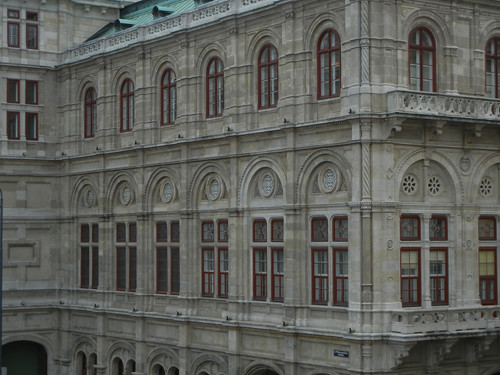
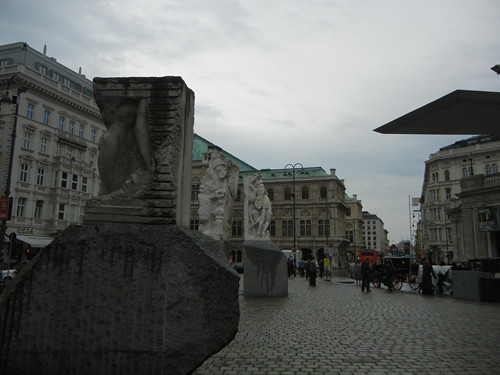
For comparison, below are a group picture of Wiener Staatsoper I took during this trip:

DSCN1654 _ Wiener Staatsoper, Wien, 6 October

DSCN9026 _ Wiener Staatsoper, 2 October - 500

DSCN1793 _ Winer Staatsoper, Wien, 7 October

DSCN1779 _ near Staatsoper and Albertina Museum, Wien, 7 October

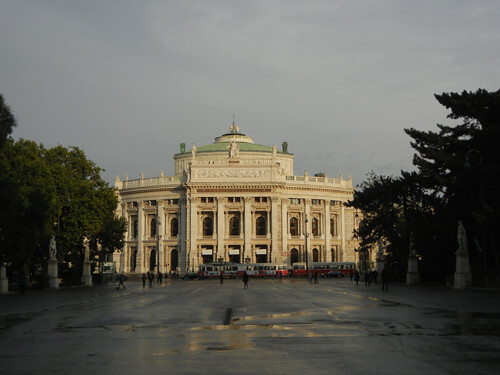
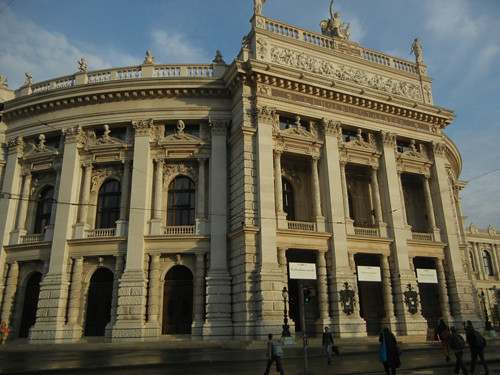
The second performance we attended was a play in one of the most prestigious theaters in German speaking world - Burgtheater in Vienna.

DSCN9424 _ Burgtheater, Wien, 2 October

DSCN9433 _ Burgtheater, Wien, 2 October

DSCN9436 _ Burgtheater, Wien, 2 October

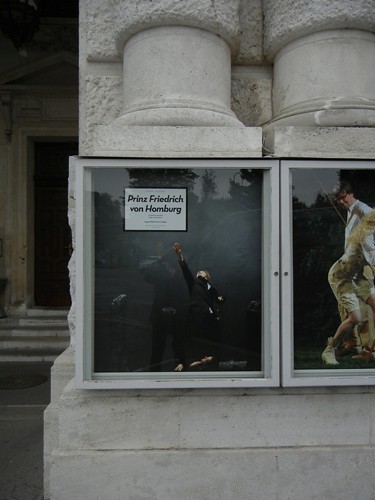
The play we chose to see was Prinz Priedrich von Homburg by Heinrich von Kleist.  It was a seminal play on discipline, militarism and reason. It was a co-production with Salzburg Festival and in the title role, starred the wonderful young German actor August Diehl.  There were many young people in audience, perhaps high school students - the tickets were as low as 2.5 euros.  I didn't know if the high percentage of young people was the norm or not, or they were particularly lured by the heartthrob Diehl.

DSCN9224 _ Burgtheater Poster, Wien, 2 October- 500


It was a sparse, modern and fiercely intelligent production, yet emotional raw and wrenching - two and half hours without intermission breezed through.  I did my homework by reading both original German texts and English translation in advance, plus listening to a radio play produced in 1950s.   

DSCN9790 _ Burgtheater, Wien, 3 October

DSCN9796 _ August Diehl as Prince von Homburg, Burgtheater, Wien, 3 October

DSCN9794 _ Burgtheater, Wien, 3 October

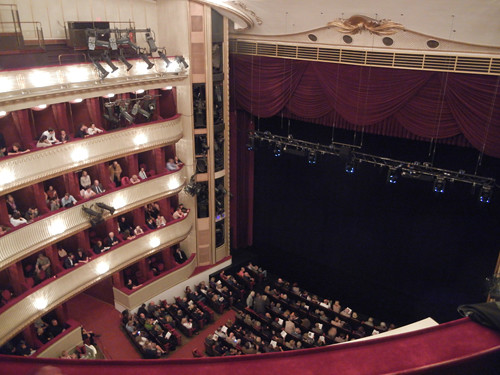
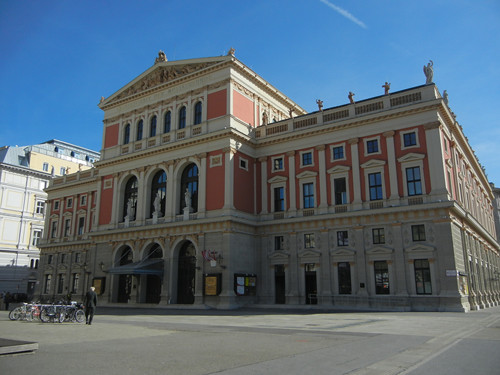
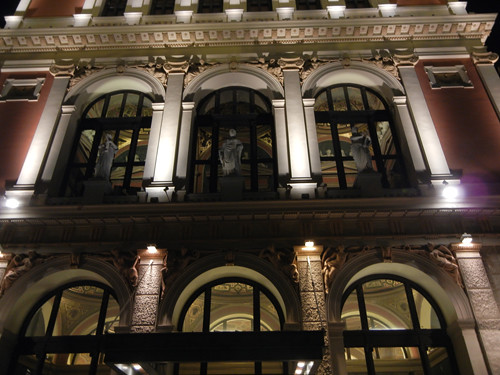
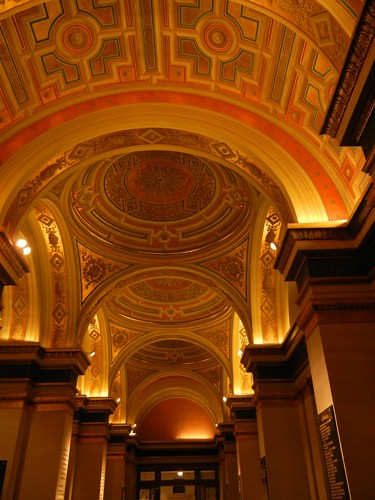
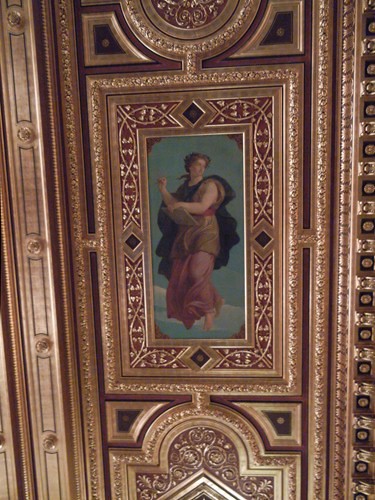
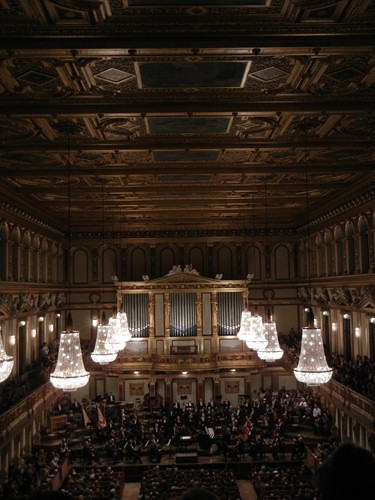
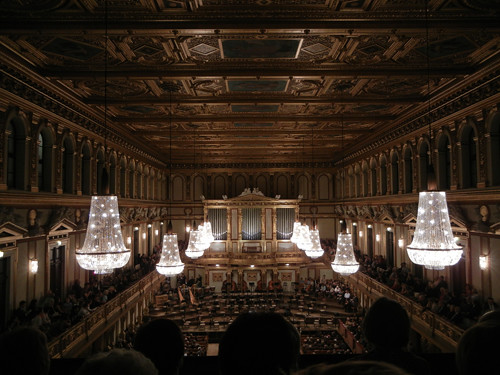
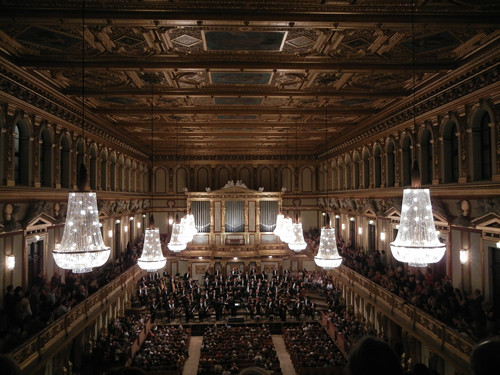
The most venerated musical venue in Vienna for symphonic performances was the Großer Saal (Great Hall), sometimes called Golden Hall, of Musikverein (Music Association).  It was the venue for annual Vienna New Year's Concert, televised all over the world.  The building was an ornate classical structure, with elaborate decorations inside the hall, centering around Apollo and nine muses gracing the golden-trimmed ceiling.

DSCN0640 _ Musikverein, Wien, 5 October

DSCN1617 _ Musikverein, Wien, 6 October

DSCN1562 _ Musikverein, Wien, 6 October

Wikipedia described the Großer Saal thus:
The Großer Musikvereinssaal, or Goldener Saal (Golden Hall), is about 49 m (161 ft) long, 19 m (62 ft) wide, and 18 m (59 ft) high. It has 1,744 seats and standing room for 300. The annual Vienna New Year's Concert is held here. Its lively acoustics are primarily based on Hansen's intuition as he could not rely on any studies on architectural acoustics. The room's rectangular shape and proportions, its boxes and sculptures allow early and numerous sound reflections. The original equipment comprised a historic pipe organ built by Friedrich Ladegast, the first organ recital was held by Anton Bruckner in 1872. The present–day organ was originally installed by the Austrian firm Rieger Orgelbau in 1907, highly esteemed by musicians such as Franz Schmidt or Marcel Dupré, and rebuilt in 2011.
DSCN1548 _ Musikverein, Wien, 6 October

DSCN1555 _ Musikverein, Wien, 6 October

DSCN1541 _ Musikverein, Wien, 6 October

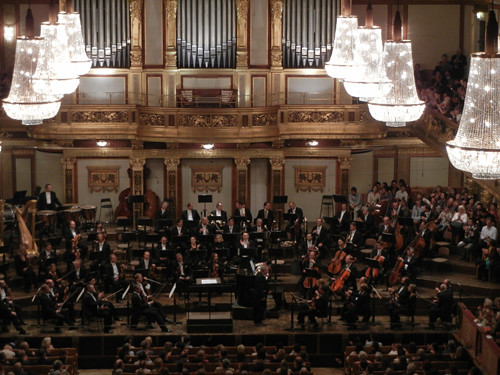
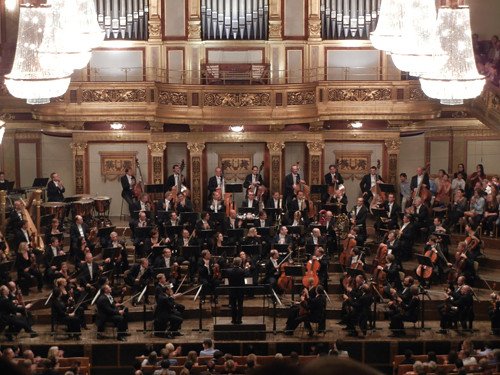
The program we enjoyed was performed by Wiener Symphoniker, conducted by Vladimir Fedosejev, Dirigent, with Edgar Krapp as organ soloist.  The pieces they performed were:
  • Werner Egk: Französische Suite nach Rameau für großes Orchester
  • Alexandre Guilmant: Symphonie für Orgel und Orchester Nr. 1 d - Moll, op. 42
    -------- Pause ----------
  • Modest Petrowitsch Mussorgskij: "Bilder einer Ausstellung" für Orchester bearbeitet von Maurice Ravel
    Encore:
  • Johann Sebastian Bach: Ouverture Nr. 3 D - Dur, BWV 1068 - 2. Satz (Air)
DSCN1588 _ Großer Saal, Musikverein, Wien, 6 October

DSCN1556 _ Großer Saal, Musikverein, Wien, 6 October

DSCN1585 _ Großer Saal, Musikverein, Wien, 6 October

It was glorious performance in a glorious hall.  I enjoyed the Egk and Mussorgky pieces very much.  Guilmant's organ symphony was not very engaging but it did allow the organ to go full blast and it was very impressive indeed.  For that experience's sake, I was glad for its inclusion.

The Wiener Symphoniker was a great symphonic orchestra, though overshadowed by the higher-profiled Wiener Philharmoniker.  Unfortunately, Wiener Philharmoniker was not performing both time I was in Vienna.  Therefore, a return to Vienna is a must.

We enjoyed the concert with our hosting friends, who were inspired and attempted to subscribe to the Wiener Philharmoniker's concerts but was told that they ought to wait for 13 years.  

Indeed, Vienna does mean music.

Related posts on Art · 文化 · Kunst
- Gondolas in Venice, Italy
- Teatro La Fenice di Venezia (La Fenice Theatre in Venice)
- Boy With Frog Sculpture and Punta della Dogana, Venice
- Bus Ride From Graz, Austria to Venice, Italy
- Magnificent Churches in Vienna
- Christopher Wheeldon's Brilliant Cinderella at San Francisco Ballet
- Theater Experiences in Wien (Vienna)

Label: Austria, Austria and Italy Trip 2012