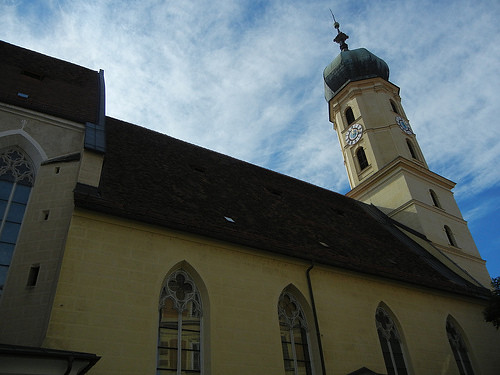
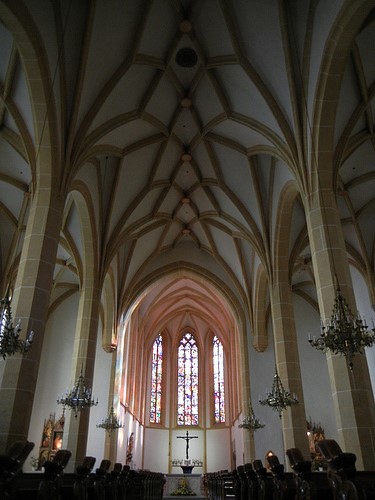
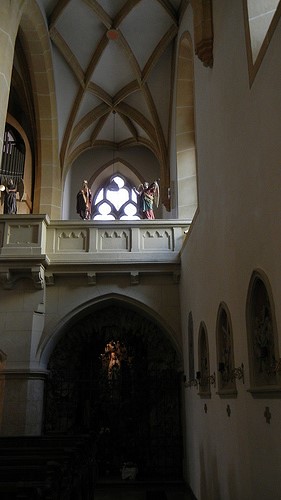
TheFranziskanerkirche in Graz was visually pleasing in its
simplicity, befitting to its name; even its many multiple-colored
stained glass windows didn't distract from its purifying sparseness.
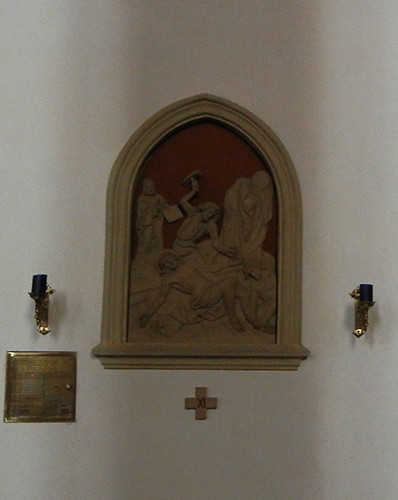
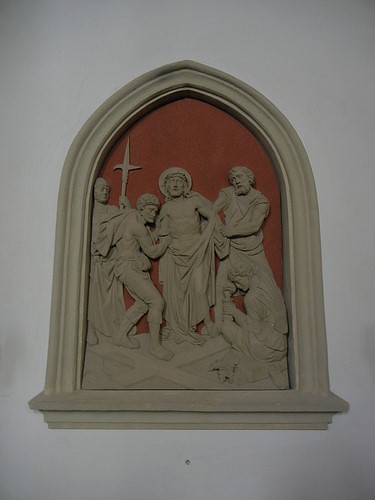
In that rather somber and scantly decorated space, what I found most striking was a small format relief cycle on the life of Jesus. These emotionally charged reliefs were as simply and economically delineated as the church itself - terse, understated, and never showy or ostentatious.
Amongst this cycle, I found these two pieces below were most exemplary - The Nailing of Jesus to the Cross and The Resurrection:
The Nailing of Jesus to the Cross
Resurrection
The interplay and dialogues between the reliefs consisted of monochromatic and line drawing-like figures and the flat and light maroon tinted background, helped to create a somber and sanctified atmosphere and classic timelessness. The drama was not diminished when the wrenching and emotional scenes were not presented in some obvious and overwrought styles; rather, the constraints of the execution of these reliefs enhanced their emotional impact.
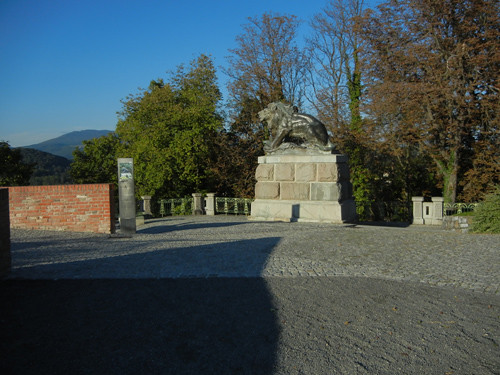
The hill in the city of Graz, Austria, Schloßberg, boasted many
monuments, on the ground of the fortress destroyed by the conquering
Napoleon's army, such as the Lion: Major-Hackher-Denkmal, Bastion of Schloßberg (above).
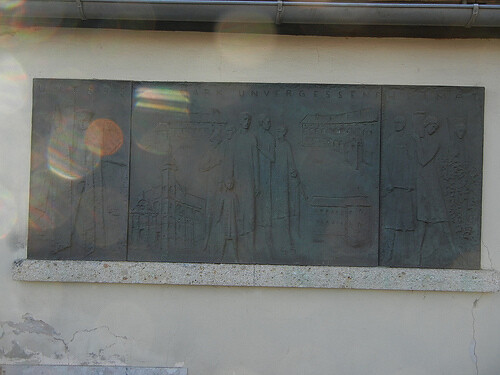
Amongst many memorable sculptures, my favorite one was a large relief, titled Untersteiermark unvergessene Heimat (Lower Styria UnforgottenHome) (Graz 1945), whose poignantly depiction of displayed people by the raging war. In regardless of political situation, the horrible effect of war on people were just deplorable.
My second favorite sculpture was titled Furchtlos und Treu - INF.RGT.27 - 1682-1918 (Fearless and faithful). This stone sculpture of a noble-looking man holding a heavy sword, looking straight forward in the most steadfast fashion. Its effect was enhanced by the fact that it was mounted on a red-brick wall of a fortress, dramatically draped with ivy leaves. The heroism of the sculpture though had a disturbing taste of the nationalist fervor, much appreciated in totalitarian states, such as Nazi Germany and the Soviet Unions. Austria was the right place to reflect on ambiguity and contradiction.
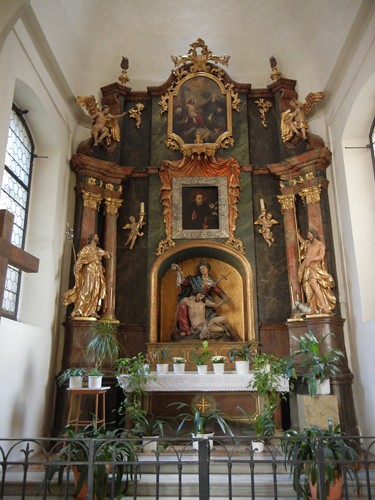
There are many interesting churches in Graz and one of them I visited in 2012, Mariahilferkirche and cloister, impressed me very much with its startling altar pieces.
The most striking one was an altar of Pietà, whose particularity was that there was a sword piercing into Maria's breast. It was a very disturbing and moving image and hard to forget.
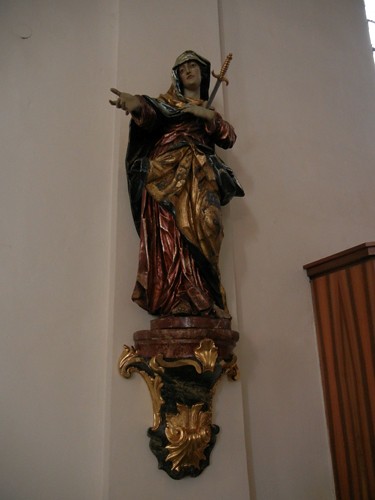
I happened to have seen quite a few similar images during that trip; in the very same church, on the side wall, I also saw this standing alone Maria pierced by a sword. In other church, I even saw a Maria pierced by seven swords!
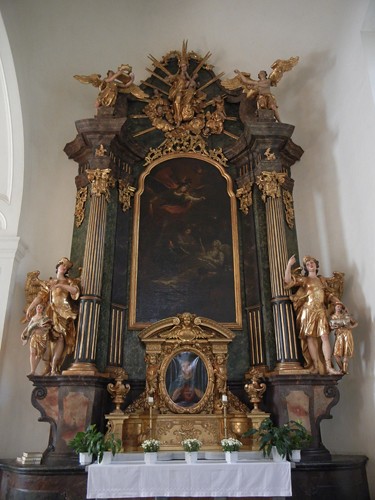
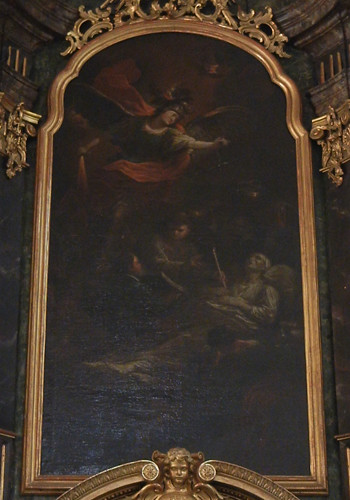
The second favorite altar in Mariahilferkirche featured a dead scene of a saint, perhaps, Maria.
The strong contrast between the splendidly colorful angel and the bleached dying Maria were very striking, and their postures echoed each other, and formed a broad and comforting embrace. Very moving.
The other important museum I visited in Graz, besides Kunsthaus, was Neue Galerie, which housed many important Austrian art.
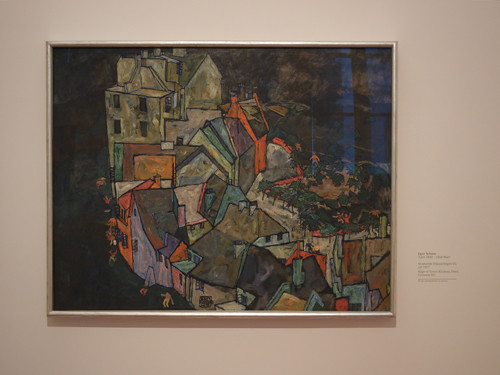
My favorite painting there was, again, by Egon Schiele (1890, Tulln an der Donau, Austria - 1918, Vienna), titled Stadtende (Häuserbogen III) (City End, Houses Arc III). It depicted a jumble of houses in various shades and shapes and the whole composition was quite dynamic, full of contrast and movements. Despite the many colors employed by the artist, the painting was also very harmonious, predominately in various shades of gray, accented by stripes and patches of brilliant blue, red, and green colors. It was a lovely painting, beautiful, a bit unsettling and menacing, mainly due to some very angular and irregular outlines of those houses.
Stadtende (Häuserbogen III), um 1917, Egon Schiele
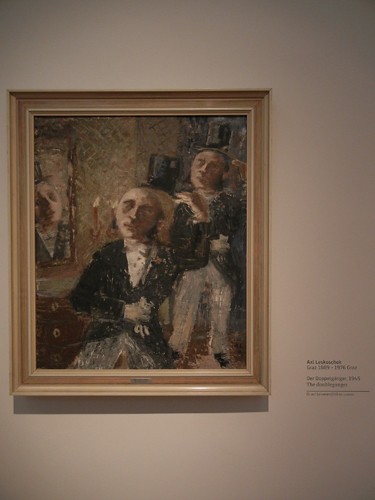
My second favorite piece was by a Graz artist, Axl Leskoschek (1889, Graz -1976, Wien), Der Doppelgänger (The Double). It was a somewhat spooky painting, monochromatic and enigmatic. It featured actually not two, but three figures - the doubles and an image reflection in a mirror, looking out of the frame, as if mocking at the live two, in their fancifully dinner jackets, with intriguing postures and facial express warranted endless interpretations. It was an unforgettable piece.
Der Doppelgänger, 1945, Axl Leskoschek (1889, Graz -1976, Wien)
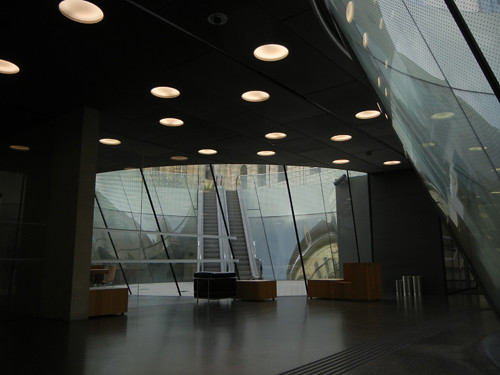
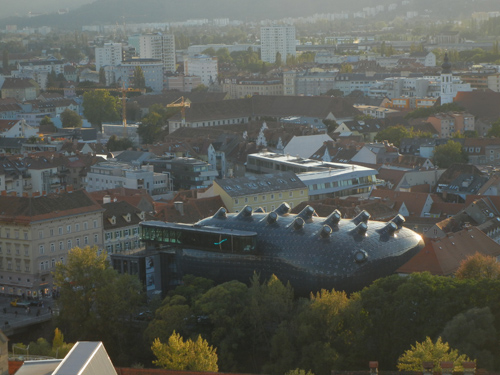
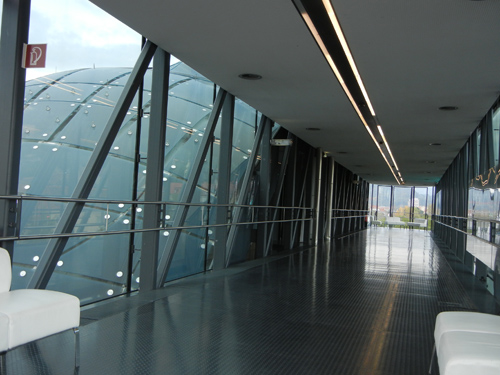
The ultra-modern museum, Kunsthaus, in Graz, Austria, was a distinctive architecture and its attraction is itself.
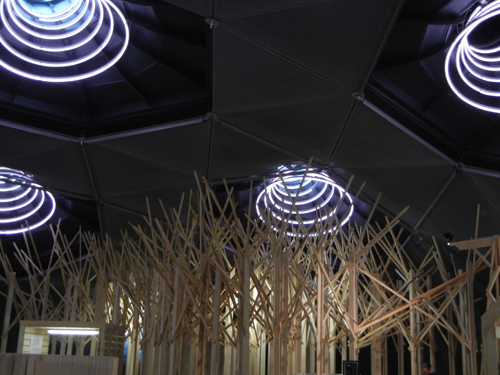
That said, I did see some very interesting works in this museum during my 2012 visit to Graz. My favorite item was an installation - a wooden forest flourishing under several intense circular florescent lights, suggesting a giant incubator, or an solemn, almost spiritual outer space, where several stars or planets converging upon alien soil. Very intriguing.
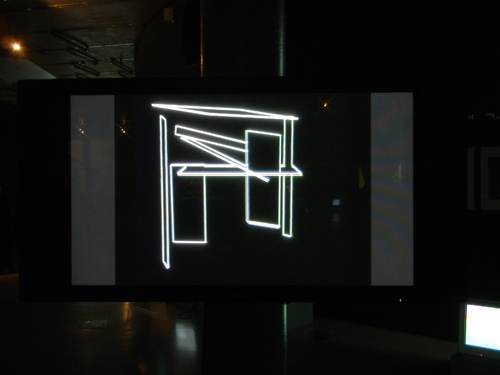
My second favorite was a 30 minutes video, titled True False Else, white outlines of ever-morphing objects continuously expanded and contracted against a dark background, reminiscent of the famous William Kentridge's drawing animation. Mesmerizing.
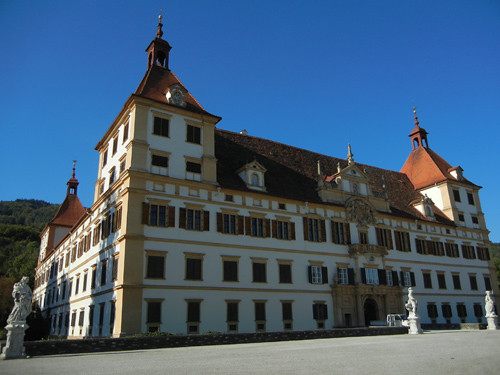
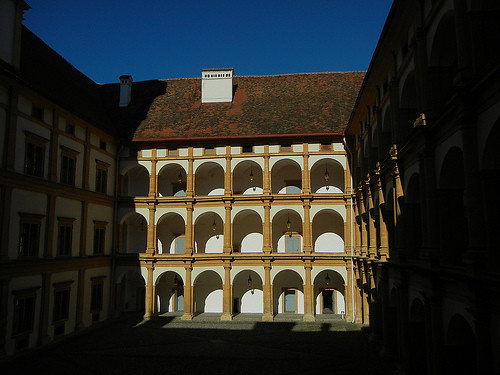
Schloss Eggenberg
in Graz, Austria is a magnificent Baroque palace and in 2010 was
included in the listing of UNESCO World Cultural Heritage Sites. In
2012, when I made a brief stop at Graz, though I was not able to visit the
museum housed inside the Schoss, Universalmuseum Joanneum, I was able to tour the building and its lovely garden ground.
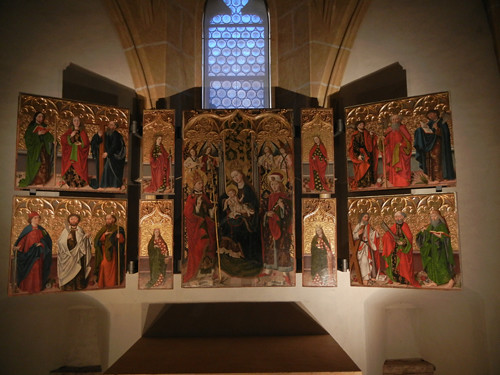
Though I couldn't go inside many marvelous rooms, I was able to see this wonderful triptych below through the window and though it was medieval in style, the coloration and rendering of its figures were reminiscent those of the great Jan van Eyck.
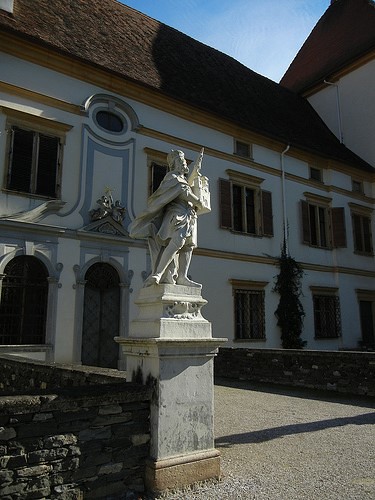
My second favorite in the Schloss was a bearded figure with a heavy crown, a Kaiser, I assume, holding a model of a town with some effort, looking imploringly heavenwards. A pious figure, seemingly suffered under the weight of his charges, almost pathetically tragic. Hard to forget.
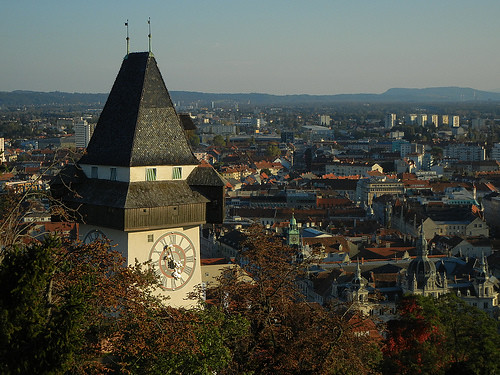
Uhrturm, Schloßberg, Graz (left) and Hauptbahnhof, Graz
Leaving the Renaissance city Graz, Austria, the city I called the City Without Entrance, and Exit
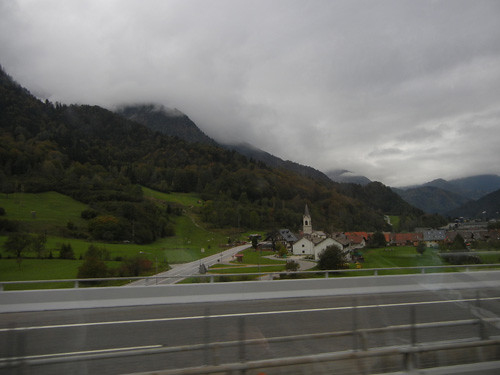
was an adventure itself. We left Graz via Klagenfurt, Villach, Austria, then Udine, Italy to arrive at Venice, on 10 October 2010. The highlight of these two bus rides was the part passing through the Julius Apls from Villach and Udine.
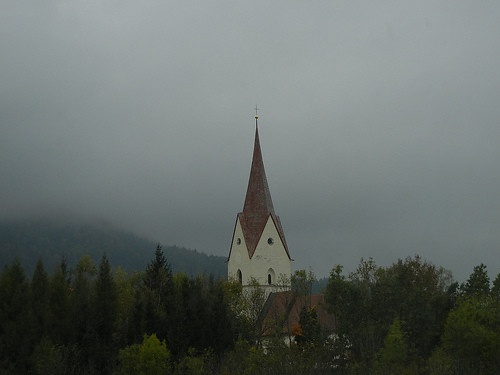
Once we had departed from Graz, our trip became very smooth. Though it was gray and we were traveling amongst the mountains, the road condition was excellent and any safety concern dissipated.
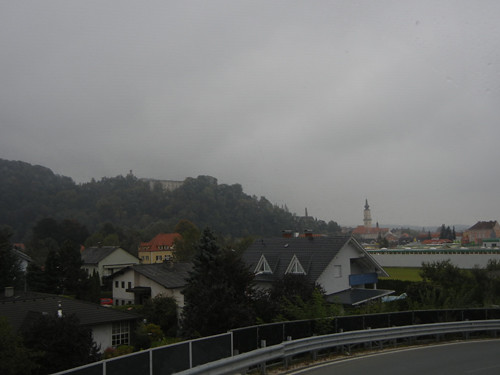
Between Graz and Klagenfurt, Austria
Between Graz and Klagenfurt, Austria
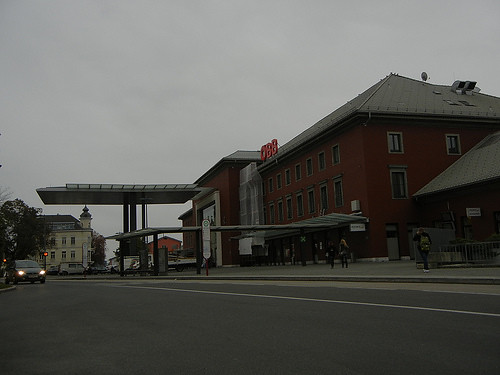
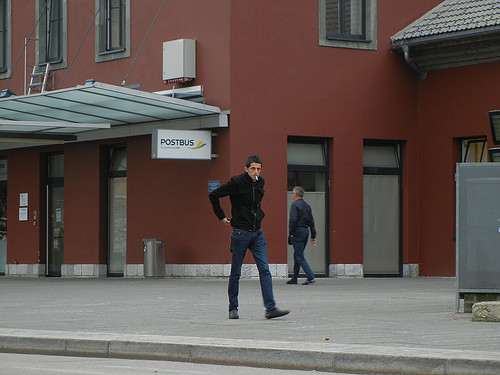
It took only two hours to arrive at Klagenfurt. We followed another bus into the Hauptbahnhof and that was our bus from Klagenfurt to Venice. All Austrian cities were clean and orderly.
Hauptbahnhof Klagenfurt, Austria
Hauptbahnhof Klagenfurt, Austria
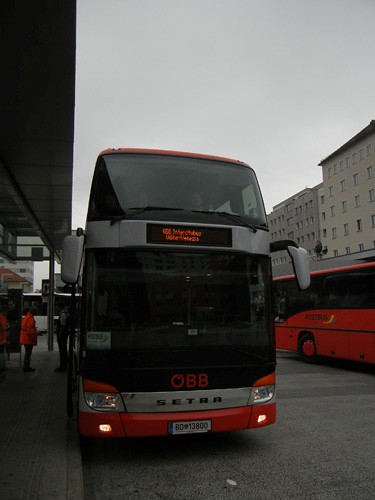
We had ten minutes to change bus. The bus driver also checked our passports against his list. For both rides, we had purchased our seats right above the driver, so as to have a good view. The reservation cost only three euros each. Below was our bus, resting at Villach, Austria, our next stop before entering Italy.
Klagenfurt-Villach-Undine-Venedig bus, Villach, Austria
Hauptbahnhof Villach, Austria
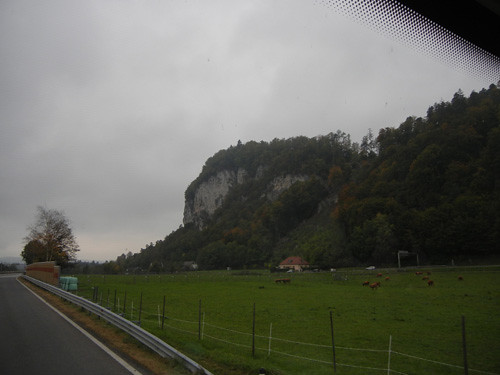
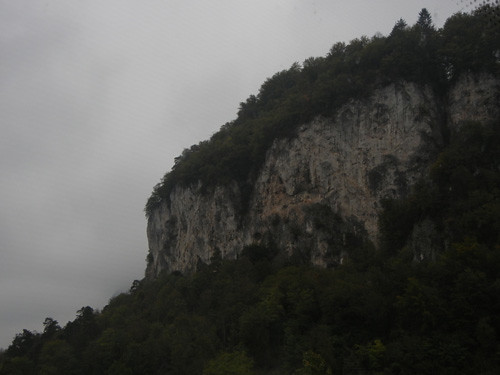
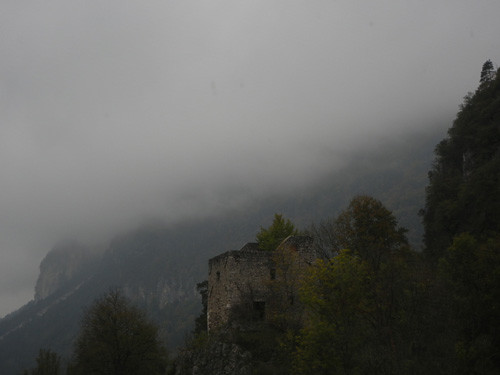
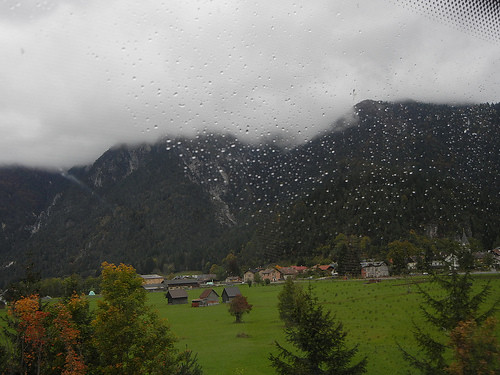
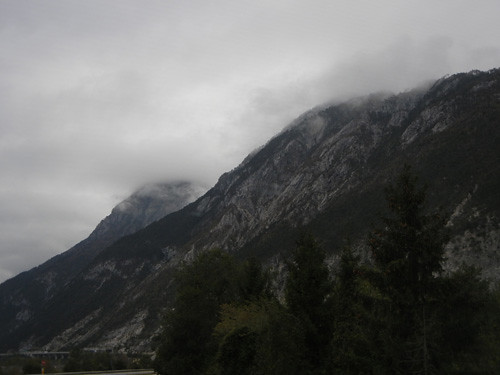
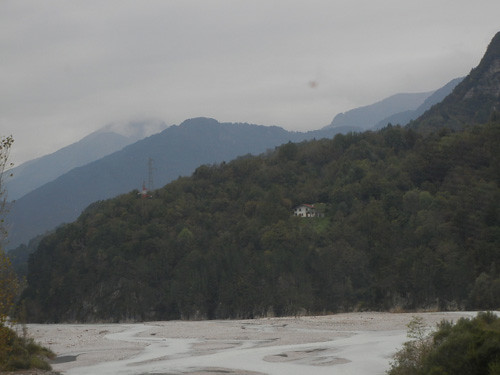
From Villach to Udine, Italy, we traveled through some beautiful scenery, part of the Julius Alps formation. We saw impressive pastures, villages and cliffs. The pictures I took may present it as somewhat monotonous but in reality it was far from it.
Julische Alpen (Julius Alps) between Villach and Udine, Italy
Julische Alpen (Julius Alps) between Villach and Udine, Italy
Julische Alpen (Julius Alps) between Villach and Udine, Italy
Julische Alpen (Julius Alps) between Villach and Udine, Italy
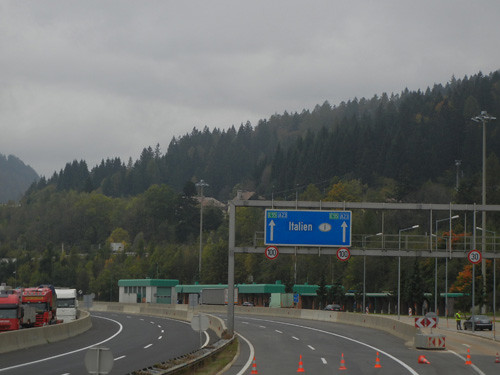
The border between Austria and Italy was very plain, like a simple roadside rest stop in the US.
Austria-Italy Border
The rocky formation continued for a long stretch and we passed some large quarries just before we came upon the fertile fields near Udine, in the Friuli-Venezia Giulia region of Italy.
Julische Alpen (Julius Alps) between Villach and Udine, Italy
Julische Alpen (Julius Alps) between Villach and Udine, Italy
Julische Alpen (Julius Alps) between Villach and Udine, Italy
Julische Alpen (Julius Alps) between Villach and Udine, Italy
Julische Alpen (Julius Alps) between Villach and Udine, Italy
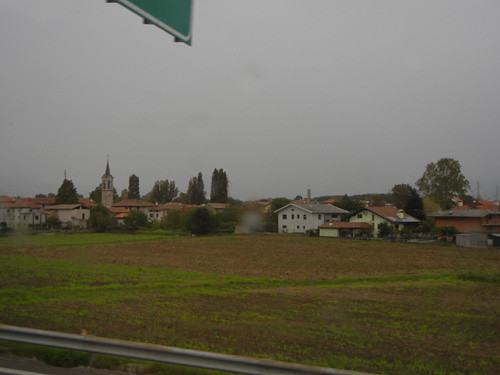
Now, the landscape started to take on more warm hue of the Italy we associated with. The villages and towns took on a warmer tone as well. More Mediterranean.
Near Udine, Italia
Udine, Italia
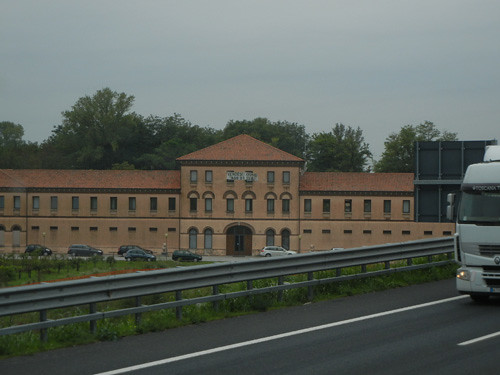
Near the end of the day, we finally arrived at Veneto region, and we made a quick stop at Mestre Stazione, Venezia. We were told not to get off the bus at all.
Veneto, Italia
Mestre Stazione, Venezia
Then we left the mainland behind, and traveled upon a man-made bridge in the lagoon, leading to the islands part of Venice. It was amazing to be on the bridge, or viaduct, seeing water on both sides was and then the familiar landmarks emerged in the far distance.
Approaching Tronchetto, Venezia
Arriving Tronchetto, Venezia
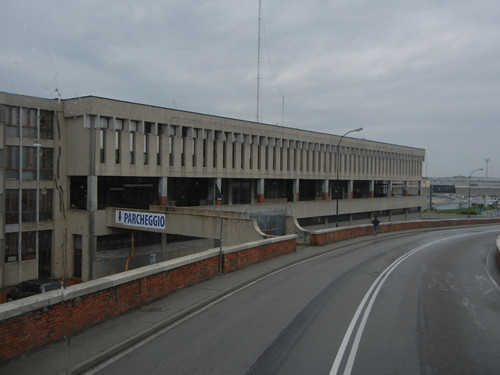
Tronchetto was the final stop of the bus. From there, we were to switch on a commuter light rail to go to Stazione Santa Lucia, which was the main train station in Venice.
Tronchetto, Venezia, 10 October
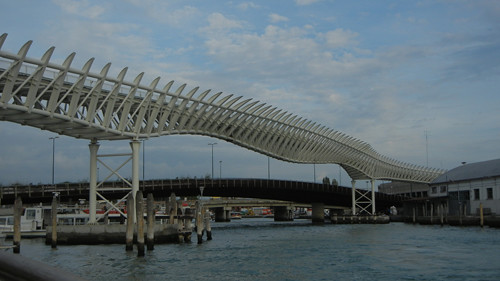
The light rail traveled on a bridge looked like a gigantic whale bone. Very beautiful. The trip cost only a Euro.
Rail track connecting Stazioni Tronchetto and Santa Lucia, Venezia
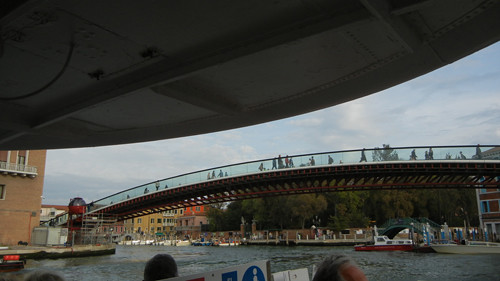
Getting off the light rail, we dragged our luggage through a lovely bridge with translucent pavement so we could almost see the water underneath, and finally arrived at Stazione Santa Lucia.
Ponte della Costituzione & Stazione Venezia Santa Lucia
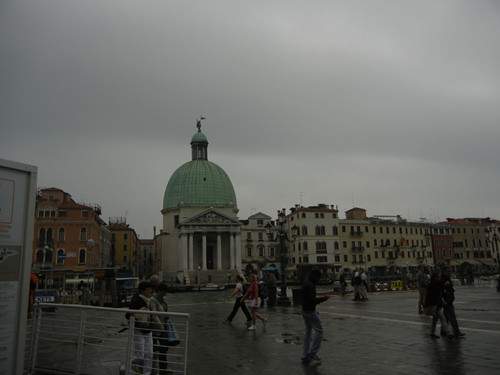
We walked onto the plaza in front of Santa Lucia, and saw in front of us the imposing San Simeone Piccolo. Naturally, we knew grander sights
were to come.
San Simeone Piccolo, viewed from Santa Lucia, Venezia, 10 October














 Posts
Posts


