Showing posts with label Symphony. Show all posts

Monday, December 2, 2013

Britten's War Requiem at San Francisco Symphony


DSCN7434_ San Francisco seen from Rockridge BART Station, 30 Nov 2013
San Francisco seen from Rockridge BART Station
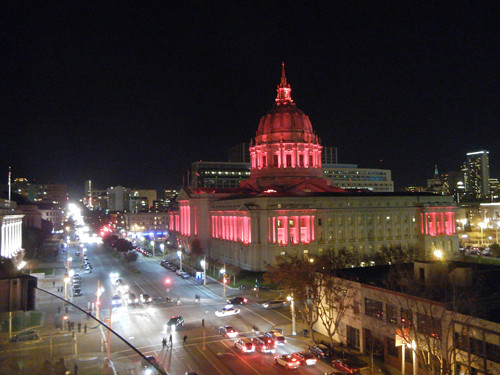
DSCN7460_ San Francisco City Hall & Opera House, seen from Symphony Hall, 30 Nov 2013
San Francisco City Hall, seen from balcony of Davies Symphony Hall

On the evening of the Saturday after Thanksgiving, a beautiful late autumn / early winter evening, we went to San Francisco Symphony to attend a performance of Benjamin Britten's War Requiem, part of Britten centennial celebration.
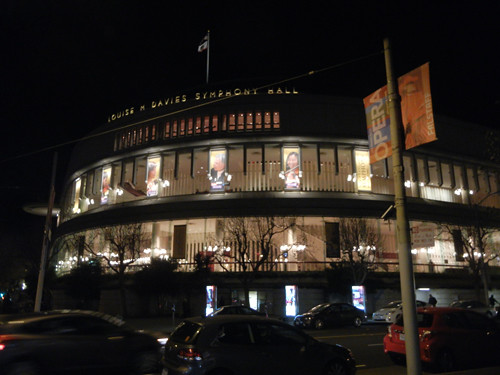
DSCN7443_ War Requiem, SFS 30 Nov 2013
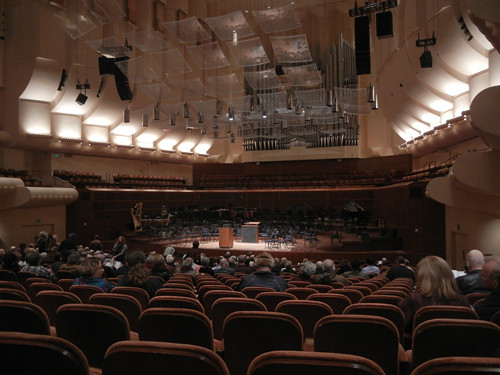
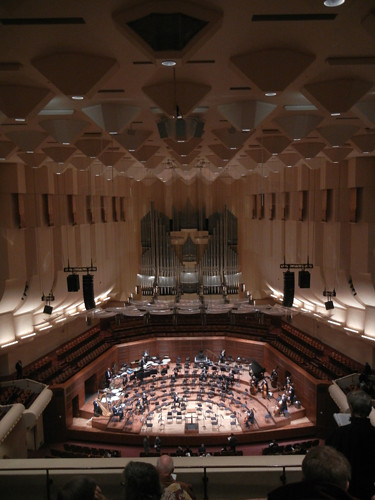
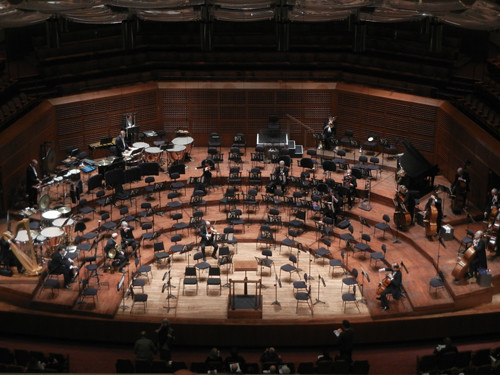
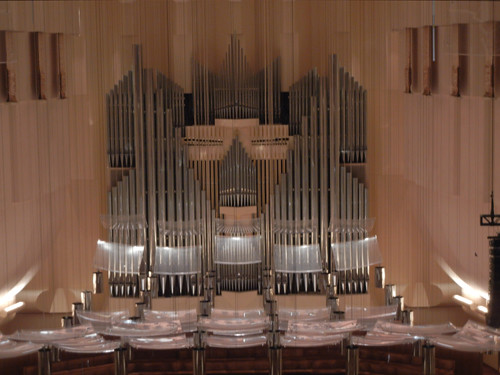
Davies Symphony Hall, home to San Francisco Symphony Orchestra

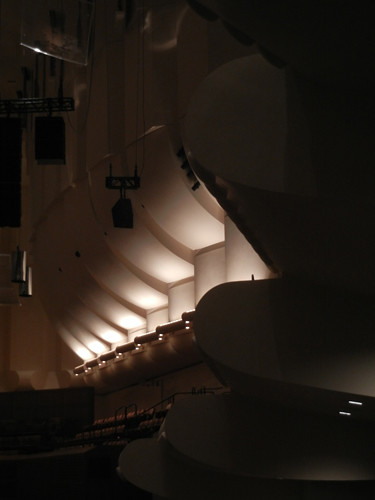
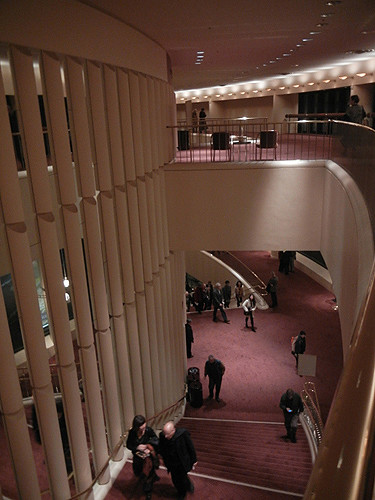
San Francisco Civic Center dresses up for the festive season; yet, inside the symphony hall, the modernistic interior kept the festival mood in check, which was rather fitting, considering the theme of the War Requiem, a solemn pieced commissioned for the consecration of Saint Michael's Cathedral, Coventry, severely damaged during the World War II, and premiered in the Cathedral on May 30, 1962, on the ravage of war.
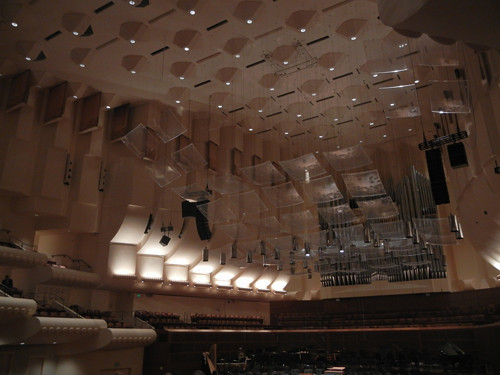
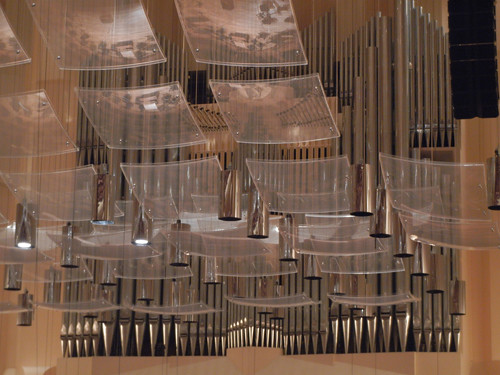
DSCN7445_ War Requiem, SFS 30 Nov 2013 DSCN7451_ War Requiem, SFS 30 Nov 2013

DSCN7452_ War Requiem, SFS 30 Nov 2013

DSCN7454_ War Requiem, SFS 30 Nov 2013 DSCN7455_ War Requiem, SFS 30 Nov 2013

DSCN7463_ War Requiem, SFS 30 Nov 2013

DSCN7464_ War Requiem, SFS 30 Nov 2013

DSCN7465_ War Requiem, SFS 30 Nov 2013 DSCN7466_ War Requiem, SFS 30 Nov 2013

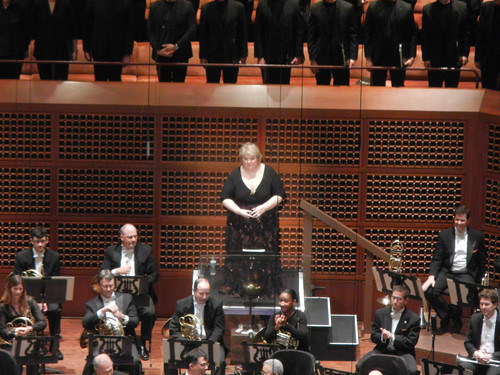
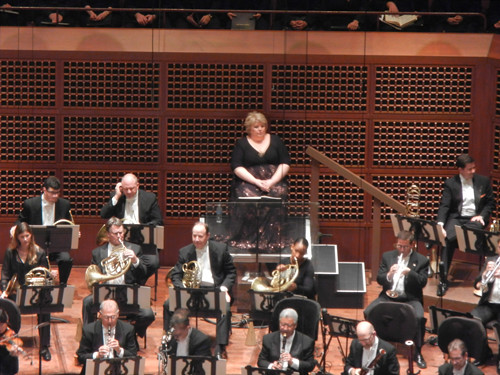
After the informative but a bit too narrowly focused lecture, we took our seats, eagerly waiting for the performance to start.  The soprano soloist, Christine Brewer, also took her position, in the far back of the orchestra, just below the chorus:
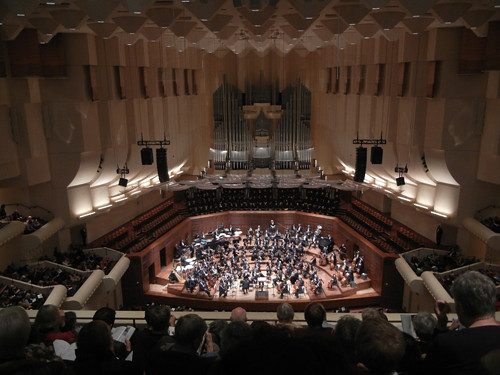
DSCN7468_ War Requiem, SFS 30 Nov 2013

DSCN7471_ Soprano Christine Brewer before the performance of War Requiem, SFS 30 Nov 2013

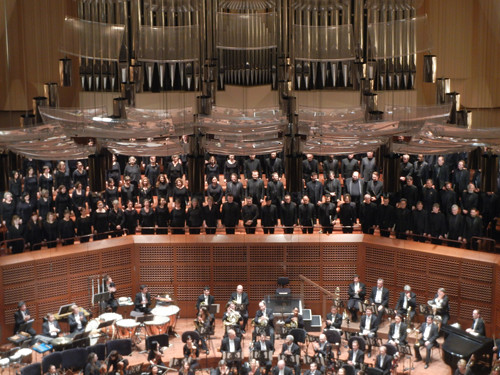
The performance was a moving account of one of the most shattering works of modern literature, composed by the troubled pacifist Britten, juxtaposes the Latin Requiem Mass with verses by the World War I poet Wilfred Owen, as a cry protest against the brutality of the War and an attempt to console the War's victims.  Led by the renowned maestro Semyon Bychkov, soloists Christine Brewer (soprano), James Gilchrist (tenor), Roderick Williams (baritone), joining the San Francisco Symphony and San Francisco Symphony Chorus, and the invisible Pacific Boychoir, gave their most sincere responses to the poem and liturgy.  The long evening took us through many emotions - fear, anger, grieve, sadness, resignation, protest, tentative hope and consolation. 

The tenor and baritone articulated Owen's poems with great dexterity and clarify, accompanied by a chamber orchestra, sitting on stage right; the soprano, rode the wave, led the charge, or cut through the thickets of the great waves of sound emitted from the large orchestra in front of her, in magisterial and beautiful voice, gave an authoritative and heart-felt reading, and at times her fragmented cries poured force like a lightening sent force from earth to heaven, controlled and dignified, nothing sounded like a harridan, rather a great Greek tragedian, or a primordial earth goddess.

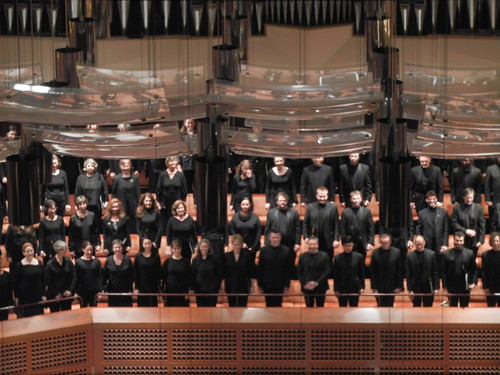
The chorus sang with great emotion, beauty and precision, so did the boys, gently lending their other-worldly voices to the ravaged world.

The performance of this shattering and profound music was searing and wrenching.  After the final note, the entire hall sank into deep silence for about two minutes.  Not a single person made a move and attempted to clap hands during that collective meditative moment.  Afterwards, from a section, some gentle hand clapping started and gradually, the clapping sound spread and erupted and the well-earned standing ovation ensued.

The rest of the pictures were taken from the curtail calls:
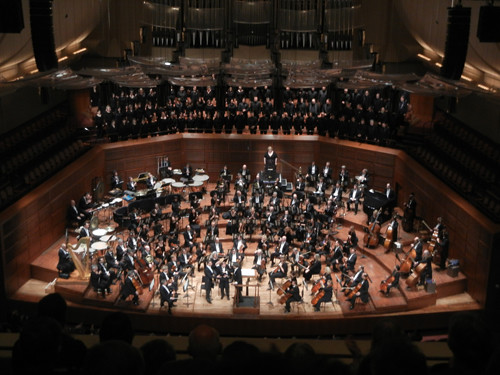
DSCN7473_ War Requiem, SFS 30 Nov 2013

DSCN7474_ Curtain, Soprano Christine Brewer, War Requiem, SFS 30 Nov 2013
Christine Brewer (soprano)

DSCN7494_ War Requiem, SFS 30 Nov 2013
Mixed chorus

DSCN7486_ War Requiem, SFS 30 Nov 2013

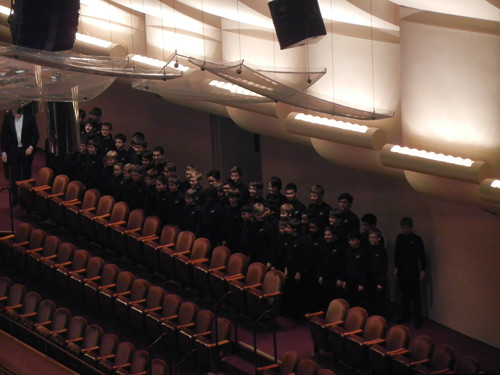
DSCN7485_ Curtain - Boys Choir, War Requiem, SFS 30 Nov 2013
The angelic Pacific Boychoir, who sang behind the stair door during the evening
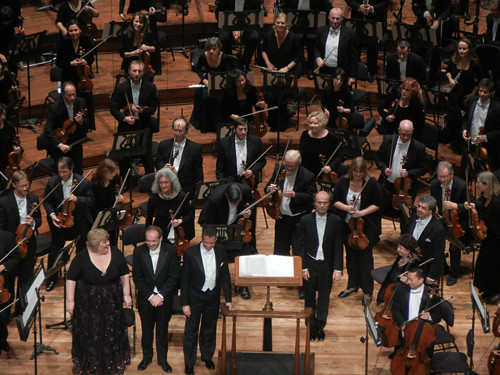
DSCN7488_ War Requiem, SFS 30 Nov 2013
Christine Brewer (soprano), James Gilchrist (tenor), Roderick Williams (baritone), Ragnar Bohlin (chorus director) & Semyon Bychkov (conductor)
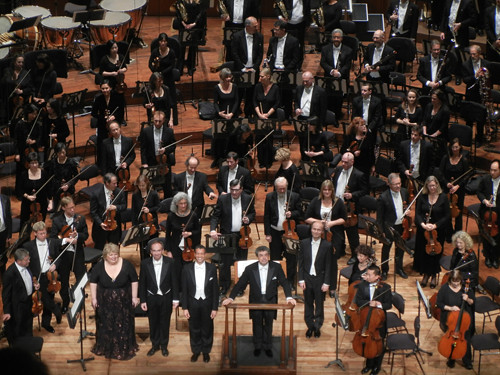
DSCN7498_ War Requiem, SFS 30 Nov 2013
Christine Brewer (soprano), James Gilchrist (tenor), Roderick Williams (baritone), Semyon Bychkov (conductor) & Ragnar Bohlin (chorus director)

An utterly unforgettable evening.


Related posts on Art · 文化 · Kunst:
-
Nederlands Dans Theater in Berkeley
- Walt Disney Concert Hall Tour
- Theater Experiences in Wien (Vienna)
- Christopher Wheeldon's Brilliant Cinderella at San Francisco Ballet
- Three-Course Cultural Feast - Tetzlaff, Amour and Nijinsky
- High Romanticism - German Tenor Jonas Kaufmann's Recital in Berkeley
- Angelic Voice - Philippe Jaroussky at Hertz Hall, UC Berkeley
- Operas in Concert Hall
- Part 1, Das Rheingold - Premiere of Wagner's Ring Cycle at San Francisco Opera

Wednesday, November 28, 2012

Theater Experiences in Wien (Vienna)

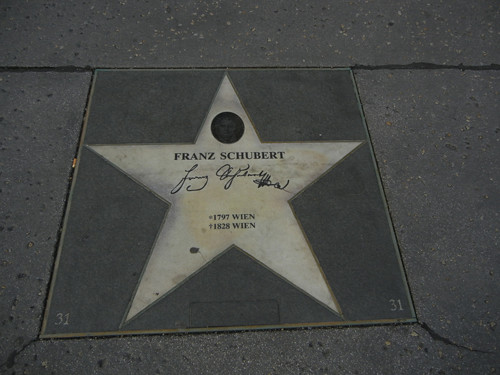
DSCN0643 _ Star of Schubert in front of Musikverein, Wien
Franz Schubert star near Musikverein, Wien
Wien (Vienna) means music and style.  In Vienna, the stars are given to composers and musicians - Schubert, Bach, Brahms, Berg, von Einem and von Karajan, etc., instead of film stars and starlets in Hollywood.

When I visited Vienna last month, my second trip to Vienna, I attended three different theatrical performances, all in renown venues, within a brief span of six nights.

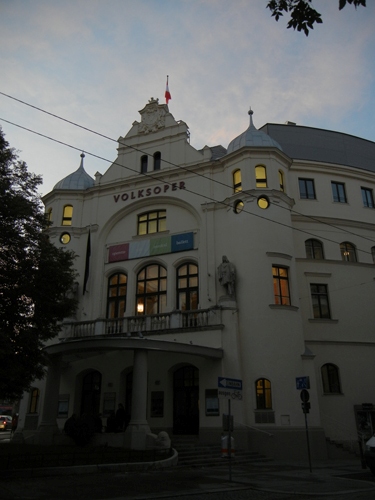
DSCN9467 _ Volksoper, Wien, 2 October
Volksoper Wien
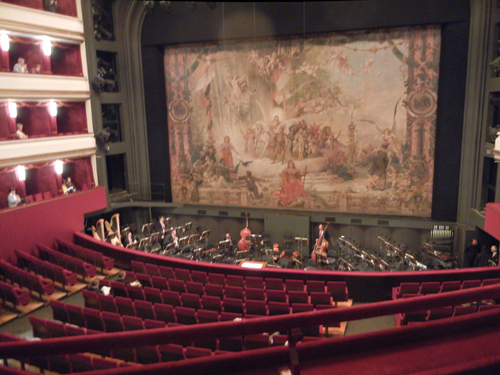
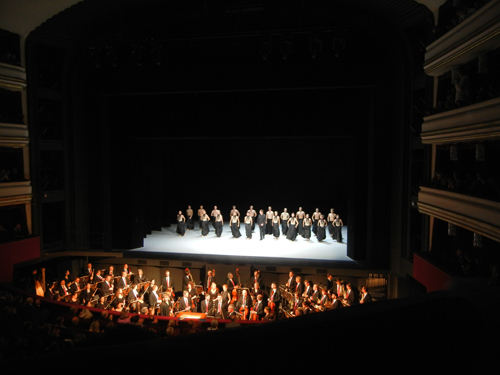
The first performance we attended was a night of three modern ballets at Volksoper.  The options then included Viennese operettas, such as Die lustige Witwe (The Merry Widow), a quintessential Viennese confection, but it was vetoed by my partner and we chose the ballet night instead, for its modernity and daring (see the preview video below).  It turned out to be a wonderful night of theater.  The three modern ballets were, in the order of performance and ascending scale of the pieces, Claude Debussy's "Nachmittag eines Fauns", Maurice Ravel's "Bolero" and Carl Orff's "Carmina Burana", performed by Wiener Staatsballett.

The first piece was intimate and small, with only two dancers, and the last was ambitious, set to a full orchestra, several choruses and multiple couples and corps, while the middle one was, in the middle of everything.  The first piece was lovely but just a tad underwhelming and the last one, hour long, had some muddy moments and sagging energy amongst generally very satisfying presentation and poignant choreographed dances; it was the middle piece made the strongest impact through its glorious choreography by Boris Nebyla, incredibly beautiful costume, and unflagging energy of the music.  It was one of the most satisfying theatrical pieces I have ever enjoyed.

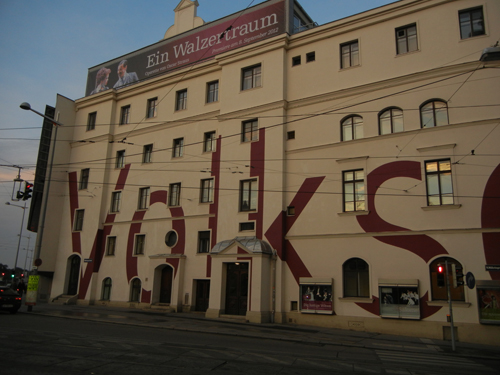
DSCN9465 _ Volksoper, Wien, 2 October

DSCN9499 _ Volksoper, Wien, 2 October

DSCN9491 _ Volksoper, Wien, 2 October

DSCN9497 _ Volksoper, Wien, 2 October


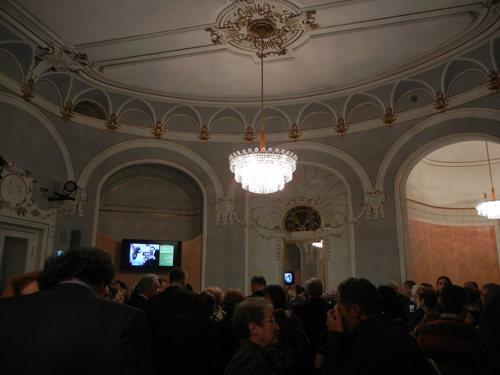
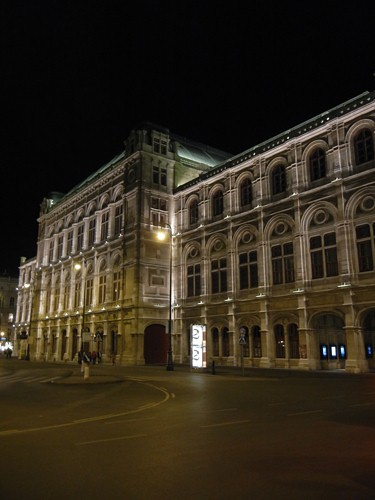
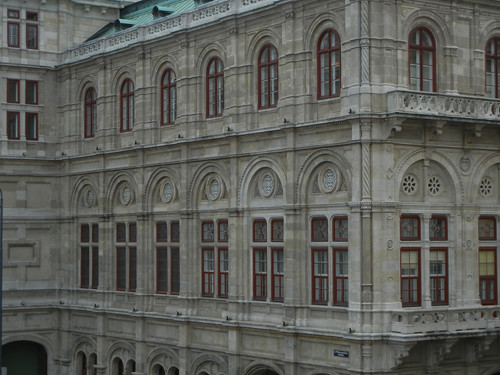
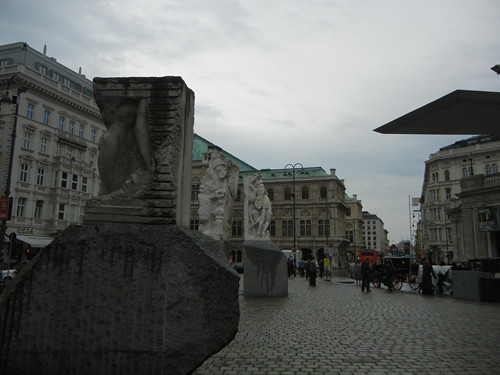
Volksoper is the "second" or "third" opera house in Vienna.  The top one was the most exulted Wiener Staatsoper, and the other one might be "Theater an der Wien", where Beethoven's Fidelio premiered.  There were only Puccinis in those houses in the week I was in Vienna so I had to pass them over.  In 2002, I did enjoy a performance of Bellini's La Sonnambula at Wiener Staatsoper.  Standing section.  Cost 3 euros.  At that time, a guided tour of that house was 5 euros.  The house was much more grandiose and glamorous.  Formal too.  In the cafe inside the house, a server wore a name tag identifying her as Frau XXX.  Volksoper, in contrast, was a little smaller, more intimate and more down to earth.  After all, it was called "Folks' Opera".  Yet, it was in that "people's house" that my partner was made to check his quite nice-looking and almost formal black windbreaker, where in Staatsoper, a similar but more casual windbreaker cost no concern, and was also in the presence of Present Havel in Prague.  At Volksoper, My blazer was sanctioned by the usher.

For comparison, below are a group picture of Wiener Staatsoper I took during this trip:

DSCN1654 _ Wiener Staatsoper, Wien, 6 October

DSCN9026 _ Wiener Staatsoper, 2 October - 500

DSCN1793 _ Winer Staatsoper, Wien, 7 October

DSCN1779 _ near Staatsoper and Albertina Museum, Wien, 7 October

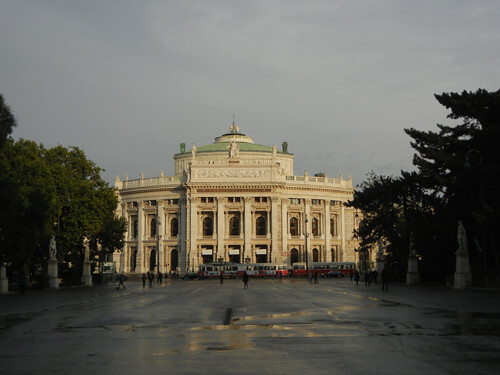
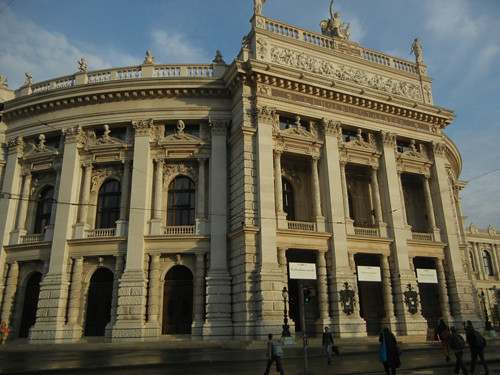
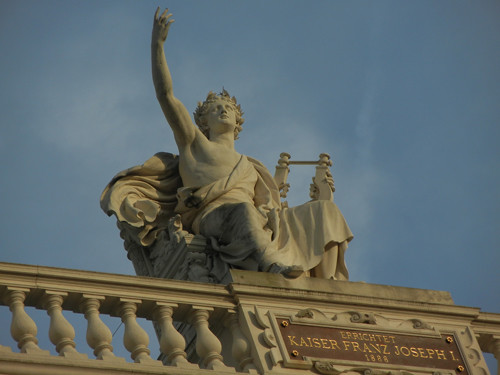
The second performance we attended was a play in one of the most prestigious theaters in German speaking world - Burgtheater in Vienna.

DSCN9424 _ Burgtheater, Wien, 2 October

DSCN9433 _ Burgtheater, Wien, 2 October

DSCN9436 _ Burgtheater, Wien, 2 October

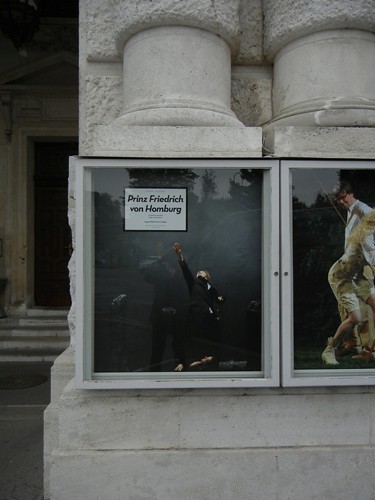
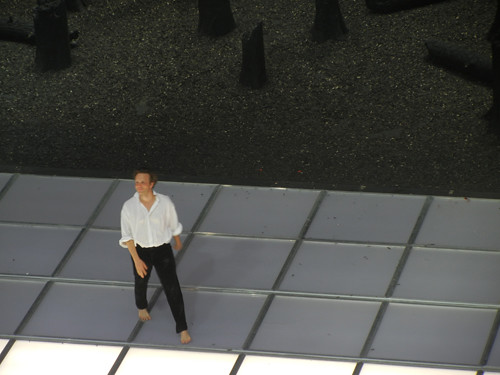
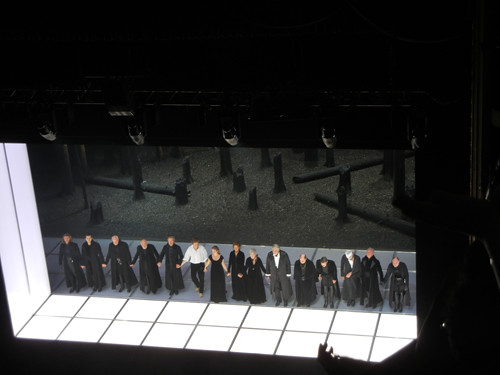
The play we chose to see was Prinz Priedrich von Homburg by Heinrich von Kleist.  It was a seminal play on discipline, militarism and reason. It was a co-production with Salzburg Festival and in the title role, starred the wonderful young German actor August Diehl.  There were many young people in audience, perhaps high school students - the tickets were as low as 2.5 euros.  I didn't know if the high percentage of young people was the norm or not, or they were particularly lured by the heartthrob Diehl.

DSCN9224 _ Burgtheater Poster, Wien, 2 October- 500


It was a sparse, modern and fiercely intelligent production, yet emotional raw and wrenching - two and half hours without intermission breezed through.  I did my homework by reading both original German texts and English translation in advance, plus listening to a radio play produced in 1950s.   

DSCN9790 _ Burgtheater, Wien, 3 October

DSCN9796 _ August Diehl as Prince von Homburg, Burgtheater, Wien, 3 October

DSCN9794 _ Burgtheater, Wien, 3 October

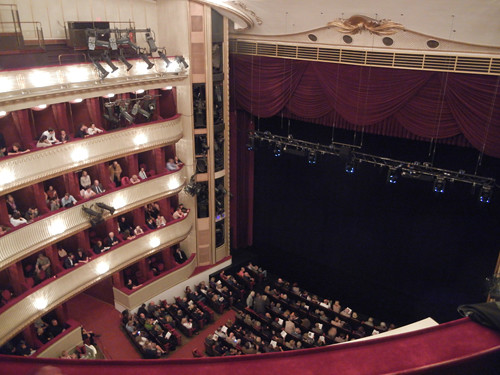
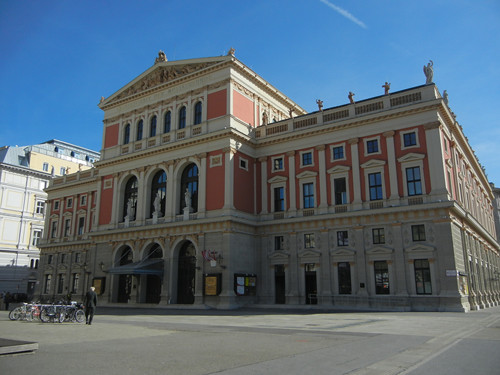
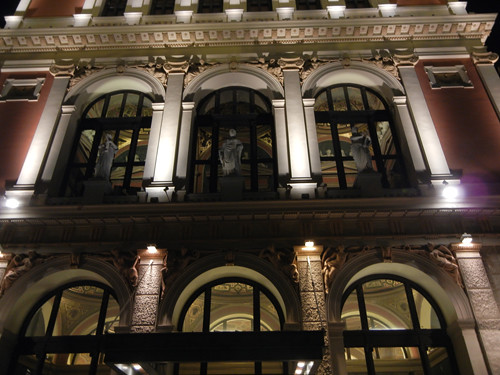
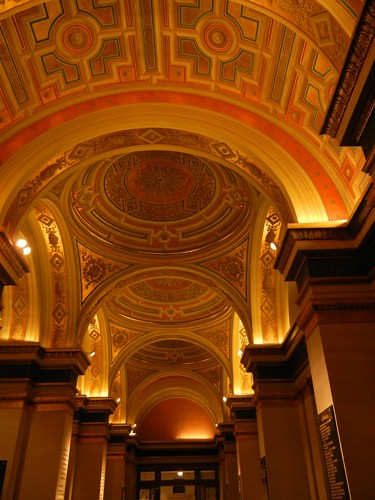
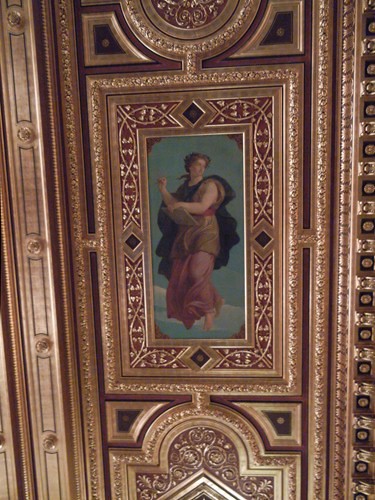
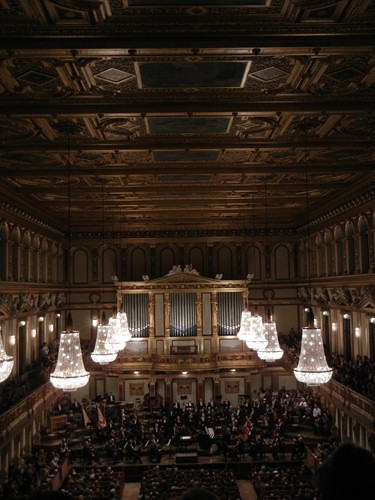
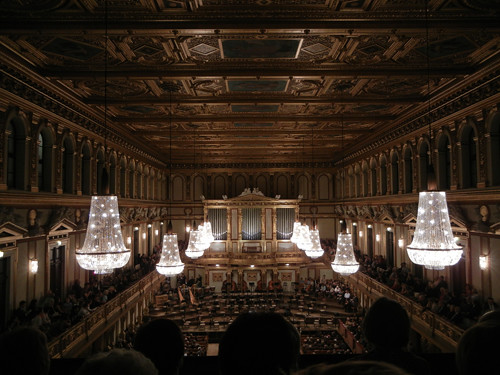
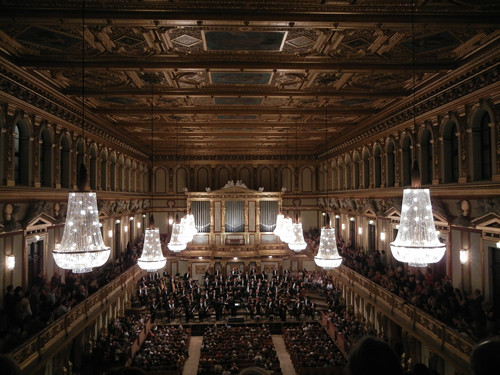
The most venerated musical venue in Vienna for symphonic performances was the Großer Saal (Great Hall), sometimes called Golden Hall, of Musikverein (Music Association).  It was the venue for annual Vienna New Year's Concert, televised all over the world.  The building was an ornate classical structure, with elaborate decorations inside the hall, centering around Apollo and nine muses gracing the golden-trimmed ceiling.

DSCN0640 _ Musikverein, Wien, 5 October

DSCN1617 _ Musikverein, Wien, 6 October

DSCN1562 _ Musikverein, Wien, 6 October

Wikipedia described the Großer Saal thus:
The Großer Musikvereinssaal, or Goldener Saal (Golden Hall), is about 49 m (161 ft) long, 19 m (62 ft) wide, and 18 m (59 ft) high. It has 1,744 seats and standing room for 300. The annual Vienna New Year's Concert is held here. Its lively acoustics are primarily based on Hansen's intuition as he could not rely on any studies on architectural acoustics. The room's rectangular shape and proportions, its boxes and sculptures allow early and numerous sound reflections. The original equipment comprised a historic pipe organ built by Friedrich Ladegast, the first organ recital was held by Anton Bruckner in 1872. The present–day organ was originally installed by the Austrian firm Rieger Orgelbau in 1907, highly esteemed by musicians such as Franz Schmidt or Marcel Dupré, and rebuilt in 2011.
DSCN1548 _ Musikverein, Wien, 6 October

DSCN1555 _ Musikverein, Wien, 6 October

DSCN1541 _ Musikverein, Wien, 6 October

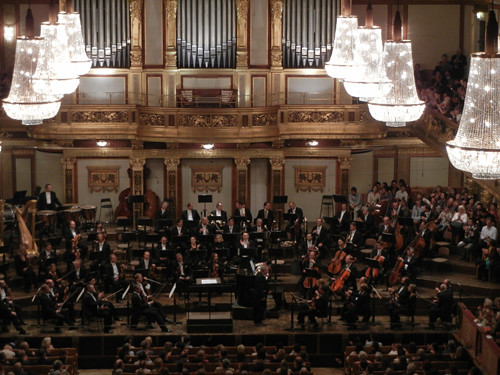
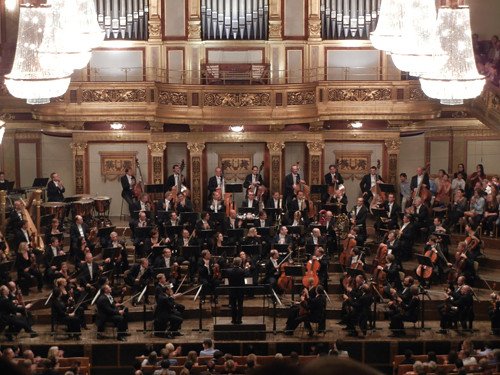
The program we enjoyed was performed by Wiener Symphoniker, conducted by Vladimir Fedosejev, Dirigent, with Edgar Krapp as organ soloist.  The pieces they performed were:
  • Werner Egk: Französische Suite nach Rameau für großes Orchester
  • Alexandre Guilmant: Symphonie für Orgel und Orchester Nr. 1 d - Moll, op. 42
    -------- Pause ----------
  • Modest Petrowitsch Mussorgskij: "Bilder einer Ausstellung" für Orchester bearbeitet von Maurice Ravel
    Encore:
  • Johann Sebastian Bach: Ouverture Nr. 3 D - Dur, BWV 1068 - 2. Satz (Air)
DSCN1588 _ Großer Saal, Musikverein, Wien, 6 October

DSCN1556 _ Großer Saal, Musikverein, Wien, 6 October

DSCN1585 _ Großer Saal, Musikverein, Wien, 6 October

It was glorious performance in a glorious hall.  I enjoyed the Egk and Mussorgky pieces very much.  Guilmant's organ symphony was not very engaging but it did allow the organ to go full blast and it was very impressive indeed.  For that experience's sake, I was glad for its inclusion.

The Wiener Symphoniker was a great symphonic orchestra, though overshadowed by the higher-profiled Wiener Philharmoniker.  Unfortunately, Wiener Philharmoniker was not performing both time I was in Vienna.  Therefore, a return to Vienna is a must.

We enjoyed the concert with our hosting friends, who were inspired and attempted to subscribe to the Wiener Philharmoniker's concerts but was told that they ought to wait for 13 years.  

Indeed, Vienna does mean music.

Related posts on Art · 文化 · Kunst
- Gondolas in Venice, Italy
- Teatro La Fenice di Venezia (La Fenice Theatre in Venice)
- Boy With Frog Sculpture and Punta della Dogana, Venice
- Bus Ride From Graz, Austria to Venice, Italy
- Magnificent Churches in Vienna
- Christopher Wheeldon's Brilliant Cinderella at San Francisco Ballet
- Theater Experiences in Wien (Vienna)

Label: Austria, Austria and Italy Trip 2012