Showing posts with label San Francisco Symphony. Show all posts

Monday, December 2, 2013

Britten's War Requiem at San Francisco Symphony


DSCN7434_ San Francisco seen from Rockridge BART Station, 30 Nov 2013
San Francisco seen from Rockridge BART Station
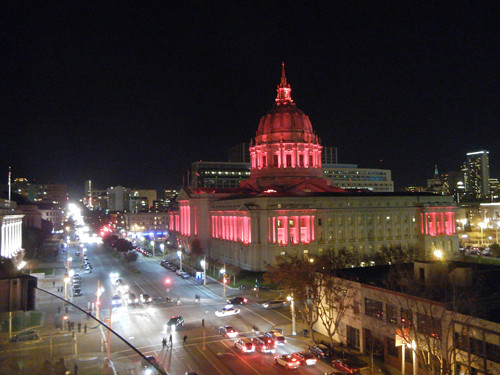
DSCN7460_ San Francisco City Hall & Opera House, seen from Symphony Hall, 30 Nov 2013
San Francisco City Hall, seen from balcony of Davies Symphony Hall

On the evening of the Saturday after Thanksgiving, a beautiful late autumn / early winter evening, we went to San Francisco Symphony to attend a performance of Benjamin Britten's War Requiem, part of Britten centennial celebration.
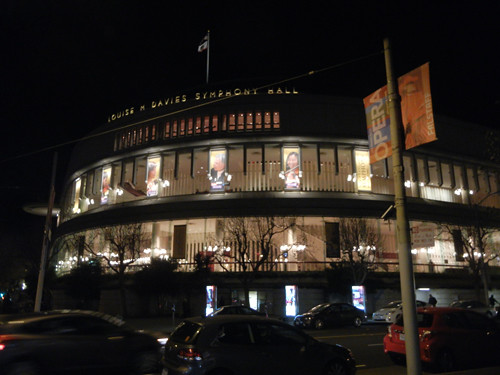
DSCN7443_ War Requiem, SFS 30 Nov 2013
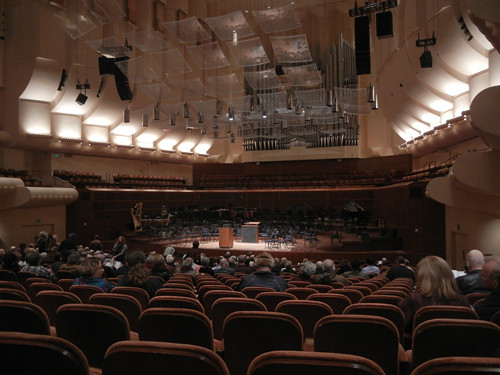
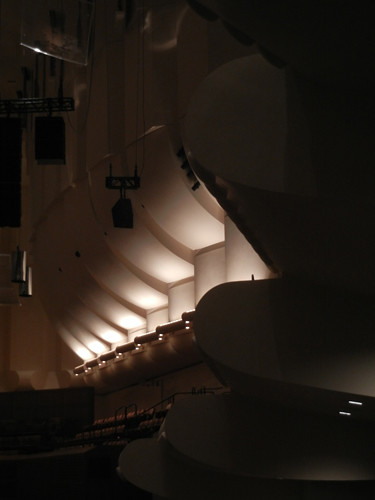
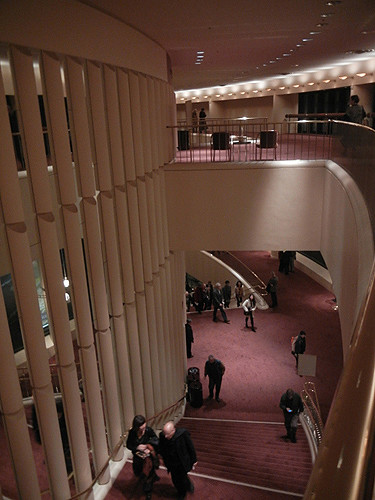
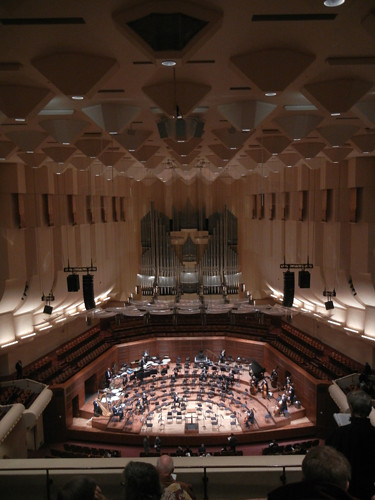
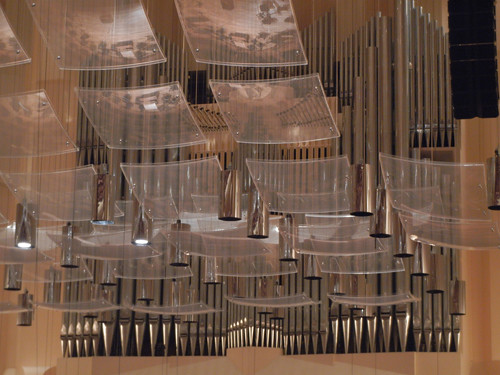
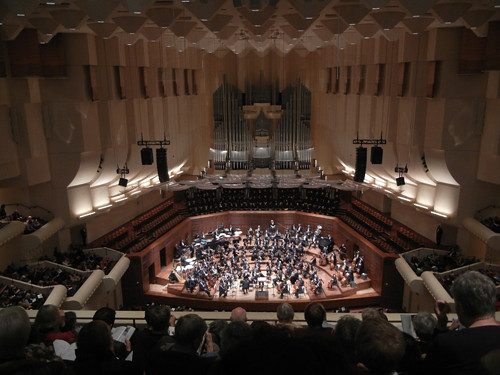
Davies Symphony Hall, home to San Francisco Symphony Orchestra

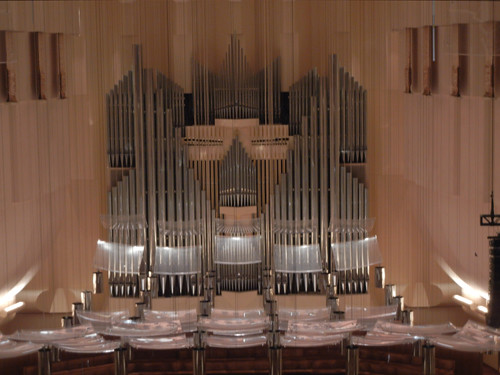
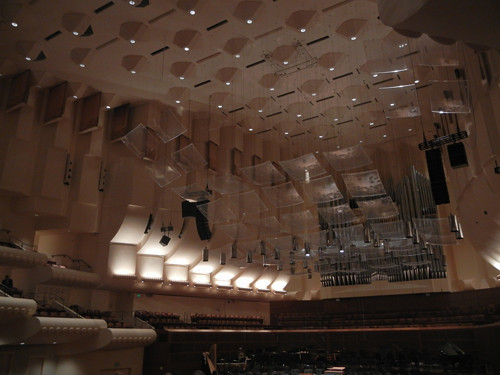
San Francisco Civic Center dresses up for the festive season; yet, inside the symphony hall, the modernistic interior kept the festival mood in check, which was rather fitting, considering the theme of the War Requiem, a solemn pieced commissioned for the consecration of Saint Michael's Cathedral, Coventry, severely damaged during the World War II, and premiered in the Cathedral on May 30, 1962, on the ravage of war.
DSCN7445_ War Requiem, SFS 30 Nov 2013 DSCN7451_ War Requiem, SFS 30 Nov 2013

DSCN7452_ War Requiem, SFS 30 Nov 2013

DSCN7454_ War Requiem, SFS 30 Nov 2013 DSCN7455_ War Requiem, SFS 30 Nov 2013

DSCN7463_ War Requiem, SFS 30 Nov 2013

DSCN7464_ War Requiem, SFS 30 Nov 2013

DSCN7465_ War Requiem, SFS 30 Nov 2013 DSCN7466_ War Requiem, SFS 30 Nov 2013

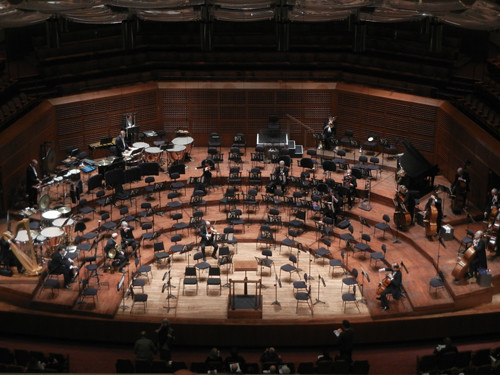
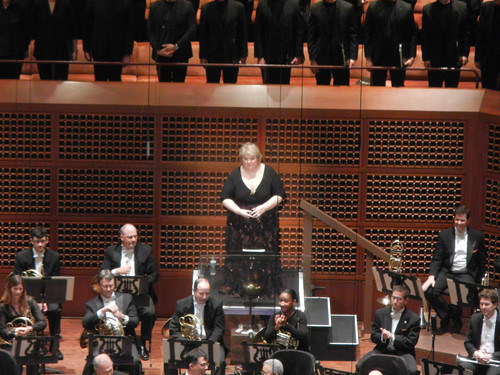
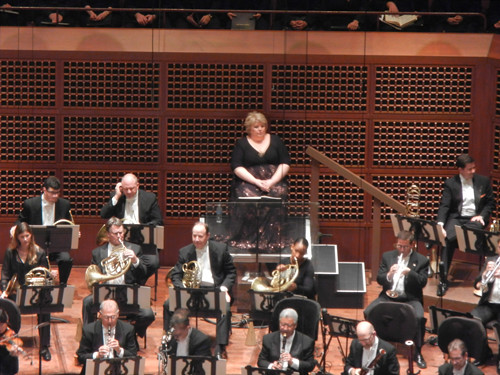
After the informative but a bit too narrowly focused lecture, we took our seats, eagerly waiting for the performance to start.  The soprano soloist, Christine Brewer, also took her position, in the far back of the orchestra, just below the chorus:
DSCN7468_ War Requiem, SFS 30 Nov 2013

DSCN7471_ Soprano Christine Brewer before the performance of War Requiem, SFS 30 Nov 2013

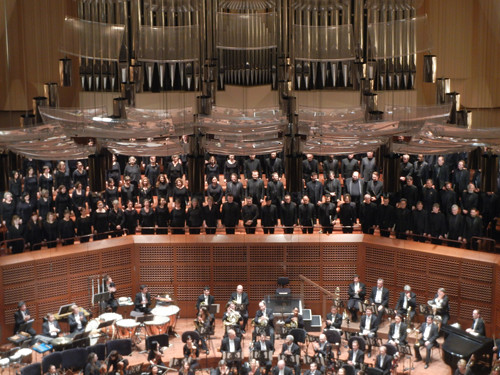
The performance was a moving account of one of the most shattering works of modern literature, composed by the troubled pacifist Britten, juxtaposes the Latin Requiem Mass with verses by the World War I poet Wilfred Owen, as a cry protest against the brutality of the War and an attempt to console the War's victims.  Led by the renowned maestro Semyon Bychkov, soloists Christine Brewer (soprano), James Gilchrist (tenor), Roderick Williams (baritone), joining the San Francisco Symphony and San Francisco Symphony Chorus, and the invisible Pacific Boychoir, gave their most sincere responses to the poem and liturgy.  The long evening took us through many emotions - fear, anger, grieve, sadness, resignation, protest, tentative hope and consolation. 

The tenor and baritone articulated Owen's poems with great dexterity and clarify, accompanied by a chamber orchestra, sitting on stage right; the soprano, rode the wave, led the charge, or cut through the thickets of the great waves of sound emitted from the large orchestra in front of her, in magisterial and beautiful voice, gave an authoritative and heart-felt reading, and at times her fragmented cries poured force like a lightening sent force from earth to heaven, controlled and dignified, nothing sounded like a harridan, rather a great Greek tragedian, or a primordial earth goddess.

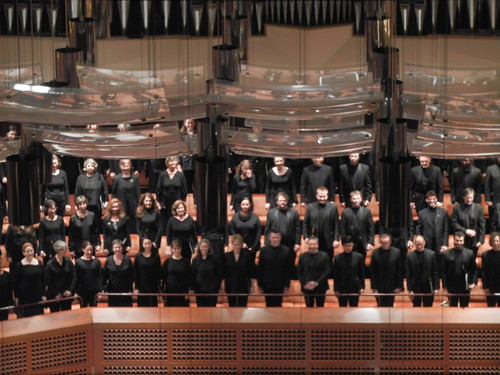
The chorus sang with great emotion, beauty and precision, so did the boys, gently lending their other-worldly voices to the ravaged world.

The performance of this shattering and profound music was searing and wrenching.  After the final note, the entire hall sank into deep silence for about two minutes.  Not a single person made a move and attempted to clap hands during that collective meditative moment.  Afterwards, from a section, some gentle hand clapping started and gradually, the clapping sound spread and erupted and the well-earned standing ovation ensued.

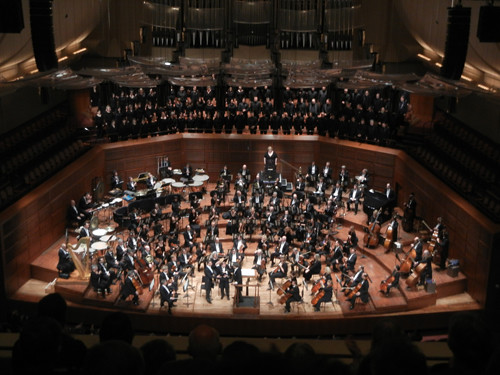
The rest of the pictures were taken from the curtail calls:
DSCN7473_ War Requiem, SFS 30 Nov 2013

DSCN7474_ Curtain, Soprano Christine Brewer, War Requiem, SFS 30 Nov 2013
Christine Brewer (soprano)

DSCN7494_ War Requiem, SFS 30 Nov 2013
Mixed chorus

DSCN7486_ War Requiem, SFS 30 Nov 2013

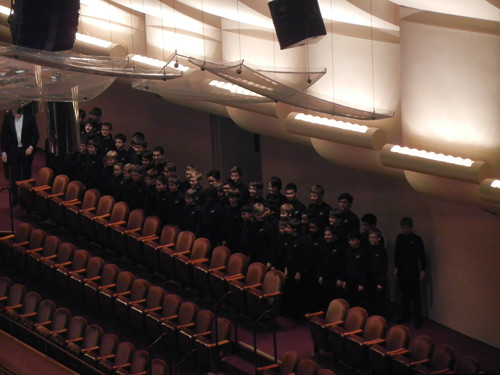
DSCN7485_ Curtain - Boys Choir, War Requiem, SFS 30 Nov 2013
The angelic Pacific Boychoir, who sang behind the stair door during the evening
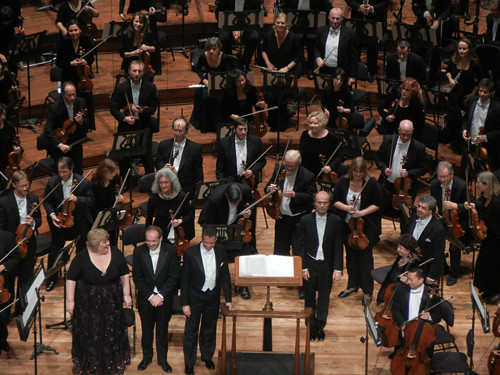
DSCN7488_ War Requiem, SFS 30 Nov 2013
Christine Brewer (soprano), James Gilchrist (tenor), Roderick Williams (baritone), Ragnar Bohlin (chorus director) & Semyon Bychkov (conductor)
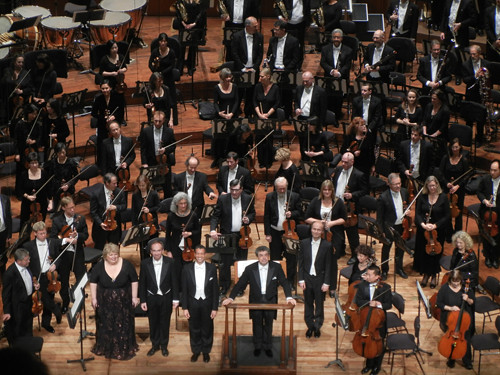
DSCN7498_ War Requiem, SFS 30 Nov 2013
Christine Brewer (soprano), James Gilchrist (tenor), Roderick Williams (baritone), Semyon Bychkov (conductor) & Ragnar Bohlin (chorus director)

An utterly unforgettable evening.


Related posts on Art · 文化 · Kunst:
-
Nederlands Dans Theater in Berkeley
- Walt Disney Concert Hall Tour
- Theater Experiences in Wien (Vienna)
- Christopher Wheeldon's Brilliant Cinderella at San Francisco Ballet
- Three-Course Cultural Feast - Tetzlaff, Amour and Nijinsky
- High Romanticism - German Tenor Jonas Kaufmann's Recital in Berkeley
- Angelic Voice - Philippe Jaroussky at Hertz Hall, UC Berkeley
- Operas in Concert Hall
- Part 1, Das Rheingold - Premiere of Wagner's Ring Cycle at San Francisco Opera

Saturday, June 16, 2012

Operas in Concert Hall

I just booked ticket to see a semi-staged concert performance of Béla Bartók's Duke Bluebeard’s Castle at San Francisco Symphony (SFS), and Liszt's Piano Concerto No. 1, and am anticipating an exciting night in the symphony hall.  Below is a video clip featured on SFS's website, documenting the preparation for this production.


Opera, as an art genre, often boasts being the form has it all - music, drama, costume, scenery, and dance, etc.  However, an over-produced, stuffy production can suffocate drama and music, the essence of operas. 

Sometimes, symphonic orchestras would stage operas with reduced scenery, costume and staging, due to the constraint nature of the symphonic halls and often, such particular constraints could force the singers to rely on their body languages, facial expressions, and above all, their voices to convey meanings, and force the viewer/listener to concentrate on music instead of scenery.  I had the good fortune of attended several semi-staged opera productions and one concert performance (without any scenery, prop or costume appropriate to the characters) - Wagner's Der fliegende Holländer (The Flying Dutchman), Stravinsky's Oedipus Rex, The Nightingale, Beethoven's Fidelio, and Zemlinsky's Eine florentinische Tragödie (A Florentine Tragedy), presented by the SFS and nearly all of them left an indelible impressions on me. 

All of them except for Zemlinsky opera (in concert form), were staged with great economy and intensity and the confinement of the smaller stage often heightened the drama.  It helped to have great conductors on podium - all those performances were conducted by SFS's music director Michael Tilson Thomas, with the exception of the Florentine Tragodie, which was conducted by another wonderful conductor James Conlon, current music director at Los Angeles Opera.  It also helped that the orchestra was first rate one.  I was equally grateful for the concert performance of Eine florentinische Tragödie, simply because it is so rarely performed and a chance to hear it alive was something to be happy about.  Without the proper costume, the singers still were able to interact and created credible human drama and dramatic situations.  The tiny unsatisfactory memory was from Fidelio, where awkward narratives replaced the original spoken dialogues, and this marred the otherwise excellent music performance.

All said, I do enjoy marvelous productions which fully take advantage of opera house stage machinery, when done for dramatic purposes, and do not compete with or overwhelm music and drama.  I have enjoyed many wonderful productions at San Francisco Opera (SFO), where the stage is more equipped to present technically challenging productions, such as The Cunning Little Vixen, Eugene Onegin, Billy Budd, Così fan tutte, Werther, Tannhäuser, Il Barbiere di Siviglia (The Barber of Serville), and Věc Makropulos (The Makropulos Case).

Of course, the operas themselves had to be good.  Sometimes, an hyper-produced production was really a desperate attempt to salvage a hopelessly inert and lackluster work, or even a musically satisfying but dramatically static ones.

Speaking of operas with some dramatically weakness, I realized that I have forgotten that I did see one more concert opera at SFS, A Flowering Tree by John Adams, conducted by the composer himself.  The opera had gorgeous music but the story was narrated by a storyteller, told instead of shown, which somewhat took the wind out of the dramatic sail. 

Therefore, an excellent all-around work must be the foundation of a great night at theater, and Duke Bluebeard’s Castle is a true 20th century masterpiece and I must thank SFS for its adventurous operative effort.

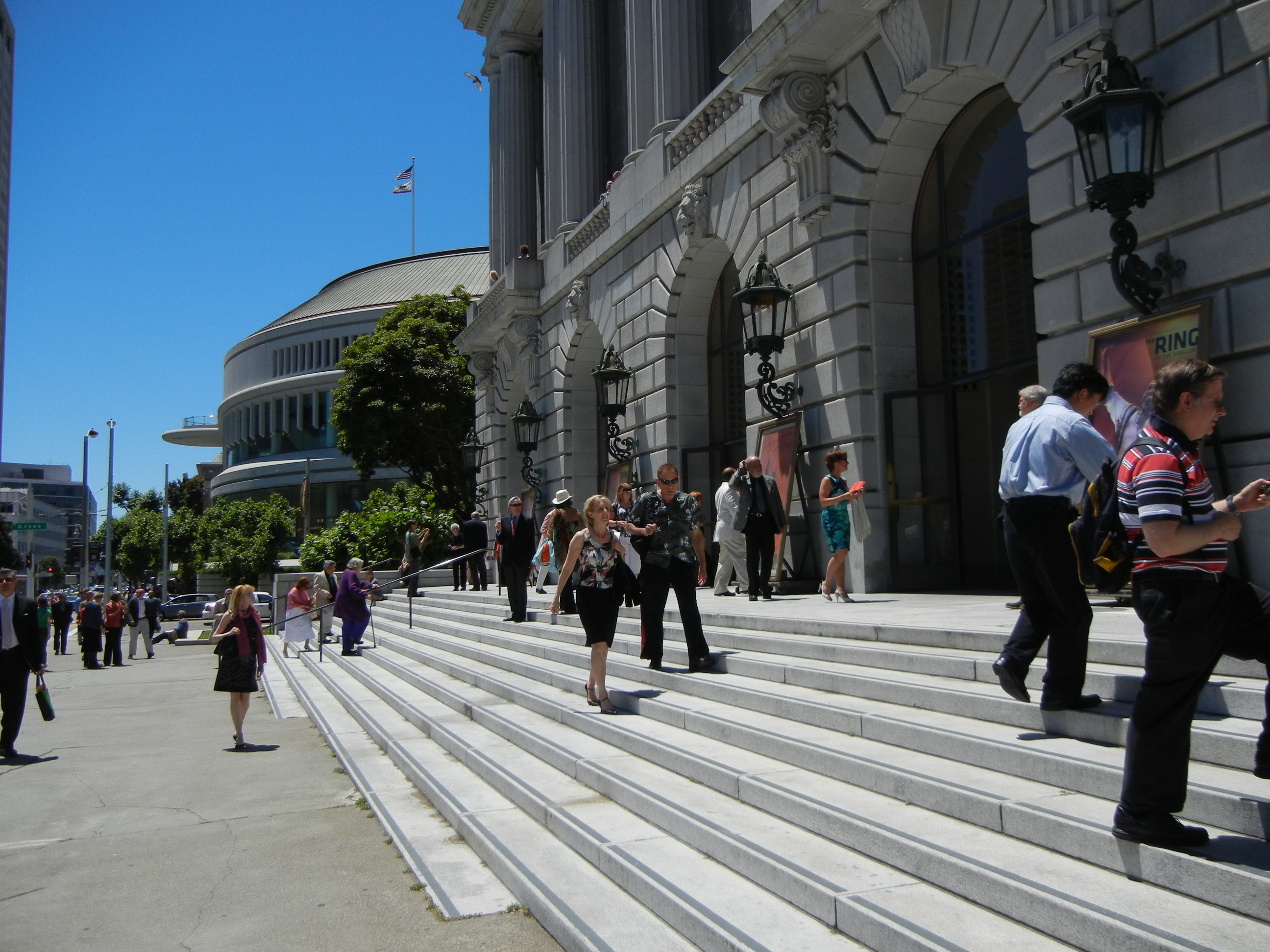
San Francisco Opera Ring Cycle  2011 Götterdämmerung _  3715
San Francisco Opera House and the Symphony Hall