Showing posts with label Vienna. Show all posts

Thursday, July 31, 2014

My Favorite Artifacts at Jüdisches (Jewish) Museum, Vienna

Jüdisches Museum Wien (Jewish Museum) in Vienna has many artifacts highlighting the past and present of Jewish culture in Austria.  When I visited the museum in 2012, I was astounded by the huge quantities of items they put on display, some beautiful, some ethereal, some kitschy, and some poignant.

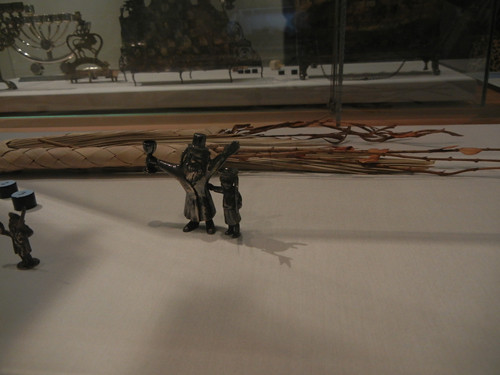
I was particularly taken by artifacts emphasizing the folksy Jewish tradition and heritage, such as the two figurines in the picture below.  These two figures, in traditional eastern European Jewish attires, with their endearingly exaggerated open-arm gestures - a sort of Jewish self-parody, I hope - invited viewers to enter their now long-gone time and location specific sphere.

DSCN1670 _ Jüdisches Museum, 6 October

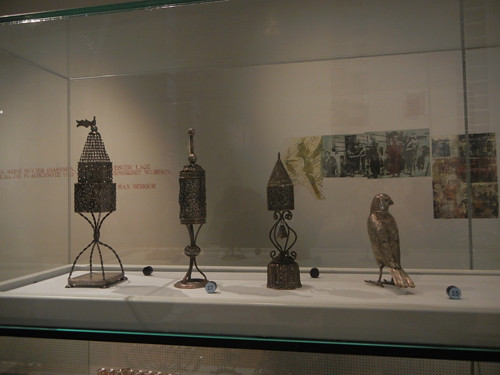
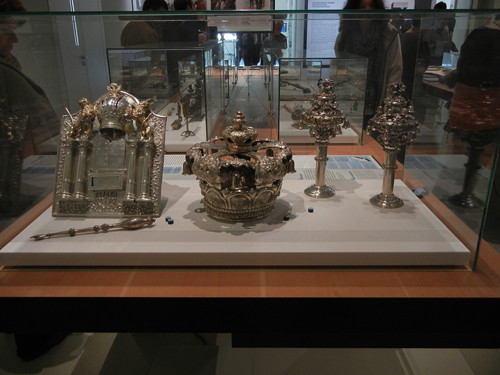
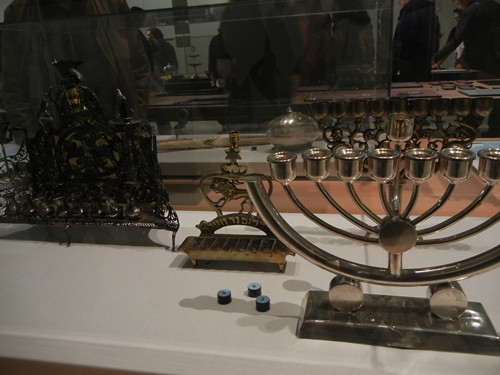
I was also very taken by the almost medieval-looking metal spice boxes, see picture below. I was particularly taken in by the far left one, which reminded me of a moving tent, or with a little more imagination, a knight errant in full armor, who ironically roamed the lands of Europe and the Middle East where many Jewish people, Muslims and Pagans constantly being threatened by sword and fire, and worse.  It was hard not to see violence and suffering even in these seemingly most innocuous objects.

DSCN1672 _ Jüdisches Museum, 6 October


My Favorite Museum Collection Series
>> My Favorite Museum Collection Series 88: My Favorite Artworks in the Mausoleum, Graz, Austria
<< My Favorite Museum Collection Series 86: My Favorite Artworks at Augustinerkirche, Vienna
List of My Favorite Artworks in the Museums I've Visited


Other Related posts on Art · 文化 · Kunst:
- Magnificent Churches in Vienna
- My Favorite Paintings at Akademie der bildenden Künste Wien
- My Favorite Paintings at Kunsthistorisches Museum, Wien (Vienna)
- Gustav Klimt and Egon Schiele in Wien (Vienna)
- Liaoning (Proving) Museum in Shenyang
- Basilica Santuario Santo Stefano, Bologna
- My Favorite Sculptures at Cimetière du Père-Lachaise, Paris
- My Favorite Sculptures in Cimetière de Montmartre, Paris

Monday, July 28, 2014

My Favorite Sculptures at Stephansdom (St. Stephen's Cathedral), Vienna


DSCN0348 _ Stephansdom, Wien, 4 October

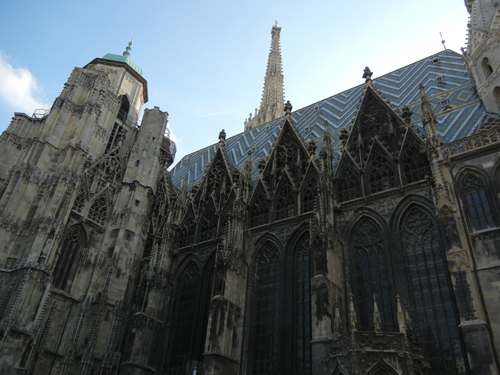
The most important religious building in Vienna, Stephansdom (St. Stephen's Cathedral), with multi-colored tile roof, was one of Vienna's most recognizable landmarks and symbols. 

DSCN0300 _ Stephansdom, Wien, 4 
October

The most interesting work inside this massive structure was a sculptural portrait of Anton Pilgram (also Anton Pilchramb), a late medieval Austrian architect and sculptor. This sculpture, possibly a self-portrait, depicting the sculptor leaning out of a window-like frame, and above his slender body, a massive ornate altar, supported by elongated fan vault. The figure was very austere, yet the whole structure was grand and dramatic. The intense contrast was very intriguing and eloquent.

DSCN0322 _ Stephansdom, Wien, 4 
October
Portrait of Anton Pilgram, possible self-portrait

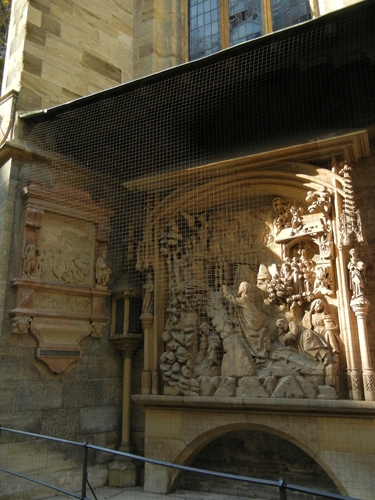
My second favorite was outside the building, at the base of its massive walls - a relief of Christ in Gethsemane, a garden at the foot of the Mount of Olives in Jerusalem, where Jesus prayed and his disciples slept the night before Jesus' crucifixion.

The stone relief thrust Jesus in the center of the tableau, kneeling above tumbling boulders, creating a world consisted of bare-boned elements. Jesus and his disciples were modeled in a medieval naïve style, endearing; the background scenes of approaching soldiers, the final climbing to Mount of Olives and the city itself, were depicted in an almost decorative way, unobtrusive, almost negligible.  When I visited the Dom, Jesus was cast in the shadow, except for his upturned face - subtly dramatic.

DSCN0370 _ Stephansdom, Wien, 4 October
Christ in Gethsemane, after restoration


My Favorite Museum Collection Series
>> My Favorite Museum Collection Series 87: To be continued
<< My Favorite Museum Collection Series 85: My Favorite Artworks at Augustinerkirche, Vienna

List of My Favorite Artworks in the Museums I've Visited


Other Related posts on Art · 文化 · Kunst:
- Magnificent Churches in Vienna
- My Favorite Paintings at Akademie der bildenden Künste Wien
- My Favorite Paintings at Kunsthistorisches Museum, Wien (Vienna)
- Gustav Klimt and Egon Schiele in Wien (Vienna)
- Liaoning (Proving) Museum in Shenyang
- Basilica Santuario Santo Stefano, Bologna
- My Favorite Sculptures at Cimetière du Père-Lachaise, Paris
- My Favorite Sculptures in Cimetière de Montmartre, Paris

Thursday, July 24, 2014

My Favorite Artworks at Augustinerkirche, Vienna

The Augustinerkirche (Augustinian Church) was built in the 14th century as the parish church of the imperial court of with the Gothic interior added in the 18th century.

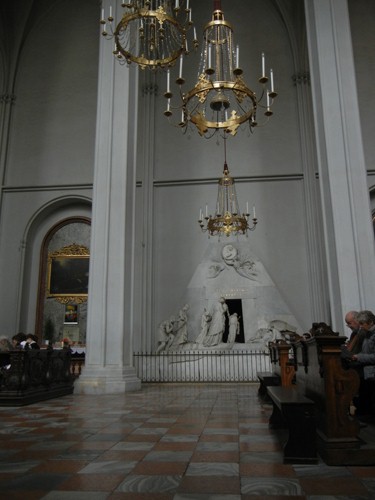
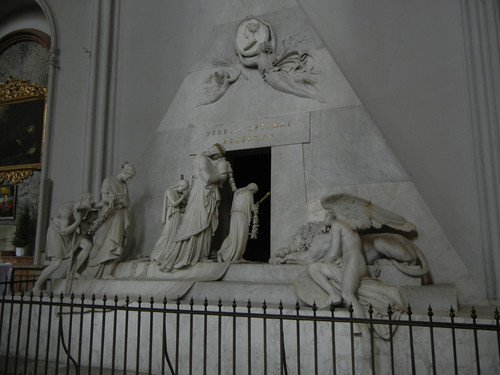
The most impressive artwork was a tome sculpture designed by the renown Italian sculptor Antonio Canova, for Archduchess Maria Christina of Austria - in his typical neoclassical style - pyramidal shaped, with clear and clean delineation, and delicately modeled figures.  The atmosphere it created was somber, sorrowful and soaringly lyrical.

DSCN1769 _ Augustinerkirche

DSCN1752 _ Archduchess Maria Christina Tome by Antonio Canova, Augustinerkirche


Archduchess Maria Christina Tome by Antonio Canova, Augustinerkirche, Wien

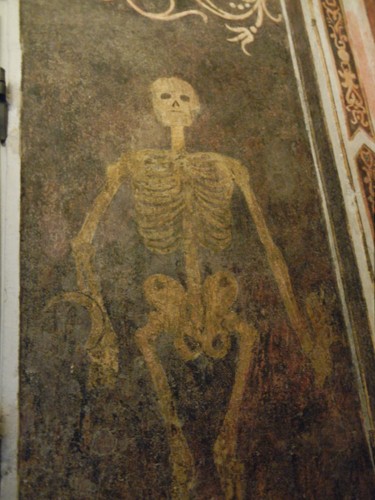
My second favorite work there was a strangely painted skeleton, surrounded by beautiful decorative borders. This frank depiction of death and decay gave viewers no catholic comfort, yet it was not devoid of any tranquility, a kind of knowing acceptance, which was the grace we all hope to have when it's our time to take our leave.

DSCN1758 _ Augustinerkirche

My Favorite Museum Collection Series
>> My Favorite Museum Collection Series 88: My Favorite Sculptures at Stephansdom (St. Stephen's Cathedral), Vienna
<< My Favorite Museum Collection Series 86: My Favorite Artworks in Votivkirche, Vienna

List of My Favorite Artworks in the Museums I've Visited


Other Related posts on Art · 文化 · Kunst:
- Magnificent Churches in Vienna
- My Favorite Paintings at Akademie der bildenden Künste Wien
- My Favorite Paintings at Kunsthistorisches Museum, Wien (Vienna)
- Gustav Klimt and Egon Schiele in Wien (Vienna)
- Liaoning (Proving) Museum in Shenyang
- Basilica Santuario Santo Stefano, Bologna
- My Favorite Sculptures at Cimetière du Père-Lachaise, Paris
- My Favorite Sculptures in Cimetière de Montmartre, Paris

Wednesday, July 16, 2014

My Favorite Artworks in Votivkirche, Vienna

One of the most visible churches in Vienna, amongst many magnificent ones, is Votivkirche, which I visited in 2012 and was duly impressed. 

DSCN9231 _ Votivkirche, Wien, 2 October- 500 DSCN9394 _ Votivkirche, Vienna, 2012

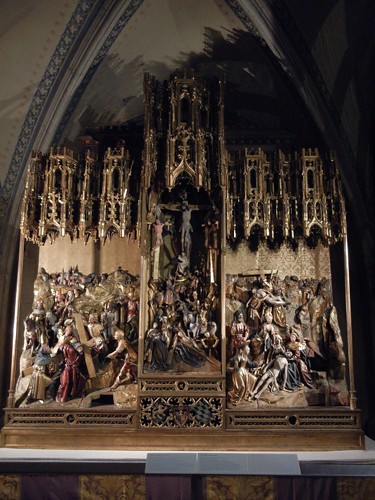
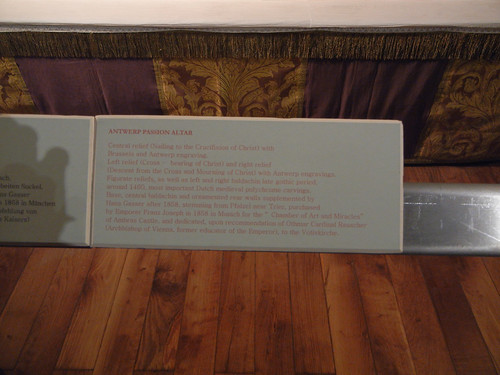
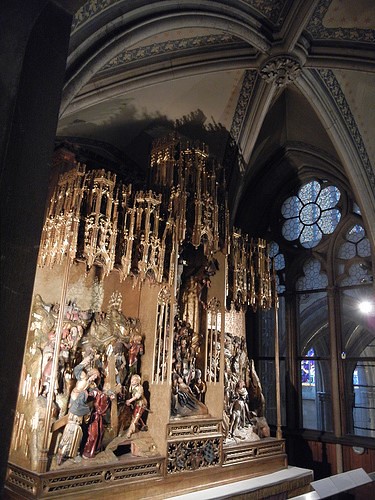
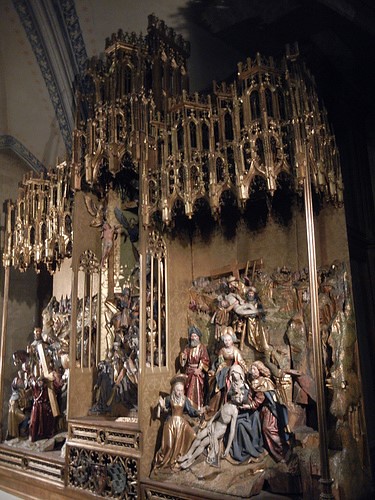
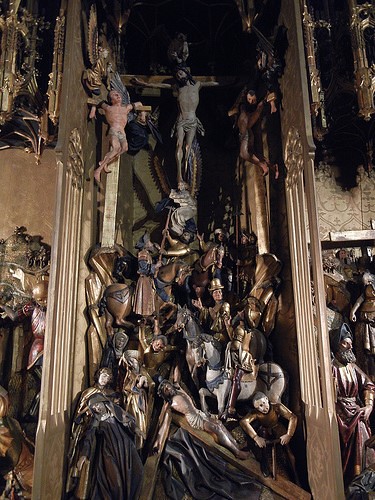
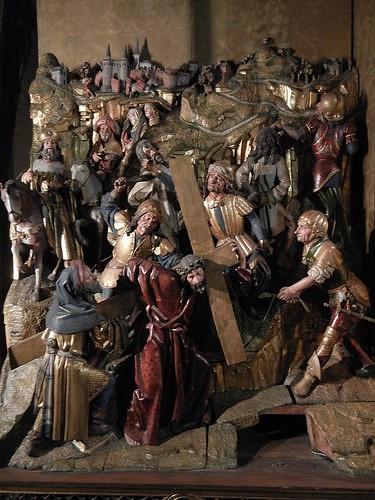
This Neo-Gothic church of twin spires, dating back to late 19th century, boasted a famous Antwerp Passion Altar (Wood Curve) (dating back to around 1460). This altar was the best example of the achievement of medieval wood curving religion art in the low countries.

DSCN9317 _ Antwerp Passion Altar, Museum of Votivkirche, Wien, 2 October- 500
Antwerp Passion Altar

DSCN9316 _ Antwerp Passion Altar, Museum of Votivkirche, Wien, 2012

This Altar has grandeur, dignity and its moving pathos lies in the folksy naïveté and the lightened wrenching dramatic tableau it represents.  I found it hugely effective and moving.

DSCN9371 _ Antwerp Passion Altar, Museum of Votivkirche, Wien, 2012 DSCN9324 _ Antwerp Passion Altar, Museum of Votivkirche, Wien, 2012
DSCN9320 _ Antwerp Passion Altar, Museum of Votivkirche, Wien, 2012 DSCN9318 _ Antwerp Passion Altar, Museum of Votivkirche, Wien, 2012

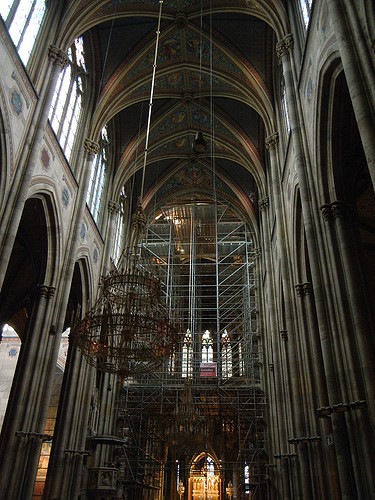
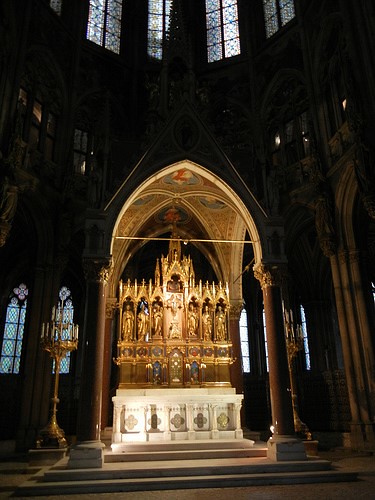
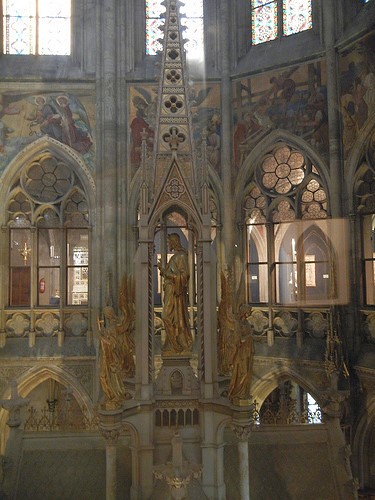
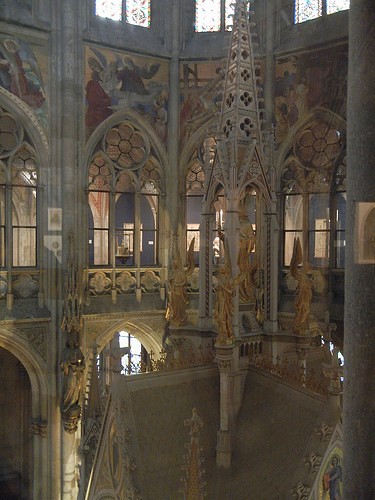
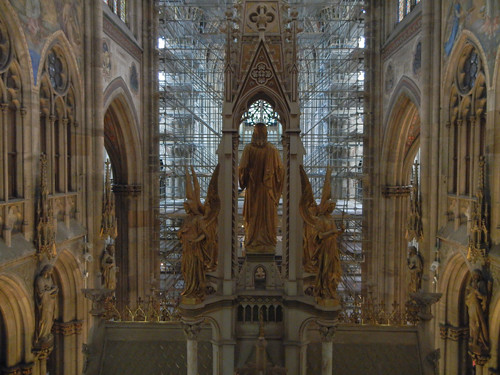
Another amazing work was even grander assembly - Hochaltar (Main Altar), which consists of tier-ed multiple parts.  Due to restoration work, I was only able to see the upper part from side and behind in the Museum Gallery; however, the trusses of the scaffolding added quite appropriate setting to Christ and angels when view from behind.  The lower part of the Hochaltar was glistering and awe inspiring.

DSCN9232 _ Hochaltar (Main Choir), Votivkirche, Vienna, 2012 DSCN9244 _ Lower part of the Hochaltar (Main Choir), Votivkirche, Vienna, 2012

DSCN9326 _ Upper part of the Hochaltar (Main Choir), Votivkirche, Vienna, 2012 DSCN9322 _ Upper part of the Hochaltar (Main Choir), Votivkirche, Vienna, 2012

DSCN9334 _ Viewing Altar from Museum of Votivkirche, Wien, 2 October- 500

Below is a short video with quick glances of the Antwerp Passion Altar, and the Hoch Altar viewed from Museum Gallery:


My Favorite Museum Collection Series
>> My Favorite Museum Collection Series 85: My Favorite Artworks at Augustinerkirche, Vienna
<< My Favorite Museum Collection Series 83:  My Favorite Artworks at Secession Building, Vienna

List of My Favorite Artworks in the Museums I've Visited


Other Related posts on Art · 文化 · Kunst:
- Magnificent Churches in Vienna
- My Favorite Paintings at Akademie der bildenden Künste Wien
- My Favorite Paintings at Kunsthistorisches Museum, Wien (Vienna)
- Gustav Klimt and Egon Schiele in Wien (Vienna)
- Boy With Frog Sculpture and Punta della Dogana, Venice
- Design for San Francisco Museum of Modern Art (SFMOMA)'s New Wing and Solution for Boxy Metreon, San Francisc

Sunday, July 13, 2014

My Favorite Artworks at Secession Building, Vienna

The Secession Building in Vienna is so iconic, that though it doesn't have permanent collections, except for Beethoven Frieze by Gustav Klimt, I feel that I am compelled to include it in the series of .

Secession Building is an exhibition hall built in 1897 by Joseph Maria Olbrich as an architectural manifesto for the Vienna Secession and the Beethoven Frieze is a painting by Gustav Klimt created in 1902 for the 14th Vienna Secessionist exhibition and is now on display in the building permanently.

The frieze has the hallmark of the overt ornamentation the movement, and it also addressed the life's motifs close to Klimt's heart, as it covered the themes of human yearning for happiness and fulfillment of desires in the dark and tempestuous world as can be gleaned through a snapshot of the copy of part of the immense frieze below.

DSCN0593 _ Beethoven Frieze copy, Secession, Wien, 5 October
Beethoven Frieze copy, Secession, Wien

The frieze has the hallmark of the overt ornamentation the movement, and it also addressed the life's motifs close to Klimt's heart, as it covered the themes of human yearning for happiness and fulfillment of desires in the dark and tempestuous world.

Since there are no other permanent art collections to speak of in Secession Building, I'm going to cheap a bit, by citing an element of the utterly lovely building itself.  My favorite relief on the exterior wall of the building is a group of three highly decorative owls, well-balanced and proportioned, stylized in the typical Jugendstil (Art Nouveau) fashion.  Absolutely enchanting.

File:Jugendstil owls - Koloman Moser - Detail facade of Secession Building - Vienna.jpg
Jugendstil owls - Detail of the facade of the Secession Building.
Image credit: Alberto Fernandez Fernandez


My Favorite Museum Collection Series
>> My Favorite Museum Collection Series 84: My Favorite Artworks in Votivkirche, Vienna
<< My Favorite Museum Collection Series 82: My Favorite Paintings at Leopold Museum, Vienna 

List of My Favorite Artworks in the Museums I've Visited


Other Related posts on Art · 文化 · Kunst:
- Magnificent Churches in Vienna
- My Favorite Paintings at Akademie der bildenden Künste Wien
- My Favorite Paintings at Kunsthistorisches Museum, Wien (Vienna)
- Gustav Klimt and Egon Schiele in Wien (Vienna)
- Boy With Frog Sculpture and Punta della Dogana, Venice
- Design for San Francisco Museum of Modern Art (SFMOMA)'s New Wing and Solution for Boxy Metreon, San Francisco

Friday, July 4, 2014

My Favorite Paintings at Leopold Museum, Vienna

Leopold Museum in Vienna is renown for its collections of late 19th through early 20th century works by Austrian masters, such as Egon Schiele, Gustav Klimt, Oskar Kokoschka and Richard Gerstl.

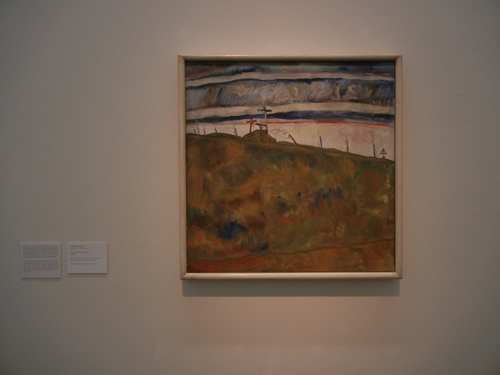
My favorite works there were many, and the two top choices were both by Schiele. My first favorite piece was called "Kalvaienberg" (Calvary Hill), which was of a square format, with the top one-third depicting blue and pink sky, and the lower part the gentle hill whose sloping top was dominated by tilting trees and three clustered crosses, breaking into the horizontal layers of clouds. It was rendered in overly sweet palette, verged on nauseating, therefore overcame the danger of being sentimental.  The understated rendering created a violent contrast between the content and the style which made this piece less conventionally overpowering, therefore startlingly striking and fresh. It affected without screaming.

DSCN0898 _ Kalvarienberg, 1912, Egon Schiele, Leopold Museum
Kalvarienberg, 1912, Egon Schiele, Leopold Museum


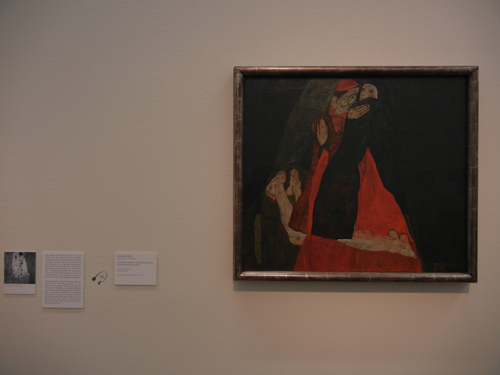
My second favorite painting was titled "Kardinal und Nonne" (Cardinal and Nun).  Against pitch black background, two kneeling figures, with their jutting naked lower legs formed the foundation of a pyramid, consisted of the upper bodies of these two figures - a luscious-looking cardinal, and a furtive-looking nun, whose interlocking hands formed a dubious gesture of praying, in a tight embrace reminiscent the iconic embrace of Gustav Klimt's "Kuss" (Kiss).  The scarlet robe of the cardinal and the black garb of the nun, contrasted greatly and created a great drama, which was however, dwarfed by the dramas manifested on their faces.  The cardinal was the obvious aggressor, while the nun, however, could be a victim, an accomplice, or both, in their illicit and grotesque embrace. A powerful rendering of decay.

DSCN0924 _ Kardinal und Nonne, Egon Schiele, Leopold Museum
Kardinal und Nonne, Egon Schiele, Leopold Museum


My Favorite Museum Collection Series
>> My Favorite Museum Collection Series 83: My Favorite Artworks at Secession Building, Vienna
<< My Favorite Museum Collection Series 81: My Favorite Paintings at Österreichische Galerie Belvedere, Vienna

List of My Favorite Artworks in the Museums I've Visited


Other Related posts on Art · 文化 · Kunst:
- Magnificent Churches in Vienna
- Kaiser Maximilian I und die Kunst der Duerer-Zeit in Albertina Museum, Vienna
- My Favorite Paintings at Akademie der bildenden Künste Wien
- My Favorite Paintings at Kunsthistorisches Museum, Wien (Vienna)
- Gustav Klimt and Egon Schiele in Wien (Vienna)
- Visiting Four Universities in Austria and Italy

Sunday, June 15, 2014

My Favorite Paintings at Österreichische Galerie Belvedere, Vienna

The complex of the Belvedere Palaces in Vienna contained the Österreichische Galerie Belvedere (Austrian Gallery Belvedere), showcasing Austrian artists, such as Gustave Klimt (1862-1918) and Egon Schiele (1890-1918), two giants of the late 19th to early 20th century and their works were indeed my favorites in this museum.

Of many works by these two artists, I'll call Braut (Bride) by Klimt as my first favorite.  It was less iconic than the more renown Kuss (Kiss), but the images of this piece were richer and the messages more layered.  I particularly loved the interplays of the patterns and the juxtaposition of those overtly sensual, to the point of near indecent fleshy figures, permeating a hedonistic and even sinister atmosphere. It was the unabashed abandon carried the day.


Braut, Gustav Klimt, 1918, Oberes Belvedere, Wien

My second favorite painting there was Fensterwand (Hauswand) (Window Wall (House Wall), which contrasted most violently with the Braut by Klimt.


Fensterwand (Hauswand), Egon Schiele, 1914, Oberes Belvedere, Wien

This Schiele piece, somber though not stern, was orderly and becalming, with dashes of colors accenting the overall gray scheme.  It had a purifying effect, yet it was also playful in the details.  This piece, completed just four short years before both his wife and he succumbed to the Spanish flu pandemic, represented the world to be smashed by the Great War (World War I).  A very beautiful and poignant piece.


My Favorite Museum Collection Series
>> My Favorite Museum Collection Series 82: My Favorite Paintings at Leopold Museum, Vienna
<< My Favorite Museum Collection Series 80: My Favorite Paintings at Albertina Museum, Vienna

List of My Favorite Artworks in the Museums I've Visited


Other Related posts on Art · 文化 · Kunst:
- Magnificent Churches in Vienna
- Kaiser Maximilian I und die Kunst der Duerer-Zeit in Albertina Museum, Vienna
- My Favorite Paintings at Akademie der bildenden Künste Wien
- My Favorite Paintings at Kunsthistorisches Museum, Wien (Vienna)
- Gustav Klimt and Egon Schiele in Wien (Vienna)
- Visiting Four Universities in Austria and Italy

Tuesday, June 10, 2014

My Favorite Paintings at Albertina Museum, Vienna

The renown Albertina Museum in Vienna, Austria was mostly valued for its graphic art collections, such as works by the incomparable Albrecht Dürer, whose ultra-realistic drawings and watercolors were so delicate that the museum only put reproductions on display, therefore, I refrain from citing his works as my favorite there.

Albertina Museum also had some really impressive oil paintings, amongst which, I was particularly enthralled by paintings by Max Beckmann and Paul Delvaux.

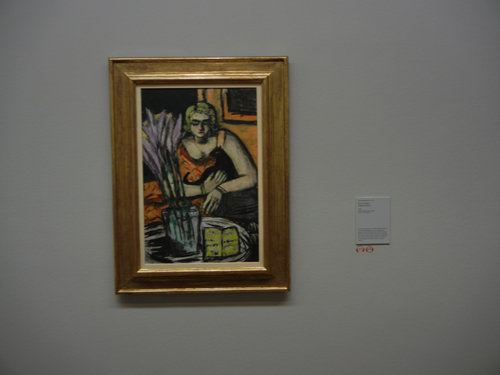
The Frau mit Katze (Woman with Cat) by German artist Max Beckmann was a stylish, understated yet highly erotically charged woman portrait, typical of his pre-Third-Reich oeuvre, without the unsettling sinister atmosphere permeated in his later works.

I was particularly enchanted by the sitters' self-satisfying langour, the marvelously subtle and bold interplays of orange, yellow, pale purple, green and black shades, and the sitter's slightly monumental bulk, which didn't take away any of her sensuality or her femininity.

DSCN9068 _ Frau mit Katze (Woman and Cat), 1942, Öl auf Leinwand, Max Beckmann, Albertina Museum, Wien, 2 October - 500
Frau mit Katze (Woman and Cat), Max Beckmann, 1942, Öl auf Leinwand (Oil on Canvas)

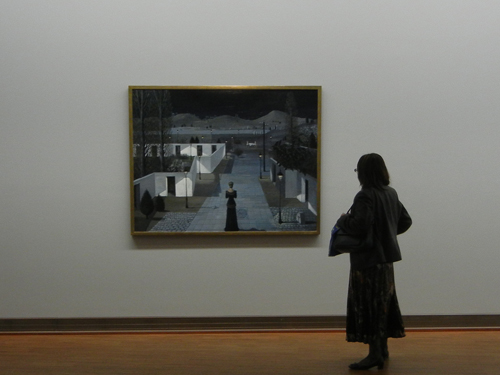
My second favorite works was Belgian painter Paul Delvaux's Landschaft mit Lanternen (Landscape with Lanterns) - a mysterious cityscape which extended to landscape under cool moonshine, almost symmetrical, with a noble-looking woman stood at the foreground, looking into the goings-on on the receding away from the viewers, including two small figures in white, carrying a stretcher with a person enshrouded in white sheet, against the gently lit hills dotted with unfinished architectures, or strange gate-shaped structures, corresponding to the seemingly unfinished city structures in the foreground.

DSCN9070 _ Landschaft mit Lanternen, 1958, Paul Delvaux (1897-1994), Albertina, - 500
Landschaft mit Lanternen (Landscape with Lanterns), 1958, Paul Delvaux (1897-1994)

The cool atmosphere and the classical symmetry recalled The Ideal City by Piero della Francesca (?) though the mood of Delvaux's painting was much darker and more mysterious, even quite sinister, and the story was much harder to decode, thus even more fatally attractive.

File:Piero della Francesca Ideal City.jpg
The Ideal City, Piero della Francesca, public domain work of art

During my visit, I shot the picture with a viewer looking inside the frames, and her presence added another layer to this haunting piece.


My Favorite Museum Collection Series
>> My Favorite Museum Collection Series 81: My Favorite Paintings at Österreichische Galerie Belvedere, Vienna
<< My Favorite Museum Collection Series 79: My Favorite Sculptures in Cathédrale Notre Dame de Paris

List of My Favorite Artworks in the Museums I've Visited


Other Related posts on Art · 文化 · Kunst:
- Magnificent Churches in Vienna
- Kaiser Maximilian I und die Kunst der Duerer-Zeit in Albertina Museum, Vienna
- My Favorite Paintings at Akademie der bildenden Künste Wien
- My Favorite Paintings at Kunsthistorisches Museum, Wien (Vienna)
- Gustav Klimt and Egon Schiele in Wien (Vienna)
- Visiting Four Universities in Austria and Italy

Tuesday, March 5, 2013

Late Night of Jewish Museum in Vienna

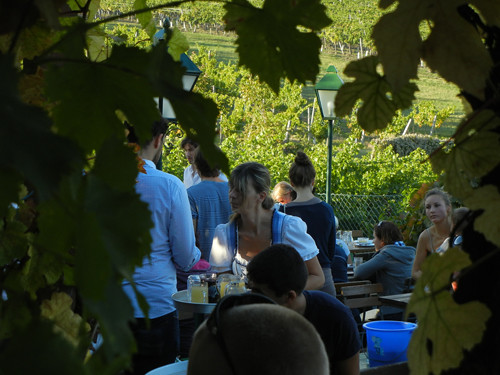
DSCN1503 _ Heurige Weingut, Kahlenberger Straße, between Kahlenberg and Nußdorf, 6 October
Heurige Weingut, Kahlenberger Straße, 
between Kahlenberg and Nußdorf
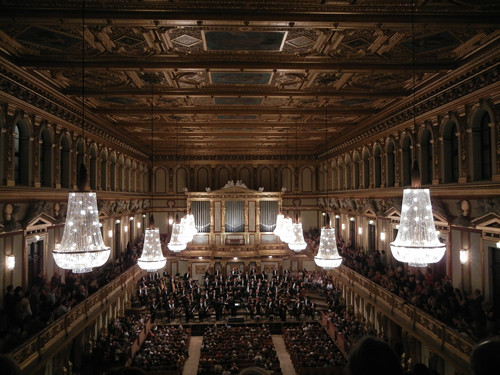
When I visited Vienna last October, I participated a wonderful event - ORF-Lange Nacht der Museen (Long Night of the Museums) which allowed patrons visit 122 museums until 1.00 am in the morning.  The "Lange Nacht" ticket cost €13.00 and granted access to all participating museums, and also included use of the shuttle buses, which plied between selected museums. The ticket was also valid for use on public transport services in Vienna. The event took place on the night of 6 October.  That day was a long day for me - we went to morning market, canal, a vineyard in Kahlenberg and Nußdorf, suburbs of Vienna, then a magnificent concert at the glorious Musikverein.

DSCN1588 _ Großer Saal, Musikverein, Wien, 6 October
Großer Saal, Musikverein

After the concert and a wonderful Italian dinner near the Staatsoper, we decided to continue our long day, with our gracious hosts, to one of those 120 museums - Jüdisches Museum (Jewish Museum)

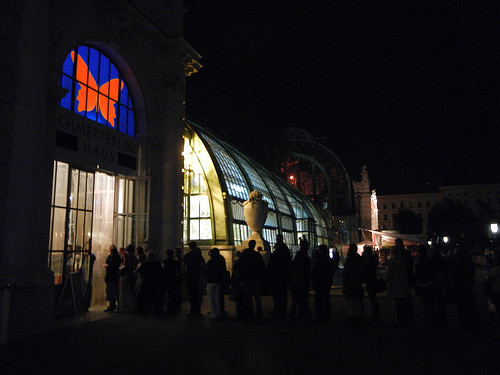
Many museums were quite crowded, such as this Schmetterlinghaus (Butterfly House) at Hofburg below:

DSCN1635 _ Schmetterlinghaus, Wien, 6 October
Schmetterlinghaus

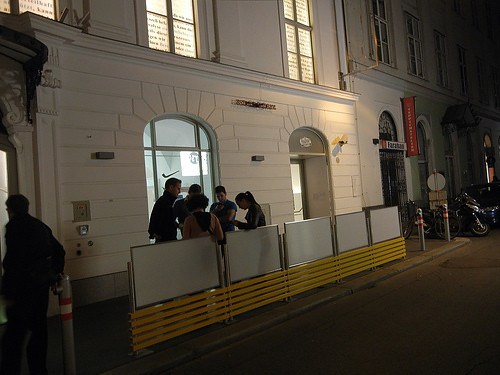
Mercifully, the Jewish Museum was less crowded though hardly deserted.  This museum was not very big, had a mixture of artifacts recording Jewish people's daily life and religious services in Vienna and Austria -  Vienna and the World: The Jewish Museum Visible Storage, a collection of contemporary art by Jewish artist or on Jewish theme, and a special exhibit “Vienna. Jewish Museum. 21st Century”.

DSCN1679 _ Jüdisches Museum, 6 October

All the exhibitions in the modest-sized museums were fascinating, particularly those family records and writings - letters, diaries, etc. were of great interest; no precious metals and stones could compete with them for the sediment of history those records had accumulated through tears, sweats, and blood.  But this is not mean to slight the amazing artifacts collected there - from solemn to witty, from humble to haunting, all steeped in enviable long tradition and manifested incredible beauty.  To the museum's credit, they also displayed some artifacts demonstrated prejudice against Jewish people in the region and served as a somber reminder of the ugly past took place in this beautiful land.

DSCN1669 _ Jüdisches Museum, 6 October

DSCN1670 _ Jüdisches Museum, 6 October

DSCN1672 _ Jüdisches Museum, 6 October

DSCN1665 _ Jüdisches Museum, 6 October

This museum visit was unforgettable; however, in this modern interior, one couldn't help but feeling that the history recorded there were somewhat pale and less vivid, and more manicured.  For a more down to earth experience of ancient and contemporary Jewish life, my trip to the Jewish Ghetto in Venice two weeks later provided the answer and I'll report it soon, hopefully.


Related posts on Art · 文化 · Kunst
- Il Ghetto di Venezia and Museo Ebraico (Jewish Museum) in Venice
- Gustav Klimt and Egon Schiele in Wien (Vienna)
- Theater Experiences in Wien (Vienna) 
- Magnificent Churches in Vienna
- My Favorite "Sculptures" at the Imperial Crypt (Kapuzinergruft), Vienna
- Kaiser Maximilian I und die Kunst der Duerer-Zeit in Albertina Museum, Vienna

Label: Austria, Austria and Italy Trip 2012


Sunday, February 24, 2013

Visiting Four Universities in Austria and Italy

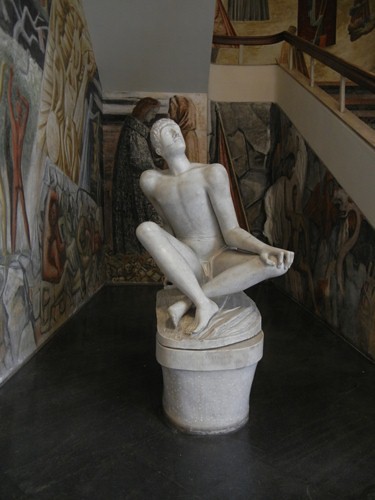
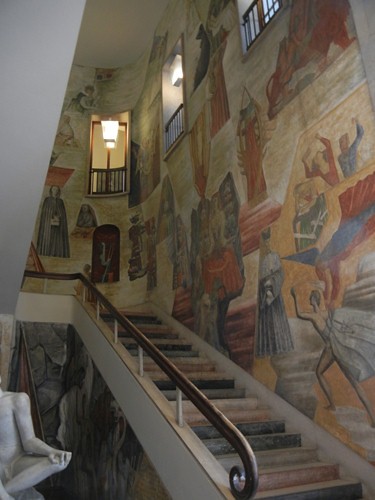
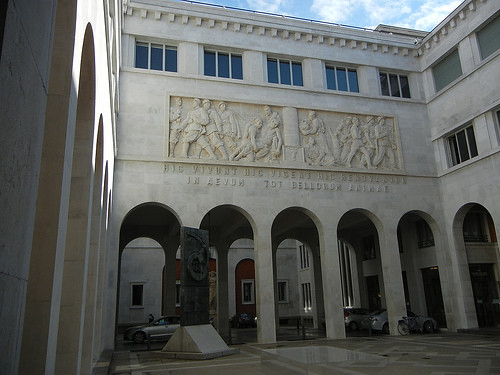
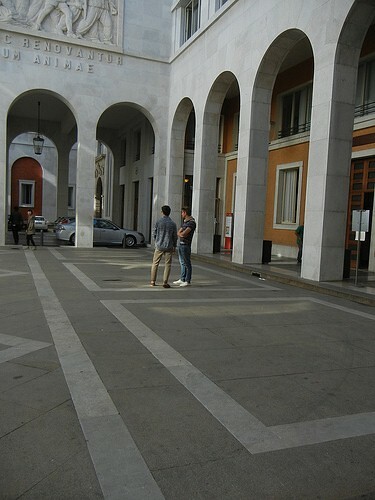
When I visited Vienna, Graz in Austria and Padua, Bologna in Italy last October, I was deeply impressed by the beauty of the campuses and the long history of those highly-esteemed institutions.

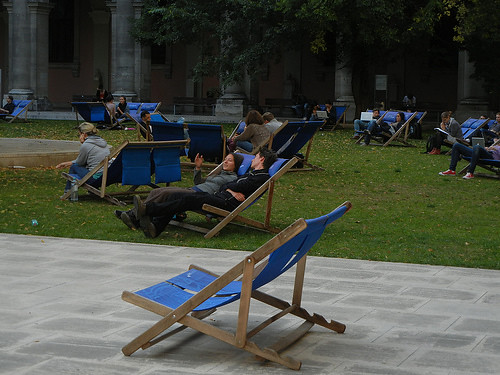
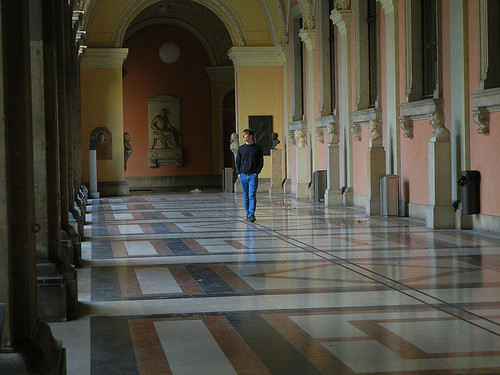
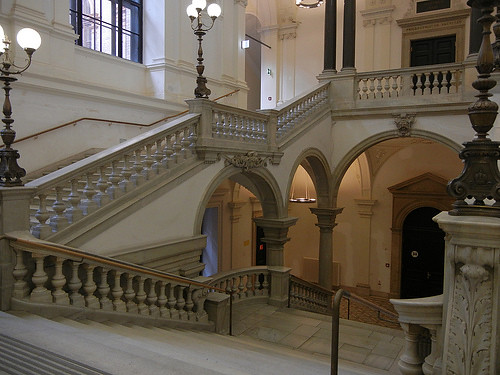
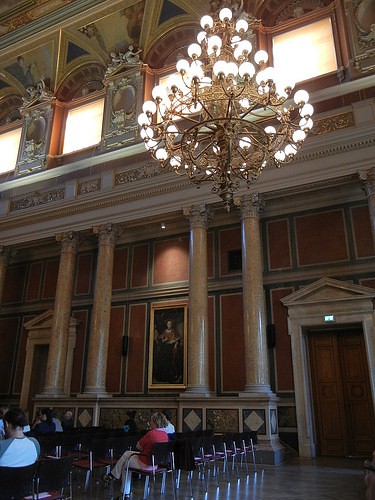
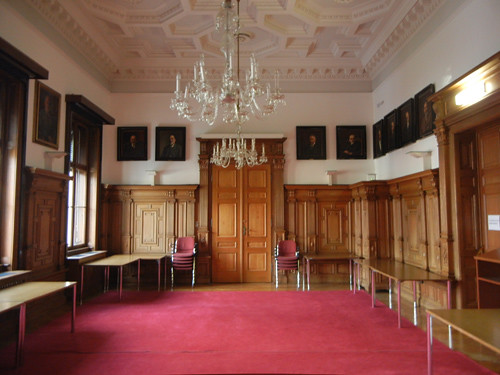
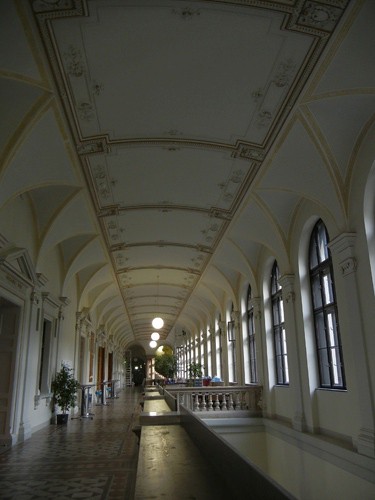
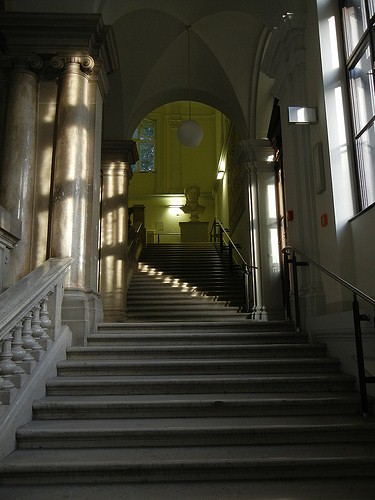
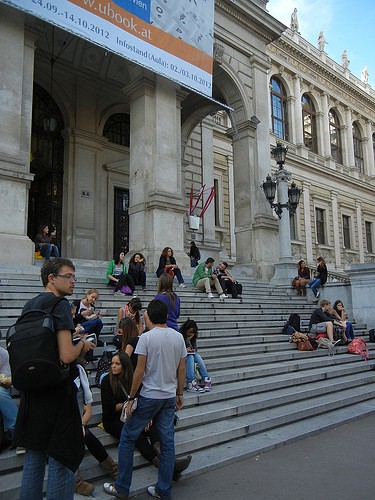
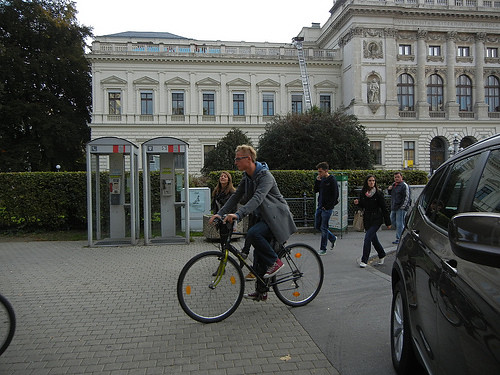
Universität Wien (University Vienna) was conveniently located in the center of the city, near the City Hall and the iconic theater, Burgtheater, and had a similar classical façade, giving it a sense of seriousness and loftiness.  However, if the maze-like structure was lofty, the students roaming around the staircases, courtyard and lawn made it clear that this institution was also a vibrant living organism and continued to generate academic debates and social and scientific advancements in despite its museum or temple quality look:
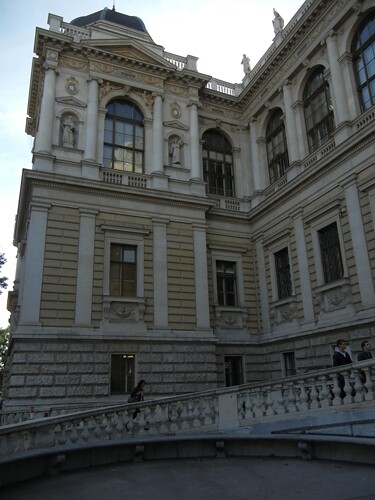
DSCN1148 _ Universität Wien, 5 October  DSCN1150 _ Universität Wien, 5 October

DSCN1128 _ Universität Wien, 5 October

DSCN1140 _ Universität Wien, 5 October

DSCN1121 _ Universität Wien, 5 October

DSCN1113 _ Universität Wien, 5 October  DSCN1115 _ Universität Wien, 5 October

~~~~~~~~~~~~~~~~~~~~~~~~~~~~

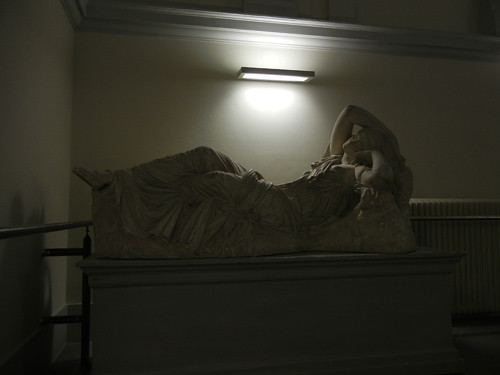
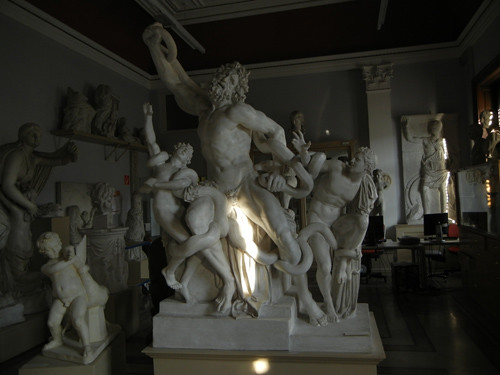
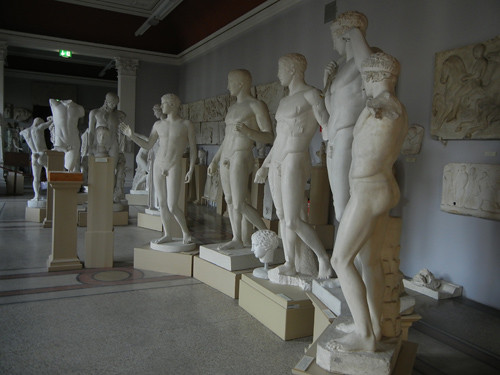
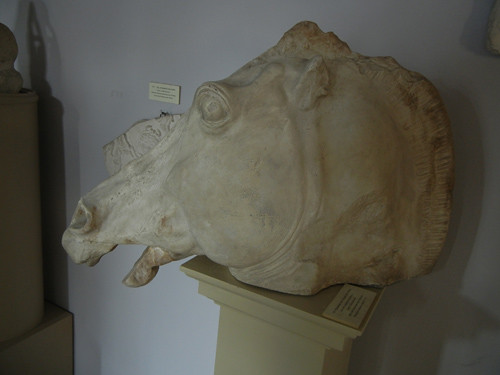
After the glittering Vienna, it was hard to imaging that Graz would even top that.  Karl-Franzens-Universität Graz had the similar look to Universität Wien, classical and ornate.  What make it most remarkable was a small museum/storage/workshop in its Institut für Klassische Archäologie.  Behind the usual office space, there were two or three (I cannot remember clearly) connected large halls, in which many classical Roman and Greek marble sculptures and reliefs were collected and displayed.  According to the university, "the Institute is home to significant archaeological collections of ancient vases of Greece, objects from local sites as well as casts of ancient sculptures. These collections are open to the public."

Indeed they were open to public.  It took me quite a while to locate the Institute and two kind middle-aged women rather casually pointed out the halls to me and let me wander amongst those amazing sculptures by myself.  It was an absolute treat.
DSCN9102 _ Universität Graz, 9 October

DSCN9129 _ Universität Graz, Graz, 9 October

DSCN9117 _ Universität Graz, Graz, 9 October  DSCN9119 _ Universität Graz, 9 October

DSCN9113 _ Universität Graz, Graz, 9 October

DSCN9137 _ Institut für Klassische Archäologie, Universität Graz, 9 October

DSCN9149 _ Institut für Klassische Archäologie, Universität Graz, 9 October

DSCN9152 _ Institut für Klassische Archäologie, Universität Graz, 9 October

~~~~~~~~~~~~~~~~~~~~~~~~~~~~

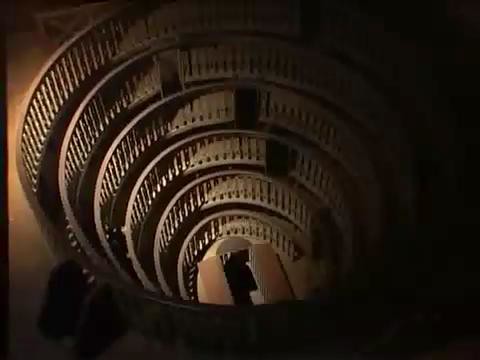
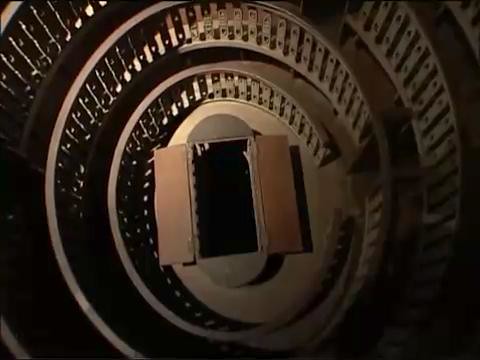
The most remarkable things about Università degli Studi di Padova (University of Padua) are its long history and its remarkably preserved ancient dissection theater.  The University of Padua was conventionally believed to be founded in 1222 as a school of law and was one of the most prominent universities in early modern Europe. It is among the earliest universities of the world and the second oldest in Italy. Since 1595, Padua's famous anatomical theatre drew artists and scientists studying the human body during public dissections. It is the oldest surviving permanent anatomical theatre in Europe.  Again, the city and the university were teemed with vivacious young people, learning to be themselves.
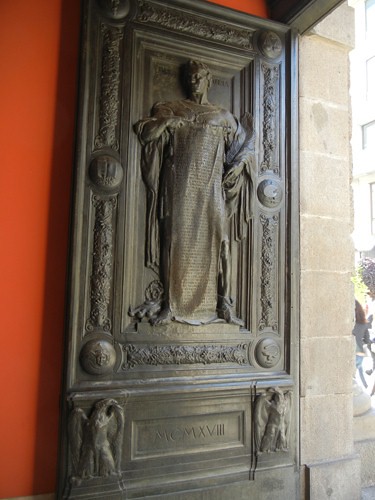
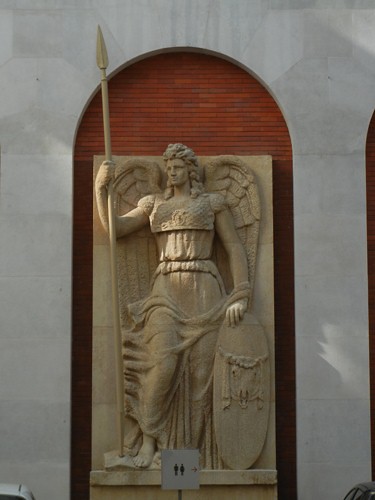
DSCN0908 _ Palazzo del Bò, Padova, 12 October  DSCN0925 _ Palazzo del Bò, Padova, 12 October

DSCN0907 _ Palazzo del Bò, Padova, 12 October  DSCN0906 _ Palazzo del Bò, Padova, 12 October

DSCN0927 _ Palazzo del Bò, Padova, 12 October

DSCN0888 _ Palazzo del Bò, Padova, 12 October

DSCN0910 _ Palazzo del Bò, Padova, 12 October

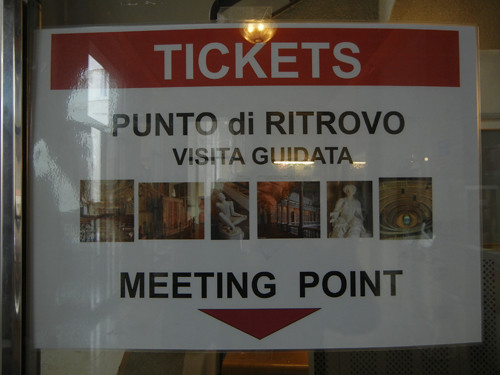
The anatomical theatre was quit delicate and the tours could only accommodate small groups.  We were only allowed to view the surprisingly small wooden structure from below, at the dissection table level, up to the tier audience levels.  It was quite remarkable and unforgettable.
DSCN0913 _ Palazzo del Bò, Padova, 12 October

The Anatomical Theatre, Palazzo del Bò, Padova (1)
Anatomical Theatre

The Anatomical Theatre, Palazzo del Bò, Padova (2)

~~~~~~~~~~~~~~~~~~~~~~~~~~~~
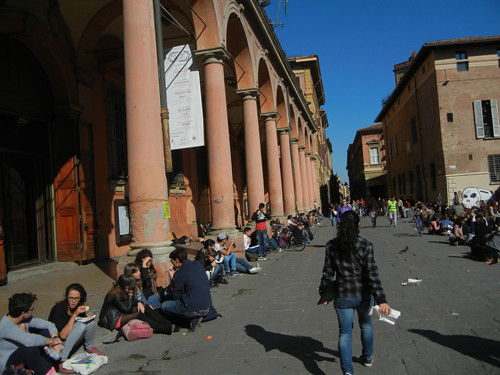
My last stop in Bologna granted me a glimpse of the oldest university, Università di Bologna, which is widely recognized as the oldest university, considering that it was the first to use the term universitas for the corporations of students and masters which came to define the institution.

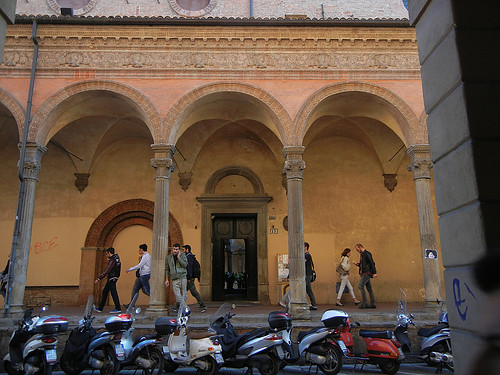
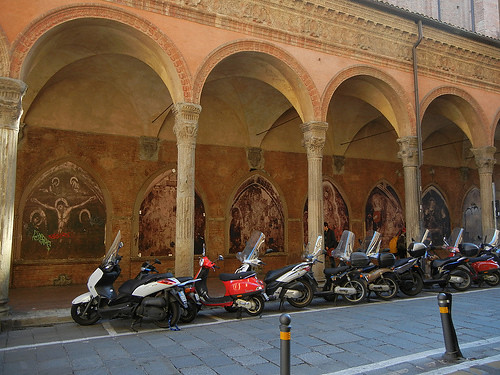
Bologna was much bigger than Padua, and more gritty, more living-in.  In this ancient arched city, one would not miss the university quarter, when endless sprawling crowds of young people filled out the street and plazas day and night.  It was messy yet lively.  There were some people there quite reminded me of University of California, Berkeley, with just the same dress "code" and odor:
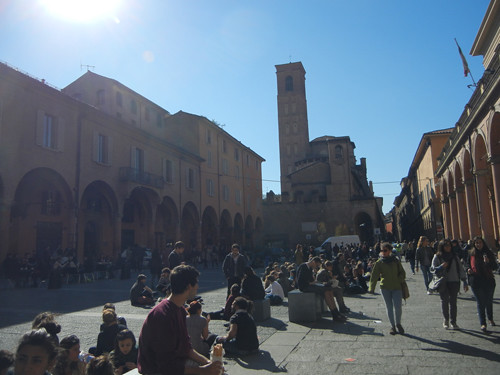
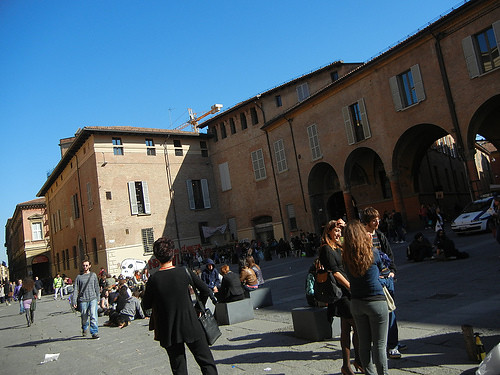
DSCN3256 _ Università di Bologna, 16 October

DSCN3252 _ Università di Bologna, 16 October

DSCN3253 _ Università di Bologna, 16 October

DSCN3430 _ Università di Bologna, 16 October

DSCN3440 _ Università di Bologna, 16 October

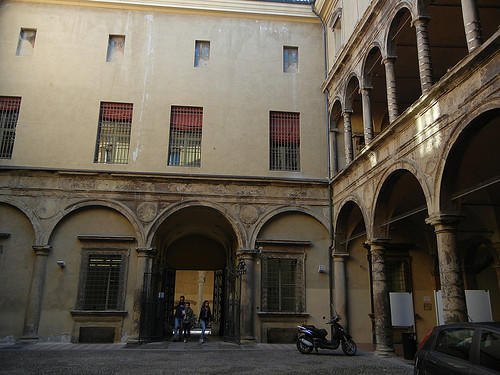
University of Bologna also boasted an ancient anatomical theater but we didn't have time for that.  We did see its ancient Law School and I even got a peep of a lecture in one of the ground level classrooms:
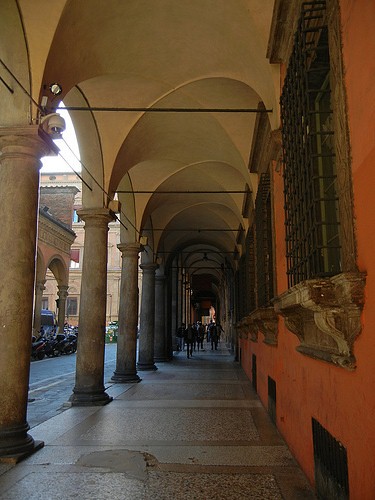
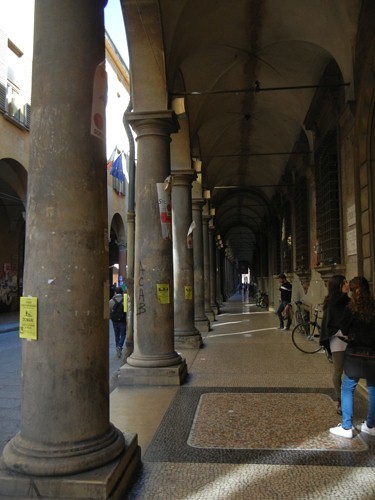
DSCN3439 _ Law School, Università di Bologna, 16 October  DSCN3264 _ Università di Bologna, 16 October

DSCN3438 _ Law School, Università di Bologna, 16 October
Law School

And for a look of student life, we saw a crowded Caffè Zamboni, between Torre degli Asinelli and Basilica Giacomo Maggiore, near Università, with super-sized offering trays for the hungry youths:
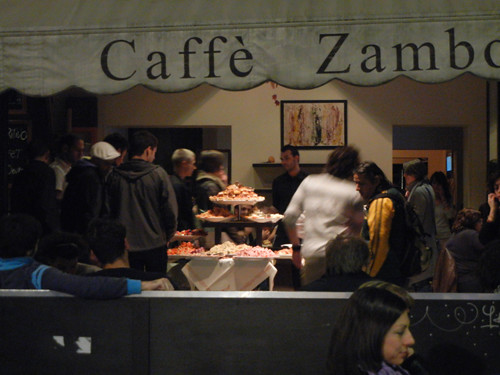
DSCN5064 _ Caffè Zamboni, between Torre degli Asinelli and Basilica Giacomo Maggiore, near Università, Bologna, 18 October
Caffè Zamboni, between Torre degli Asinelli and Basilica Giacomo Maggiore, near Università


Related posts on Art · 文化 · Kunst
- Magnificent Churches in Vienna
- My Favorite "Sculptures" at the Imperial Crypt (Kapuzinergruft), Vienna
- Theater Experiences in Wien (Vienna) 
- Kaiser Maximilian I und die Kunst der Duerer-Zeit in Albertina Museum, Vienna

Label: Austria, Italy, Austria and Italy Trip 2012