Showing posts with label Chinese Art. Show all posts

Friday, July 24, 2015

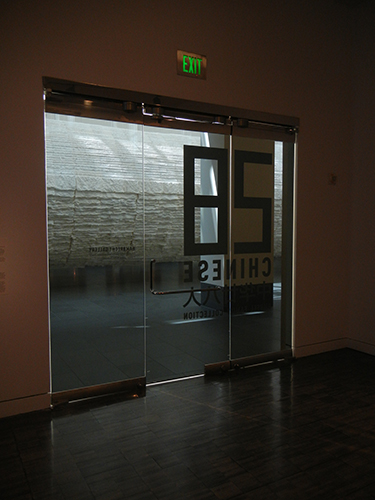
"28 Chinese" at Asian Art Museum, San Francisco


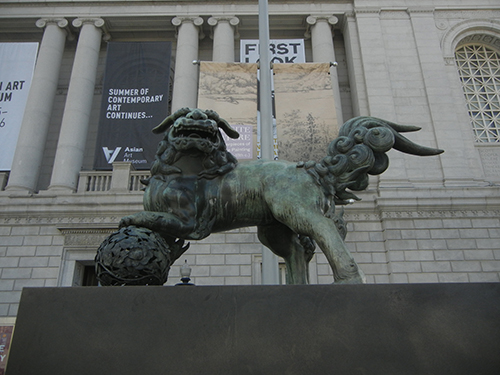
DSCN4620 _ Asian Art Museum

Courtesy of Rubell Collection from Miami, 28 Chinese Exhibition at Asian Art Museum in San Francisco showcases a sample of 28 contemporary Chinese artists' diverse artistic pursuits, including abstract, computer planned, re-purposed ancient artifacts, installations, and figurative oil painting pieces.

Due to the nature of the sampling, the exhibit was a bit unfocused and that caused certain difficulty for visitors to assess each artist's achievement in depth but each piece could speak for itself independent from its creator's artistic arc.

The first piece I saw were a group of massive chairs, made of demolished viaducts - the ancient woods eloquently told stories of a people hard of luck yet resilient and never broken.
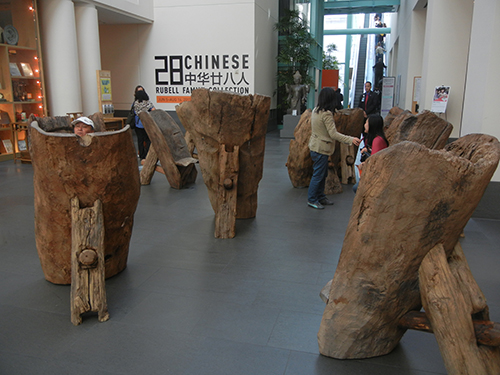
DSCN4623 _ 28 Chinese - The Man on the Chair, 2008-09, Xiangyu HE, Asian Art Museum
The Man on the Chair, 2008-09, Xiangyu HE

Next, I saw a painting, cheekily titled Comrade your temperature is back to normal, but the almost geometrical impasto patterns gave this painting a modern look and rescued it from 1960s-70s propaganda work, somewhat.  I didn't find the humor of the piece that amusing. It was a sad and mostly inauthentic time and presenting that era in a tongue-in-cheek way somewhat make light of the heaviness of the cultural and political sediments of the time.
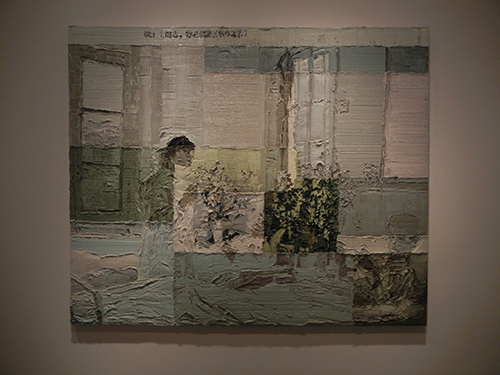
DSCN4627 _ 28 Chinese - Comrade your temperature is back to normal, 2005, Songsong LI, Asian Art Museum
Comrade your temperature is back to normal, 2005, Songsong LI
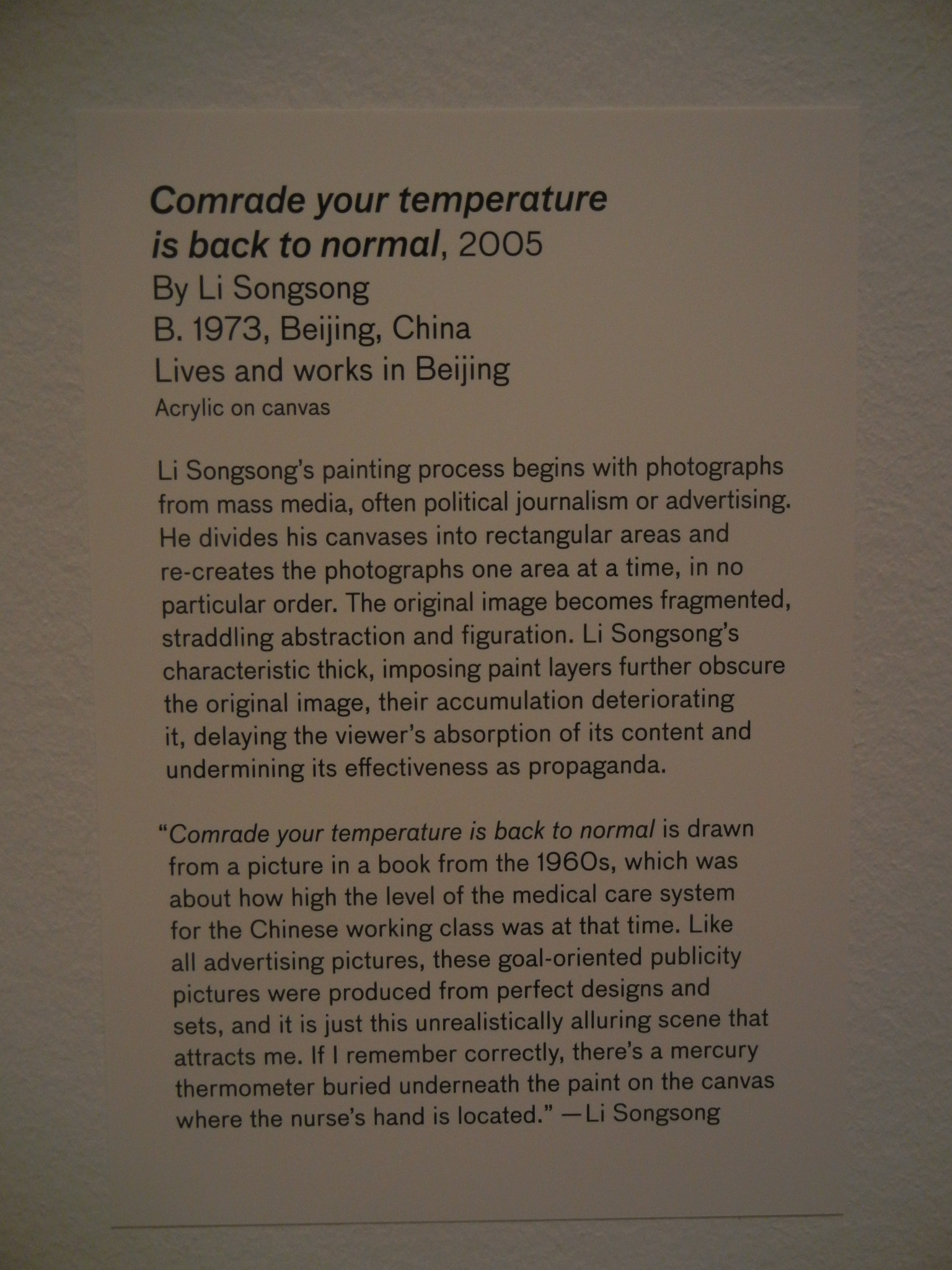
DSCN4628 _ 28 Chinese - Comrade your temperature is back to normal, 2005, Songsong LI, Asian Art Museum
Comrade your temperature is back to normal, 2005, Songson LI

For a better appraisal of boxed-in life in China, Enli Zhang's Container 2 worked much better. Life was never a box of chocolate but a container of most crude sort, reminiscent of a casket.
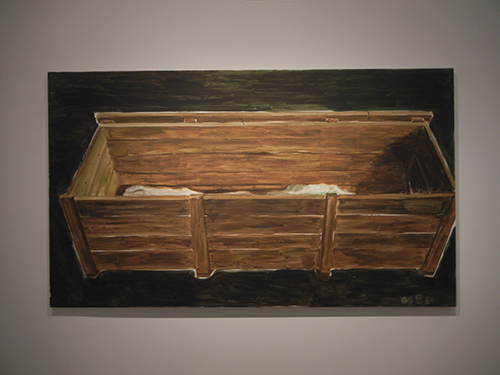
DSCN4629 _ 28 Chinese - Container 2, 2006, Enli ZHANG, Asian Art Museum
Container 2, 2006, Enli ZHANG

DSCN4630 _ 28 Chinese - Container 2, 2006, Enli ZHANG, Asian Art Museum
Container 2, 2006, Enli ZHANG

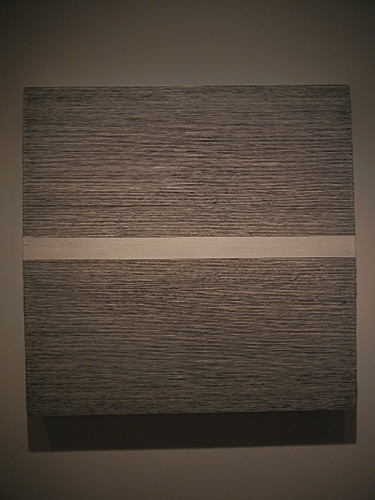
Then some abstract works which pleased the eyes with their intricate patterns but I didn't try to divine any depth of these works:
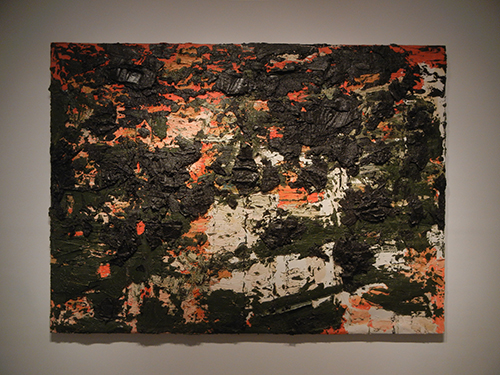
DSCN4633 _ 28 Chinese - Black and White Summer Palace - Black, 2007, Jinshi ZHU, Asian Art Museum
Black and White Summer Palace - Black, 2007, Jinshi ZHU
DSCN4634 _ 28 Chinese - Black and White Summer Palace - Black, 2007, Jinshi ZHU, Asian Art Museum
Black and White Summer Palace - Black, 2007, Jinshi ZHU
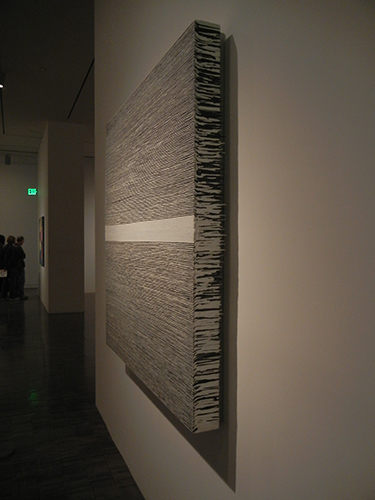
DSCN4637 _ 28 Chinese - 130905, 2013, Guangle WANG, Asian Art Museum DSCN4639 _ 28 Chinese - 130905, 2013, Guangle WANG, Asian Art Museum

DSCN4638 _ 28 Chinese - 130905, 2013, Guangle Wang, Asian Art Museum
130905, 2013, Guangle WANG

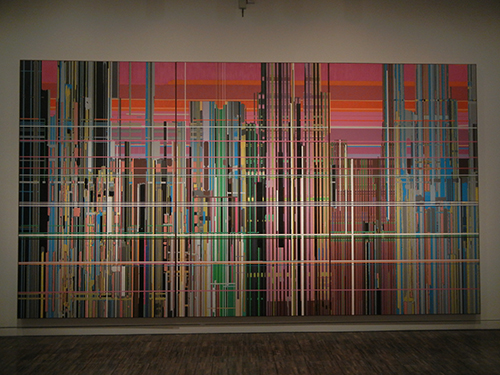
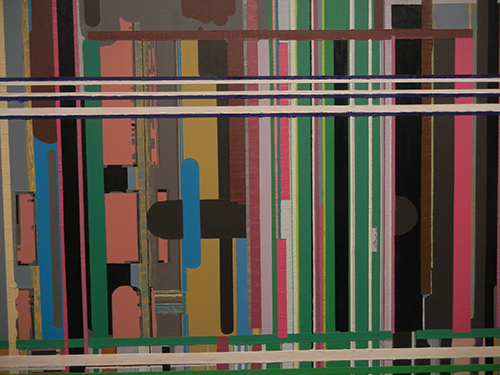
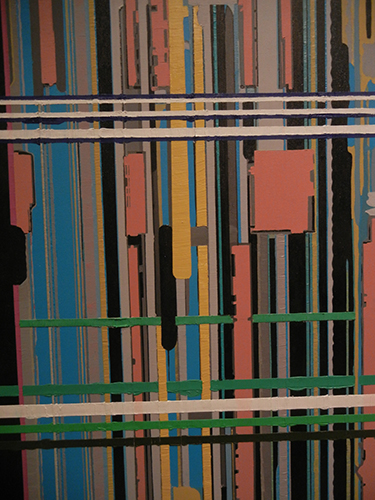
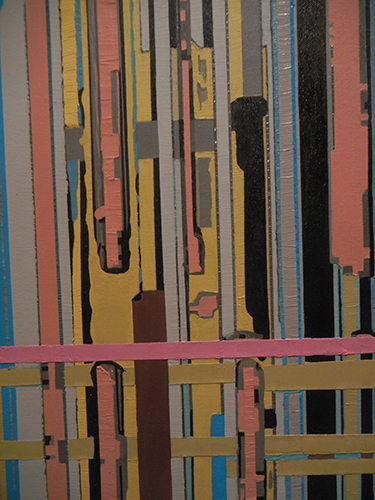
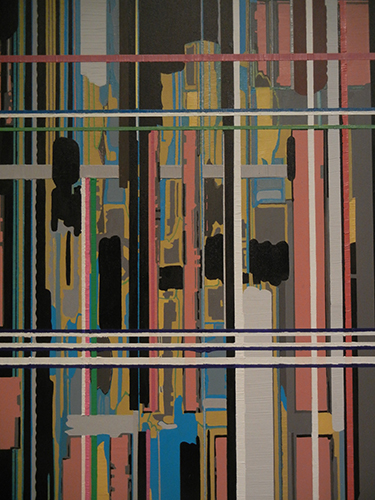
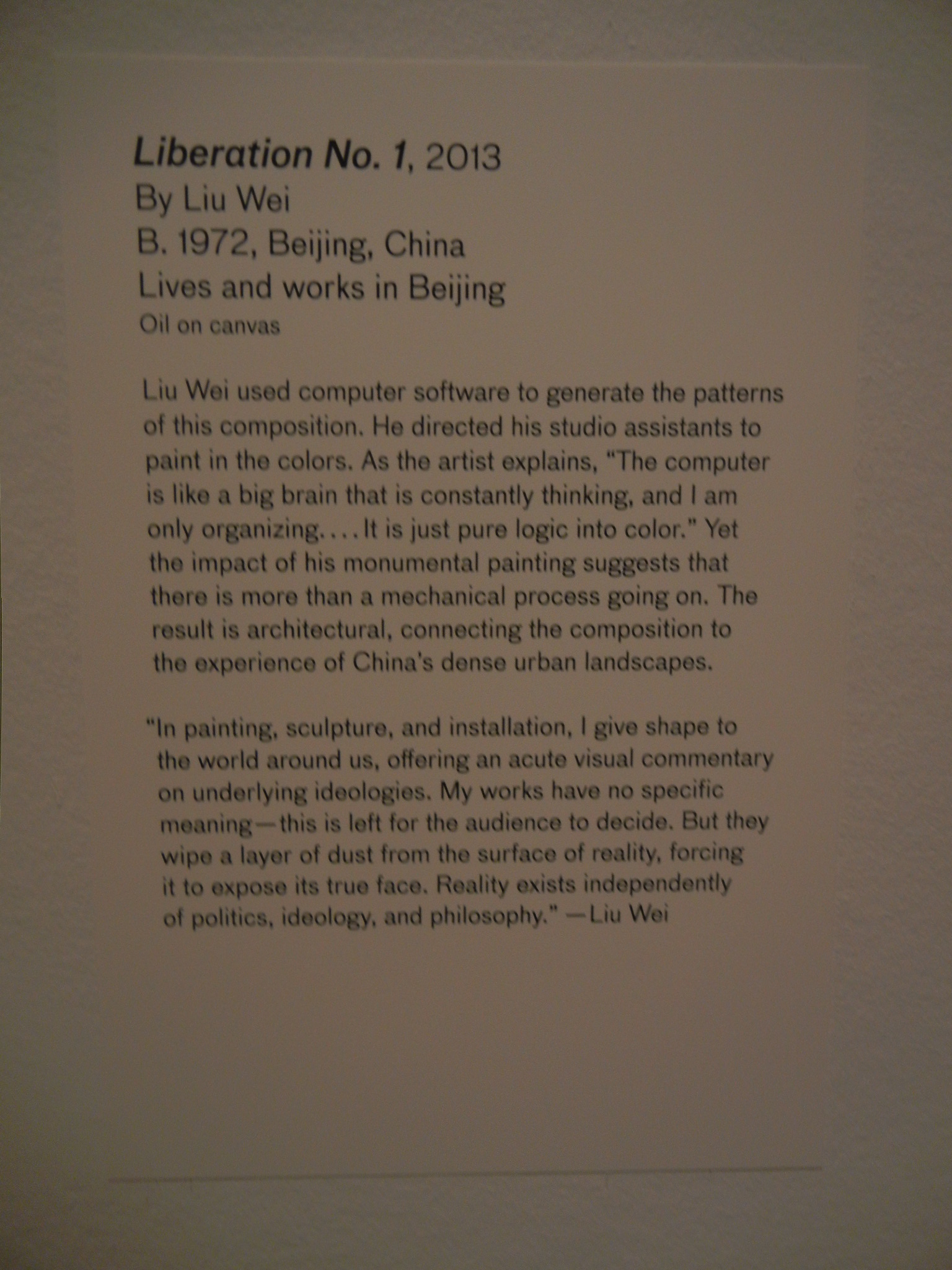
Next was a large piece, Liberation No. 1, which was designed by the artist aided with computer, and painted by artist's assistants resulting in an orderly explosion of colors and the intricacy of the patterns was quite intoxicating.

DSCN4636 _ 28 Chinese - Liberation No. 1, 2013, Wei LIU, Asian Art Museum
Liberation No. 1, 2013, Wei LIU

DSCN4641 _ 28 Chinese - Liberation No. 1, 2013, Wei LIU, Asian Art Museum

DSCN4646 _ 28 Chinese - Liberation No. 1 (detail), 2013, Wei LIU, Asian Art Museum

DSCN4643 _ 28 Chinese - Liberation No. 1 (detail), 2013, Wei LIU, Asian Art Museum DSCN4644 _ 28 Chinese - Liberation No. 1 (detail), 2013, Wei LIU, Asian Art Museum DSCN4647 _ 28 Chinese - Liberation No. 1 (detail), 2013, Wei LIU, Asian Art Museum

DSCN4642 _ 28 Chinese - Liberation No. 1, 2013, Wei LIU, Asian Art Museum
Liberation No. 1, 2013, Wei LIU

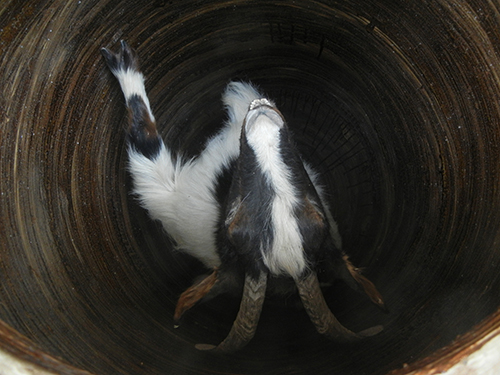
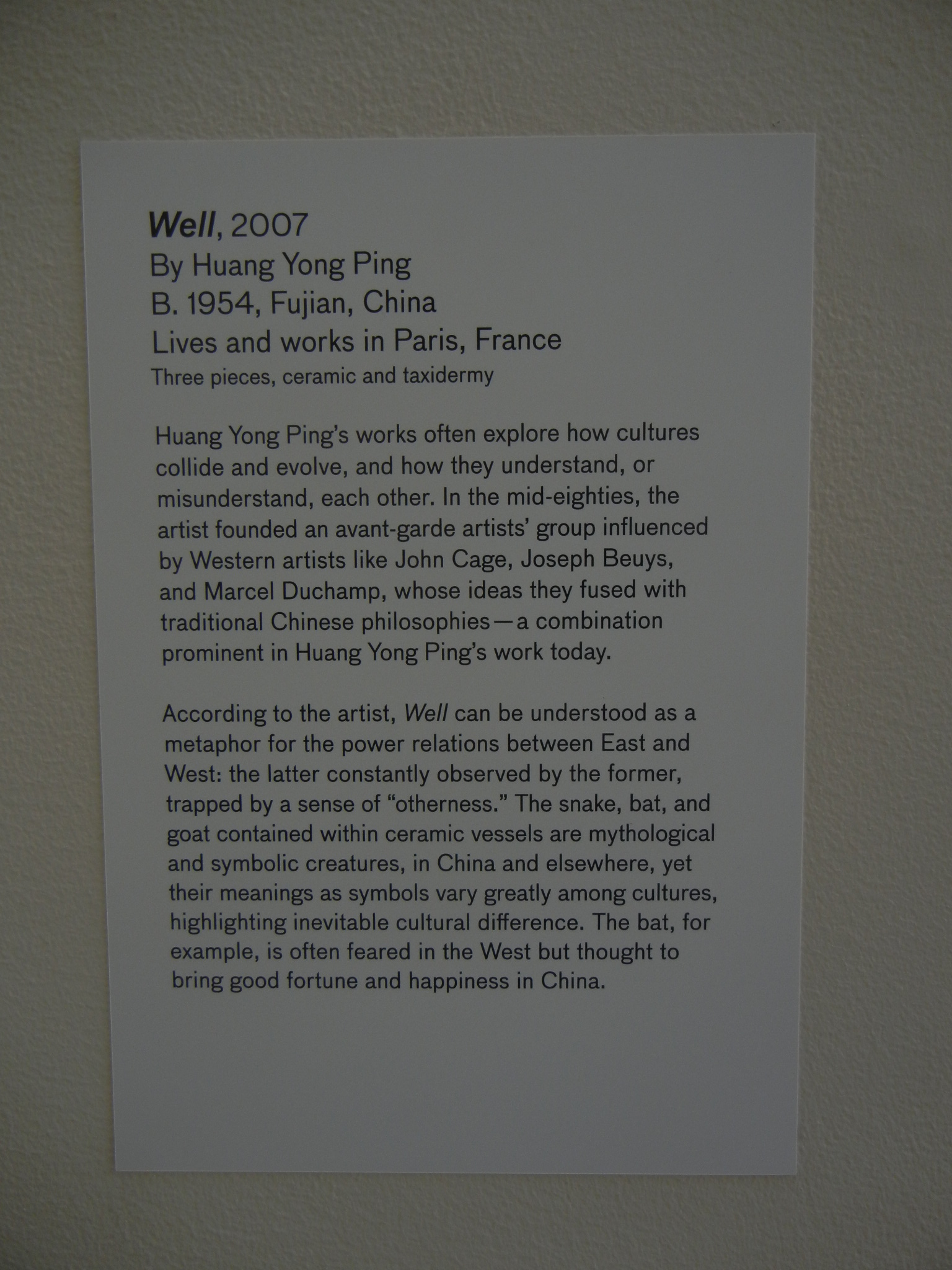
In the lobby, sandwiched between two wings of exhibition rooms, there were some installations. One was three huge vases, titled, Well, and each of those vases contained an animal.  Didn't bother to figure out what it meant. 
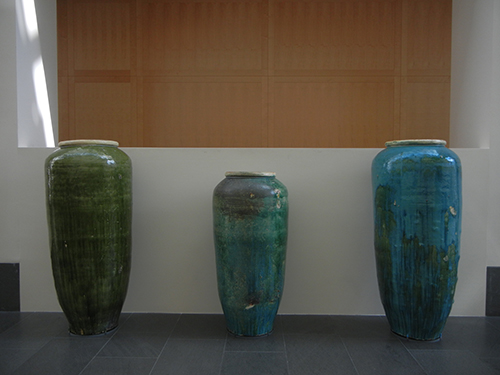
DSCN4655 _ 28 Chinese - Well, 2007, Yong Ping HUANG, Asian Art Museum
Well, 2007, Yong Ping HUANG

DSCN4654 _ 28 Chinese - Well, 2007, Yong Ping HUANG, Asian Art Museum
Well, 2007, Yong Ping HUANG

DSCN4656 _ 28 Chinese - Well, 2007, Yong HUANG, Asian Art Museum
Well, 2007, Yong Ping HUANG

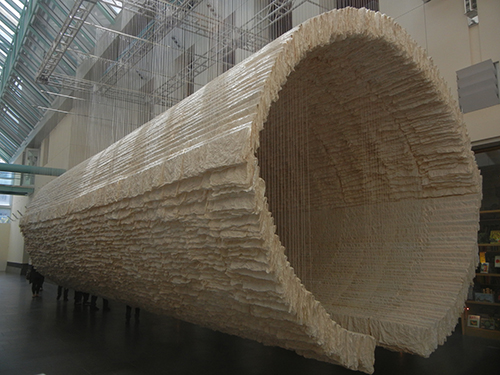
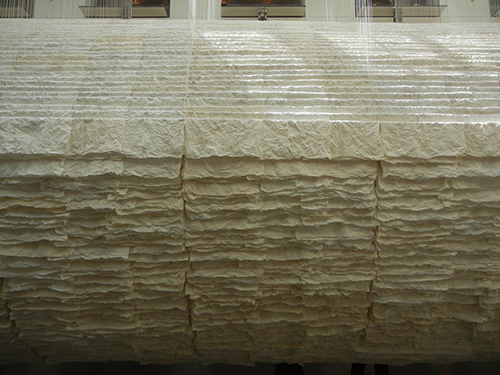
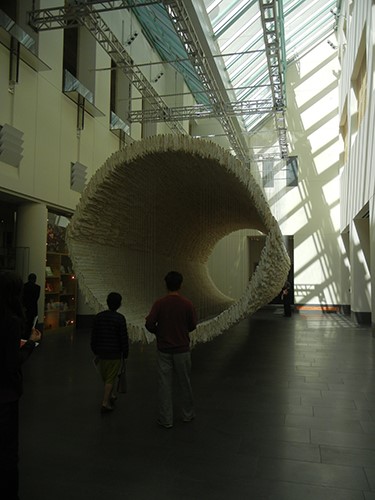
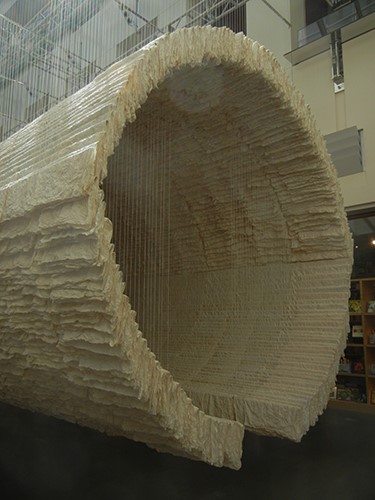
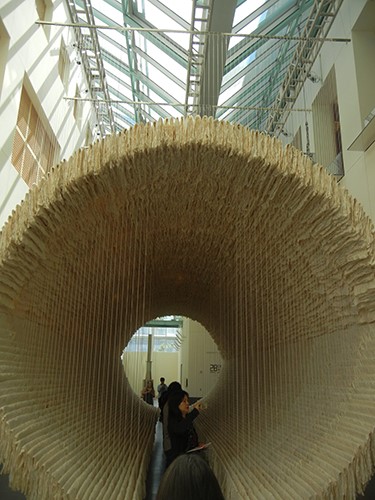
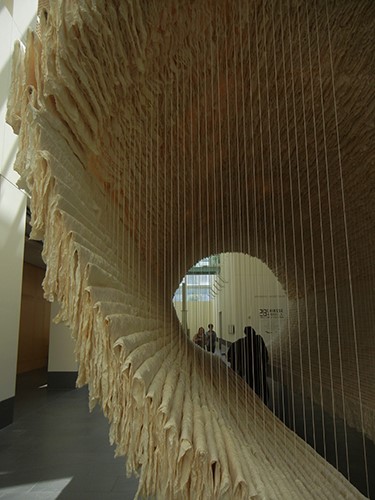
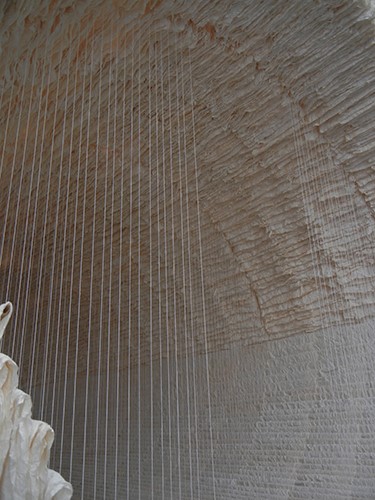
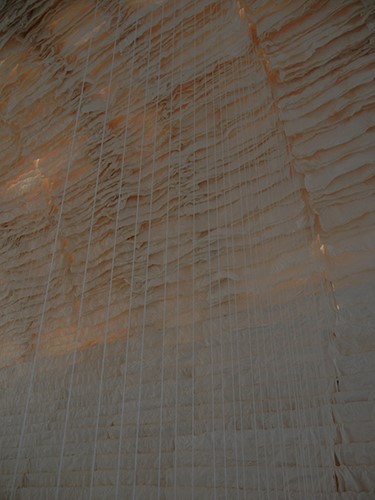
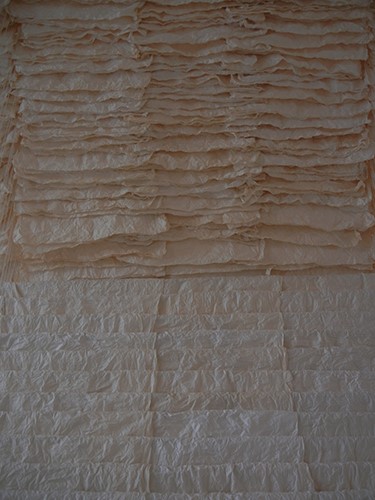
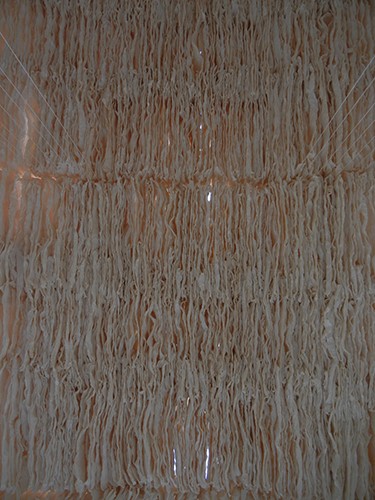
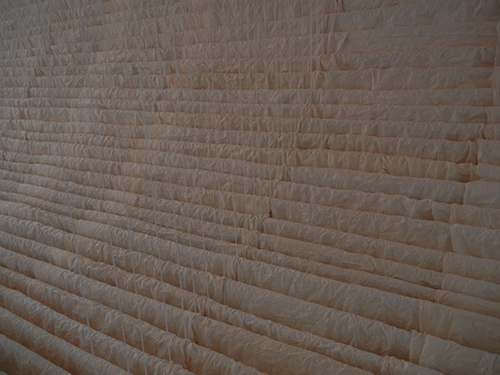
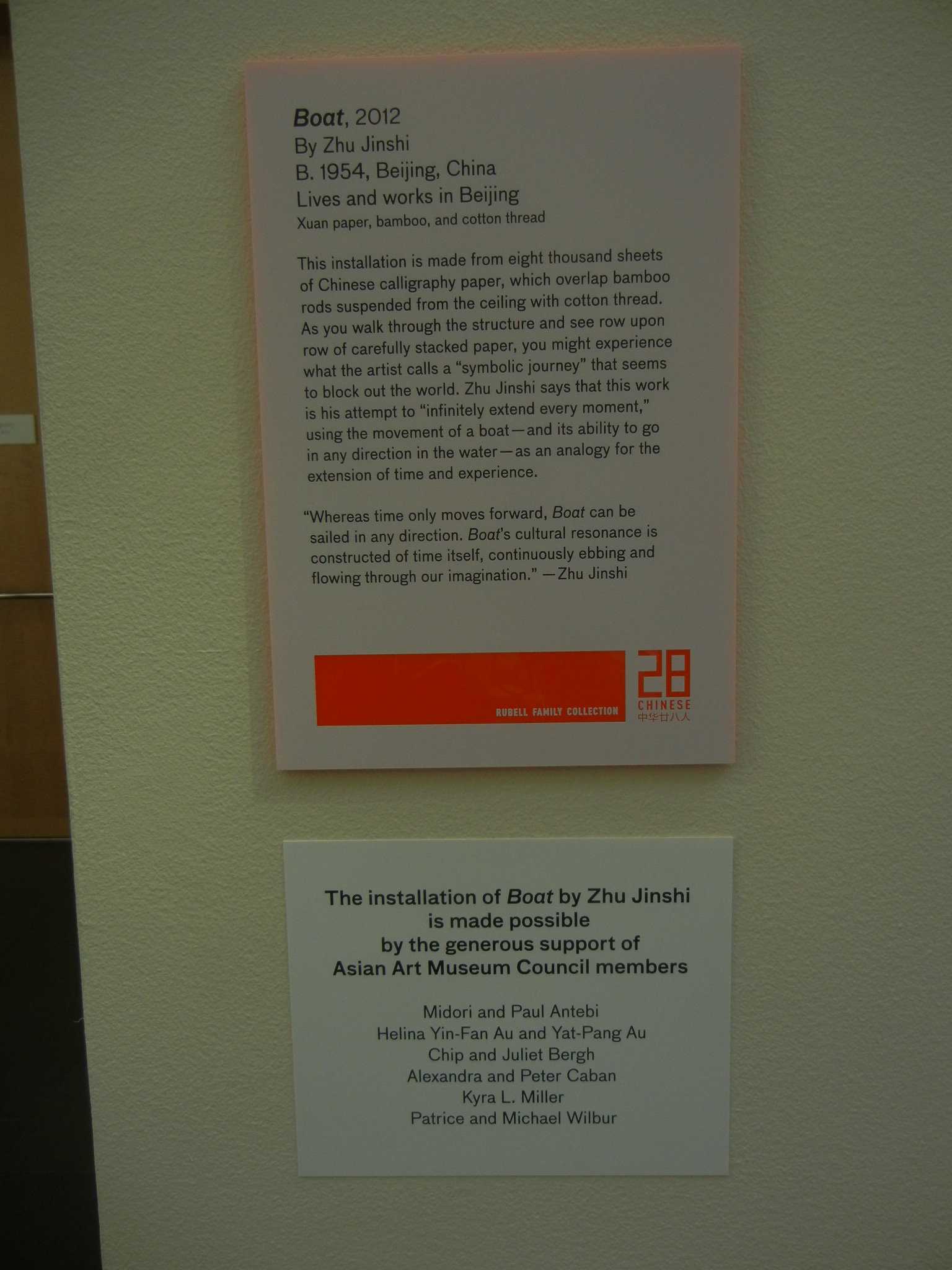
The next was the most exciting work in the show - a huge installation titled Boat and its purity, delicacy, scope and sensual form created a symphonic poem in the minimalist vein.
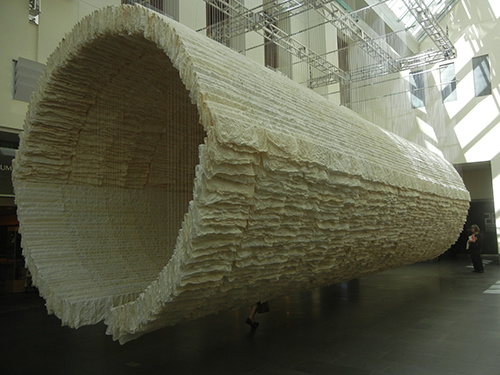
DSCN4650 _ 28 Chinese - Boat, 2012, Jinshi ZHU, Asian Art Museum
Boat, 2012, Jinshi ZHU

DSCN4668 _ 28 Chinese - Boat, 2012, Jinshi ZHU, Asian Art Museum

DSCN4683 _ 28 Chinese - Boat (detail), 2012, Jinshi ZHU, Asian Art Museum

DSCN4681 _ 28 Chinese - Boat (detail), 2012, Jinshi ZHU, Asian Art Museum DSCN4648 _ 28 Chinese - Boat, 2012, Jinshi ZHU, Asian Art Museum DSCN4673 _ 28 Chinese - Boat (detail), 2012, Jinshi ZHU, Asian Art Museum

DSCN4669 _ 28 Chinese - Boat, 2012, Jinshi ZHU, Asian Art Museum DSCN4671 _ 28 Chinese - Boat (detail), 2012, Jinshi ZHU, Asian Art Museum
DSCN4672 _ 28 Chinese - Boat (detail), 2012, Jinshi ZHU, Asian Art Museum DSCN4659 _ 28 Chinese - Boat (detail), 2012, Jinshi ZHU, Asian Art Museum
DSCN4658 _ 28 Chinese - Boat (detail), 2012, Jinshi ZHU, Asian Art Museum DSCN4657 _ 28 Chinese - Boat (detail), 2012, Jinshi ZHU, Asian Art Museum

DSCN4660 _ 28 Chinese - Boat (detail), 2012, Jinshi ZHU, Asian Art Museum


DSCN4664 _ 28 Chinese - Boat, 2012, Jinshi ZHU, Asian Art Museum
Boat, 2012, Jinshi ZHU

Next three rooms mostly featured some oddities, such as a huge rubbing imprint from stelae of calligraphy inscriptions in various styles, broadcasting contradictory political slogans or policies, from various epochs of Chinese history.
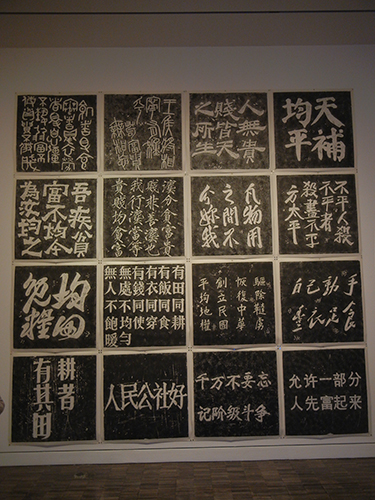
DSCN4680 _ 28 Chinese, Asian Art Museum

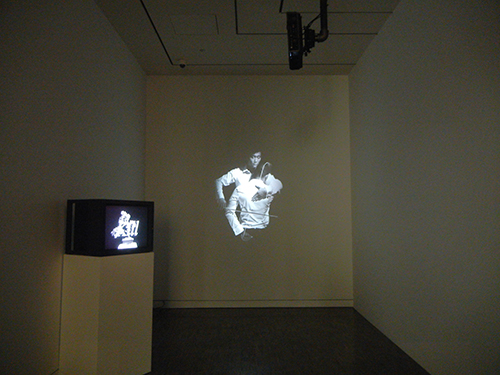
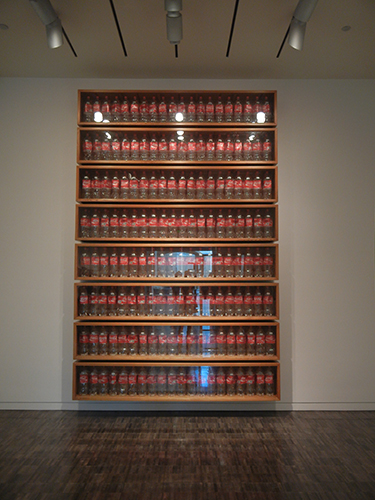
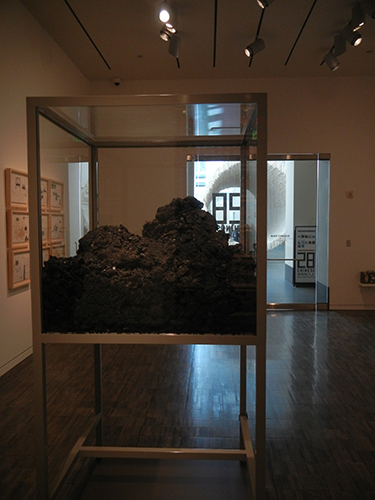
Other things I recorded including a large-scaled, fanciful weaving piece, a strange video featuring a woman as a cello, and some Coca-Cola bottles in a case, next to its companion case holding toxic wasted from melted down Coca-Cola bottles:
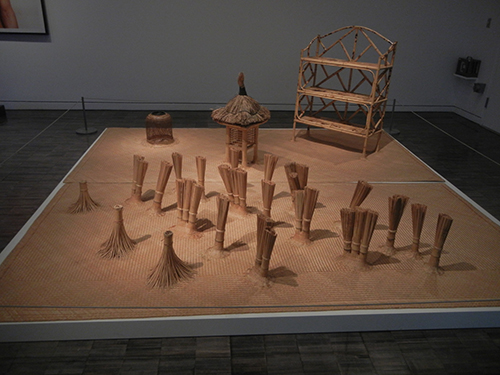
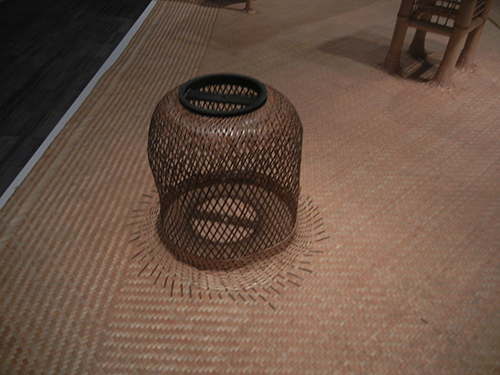
DSCN4674 _ 28 Chinese, Asian Art Museum

DSCN4676 _ 28 Chinese - Boat (detail), 2012, Jinshi ZHU, Asian Art Museum

DSCN4686 _ 28 Chinese, Asian Art Museum

DSCN4687 _ 28 Chinese, Asian Art Museum DSCN4689 _ 28 Chinese, Asian Art Museum

Other Related posts on Art · 文化 · Kunst:
- Last Chance to See Terracotta Warriors in San Francisco Asian Art Museum
- Calligraphies at San Francisco Modern Art Museum
- Impressionism from National Gallery of Art (DC) in San Francisco
- Last Call - "The Girl With A Pearl Earring" in De Young Museum, San Francisco
- Art Displays in San Francisco International Airport (SFO)
- Art in the Streets of San Francisco
- Modernism from the National Gallery of Art in De Young Museum, San Francisco

Saturday, July 16, 2011

Ideas Alone Make Great Art?

I just read a New Yorker article about learning drawing (Life Studies) by art critic Adam Gopnik, who took instructions from an artist who is adherent to the classic way of drawing and painting.

Over time, the featured artist Jacob Collins had assembled a group of teachers and enthusiasts, all given over to the practice of classical drawing from life and plaster casts, and from that nucleus came this studio and the Grand Central Academy of Art. The best half-serious label Jacob could find for his approach was “traditional realist revivalism.”

According to Gopnik's description, Collins was apparently exasperated by the indifference if not ought right disdain leveled upon the classicists and their creations.

It is quite a curious thing to observe the contemporary art scene.  People go to art gallery openings expected to be entertained, in the same anticipation of attending an aerial acrobat or a ballet performance.  The modern artists were expected to create something knock you out with it sheer size, originality of materials or ideas.  As for the execution of the ideas, most curators and audiences seem don't care much.  After Jackson Pollock and Andy Warhol, any work deemed lack of theatricality were often overlooked.

The drive to be more in your face theatrical have rendered the art scenes centering on installations and conceptual art - some of them are very transcendent but time to time, they are often less than fully developed, shallow, and worse, kitschy.

Starting with the excellent ones.  I found the sunflower seeds installation in Tate Modern, London by Ai Weiwei exhilarating, and an installation I saw in De Young Museum, San Francisco, Anti-Mass, 2005, by Cornelia Parker (b 1956) poignant.  The latter one was a 3D explosion of suspended debris constructed of the burned remains of a Southern Black Baptist church destroyed by arsonists:


Then there are things less exalted though no less flashy.  I always found the concepts put forth by Yoko Ono interesting but they were interesting mostly as ideas, less so as art creations.  In a sense, she is more a performing artist or a propagandist than a visual artist.

This led me to the discussion of a highly successful duo - the Gao Brothers hailed from China, whose "Gao Brothers: Grandeur and Catharsis" was presented at Kemper Museum of Contemporary Art in Kansas City, Missouri in 2010-2011.  Kemper also presented them in 2010 .

According to Kemper Museum,
China’s Gao Brothers—Gao Qiang and Gao Zhen—have collaborated on their artwork since 1985. Much of the Gao Brothers’ work has been colored by their family’s experiences during China’s Cultural Revolution (1966–76). In 1968 the artists’ father was arrested as a counter revolutionary, and days later he died while in custody. The Gao Brothers’ works of art seek to understand China’s complicated history and a government that has moved from Communism to a form of State Capitalism controlled by the Communist Party. At times, the works are politically charged, but in the end the brothers seek to forgive and understand. Featuring large-scale sculpture, painting, and photography, this is the artists’ first museum exhibition in the United States.

Their recent effort including Mao's Guilt:


An exhibition program noted that "Mao's Guilt (2009) is the culmination of many years of the Gao Brother's attempts to make peace with their father's death during the Cultural Revolution... The sculpture allows for personal catharsis as the Gao Brothers have created a repentant Mao, expressing guilt for the millions of deaths for which he was responsible. As the artists told curator this may be their last image of Mao, as it encompasses their long process of working through the grief and anger associated with him. Surrounded by images of the Gao Family, this installation offers a very personal perspective on the Cultural Revolution and the human losses associated with the period."

Again, the concept was an interesting one -- though I cannot imagine a repentant Mao -- and it must be very controversial in China when Mao still commands some respect and even reverence but I found the caricatured image of Mao was less threatening than it should have been and would not carry the historical burden the subject demands, therefore, I think that the Gao Brothers have missed an opportunity to express something truly deep and profound.  I felt the same towards their sculptures "Miss Mao trying to poise herself at the top of Lenin's head" and "The Execution of Christ" below - by simply making fun of their grim subjects, they made the grime history/reality a cartoon and that rob the impact they ought to exert:


Their figurines of Mao et. al., simultaneously daring and pedantic, have become, unfortunately, political kitsch.  Sleek ones.  One can argue that this is intentional - that the worship of Mao itself is being parodied but then sometimes I felt it was the criticism was being parodied here.

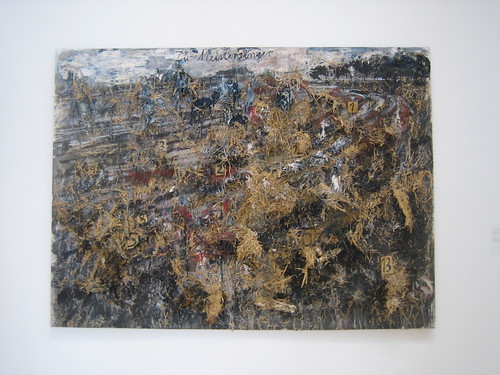
I think more satisfying efforts can be found in works by South African artist William Kentridge and German artist Anselm Kiefer, both dealing with collective national traumas.

IMG_6651
Die Meistersinger, 1982, Anselm Kiefer 1945-


Drawing by William Kentridge

Ideas by themselves, won't make great art.  Sometimes, voicing the idea alone, without a deliberate and well execution, the ideas could become parodies and even dangerously veer towards kitsch.

But a well-executed visual work need to have weighty substances to make their impact great.  Taking Jacob Collins for example.  Though I like his drawings and his nude paintings very much, I still would prefer to see more social context which he had chosen to stripe away.


Anna by Jacob Collins

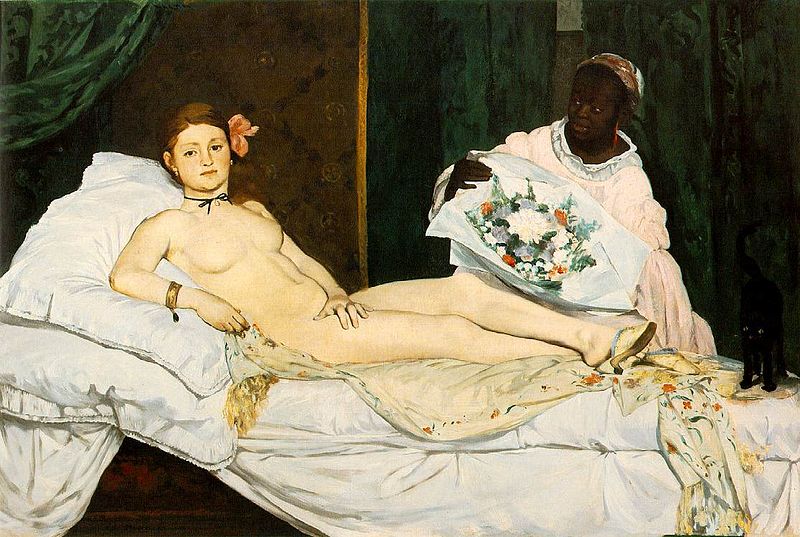
Jean Auguste Dominique Ingres's nudes were much more gratifying, despite its obvious decorative nature.  The oeuvres of the modern artist Collins couldn't stand, Édouard Manet, were also much more meaningful when provided appropriate specificities:


Grande Odalisque by Ingres   (image source: wikipedia)


Olympia by Manet  (image source: wikipedia)