Wednesday, August 10, 2011

Sculptures vs. Paintings

A tiny clay sculpture of John the Baptist at the Bode Museum in Berlin is attributed to the 15th-century Luccan artist Matteo Civitali.
There was a fascinating article on New York Times on the attractions of sculptures versus paintings by Michael Kimmelman.  He related that when he was in the Museum Island in Berlin, he was struck by the observation that people flocked to see multiple colored paintings and left the sculpture sections deserted, in many museums, including the Bode Museum which showcased the sculptures of John the Baptist by Matteo Civitali (left) and he deemed the sculpture as "all exquisite ecstasy and languor".

He continued that "a few minutes' walk from the Bode, the Friedrichswerdersche Kirche, the rebuilt neo-Gothic former church designed by Karl Friedrich Schinkel in the 1830s, houses its own sublime assortment of 19th-century sculpture. It's usually even emptier than the Bode, and it is free to boot. I'll occasionally spend an hour or so there, feeling small and unimportant before the portraits of Kant and the great German archaeologist Johann Winckelmann. Except for the doleful guards, I rarely encounter another living soul."
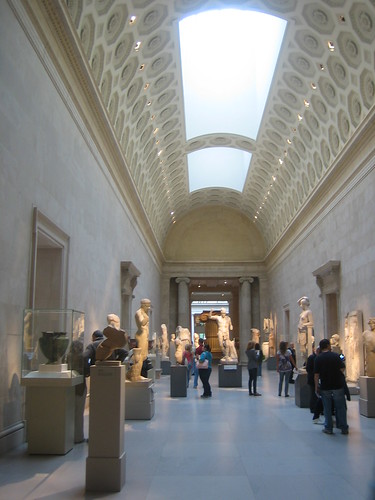
Greek _8213
Roman and Greek Wing, Metropolitan Museum of Arts, New York
In retrospect, he conceded that "sculpture does still bear something of the burden of its commemorative and didactic origins. It's too literal, too direct, too steeped in religious ceremony and too complex for a historically amnesiac culture. We prefer the multicolored distractions of illusionism on flat surfaces, flickering in a movie theater or digitized on our laptops and smartphones, or painted on canvas. The marketplace ratifies our myopia, making headlines for megamillion-dollar sales of old master and Impressionist pictures but rarely for premodern sculptures."

I am a painter, not a sculptor, therefore I am afraid that my visits to museums often concentrated on the painting wings.  I had been asked to make sculptures many times but just couldn't abandon my tubes of paints, even temporarily.  Same thing happened to printmaking, etc.  I did make one sculpture of clay, a golden fish, in elementary school.  It was not very interesting, I think.

I understand sculpture less well than paintings, therefore, sculptures need to have higher quality and meaning to attract my attention.  I can enjoy completely innocent and whimsical paintings but for sculptures, if they failed to touch me with visceral impacts, I lose my interesting quickly.  This is not to say that I'm crazy about colors.  My palettes are often muted and even monochromatic.  I do see not being bound to verisimilitude in paintings as a plus in art creation.
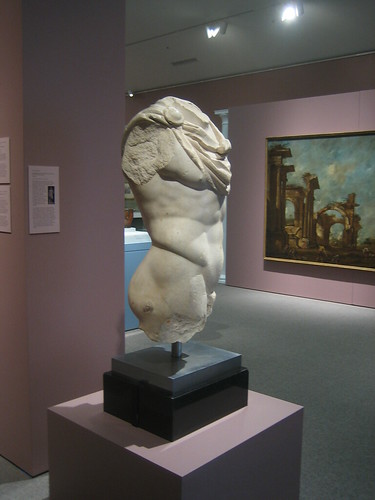
IMG_1822
Marble Tors, Cantor Arts Center, Stanford University
I'd thought that the invasion of 3D would have prompted more appreciation of sculptures.  But I perhaps am wrong.  Successful 3D adventures usually are espoused to colorful presentations, demonstrated in the seminal movie Avatar.  Perhaps, over-stimulation of our senses contributed to our depreciation of sculptures.

I just saw the last installment of Harry Potter movies, IMAX, 3D version.  It was not a good movie.  The 3D effects neither added nor subtracted.  The whole experience was actually more aural-based.  The theater blasted its high-tech sound system during commercials, previews and the feature.  I watched the entire movie with my ears plugged and hear the movie as clearly as any other normal movie experience.

It seems that nowadays anything less flashy would be appreciated less accordingly.  In order to make a big impact with art, even paintings - however colorful - are in no position to gloat.

It must be a gargantuan installation, and better still to have performing elements built in.

Soon, painters would bemoan our abandoned fates as those old sculptors.  I felt like a medieval monk already.
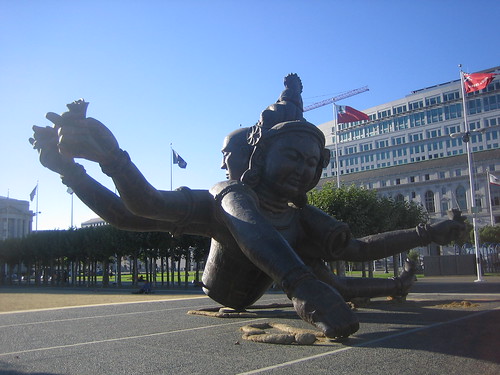
Nezha by Zhang Huan _8735
Nezha by Zhang Huan, San Francisco


Monday, August 8, 2011

Forbidden City Accused of Selling Art to Support Operations and Luxuries

It must be very tempting for cash-strapped museums to sell off their art collections to support daily operations.  However, this practice can lead to rapid disintegration of museum, great or small.  Therefore, it is good to have such policy in place to forbid selling art to support operations by Association of Art Museum Directors (AAMD) in North America.

The Association of Art Museum Directors promotes the vital role of art museums throughout North America and advances the profession by cultivating leadership and communicating standards of excellence in museum practice.
In the Letter of Censure from the AAMD to Randolph College, it stressed that "AAMD’s long-standing policy restricting the use of funds obtained through deaccessioning to the acquisition of new works of art exists to protect the art museum community.  Selling art to support operations fundamentally undermines the critically important relationship between art museums and patrons who contribute works of art to collections to help advance a museum’s mission.  Selling art to support operations also erodes the incentive for patrons and other funding agencies to support art museum programs.  Why invest in such programs if art museums can pay for them by deaccessioning a few works of art now and then?  Supporting operations through the sale of works of art also fundamentally undermines the core mission of an art museum and its public service.  Finally, some of the tax exempt planning benefits that art museums provided depend, in part, on maintaining the integrity of collections to benefit the public.  Art museums, standing alone or operated as part of a college, university, or non-profit agency, fundamentally compromise these core principles and negatively impact the entire art museum community when they sell art to support operations."
Even worse, irresponsible management can even sell off art collections to fund their luxurious splurges, as the Forbidden City Museum in Beijing has been accused of.

Recently, the Museum of Forbidden City had been exposed of many misdeeds, from impossible one-man heist to hiding the damage of national treasures during testing.  Now, some insiders claimed that Forbidden City Museum had sold artifacts to fund their operations and other improper expenditures.  Since the cataloging there is very haphazard, it is not inconceivable that the proceeds from these sales, if they did take place, had been embezzled altogether.


Saturday, August 6, 2011

Herakles, not Hamlet

This is my rare foray into politics on this blog designated for culture. However, since the political and economical situation affect art and culture greatly, I think it is pertinent to re-post this one I created for the my political blog: This Fading American Life.

This is a very difficult blog to post. It broke my heart to see such historical figure, President Obama, and the historical opportunities were squandered by his indecision and lack of political determination. Observing his tying up himself up like a pretzel, and losing political argument and debate at every important moment, due to not only the insanity of his opponent, but his inability to act, I think it is high time for the Democrats to rally around a warrior who will take on the irresponsible and greedy factor who ran this country aground.

I don't know what that person might be. However, there are more than a year's time before next general election. People who love this country and would want to serve can have time to rally liberal force and to tackle the problem we have, and to act today, not tomorrow.

Herakles, not Hamlet

The first term of the historic Obama presidency has passed its mid-point and now he is gearing up for his re-election.  In those pass year, he has proved extremely ineffective as he was extremely eloquence in his campaign trips.  In last few years, he surrendered again and again before many major battles and then came out declaring victories in the face of humiliating (to himself) and devastating (to us) defeats and squandered hand-own political edges.

He came to the presidency as the personification of great hope.  Yet, now, it looks more like the greatest hype.

I have no doubt of his great intelligence, his noble intentions and his admirable even temper.

Yet, for all those virtues, if he cannot get his agendas, no, our agendas, accomplished, how good this president is he?  Not much.

He has retreated again and again, arguing that all those defeats would be perfect debating points during his re-election campaign and he would deal his opponents a crushing defeat.  That line of argument is not even hopeful; it's delusional.

Let us admit it, that Obama's presidency would not achieve what we deem good for the nation.  He has served the historical purpose by smashing one racial ceiling; for that, we congratulate him and his voters, and thank them all.

Now, it's time for President Obama to accept the bitter reality.  He is not up to the demands of the tough job, facing the opponents with utter contempt for average American people, America and him.

Perhaps, he can still prevail in the general election.  But what's the purpose of that, if his second term is just as ineffective and disastrous as this one?

We need to have someone in the White House who can accomplish what we demand the president to accomplish.  Let's find a warrior who would fight tooth and nail.

We need Herakles; not Hamlet.

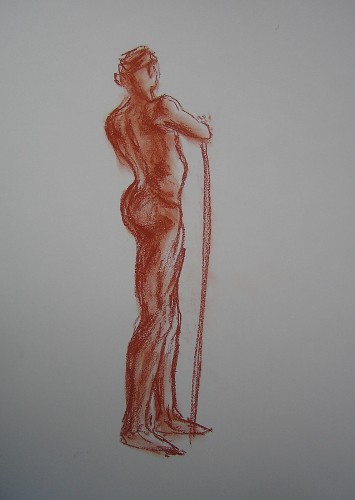
Matthew Felix Sun's Live Drawing_1373
Life Drawing © Matthew Felix Sun

Friday, August 5, 2011

Brilliant Sunset

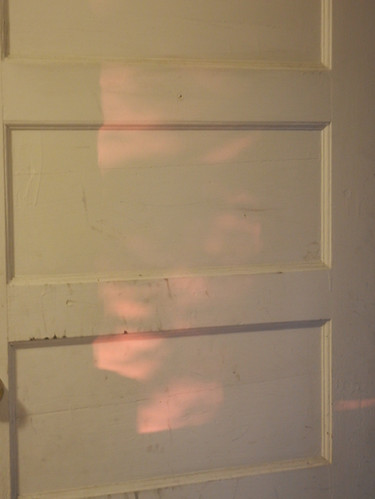
Sunset _ 4171

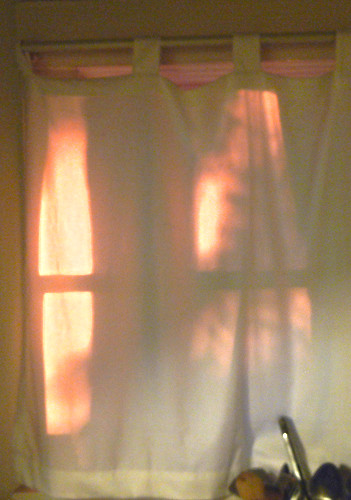
One evening, I was enchanted by a pink glow on my off-white kitchen door and it was a lovely setting sun beam.  In the back yard, I was able to see even more wonderful sight.

Sunset _ 4173

Sunset _ 4179

Sunset _ 4176

Sunset _ 4177

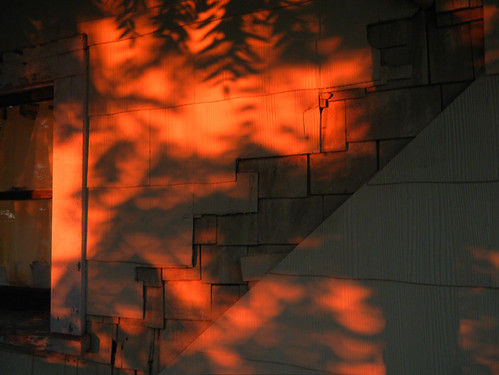
A day later, the sunset was even more lovely, with darkened hue and more reddish glow.

Sunset _ 4210

Sunset _ 4213

Sunset _ 4214

Sunset _ 4215

Sunset _ 4223

Sunset _ 4221

Sunset _ 4216

Glorious summer.

Thursday, August 4, 2011

Daily Objects Became Art - "Laundered Clothes" Painting Completed

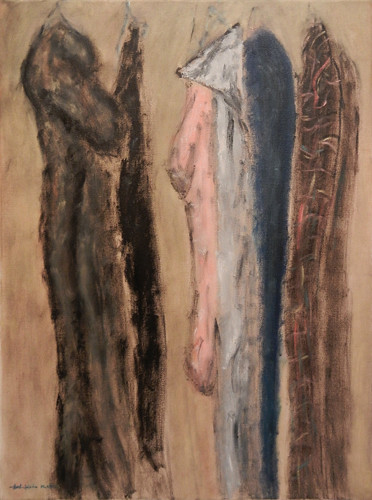
Several days ago, I was suddenly amused by the drying laundries in my bathroom. There was some studied casual charm in the sight, which was incidentally a bit melancholic and touching.  It also emitted certain warmth, being connected to things close to me on personal levels.

A quick sketch evolved to a painting - simultaneously playful, calm and a bit yearning.  Oil painting "Laundered Clothes" Completed.

Laundered Clothes
Laundered Clothes
Oil on Canvas
24" x 18"
Completed in 2011
© Matthew Felix Sun
www.matthewfelixsun.com

Related article: Beauty in Household Objects

Tuesday, August 2, 2011

Visualizing Success

Ambitious people dream of success but are often daunted by lacking a clear path to reach their lofty and glorious goals.  When the goals become too elusive to grasp, it could be very frustrating and even paralyzing.  I call that "Three-Sister Syndrome", which alludes to the eponymous play by Anton Chekhov, on three sisters who pined to return to Moscow but could not and would not make an effort to initiate the move.

The Three-Sister Syndrome can creep up often, during the various stages of one's career.  This paralysis is very damaging and if it becomes chronic, one can easily give it up altogether. 

Recognizing this being "normal", doesn't mean that we ought be let it control our life.

The way to cope with this problem, or work around it, is to set goals not only the ultimate one, but short term and intermediate ones.  It is very important that the short-terms goals (one year - five years, say) should be tangible and measurable.  For visual artists, these can be like numbers of sales, numbers of exhibitions, numbers of competitions participated, or more ambitious, numbers of juried shows, or juried shows in a particular art market, say New York or London.

These goals should not be easy to achieve but also should be achievable with considerable stretch, therefore the growth.

Whatever the goals are, they should be as detailed as possible.  The more details we add to those goals, the clearer the difference between the state of now and the future.  Once the differences between where we are and where we want to be are mapped out, it would be less difficult to pin down what to be done to get there.

This process is often hard and even odious to our morale.  However, if we live in the shade of illusion, we would never achieve the success we crave.

This process demands absolute honesty with ourselves and it is soul-baring brutal.  However, if we survive this multiple times, each time we reach for a higher plane, then, we are on our way to success.

Naturally, this would not guarantee anything; but, in my opinion, it is a must.

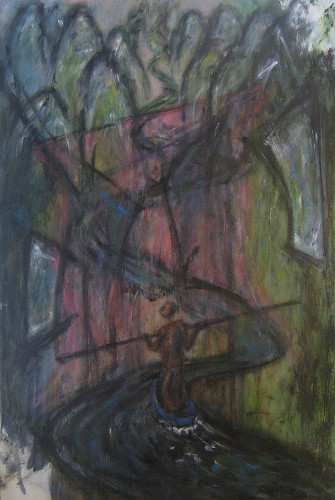
Rafting / 漂筏 / Flößerei
Rafting © Matthew Felix Sun