Showing posts with label Beijing. Show all posts

Monday, August 29, 2016

My Favorite Paintings at Xu Beihong Museum in Beijing

Xu Beihong (1895-1953) was a renown Chinese artist, who was uniquely accomplished in both western oil paintings and traditional Chinese paintings. The museum bears his name, Xu Beihong Museum in Beijing had many of fine representations of his works.

One of his most famous oil painting was a portrait titled "Sound of Flute", which, though somewhat veered towards sentimentality, was redeemed by the heroine's shagginess, which transported her to the purer and more primitive and private world. Rather than a candied soiree, we were witnessing the sitter's private communion.


One of Xu's large scaled historical pieces in the style of French Academy, "Tian Heng and Five Hundred Followers", depicted a leave taking ceremony of those figures about to face their tragic and heroic collective deaths. The emotion and intensity were enhanced by the stoicism those figures exerted.  However, some choices, such as the Titianesque blue sky and the yellow robe on the figure in the center,  somewhat lent the painting a suspicious air of socialist realism. That said, one could not deny the painting's restrained grandeur.


My Favorite Museum Collection Series
>> My Favorite Museum Collection Series 129: My Favorite Sculptures in Sichuan University, Chengdu, Sichuan, China
<< My Favorite Museum Collection Series 127: My Favorite Paintings at National Art Museum of China, Beijing

List of My Favorite Artworks in the Museums I've Visited

Other Related posts on Art · 文化 · Kunst:
- Treasure in Liaoning Museum, Shenyang, China
- Art Gallery of Luxun Art Academy in Shenyang, China
- Making and Framing Art in Shenyang and US
- 拆 - Demolition in China
- Kitsch in Beijing Capital International Airport
- Princess Turandot
- Politics and Profits
- Ugly Buildings in China
- Sunflower Seeds by Ai Weiwei at Tate Modern, London

Friday, August 26, 2016

My Favorite Paintings at National Art Museum of China, Beijing

The National Art Museum of China in Beijing has interesting oil painting collections, but when I visited it many years ago, the only oil paintings on display were a group of portraits of political and bigness bigwigs, uniformly done in the quite pompous and imperial fashion, therefore the only works worth seeing were some Chinese paintings and here are a couple of such samples.

The 1960 landscape "Xiling Gorge" by FU Baoshi was a bold presentation of an often painted subject - one of the renown Three Gorges in upper Yangtze River.  With broad and assertive strokes, and only a few shades of black, gray and white, Fu fashioned an epic scene worthy of Homer, a monumental world of basic elements - river, mountain, fog, rain, and clouds - charged of primordial energy and majesty.


Further in the direction of modern, JIA Youfu's 1984 landscape painting "A Monument of Taihang" left an indelible impression with bold gestures, complemented by fine and layered details. The overlapping angular planes created a receding and serene universe, while the bold red colors and the jagged upward peaks punctuated the scene like a pounding heart.


My Favorite Museum Collection Series
>> My Favorite Museum Collection Series 128: My Favorite Paintings at Xu Beihong Museum in Beijing
<< My Favorite Museum Collection Series 126: My Favorite Paintings at Liaoning Provincial Museum, Shenyang, China

List of My Favorite Artworks in the Museums I've Visited

Other Related posts on Art · 文化 · Kunst:
- Treasure in Liaoning Museum, Shenyang, China
- Art Gallery of Luxun Art Academy in Shenyang, China
- Making and Framing Art in Shenyang and US
- 拆 - Demolition in China
- Kitsch in Beijing Capital International Airport
- Princess Turandot
- Politics and Profits
- Ugly Buildings in China
- Sunflower Seeds by Ai Weiwei at Tate Modern, London

Wednesday, August 1, 2012

Chinese People's Olympics Apathy

Four years ago, when Beijing was hosting the Olympic Games, most Chinese people were extremely excited and proud of their coming of age party, a party so grand that no one would dare to challenge ever after.  That country poured grotesquely large amount of money into the Games and duly stunned the rest of the world for its brutal efficiency and the brutishly stunning spectacle of the Opening Ceremony.

Four years later, the 2012 Olympic Games is well underway in London, Great Britain, yet many Chinese people seem to have decidedly much less enthusiasm and even apathy towards the Olympics.

According to some Chinese language media, and through talking to my family in China, I recognized the striking change of attitudes.  One clear reason was the location and distance.  In 2008, China hosted the Olympics in Beijing for the first time; while now it is in the faraway London, where most Chinese have never seen and will never have the chance to visit.  However, people also have lost some interests in the gold medals which they used to counted ounce by ounce four years ago with the greed like an Harpagon, the titular character of The Miser (L'Avare) by Molière.

Four years ago, many of them firmly believed that the Olympics would be the panacea of all social woes, as promised by the government.  Yet, four years later, they discovered, that after a storm, cities were still flooded (see images below from Beijing in July 2012). Yet, despite the huge amount of money spent on infrastructures, the list of sorrow stories goes on: High speed trains still crash; food/milk/medicine are still poisonous; officials are still corrupt; people still have trouble in paying for education, medicine and even tomb plots. 


Beijing, July 2012

The demolitions and constructions were not limited to Beijing.  After the Olympic Games in Beijing, other big cities in China competed to put on their own shows - Shanghai had its World Expo; Guangzhou hosted the 2010 Asian Games; etc. My home city, Shenyang, is preparing for the most superfluous All China Games with much demolitions and constructions, despite the fact that the city refused to pay some employees and pensioners the nationally mandated salary increases for lacking funds.  One prime example was the demolition of a 9-year-old, state-of-art, one of the largest indoor stadiums in Asia, built in the "unsuitable location" in Shenyang:


Shenyang, June 12, 2012

Regular folks continue to suffer, contractors continue to make profit and the officials continue to enrich themselves with kickbacks in the process of such demolition and construction and in the name of people.

Internationally, China is as isolated as ever, with only friends in the league of Syria, Iran, Cuba, North Korea, and perhaps Russia.  People outside China watched its phenomenal economic growth with awe and fear.  Envy played some role perhaps, but definitely a minor one.  It was Chinese government's refusal to comply by the international standards and decency keeps China outside the international community.  No window dressing Olympics could change that.

Chinese people had learned their lessons in a hard way.  At least, they have opened up their eyes.  They are saying loudly that the Opening Ceremony of 2008 in Beijing was a celebration of absolute control and absolute order, while in 2012 in London they saw a celebration of humanities.  No wonder, they are becoming more cynical and less enamored with the obvious glitter.
Monday, June 4, 2012

Bloody June Fourth (六四) in Beijing, 23 Years Later

Blood was shed.  People were killed.

Twenty-three years has passed since 4 June 1989, and the wounds have not healed.

The wounds would not heal unless the Chinese authority admits its crime against its own unarmed, peacefully demonstrating people, mostly young students as me and sympathetic Beijing citizens.

Chinese government wants the world to forget.  Yet we remember.  If the young people didn't know, we ought to keep telling the tragic story.

According to Huffington Post:
The father of a man killed in the 1989 Tiananmen Square crackdown has hanged himself after two decades of failed attempts to seek government redress.

A support group for parents of the crackdown's victims said Monday that 73-year-old Ya Weilin's body was found in an unused underground parking garage below his residential complex.

Zhang Xianling, a member of the group, says Ya killed himself out of despair and to protest the government's long-standing refusal to address the grievances of the victims' relatives.

His death comes about a week ahead of the anniversary of the night of June 3-4, 1989, when the military crushed the weeks long, student-led protests, possibly killing thousands of students, activists and ordinary citizens.
The victim families were not the only one who had made moves.  Even the those who were, in various degrees, responsible for the tragedy had attempted.

Then Mayor of Beijing, Chen Xitong, had his memoir published, trying to distance himself for the decision of crackdown.  So did the then prime minister Li Peng, who was largely blamed on the decision, along with then supreme leader Deng Xiaoping.

The late Deng's family had made such an attempt to, claiming that he held no official title.

Maybe there was some truth in it that no a single person was one hundred per cent responsible for it; but collectively, as the part of the ruling apparatus, they cannot easily spin such disclaimer.

All they can do is trying to whitewash themselves but the stains on their hands would be just as hard to wash as those on the hands of Lady Macbeth.

There were more clamoring for 平反 (rehabilitate) of the event.  Yet, it is wrong to ask the culprit to rehabilitate such event.  The demand should be calling for Chinese government to admit its crime and take full responsibility for the tragedy, and pursue justice to punish such crime against its own people, and ask for forgiveness from its people.

They have no moral standing to rehabilitate their own crimes.


Monday, August 8, 2011

Forbidden City Accused of Selling Art to Support Operations and Luxuries

It must be very tempting for cash-strapped museums to sell off their art collections to support daily operations.  However, this practice can lead to rapid disintegration of museum, great or small.  Therefore, it is good to have such policy in place to forbid selling art to support operations by Association of Art Museum Directors (AAMD) in North America.

The Association of Art Museum Directors promotes the vital role of art museums throughout North America and advances the profession by cultivating leadership and communicating standards of excellence in museum practice.
In the Letter of Censure from the AAMD to Randolph College, it stressed that "AAMD’s long-standing policy restricting the use of funds obtained through deaccessioning to the acquisition of new works of art exists to protect the art museum community.  Selling art to support operations fundamentally undermines the critically important relationship between art museums and patrons who contribute works of art to collections to help advance a museum’s mission.  Selling art to support operations also erodes the incentive for patrons and other funding agencies to support art museum programs.  Why invest in such programs if art museums can pay for them by deaccessioning a few works of art now and then?  Supporting operations through the sale of works of art also fundamentally undermines the core mission of an art museum and its public service.  Finally, some of the tax exempt planning benefits that art museums provided depend, in part, on maintaining the integrity of collections to benefit the public.  Art museums, standing alone or operated as part of a college, university, or non-profit agency, fundamentally compromise these core principles and negatively impact the entire art museum community when they sell art to support operations."
Even worse, irresponsible management can even sell off art collections to fund their luxurious splurges, as the Forbidden City Museum in Beijing has been accused of.

Recently, the Museum of Forbidden City had been exposed of many misdeeds, from impossible one-man heist to hiding the damage of national treasures during testing.  Now, some insiders claimed that Forbidden City Museum had sold artifacts to fund their operations and other improper expenditures.  Since the cataloging there is very haphazard, it is not inconceivable that the proceeds from these sales, if they did take place, had been embezzled altogether.


Monday, June 6, 2011

Most Fortunate Chinese - Beijing Residents, on Drought and Water Project in China

Beijing is the absolute center of China - in a country spanning of over four time zones, only time used there is Beijing standard time.  Either the number of a train is even or odd, depends on if it goes to or fro Beijing.  When I grew up, one resident in my home city got a ration of about one pound meat, 7 oz. cooking oil, etc. per month, while Beijing residents could purchase almost everything, with no real quantitative limits.  The only inconvenience was the limit they could buy at one time.  As long as they went back to the queues, they were allowed to buy as much to their hearts' content.  Dad had many opportunities of going to Beijing on business trips and every time, he would brought back large amount of amazing food, unknown or unfamiliar to the people in the desolate Manchuria, such as deep fried doughs, and twists soaked in honey.  Dad called himself of of those "Manchurian Tiger" charging into Beijing, a favorite term Beijing residents disparagingly called people from materially challenged bitter cold Manchuria.  Beijing residents were very privileged indeed.

That tradition has survived to the new century.  The first Chinese Olympic took place in no other city than Beijing.  People from all corners spent vast amount of money to sustain a month-long inflated pride of Beijing residents, with no benefits to other places whatsoever.

When Beijing residents are thirsty, millions people lose their homes in the provinces.

Beijing and several other northern cities are suffering from thirst.  Yet, Beijing has built many golf courses and ski resorts, all notorious for water consumption.  Instead, Chinese government, after the controversial Three Gorges Dam, is now embarking on an even more ambitious, and more controversial water project - South-North Water Diversion Project.

Guardian reported that
The dam is not the only hydro-engineering project that has come under scrutiny as a result of the drought. The state's massive south-north water diversion project, which aims to tap the normally moist Yangtze basin to supply arid northern cities like Beijing, is also being called into question because one of its source reservoirs at Danjiangkou has fallen 4m below the minimum requirement for its operation.

"This is bound to have an impact on the diversion project," said Zhang Junfeng, an environmental activist with Green Earth Volunteers. "Water storage at Danjiangkou reservoir is already at a dead level and I think the situation will get worse year by year because this is partly due to climate change."

New York Times reported that 
Beijing has about 100 cubic meters, or 26,000 gallons, of water available per person. According to a standard adopted by the United Nations, that is a fraction of the 1,000 cubic meters, or 260,000 gallons, per person that indicates chronic water scarcity.

The planning for Beijing’s growth up to 2020 by the State Council already assumes the water diversion will work, rather than planning for growth with much less water, said Mr. Wang, the former official.

City planners see a Beijing full of golf courses, swimming pools and nearby ski slopes — the model set by the West.

“Instead of transferring water to meet the growing demand of a city, we should decide the size of a city according to how much water resources it has,” Mr. Wang said. “People’s desire for development has no end.”
Yangtze region is suffering the worst drought in fifty years - The Three Gorges Dam upstream had been blamed by many quarters - and the second largest lake in China, with the size of 1/6th of Lake Erie, has dried up.  There will be up to four million people relocated due to Three Gorges Dam and the Water Diversion Project would affect more people, in almost unimaginable scale.

If the Three Gorges Dam was crazy, this new project is pure insanity.

The more I think about it, the more I resent the fact that entire China population sacrifice themselves for the benefit of several million privileged residents in the most indulged Beijing.

However, whenever I complained too much, I remembered their heroic deeds in the trying time of May and June of 1989, then, my antipathy towards Beijing residents would dissipate, somewhat.

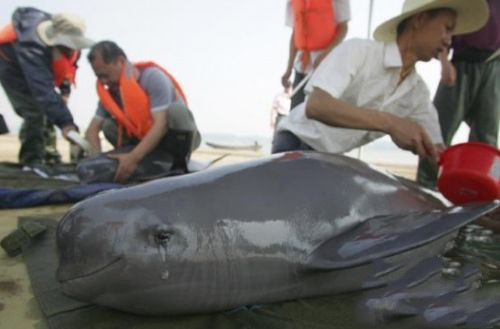
Weeping Water Dolphin

Sunday, April 4, 2010

Google, Wikipedia, Flickr, Oasis and Bob Dylan

What do Google, Wikipedia, Flickr, British rock band Oasis and American icon Bob Dylan have in common?

Not welcomed in China, at least partially.

According to a report by StarPulse, Bob Dylan has canceled his planned Asian tour this month after he was reportedly refused permission to play in Shanghai and Beijing. His tour should have included stops at Beijing, Shanghai, Taiwan, South Korea and Hong Kong.

According to the report, "Jeffrey Wu, of Taiwan-based promotion company Brokers Brothers Herald, says, 'China's Ministry of Culture did not give us permission to stage concerts in Beijing and Shanghai, so we had no alternative but to scrap plans for a Southeast Asian tour. The chance to play in China was the main attraction for him. When that fell through everything else was called off. What Björk did definitely made life very difficult for other performers. They are very wary of what will be said by performers on stage now.'"

Björk made an onstage protest about the Chinese occupation of Tibet at a concert in 2008.

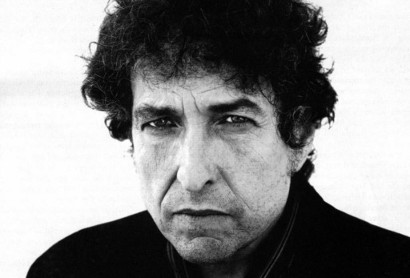
Bob Dylan

Saturday, May 2, 2009

Kitsch in Beijing Capital International Airport

On my way back from China, I had almost four hours to explore the newly built Beijing Capital International Airport. There are art galleries and stage and booths showcasing different regions in China - currently on display are works from Hebei Province next to Beijing.

The art gallery in my terminal displayed "bone porcelain" plates, vases and other products. Most of them are very beautiful but inevitably, some kitsch took the center space - a giant plate of Mao Zedong portrait sat right in the middle of the beautiful utilitarian merchandises.


In one of the showcases from Hebei Province, I picked out an expensively produced catalog of snuff boxes but found nothing nice in it. The catalog started with a grandiose owner of the enterprise and an array of awards and certificate pictures, followed by pictures of visiting VIPs (exclusively politicians) and calligraphy by some of those VIPs. Only then, you would see the products. Most of the snuff boxes were painted with vulgarity, but it was the kitsch stood out. Many snuff boxes featured the president and prime minister of China, striking heroic or caring poses during the 2008 earthquake, or many famous athletes or scientists.


In last few decades, China has transformed greatly but definitely not everything.

Monday, April 13, 2009

Monstrous Beijing Capital International Airport

Transferring in the newly built (for the Olympic Game) Beijing Capital International Airport in the early hour of the day was like walking in a dreamland.

Our airplane arrived from Los Angeles shortly after 5:00 am local time (Beijing Time for the entire span of China, as a matter of fact). The plane was only half full - I don't know if it was because of the economic downturn or because we were in the air during the entire Easter. We got off the airplane and descended onto the foggy tarmac, and was transferred by a bus to a far away Passport Control.

All the halls were hugely impressive - immense space with echoing whirring buzz, a few decorative, unthreatening uniformed figurines scattered here and there, adding the only human touches in the steel trussed industrial futuristic thing.

The wait was short and we were led to the downstair train station - without knowing which train to take, we waited for the incoming train. Train came and only after we got on the train, we were able to see the directions and it turned out there was only one destination - luggage claim, custom, and transfer area. After a short wait to get my luggage, I started to look around in the area for an ATM machine. I saw two Currency Exchange but no ATM. I went to a Duty Free shop for advice and was told that there was an ATM outside that Luggage Claim zone. Why didn't the Duty Free shop carry one was beyond my understanding.

I joined the jumbled line (if there was any line in China) for Custom. Two lanes - Red for Something to Declare and Green for Nothing to Declare. At 5:45 am, the lanes were still closed. No sign and no person to help the insomniac bunch. Finally, one of us grew nervous and waved down one of the uniformed figurines and was told that the Custom would be open at 6:00 am. If there were only a sign! Then the country would be too visitor friendly. Keeping people uninformed and confused was the best way to exert one's authority.

Finally, the lanes were open and we were all waved pass, without having to fill out any paperwork. Another short lines to re-check in my luggage followed - Economy, Business and First Classes. One person came first to serve the Business class which had three people in line, and then another person came for Economic class, which had about 25-35 people waiting, yet no one was serving the lone First Class flyer. After the three Business Class flyer were dispatched, Economy class flyers were beckoned onto the the Business Class lane and the poor First Class flyer was left out unattended and he finally moved over to wait in the Business Class lane and was duly served.

Once re-checked my luggage, I went to the third floor and went through another round of security screening and again, no ATM was in sight. I found Information desk and was told that there is one near Gate C11. I walked a fairly long distance and found a Bank of China ATM near Gate C11. It gave me options of Inquiry and Taking my card. I was utterly defeated in trying to taking money out of my banking account.

Turning around, I had to walk through another vast span to Gate C55 for Shenyang. Found it but saw no gate leading to the airplane. Confusion kicked in. I went to Second floor and saw nothing and went to First and was reassured by the typical Boarding Pass dispenser near the gate. There were very limited seating on the first floor so I went back up to the second. Found a seat but had to move away, in order to stay away from several large tour groups, mainly consisted of loud talking Chinese. They were so loud that I thought they were doing political rally at an Obama event. My boarding time was 7:05 am. Near 6:55 am, I heard the call for boarding through my ear plugs. I went to the gate and was greeted by another bus. After another dream sequence, my fellow passengers and I arrived on tarmac again and climbed onto the plane destined for Manchurian Shenyang in northeast China.

The new Beijing Capital International Airport was the most inhumane large structure I ever encountered, for the purpose of swallowing and spitting out as many people as one could imagined.