Showing posts with label Water. Show all posts

Monday, March 12, 2012

"White Dress" Series Continues - A New Drawing and a New Painting

My fascination with the "white dress" motif does not abate, after having created several paintings in the past.

Last week, I finished a pastel drawing and an oil painting with such motifs.  The drawing, titled Revelling, had three floating dancing white dresses, hovering over a plain landscape.  Though dancing, the color palette was anything but cheerful.  A melancholy permeated the space:

Revelling / 狂歡 / Revelling
Revelling
Pastel on Paper

As for the painting, it seemed even less comforting.  There, white dresses fell and continued falling into greenish dark water, in which the submerged materials mingled with other ominous looking objects, making this little canvas a swallowed scream:

Submerge / 淹沒 / Untertauchen  
Submerge
Oil on Canvas
20" x 16"

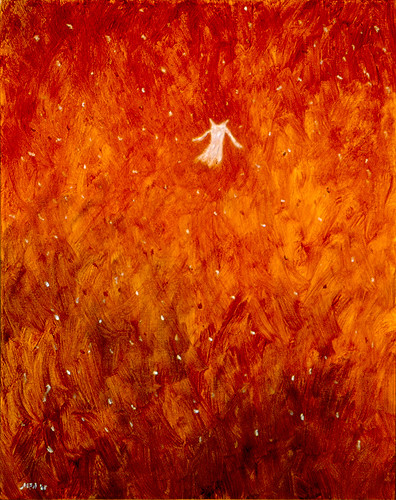
Below are three "White Dress(es)" paintings I created in 2005 and 2010.

White Dress / 白色連衣裙 / Weißes Kleid
White Dress
Oil on Canvas
20" x 16"
Completed in 2005

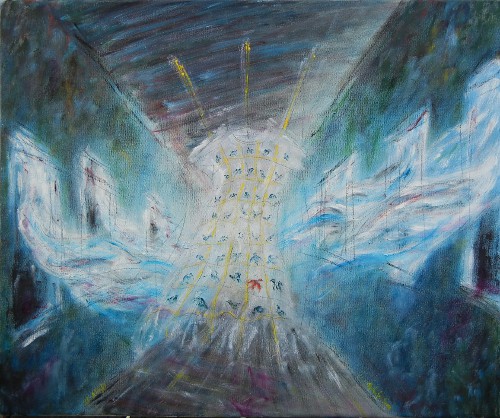
White Dress with Birds / 带鳥的白連衣裙 / Weißes Kleid mit Vögeln
White Dress with Birds
Oil and Graphite on Canvas
20" x 24"
Completed in 2011

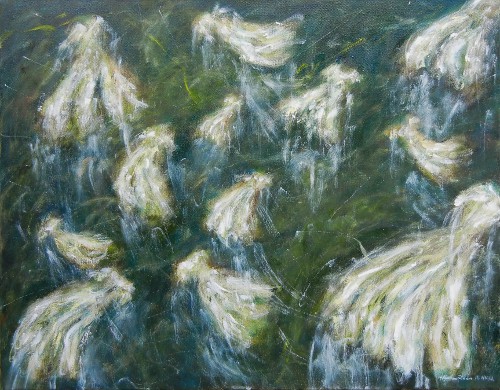
White Dresses / 白連衣裙 / Weiße Kleider
White Dresses
Oil on Canvas
22" x 28"
Completed in 2011


Other Related posts on Art · 文化 · Kunst:
- New Presentations of My Yearly Artworks
- First Painting Completed in 2013
Unexpected Successes of "Stringed White Dresses - An Installation"
- 2012 Recapitulation - Video Presentation of Paintings Completed in 2012

Friday, October 28, 2011

Natural Bridge and Crater Lake, Oregon - Oregon Trip, Part 7

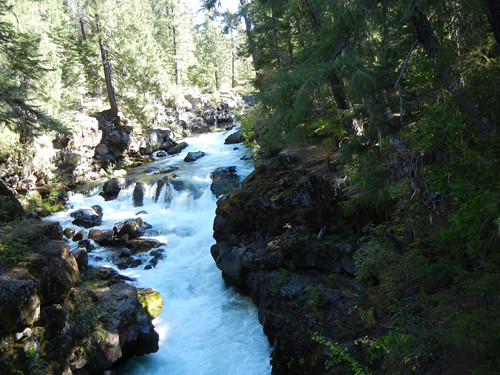
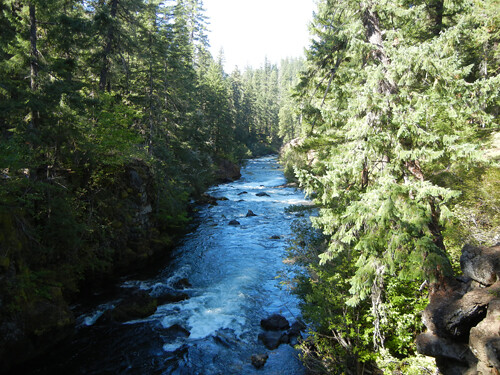
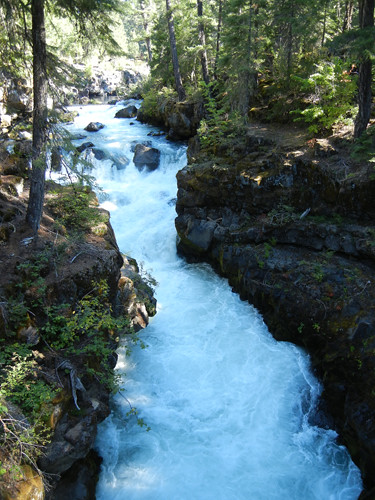
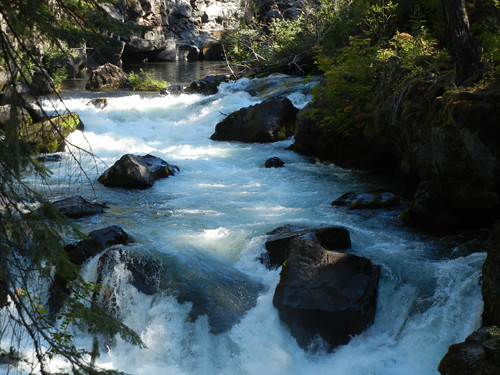
During our stay in Ashland, we took a day trip to the renown Crater Lake.  Before we arrived at our destination, we stopped by the "Natural Bridge" at the upper Rogue River for a short while.


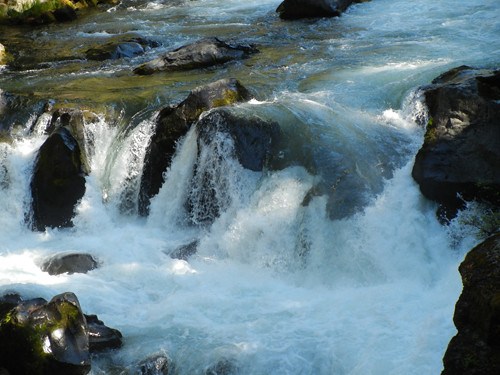
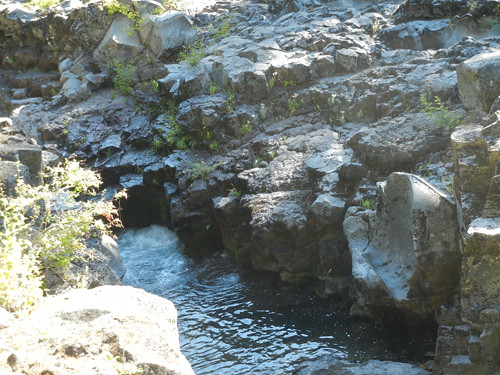
Natural Bridge, The Rogue River, Oregon _ 6464

Natural Bridge, The Rogue River, Oregon _ 6465

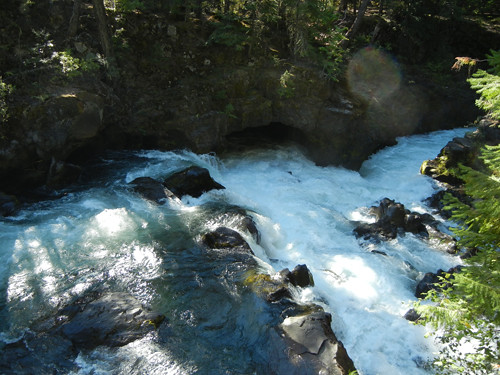
Natural Bridge, The Rogue River, Oregon _ 6531

Natural Bridge, The Rogue River, Oregon _ 6534

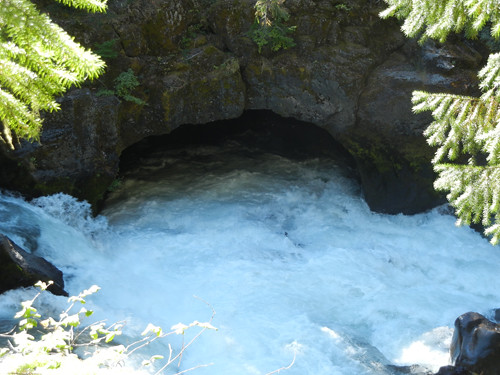
Natural Bridge, The Rogue River, Oregon _ 6538

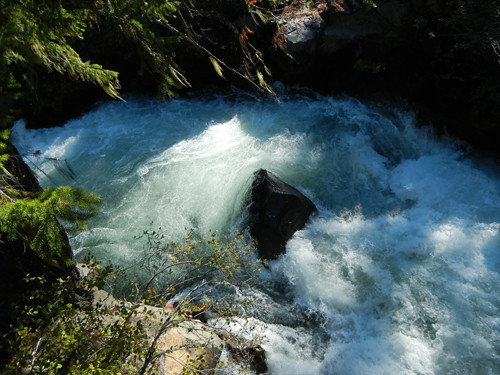
Natural Bridge, The Rogue River, Oregon _ 6469

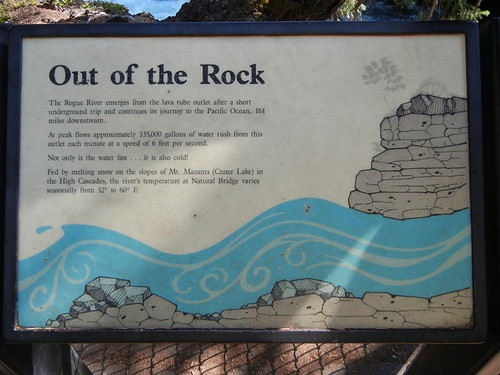
The Rogue River was a large rapids and a lovely one.  The wonderful thing to see here is the water had created courses underneath large rocks therefore the "natural bridges".  We saw clearly how the water came out of and flew into "caves".

Natural Bridge, The Rogue River, Oregon _ 6480

Natural Bridge, The Rogue River, Oregon _ 6479

Natural Bridge, The Rogue River, Oregon _ 6496

Natural Bridge, The Rogue River, Oregon _ 6490

Natural Bridge, The Rogue River, Oregon _ 6517


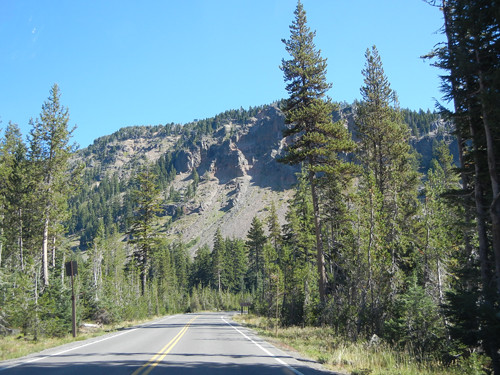
After we'd left the Natural Bridge, we continued to climb up to more than 8,000 feet elevation and arrived at the Crater Lake.

Crater Lake, Oregon _ 6544

Crater Lake, Oregon _ 6579

Crater Lake, Oregon _ 6588


Wikipedia described the lake as:

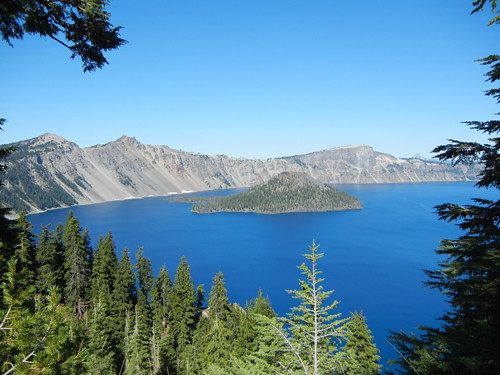
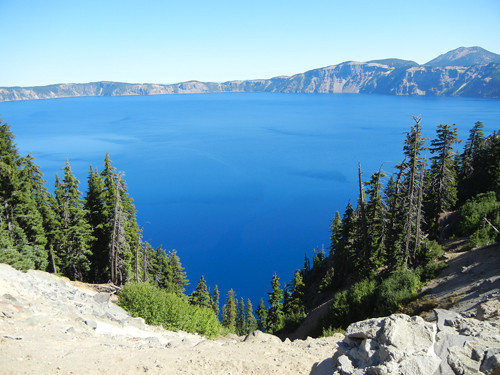
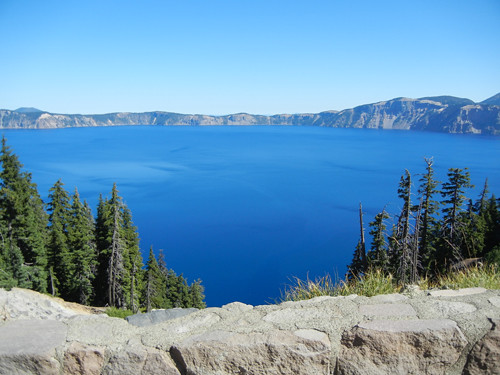
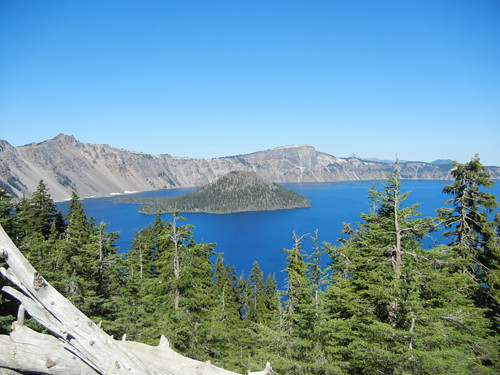
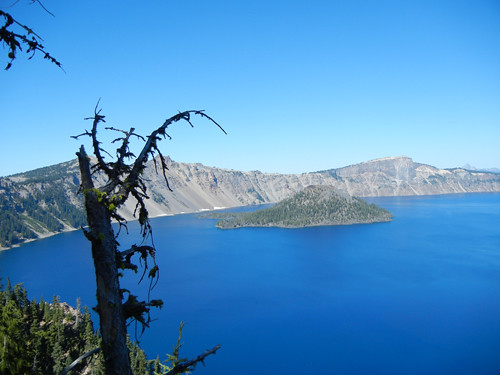
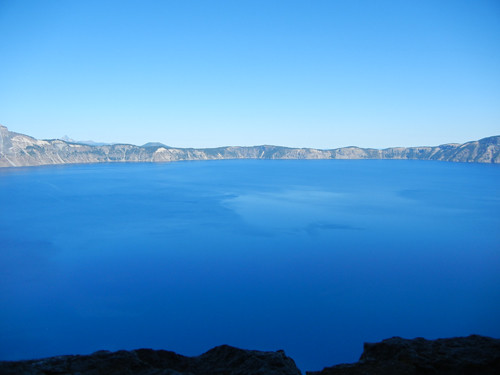
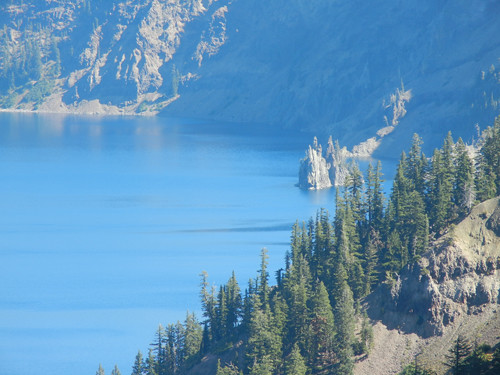
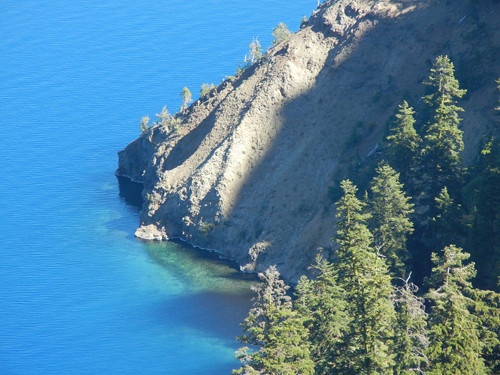
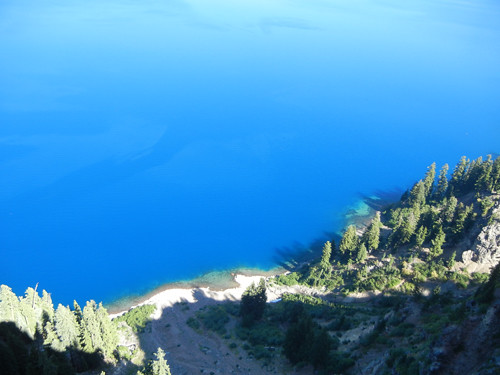
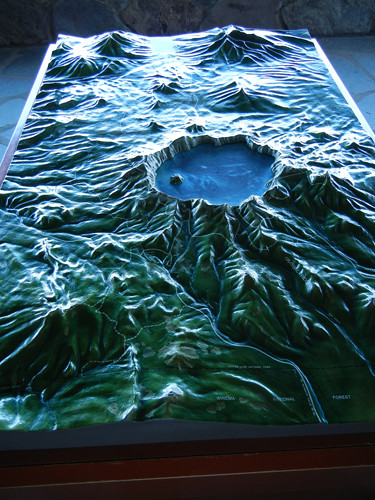
Crater Lake is a caldera lake located in the south-central region of the U.S. state of Oregon. It is the main feature of Crater Lake National Park and famous for its deep blue color and water clarity. The lake partly fills a nearly 2,148-foot (655 m) deep caldera that was formed around 7,700 (± 150) years ago by the collapse of the volcano Mount Mazama. There are no rivers flowing into or out of the lake; the evaporation is compensated for by rain and snowfall at a rate such that the total amount of water is replaced every 250 years.
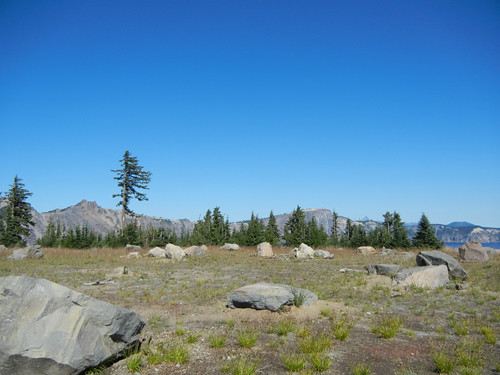
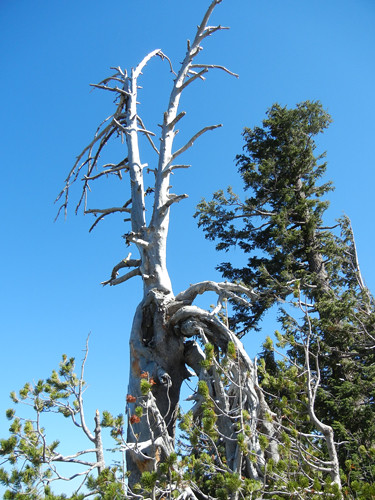
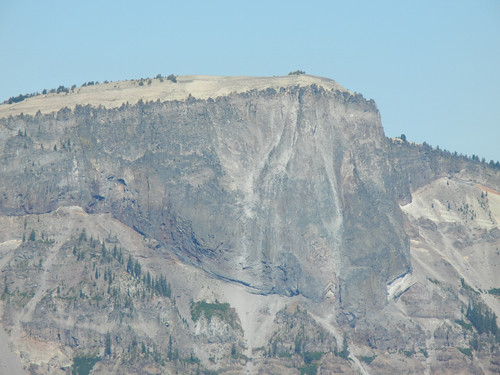
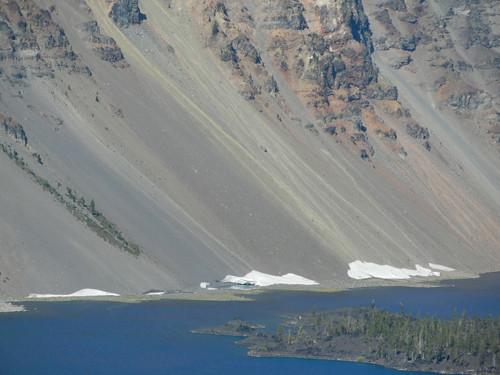
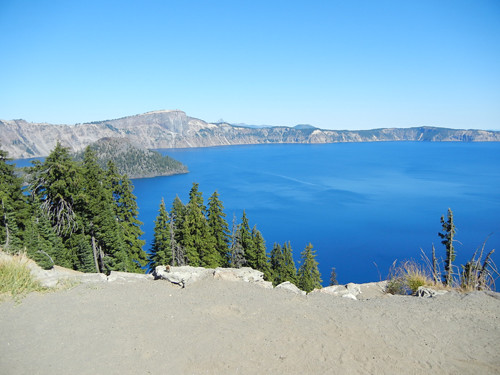
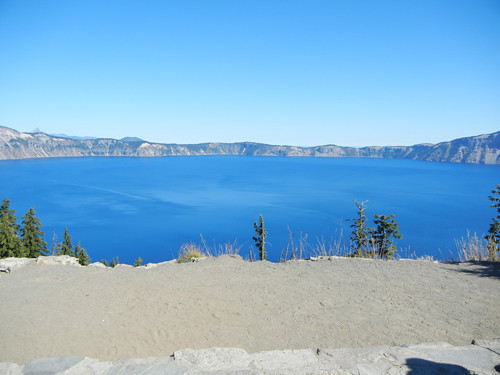
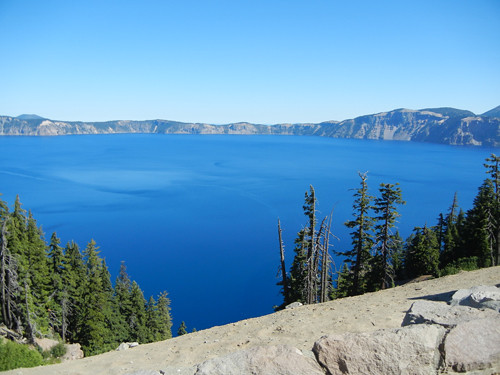
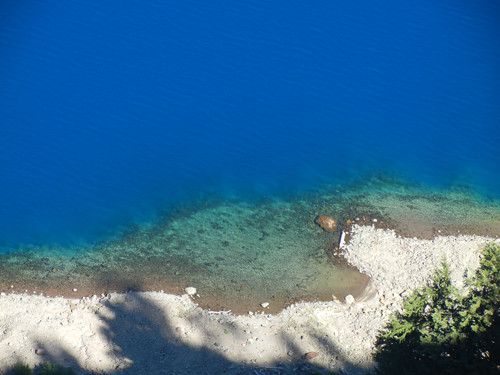
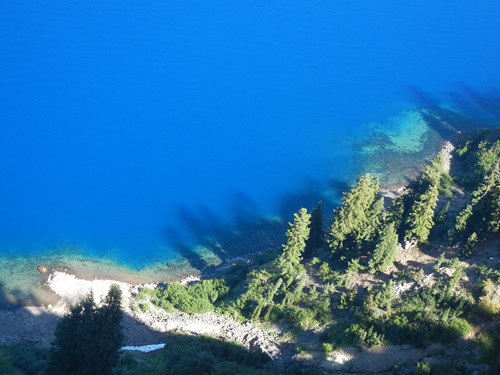
It was breathtakingly beautiful, with its almost perfectly round shape, the incredible deep cobalt blue in the center and magically shimmering blue-green at the shallow water edges.  The Rocks surrounded the lake was strong and tough and we even saw some snow at the bottom of the rocks.

Crater Lake, Oregon _ 6598

Crater Lake, Oregon _ 6590

Crater Lake, Oregon _ 6595

Crater Lake, Oregon _ 6563

Crater Lake, Oregon _ 6566

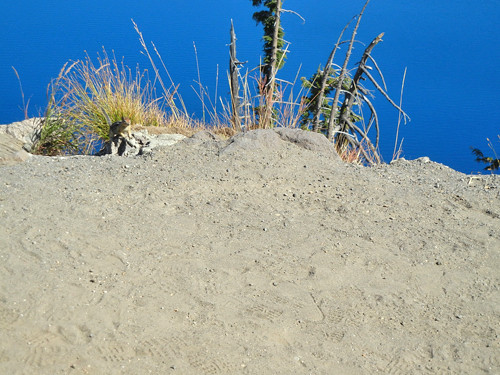
We also saw a cute chipmunk at the edge of the lake, posing for tourists.

Crater Lake, Oregon _ 6557

Crater Lake, Oregon _ 6569

Crater Lake, Oregon _ 6574

Crater Lake, Oregon _ 6573

Crater Lake, Oregon _ 6582

Crater Lake, Oregon _ 6598

Crater Lake, Oregon _ 6653

Crater Lake, Oregon _ 6612

Crater Lake, Oregon _ 6628

Crater Lake, Oregon _ 6626

Crater Lake, Oregon _ 6639

Crater Lake, Oregon _ 6615

Crater Lake, Oregon _ 6616

Crater Lake, Oregon _ 6630


Related articles:
--> Coastal Northern California and Wine Country - Oregon Trip, Part 11 (The End)

--> Arcata, California - Oregon Trip, Part 10
--> Idyllic Parks and Cute Animals in Ashland - Oregon Trip, Part 9
--> Art in Ashland - Oregon Trip, Part 8
--> Natural Bridge and Crater Lake, Oregon - Oregon Trip, Part7--> It Got Better - Three Plays at Oregon Shakespeare Festival - Oregon Trip, Part 6
--> Ashland Springs Hotel - Oregon Trip, Part 5
--> Ashland, Oregon - Oregon Trip, Part 4
--> A Night at McCloud, California - Oregon Trip, Part 3
--> Burney Falls in McArthur-Burney Falls Memorial State Park, Shasta County, California - Oregan Trip, Part 2
--> Sundial Bridge at Turtle Bay, Redding, California - Oregon Trip, Part 1

Monday, June 6, 2011

Most Fortunate Chinese - Beijing Residents, on Drought and Water Project in China

Beijing is the absolute center of China - in a country spanning of over four time zones, only time used there is Beijing standard time.  Either the number of a train is even or odd, depends on if it goes to or fro Beijing.  When I grew up, one resident in my home city got a ration of about one pound meat, 7 oz. cooking oil, etc. per month, while Beijing residents could purchase almost everything, with no real quantitative limits.  The only inconvenience was the limit they could buy at one time.  As long as they went back to the queues, they were allowed to buy as much to their hearts' content.  Dad had many opportunities of going to Beijing on business trips and every time, he would brought back large amount of amazing food, unknown or unfamiliar to the people in the desolate Manchuria, such as deep fried doughs, and twists soaked in honey.  Dad called himself of of those "Manchurian Tiger" charging into Beijing, a favorite term Beijing residents disparagingly called people from materially challenged bitter cold Manchuria.  Beijing residents were very privileged indeed.

That tradition has survived to the new century.  The first Chinese Olympic took place in no other city than Beijing.  People from all corners spent vast amount of money to sustain a month-long inflated pride of Beijing residents, with no benefits to other places whatsoever.

When Beijing residents are thirsty, millions people lose their homes in the provinces.

Beijing and several other northern cities are suffering from thirst.  Yet, Beijing has built many golf courses and ski resorts, all notorious for water consumption.  Instead, Chinese government, after the controversial Three Gorges Dam, is now embarking on an even more ambitious, and more controversial water project - South-North Water Diversion Project.

Guardian reported that
The dam is not the only hydro-engineering project that has come under scrutiny as a result of the drought. The state's massive south-north water diversion project, which aims to tap the normally moist Yangtze basin to supply arid northern cities like Beijing, is also being called into question because one of its source reservoirs at Danjiangkou has fallen 4m below the minimum requirement for its operation.

"This is bound to have an impact on the diversion project," said Zhang Junfeng, an environmental activist with Green Earth Volunteers. "Water storage at Danjiangkou reservoir is already at a dead level and I think the situation will get worse year by year because this is partly due to climate change."

New York Times reported that 
Beijing has about 100 cubic meters, or 26,000 gallons, of water available per person. According to a standard adopted by the United Nations, that is a fraction of the 1,000 cubic meters, or 260,000 gallons, per person that indicates chronic water scarcity.

The planning for Beijing’s growth up to 2020 by the State Council already assumes the water diversion will work, rather than planning for growth with much less water, said Mr. Wang, the former official.

City planners see a Beijing full of golf courses, swimming pools and nearby ski slopes — the model set by the West.

“Instead of transferring water to meet the growing demand of a city, we should decide the size of a city according to how much water resources it has,” Mr. Wang said. “People’s desire for development has no end.”
Yangtze region is suffering the worst drought in fifty years - The Three Gorges Dam upstream had been blamed by many quarters - and the second largest lake in China, with the size of 1/6th of Lake Erie, has dried up.  There will be up to four million people relocated due to Three Gorges Dam and the Water Diversion Project would affect more people, in almost unimaginable scale.

If the Three Gorges Dam was crazy, this new project is pure insanity.

The more I think about it, the more I resent the fact that entire China population sacrifice themselves for the benefit of several million privileged residents in the most indulged Beijing.

However, whenever I complained too much, I remembered their heroic deeds in the trying time of May and June of 1989, then, my antipathy towards Beijing residents would dissipate, somewhat.
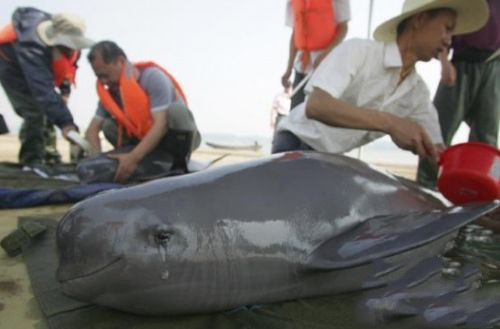
Weeping Water Dolphin

Monday, October 11, 2010

iPad, Water, Computer Art

The advance of new technology is quite disorienting amongst artists. Many people however are eager to explore the new horizon.  Fine art should not be limited to fresco, paper, charcoal, canvas, oil, marble or bronze.  Take William Kentridge for example, it is difficult to refute that his process or art-making is just as important as his drawings, prints and paintings, if not more.

Since iPad came into existence, people have made effort to incorporate that device into art-making, with various degree of success.

New York Times Magazine reported recently on such effort by the British painter David Hockney using iPhone’s Brushes app, among others:


I also found the video below on using iPad to make a portrait.


Other unusual art formats include "water painting", computer simulation (an old trick by now?) and light projections:

Water Painting:


Computer Simulation:


Coordinated Light Projection: