After visiting
The Frick Collection, it was fitting to visit
The Morgan Library and Museum. Again, I was being ignorant of its importance; rather, I was drawn by a drawing exhibit of Dürer:
Defining Beauty: Albrecht Dürer at the Morgan. The Official website says:
The exhibition includes eight extraordinary drawings by Dürer that demonstrate the variety and dynamism of his draftsmanship. Also included are prints and treatises by the artist.
Among the many highlights of the exhibition that illustrate Dürer's preoccupation with beauty are his seminal engraving of 1504, Adam and Eve, along with its most important extant related preparatory drawing. To create the work, Dürer joined several sheets of paper, then unified the composition with brown wash to create a perfect balance between the two figures. Dürer's efforts to resolve the composition are evident; both figures hold the apple that led to their expulsion from the Garden of Eden. Ever cognizant of his authorship, Dürer added his monogram and the date to the drawing. This iconic image, perhaps more than any other, documents how the artist strove to create both beauty and harmony in his depictions of the human form.
The drawings and prints on display were extraordinary. I was quite taken by the simple beauty and subtle violence in his drawing
Abduction on Horseback below.
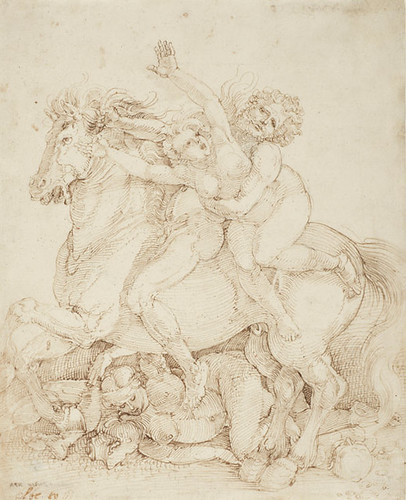 Abduction on Horseback, Pen and brown ink
His great ability to describe details accurately were demonstrated in two portrait drawings, both had his signature stylish approaches. One more true to life (his brother Endres) and the other one other worldly beautiful.
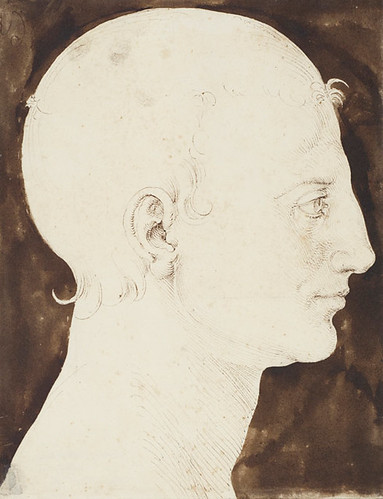 Constructed Head of a Man in Profile, Pen and brown ink and dark brown wash
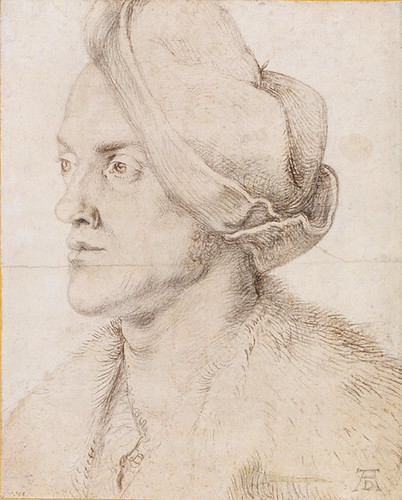 Portrait of the Artist’s Brother Endres, Charcoal, background later washed with white lead
His great enigmatic
Melancholia I was included in this exhibit. "This enigmatic image of the allegorical figure of Melancholy, her head leaning upon her hand, has been seen alternatively as a statement on artistic creativity and as evidence of Dürer's interest in ancient debates over the definition of beauty." Thus stated the notations in the exhibit.
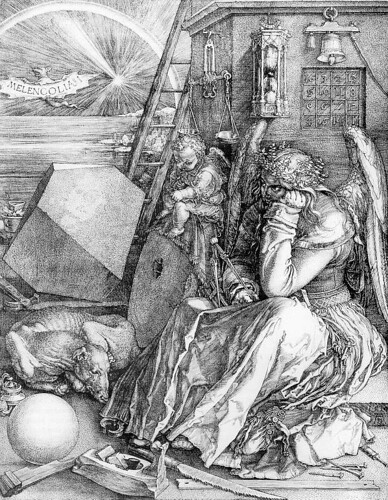 Melancholia I, Engraving
The focus point of this exhibit was on two "Adam and Eve" - one drawing and one engraving. The Morgan Library website claimed: "Among the many highlights of the exhibition that illustrate Dürer's preoccupation with beauty are his seminal engraving of 1504,
Adam and Eve, along with its most important extant related preparatory drawing. To create the work, Dürer joined several sheets of paper, then unified the composition with brown wash to create a perfect balance between the two figures. Dürer's efforts to resolve the composition are evident; both figures hold the apple that led to their expulsion from the Garden of Eden. Ever cognizant of his authorship, Dürer added his monogram and the date to the drawing. This iconic image, perhaps more than any other, documents how the artist strove to create both beauty and harmony in his depictions of the human form." For comparison, I include the painting of "Adam and Eve" (Museo del Prado, Madrid, Spain) following the engraving and the drawing below.
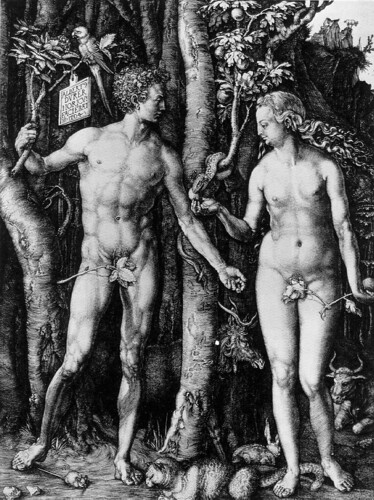 Adam and Eve, Engraving
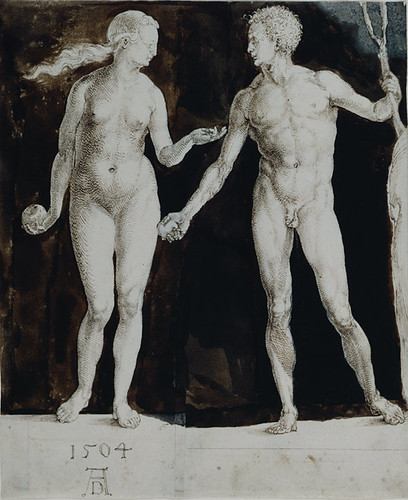 Adam and Eve, Pen and brown ink, brown wash, corrections in white
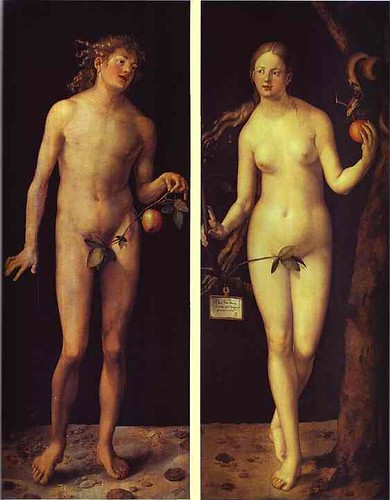 Adam and Eve, Oil on Panel (in Museo del Prado, Madrid, Spain)
There was another special exhibit, which had fascinating historical and artistic value -
Anne Morgan's War: Rebuilding Devastated France, 1917–1924.
This exhibition brings to life the extraordinary work undertaken by a small team of American women volunteers who left comfortable lives in the United States to devote themselves to relief work in France during and after World War I. Their dynamic leader was Anne Morgan (1873–1952), a daughter of the financier Pierpont Morgan. As she rallied potential volunteers and donors on speaking tours across the United States, Morgan harnessed the power of documentary photography to foster a humanitarian response to the plight of French refugees.
Works on view are drawn from two major collections: fifty photographs and a montage of silent films are on loan from the Franco-American Museum, Château de Blérancourt, France, a national museum housed in the seventeenth-century château that served as the base of operations for the American Committee. Photograph albums, personal letters, sound recordings, and archival documents are drawn from the papers of Anne Morgan at the Morgan.
I like the photographs very much - vivid character studies in that trying time.
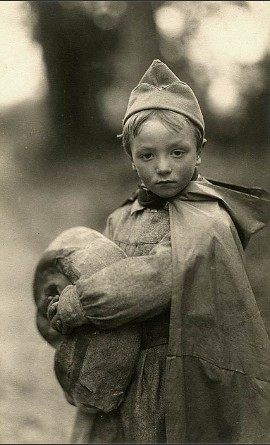 Faces of War, Anne Morgan
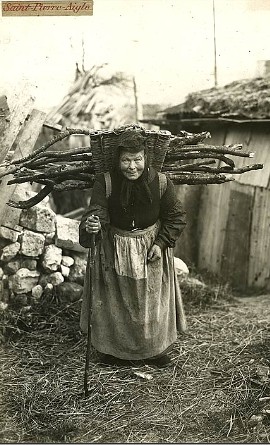 Faces of Wa,- Anne Morgan
I have to admit that immediately after Labor Day, perhaps was not the best time to visit New York, because many museums were changing exhibitions after the summer tourist season was over. Musical and theatrical offerings were sparse as well. Here, the great wonder, Library itself, was closed along with several exhibiting rooms. But I was very satisfied with Dürer.
Besides the special exhibit, I was able to see several important pieces on display in the hallways and corridors, including the crown jewel of the collection in the museum - Stavelot Triptych below:
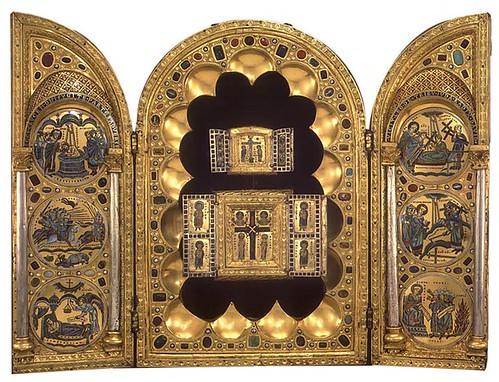 Stavelot Triptych, Flemish
This museum's collection included important manuscripts, music sheets, drawings and rare books, as sampled below:
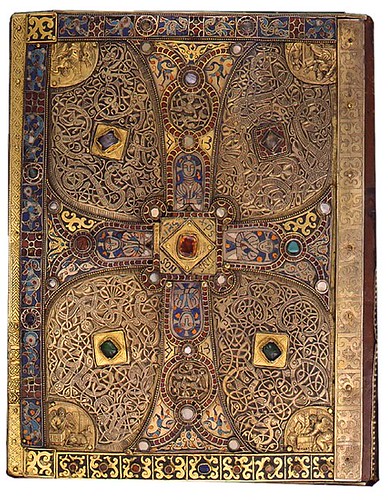 Gilt silver, enamel, and jeweled bookcover, probably Salzburg
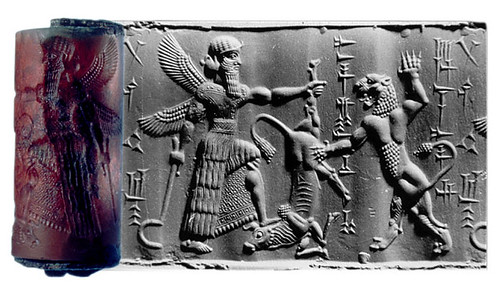 A Winged Hero Contesting with a Lion for a Bull, Cylinder seal and impression
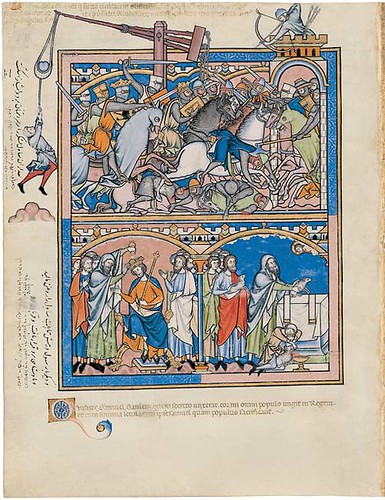 Saul Slaying Nahash and the Ammonites and Samuel Anoints Saul and Sacrifices to the Lord, France
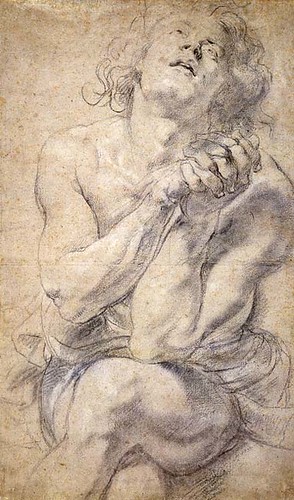 Seated Nude Youth, Peter Paul Rubens
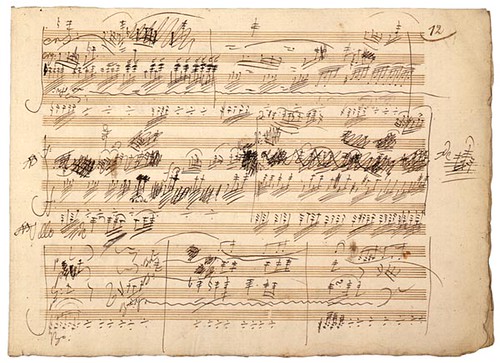 Manuscript - Piano Trio in D Major, op. 70, no. 1, Ludwig van Beethoven
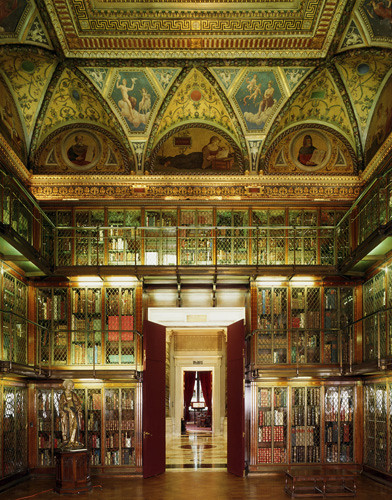
It was regrettable that I missed my chance to marvel at the Library. More trips to New York are in order!
 >> New York City Report, September 2010, Part V: "Matisse: Radical Invention, 1913-1917" at New York MOMA
<< New York City Report, September 2010, Part III: The Frick Collection
>> New York City Report, September 2010, Part V: "Matisse: Radical Invention, 1913-1917" at New York MOMA
<< New York City Report, September 2010, Part III: The Frick Collection



 Posts
Posts


