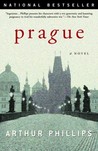
 Prague by Arthur Phillips
Several years ago, Arthur Phillips's Prague was read very broadly; at certain time, I could see someone reading it almost everyday. Finally I got the chance to read it myself and on the day I finished reading it, I chance encountered the St. Stephen's Day celebration (Hungarian National Day) in San Francisco's Golden Gate Park, two days before the holiday -- a nice coincidence since the entire novel of "Prague" took place in Budapest. "Prague" related the adventure of several young westerners in post-Communist Budapest, trying to find their life's purposes, while pining for the more apparently alluring Prague.
It was a fascinating read for me since I did visit Budapest after a stop in the more exotic-looking Prague during the same trip to Central Europe for a wedding took place in Margaret Island (Nunavut) of Budapest, a beautiful island referred to many times in the novel. The book was also very fascinating to me because the author had ably summarized the long history of the struggles of the Hungarian people for their identity and freedom, and their sufferings in the hands of the Communist regime. My personal experience of growing up in Communist China and having lived through the 1989's Tian'anmen Massacre in Beijing made the read more poignant.
The story line of the novel was not linear and the book often threatened to unravel but then those strands were pulled back and re-braided into a coherent rope, ushering the reader further along the path with the meandering characters who were often quirky and predictably unpredictable, and were prevented from being sentimental because enough timely irony were employed by the shrewd author.
Quite an engaging read, particularly for people had fascinations with central Europe history and people, the impact of Communism, and the yearning of the young people.
~~~~
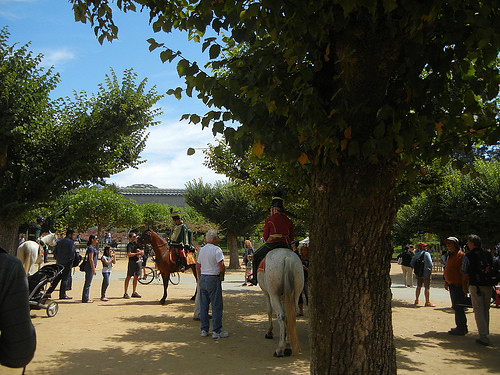
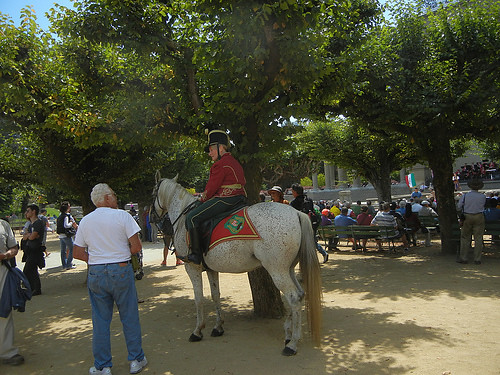
It was on 18 August 2013 that I encountered the celebration of St. Stephen's Day in Golden Gate Park. The actual St. Stephen's Day falls on today, 20 August. First we heard music, then saw two dancers danced to Hungarian folk tunes.
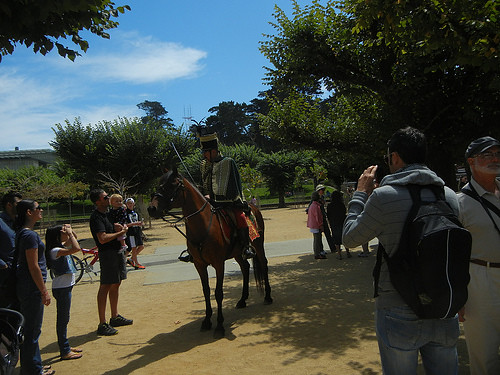
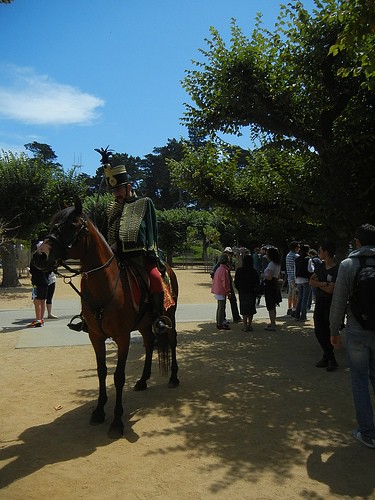
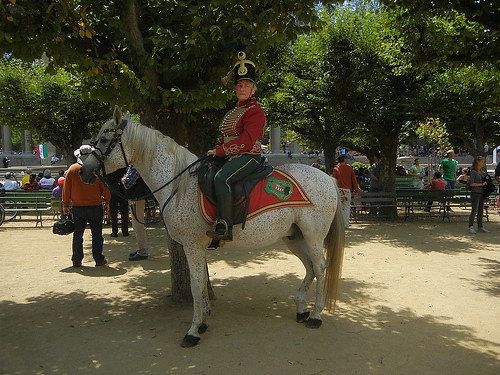
A while later, when we moved away from the stage, we saw several Hungarian Hussars on beautiful horses, in their impressive full regalia.
~~~~
What brought us to Golden Gate Park was to see the special exhibit of Richard Diebenkorn, Berkeley Years (1953-1966).Deeply engaged with the unique setting of the Bay Area, artist Richard Diebenkorn profoundly influenced postwar American art during his years spent working in Berkeley, from 1953 to 1966. Explore this first exhibition to focus on this pivotal period in Diebenkorn's career.
During his years in Berkeley, Diebenkorn was deeply engaged with the unique setting of the Bay Area, saturating his works with color, light, and atmosphere. More than 130 paintings and drawings, beginning with the artist's earlier abstract works and moving through his subsequent figurative phase, display his profound influence on postwar American art. [source: De Young Museum]
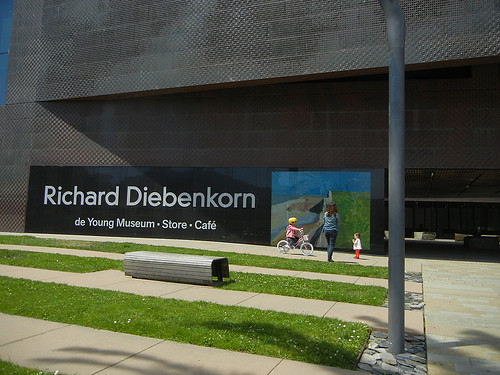
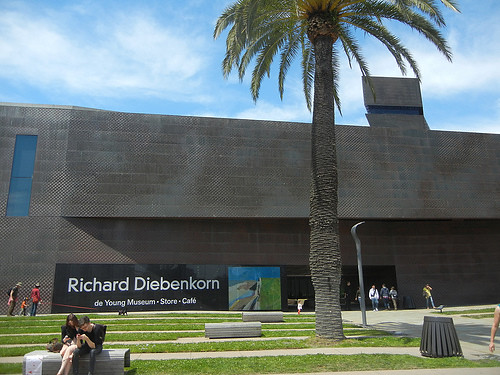
Diebenkorn was the artist that we thought we knew everything about him but actually, his opuses were much broader and deeper and much more mercury than the familiar (semi-)abstract pieces most closes representing his maturity, and it was gratifying and startling to see the richness of his works, even though confined to only his Berkeley years. Since I was not allowed to take pictures in the special exhibit, I found this photo I took when visiting Oakland Museum of California, featuring Diebenkorn's semi-abstract piece which was actually included in this exhibit, and quite a good representation of his Berkeley era.
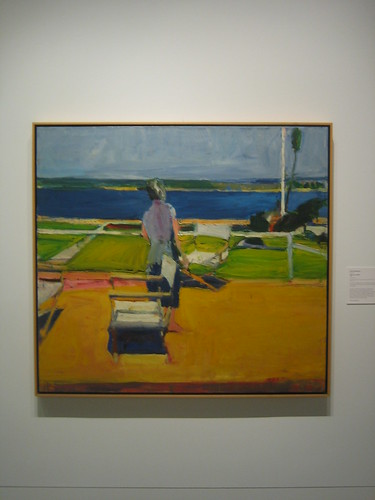
Figure on a Porch, 1959, Oil on Canvas, Richard Diebenkorn
~~~~
Since we saw James Turrell's special exhibit in LACMA, we were recommended by our artist friends to see a "hidden" James Turrell's work in De Young Museum. It was a site specific work created for De Young's Osher Sculpture Garden. This "skyspace," titled Three Gems, is the first work by Turrell to enter the museum’s collections. It is a subterranean installation that will feature a view of the sky altered by L.E.D. lighting effects, and that highlights changing light and weather conditions outside.This sculpture/installation was like a burial mound and after a little wooded pathway, we circled around the structure then entered the "shrine," and joined a group people sitting on the circular stone benches to look at the sky through the round opening on the domed ceiling.
Although Turrell has created other skyspaces, his project for the de Young will be his first skyspace to adopt the stupa form. The sculpture will be sited in a grass-covered hill in the Osher Sculpture Garden. Viewers will walk through a short tunnel cut into the hill, and then enter into a cylindrical space carved out of the hill. The retaining walls of this cylindrical space will be white concrete and the floor will be red stone. At the center of this cylindrical space will be a rough-hewn, black basalt stupa form. Entering the round stupa through a door, viewers will sit on a stone bench that runs around the circumference of the skyspace and view the sky through an oculus cut in the roof of the chamber. Viewers’ perceptions of the sky color will be subtly altered by an L.E.D. lighting system inside the chamber, and by changing light and weather conditions outside the chamber. [source: De Young Museum]
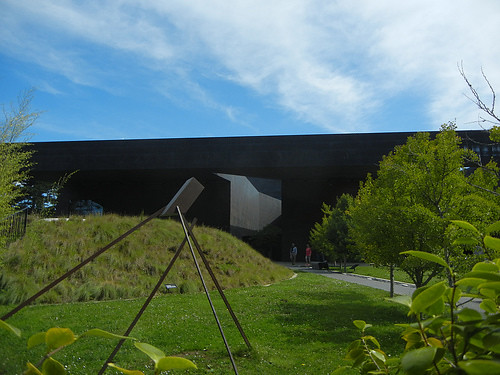
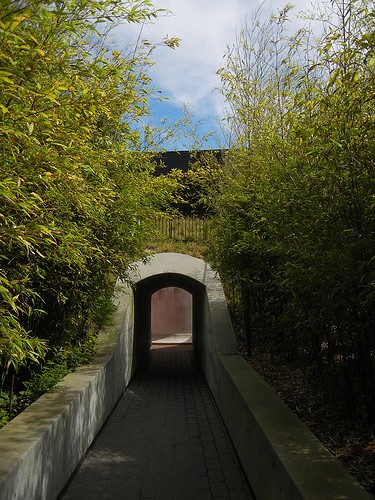
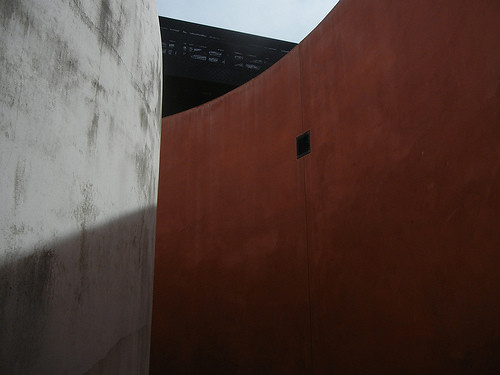
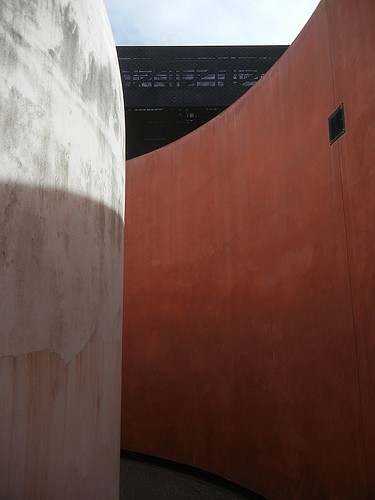
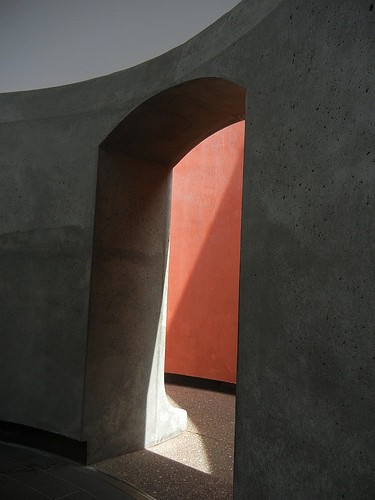
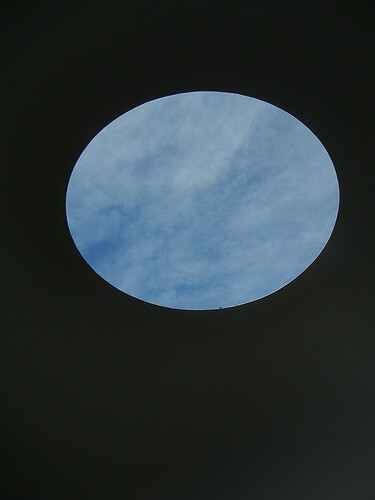
The site was surprisingly small and the meditative effect was diminished by the closeness to other people and the claustrophobic atmosphere. I wished that it were raining or snowing, then the effect could be more interesting.
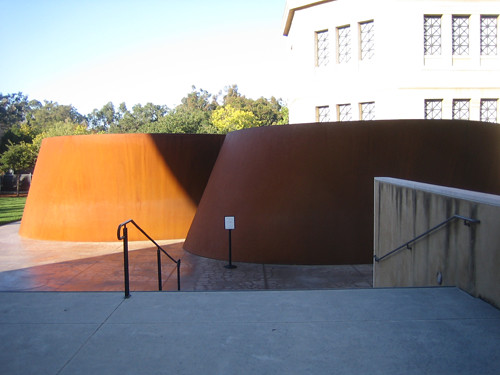
This installation reminded of me of Richard Serra's gargantuan installation "Sequence" we saw in Cantor Arts Center, Stanford University, featuring two two joined spiral spaces formed by curved steel plates. Serra's work was much more interesting to me because when we walked through those spiral spaces, we were greeted with myriad variations of shapes, colors, and lights. Much more spiritual and magical.
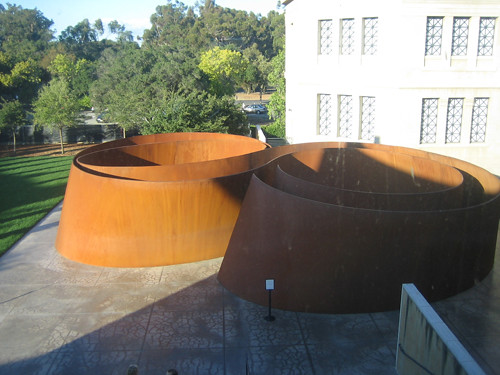
Sequence, Richard Serra
~~~~
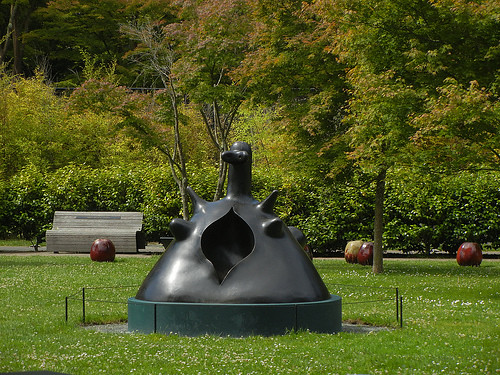
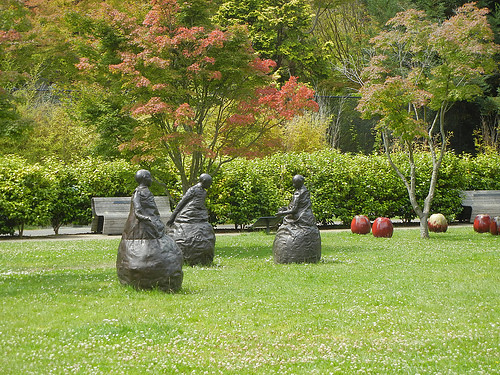
Osher Sculpture Garden in De Young Museum was a beautiful and soothing place to relax after my gluttonous art consumption. Below are several whimsical works I enjoyed particularly:
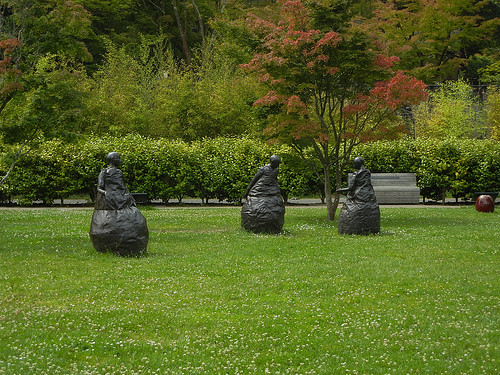
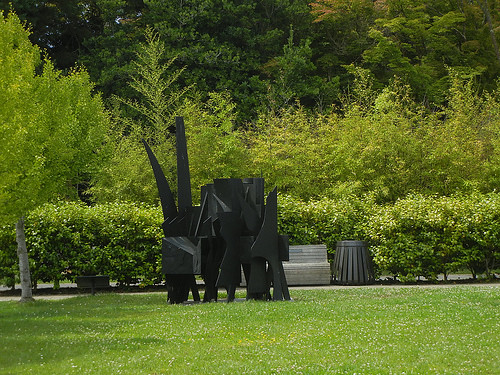
~~~~
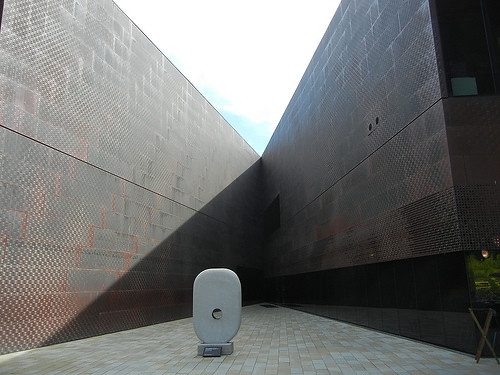
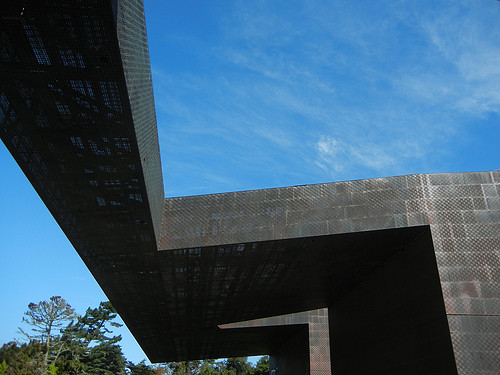
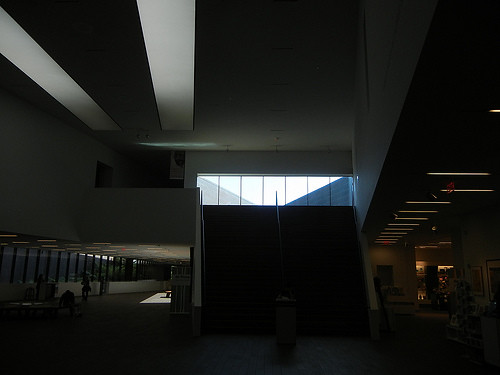
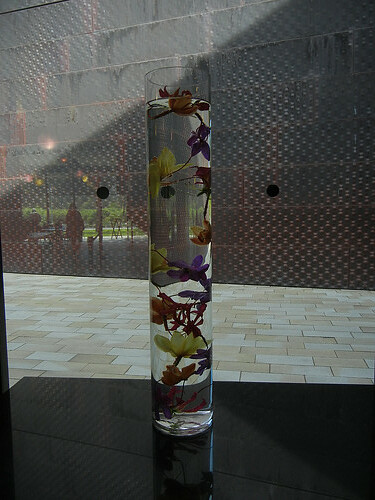
The museum itself was also a piece of art in its own rights and the ever changing views with shifting view angles continued to impress and delight:
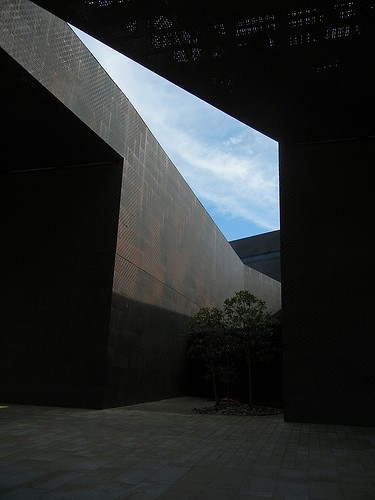
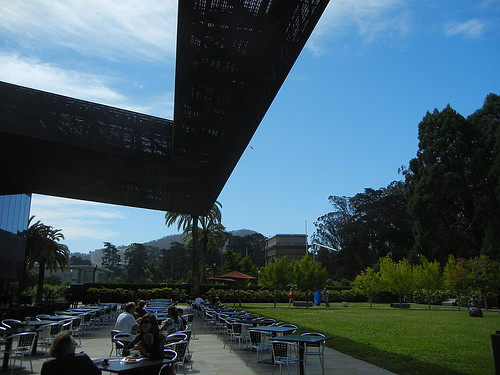
- Urs Fischer Exhibit at MOCA, Los Angeles
- Pixar Exhibit and Newly Renovated Oakland Museum of California
- Rodin and Richard Serra in Cantor Arts Center, Stanford University
- Review of "The Stranger's Child" by Alan Hollinghurst- Pixar Exhibit and Newly Renovated Oakland Museum of California
- Rodin and Richard Serra in Cantor Arts Center, Stanford University
- Review of "As Above, So Below" by Rudy Von B. Rucker
- My Favorite Paintings from Museum of Fine Arts (Budapest) (Szépművészeti Múzeum)
- My Favorite Paintings at the National Gallery (Schwarzenberg Palace) in Prague
- My Favoritate Sculptures on Karl's Bridge, Prague
- Another Look at De Young Museum in San Francisco
- My Favorite Paintings from Museum of Fine Arts (Budapest) (Szépművészeti Múzeum)
- My Favorite Paintings at the National Gallery (Schwarzenberg Palace) in Prague
- My Favoritate Sculptures on Karl's Bridge, Prague
- Another Look at De Young Museum in San Francisco


 Posts
Posts


