Showing posts with label The Cloisters. Show all posts

Thursday, February 2, 2012

My Favorite Collections at The Cloisters, Metropolitan Museum of Art, New York

Metropolitan Museum of Art, New York, has a wonderful branch - The Cloisters, devoted to the art and architecture of medieval Europe, with approximately three thousand works dating from the twelfth through the fifteenth century. The building and its cloistered gardens—located in Fort Tryon Park in Northern Manhattan—are treasures in themselves, effectively part of the collection housed there.

In 2010, I visited it for the first time and blogged about it rather broadly.  Today, I set up another task of choosing two artworks collected there touched me the most.  My picks are a wood sculpture of Crucifix and a tapestry featuring a unicorn in captivity.

The below Crucifix was as moving and otherworldly as a religious devotional piece can be.  Its seemingly stiff and old fashioned curving actually enhanced its mystery to modern eyes.  It was a reminder of the ancientness of Christian cult and the surrounding murals of Mother of God and other Saints complemented this powerful work wonderfully with their multiple-hued coloration and softer lines.  Below the sculpture, narrow slits of lights illuminated the vault reluctantly, and added extra layer of drama and mystery.

Crucifix, Palencia, Castile-León, c. 1150–1200, The Cloisters, The Metropolitan Museum of Art, New York _7894
Crucifix, Palencia, Castile-León, Spain, c. 1150–1200
Corpus: white oak and pine with polychromy, gilding, and applied stones; Cross: red pine, polychromy

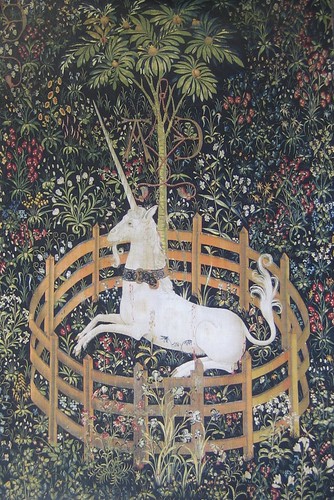
The other favorite of my there is "The Unicorn in Captivity".  Crucifix is a religious artifact, while this one is fantastical one, rooted in our ancestors' uninhabited imagination.  It mingled, rather deftly, the secular and spiritual.  It also embodies the medieval people's desire for a world which was pure and bountiful.  Alas, that paradise didn't exist.

The Unicorn in Captive, South Netherlandish, c. 1495-1505  _7852 (m)
The Unicorn in Captive, South Netherlandish, c. 1495-1505
Wool warp with wool, silk, silver, and gilt wefts

The Cloisters web site stated that "The Unicorn in Captivity" may have been created as a single image rather than part of a series. In this instance, the unicorn probably represents the beloved tamed. He is tethered to a tree and constrained by a fence, but the chain is not secure and the fence is low enough to leap over: The unicorn could escape if he wished. Clearly, however, his confinement is a happy one, to which the ripe, seed-laden pomegranates in the tree—a medieval symbol of fertility and marriage—testify. The red stains on his flank do not appear to be blood, as there are no visible wounds like those in the hunting series; rather, they represent juice dripping from bursting pomegranates above. Many of the other plants represented here, such as wild orchid, bistort, and thistle, echo this theme of marriage and procreation: they were acclaimed in the Middle Ages as fertility aids for both men and women. Even the little frog, nestled among the violets at the lower right, was cited by medieval writers for its noisy mating."


My Favorite Museum Collection Series

>> My Favorite Museum Collection Series 7: An Exception - Another Favorite Work from De Young Museum, San Francisco  
<< My Favorite Museum Collection Series 5: My Favorite Paintings at Metropolitan Museum, New York


List of My Favorite Artworks in the Museums I've Visited

Monday, September 27, 2010

The Cloisters - The Metropolitan Museum of Art, New York City

Every time when I visited New York City, I'd stop by the Metropolitan Museum of Art, but had never been to its branch - The Cloisters, devoted to the art and architecture of medieval Europe, with approximately three thousand works dating from the twelfth through the fifteenth century. The building and its cloistered gardens—located in Fort Tryon Park in Northern Manhattan—are treasures in themselves, effectively part of the collection housed there.

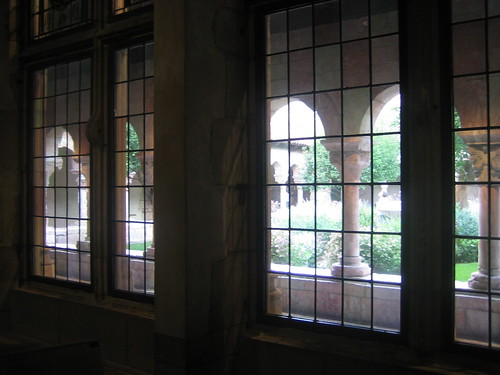
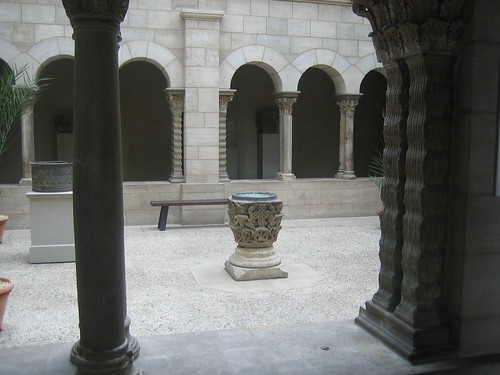
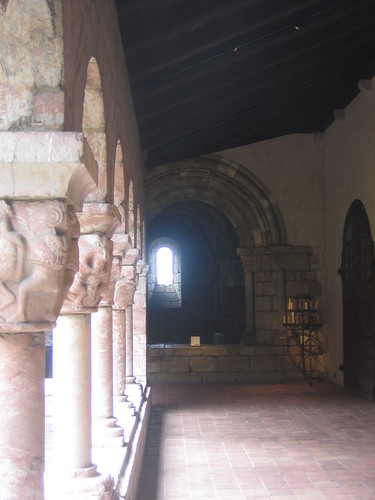
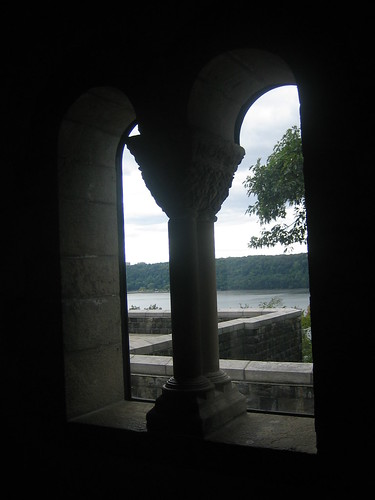
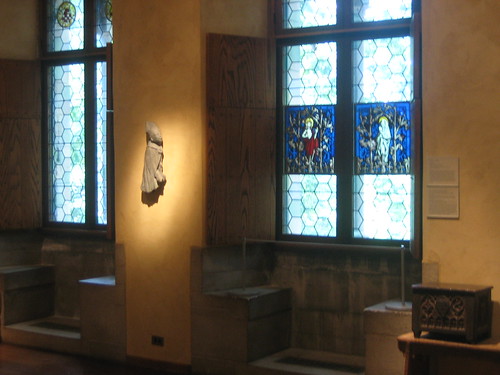
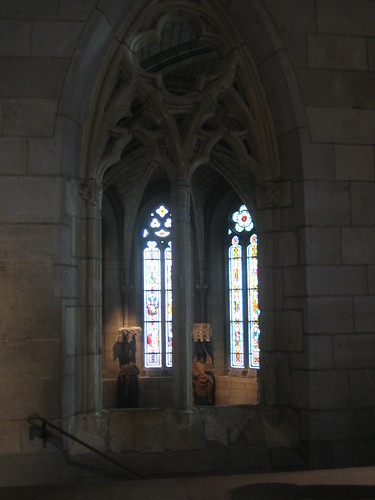
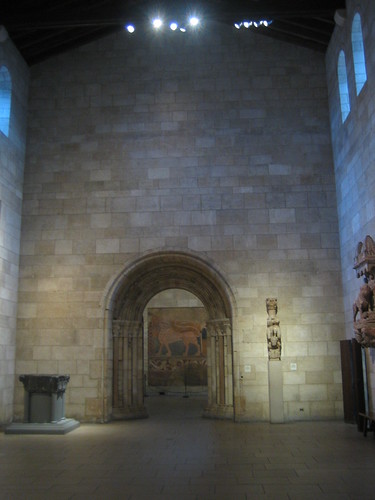
I visited the Cloisters on 10 September and it was surprisingly cool and the walk up to the hill along the Hudson River was very pleasant. Before I dived in for the collections, I took moments to admire the lovely building, which incorporated elements from five medieval French cloisters—quadrangles enclosed by a roofed or vaulted passageway, or arcade—and from other monastic sites in southern France. Three of the cloisters reconstructed at the branch museum feature gardens planted according to horticultural information found in medieval treatises and poetry, garden documents and herbals, and medieval works of art, such as tapestries, stained-glass windows, and column capitals.
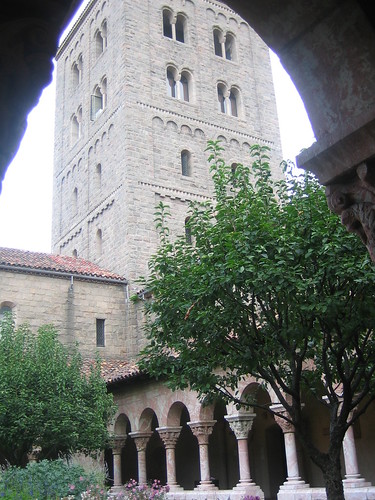
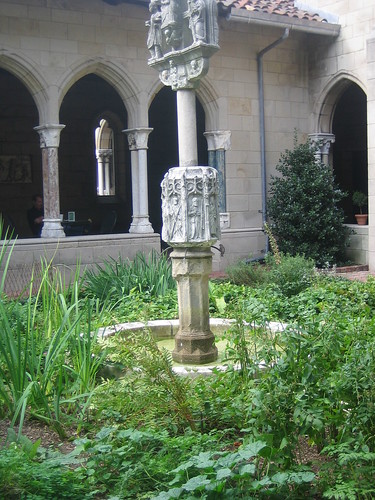
The Cloisters, The Metropolitan Museum of Art, New York _7864

The Cloisters, The Metropolitan Museum of Art, New York _7886

The Cloisters, The Metropolitan Museum of Art, New York _7853

The Cloisters, The Metropolitan Museum of Art, New York _7897

The Cloisters, The Metropolitan Museum of Art, New York _7868

The Cloisters, The Metropolitan Museum of Art, New York _7896

Viewing medieval art in a setting like this was heavenly.  The relative isolation from urban surroundings made this trip even more eventful.  In the past, I hadn't paid much attention to medieval art, even though I had always been drawn to monastic stories and life, till a few years ago, when I stayed in a hotel near Musée de Cluny - Musée national du Moyen Âge in Paris. Due to the proximity, I was "compelled" to visit the museum and was completely won over and even visited it twice.

There were many beautiful stain glass windows and they often were my favorite objects.
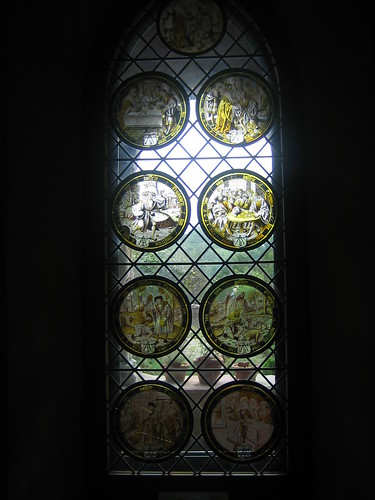
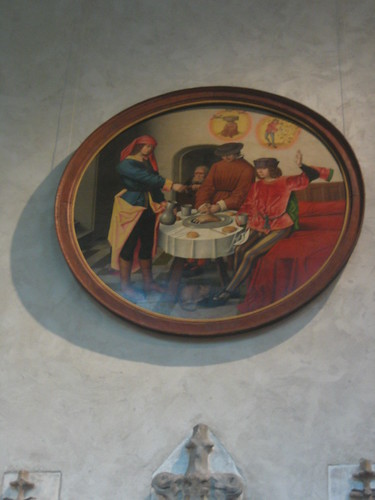
Scenes from a Series of the Parable of the Prodigal Son, Germany, Cologne (?), c. 1530-35 _7873
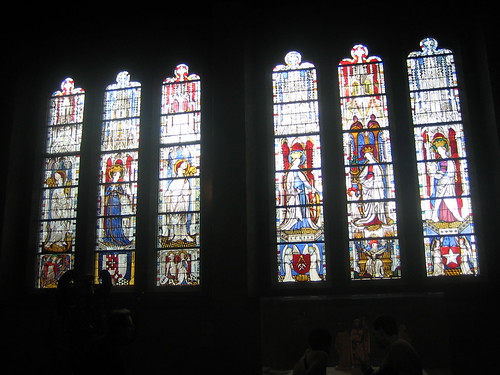
Scenes from a Series of the Parable of the Prodigal Son, Germany, Cologne (?), c. 1530-35
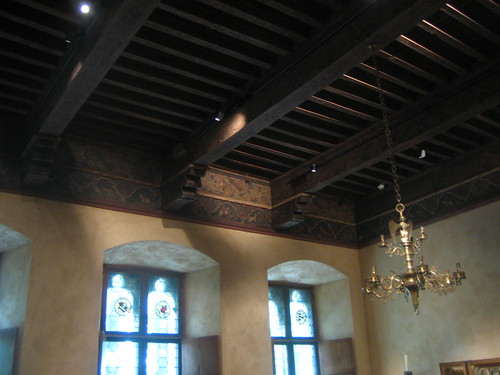
The Cloisters, The Metropolitan Museum of Art, New York _7843

The Cloisters, The Metropolitan Museum of Art, New York _7835

The Cloisters, The Metropolitan Museum of Art, New York _7827

The Cloisters, The Metropolitan Museum of Art, New York _7858

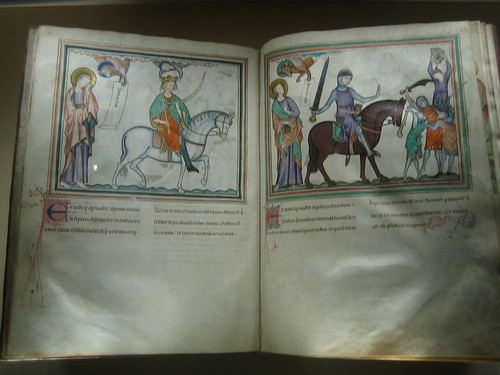
Manuscripts were my favorite objects as well. It was fascinating to see some cartoon scribbles carefully drawn in blank space to add spices, like those we encounter often on The New Yorker. It was also very interesting to see ancient playing cards as well. In the same group,
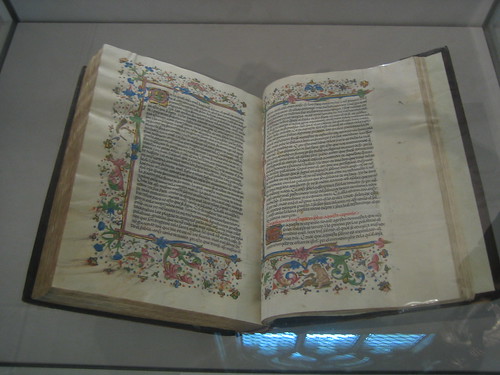
Saint Augustine's City of God, Spain, Toledo, 1446-82, Cano de Aranda and Workshop _7833
Saint Augustine's City of God, Spain, Toledo, 1446-82, Cano de Aranda and Workshop
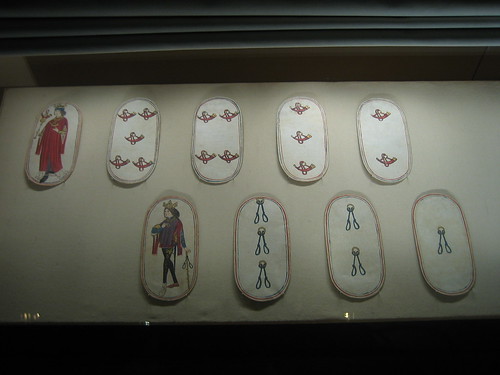
The Cloisters, The Metropolitan Museum of Art, New York _7876

Set of Fifty-Two Playing Cards, c. 1470–1480, South Netherlandish, The Metropolitan Museum of Art, New York _7877
Set of Fifty-Two Playing Cards, c. 1470–1480, South Netherlandish

More collections were of the serious kind, particularly those of religious purposes. There were a giant Crucifix under a Byzantine style dome, decorated with mosaics and a crude but very moving Pietà from Germany.
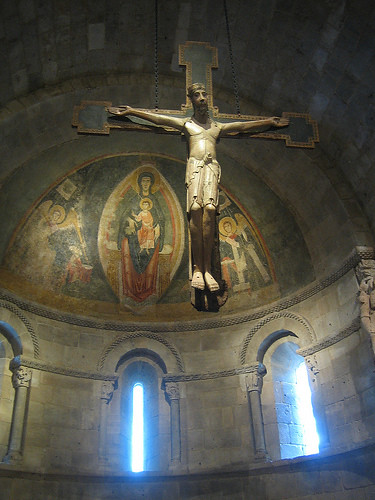
Crucifix, Palencia, Castile-León, c. 1150–1200, The Cloisters, The Metropolitan Museum of Art, New York _7894
Crucifix, Palencia, Castile-León, c. 1150–1200
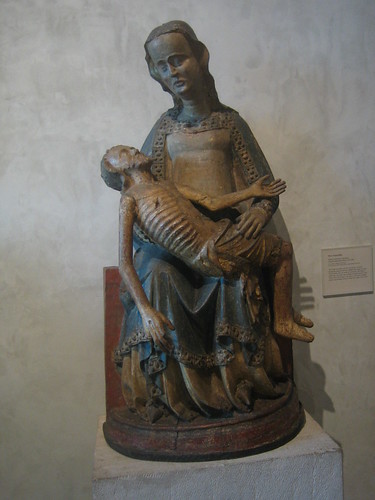
Pietà (Vesperbild), Germany, Rhineland, c. 1375-1400 _7840
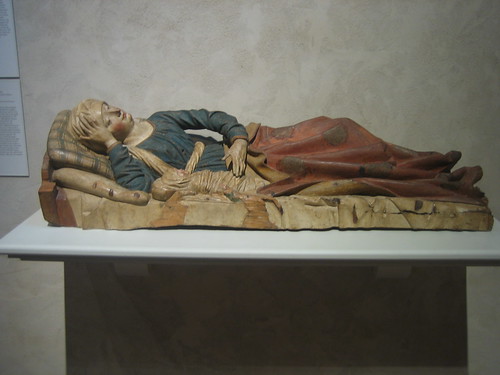
Pietà (Vesperbild), Germany, Rhineland, c. 1375-1400

Nativity of the Virgin, Germany, Lower Franconia, From the parish church of Saint Laurentius at Ebern, Bavaria, north of Bamberg, c. 1480 _7818
Nativity of the Virgin, Germany, Lower Franconia, From the parish church of Saint Laurentius at Ebern, Bavaria, north of Bamberg, c. 1480
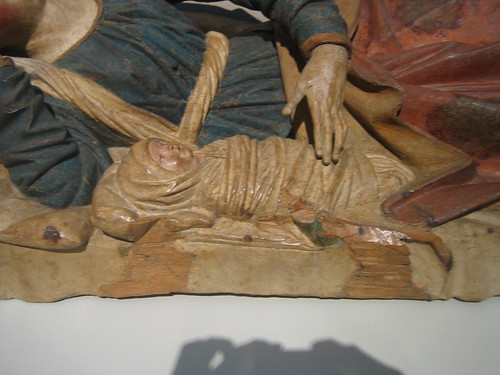
Nativity of the Virgin, Germany (detail), Lower Franconia, c. 1480 _7819
Nativity of the Virgin, Germany (detail), Lower Franconia, c. 1480

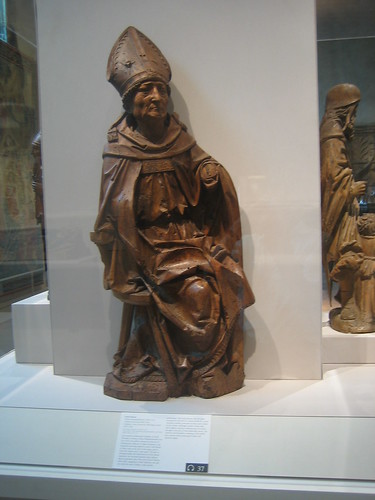
Seated Bishop, Germany, Lower Franconia, Würberg, c. 1495-1500 _7821
Seated Bishop, Germany, Lower Franconia, Würberg, c. 1495-1500

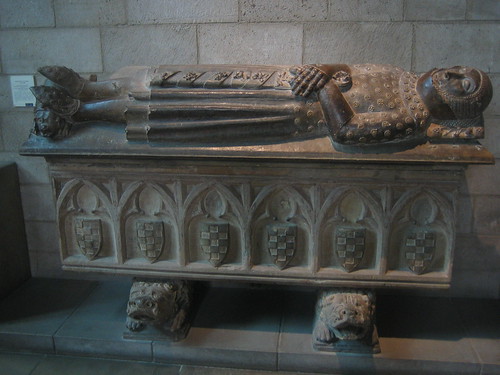
Sepulchral Monument of Ermengol X, Count of Urgell, Spain, Catalunya (Cataluña), Lleida (Lérida), c. 1300-50 _7871
Sepulchral Monument of Ermengol X, Count of Urgell, Spain, Catalunya (Cataluña), Lleida (Lérida), c. 1300-50

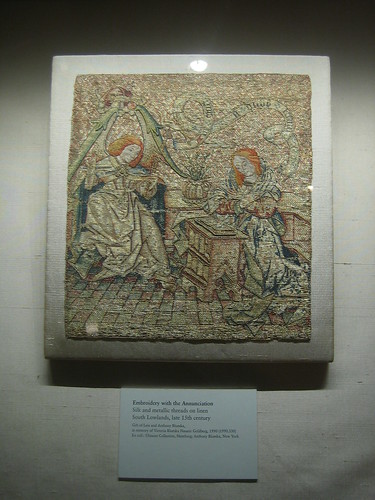
Moving away from these sculptural objects, I took delight in paintings and embroidery. At a glance, I thought the Annunciation Triptych below was done by Hans Memling but I was wrong.
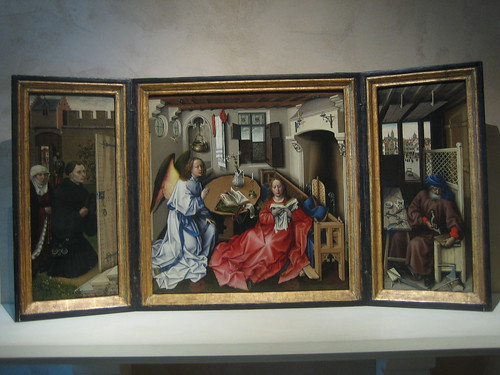
Annunciation Triptych (Merode Altarpiece), South Netherlands (modern Belgium), Tournai, c. 1427-32, Workshop of Robert Campin _7829
Annunciation Triptych (Merode Altarpiece), South Netherlands (modern Belgium), Tournai, c. 1427-32, Workshop of Robert Campin
The Cloisters, The Metropolitan Museum of Art, New York _7823

Embroidery with the Annunciation, South Lowlands, late 15th century _7875
Embroidery with the Annunciation, South Lowlands, late 15th century

I also enjoyed the Fresco of monsters very much.  They were just as fascinating to study up close and view from underneath the arc of great gates. 
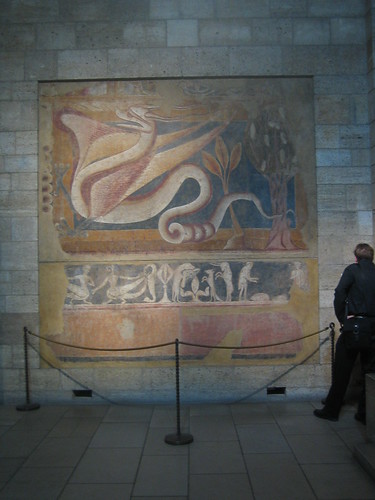
The Cloisters, The Metropolitan Museum of Art, New York _7888

The Cloisters, The Metropolitan Museum of Art, New York _7895
Lion Passant, after 1200, San Pedro de Arlanza, Castile-León

There were many portals assembled here with amazing sculptures and decorations:
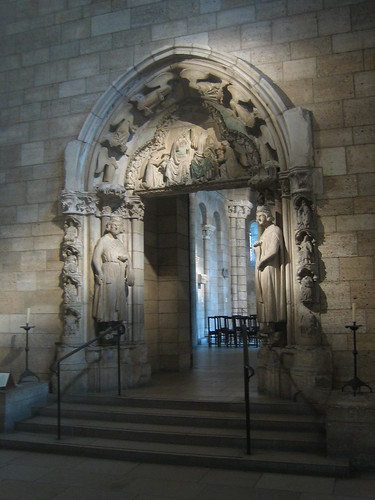
The Cloisters, The Metropolitan Museum of Art, New York _7889


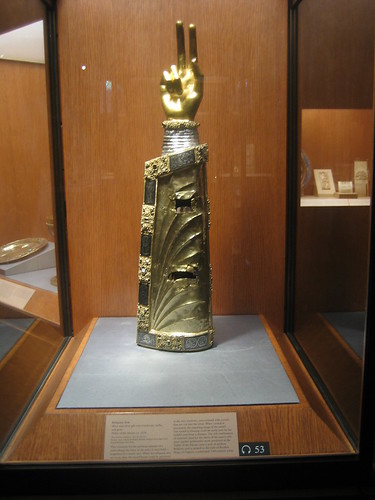
Reliquary cases were always strange but a reliquary case in the shape of a foot was the strangest I'd ever seen.  I didn't figure out what was in it though and the database of the Museum didn't enlighten me either. The Reliquary Arm was much more conventional comparing to this one.
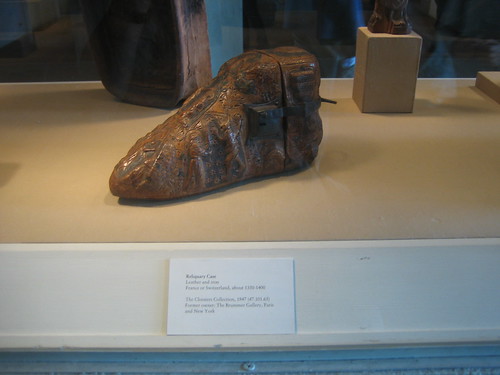
Reliquary Case, France or Switzerland, c. 1350-1400  _7879
Reliquary Case, France or Switzerland, c. 1350-1400


Reliquary Arm, South Netherlandish, c. 1230  _7878
Reliquary Arm, South Netherlandish, c. 1230

I also found the objects below very interesting, because they much came from Albrecht Dürer's family workshop.  His father and brother(s) were renowned goldsmiths and he apprenticed in the workshop before he joined painter's workshop.
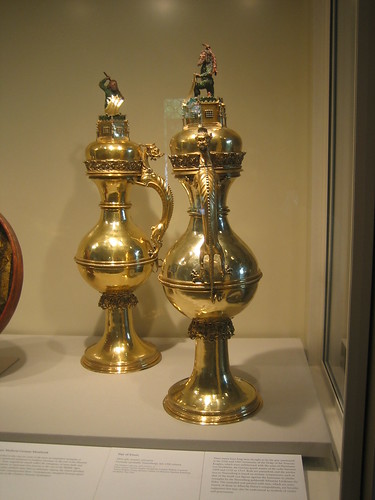
Pair of Ewers, Germany (probably Nuremberg), late 15th Century - design reminiscent of those in Albrecht Dürer's compositions _7838
Pair of Ewers, Germany (probably Nuremberg), late 15th Century - design reminiscent of those in Albrecht Dürer's compositions

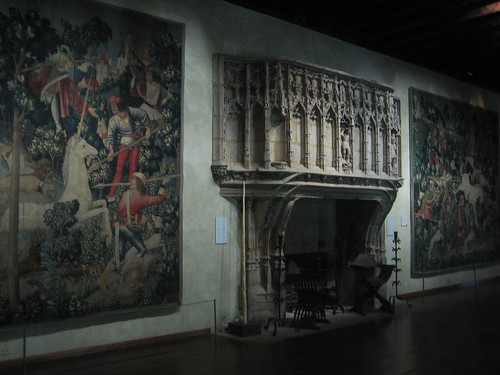
Everything I saw there were very interesting but none was more significant and beautiful than the Unicorn Tapestry from South Netherlandish, dating from 1495 to 1505.
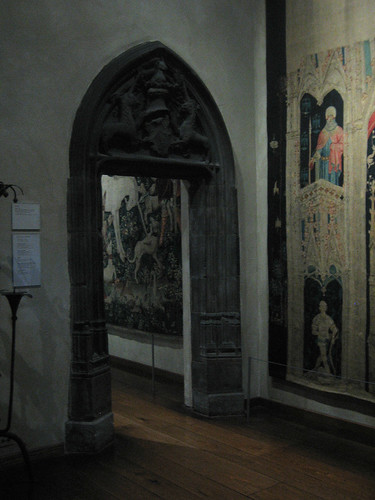
The Cloisters, The Metropolitan Museum of Art, New York _7857 (m)

The Cloisters, The Metropolitan Museum of Art, New York _7847 (m)

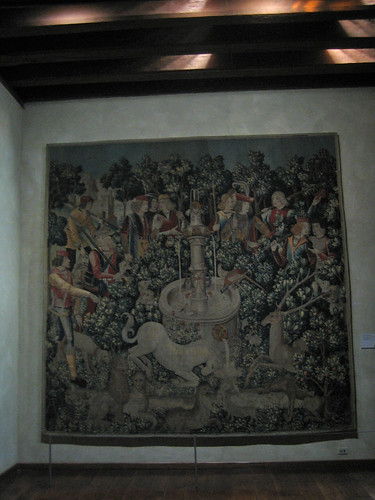
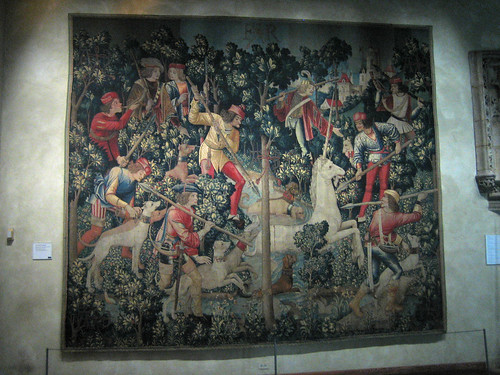
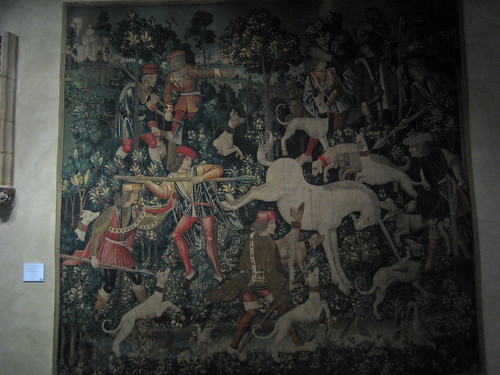
Official web site says: "The seven individual hangings known as 'The Unicorn Tapestries,' are among the most beautiful and complex works of art from the late Middle Ages that survive. Luxuriously woven in fine wool and silk with silver and gilded threads, the tapestries vividly depict scenes associated with a hunt for the elusive, magical unicorn."
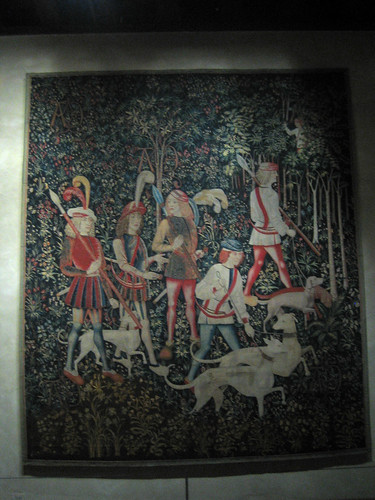
The Start of the Hunt, South Netherlandish, c. 1495-1505  _7850 (m)
The Start of the Hunt

The Unicorn is Found, South Netherlandish, c. 1495-1505 _7848 (m)
The Unicorn is Found

The Hunt of  the Unicorn, South Netherlandish, c. 1495-1505 _7845 (m)
The Unicorn Leaps out of the Stream

The Unicorn at Bay, South Netherlandish, c. 1495-1505  _7849 (m)
The Unicorn at Bay

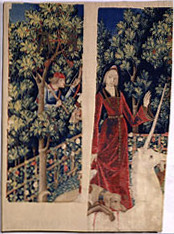
Two fragments of a lost tapestry from the Unicorn Tapestries, South Netherlandish, c. 1495-1505 (m)
Two fragments of a lost tapestry from the Unicorn Tapestries
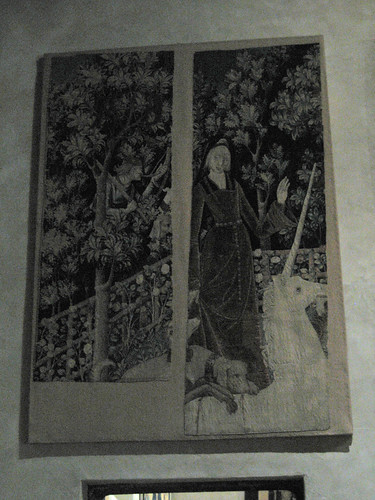
Two fragments of a lost tapestry from the Unicorn Tapestries, South Netherlandish, c. 1495-1505  _7854 (m)
Two fragments of a lost tapestry from the Unicorn Tapestries
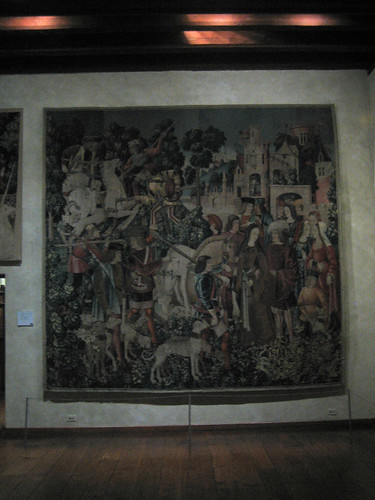
The Unicorn Is Killed and Brought to the Castle, South Netherlandish, c. 1495-1505  _7855 (m)
The Unicorn Is Killed and Brought to the Castle
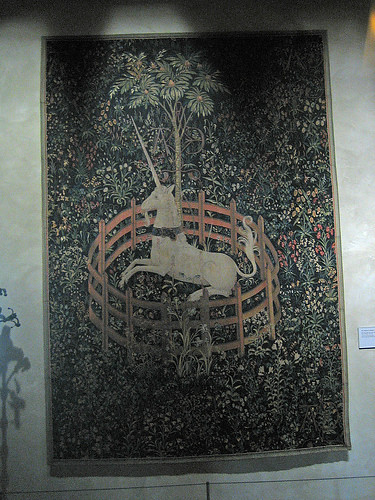
The Unicorn in Captive, South Netherlandish, c. 1495-1505  _7852 (m)
The Unicorn in Captive

The Unicorn in Captivity (detail), from The Hunt of the Unicorn, South Netherlandish, 1495-1505, The Cloisters, New York City
The Unicorn in Captivity (detail), from The Hunt of the Unicorn

This group of tapestry strongly resonate with those I saw in Paris - "The Lady and the Unicorn" series, which presented the six senses. I had to rate the Parisian series higher because it was less a sad story for the unicorn and because of the unique and ravishing color palettes they employed. After New York, one ought to go to Paris.
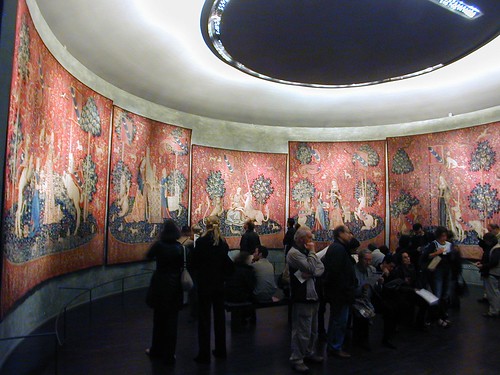
Musée National du Moyen Âge: Lady and the Unicorn

>> New York City Report, September 2010, Part IX: Doug + Mike Starn on the Roof: Big Bambú at The Metropolitan Museum of Art, New York City
<< New York City Report, September 2010, Part VII: Richard L. Feigen Collection and Yale University Art Gallery