Showing posts with label Mao Zedong. Show all posts

Friday, December 23, 2011

Remembering Mao's Death

The death of the dictator of North Korea Kim Jong-Il triggered a wave of show of grief in that isolated country.  To many informed, Kim Jong-Il was a ruthless and heartless ruler who brought his people to calamities after calamities.  Yet, his people mourned his passing.


I suspect that their sorrow demonstrated in the pictures above is largely genuine.  It's not like they are stupid but they are deceived.

The power of propaganda and brain-wash cannot be underestimated.

The pictures above reminded me what happened in China, when their Chairman Mao Zedong died in September 1976.

Many people cried as if the world came to an end and as if they indeed had lost a most caring father, despite the fact that Mao's long reign had been very destructive and oppressive, which could only be topped by the cruelty of the Khmer Rouge in Cambodia.  Some historical pictures showed how Chinese people showed their collective grief.


I was very young and just started my school. The overwhelming showing off grieve by the adults made a great impression on me, with mixture of fear and joy.  It was the kind joy when a calamity we had often prayed for, say before an unprepared final exam, miraculously materialized.

However, I knew that such joy was not to be revealed.  At the time, I was not aware of the evilness of Mao therefore didn't harbor any hatred against him yet.

On the national mourning day, we were herded to some room lying between our make-shift classroom, rented in residential area by local government due to lacking classrooms in schools, and my home for a memorial service.  The grim atmosphere in the dark room again was impressive and if anyone in my class cried, I suspect it was mostly due to fear or hallucination.  But I didn't witness any because we had to bow our heads and look at our feet.  Or others' feet.  I heard a rumor that a girl spat on her cloth shoes to make them wet as if soaked by tears.  I suspected that this was just malicious gossip, but couldn't dismiss it with absolute confidence.  We first-graders were capable of playing many tricks to score over others, in order to wangle some praises from our teachers.

When I returned home, I rested in the hallway before I entered our flat, to ensure that any trace of schadenfreude smile be erased from my face.  Before I finished hiding my glee, my mother suddenly came out of our flat and startled me.  I must looked unnatural due to my inexperience and not having mastered the requisite art of deception.  She insisted on interpreting my abashment as the result of my being caught weeping out of grief and felt embarrassed by that and heaped upon me with extravagant praises which I tried to evade in vain.  She would not or refused to understand my explanation.  Perhaps, her version would have put her mind at better ease?

Anyway, during those days, kids had a little bit more leverage to do whatever we pleased.  Besides, after we'd witnessed how adults howling like wounded animals in the most ungainly ways, their collective authorities eroded quite a bit.

Sometimes, it was even comical.

The last picture above showed that all the mourners had a black band on their left arms - a sign for mourning in then China.  If the deceased were a woman, the band should be worn on the right arms by her mourners.

In one P.E. class in the following days, we were drilled repeated to turn left or right because some of my classmates had trouble in following the commands of "Left Turn" and "Right Turn".  Some of us were not quite able to tell left from right.  To make things simple, our P.E. teacher told us that it were our left arms wearing the black band, therefore, we ought to turn towards that direction when he called out "Left Turn".

Even so, one boy still turned to his right on such command.  Our P.E. teacher was furious and almost struck the poor boy before he realized that the boy was wearing his black band on his right arm.

I don't remember the name and the face of that poor boy.  But he must be a poor one.  I remember that most of us have beautiful shining new black band made of some nice, wrinkle-free material while his was a miserable looking one, trimmed out of an old pair of trousers or jacket.  Surely his parents did not purchase black cloth for the band despite the fact that all residents were given extra rations for cloth that month and for that we despised him and laughed at his mistake most heartily.


Wednesday, November 30, 2011

How China Beats the U.S.

Globalization enabled corporations to cut costs, pay less salaries and pensions and reduce inventories.  Internet age made it much easier to have as low raw material inventory as possible.  The downside of this is that any interruption of the flow of the materials would cause chain-reactions down the pipe and all the way to the end users or consumers.

Take the flooding in Thailand for example.  American Public Media reported that "Thailand was such a key manufacturing base. It is a key point of transit for both computer parts -- hard drives in particular -- but also auto parts. It supplies other parts of the world but it also has assembly plants here; so in both cases in the auto industry.

"But also the parts shortage is causing big problems much further afield. In the United States and in Europe, for instance, Honda has had to cut production. Same with computer hard drives. Looking ahead towards the Christmas rush, there are already worries that they're just not going to be able to get the kind of parts they need. So it is a crucial hub in this region -- not just for Asia, but much further afield."

The earthquake and tsunami in Japan caused similar headache globally as well.

We'd better be prepared for such troubles in the future.  Overtly relying on the foreign suppliers, could be a security risk.

China, with its accumulating wealth, is heading to a clashing course with the U.S. headlong.  If these two countries are engaged in a war, China could beat the U.S. easily by withholding shipments of all those iProducts, such as iPhone, iPad, etc.

The inconsolable American consumers will storm our governments and pledge their allegiance to whoever would deliver their coveted goods and would be gladly to start to sing "The East is Red"!

[East is Red was a folk-song based ode to the great dictator Mao Zedong.]

Friday, May 6, 2011

The Ghost of Mao Zedong

Chinese women's volleyball was the first Chinese team to achieve championship at international level in 1980s amongst major sports and was the pride and heroines of the nation for decades.

In recent years, Chinese women's volleyball standing fell into the abyss, the Chinese Volleyball Association recently posted the message, that from April 26 to May 1, the Chinese women's volleyball team spent a week time in Zhangzhou, Fujian province to learn, recite poems by Mao Zedong, hope that through this "revolutionary education", they'd be well-prepared for next year's (2012) London Olympics:


The ghost of Mao Zedong made a dramatic comeback.

Coinciding with the disappearance of internationally renown artist and social critics Ai Weiwei, and the "Singing Red" movement in Chonqing, championed by Prime Minister aspirant, Bo Xilai, China is making great leap backward, back to 1960s and 1970s.


Chongqing: Sing the Classic Red Songs, Summon the Spirit of Development

Chongqing: ten-thousand people renewed their vows to the [Communist] Party and Sung "red" songs in unison

It was in this square of my home city Shenyang, during the height of the Great Cultural Revolution, the president of Shenyang Music Conservatory taught tens of thousands people to sing songs he composed to speeches from Mao's "Little Red Book":

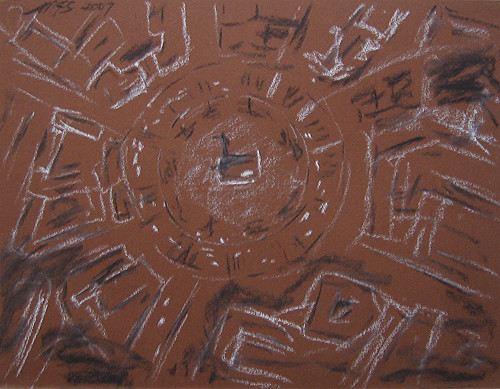
Mao Zedong Statue in Shenyang, China - Matthew Felix Sun's Drawing_7339

Mao is dead.  Mao is alive.  Long Live Mao.

Wednesday, February 9, 2011

Art and Politics

The story, if not a controversy following Lang Lang's playing anti-America Korean War ear song in the White House, triggered much talk in Chinese American circle. To whose who grew up in China and living in the US now, the song he played, however melodic, has an undeniable political undertone.

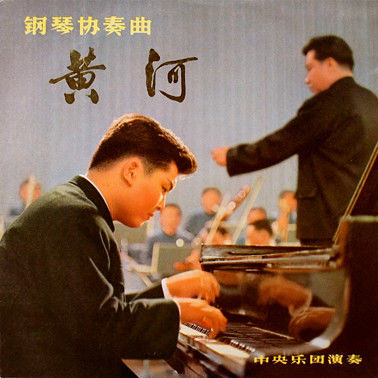
Yellow River ConcertoMany the disgruntled claimed that Mr. Lang has always been eager to participate in performing art as propaganda, despite his protest that he was only a musician. One piece of Chinese music he loved to play was the Yellow River Piano Concerto.

Yellow River ConcertoThe Yellow River Piano Concerto is a piano concerto arranged by a collaboration between musicians including Yin Chengzong and Chu Wanghua, and based on the Yellow River Cantata by composer Xian Xinghai. The Yellow River Cantata, written in 1939 during the Sino-Japanese War (1937-1945), is an eight-movement piece in which Xian used traditional folk-melodies and evoked the image of the Yellow River as a symbol of Chinese defiance against the Japanese invaders.

Under orders of Madame Mao, a collective of musicians from the Central Philharmonic Society including Yin Chengzong, Liu Zhuang, Chu Wanghua, Sheng Lihong, Shi Shucheng, and Xu Feixing rearranged the cantata into a four-movement piano concerto. In the fourth movement, following a recapitulation of the theme of "Defending the Yellow River" played canonically against the strings came the climatic tutti of "The East is Red", a song with lyrics like this:
The east is red, the sun is rising.
China has brought forth a Mao Zedong.
He works for the people's welfare.
Hurrah, He is the people's great savior!
(Repeat last two lines)

Chairman Mao loves the people.
He is our guide
To build a new China.
Hurrah, he leads us forward!
(Repeat last two lines)

The Communist Party is like the sun.
Wherever it shines, it is bright.
Wherever there is a Communist Party,
Hurrah, there the people are liberated!
(Repeat last two lines)

Then the first phrase of "The East is Red" is played by the trumpet, and tightly followed by the final phrase of the Internationale.

Below video was a performance of this concerto by Mr. Lang, at a countdown event in preparation for the 2008 Olympic Game in China:


The Yellow River Cantatas was a great piece of choral literature and deserved to be heard often.  The concerto, though wonderful as well, was seriously marred by the inclusion of The East is Red, which was not only stylistically incompatible, it also hijacked an ode to a great nation to a personal cult.  It is high time to have a new edition prepared and get rid of those inappropriate notes.

I learned that the Yellow River Cantatas was written in 1939 in Yan'an, a place Mao and his army took strong hold during World War II, in preparing for the inevitable civil war afterwards. The timing of this composition reminded me a quite provocative lecture my high school English teacher gave us in 1980s.

He mentioned a slew of wonderful writers, artists and composers who had established themselves in 1920s through 1930s and then suddenly, everything they could put forth was pure rubbish. The turning point was a crucial speech Mao Zedong gave in a Forum on Art ad Literature in Yan'an and the time was May 1942.

Following his instruction, I did some inventory and the result was precisely what my teacher had claimed. It was a brave lecture, sort of, because most of my fellow students would not have recognized the significance of his lecture or didn't care. My father had been working in the art and literature fields for a long time and I was very alert to the essence my teacher's bravery.

The background of his speech was ominous. In 1942, the Chinese Communist Party (CCP) leadership faced an internal crisis, as a group of "Internationalists" had returned from the Soviet Union with ideas that challenged Mao’s authority. In response, Mao launched the Rectification Campaign, inviting open criticism from the masses. This call for criticism was Mao’s way of inviting popular opinion unfavorable to his enemies. However, rather than speaking against the planned targets of the campaign, Party intellectuals took the opportunity to unmask the CCP’s hypocrisy by pointing out instances of inequality in Yan’an. The Forum was part of his counteract campaign to erudite oppositions. Mao's speech on art and literature could be summarized as: 文艺服从于政治 - literature and art are subordinate to politics, and 在阶级社会里就是只有带着阶级性的人性,而没有什么超阶级的人性 - in class society there is only human nature of a class character; there is no human nature above classes.

Artwork will never be separated from politics, and needn't and shouldn't be. However, it should never subject to politics. To demand so, is to committing artistic homicide and suicide.

Thursday, April 23, 2009

Statue of Mao Zedong in the Heart of Shenyang

Statue of Mao Zedong still stands firm in Dr. Sun Yat-Sen Square, the heart of Shenyang, China: