Showing posts with label Statue. Show all posts

Wednesday, September 21, 2016

My Favorite Sculptures at Terracotta Army Site, Xi'an

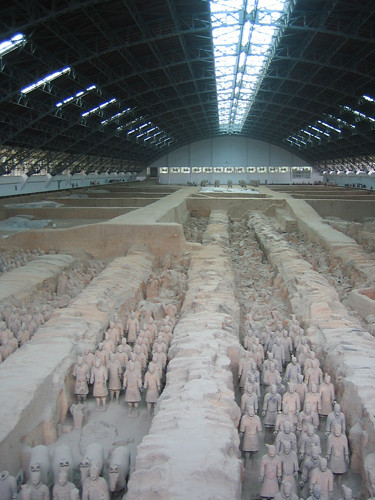
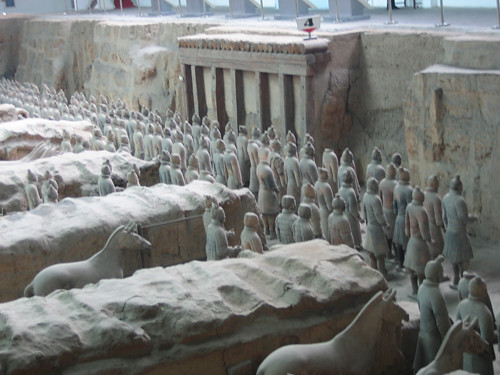
The famed Terracotta Army of the First Emperor of Qin Dynasty in China impressed not only with the sheer numbers of those soldiers, generals and horses, but upon close inspection, the endless variations of those individuals, each one of them seemed to have a distinct look and personalities, a far cry from cookie cutter mass production one might have suspected.

IMG_4944 - Terracotta Warriors in Qin Shi Huang's Tomb, Xi'an, China, 2007

IMG_4968 - Terracotta Warriors in Qin Shi Huang's Tomb, Xi'an, China, 2007

The most impressive was a Standing Archer - whose stylized yet naturalistic posture and his impassive face emitted an aura of zen, strange for a soldier. Also noteworthy was the plain but delicate face of this calm soldier.
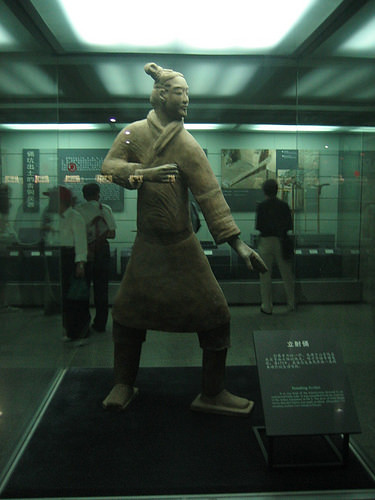
Terracotta Warriors in Qin Shi Huang's Tomb, Xi'an, China, 2007 _ IMG_4002

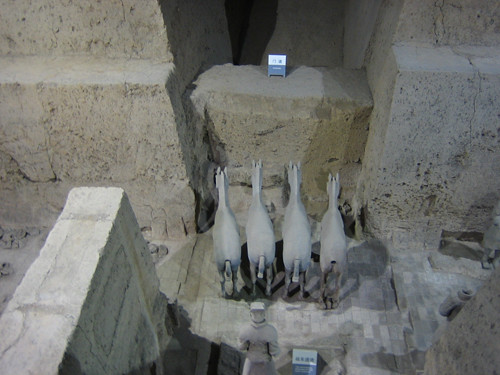
I also love the horses "enlisted" in the army.  They were absolutely sleek and beautiful.  These beasts couldn't be nobler.
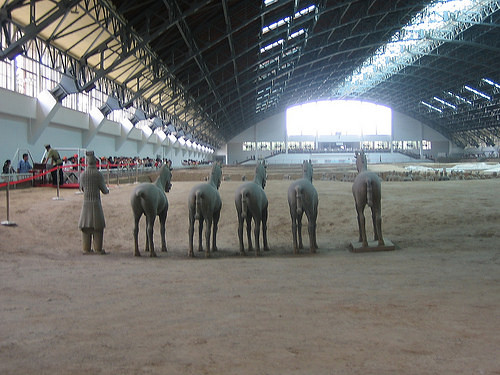
Terracotta Warriors in Qin Shi Huang's Tomb, Xi'an, China, 2007 _ IMG_4996_mod

IMG_5048 - Terracotta Horses in Qin Shi Huang's Tomb, Xi'an, China, 2007

My Favorite Museum Collection Series
>> My Favorite Museum Collection Series 135: My Favoritate Bronze Artifacts at Shaanxi History Museum, Xi'an, China
<< My Favorite Museum Collection Series 133: My Favorite Earthenware Artifacts in Banpo Archaeological Site Museum, Xi'an, China

List of My Favorite Artworks in the Museums I've Visited

Other Related posts on Art · 文化 · Kunst:
- Last Chance to See Terracotta Warriors in San Francisco Asian Art Museum
- Ruins in Sanxingdui (Three-Star Mound) and Jinsha (Gold Sands), Sichuan, China
- Treasure in Liaoning Museum, Shenyang, China
- Art Gallery of Luxun Art Academy in Shenyang, China
- Visiting Four Universities in Austria and Italy
- Sunflower Seeds by Ai Weiwei at Tate Modern, London
- My Favorite Sculptures at Institut für Klassische Archäologie, Karl-Franzens-Universität Graz
- My Favorite Sculptures at Musei Civici degli Eremitani, Padova (Padua)

Wednesday, April 24, 2013

My Favorite Sculptures in Jardin du Luxembourg, Paris

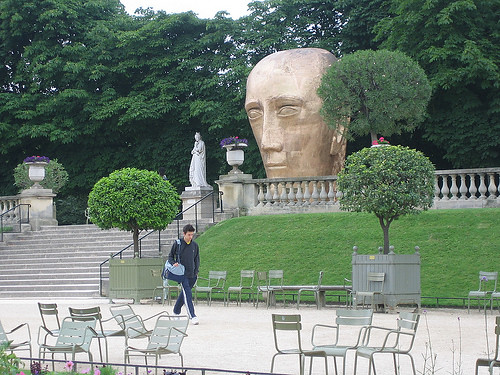
IMG_8032 - Jardin du Luxembourg, ParisIn 2008, when I arrived in my hotel in Paris, I was very pleased to find out that my hotel was very close to the lovely Luxembourg Garden (Jardin du Luxembourg) and I took daily strolls along the beautiful Boulevard Saint-Michel to the garden in order to savor the tranquility there, and to enjoy the companionship of over one hundred statues, monuments, and fountains, mostly in the classical restrained style, plus a few flamboyant modernistic works scattered about on the vast ground (left).

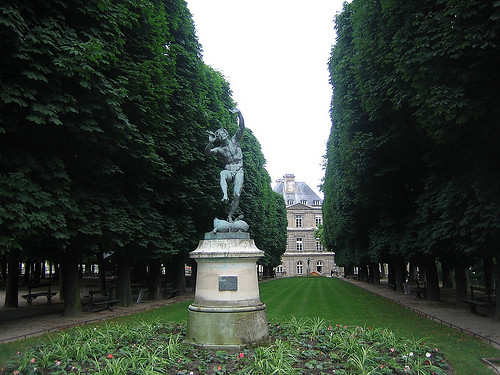
Of these metal or stone statues, I was particularly fond of a bronze one - Faun Dancing on a Wineskin, by Eugène-Louis Lequesne (1851), perhaps because of its convenient location - the faun stood close to the boulevard, facing the main square, just inside wrought-iron fences, always ready to greet me with his infectious wave and the inaudible horn.  It was very dynamic and full of movement and energy; at the same time, the form of the faun, or the boy, was classically graceful and a pure delight to the eyes.  Finally, it had a rich patina of aged bronze, contrasting nicely to the youthful dancing figure.

IMG_8015 - Faun dancing on a wineskin, bronze by Eugène-Louis Lequesne (1851) - Jardin du Luxembourg, Paris
Faun Dancing on a Wineskin, bronze by Eugène-Louis Lequesne (1851)

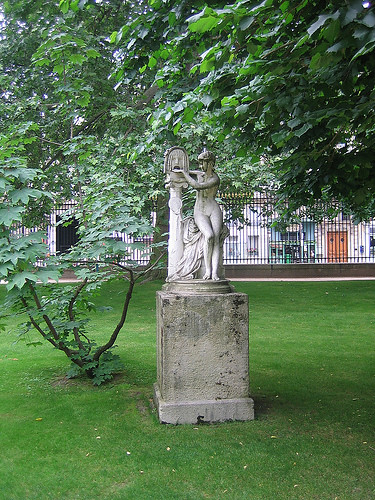
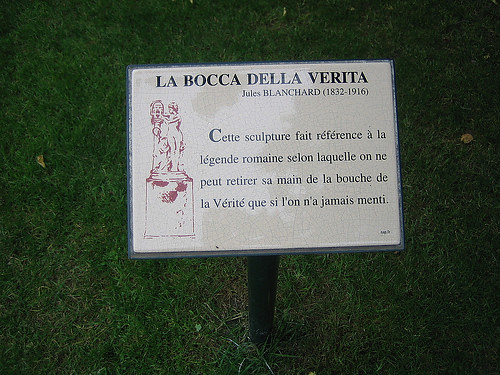
My second favorite statue in the Garden was a stone statue, La Bocca della Verità by Jules Blanchard, referring to the Roman legend that one tells a lie with one's hand in the Mouth of the Truth, it would be bitten off.  The one in Roma was just a round plate of face; here a female nude made an almost teasing gesture of putting her hand inside the mouth of a quite small shield-shaped face, held in her other hand, as if she was petting a not always obedient pet, whimsical and full of fun.  It often brought faint smiles to its viewers and for that one must be grateful.

IMG_8071 - La Bocca della Verità, statue by Jules Blanchard, Jardin du Luxembourg, Paris
La Bocca della Verità, statue by Jules Blanchard

IMG_8072 - La Bocca della Verità, statue by Jules Blanchard, Jardin du Luxembourg, Paris
La Bocca della Verità, statue by Jules Blanchard


My Favorite Museum Collection Series

>> My Favorite Museum Collection Series 66:  My Favorite Paintings at Église Saint-Sulpice, Paris
<< My Favorite Museum Collection Series 64: My Favorite Sculpture and Painting at Musée d'Art moderne de la Ville de Paris

List of My Favorite Artworks in the Museums I've Visited


Other Related posts on Art · 文化 · Kunst:
- Grand Palais in Paris
- Musée de Cluny - Musée national du Moyen Âge, Paris
- Travel Inspired Paintings
- Get Ready for the Treasures from Musée d’Orsay
- Picasso: Masterpieces from the Musée National Picasso, Paris - De Young Museum, San Francisco
- Birth of Impressionism at De Young Museum, San Francisco

Friday, June 8, 2012

My Favoritate Sculptures on Karl's Bridge, Prague

Prague was my first stop in Central Europe in early 2000s, which included the capitals of Czech Republic, Austria and Hungary.

The most impressive art in Prague is the city itself, more so than anything I'd seen in a museum, cathedral or a monastery.  The best of it was Karlův most (Charles Bridge) over Vltava, linking the "Old Town" to the even older "Malá Strana (Lesser Quarter)", named after the Holy Roman Emperor, Karl IV, who was the first Bohemian king who ascended the imperial throne.

We stayed in Malá Strana and every morning, I would take a little short stroll to walk on the wonderful bridge, to savor the quiet and intimate moments when most tourists had not flooded the bridge and to admire the continuous alley of statues and statuaries, 30 in all, mostly in baroque-style, originally erected around 1700 but now all replaced by replicas.

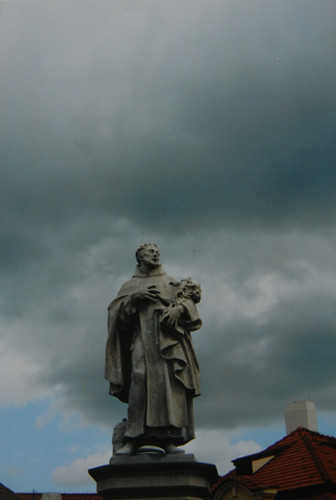
I will cite two as my favorites.  One is St Philip Benzi (St. Philip Benitius) (socha sv. Filipa Benicia):

St Bernini, Charles Bridge, Prague _ 8703 - 500

It was designed by Michal Bernard Mandl in 1714 and portrayed St. Philip Benitius, fifth general of the Servites, holding a cross, a book and a spray. A papal crown lay behind his foot. This is an understated, but highly charged statue.  The inner conflict was betrayed by his unsettled right leg and arm, despite the calmness on his face.  The picture I took above had a very dramatic clouds background and it was a perfect foil for the restrained sculpture.

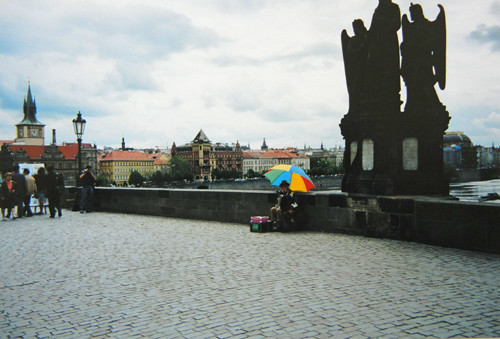
My next favorite was a much more ornate sculpture of Saint Francis of Assisi (socha sv. Františka Serafinského), flanked by two large winged angels.  The frontal view of sculpture was quite plain and humble, befit to the character of the saint. However, when viewed with the impressive wings as focal point, it became incredibly dramatic and ornate - perhaps Rodin would not have approved it but I loved its view like this. 

St Francis of Assisi, Charles Bridge, Prague _ 8706 - 500

Perhaps a bit sentimental, whenever I looked at this picture, I remembered that street musician playing "Que sera, sera", under a colorful umbrella.  The very essence of bohemian life.


My Favorite Museum Collection Series

>> My Favorite Museum Collection Series 36: My Favorite Paintings at the National Gallery (Schwarzenberg Palace) in Prague
<< My Favorite Museum Collection Series 34: My Favorite Sculptures at Cimetière du Père-Lachaise, Paris


List of My Favorite Artworks in the Museums I've Visited

Friday, March 2, 2012

My Favorite Artworks at the Galleria dell'Accademia Firenze

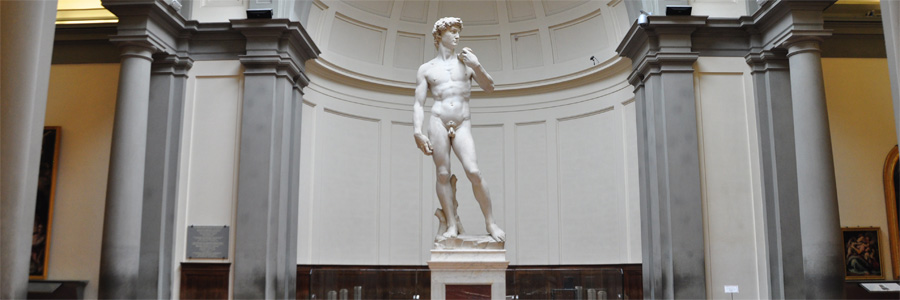
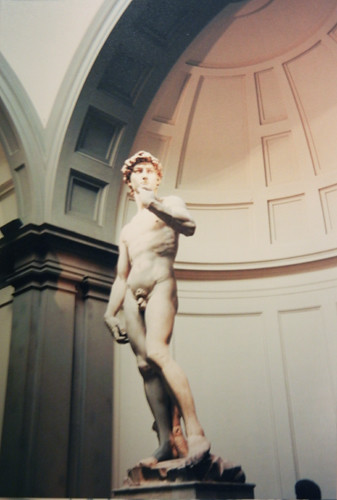
My second European stop was the most beautiful and richest (in term of art collections) all them all - Firenze (Florence).  Amongst many incredibly rich art institutions, my first stop was Galleria dell'Accademia Firenze, whose most famous resident was Michelangelo Buonarroti's David - a marble statue originally installed in front of the city hall - Palazzo Vecchio (Old Palace) but moved here after a riot during which the statue was damaged but repaired afterwards.

When we visited the Accademia, there was a long line to get in, for its special exhibit of Giotto.  However I enjoyed that special exhibit, I will follow my rule that I only cite permanent collections in the museums I've visited, therefore, I would only discuss Giotto later, such as in Santa Croce, where his frescoes shined.

Back to David.


This super-human sized marble statue was the ideal of human body - chiseled face, steady gaze, powerful yet elegant torso, elongated but strong limbs, seemingly at ease yet poised to strike the overwhelming sling shot.  He hat it all.  He was not a simple warrior but a concentration of all those praise-worthy characteristics one could find in the human race.  This is the apex of art making and humanistic study.

David, Michelangelo, Galleria dell'Accademia, Firenze _0291 _ 500

David, Michelangelo, Galleria dell'Accademia, Firenze _ 8972_500

After David, it was a testament of its strong virtue, that the painting Profeta Isaia by Fra Bartolommeo could have made yet another powerful impact on me.

I did even know the painter Fra Bartolommeo (or Fra Bartolomeo) but I instantly fell in love with his paintings, for the richness and vibrancy of his colors, and for the weighty grandeur of his figures, like this one in the Accademia - Profeta Isaia (Prophet Isaiah).  This prophet was a young man, full of wisdom and grace, and gravitas due to the solidity of the masses formed his body and his pose.  His raised right arm was like posing a question and challenge to the viewers, poise yet dynamic.  And how his blue, yellow, orange and red complemented and contrasted each other! in blazing hues.  A very wonderful portrait.


Profeta Isaia, cm. 168 x 108, Fra Bartolommeo, Galleria dell'Accademia, Firenze


My Favorite Museum Collection Series

>> My Favorite Museum Collection Series 16: My Favorite Paintings at Galleria degli Uffizi, Firenze
<< My Favorite Museum Collection Series 14: My Favorite Artworks in San Pietro in Vincoli (Saint Peter in Chains), Roma


List of My Favorite Artworks in the Museums I've Visited

Thursday, February 23, 2012

My Favorite Sculptures at Museo Nazionale Romano, Roma

The last museum I visited in Roma is Museo Nazionale Romano (Roman National Museum), which hosted an array of wonderful, even spectacular sculptures, including a version of a marble Discobolus (Disc Thrower), which is as iconic as Leonardo's Mona Lisa and Venus de Milo.  However, despite my love for this famous image, I found this particular version of Discobolus, discovered in 1906 in the ruins of a Roman villa at Tor Paterno in the former royal estate of Castel Porziano, a bit still and plastic. It was heroic and beautiful for sure, but somewhat meaningless.

Instead, my favorites were two sculptures with understated grandeur, relative static poses belied the hidden tension.

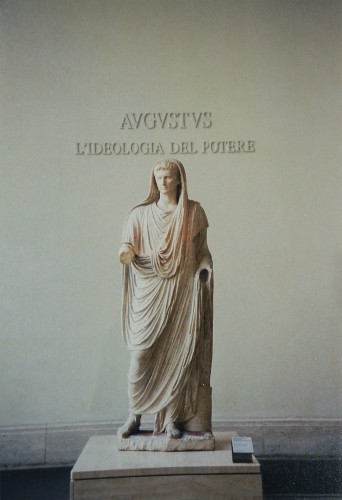
The first was a marble statue of the Roman emperor, August as Pontifex Maximus.  It was a full length sculpture, capturing the emperor, in flowing robe, walking quietly, as if weighing something of considerable importance.  It's a fleeting moment, unguarded, without officious pomposity.  A high-born nobleman for sure, but also intensely human.  Pensive, and a bit sad.

August as Pontifex Maximus, Palazzo Massimo alle Terme (Museo Nazionale Romano), Roma, Italia _ 0288
August as Pontifex Maximus, Palazzo Massimo alle Terme (Museo Nazionale Romano), Rome, Italy

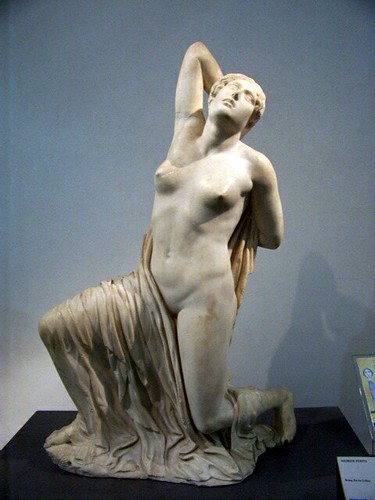
However, that sadness would be eclipsed easily by the grand tragedy of the Dying Niobid, another marble sculpture, capturing one of the queen Niobe's fourteen children being shot to death by the vengeful arrows of the slighted Apollo and Artemis, when Niobe boasted that she had much greater number of children than those of Leto, Mother of Apollo and Artemis.

The Dying Niobid, fleeing, was shot on her back, faltered to be on her knee, bent backwards, both hands reached to the killing tool on her back.  Her frontal torso and one leg exposed, revealing the beauty and the vulnerability of this tragic figure.  Her face was peaceful, almost like asleep, without obvious pain, though she did have a questioning look upon closer inspection.  Even her pose, though unbalanced, was not in painful twist.  The sculptor did not want to shock the viewer, rather, he wanted to present this moment in restrained dignity.  The more peaceful she seemed, the greater the sense of tragedy.

Dying Niobid
Dying Niobid, Palazzo Massimo, Museo Nazionale Romano, Rome
Source: diffendale


My Favorite Museum Collection Series

>> My Favorite Museum Collection Series 13: My Favorite Artworks at Basilica Sancti Petri (Papal Basilica of Saint Peter)
<< My Favorite Museum Collection Series 11: My Favorite Artworks at Galleria Borghese, Rome


List of My Favorite Artworks in the Museums I've Visited

Friday, August 26, 2011

Dr. Martin Luther King's New Statue in Washington D.C.


The unveiling of the new Dr. Martin Luther King's memorial designed and created by sculptor Lei Yixin was a major event in Washington D.C. and it had generated much discussions and even debates.  The debates took place largely when the project announced the chosen sculptor, largely due to his Chinese origin.  The the debut of the sculpture, the discussion now shifted to the representation of Dr. King, the merit of the sculpture as memorial and artistic achievement.  New York Times published a long article on this project and the highlights are as follow:

That figure is the Rev. Dr. Martin Luther King Jr., and this Sunday, when his four-acre, $120 million memorial on the edge of the Tidal Basin is to be officially dedicated, it will be adjacent to Franklin D. Roosevelt’s, across the water from Thomas Jefferson’s, and along an axis leading from that founding father directly to Abraham Lincoln’s. There are few figures in American history with similar credentials who would have even a remotely comparable claim for national remembrance on the Washington Mall.

Perhaps, though, it was the presence of such company that led to the kind of memorial that now exists. There is always an element of kitsch in monumental memorials, a built-in grandiosity that exaggerates the physical and spiritual statures of their human subjects.

So it should be no surprise that something similar happens to Dr. King. But his statue goes even further. Those of Jefferson and Lincoln are a mere 19 feet tall; Dr. King looms 30 feet up, staring over the Tidal Basin. And he isn’t decorously posed in a classical structure; he isn’t contained in an ordered space with Greek or Roman allusions. His form emerges halfway out of an enormous mound of granite so heavy that 50-foot piles had to be driven into the ground to provide support.

We don’t even see his feet. He is embedded in the rock like something not yet fully born, suited and stern, rising from its roughly chiseled surface. His face is uncompromising, determined, his eyes fixed in the distance, not far from where Jefferson stands across the water. But kitsch here strains at the limits of resemblance: Is this the Dr. King of the “I Have a Dream” speech? Or the writer of the 1964 Nobel Peace Prize acceptance speech?


But do these mounds of granite, which are given an almost artificial appearance with their sketchy, cartoonish contours — do they evoke anything at all like a “mountain of despair”? And the unattractive slice supposedly pushed into the center of the memorial: is that really a “stone of hope”? Certainly not, judging from the expression on Dr. King’s face.

The metaphor is not one of Dr. King’s best, anyway, but to center an entire memorial on it, and then to do so in a way that makes no real sense, is baffling. Moreover, the original context of the line from the speech is quite different. Dr. King, after the demonstration in Washington, was going back to the South, his faith intact.

And the mound’s isolation from any other tall objects, its enormity and Dr. King’s posture all conspire to make him seem an authoritarian figure, emerging full-grown from the rock’s chiseled surface, at one with the ancient forces of nature, seeming to claim their authority as his. You don’t come here to commune with him, let alone to attend to the ideas the memorial’s Web site insists are latent here: “democracy, justice, hope and love.” You come to tilt your head back and follow; he, clearly, has his mind elsewhere.

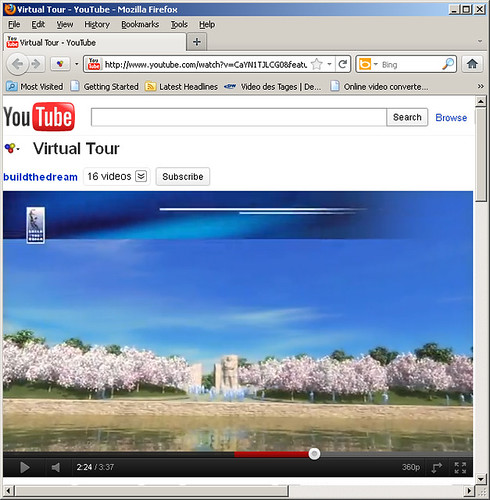
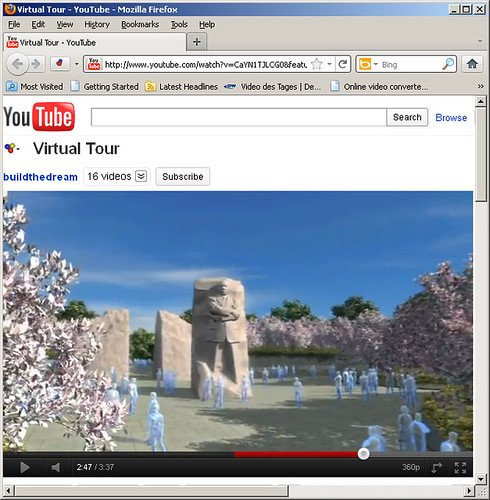
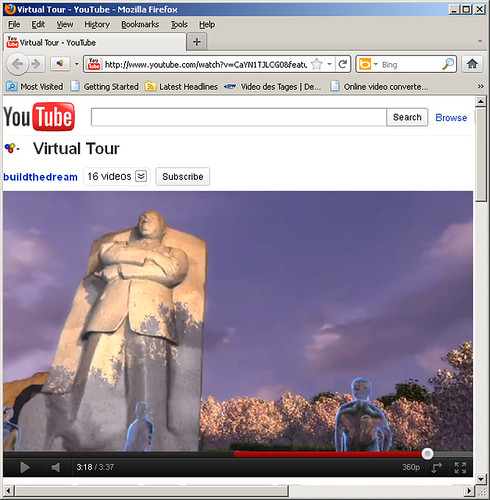
The still photo above gives us a close up of that face hoovering in the clouds which the video below from the official website give us some idea of what they want us to see. I think some shots at below moments are very representative: 2:24, 2:47 and 3:18:


Dr Martin Luther King by Lei Yixin - 2'24Dr Martin Luther King by Lei Yixin - 2'47Dr Martin Luther King by Lei Yixin - 3'18

Thus we can see much more vividly, almost in situ.  The unrealistically polished folds of his impeccably suit, his haughtily crossed arms, his stern facial expression all conspired to make him as authoritative and aloof as possible, rather than a fiery and compassionate man who has a deep connection to the time, the people and their sufferings.  To me, it invokes the unpalatable feelings of encountering those always-correct Communist leaders on high horses, such as the Stalin statue below:


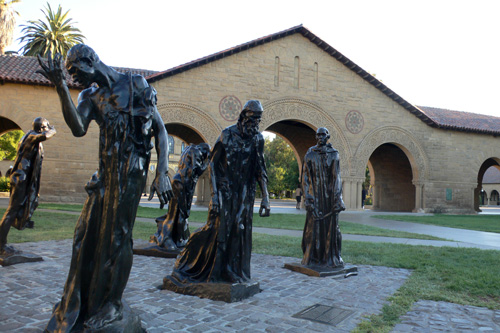
I think to make the appropriate tribute to Dr. King, a statue in the style of Rodin's "The Burghers of Calais" would be much more proper:

The Burghers of Calais, Stanford University
The Burghers of Calais, Auguste Rodin, Stanford University

Or the Memorial in Berlin to all victims of war and violence by Käthe Kollwitz, which was just as stylized and sleek bu full of emotion and compassion:


This Dr. Martin Luther King's statue by Mr. Lei - with a startlingly similar facial features to the artist and a grandiose profile to that of an Egyptian deity - failed to measure up to the essence of Dr. King and what he represented for and is not a successful addition to the capital where he delivered his important speech, I Have a Dream, surrounded by people he had been fighting for:


The greatness of Dr. King is not to be judged by the size of his pedestal.

Friday, March 25, 2011

Politics and Profits

Thirty-five years after his death, Mao Zedong still enjoys respect or even reverence from many quarters in China. For example, in April 2010, Telegraph reported that Chinese protestor throws ink at portrait of Chairman Mao:
An angry Chinese protestor has attempted to throw ink over the famed giant portrait of Chairman Mao Zedong that hangs in Beijing's Tiananmen Square, police in China have confirmed.

Police wrestled the man to the ground last weekend after he threw a bottle of ink at the portrait, a potent symbol of Communist Party power which hangs on the Tiananmen gate tower where Chairman Mao declared a new republic 60 years ago.

"At around 13:35pm, April 5 2010, a man was put under control after he threw a plastic bottle of ink towards the Tiananmen gate tower," the Beijing Municipal Public Security Bureau confirmed in a statement faxed to The Telegraph.

The audacious attack echoes the 1989 Tiananmen Square protest when three young men threw ink-filled eggs at the portrait in a gesture of defiance against China' Communist ruling party that resonated around the world.

The three men, Lu Decheng, Yu Zhijian, and Yu Dongyue, received some of the harshest sentences in the crackdown that followed the violent crushing of the protests, being jailed for 16 years, 20 years and life respectively.

That kind of disrespect to the Mao could not be tolerated by Chinese government, if it was out of political motivation.

However, if it was done in the name of development, the story could have a different ending.

Technews reported that 
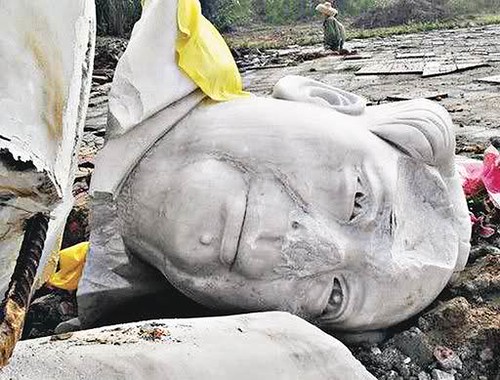
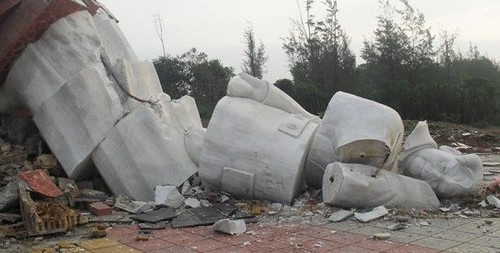
A real estate company wrecked the statue of the 'Great Helmsman' -- China's most powerful figure between 1949 and 1976 -- while re-developing a district in Longlou town in Wenchang region, reported Hong Kong's South China Morning Post.

Erected in 2008, the 9.9m white marble statue had attracted many visitors, China News Service (CNS) reported.

"Developers now wield the greatest power of destruction in China, tearing down houses and flattening martyrs' mausoleums in the name of development," another (Internet) post remarked on China.com."
Indeed, in the name of development, developers, often combined with power of unchecked government and ruthless mafia, wrecked homes for profit at well.

5042c531g9e043d3f387d&690

a5dfd10069f35345728b65ce

The demolition of Mao's statue earned some condemnation from China's leftist corners but it is doubtful any developers involved would suffer the fate of those angry protesters who "defaced" Mao's giant portrait.

Profits tramps politics.  Call it progress.

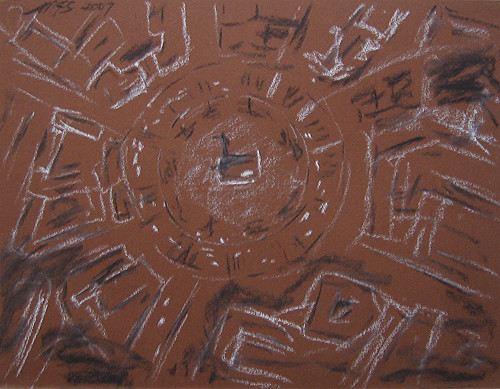
Mao Zedong Statue in Shenyang, China - Matthew Felix Sun's Drawing_7339
Mao's Statue in Shenyang

Thursday, April 23, 2009

Statue of Mao Zedong in the Heart of Shenyang

Statue of Mao Zedong still stands firm in Dr. Sun Yat-Sen Square, the heart of Shenyang, China: