Showing posts with label Print. Show all posts

Friday, November 11, 2016

My Favorite Engravings at Seattle Art Museum

What impressed me most in Seattle Art Museum were two amazing engravings, both by the great German artist Albrecht Dürer (1471-1528).

The first was titled Ritter, Tod und Teufel (Knight, Death and Devil) (1513). This allegorical piece zoomed in on a weary-looking knight amounting a sturdy steed, accompanied by two goat-like strange creatures, one on an exhausted horse to the knight's right — Death, identifiable by the hourglass in his hand reminding the knight of the shortness of life, and the other one following behind on foot, even more hideous looking than Death — the Devil, joining in hearty taunting. Underneath the knight's horse, a hound resolutely ran along on that narrow range of a waste land, as steadfast as the master, who maintained his proud posture and stony countenance in the company of danger, could be seen either as symbol of courage, or foolhardiness.

Dürer's technical virtuosity was astounding, not only in the tense subject and well-planned composition, but particularly also in many fine details, such as the majestic muscles and shining pelt of the horse, the menacing cliffs pressing on the travelers, and the castles seen through barren branches atop the jagged ridge, all through flowing lines, endlessly varied types of fine hatching, the subtle modulations of light and shadow, and the absolute confidence in rendering of minutiae details.

Knight, Death and the Devil
Albrecht Dürer [Public domain], via Wikimedia Commons
Ritter, Tod und Teufel (Knight, Death and Devil), 1513, Albrecht Dürer, 1471-1528

The second Dürer was Das Meerwunder (The Sea Monster, or The Sea Wonder), ca. 1498. This engraving depicted a naked maiden, lying on the back of a scaled creature with human head and fish body, being led or dragged away from shore into broad water body, though it was curiously narrow, more an estuary than an open sea. The background featured a steep hill and a castle on top, and a grander castle at the foot of the hill, just above the shore, onto which maidens clambered several naked in great haste, ostensibly fleeing from danger, the sea monster, and nearby, an old man gesticulating his alarm, next to a collapsed woman lamenting on the ground.

Despite all the drama on the distant shore, the central figures, both the sea creature and the abducted maiden, were rather curiously calm and almost nonchalant save for a few traces of sadness, resignation, and slight distress on the maiden's face, which was in turn betrayed by her body's eloquent pose in a reclined pose often associated with voluptuous and seductive Venus. This contradiction created a fascinating though somewhat sad enigma.

Comparing to the dark tone of Knight piece, this one was much brighter, almost ironically sunny, dominated by more white space due to far less hatching, and result was airy and quite suitable to the sea setting, though no necessarily the obviously disturbing story. These main figures and landscape though were no less three-dimensional, due to energetic and graceful lines, and subtle suggestions of shades and volumes, as in a very fine line drawing. 

Albrecht Dürer - Sea Monster (Das Meerwunder) (NGA 1943.3.3483)
Das Meerwunder (The Sea Monster, or The Sea Wonder), ca. 1498, Albrecht Dürer
Albrecht Dürer [Public domain], via Wikimedia Commons


My Favorite Museum Collection Series
>> My Favorite Museum Collection Series 148: My Favorite Paintings at Iris & B. Gerald Cantor Center for Visual Arts at Stanford University
<< My Favorite Museum Collection Series 146: My Favorite Artifacts in Phoebe A. Hearst Anthropology Museum, UC Berkeley

List of My Favorite Artworks in the Museums I've Visited

Other Related posts on Art · 文化 · Kunst:
- Crescat Graffiti, Vita Excolatur by Quinn Dombrowski
- My Favorite Paintings at Musée Marmottan Monet
- Museum of Modern Art (MOMA), New York City
- Max Beckmann's Paintings in MOMA and MET
- Gustav Klimt and Egon Schiele in Wien (Vienna)

Wednesday, April 2, 2014

My Favorite Artworks at Maison de Victor Hugo, Paris

After visiting Balzac's former residence, a trip to Maison de Victor Hugo, Paris was in order and there, in the crazily decorated old flat in a fashionable building with a lovely courtyard in Le Marais district, I was amused by some quite idiosyncratic decorations and odd collections. 

Amongst such clutters, several sculptures, paintings and prints stood out and my two favorites there were a bust of Hugo and a painting depicting the battle between classists and romanticists during the performance of his play, Hernani.

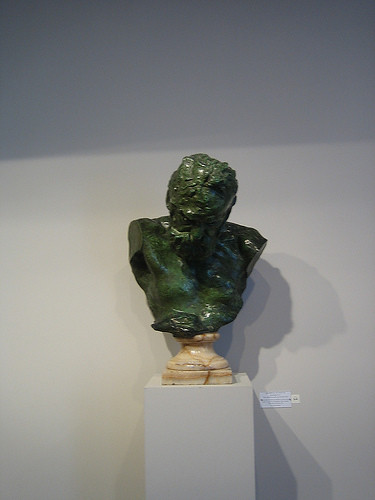
The Victor Hugo, buste héroïque was once again by the great French sculptor Auguste Rodin (1840-1917).  This bronze sculpture presented the triangle-shaped bust of a lean and brawny Hugo, without clothes and stripped of his arms, precariously perched on a small marble stand.  Head bent down, he was lost in his own thoughts, not dissimilar to Le Penseur, the most celebrated work by Rodin.

IMG_8803 _ Victor Hugo, buste héroïque, Auguste Rodin, 1902 (2), 1908, Bronze, Maison de Victor Hugo, Paris, 2008
Victor Hugo, buste héroïque, Auguste Rodin (1840-1917), 83 x 56 x 65 cm, 1902 (2), 1908, Bronze (fonte Alexis Rudier)

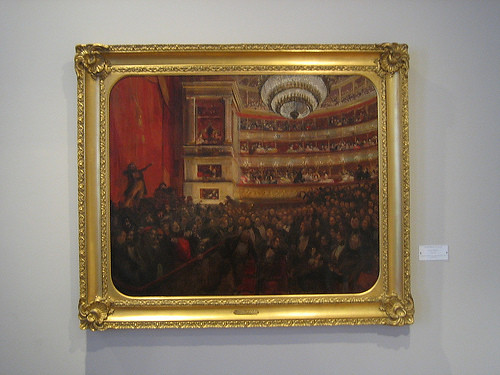
The painting, Performance of 'Hernani' by Victor Hugo in 1830, aka, The Battle of Hernani, by Paul Albert Besnard was quite virtuosic in depicting an animated crowd scene; if its artistic value was not the most accomplished, it did command viewers' attention and was hard to forget, and that made it a wonderful work. 

Hernani was Hugo's romantic play, during its premiere, in anticipating attacked from the classists, Hugo enlisted the support of fellow romanticists to combat the opposition and indeed the play had caused fights amongst the audience.  It was one of the watershed moment of the course of artistic development.  The painting captured the maniac atmosphere of that significant moment wonderfully. 

IMG_8800 _ Performance of 'Hernani' by Victor Hugo in 1830, Paul Albert Besnard, Maison de Victor Hugo, Paris, 2008
Performance of 'Hernani' by Victor Hugo in 1830, Paul Albert Besnard


My Favorite Museum Collection Series
>> My Favorite Museum Collection Series 73: My Favorite Artworks at Musée National Eugène Delacroix, Paris

<< My Favorite Museum Collection Series 71: My Favorite Artworks in La maison de Balzac, Paris

List of My Favorite Artworks in the Museums I've Visited


Other Related posts on Art · 文化 · Kunst:
- My Favorite Paintings at Musée Marmottan Monet
- My Favorite Sculptures at Musée Rodin, Paris
- Revisiting Norton Simon Museum in Pasadena
- My Favorite Paintings from Musée Picasso, Paris
- The Museum of Modern Art, New York City
- My Favorite Sculptures at Cimetière du Père-Lachaise, Paris
- Fifteen Authors Influenced Me Most and Watching Shakespeare in China
- Swiss Author and Dramatist Friedrich Dürrenmatt
- Molotov's Magic Lantern: A Journey In Russian Histoy by Rachel Polonsky and Some Journeys of My Own
- Review of "As Above, So Below" by Rudy Von B. Rucker

Saturday, March 29, 2014

My Favorite Artworks in La maison de Balzac, Paris

Honoré de Balzac was the first French author I encountered via his immortal Le Père Goriot, when I was still in elementary school, therefore I had a great affection for this great novelist and societal historian.

In 2008, when I returned to Paris, I made my way to his former residence, La maison de Balzac, in the western edge of the city, near Musée Marmottan Monet and Jardins du Ranelag in its vicinity. Balzac rented the top floor of that rather modest house, from 1840-1847 under his housekeeper's name (Mr. de Breugnol), evading his creditors from the city.

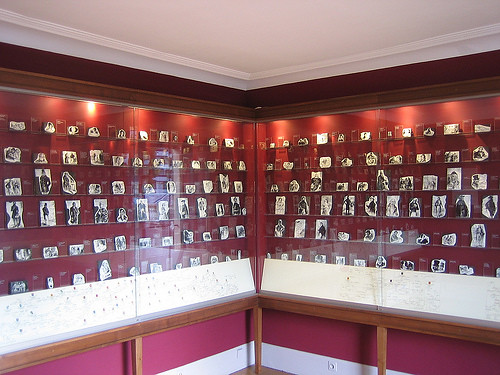
I loved Balzac's keen and cutting observation of the colorful characters populated the brutal society in Paris and provinces, and was delighted to see a roomful print blocks of main characters from his enormous, though unfortunately unfinished, La Comédie humaine.  Amongst those characters, my favorite had always been Eugène de Rastignac, a charming and innocent lad from province to a roguish and cynic though not without redeeming qualities, featured in several of his novels in this series.

Print blocks of characters from La Comédie humaine by Honoré Balzac, Le maison de Balzac, Paris, 2008
Print blocks of characters from La Comédie humaine by Honoré Balzac

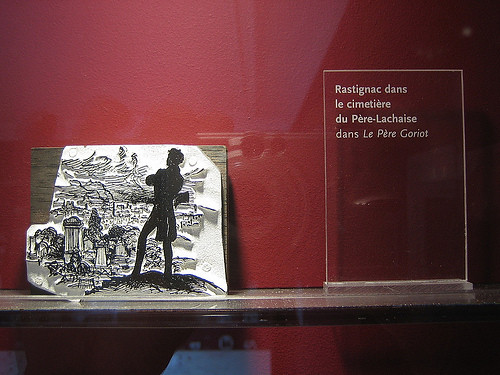
In the block below, Rastignac, after having buried the self-sacrificing Père Goriot, swore to fight with the corrupted city and its high society, before he jumped into the battle headlong, by joining his mistress, the younger daughter of Père Goriot, Delphine, Baroness de Nucingen.  It was the moment of truth and resolution, a moment of leaping from innocence to corruption.  The image was an utterly bleak and most biting assessment of the glittering Paris and its dazzling society.

IMG_8879 _ Eugène Rastignac dans le cimetière du Père-Lachaise dans Le Père Goriot, a main character from La Comédie humaine by Honoré Balzac, Le maison de Balzac, Paris, 2008
Eugène de Rastignac dans le cimetière du Père-Lachaise dans Le Père Goriot

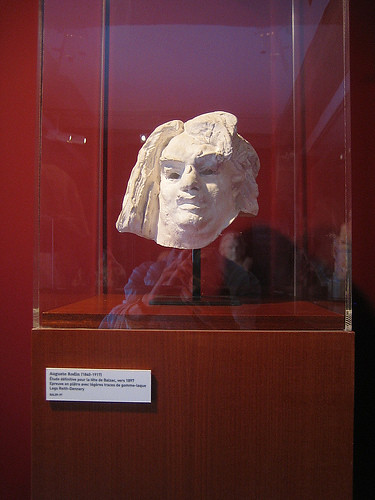
My second favorite artwork there was a definitive study of a head sculpture of the novelist by Auguste Rodin, made around 1897 - Étude définitive pour la tête de Balzac.  Behind exuberant air of the novelist, Rodin captured his sharp gaze and presented him as simultaneously sagely and clownish, embodying the broad spectrum of his oeuvre and his epoch. 

Sculpture of Honoré Balzac, Le maison de Balzac, Paris, 2008
Étude définitive pour la tête de Balzac, vers 1897, Auguste Rondin


My Favorite Museum Collection Series
>> My Favorite Museum Collection Series 72: My Favorite Artworks at Maison de Victor Hugo, Paris

<< My Favorite Museum Collection Series 70: My Favorite Sculptures in Jardins du Ranelag, Paris

List of My Favorite Artworks in the Museums I've Visited


Other Related posts on Art · 文化 · Kunst:
- My Favorite Paintings at Musée Marmottan Monet
- My Favorite Sculptures at Musée Rodin, Paris
- Revisiting Norton Simon Museum in Pasadena
- My Favorite Paintings from Musée Picasso, Paris
- The Museum of Modern Art, New York City
- My Favorite Sculptures at Cimetière du Père-Lachaise, Paris
- Fifteen Authors Influenced Me Most and Watching Shakespeare in China
- Swiss Author and Dramatist Friedrich Dürrenmatt
- Molotov's Magic Lantern: A Journey In Russian Histoy by Rachel Polonsky and Some Journeys of My Own
- Review of "As Above, So Below" by Rudy Von B. Rucker

Sunday, May 13, 2012

My Favorite Art Works at Centre Pompidou, Paris

In Paris, the museum which collected the most modern works was Musee National d'Art Moderne, Centre Pompidou, of which I remembered more of the building itself than the collections within.  I remembered that the most contemporary works, particularly from Pop Art Movement onward, was not very engaging, while older works were much more satisfactory, such as the works produced between the Wars, and particularly those by the tortured German artists, with whom I seemed to have great affinity.

My first pick was a surrealism print by Max Ernst, dated 1929, with a French title as Reste donc celui qui spécule sur la vanité des morts, le fantôme de la repopulation, whose rough translation could be Remained one that speculates on the vanity of the dead the ghost of the re-population.

This prints depicted two figures, one bent and ancient, calmly consulted with a sitting ape-like character with an enormous belly and limping arms.  The convoluted title and the slightly domestic scene didn't diminish the strangeness and the grotesqueness.  Whatever the meaning the allegory was, it had an unforgettable imagery.


Reste donc celui qui spécule sur la vanité des morts, le fantôme de la repopulation (Remainsone thatspeculateson the vanityof the deadthe ghost of therepopulation., Max Ernst, 1929

The other favorite of mine was a painting by the great German artist, Max Beckmann, Der kleine Fisch (The Small Fish), a seemingly idyllic yet not without menace, with strong contrast between sun-bathed flat areas in pale and becalming yellow and blue hues, and the densely hatched patterns in domineering black strokes.

Three figures, in retro bathing gears, formed an up-side-down pyramid in the foreground on a seaside.  Two women were offered, by a suggestively smiling young man, a large, not small, fish, whose size, shape and position, had an unmistakable resemblance of a male sexual organ.

The women on the left, peeped at the fish not without curiosity, with her right arm poising to reach out to touch and feel the fish.  Her friend, shrank and hid behind her, face in shadow, was full of anxiety and anguish, yet her right index finger raised in the same way the fish's rising head, forming a mirror image and her finger could be seen either as a warning sign or a bargaining gesture.  Her left hand rested on the young man's arm holding the fish, her attempt to control the situation.  She looked into the young man's eyes, timidly and wearily, but the young man had eyes only for the other woman, who was obviously more receptive.

A quite innocent picture impregnated with amorous, even sinister innuendos.  A very economic and eloquent work.


Der kleine Fisch (Le petit poisson), Max Beckmann, 1933


My Favorite Museum Collection Series

>> My Favorite Museum Collection Series 32: My Favorite Sculptures at Musée Rodin, Paris
<< My Favorite Museum Collection Series 30: My Favorite Paintings from Musée d'Orsay, Paris


List of My Favorite Artworks in the Museums I've Visited

Saturday, December 3, 2011

"So Low Show" at Worth Ryder Gallery, UC Berkeley

"So Low Show" of the honored students at Art Practice Department, University of California, Berkeley opened on 30 November 2011 at Worth Ryder Gallery.  There were many fascinating artworks on display.  The exhibit consisted of mostly installations and prints, one photography, several watercolors and only one painting. Tradition is definitely perceived as less edgy in academic setting for sure.  Installation, performing arts and other flashy stuff are the order of the day. Cannot blame the kids for wanting to be hip.


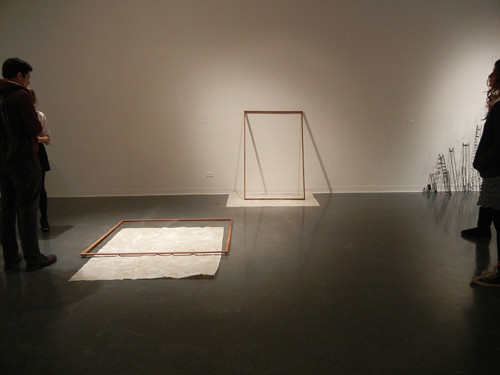
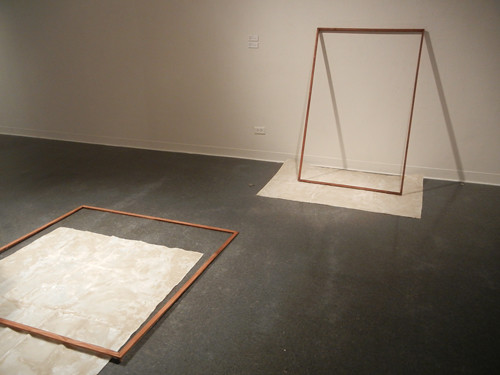
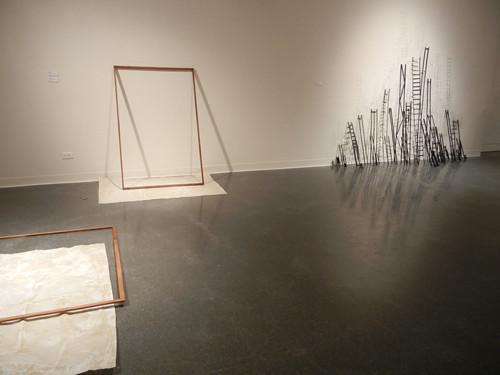
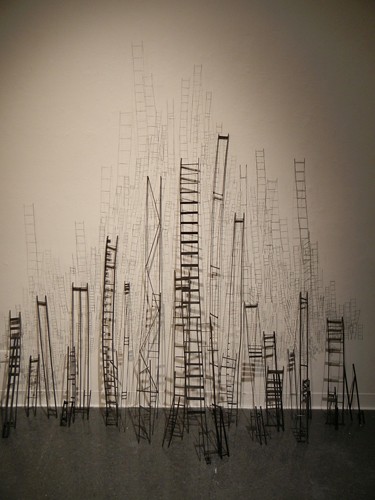
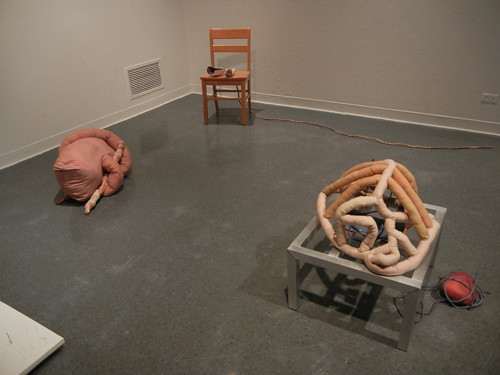
What I like most are two installations (see images below) - they were equally evocative and even transcendent.  Most important to me, they were beautiful to behold, which is not always the case in modern art.

Art Practice Department Honor Student Show, Worth Ryder Gallery, UC Berkeley _ 8593

Art Practice Department Honor Student Show, Worth Ryder Gallery, UC Berkeley _ 8548

Art Practice Department Honor Student Show, Worth Ryder Gallery, UC Berkeley _ 8592

Sketch, Stephanie Smith, Art Practice Department Honor Student Show, Worth Ryder Gallery, UC Berkeley _ 8580
Sketch, Stephanie Smith, metal, graphite

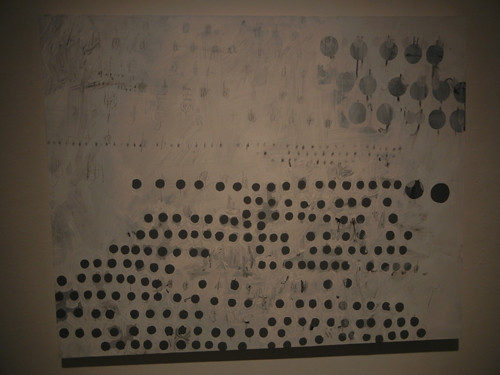
Another my favorite piece was a gesso, charcoal and graphite on canvas by Jessica Kreck below, which was beautiful, moody and mysterious.  The execution was excellent.

Untitled, Jessica Kreck, Art Practice Department Honor Student Show, Worth Ryder Gallery, UC Berkeley _ 8518
Untitled, canvas, gesso, charcoal, graphite, Jessica Kreck

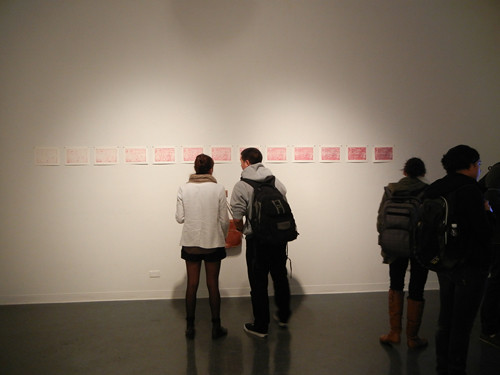
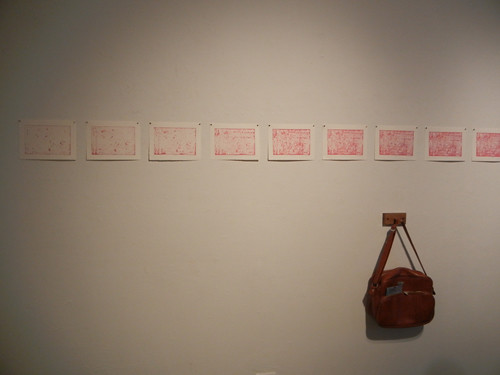
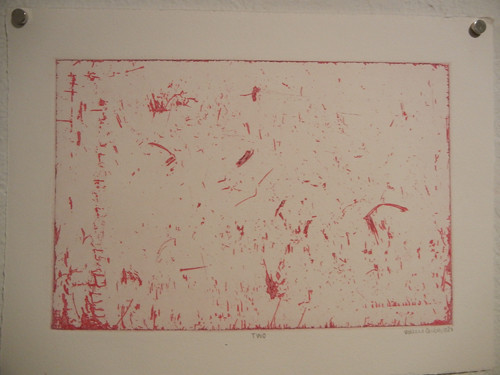
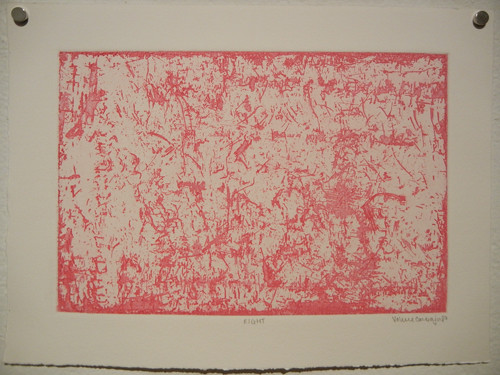
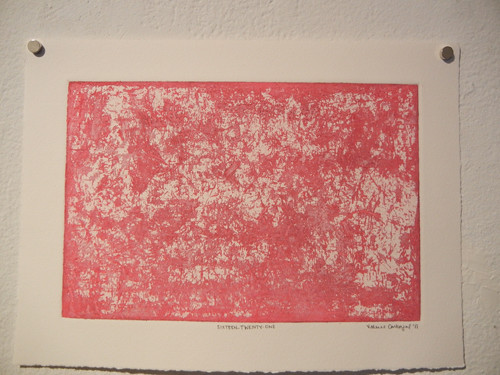
There was a series of prints, showing various presses, by Valerie Carbajal:

Art Practice Department Honor Student Show, Worth Ryder Gallery, UC Berkeley _ 8533

Art Practice Department Hornor Student Show, Worth Ryder Gallery, UC Berkeley _ 8532

Art Practice Department Honor Student Show, Worth Ryder Gallery, UC Berkeley _ 8540
Some Days are Easier Than Others (Two), Hard ground etching, 6" x 8" zinc plate, Finesse luggage bag, Valerie Carbajal

Art Practice Department Honor Student Show, Worth Ryder Gallery, UC Berkeley _ 8538
(Eight)

Art Practice Department Honor Student Show, Worth Ryder Gallery, UC Berkeley _ 8543
(Sixteen - Twenty-One)

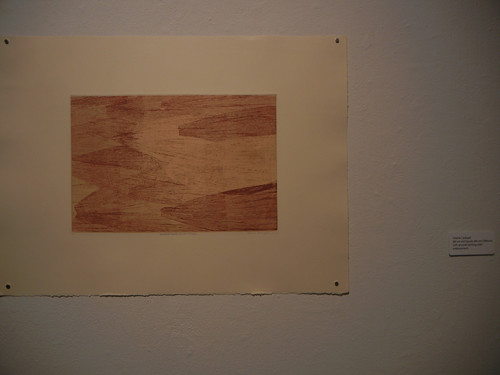
I also like the same artist's print "We are not Equals; We are Different" below:

Art Practice Department Honor Student Show, Worth Ryder Gallery, UC Berkeley _ 8520
We are not Equals; We are Different,  Soft ground etching with embossment, Valerie Carbajal


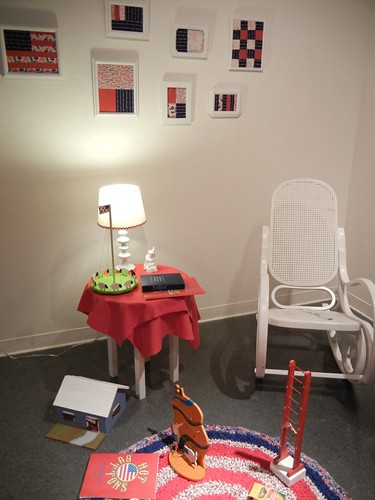
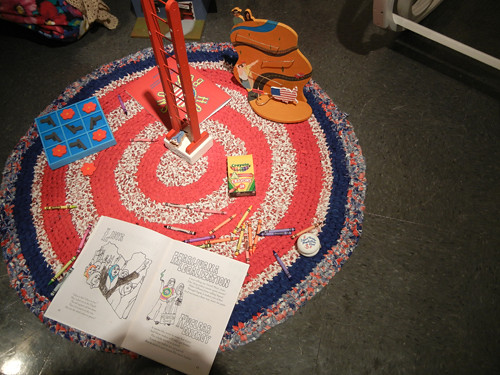
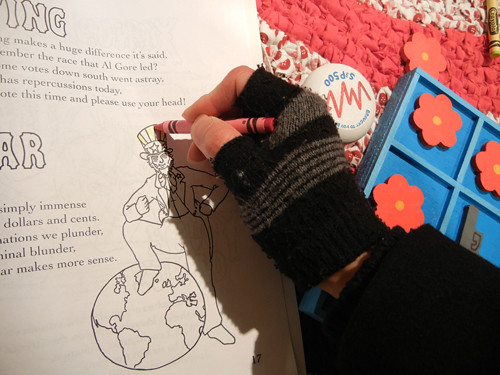
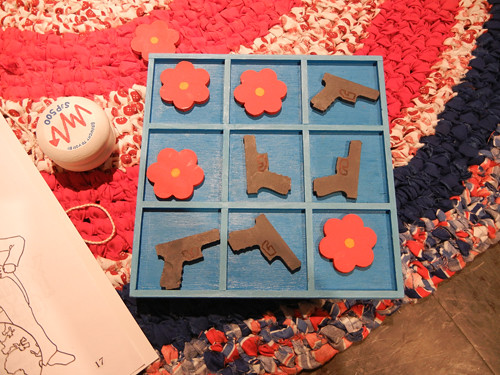
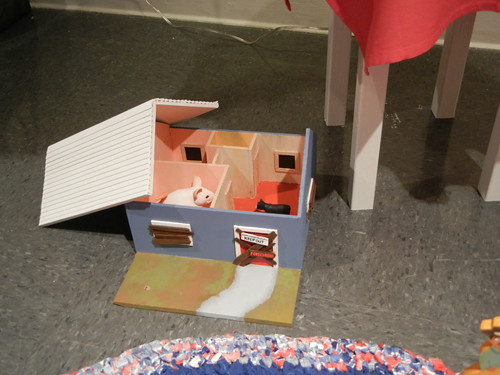
A very fun and ambitious installation was "Home Sweet America", made of handmade wood toys, rug, flags, found furniture by Ariel Ruby.  This piece was so engaging that it was heartening to see many people stopped there to play with the toys and to color the wonderful book created by the artist.

Art Practice Department Honor Student Show, Worth Ryder Gallery, UC Berkeley _ 8525
Home Sweet America, Handmade wood toys, rug, flags, found furniture, Ariel Ruby

Art Practice Department Honor Student Show, Worth Ryder Gallery, UC Berkeley _ 8561

Art Practice Department Honor Student Show, Worth Ryder Gallery, UC Berkeley _ 8528

Art Practice Department Honor Student Show, Worth Ryder Gallery, UC Berkeley _ 8527

Art Practice Department Honor Student Show, Worth Ryder Gallery, UC Berkeley _ 8569

Art Practice Department Honor Student Show, Worth Ryder Gallery, UC Berkeley _ 8559


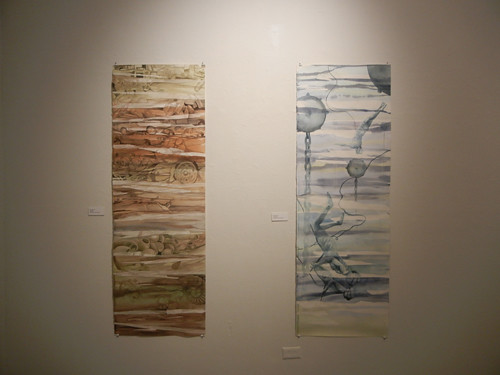
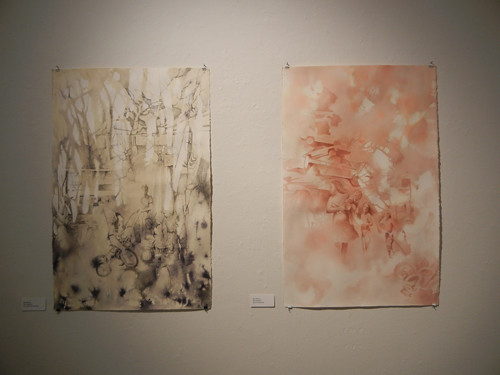
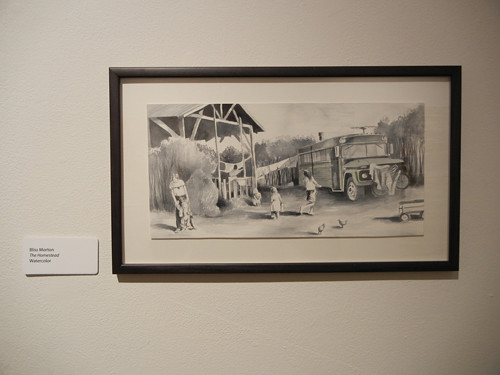
The more traditional works were represented by Bliss Morton, who had wonderful five watercolor and ink paintings, though I did find the most realistic one dull:

Art Practice Department Honor Student Show, Worth Ryder Gallery, UC Berkeley _ 8553
Watercolor, Bliss Morton

Art Practice Department Honor Student Show, Worth Ryder Gallery, UC Berkeley _ 8554
The Junkyard I (right), Ink and Watercolor, Bliss Morton

Art Practice Department Honor Student Show, Worth Ryder Gallery, UC Berkeley _ 8552
The Homestead, Watercolor, Bliss Morton

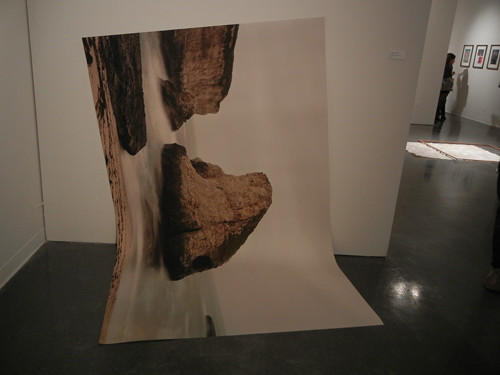
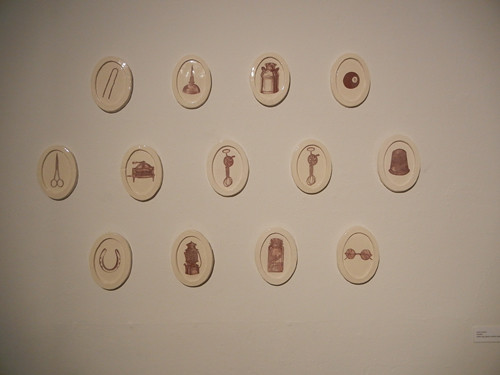
Other interesting ones are a side way photograph and a group of ceramic (?) plates but I did not find them very meaningful:

Art Practice Department Honor Student Show, Worth Ryder Gallery, UC Berkeley _ 8517


Art Practice Department Honor Student Show, Worth Ryder Gallery, UC Berkeley _ 8530

Another large-scaled installation strove hard to be avant-garde but the result was a mess and ugly, and I had no stomach to figure out its meanings, if any.  My loss?

Art Practice Department Honor Student Show, Worth Ryder Gallery, UC Berkeley _ 8521

Overall, it was a wonderful show and the artists ought to be congratulated for their thoughtful endeavors.


Saturday, November 20, 2010

Limited Edition "The Song of Orpheus"

I was just notified by ArtSlant, a vastly influential contemporary artist/collector network, that my "The Song of Orpheus" was selected by their Curation Team to be featured in their Showcase Limited Editions Collection.  This collection will be launched November 20th and it will be digitally offered at their Golden Frame exhibition at Aqua Art.

The ArtSlant LIMITED EDITIONS COLLECTION will feature approximately 30 Juried Showcase winning artists. This new collection will be developed by the ArtSlant curation team in conjunction with outside curatorial assistance.

The LIMITED EDITIONS COLLECTION will feature archival fine art prints that ArtSlant produces and numbers for each purchase. These Limited Edition prints will be sold exclusively through the ArtSlant SalesRoom. The edition for each selected image will be 30 prints. With each purchase, the artist will provide the buyer with a completed and signed Certificate of Authenticity verifying the edition run and details on arttist's work (ArtSlant'll provide the form to you).

ArtSlant's Art Consultants oversee all sales of each print offered in the Limited Editions Collection to ensure the utmost care and professionalism.

As agreed, once all 30 prints have been sold, the artist's work will be removed from this collection and no further prints of this work will be sold by ArtSlant or the artist

ArtSlant will promote this collection through ArtSlant's SalesRoom as well as during the Aqua Art Miami 2010 fair and Golden Frame Exhibition.

The 2010 Limited Editions Collection was released on November 21.