Showing posts with label Auguste Rodin. Show all posts

Saturday, March 29, 2014

My Favorite Artworks in La maison de Balzac, Paris

Honoré de Balzac was the first French author I encountered via his immortal Le Père Goriot, when I was still in elementary school, therefore I had a great affection for this great novelist and societal historian.

In 2008, when I returned to Paris, I made my way to his former residence, La maison de Balzac, in the western edge of the city, near Musée Marmottan Monet and Jardins du Ranelag in its vicinity. Balzac rented the top floor of that rather modest house, from 1840-1847 under his housekeeper's name (Mr. de Breugnol), evading his creditors from the city.

I loved Balzac's keen and cutting observation of the colorful characters populated the brutal society in Paris and provinces, and was delighted to see a roomful print blocks of main characters from his enormous, though unfortunately unfinished, La Comédie humaine.  Amongst those characters, my favorite had always been Eugène de Rastignac, a charming and innocent lad from province to a roguish and cynic though not without redeeming qualities, featured in several of his novels in this series.
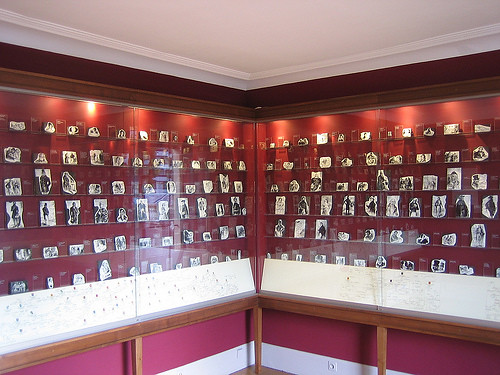
Print blocks of characters from La Comédie humaine by Honoré Balzac, Le maison de Balzac, Paris, 2008
Print blocks of characters from La Comédie humaine by Honoré Balzac

In the block below, Rastignac, after having buried the self-sacrificing Père Goriot, swore to fight with the corrupted city and its high society, before he jumped into the battle headlong, by joining his mistress, the younger daughter of Père Goriot, Delphine, Baroness de Nucingen.  It was the moment of truth and resolution, a moment of leaping from innocence to corruption.  The image was an utterly bleak and most biting assessment of the glittering Paris and its dazzling society.
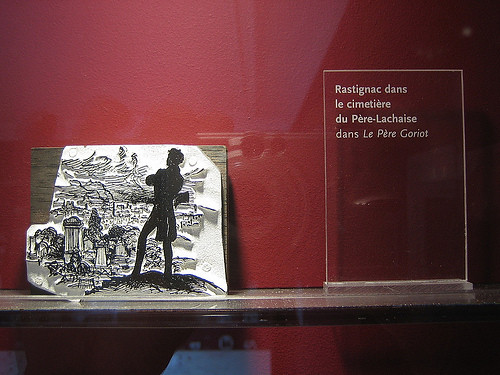
IMG_8879 _ Eugène Rastignac dans le cimetière du Père-Lachaise dans Le Père Goriot, a main character from La Comédie humaine by Honoré Balzac, Le maison de Balzac, Paris, 2008
Eugène de Rastignac dans le cimetière du Père-Lachaise dans Le Père Goriot

My second favorite artwork there was a definitive study of a head sculpture of the novelist by Auguste Rodin, made around 1897 - Étude définitive pour la tête de Balzac.  Behind exuberant air of the novelist, Rodin captured his sharp gaze and presented him as simultaneously sagely and clownish, embodying the broad spectrum of his oeuvre and his epoch. 
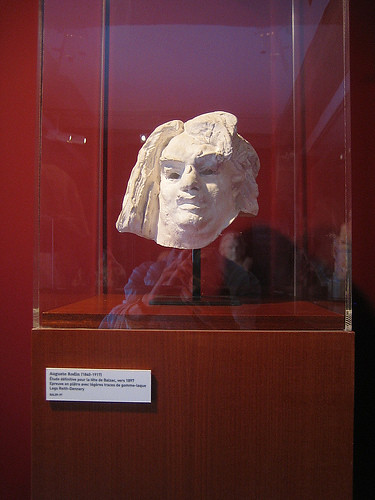
Sculpture of Honoré Balzac, Le maison de Balzac, Paris, 2008
Étude définitive pour la tête de Balzac, vers 1897, Auguste Rondin


My Favorite Museum Collection Series
>> My Favorite Museum Collection Series 72: My Favorite Artworks at Maison de Victor Hugo, Paris

<< My Favorite Museum Collection Series 70: My Favorite Sculptures in Jardins du Ranelag, Paris

List of My Favorite Artworks in the Museums I've Visited


Other Related posts on Art · 文化 · Kunst:
- My Favorite Paintings at Musée Marmottan Monet
- My Favorite Sculptures at Musée Rodin, Paris
- Revisiting Norton Simon Museum in Pasadena
- My Favorite Paintings from Musée Picasso, Paris
- The Museum of Modern Art, New York City
- My Favorite Sculptures at Cimetière du Père-Lachaise, Paris
- Fifteen Authors Influenced Me Most and Watching Shakespeare in China
- Swiss Author and Dramatist Friedrich Dürrenmatt
- Molotov's Magic Lantern: A Journey In Russian Histoy by Rachel Polonsky and Some Journeys of My Own
- Review of "As Above, So Below" by Rudy Von B. Rucker

Thursday, May 17, 2012

My Favorite Sculptures at Musée Rodin, Paris

Living in San Francisco Bay Area, one could easily see many sculptures by the great French artist Auguste Rodin.  But seeing his works in the place where he pursued his career as an artist had additional emotional punch.
Musée Rodin boasted not only many sculptures by Rodin, more readily celebrated or less so, but also his many drawings, sketches and works he collected during his lifetime.
My favorite there were more conventional this time; however, I don't believe that I need to apologize - convention often had reasons.

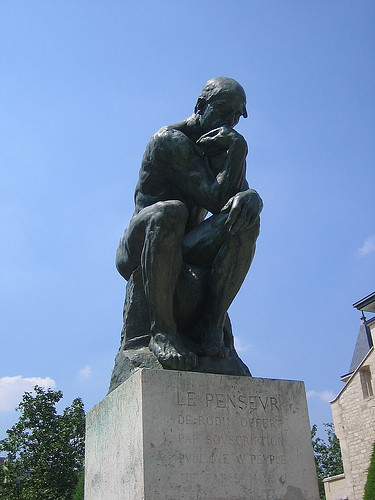
My first choice was Le penseur (The Thinker), 1903.  This sitting figure, with a height of 180 cm, was originally conceived in 1880, in smaller scale, as the crowning element of The Gates of Hell, and had the title of The Poet (Dante).

While remaining on top of the Gates of Hell, Le penseur was exhibited separately eight years later and became an independent work. It was enlarged in 1904 to current colossal scale and become an icon as easily recognized as that of Michelangelo's David.

This powerful man, sitting on top of a really tall pedestal, though pensive, was charged with tension.  His exposed muscles all tensed up, his head bent purposefully forward, and his hands, in unnaturally poses, were wonderfully evocative and full of readiness to spring into action.

Most wonderful thing about seeing it in situ was to see how it setting off the lush ground of the villa, in shifting angles.

Le penseur, 1903
Le penseur, 1903, H. 180cm.jpg

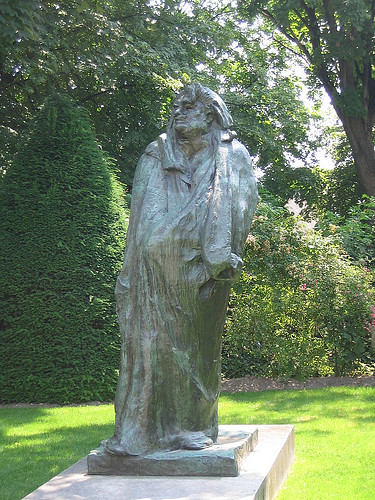
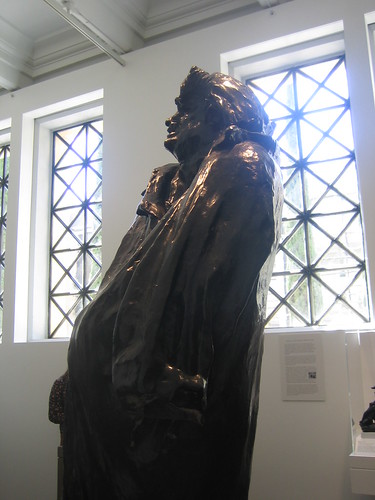
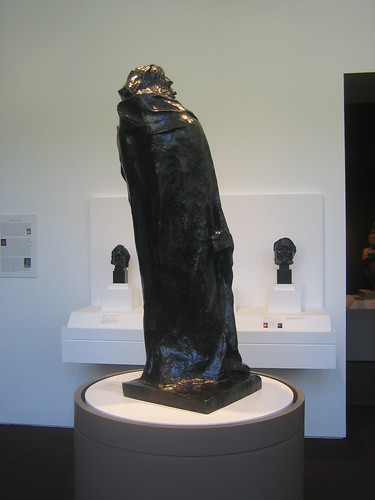
My second favorite was also situated in the trees on the villa ground - Monument à Balzac, 1898.  The sculpture itself, with the height of 270cm, was taller than the Le penseur; however, since it sat on the ground level, it was much more intimate and approachable, and precisely because of that, we had a glimpse of the humility of the great writer Rodin tried to emphasize.

This bronze Balzac, casually clothed in a shapeless robe with roughly suggested surface, stood solidly like an aged oak tree, full of ancient wisdom and understanding.  He had been reduced to the bare essence and only his facial features were modeled with recognizable details, and his hands were not visible.

It was said that after Rodin had completed his work, people marveled at and praised lavishly the hands he had given Balzac.  Feeling that the details had upstaged the work itself, Rodin decisively chopped off Balzac's hand(s).

Wonderful story.  True or false, it did reveal the innovative approach Rodin adopted towards this national figure and perhaps it partially explained why the commission was rejected and the sad fact that Rodin never saw his monument cast in bronze.

Today, one of the most satisfying memorial monuments ever created stood quietly in the tranquil woods, surveying La Comédie humaine.

Monument à Balzac, 1898
Monument à Balzac, 1898, H. 270cm.jpg


My Favorite Museum Collection Series 

>> My Favorite Museum Collection Series 33: My Favorite Paintings from Musée Picasso, Paris
<< My Favorite Museum Collection Series 31: My Favorite Art Works at Centre Pompidou, Paris


List of My Favorite Artworks in the Museums I've Visited

Thursday, November 17, 2011

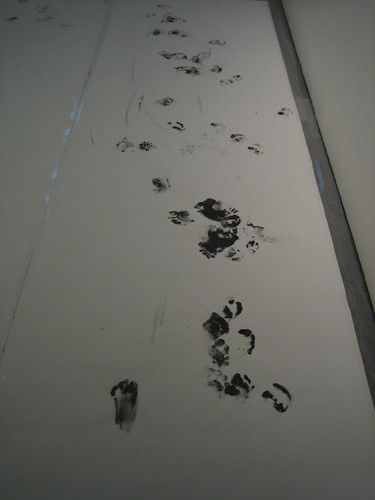
Rodin and Richard Serra in Cantor Arts Center, Stanford University

Cantor Art Museum, Stanford University, California _ 0674 Cantor Art Museum, Stanford University, California _ 0653

Two weeks ago, before I went to Palo Alto for the opening of "Scapes" juried exhibit at Pacific Art League, which included my painting "Lake", I stopped by the Cantor Arts Center at Stanford University briefly.

I had visited the museum many times, including accompanying my visiting parents from China, and saw many wonderful permanent collections and special exhibit.  This time, since I had little time, I was really only skipping along the surface; even so, I still managed to record many amazing pieces.

Cantor Art Museum, Stanford University, California _ 0655

Cantor Art Museum, Stanford University, California _ 0658

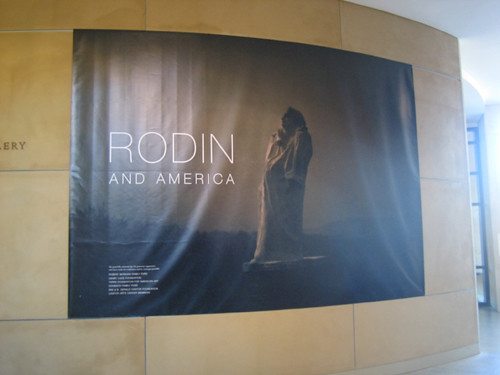
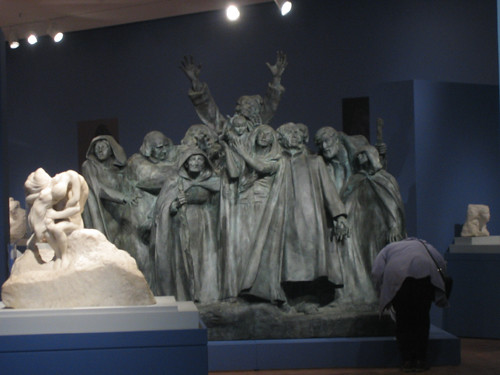
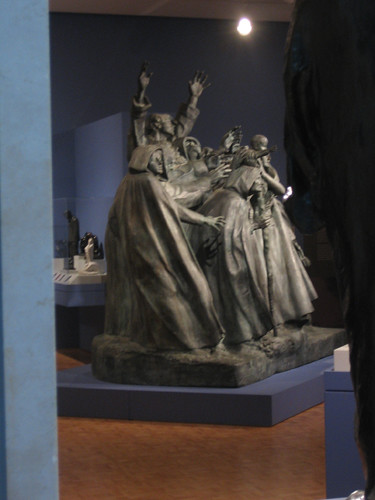
The special exhibit was "Rodin and America: Influence and Adaptation" (through 1 Jan 2012), which juxtaposed many sculptures, sketches and works in other media by Auguste Rodin and other American artists under his influences.  The work I admire most was Lorado Taft's extremely dramatic "The Blind", which predated Jose Saramago's Blindness (The City of Blind):

Cantor Art Museum, Stanford University, California _ 0660

Cantor Art Museum, Stanford University, California _ 0668

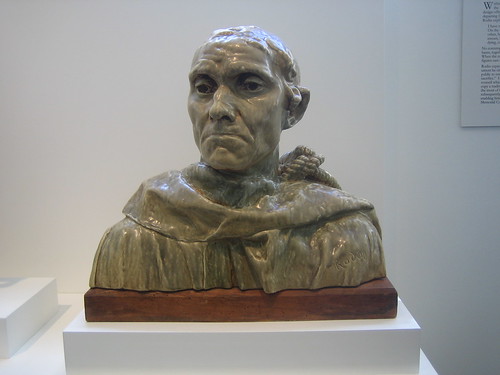
After that, I did see some of its famous Rodin collections:

Cantor Art Museum, Stanford University, California _ 0669

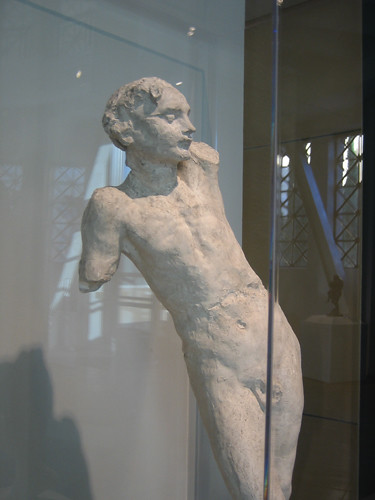
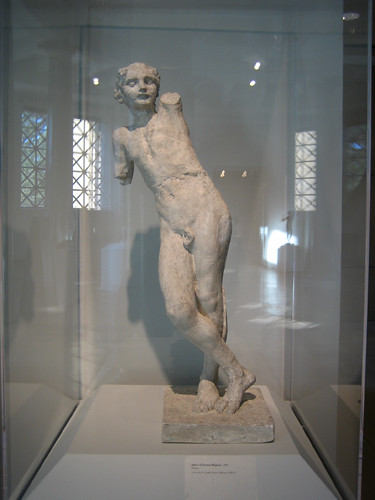
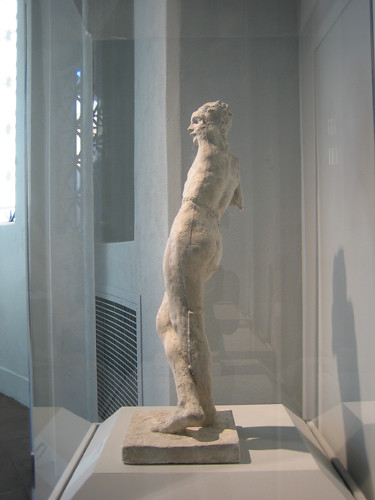
I was mostly enchanted by the "Spirit of Eternal Repose", a 1898 Plaster work:

Cantor Art Museum, Stanford University, California _ 0719

Cantor Art Museum, Stanford University, California _ 0715

Cantor Art Museum, Stanford University, California _ 0725
Other sculptures stood out are:

Cantor Art Museum, Stanford University, California _ 0671
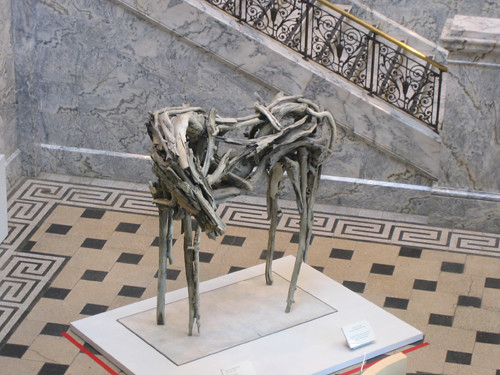
Horse, bronze, Deborah Butterfield

Cantor Art Museum, Stanford University, California _ 0700
Untitled, 1989, Welded and rusted steel and rubber, Mark Lere

Cantor Art Museum, Stanford University, California _ 0706
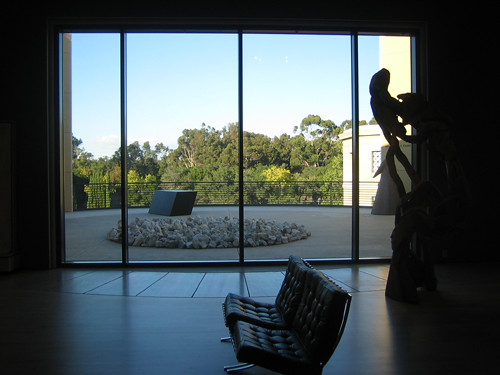
Granite Circle, Richard Long (on the balcony)

I didn't have much time therefore only looked permanent painting collections very quickly and these are Admirable paintings inside the museums are:

Cantor Art Museum, Stanford University, California _ 0709
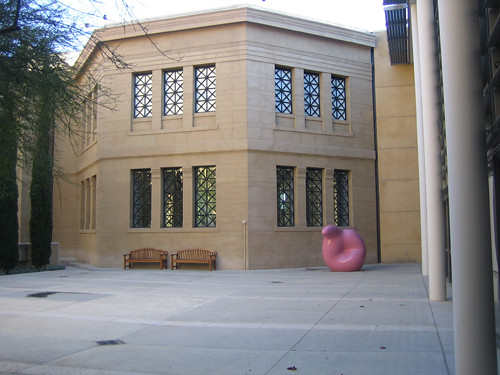
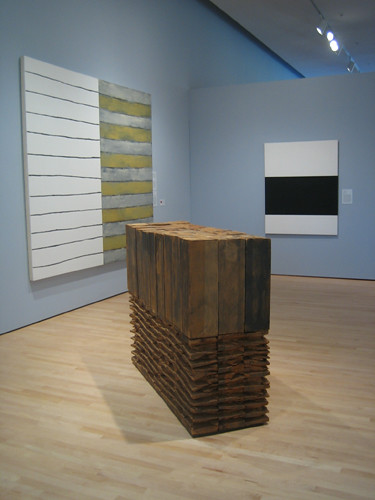
Front: Pink Companion, 1991, Cedar and graphite, Ursula von Rydingsvard; Left: Angel, 1983, Oil on Canvas, Sean Scully; Right: Untitled #14, 1969, John McLaughlin

Cantor Art Museum, Stanford University, California _ 0678
Rodin and the Dancing Body: Tracing a Lineage

Cantor Art Museum, Stanford University, California _ 0704
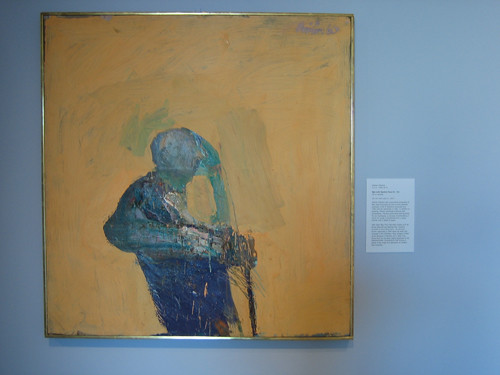
Man with Hand to Face #2, 1960, Oil on canvas, Nathan Oliveira

Cantor Art Museum, Stanford University, California _ 0707
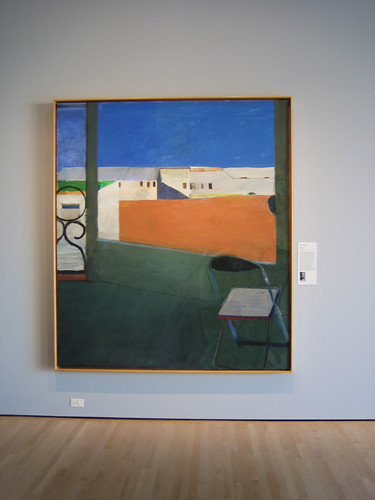
Window, 1967, Oil on Canvas, Richard Diebenkorn

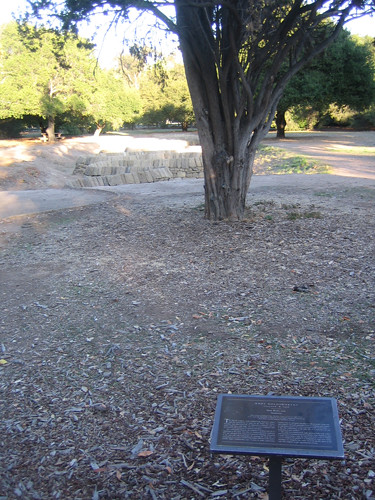
Then, there would always be the meditative "Stone River" by Andy Goldsworthy:

Cantor Art Museum, Stanford University, California _ 0727

Stone River, Andy Goldsworthy, Cantor Art Museum, Stanford University, California _ 0737

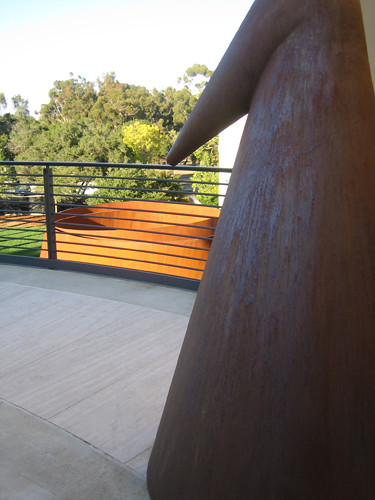
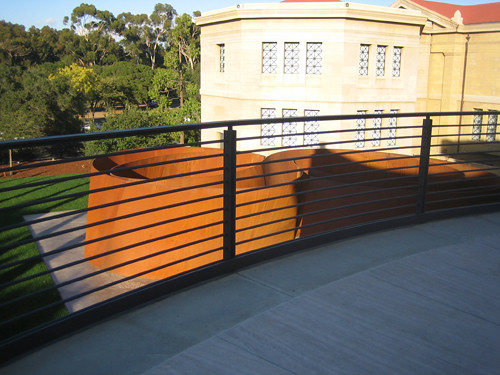
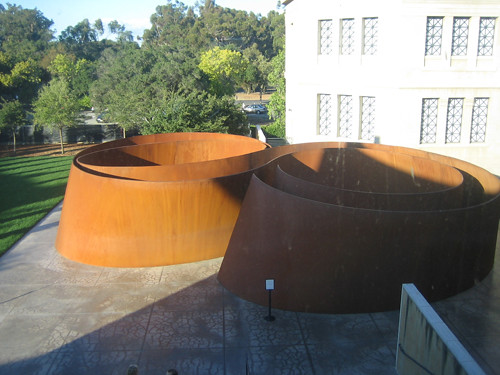
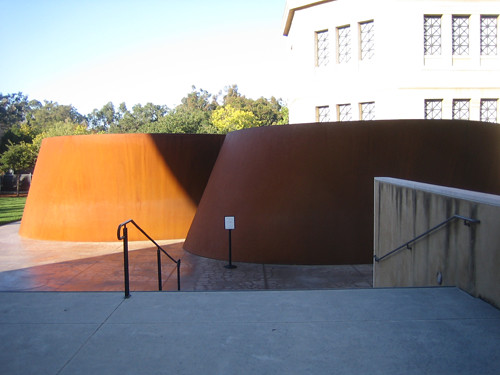
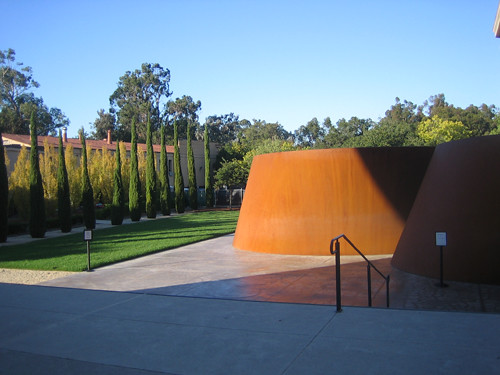
And the last, the new temporary addition to Cantor Art Center, the rusty steel sculpture "Sequence" by Richard Serra.  It was amazingly large, rustic yet sensual, almost echoed the Diebenkorn's "Window" (above):

Cantor Art Museum, Stanford University, California _ 0702

Cantor Art Museum, Stanford University, California _ 0696

Sequence, Steel, Richard Serra, Cantor Art Museum, Stanford University, California _ 0690

Sequence, Steel, Richard Serra, Cantor Art Museum, Stanford University, California _ 0665

Sequence, Steel, Richard Serra, Cantor Art Museum, Stanford University, California _ 0666

Then, yesterday, SFGate.com reported that Richard Serra's immense sculpture "Sequence", "the interlocking steel spirals - which are 13 feet tall and together weigh a whopping 235 tons - will reside come 2016 in the Howard Street gallery of SFMOMA's new wing [Fischer Collection]. And since the addition's ground floor will be clad in glass, the much-praised "Sequence" should be visible even when the museum is closed.

As for 'Sequence,' it's not far away if you want a peek before 2016: This summer it was installed outdoors at the Cantor Arts Center on the Stanford campus."

My time at Stanford this time was too short for me to enter into the swirls.  I definitely would get inside them before it moved to San Francisco.  It looked amazing on Stanford campus and it is intriguing to see how it looks in San Francisco Museum of Modern Art (SFMOMA).


Related article: Second Thoughts on the Sculpture "The Blind" by Lorado Taft

Friday, May 21, 2010

Auguste Rodin at Cantor Arts Center, Stanford University

The richness of Stanford University enables it to assemble a large collection of sculptures by Auguste Rodin, the generally recognized progenitor of modern sculpture.

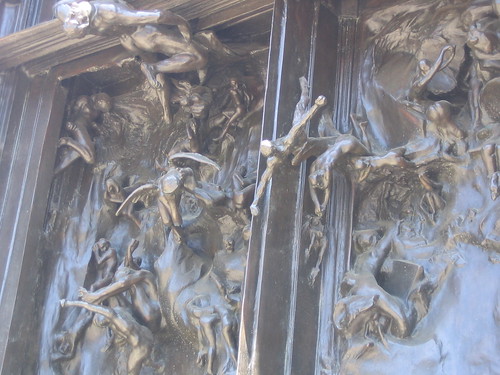
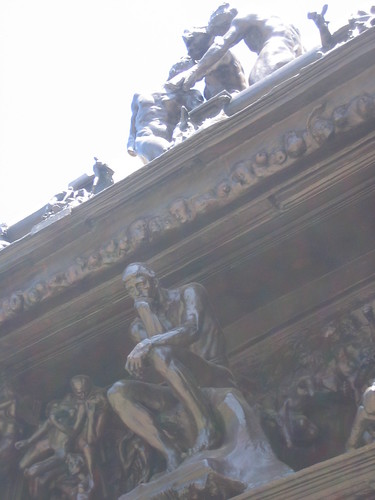
In the sculpture garden, I saw a large collection of his works, including the Gate to Hell:

Rodin, Cantor Arts Center, Stanford University _ 1770

Rodin, Cantor Arts Center, Stanford University _ 1771

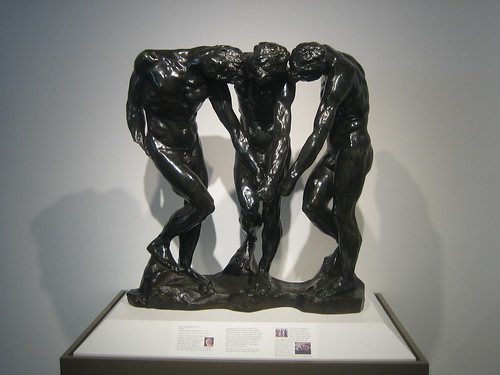
Inside the museum, I was able to study the small version of the three figures on top of the gate and realized for the first time that the figure on the left had no right hand, despite the fact that I'd visited Rodin Museum in Paris twice.

Rodin, Cantor Arts Center, Stanford University _ 1789

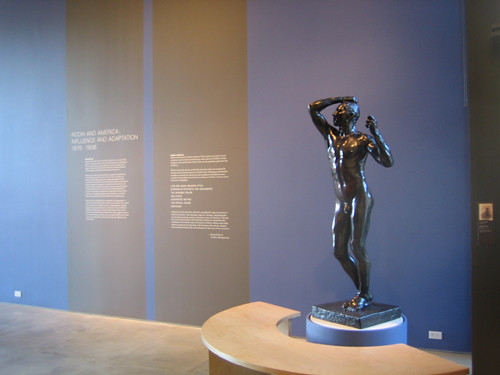
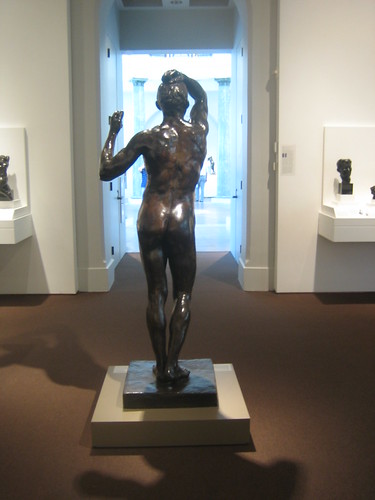
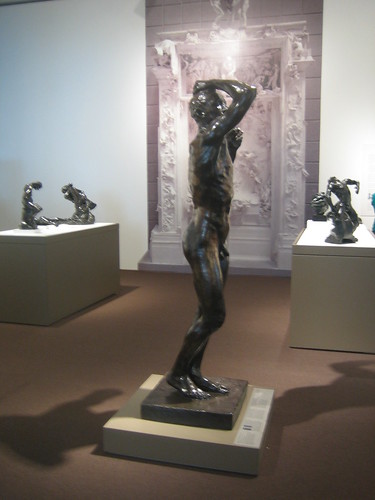
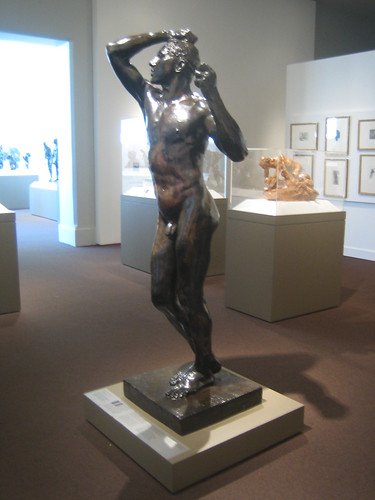
His initially controversial Age of Bronze has always commended viewer's attention. Even a smaller version did not fail to do so:

Rodin, Cantor Arts Center, Stanford University _ 1793

Rodin, Cantor Arts Center, Stanford University _ 1814

Rodin, Cantor Arts Center, Stanford University _ 1795

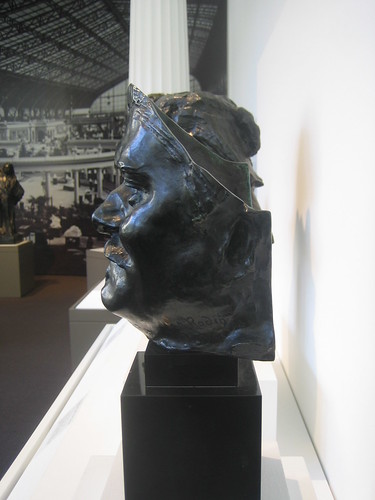
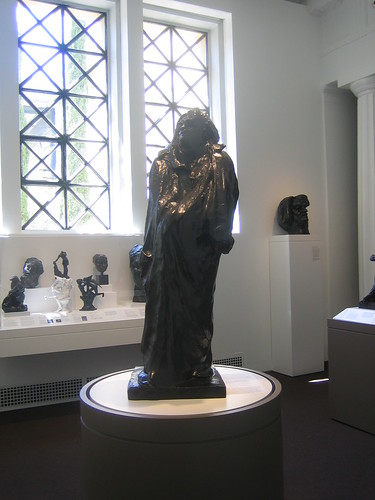
I really loved the way Rodin tried to portrait the great writer Balzec, from comic to austere:

Rodin, Cantor Arts Center, Stanford University _ 1803

Rodin, Cantor Arts Center, Stanford University _ 1804

Rodin, Cantor Arts Center, Stanford University _ 1806

Rodin, Cantor Arts Center, Stanford University _ 1812

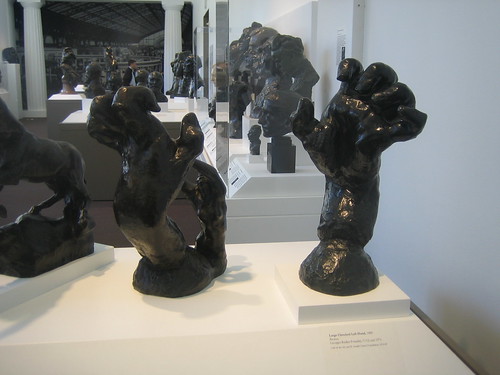
His smaller studies for large works are wonderful masterpieces on their own rights:

Rodin, Cantor Arts Center, Stanford University _ 1796

Rodin, Cantor Arts Center, Stanford University _ 1801

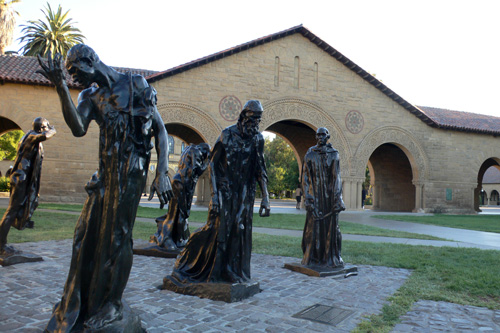
After the museum, I went to the "temple" plaza and walked inside the group of the sad Burghers of Calais, as intended by the great artist:

The Burghers of Calais, Stanford University