Sunday, May 13, 2012

My Favorite Art Works at Centre Pompidou, Paris

In Paris, the museum which collected the most modern works was Musee National d'Art Moderne, Centre Pompidou, of which I remembered more of the building itself than the collections within.  I remembered that the most contemporary works, particularly from Pop Art Movement onward, was not very engaging, while older works were much more satisfactory, such as the works produced between the Wars, and particularly those by the tortured German artists, with whom I seemed to have great affinity.

My first pick was a surrealism print by Max Ernst, dated 1929, with a French title as Reste donc celui qui spécule sur la vanité des morts, le fantôme de la repopulation, whose rough translation could be Remained one that speculates on the vanity of the dead the ghost of the re-population.

This prints depicted two figures, one bent and ancient, calmly consulted with a sitting ape-like character with an enormous belly and limping arms.  The convoluted title and the slightly domestic scene didn't diminish the strangeness and the grotesqueness.  Whatever the meaning the allegory was, it had an unforgettable imagery.


Reste donc celui qui spécule sur la vanité des morts, le fantôme de la repopulation (Remainsone thatspeculateson the vanityof the deadthe ghost of therepopulation., Max Ernst, 1929

The other favorite of mine was a painting by the great German artist, Max Beckmann, Der kleine Fisch (The Small Fish), a seemingly idyllic yet not without menace, with strong contrast between sun-bathed flat areas in pale and becalming yellow and blue hues, and the densely hatched patterns in domineering black strokes.

Three figures, in retro bathing gears, formed an up-side-down pyramid in the foreground on a seaside.  Two women were offered, by a suggestively smiling young man, a large, not small, fish, whose size, shape and position, had an unmistakable resemblance of a male sexual organ.

The women on the left, peeped at the fish not without curiosity, with her right arm poising to reach out to touch and feel the fish.  Her friend, shrank and hid behind her, face in shadow, was full of anxiety and anguish, yet her right index finger raised in the same way the fish's rising head, forming a mirror image and her finger could be seen either as a warning sign or a bargaining gesture.  Her left hand rested on the young man's arm holding the fish, her attempt to control the situation.  She looked into the young man's eyes, timidly and wearily, but the young man had eyes only for the other woman, who was obviously more receptive.

A quite innocent picture impregnated with amorous, even sinister innuendos.  A very economic and eloquent work.


Der kleine Fisch (Le petit poisson), Max Beckmann, 1933


My Favorite Museum Collection Series

>> My Favorite Museum Collection Series 32: My Favorite Sculptures at Musée Rodin, Paris
<< My Favorite Museum Collection Series 30: My Favorite Paintings from Musée d'Orsay, Paris


List of My Favorite Artworks in the Museums I've Visited

Thursday, May 10, 2012

Students' Show at Worth Rider Gallery, UC Berkeley


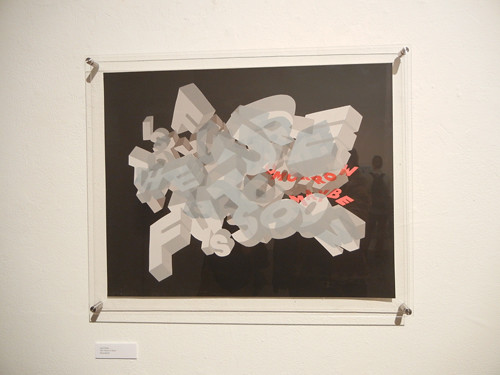
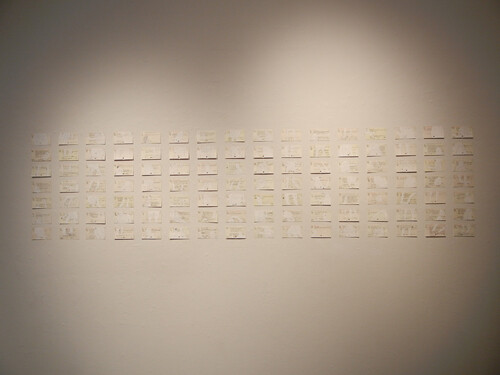
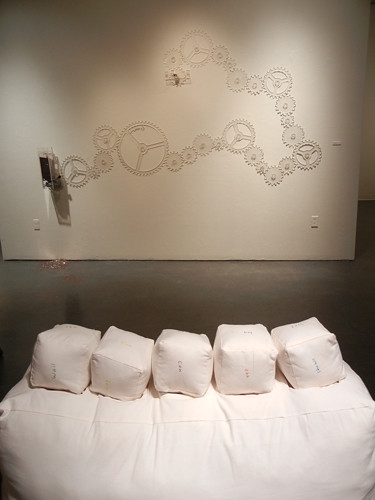
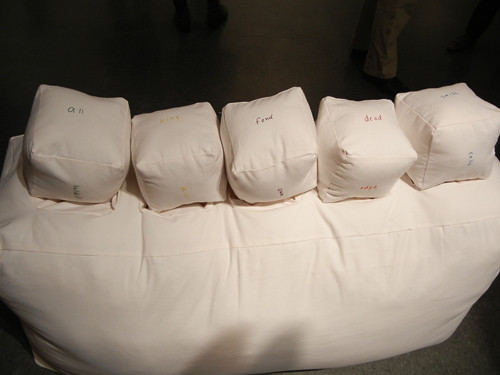
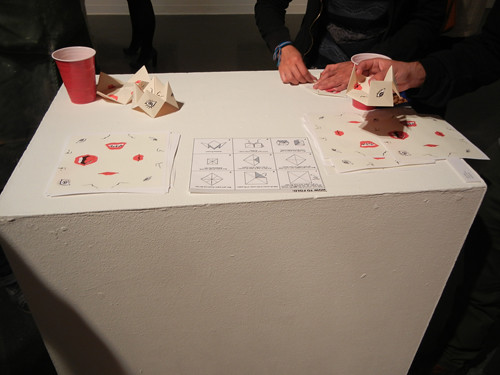
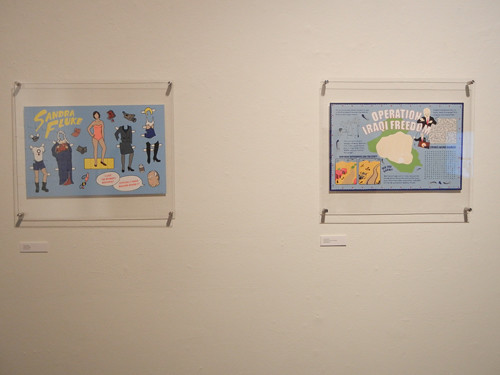
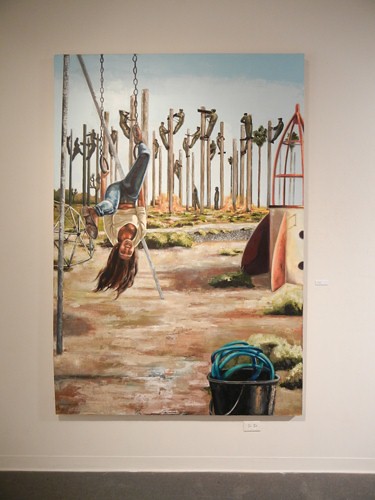
Last week, I attended the opening of another students show at Worth Rider Gallery, University of California, Berkeley.

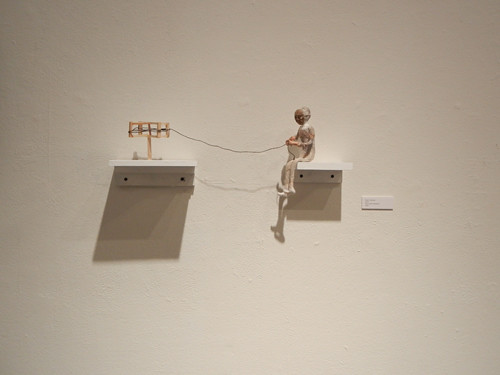
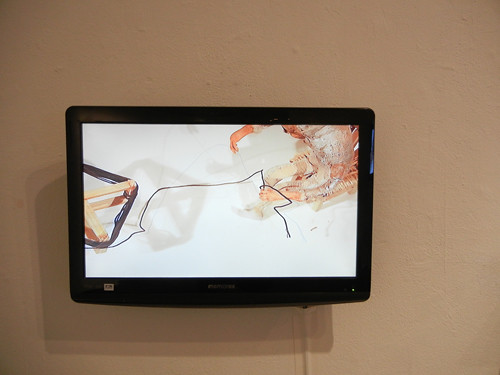
The very talented students, again, triumphed with their inventive ideas and wonderful executions.  The excitement of confronting life and reality by these young people was palpable.  I particularly liked some installations and paintings, addressing current affairs either head-on or side-ways.

Worth Ryder Gallery, UC Berkeley, May 2012 _ 8638

Worth Ryder Gallery, UC Berkeley, May 2012 _ 8648

Worth Ryder Gallery, UC Berkeley, May 2012 _ 8653

Worth Ryder Gallery, UC Berkeley, May 2012 _ 8633

Worth Ryder Gallery, UC Berkeley, May 2012 _ 8647

Worth Ryder Gallery, UC Berkeley, May 2012 _ 8641

Worth Ryder Gallery, UC Berkeley, May 2012 _ 8655

DSCN8642

Worth Ryder Gallery, UC Berkeley, May 2012 _ 8639

Worth Ryder Gallery, UC Berkeley, May 2012 _ 8659

Monday, May 7, 2012

My Favorite Paintings from Musée d'Orsay, Paris
If Musée du Louvre was most unbelievable institution in Paris due to its sheer immensity, Musée d'Orsay was one of the most enchanting one due to its unique loveliness and accessibility.  This museum, converted from a train terminal, had beautiful exterior and interior, and boasted a collection encompassing the period of impressionism and post-impressionism, which had become so popular with audience, that it was hard for modern-day audience to imagine the furore surrounded these movements' emergencies.

When I was in Paris for the first time, in early October 2000, the summer tourist season had passed, therefore I was able to enjoy many museums in a more leisurely pace and spent wonderful hours at Musée d'Orsay.  There were so many famous and wonderful works there and it felt almost criminal not to include in my top picks great masters such as Van Gogh, Cézanne, etc.  Yet, it had to be done.

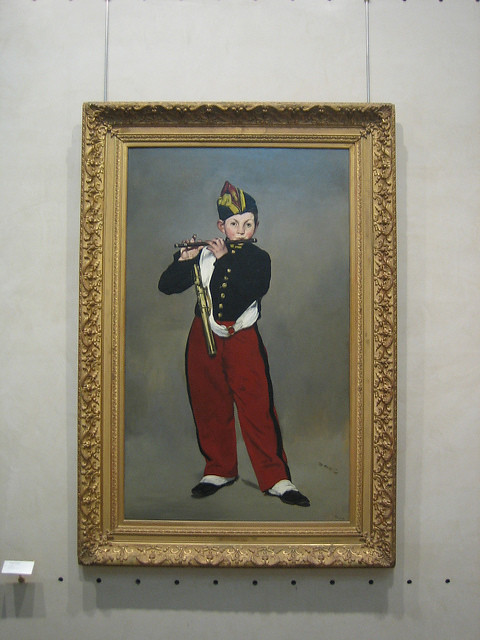
My first choice was Le fifre (The Fifer) by Édouard Manet, a full-length portrait of a little boy in bold black, red and white band uniform, playing a flute, in front of an abstract almost flat muted background.  The boy was determined to concentrate in his music-making and stay in his own world, and despite of his facing the viewers, he utterly ignored our presence.  His pose, rather peculiar, lent certain liveliness to this rather static scene.  The somewhat melancholic mood contrasted strongly with his rosy complexion, adding another layer of meaning to this mesmerizing painting.

photo
Le fifre (The Fifer), Édouard Manet, 1866

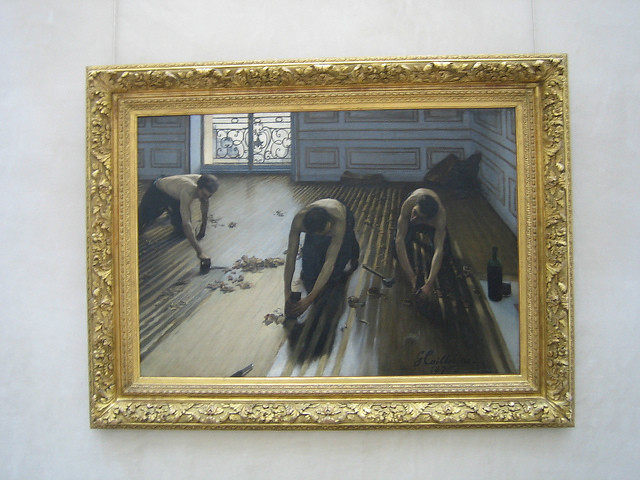
My second favorite was a painting full of actions - Les raboteurs de parquet (The Floor Scrapers), by Gustave Caillebotte. I always loved paintings depicting laborers and farmers, if they were not done for picturesque reasons.  Here, the painter lowered his gaze to the level of those laborers on the floor, and the bright back light gave them clearly defined and powerful silhouettes, and they reminded me of nimble and powerful leopards of all things.  Caillebotte had a masterful way of depicting different materials - paneled walls, wrought-iron balcony, wooden floor before and after being scraped, with varying sheen and changing reflections.  Yet, we always came back to those three working men, with their exposed upper torsos and outstretched long arms, clearly the focal points of the painting.  They were doing menial jobs, yet with great dignity.  They were also like willing offerings.  This painting, presented laborers in a way often reserved for noble characters in the past, therefore elevated those people to a new height, without being sentimental.  That was the eloquence of this masterpiece.

photo
Les raboteurs de parquet  (The Floor Scrapers), Gustave Caillebotte, 1875 


My Favorite Museum Collection Series

>> My Favorite Museum Collection Series 31:  My Favorite Art Works at Centre Pompidou, Paris
<< My Favorite Museum Collection Series 29: My Favorite Artworks at Musée du Louvre, Paris


List of My Favorite Artworks in the Museums I've Visited

Saturday, May 5, 2012

Getting Ready for the "Supermoon"

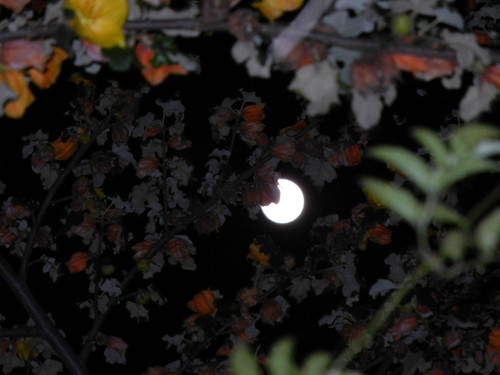
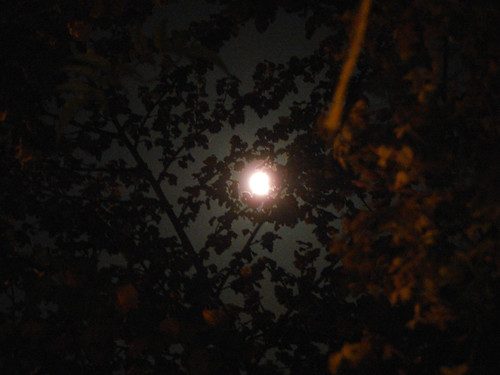
Getting ready for the supermoon tonight!

According to San Francisco Chronicle, "the biggest and brightest full moon of the year arrives Saturday night as our celestial neighbor passes closer to Earth than usual."

"Saturday's event is a 'supermoon,' the closest and therefore the biggest and brightest full moon of the year. At 11:34 p.m., the moon will be about 221,802 miles from Earth. That's about 15,300 miles closer than average."

"That proximity will make the moon appear about 14 percent bigger than it would if the moon were at its farthest distance, said Geoff Chester of the U.S. Naval Observatory. The difference in appearance is so small that 'you'd be very hard-pressed to detect that with the unaided eye,' he said."

"The moon's distance from Earth varies because it follows an elliptical orbit rather than a circular one."

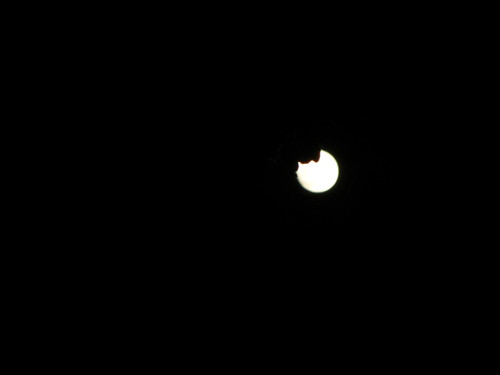
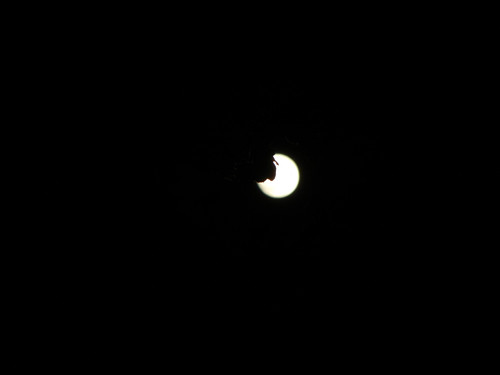
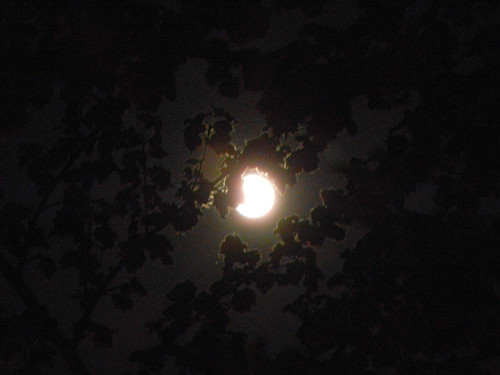
I was so impatient that I started to shoot photos last night - impatient for sure, but also startled by the natural beauty.  Get ready for the supermoon tonight!

Eve of Supermoon _ 8686

Eve of Supermoon _ 8688

Eve of Supermoon _ 8690

Eve of Supermoon _ 8687

Eve of Supermoon _ 8682

Thursday, May 3, 2012

My Favorite Artworks at Musée du Louvre, Paris

In jubilee year 2000, after completing my "Grand Tour" of Italy, I went to another art capital in Europe - Paris.  However saturated I was, I continued my greedy exposure to art and here comes a confession - I spent so much time in museums in Paris that the city failed to impress me in my first trip there.  It was only when I returned in six years' time that I truly fell in love with Paris.

Well, back to my Paris trip in 2000.  The most unbelievable institution was naturally Musée du Louvre, whose immensity, both the structure itself and its collection was sheer breathtaking.

My strategy of touring the palace was dividing the collections into three categories - I'd ignore one of them altogether, and walk by the second group very quickly, and for the third group, I'd spend more time to study objects I was more interested in.  Naturally, my impossible top two choices were from that last group.

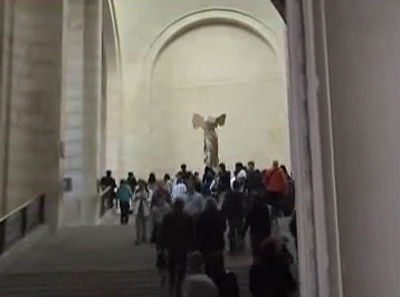
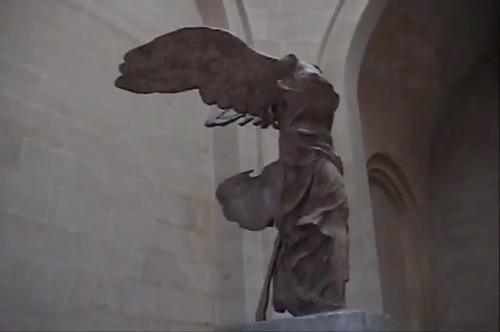
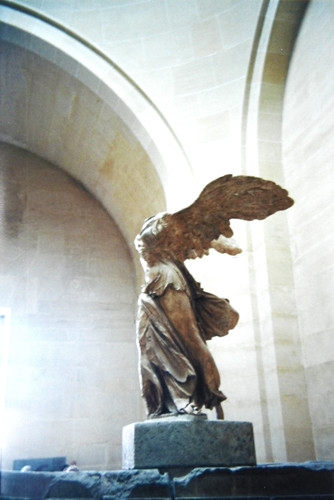
The first pick was the dynamic La Victoire de Samothrace - Winged Victory of Samothrace (Nike of Samothrace), discovered in 1863, estimated to have been created around 190 BC.  This classical marble defied the material constraints.  Despite the fact that it was made of stone, it moved, its wings beat, its drapery flapped.  Sweeping yet precise.  Grand and delicate.  The mastery of this sculpture was most justifiably celebrated. 

In this damaged and incomplete form, one felt in the presence of divinity.


Nike

Winged Victory of Samothrace (Nike of Samothrace) at Louvre 1

La Victoire de Samothrace - Winged Victory of Samothrace (Nike of Samothrace), Musée du Louvre, Paris _ 8091 HDR 500

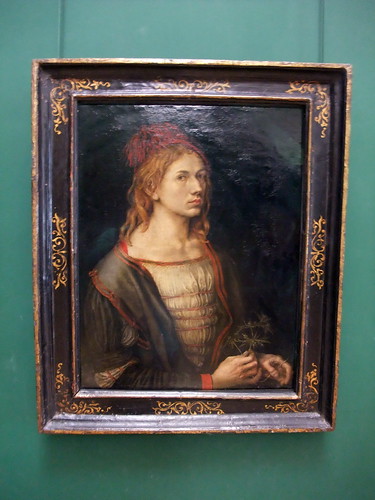
In contrast to that sculpture's monumentality, my second choice seemed quite fragile and humble.  But that was quite deceptive.  This self portrait by the great German painter Albrecht Dürer, dated 1491, though small in dimensions, was a window into a vast world and time.  The classical pose, haunting gaze, the faithfulness of  and melancholic and timeless air of the portrait, gave this intimate, somewhat narcissistic self-imagery a sense of encompassing the entire human history.

I was mostly drawn by the haunting beauty of this portraiture and the assured yet incredibly melancholic gaze of the sitter, who held the true and pitied us for the exclusion.  Was he the judge of the folly of mankind?

I had set myself up with the impossible task of choosing only two favorite works from any institutions, even as vast as the Louvre.  Yet, these two clearly deserved their exalted status.

Self-Portrait of Albrecht Dürer, Musée du Louvre, Paris


My Favorite Museum Collection Series

>> My Favorite Museum Collection Series 30: My Favorite Paintings from Musée d'Orsay, Paris
<< My Favorite Museum Collection Series 28: My Favorite Paintings at Galleria dell'Accademia, Venezia (Venice Academy)


List of My Favorite Artworks in the Museums I've Visited

Tuesday, May 1, 2012

Caressing Sun

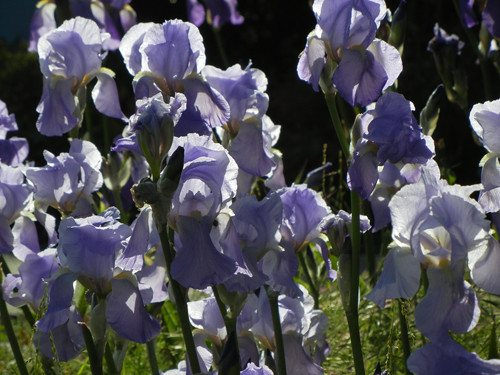
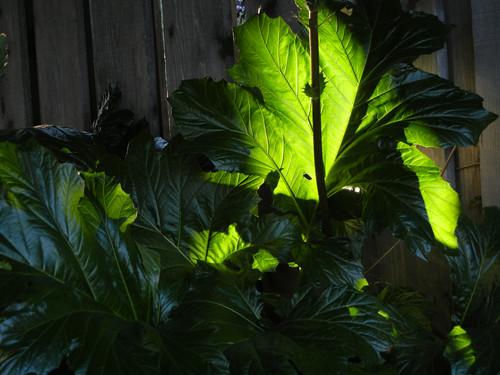
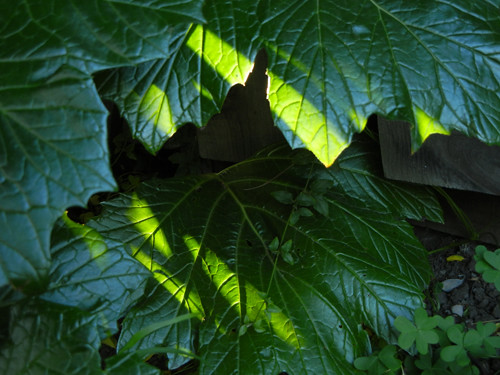
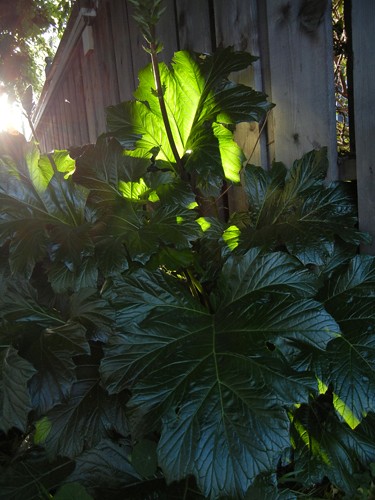
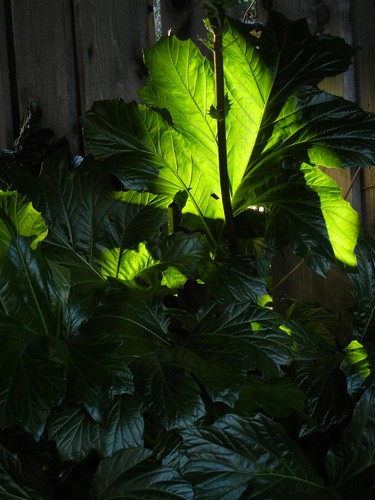
Definitely it's spring and flower season.  However, the most enchanting moments I had witnessed lately were in the morning and evenings when the sun lit the flowers and leaves almost directly, in the back, and showed off the delicacy of those lovely creatures.

First, the usual pretty flowers:

Back Lit Leaves _ 8588

Back Lit Leaves _ 8586

Then, rather unusual leaves:

Back Lit Leaves _ 8590

Back Lit Leaves _ 8591

Back Lit Leaves _ 8593

Back Lit Leaves _ 8595

Back Lit Leaves _ 8592