Friday, May 13, 2011

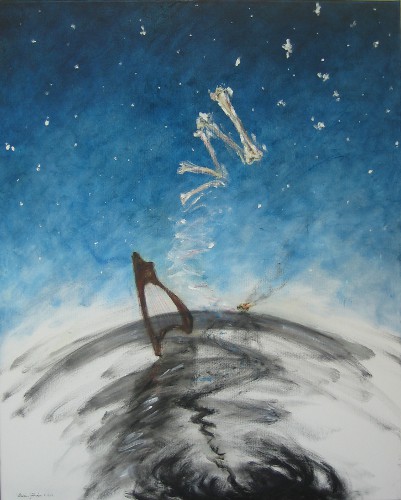
Editor's Choice Award for "The Song of Orpheus" - Artist Portfolio Magazine

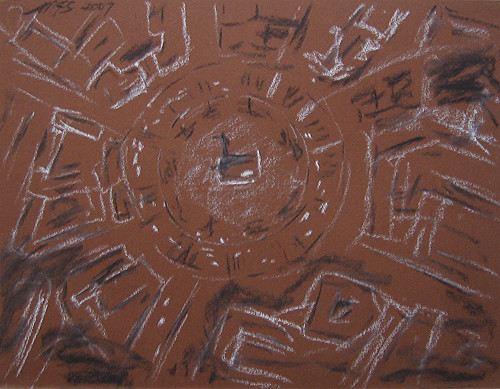
The Song of Orpheus / 奧菲厄斯的歌 / Das Lied des OrpheusThe Song of Orpheus
Oil on Canvas
30" x 24"
Completed in 2010

My painting "The Song of Orpheus" won Editor's Choice Award in the COVER II WINNERS competition, sponsored by MyArtContest.com - and will be featured in Artist Portfolio Magazine (Issue 2), which will be available online soon.  For reference, readers can view the first issue now. Below is the video presentation of this painting:


My Art Contest was created in Dec of 2007 as a way for artists to gain international exposure and to bridge the gap between artists, collectors and dealers around the world. Since then, My Art Contest has awarded thousands of dollars to support artist’s endeavors across the US and abroad. In recent years, the art world has seen a surge of online art contests. We are proud to be one of the original international juried online art contests. MyArtContest.com currently averages over 17,000 hits a day with over 500 unique visitors per day...

The entries have broad range of style and subject matters and the entries are mostly very accomplished and mature.  It is great be included in this selected group.


Related posts on Art · 文化 · Kunst:
- It's Official - Editors Choice Award Certificate- Editor's Award on Artist Portfolio Magazine, Published by My Art Contest
- "Diptych - Dawn" Won Another Award
- Another Award for a Drawing- One More Award from ArtSlant Showcase Competition- Honorable Mentioned in A Juried Competition

Lazy Cat

The cat who adopted me for almost a year is rather lazy sometimes. She only eats the food on the half plate near her and then stop, waiting for me to turn the plate for her.

That reminded me a funny story as a kid I heard in China.

There was a very lazy boy whose parents were planning a trip. The mother worried that the boy would starve to death so she made a gigantic pancake for her son. She believed that the boy would not even bother to fetch it when he became hungry so she made a hole of the pancake and hung it over his neck. However, when the parents came back from their trip, they found the son had indeed die of hunger - he only ate the part of the pancake immediately in front of his mouth. The rest still hung on his neck.

That is a champion. "My cat" has a long way to go.

Where is my pasta?
Where is my pasta?

Tuesday, May 10, 2011

Financial Troubles of Classical Music Institutions

In economic tough time, classical music institutions suffer greatly.  New Yorker tallied a partial list of such casualties:
The classical-music business lives in perpetual fear of the future. The last great shiver of foreboding swept over the city at the end of the nineteen-sixties, when it appeared that the new generation—the boomers—had no interest in classical music. The classical industry made a strong recovery, but the economic collapse of 2008 diminished both attendance and donations, and as a result several institutions are teetering or failing outright. What’s new about the current crisis is its sharply political edge, mirroring bigger battles that are taking place across the country. Managements and governing boards have often adopted an anti-union tone, charging that the costs of employing up to a hundred musicians year-round have become insupportable. That classical music could still draw a crowd was made clear in March, when YouTube Symphony drew an electronic public of thirty-three million people. Two orchestras that nearly went bankrupt in 2001—the St. Louis Symphony and the Toronto Symphony—are now thriving. The problem cases tend to show multiple symptoms of poor management: dubious real-estate moves, ham-fisted labor relations, klutzy P.R., and, above all, a lack of artistic focus. The classical business needs to start thinking of itself not as luxury but as an essential part of the average thinking person’s life. 

It went on to discuss recent productions by the financially troubled City Opera and gave a brief review of Wagner's "Die Walküre" at the Met, which cost enormous amount of money but brought little to the drama.

Last week, San Francisco Chronicle reported that San Francisco Opera's (SFO) general director, David Gockley
just renewed his contract for another five-year term as general director of the San Francisco Opera, but he's not taking any victory laps. Instead, he's using the occasion to sound an unusually urgent alarm about the company's financial future.

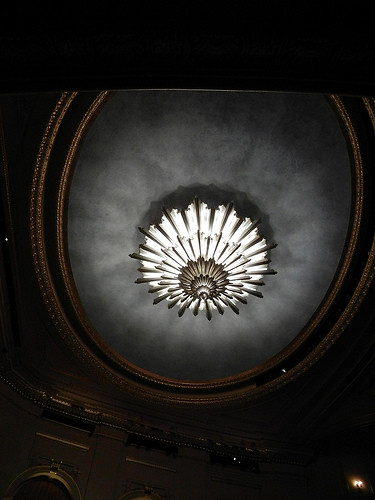
San Francisco Opera _8750
"I look at this company as teetering," he said during a recent interview in his office at the War Memorial Opera House. "The annual expenses are about $7 million more than we can reliably fund, and half of our annual gifts are made by just 11 individuals who are over 65 years old.

"That is sleep-depriving."

Among the perils besetting the company, Gockley says, are a $136 million endowment only half as large as it needs to be; dauntingly high fixed costs, particularly for health care; a punishingly compact performance schedule in a technologically antiquated facility; and a geographically scattered patchwork of office space, rehearsal venues and storage facilities.
Candid essays

Gockley began raising these issues last fall, in a startlingly candid series of essays that appeared in the company's program book. In those "Notes From the General Director," he described the Opera as standing at an economic "precipice."


The basic problem, as Gockley and Chief Financial Officer Michael Simpson lay it out, is stark enough. The company's annual budget runs to roughly $70 million, covered by ticket sales of $24 million (assuming ticket sales of 90 percent of capacity, which is as high as planners can rely on), contributions of $33 million, and a $6 million draw on the proceeds from the company's endowment. That leaves what Gockley calls "a $7 million hickey" that is not being covered up in any structural way.

Gockley is intent on building the endowment - and particularly on relieving the company's reliance on a small number of aging donors.

"People say not to worry about the graying of donors, because there are people in their 40s who are graying and they'll replace the grays," he said. "To a certain extent I embrace that idea, that people become more consistently wedded to attending an art form like symphony or opera when they get older.

"But it's hard to see the new generation of grays becoming our big contributors, given what I know of what the 40- and 50-year-olds are doing with their money. What we need to do is for each wealthy donor, to find 10 people who are interested in opera and get them to give one-tenth of what their parents gave."
Yes, indeed.  He needs to worry, despite the fact that SFO is still a strong and vibrant institution.  As a long time opera goer, and a cultural life observer, I would like to voice some thoughts of mine on how to improve the situation.
  1. Building relationships with business world and business schools.  Like it or not, money does concentrate in that sector and engage them is crucial for maintaining and enlarging the donor base.  I have worked in world-renown company and university they tend to give tickets to baseball games for their business partners and employees, but not art institutions.  Try it.  Give tickets to business schools and large companies.  SFO has wonderful theater and beautiful box seats can be very satisfying.
  2. SFO has done much to reach out, such as opera in the baseball park.  However, it does not translate into bring them into opera house.  What SFO can do is giving out door prizes and winners would be invited to experience opera in the theater.
  3. SFO cannot compete with the MET in cinemas.  What SFO can do is recording their performances and made DVDs to order and sell them to the audience after the performances.  People love souvenirs.
  4. Using social media to engage.  San Francisco Ballet has made some efforts worth trying - such as giving out free tickets to Facebook fans. 
  5. Engage young people - giving more CD/DVD/mp3/mp4 to school libraries.
  6. If Gockley's plan of enlarging office space takes place, make room for a year-round art gallery, feature theater-related art, or art work done by musicians, and exhibit scenery, costume, wig designs, production histories, etc.  When the theater is dark, maintain a light on SFO somewhere else.
  7. SFO tried to reach out to Chinese audience by producing opera based on Amy Tan's book.  Unfortunately the drama and music were sub-par. Chinese audience come to "Turandot" or Japanese audience come to "Madama Butterfly", not because these stories took place in China or Japan, but because of engaging drama and beautiful music.  Don't shortchange them.  If SFO is to try, Pulitzer winnder "Madame White Snake" by Zhou Long might be a good start.
  8. It's important to reach out to Chinese and other ethnic groups, because the tourists from China will grow fast.  Try to connect with Chinese tour groups - bring them to the house, let them see some recorded performances during the theater tour and sell them DVDs.
  9. Do some more edgy and acclaimed works, such as "Handmaid's Tale", "Tempest", "Minotaur", etc.  Some people do like the intellectualism of European conviction.  They don't need to be Euro-trash.  
  10. Find a small space for Baroque or chamber works. Hiring resident artists to sing parallel productions in the smaller space in English, or comparable works, such as Busoni's "Turandot" when the main stage present Puccini's.
  11. Better PR campaign.  For example, during Ring cycle period, SFO can show the amazing movie "Die Nibelungen" by Fritz Lang in the opera house, and invite people would might not come for the 16-hour saga.
I am sure, SFO have been trying hard to sustain the high artistic level and maintain healthy fiscal footing, and I wish this glorious institution will shine brighter.

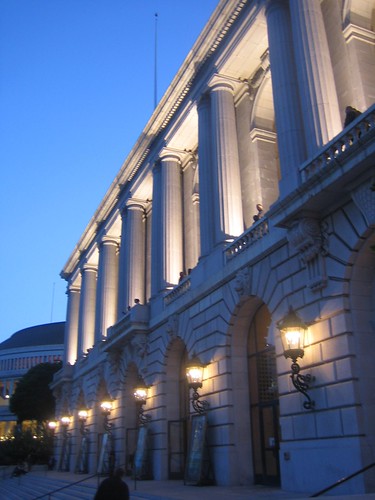
San Francisco Opera House

Sunday, May 8, 2011

A Mother's Wish: Ai Weiwei's Mother Looking for Her Son

According to Radio Australia, Gao Ying, Ai Weiwei's mother, the widow of nationally renown poet, Ai Qing (think of Walter Whitman and Allen Ginsberg), posted a handwritten searching for "Missing Person" notice, on April 5, looking for her son Ai Weiwei. Ai is an internationally renowned conceptual artist and a frequent critics of behaviors of many low ranking Chinese officials.

Gao, wrote in the search notice: "Ai Weiwei, male, aged 53, at 8:30 on April 3, 2011 or so, at the Beijing International Airport before boarding the plane to Hong Kong, was taken away by two men, and has been missing for more than 50 hours so far. If you know his whereabouts, please notify his family." A contact telephone number was included.

BBC News also reported such missing notice and confirmed that the search notice was signed by Ai's mother and sister.

In this mother's day, let's demand and pray for the immediate release of Ai Weiwei.

Updates:  Ai's Missing Days: 37

Related articles:
80 Days Later - Ai Weiwei Released on Bail
Where Is Ai Weiwei
48 Days Later - Ai Weiwei's Wife's Company Was Charged

Ai Weiwei, Ai Qing and Liu Xiaoqing

Working with Alternative Galleries

Beginner artists need exposures, not only to enrich their resumes, but to gain the experiences of curating, negotiating, pricing, packaging, delivering and caring for their works for exhibitions of all kinds.  While patiently building up bodies of works, and waiting to be connected to commercial galleries, alternative spaces to show art come in handy.

However, to show artwork in these alternative galleries can have many complications the professionals in commercial galleries would have anticipated and prevented before they emerge.

Over the years, I have showed my works in places including commercial galleries, co-op galleries, office buildings, restaurants and gyms.  The experiences I had were mostly positive but there were some bumps I'd rather avoided if I had known better.

Overall, when working with alternative galleries, artists need to be both flexible and firm, be pleasant but exercise good judgment, and watch out for things particularly regarding the contracts.

Alternative galleries are doing you a favor to let you show your work, therefore be grateful and courteous.   However, they might not be experiences in handling and caring your artworks and you must judge what risks you are willing to take for what gain.

Once, I agreed to let some new cafe owners to show my work.  On day of delivery, she and her helper showed up with an open truck and thick ropes to transport my works.  I decided to honor my agreement and not to cancel the show, despite my dismay.  It turned out to be a mistake.  They stacked my works tightly together and rather seriously damages a few paintings which are not bone dry yet.  Attempt to collect some damages went nowhere.  Therefore I learned my lesson.

Trust your instinct.  If you feel something does not go right - demand the change or cancel the show - you are under no obligation to show there, unless you are contractually compelled to.  This brought up the topic of contract.

Many alternative galleries have no contract and the mere mentioning it can stop the whole business altogether.  What you want from the contract, mostly the insurance of your work.  Ask if your works are covered by their existing insurance or not.  If not, is it possible to add a rider to cover them?  If not, would you risk of some damage or total loss?  If you judge the extra line on your resume is a compelling reason to go forward, then do it.  If not, and if you don't minding burning your bridge and don't believe the management of the alternative gallery has the means to destroy your fledgling career, then walk out. 

I had a very interesting experience with an alternative gallery which had shown artworks before.  Before delivery, I was assured that my paintings would be insured.  However, upon delivery, I was handed a form to sign - an agreement not to hold the place any responsibility of anything happened to my work.

It was clearly not we had agreed upon and I mentioned the damages to my work in other place and how uncomfortable I was with the form.  I was polite but firm.  I asked them to find out if their insurance would cover any damages to my work or not.  I waited for an hour and it was confirmed, luckily.  Even more so, I prepared a contract of my own, based on an established gallery, and the management of that place was not hesitating in signing my contract.

Another thing you should ask the management is if you can remove and replace a certain piece during the agreed-upon exhibition period, in case you need it to be somewhere else.  Usually, the management would not mind but it is polite to ask, instead of assuming.
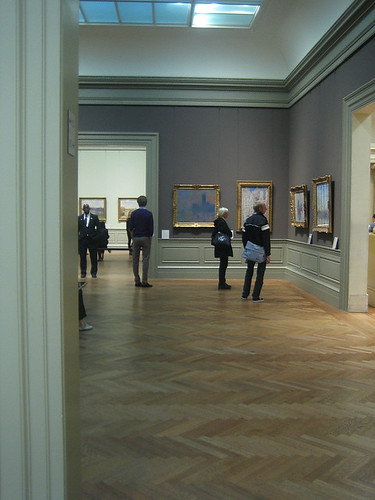
MET Museum, New York _8399_500

Friday, May 6, 2011

The Ghost of Mao Zedong

Chinese women's volleyball was the first Chinese team to achieve championship at international level in 1980s amongst major sports and was the pride and heroines of the nation for decades.

In recent years, Chinese women's volleyball standing fell into the abyss, the Chinese Volleyball Association recently posted the message, that from April 26 to May 1, the Chinese women's volleyball team spent a week time in Zhangzhou, Fujian province to learn, recite poems by Mao Zedong, hope that through this "revolutionary education", they'd be well-prepared for next year's (2012) London Olympics:


The ghost of Mao Zedong made a dramatic comeback.

Coinciding with the disappearance of internationally renown artist and social critics Ai Weiwei, and the "Singing Red" movement in Chonqing, championed by Prime Minister aspirant, Bo Xilai, China is making great leap backward, back to 1960s and 1970s.


Chongqing: Sing the Classic Red Songs, Summon the Spirit of Development

Chongqing: ten-thousand people renewed their vows to the [Communist] Party and Sung "red" songs in unison

It was in this square of my home city Shenyang, during the height of the Great Cultural Revolution, the president of Shenyang Music Conservatory taught tens of thousands people to sing songs he composed to speeches from Mao's "Little Red Book":

Mao Zedong Statue in Shenyang, China - Matthew Felix Sun's Drawing_7339

Mao is dead.  Mao is alive.  Long Live Mao.