Showing posts with label Edvard Munch. Show all posts

Wednesday, July 12, 2017

Edvard Munch at San Francisco Museum of Modern Art


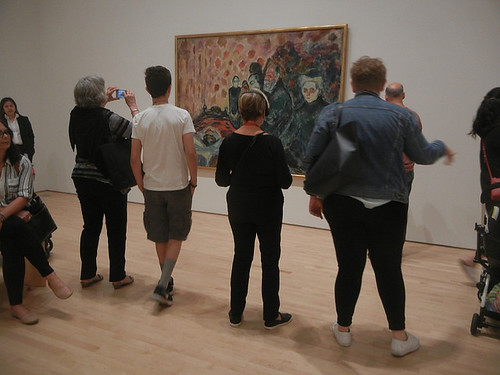
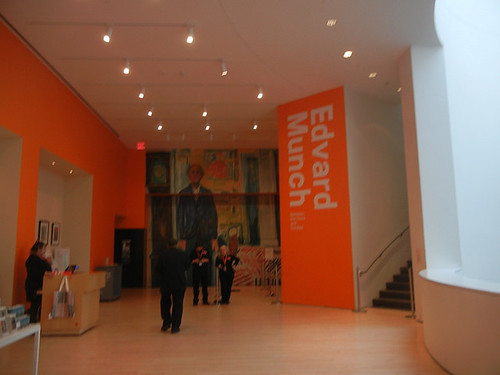
DSCN9040 _ Edvard Munch - Between the Clock and the Bed, SFMOMA, 24 June - 9 Oct. 2017

The ongoing special exhibition at San Francisco Museum of Modern Art (SFMOMA), Edvard Munch: Between the Clock and the Bed (June 24-October 9, 2017), "featuring 44 landmark compositions about art, love, mortality, and the ravages of time", which could well be a record of current turbulent time, is profoundly unnerving and ultimately moving. Moreover, "these profoundly human and technically daring artworks reveal Munch as a tireless innovator and an artist as revolutionary in his maturity as he was in his breakthrough years."

First, a group of self-portraits, dating from 1886 through 1940s, and one could see that Munch moved rapidly from almost quaint to deeply psychological.
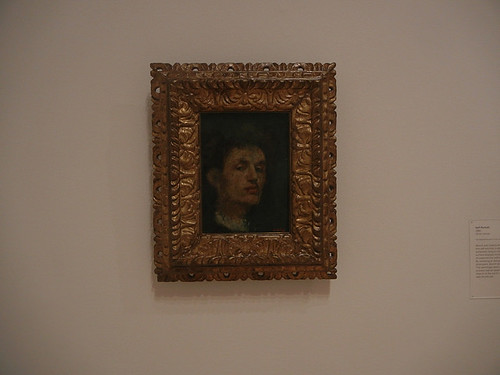
DSCN9041 _ Self-Portrait, 1886, Edvard Munch, SFMOMA
Self-Portrait, 1886

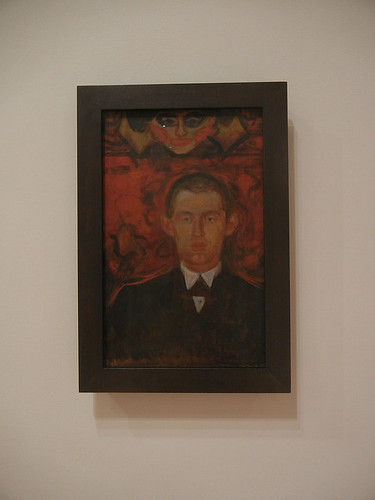
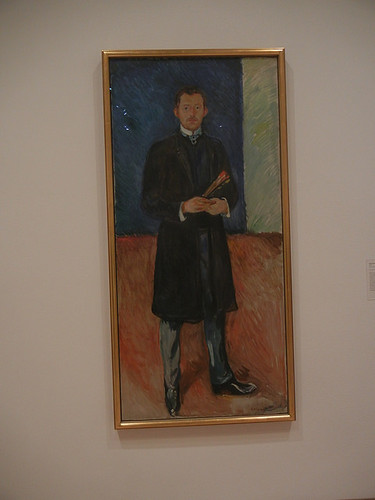
DSCN9044 _ Self-Portrait under the Mask of a Woman, 1893, Edvard Munch, SFMOMA DSCN9042 _ Self-Portrait with Brushes, 1904, Edvard Munch, SFMOMA
Self-Portrait under the Mask of a Woman, 1893 & Self-Portrait with Brushes, 1904
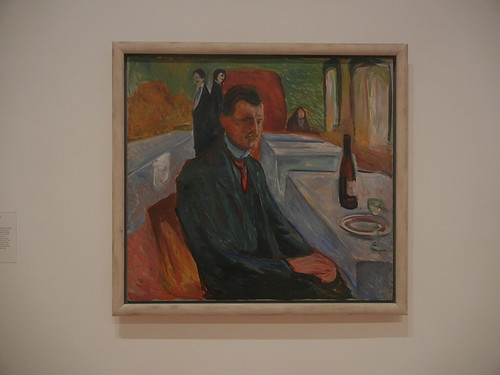
DSCN9048 _ Self-Portrait with a Bottle of Wine, 1906, Edvard Munch, SFMOMA
Self-Portrait with a Bottle of Wine, 1906
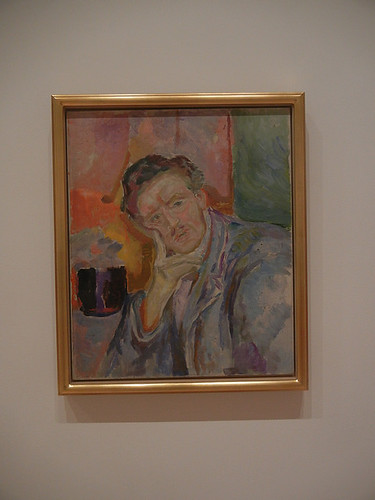
DSCN9063 _ Self-Portrait with Hand under Cheek, 1911, Edvard Munch, SFMOMA
Self-Portrait with Hand under Cheek, 1911
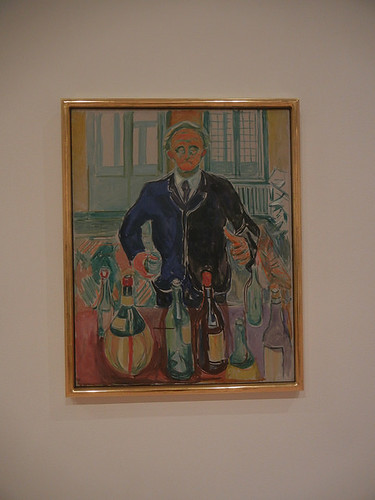
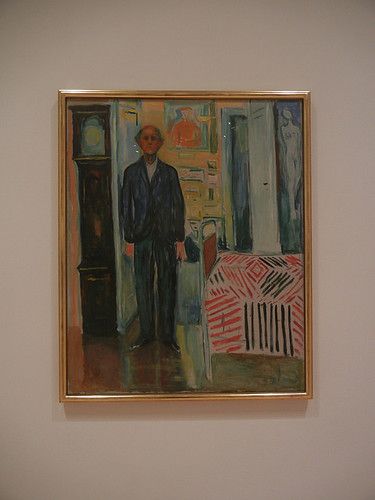
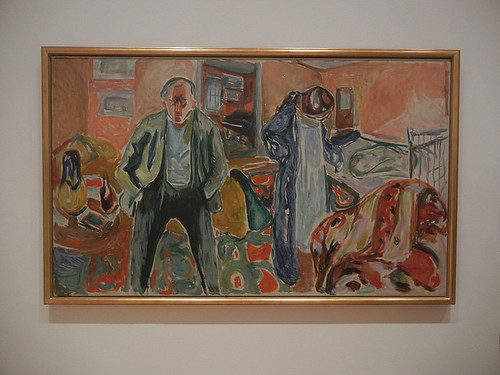
DSCN9051 _ Self-Portrait with Bottles, ca. 1938, Edvard Munch, SFMOMA DSCN9055 _ Self-Portrait_ Between the Clock and the Bed, 1940-43, Edvard Munch, SFMOMA
Self-Portrait with Bottles, ca. 1938 & Between the Clock and the Bed, 1940-43
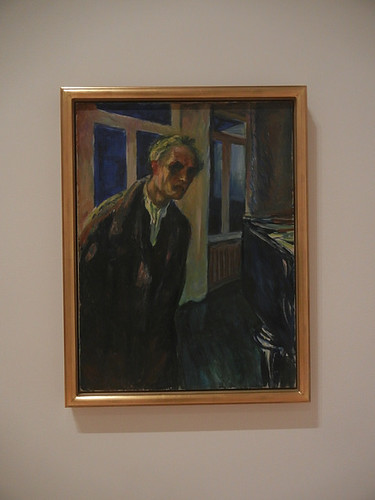
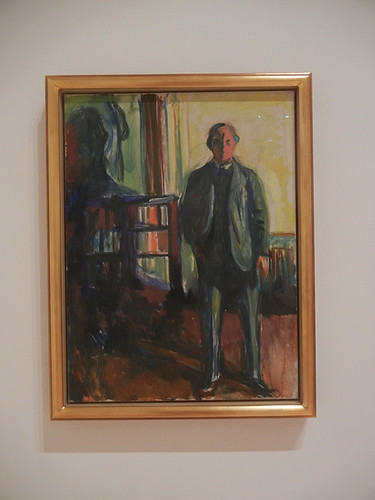
DSCN9057 _ The Night Wanderer, 1923-24, Edvard Munch, SFMOMA DSCN9059 _ Self-Portrait with Hands in Pockets, 1925-26, Edvard Munch, SFMOMA
The Night Wanderer, 1923-24 & Self-Portrait with Hands in Pockets, 1925-26
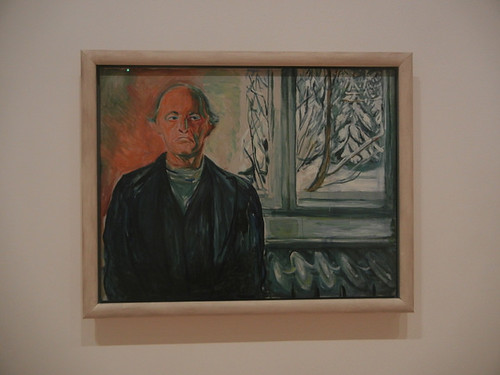
DSCN9061 _ Self-Portrait by the Window, ca. 1940, Edvard Munch, SFMOMA
Self-Portrait by the Window, ca. 1940

Then, a group of symbolism works, mysterious and forbidding, featuring isolated figure(s), or their shadows, in starkly outlined and dramatically lit environment:
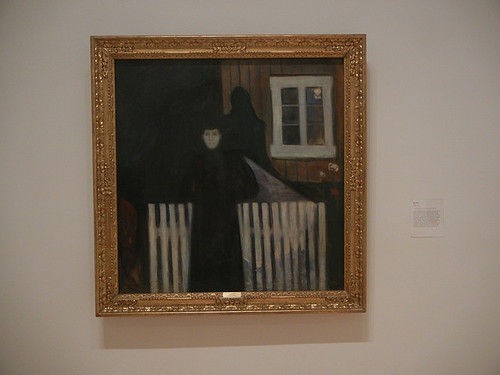
DSCN9068 _ Moonlight, 1893, Edvard Munch, SFMOMA
Moonlight, 1893

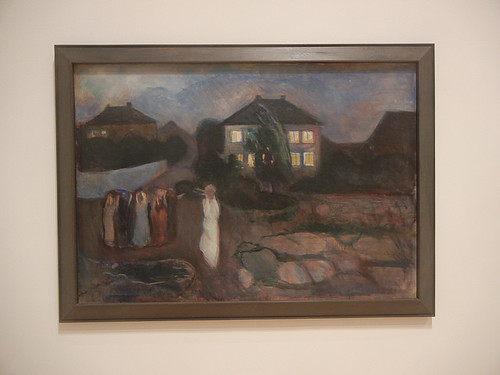
DSCN9074 _ The Storm, 1893, Edvard Munch, SFMOMA
The Storm, 1893

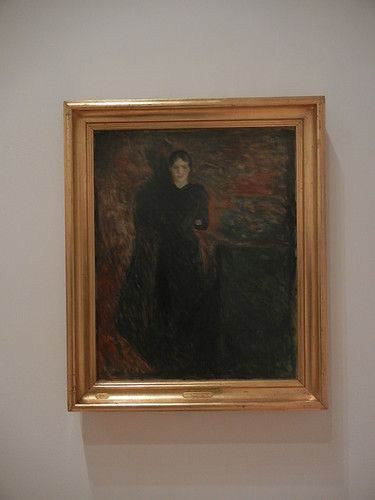
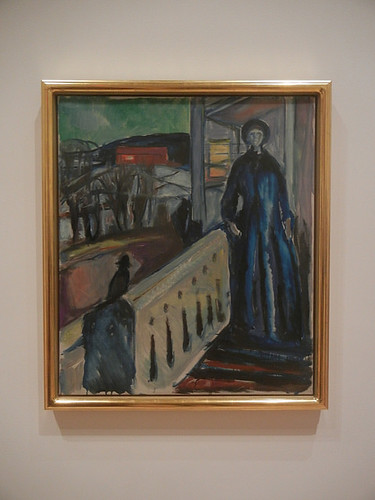
DSCN9071 _ Lady in Black (Olga Buhre), 1891, Edvard Munch, SFMOMA DSCN9082 _ On the Veranda Stairs, 1922-24, Edvard Munch, SFMOMA
Lady in Black (Olga Buhre), 1891 & On the Veranda Stairs, 1922-24
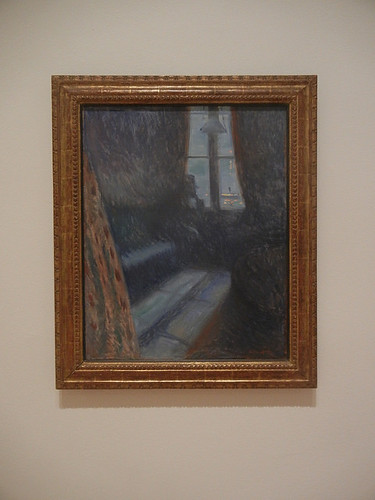
DSCN9077 _ Night in Saint-Cloud, 1893, Edvard Munch, SFMOMA
Night in Saint-Cloud, 1893

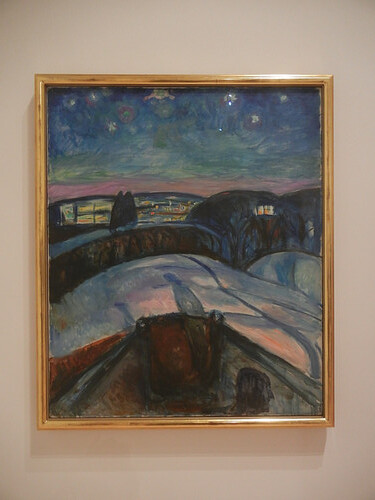
DSCN9079 _ Starry Night, 1922-24, Edvard Munch, SFMOMA
Starry Night, 1922-24

Next group focused on the ill and the dying, often with women as bereaved protagonists:
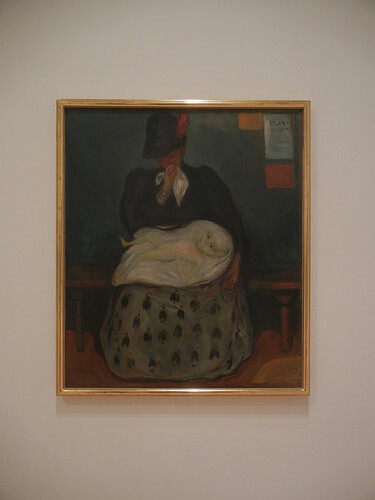
DSCN9086 _ Inheritance, 1897-99, Edvard Munch, SFMOMA
Inheritance, 1897-99

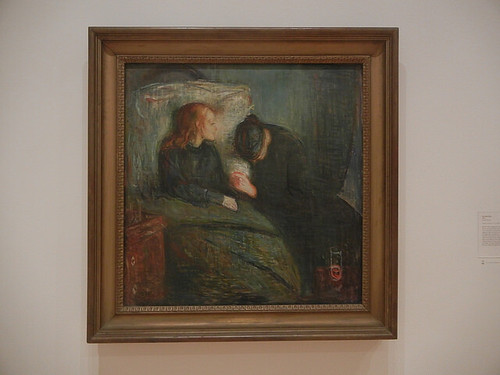
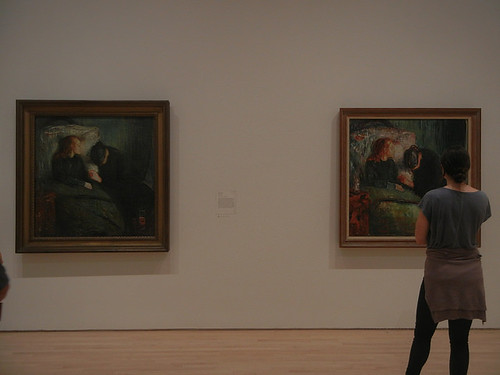
DSCN9089 _ The Sick Child, 1896, Edvard Munch, SFMOMA
The Sick Child, 1896

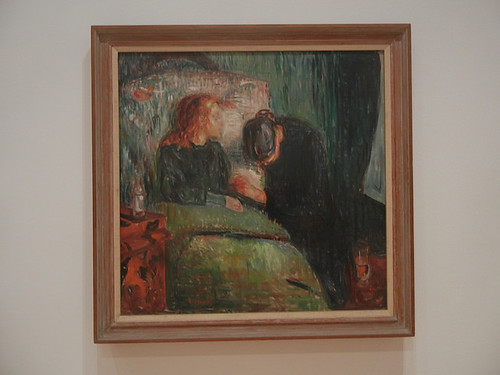
DSCN9095 _ The Sick Child, 1907, Edvard Munch, SFMOMA
The Sick Child, 1907

DSCN9183 _ Edvard Munch, SFMOMA

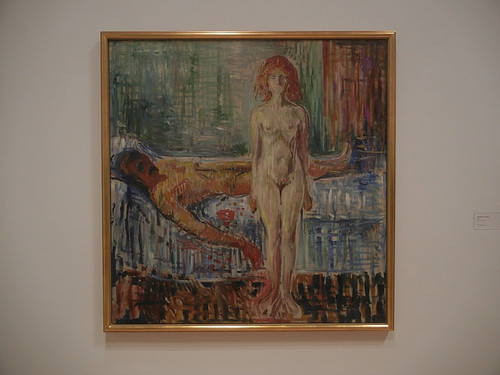
DSCN9099 _ The Death of Marat, 1907, Edvard Munch, SFMOMA
The Death of Marat, 1907

From the death, we moved onto works examining sexual awareness and tension:

DSCN9102 _ Puberty, 1894, Edvard Munch, SFMOMA
Puberty, 1894  

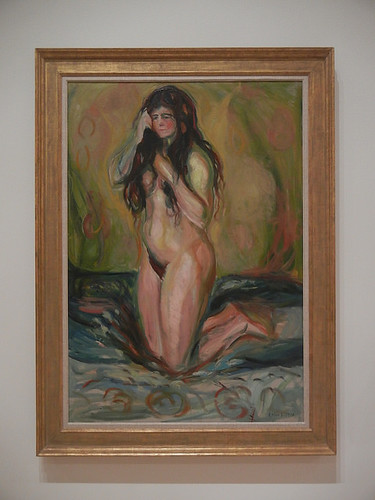
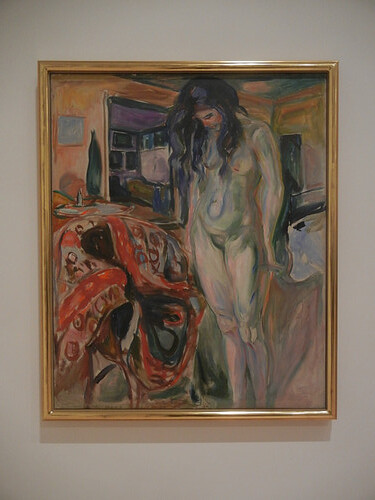
DSCN9106 _ Female Nude (Anna), 1920, Edvard Munch, SFMOMA DSCN9115 _ Model by the Wicker Chair, 1919-21, Edvard Munch, SFMOMA
Female Nude (Anna), 1920 & Model by the Wicker Chair, 1919-21
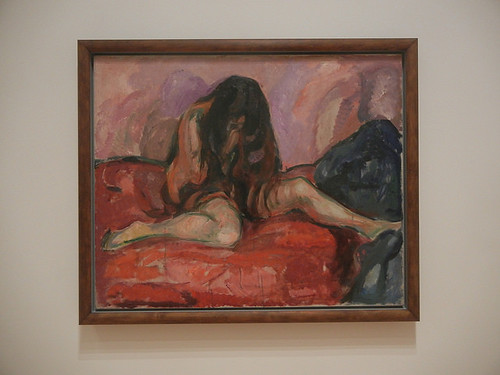
DSCN9108 _ Weeping Nude, 1913-14, Edvard Munch, SFMOMA
Weeping Nude, 1913-14

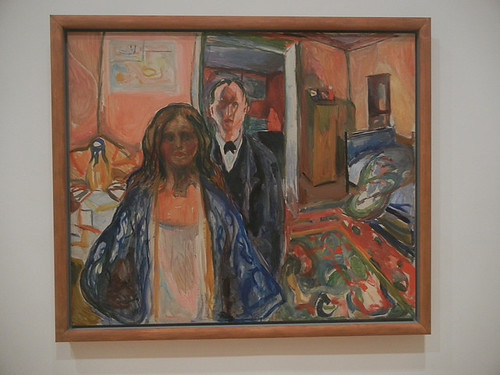
DSCN9113 _ The Artist and His Model, 1919-21, Edvard Munch, SFMOMA
The Artist and His Model, 1919-21

DSCN9112 _ The Artist and His Model, 1919-21, Edvard Munch, SFMOMA
The Artist and His Model, 1919-21

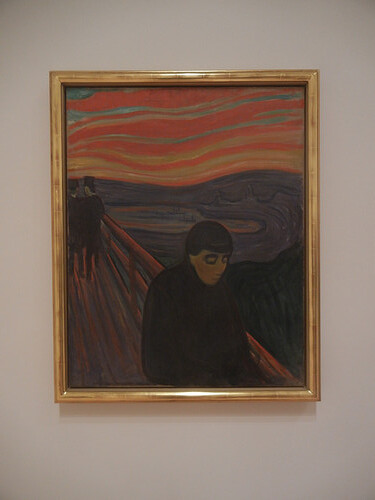
Then, back to more symbolic works. One of these, Despair (1894) recalled Munch's most recognizable work, The Scream, which was not part of the exhibition, though one hardly noticed its absence, when surrounded by so many insightful and disturbing works:
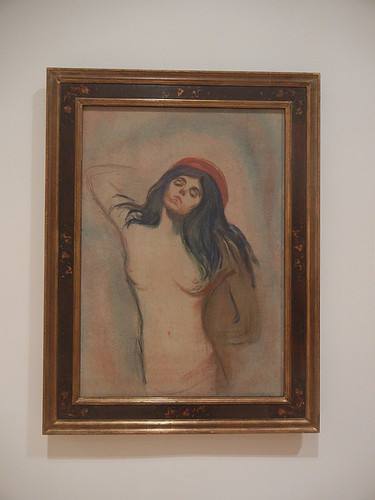
DSCN9135 _ Madonna, ca. 1895-97, Edvard Munch, SFMOMA
Madonna, ca. 1895-97

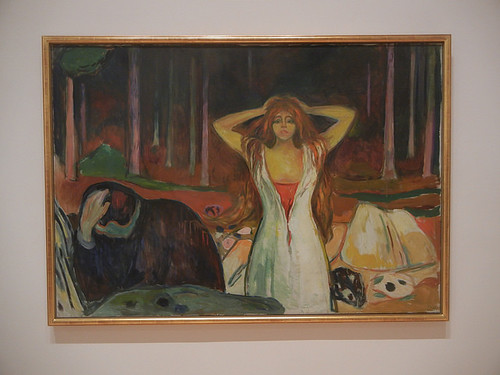
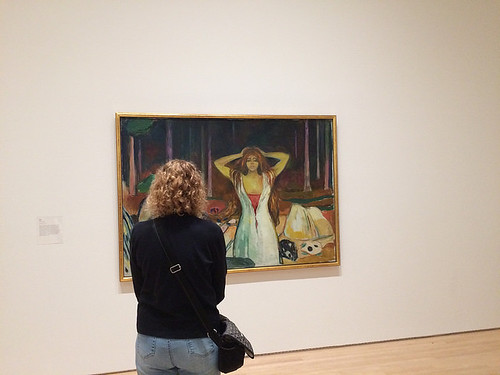
DSCN9120 _ Ashes, 1925, Edvard Munch, SFMOMA
Ashes, 1925

IMG_3123 _ Edvard Munch, SFMOMA

DSCN9126 _ Red Virginia Creeper, 1898-1900, Edvard Munch, SFMOMA
Red Virginia Creeper, 1898-190

DSCN9123 _ Despair, 1894, Edvard Munch, SFMOMA
Despair, 1894

More self-portraits, featuring the artist examining himself in unflinching ways:
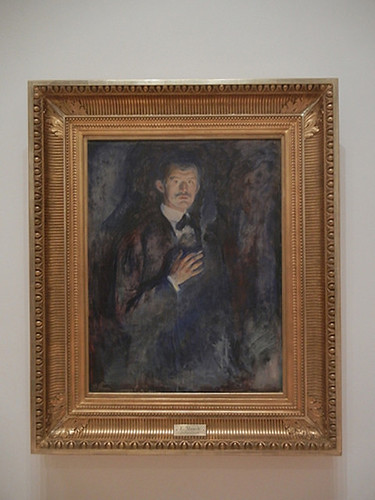
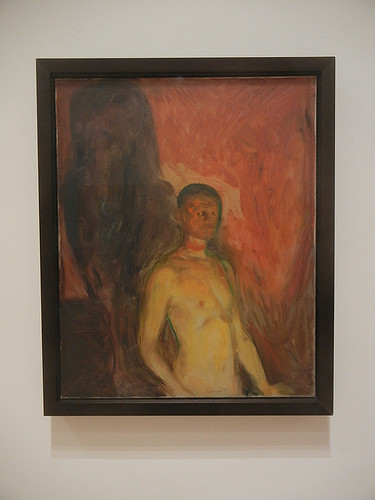
DSCN9141 _ Self-Portrait with Cigarette, 1895, Edvard Munch, SFMOMA DSCN9151 _ Self-Portrait in Hell, 1903, Edvard Munch, SFMOMA
Self-Portrait with Cigarette, 1895 & Self-Portrait in Hell, 1903
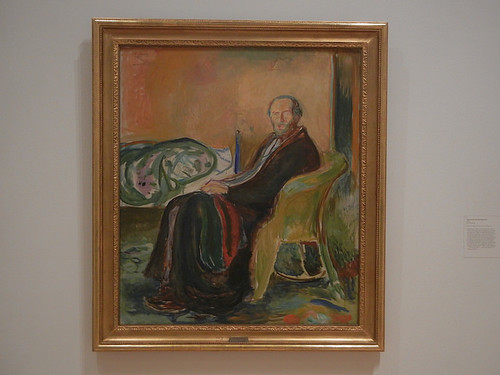
DSCN9137 _ Self-Portrait with the Spanish Flu, 1919, Edvard Munch, SFMOMA
Self-Portrait with the Spanish Flu, 1919
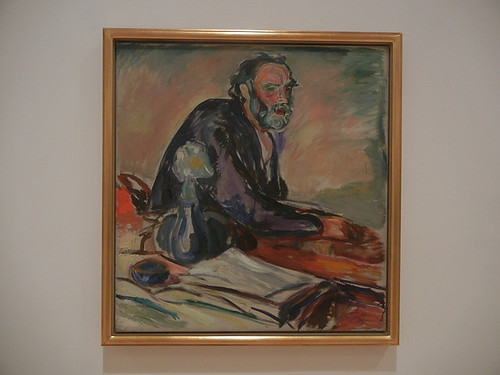
DSCN9149 _ Man with Bronchitis, 1920, Edvard Munch, SFMOMA
Man with Bronchitis, 1920

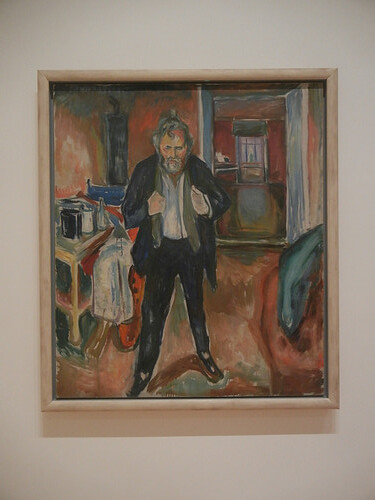
DSCN9145 _ Sleepless Night: Self-Portrait in Inner Turmoil, 1920, Edvard Munch, SFMOMA
Sleepless Night: Self-Portrait in Inner Turmoil, 1920

Next group again, depicting the the death of his sister, as in the the two "Sick Child" above. These were just as personal to the artist, but the paintings were more somber and archetypal than individual: 
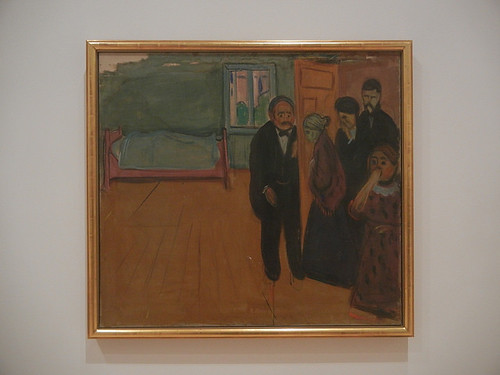
DSCN9154 _ The Smell of Death, 1895, Edvard Munch, SFMOMA
The Smell of Death, 1895

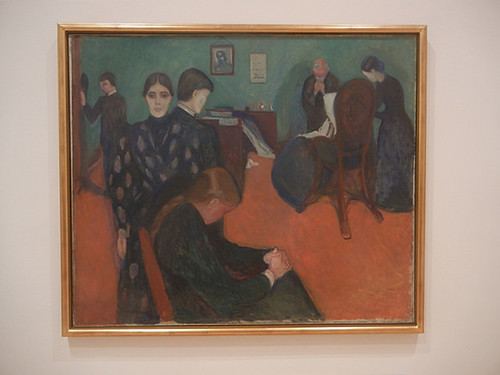
DSCN9159 _ Death in the Sick Room, 1893, Edvard Munch, SFMOMA
Death in the Sick Room, 1893

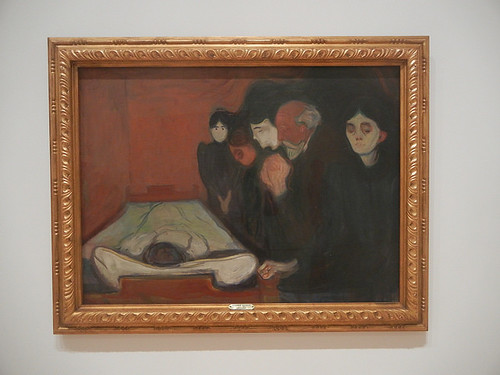
DSCN9157 _ At the Deathbed, 1895, Edvard Munch, SFMOMA
At the Deathbed, 1895

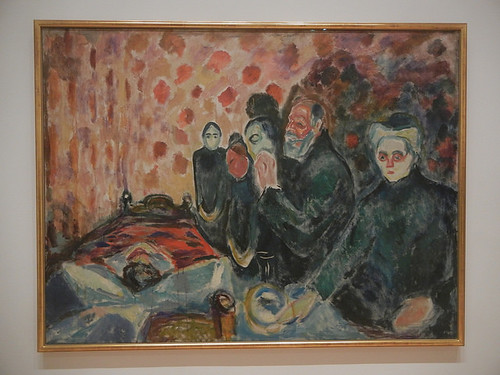
DSCN9162 _ Death Struggle, 1915, Edvard Munch, SFMOMA
Death Struggle, 1915

DSCN9180 _ Edvard Munch, SFMOMA
 
Finally, a final survey of the land of mystique and symbols:
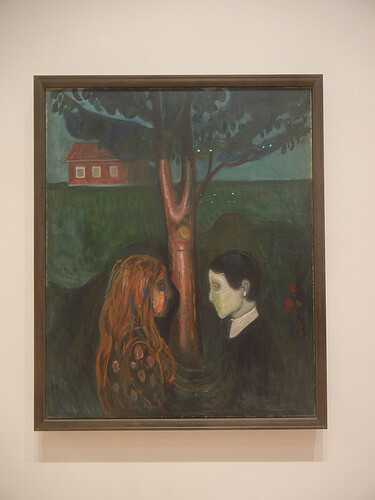
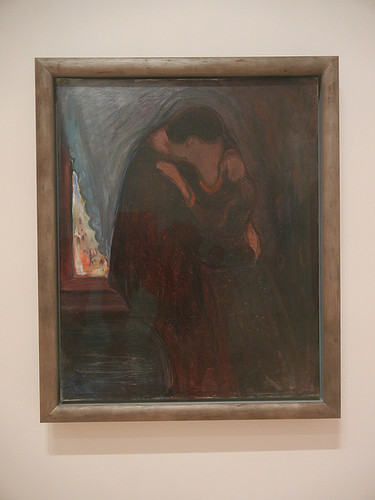
DSCN9164 _ Eye in Eye, 1899-1900, Edvard Munch, SFMOMA DSCN9176 _ The Kiss, 1897, Edvard Munch, SFMOMA
Eye in Eye, 1899-1900 & The Kiss, 1897
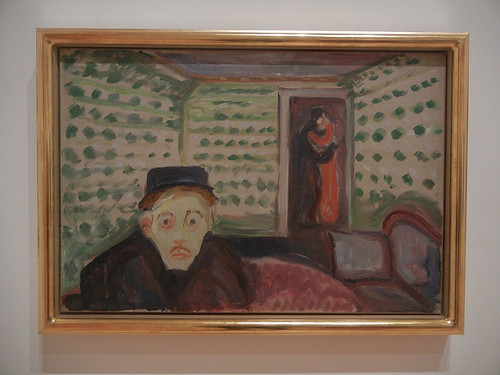
DSCN9170 _ Jealousy, ca. 1907, Edvard Munch, SFMOMA
Jealousy, ca. 1907

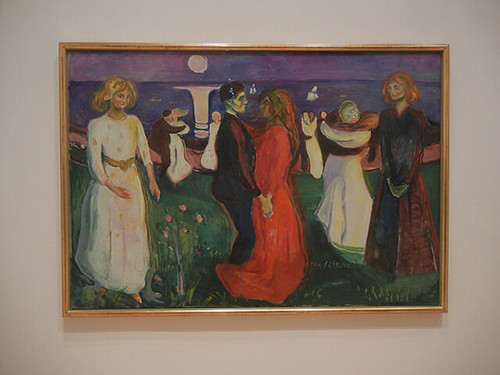
DSCN9172 _ The Dance of Life, 1925, Edvard Munch, SFMOMA
The Dance of Life, 1925

Emotionally draining, yet hugely satisfying.


Other Related posts on Art · 文化 · Kunst:
- Tomás Saraceno at SFMOMA
- Introduction to Fisher Collection and the 75th Anniversary Exhibit at SFMOMA
- Preview of the Newly Expanded SFMOMA- Unauthorized SFMOMA Solo Show
- Cy Twombly (April 25, 1928 – July 5, 2011)
- Three Heads, Six Arms (Nezha), Giant Bronze Scuplture at Civic Plaza, San Francisco
- @Large: Ai Weiwei on Alcatraz
- A Day at Palace of Fine Arts & Crissy Field in San Francisco

Thursday, December 1, 2016

My Favorite Paintings at J. Paul Getty Museum - Getty Center, Los Angeles

What I found most interesting at J. Paul Getty Museum - Getty Center in Los Angels were European paintings, and my top choice was Portrait of the Marquesa de Santiago (1804) by Spanish painter Goya — a formal portrait of an aristocratic lady in dramatically contrasting black dress with golden braids, pink shoes, and white lacy mantilla, with provocatively exaggerated makeup, standing atop a hill, a closed fan in hand, and holding herself like a seasoned stage trooper.

Goya employed broad and quick brushstrokes to establish her black dress and rustic cottages in the low lying village at distance, seen behind tilting ground, which, along with stormy sky, contributed to establish a personality prone to self-dramatization. Despite Goya's loose brushstrokes, this full length portrait was still very realistic, though the sitter's face was curiously plastic and devoid of personality. Maybe Goya did capture his sitter rather too well.

Portrait of the Marquesa de Santiago by Francisco de Goya, 1804, Getty Center
Francisco Goya [CC0], via Wikimedia Commons
Portrait of the Marquesa de Santiago, 1804, Francisco José de Goya y Lucientes (Francisco de Goya) (Spanish, 1746 - 1828)

I was also very impressed by Edvard Munch's Starry Night (1893), whose sweeping atmospheric sky, mysteriously-shaped mound and other objects on the shore, and the mirror-like glinty sea, often basked in a blue wash, gave us a sense what the beginning of everything might have looked like, and we were in the presence of some celestial phenomenon recorded with quick brushstrokes and varying thickness of paints of blue, green, maroon, and brilliant white, interlaced with some eloquent patches of almost naked canvas, where the paints thinned out. Altogether, those loosely applied pigments and vaguely suggested elements not only generated a shimmering atmosphere, but gyrating slow movements as well, and the viewers were dazzled by that.

'Starry Night' by Edvard Munch, 1893, Getty Center
Edvard Munch [Public domain], via Wikimedia Commons
Starry Night, 1893, Edvard Munch (Norwegian, 1863 - 1944)


My Favorite Museum Collection Series
>> My Favorite Museum Collection Series 153: My Favorite Sculptures at J. Paul Getty Museum - Getty Villa, Los Angeles (Malibu)
<< My Favorite Museum Collection Series 151: My Favorite Paintings at Yale University Art Gallery

List of My Favorite Artworks in the Museums I've Visited

Other Related posts on Art · 文化 · Kunst:
- LACMA - Los Angeles County Museum of Art
- Getty Villa in Los Angeles (Malibu)
- The Museum of Contemporary Art (MOCA) in Los Angeles
- Brand New Contemporary Art Museum - The Broad Museum in Los Angeles
- Urs Fischer Exhibit at MOCA, Los Angeles
- Revisiting Norton Simon Museum in Pasadena
- Surprisingly Urbane Los Angeles