Wednesday, August 15, 2012

拆 - Demolition in China


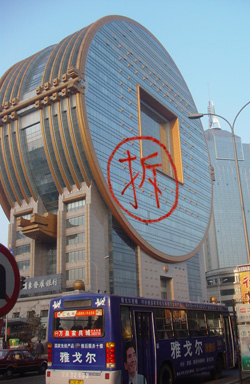
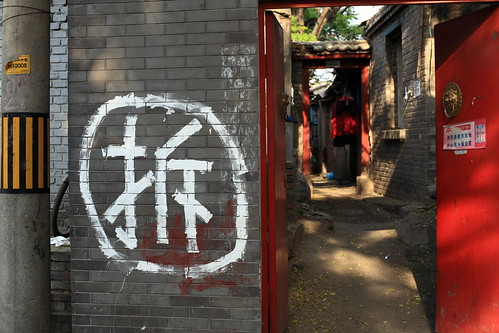
Chāi (拆), Baoguosi Dongjiadao, Xuanwu district, Beijing, China - Sunday, 23rd May 2010Anyone who wants to understand modern day China, he should start with a most ominous Chinese character, 拆 (Chai) - which means demolition, and it constantly invokes great fear and anxiety amongst the powerless and voiceless citizens of China.  Such character written on any building meant the sure demolition of it and often tragedy of its owners.  Any property owners dread such writing on the walls of their homes.

In last decade, perhaps, Chinese economy was in large part driven by relentless (re)development and urbanization, which often involved the demolition of older houses, buildings, villages, neighborhoods, and even cities entirely.  The zeal for such redevelopment was, other than the real needs of people, more driven by the developers and the government who compensated the owners little - often way below market values, and made huge profit jointly, and in the meanwhile, giving the corrupt officials golden opportunities to garner huge piles of wealth.  Poor citizens, always at the mercy of the powerful, often became desperate.  But even self-immolation could not stop the bulldozers and some owners were even buried alive with their destroyed houses.  Such story even happened to a widow of a powerful general.

It was not just the sheds in slums got demolished in the process.  Sometimes, totally decent buildings got destroyed.  More over, even invaluable historical buildings.  Chinese officially controlled media even invented a phrase "protective demolition", often invoked when a landmark building was lost in the process.  There is an alternative phrase "destructive protection", which was also often metered out to the historical buildings which unfortunately occupied locations with great redevelopment values.

Now, the development has slowed down somewhat because the government had no much left to sell to developers.  No worry.  They could demolish the existing buildings and build new ones.  And they will.  Many local governments had been used to swimming in cash and are facing the dire situation of bankruptcy and it would be really tempting for them to condemn more buildings for cash.

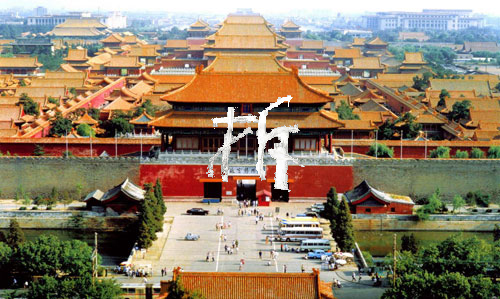
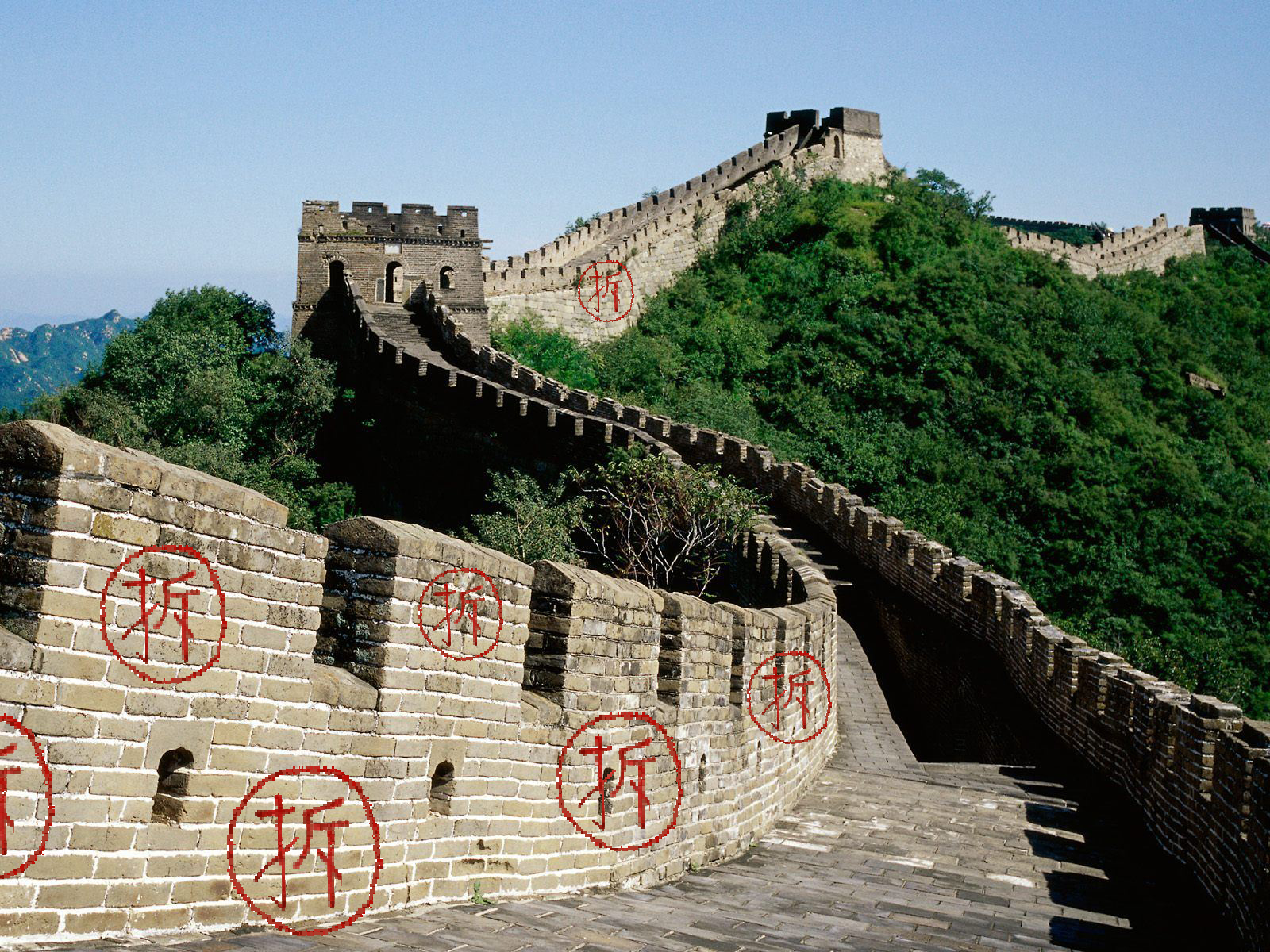
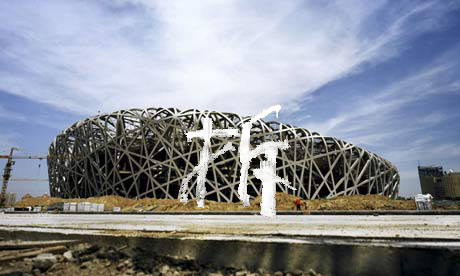
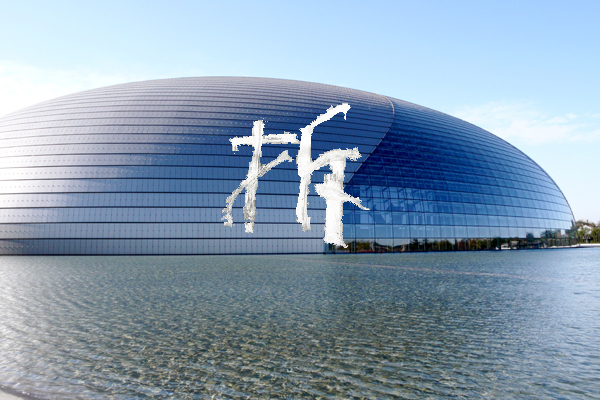
I strongly encourage you to visit China sooner, other than later, if you want to see some existing Chiense landmarks without that ominous character spelling out their dooms.  They could, in theory, even happen to these prides of Chinese people:
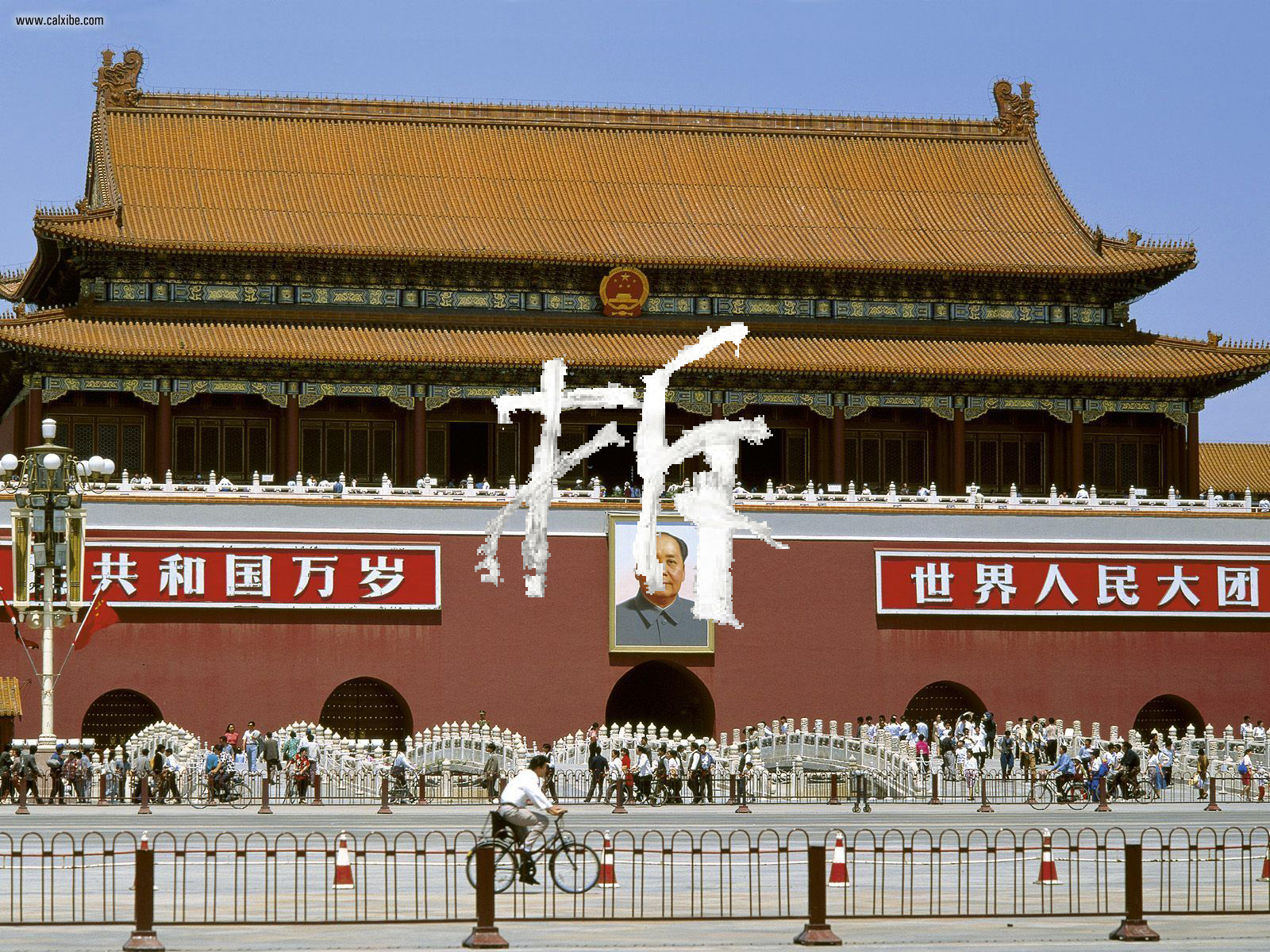

Tiananmen_Gate_Beijing_China - Chai
Tian'anmen Gate, Beijing

Forbidden City - Chai
Forbidden City, Beijing

Great Wall of China - Chai
Great Wall

Beijing Olympic Stadium - Chai
Olympic Stadium, Beijing

National Theatre in Beijing - Chai
National Theatre, Beijing

Occasionally, perhaps, such condemnation of a building would be a welcome relief of eye sore, but it does not happen often enough:
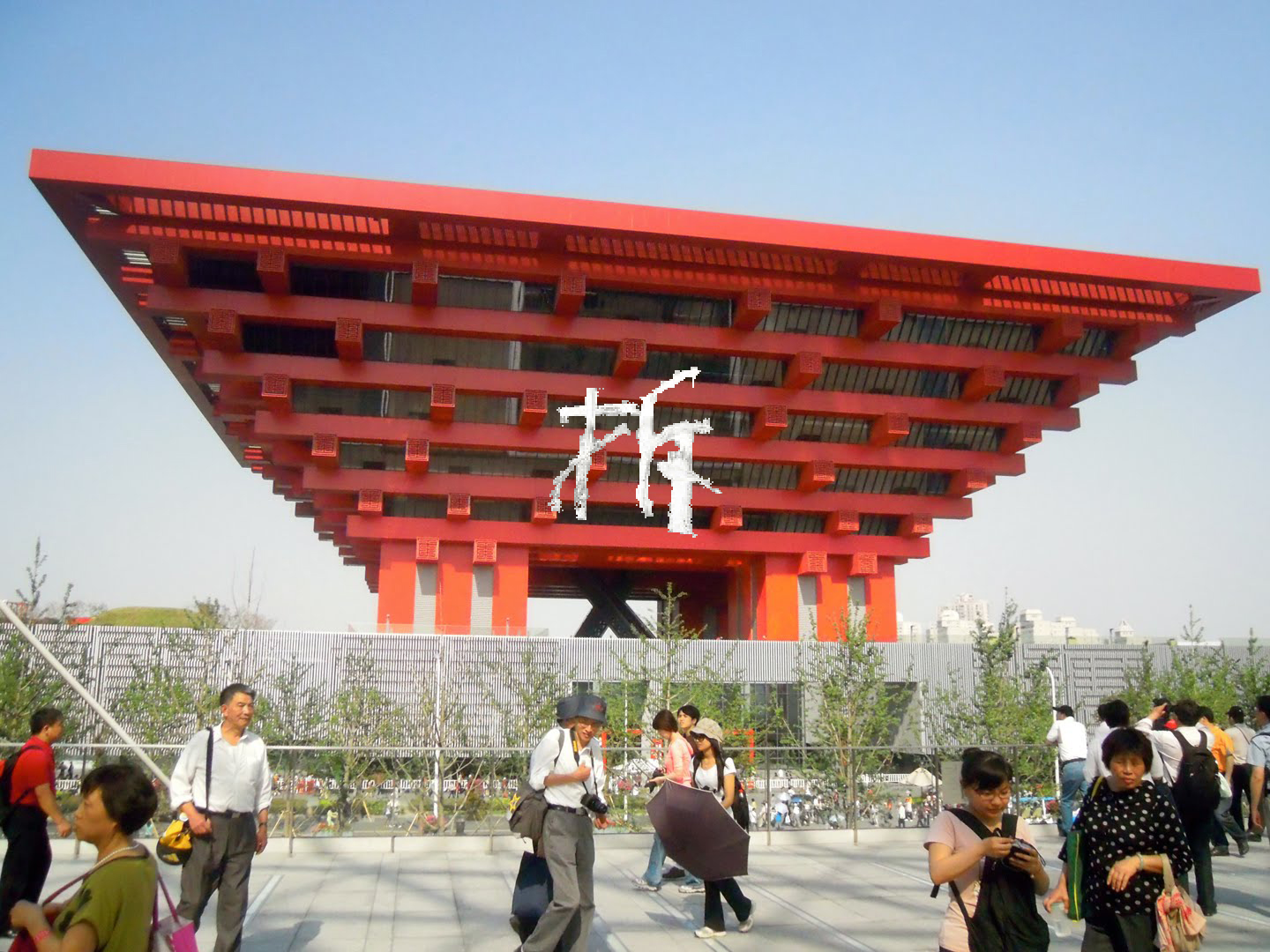
China Pavilion - Shanghai Expo - Chai
China Pavilion, World Expo, Shanghai

CN-Building in Shenyang - Chai
Square and Round Building, Shenyang

Tuesday, August 14, 2012

Ann Romney and Outsourcing

In April, when the influential lobbyist and commentator, Hilary Rosen, branded Ann Romney, the wife of Mitt Romney, the Republican nominee presumptive for US Presidency, as unqualified to speak about the economy's tolls because she's "never worked a day in her life", it caused quite a furor.

Many people, particularly feminists, came to her defense, so did Ann Romney herself.  She said that (her) raising five sons is hard work and that while she never has worried about finances, she has faced the ordeals of cancer and multiple sclerosis. Further, she said, Mitt Romney considers her job, raising the children, as more important than his, which generated the family's net worth of more than $200 million.

With a certain distance from that immediate storm, I can add a few comments of my own now.

First, I fully respect the hard work of raising a child, or five children.  That was a tough job, even if you have maids, nannies, chauffeurs, governesses, cooks, gardeners, and groom, etc.  It was still the mistress's responsibility to ensure the smooth run of the household, and the upright character development of her child(ren).

However, there is one major difference between Ann Romney's job as wife and mother and those of working men and women.  She needs not to worry about losing her job involuntarily - a downsizing, a outsourcing, usually after a takeover, by the likes of Bain Capital, once chaired by her husband, Mitt. The company, corporate, factory, or workshop (whatever you consider her family as a business), she does not worry about being laid off, and her jobs of being the wife and mother being shipped to India, China or Viet Nam.

She might be able to imagine, but she has not suffered the daily worry and humiliation of a working man or woman, who constantly fear for losing his or her job, the means to put food on his or her table, to feed his/her spouse/partner and their child(ren).

I wonder, how a woman like Ann Romney, wife of Mitt Romney, would react to the story like this, reported by Guardian of UK:
'I'm sick to my stomach': anger grows in Illinois at Bain's latest outsourcing plan - The Sensata plant in Freeport is profitable and competitive, but its majority owner, Bain Capital, has decided to ship jobs to China – and forced workers to train their overseas replacements
Sensata employee Mark Schreck in Freeport. Workers at the plant have appealed to Bain and Romney to save their plant. Photograph: Carlos Ortiz/Polaris - Guardian.co.uk

Sunday, August 12, 2012

Black Hole

I have often irrational fear of the black hole - what if our planet, our star system, or even if our universe moved too close to a black hole and we were all to be sucked in and crushed by the enormous gravity?

One of the images of space taken
by the Hubble telescope
I know it was a silly hypothesis but visualizing it was quite dramatic and breathtaking and however fearsome and loathsome it is, I cannot erase it from my mind.

On the other hand, we might be in such a black hole already, with one crucial difference - the gravity within this particular black hole was not as crushing as feared for.  Really, we might be in a black hole.  Our sun, our milky way and our universe, all reside in a black hole, whose boundary we would not probe through, however powerful our telescope would be.

We might not find the natural gravity so crush, but we are suffering mightily under the weight of carrying on a most mundane life.  Such a black hole is just as terrible.


Friday, August 10, 2012

My Favorite Portraits at National Portrait Gallery, London

Whenever I think of the National Portrait Gallery in London, I remember those fantastic characters from the Tudor Dynasty.  The Tudor portraits, some of them copies of paintings by more famous artists, such as Holbein, were definitely the crown jewels of the esteemed institution; however, their artistic merits were overshadowed or overwhelmed by historical values and societal trappings - stiff fabrics and ornate jewels, etc.  Though the characters did emerge under these heavy armors, they were often aloof, demanding respect, love, fear, etc., rather than engaging the viewers. 

For personal interactions, I opt for two modern works - one was created in 1820 and the other 1911.  Interestingly, both subjects of the portraits were poets. 

The remarkable portrait of John Clare by William Hilton (1786-1839), a history painter was a very romantic one, with the sitter every inch the perfect Byronic hero.  I confess that I knew little of poetry and I knew nothing of this poet nor his painter.  However, this very English portrait immediately commanded my attention, not by the beauty of the sitter alone, but more by the penetrating intelligence and a good mix of sensuality and a thirst for life.  The execution of the painting was spontaneous, lucid and reminded me of the great Thomas Gainsborough, though less mannered and fussy.


by William Hilton
oil on canvas, 1820
30 in. x 25 in. (762 mm x 635 mm)


The 1911 portrait of Rupert Brooke by the German artist Clara Ewald (1859-1948) was startling in its directness and modernity.  Here, in broad, economical strokes, the artist created on canvas a living and breathing young man, full of vitality, intensity, charm, and even humor.  The poet's questioning gaze was directed to life, to universe altogether.  Yet, he was also very down to earth and full of humility and humanity.  He radiated, like a most healthy country lad, yet there was a kind of intelligence practically jumped off the two-dimensional surface.


by Clara Ewald
oil on canvas, 1911
21 1/2 in. x 29 in. (546 mm x 737 mm)

According to the Gallery's notes, this painting was given by the artist's son, Professor P.P. Ewald in 1972.  The artist and her family must be very proud of it.  Yet there was some controversy regarding the likeness of the sitter.  However, it didn't matter.  What mattered was that it was a remarkable portrait.

For further information, I include a paragraph from The National Portrait Gallery below: 
The young Rupert Brooke, handsome, well-bred and full of promise as a poet, sat to the German artist Clara Ewald when he was staying in Munich in spring 1911. He was not enjoying himself and missed Cambridge terribly; but fortunately he had an introduction to Ewald and made friends with her son Paul, who was studying physics at Munich University. According to Paul Ewald, 'He would come in for tea and often stay for supper. My impression was that he found it very difficult to adapt himself to Germany and that in his thoughts he lived more in Cambridge than in Munich. This he expresses himself in his letters. So, partly perhaps to cheer him up, my mother painted him.' Most of the people who had known Rupert Brooke reckoned that the result was not a very good likeness - indeed, a later version, which was presented to King's College, Cambridge, caused a great deal of controversy, not least because it was regarded by some of the dons as too effeminate. It has however become one of the images by which he is now well known, including the hat, which he borrowed for the occasion from the artist's son.


My Favorite Museum Collection Series

>> My Favorite Museum Collection Series 45: My Favorite Paintings at the Wallace Collection, London
<< My Favorite Museum Collection Series 43: My Favorite Sculptures from The British Museum


List of My Favorite Artworks in the Museums I've Visited

Wednesday, August 8, 2012

My Favorite Sculptures from The British Museum

As I mentioned before, comparing to the wonderful painting collections in the National Gallery, the British Museum in London was instead famous for its amazing antiquities - covering the vast span from far east, Asia Minor, to the cradle of the western civilization - Greece.

In order to name just two wonderful objects from the British Museum, I had to overlook many marvels such as the Rosette Stone, a modest sized stone with same inscriptions in several ancient languages, therefore the key to the deciphering of them, and some monumental and fantastic Assyrian and Egyptian sculptures.

As an artist with a particular appreciation to figurative works, however moved I was by the Rosette Stone, I was even more moved by the beauty of the sculptures originated in the ancient Greece. One of such incredibly moving figures was a Caryatid from the Erechtheion, an ancient Greek temple on the north side of the Acropolis of Athens in Greece.

Caryatid from the Erechtheion, The Acropolis,
Athens, Greece, around 420 BC

Source: The British Museum
A caryatid is a sculpted female figure serving as an architectural support taking the place of a column or a pillar supporting an entablature on her head [wikipedia]. The term was probably derived from the young women of Sparta who danced every year in honor of Artemis Karyatis ('Artemis of the Walnut Tree').

First, she was truly beautiful, with a most noble face and wonderfully formed breasts, whose forms were not hindered by her thin, flowing priestess robe. She was a pillar, solid, strong, yet feminine.  She was also a seer, a prophetess, but also a sufferer. She embodied mothers' all-giving nature, and the burdened social hierarchy of women in that society when daughter could be sacrificed by father and mother could be slaughtered by son if she dared to murder her murderous husband.  This Caryatid was holy, admired and much put-upon.  I found such image incredibly moving and she brought shivers to me.

Further more, the British Museum informed us that "this is one of six caryatids that held up the roof of the temple on the Acropolis known as the Erechtheion. She wears a peplos, a simple tunic pinned on each shoulder. Her hair is braided and falls in a thick rope down her back. She probably held a sacrificial vessel in one of the missing hands."

"She carries an architectural capital like a basket on her head. From the side, her burden seems to bear down upon her; the weight is taken on the right leg, encased in perpendicular folds arranged like the fluting of a column shaft. The other leg is flexed with the drapery moulded to it."


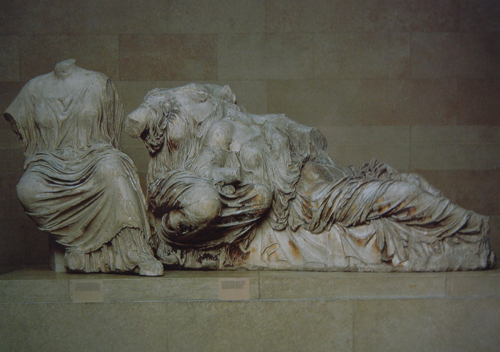
From the same origin, as part of the controversial "Elgin Marbles", a group of three marble sculpture goddesses from the east pediment of the Parthenon - Hestia, Dione and Aphrodite - moved me with their more conventional flowing beauty, sensuality and verisimilitude, if we can say that of goddesses. Their forms were strong, solid, massive, dignified yet seductive.  The endless folds of their soft draperies belied the rigid stone material they were made of.

This sculpture came from the Acropolis as well and dated about 438-432 BC, 12-18 years older than my beloved Caryatid above.  There were some debates regarding which goddesses these figures represented.  The British Museum believed that "they are perhaps, from left to right, Hestia, goddess of the hearth and home, Dione, and her daughter Aphrodite. However, another suggestion is that the two figures on the right are the personification of the Sea (Thalassa) in the lap of the Earth (Gaia)."

Hestia, Dione and Aphrodite, Pentelic marble, from the east pediment of the Parthenon, The British Museu, 2002 _ 8443 - 500

The east pediment of the Parthenon depicted the birth of Athena from the head of Zeus.  These three goddesses were only peripheral figures surrounding the now lost central scene.  Whoever they were, they dazzled the viewers with their endlessly evolving curves, their naturalistic anatomy and their wonderfully transient poses.  Look at the figure on the left - she was about to rise and leaned forward to her right so as to to lever herself up. To the right, another figure rested herself comfortably and trustfully on the lap of her companion, whose torso in turn bent slightly backwards to accommodate the invisible head of her companion, and we could also imagine her own missing arms and hands, perhaps playing with some curls on that radiant invisible resting head.

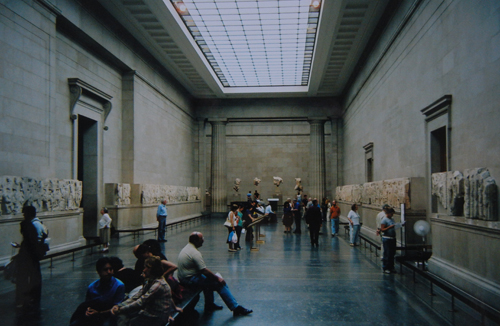
Below is a partial view of the Parthenon Gallery (Elgin Marbles) and it can give my readers some sense of what treasures that particularly gallery and by extension the Museum held:

The Elgin Marbles, The British Museum, 2004 _ 8441 - 500


My Favorite Museum Collection Series

>> My Favorite Museum Collection Series 44: My Favorite Portraits at National Portrait Gallery, London
<< My Favorite Museum Collection Series 42: My Favorite Paintings in the National Gallery, London


List of My Favorite Artworks in the Museums I've Visited

Sunday, August 5, 2012

A Dream of Labor

I often had vivid dream- from blooming meadow to swinging corpse behind a door, either comforting or upsetting, with great visual impacts and sometimes served as starting point of my painting projects.

Last week, I had another strange dream and I am still trying to determine its meanings, if any, and if I should treat it as a painting object or not.

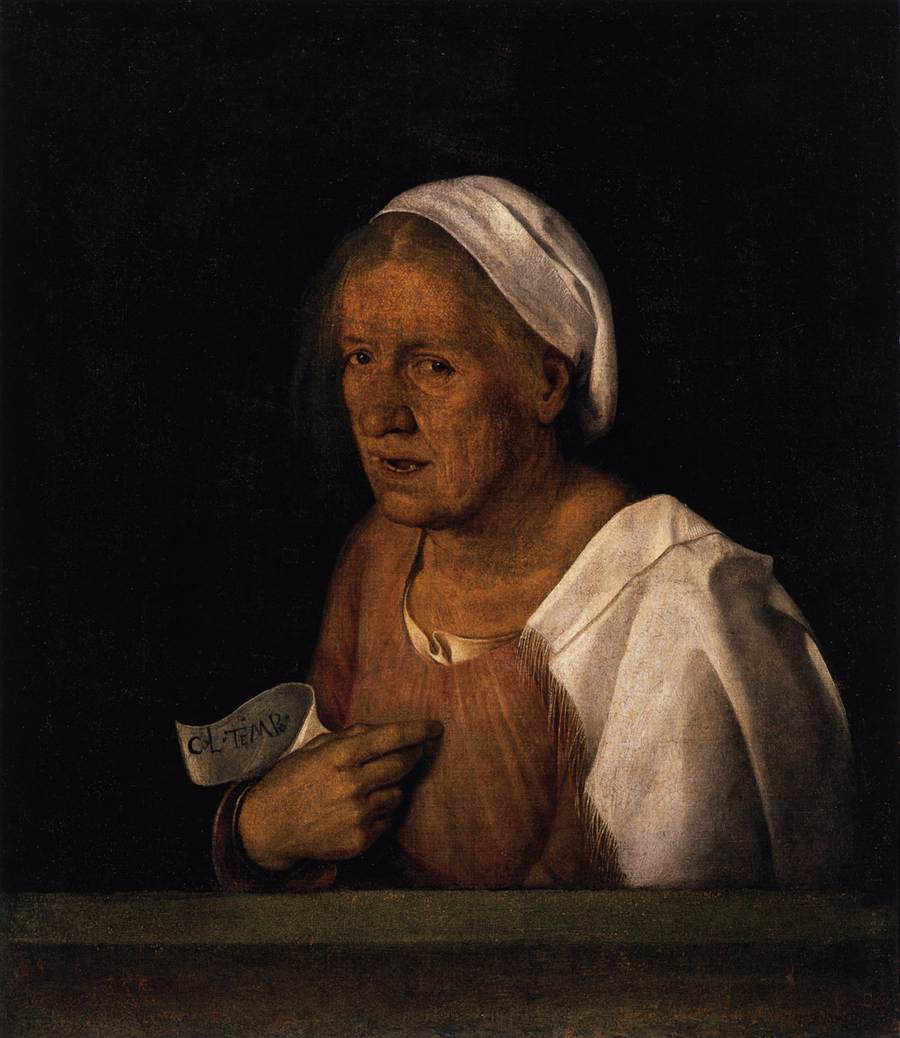
Ritratto di vecchia, Giorgione
I dreamed that I was in a restaurant, only by concept, without any visualizing of the specifics, and realized that our server was a very old woman - in her eighties or nineties, I somehow knew it in my dream sequence.  I was not alone, but couldn't tell whom I was with.  One of my companions voiced his or her concern for the old server and we were assured, perhaps by the restaurant's cheerful management, that we needed not to worry.  "She just performed a feat the other day and served a large party of eighty or ninety people by herself."

We were impressed and felt better.

Then, our old server tottered in, with her bend back absolutely parallel to the ground.  Several fully loaded large plates crowded on her stoic back

Quite an image, isn't it?  Perhaps, I should work on it?