Showing posts with label Oregon Shakespeare Festival. Show all posts

Tuesday, October 25, 2011

It Got Better - Three Plays at Oregon Shakespeare Festival - Oregon Trip, Part 6

The main purpose of my road trip was the Oregon Shakespeare Festival, which runs from February through October every year.  The three plays we planned to see gave us chances to see performances in all the three Festival theaters - Molière's Imaginary Invalid (Le Malade imaginaire) at the  proscenium Angus Bowmer Theater, Shakespeare's Henry IV Part II at Elizabethan theater, and and Julius Caesar at the arena style New Theater, respectively.

Before we approached the box office to pick up our tickets, we walked by the Festival's Main Street office, which functioned like a tourist office.  There was a small scaled but wonderful costume display - those used in last season:
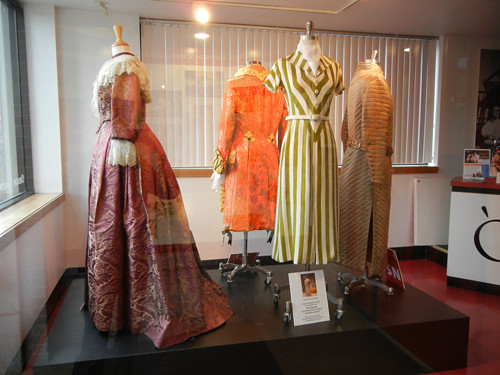
Oregon Shakespeare Festival, Ashland, Oregon _ 5993

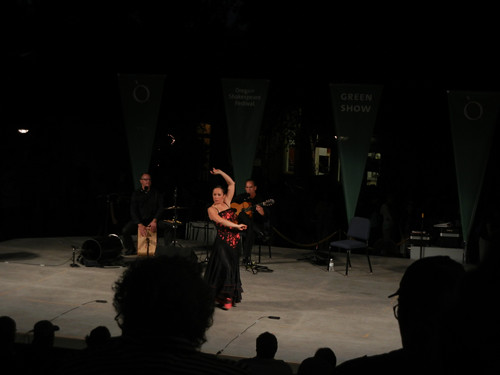
The three theaters were next to one another and in the middle of this complex, there is a sunken square, which was used for a "Green Performance" on every theater night, usually showcasing local or visiting bands and troupes.  One of the nights we saw a wonderful Flamenco sangs and dances.  
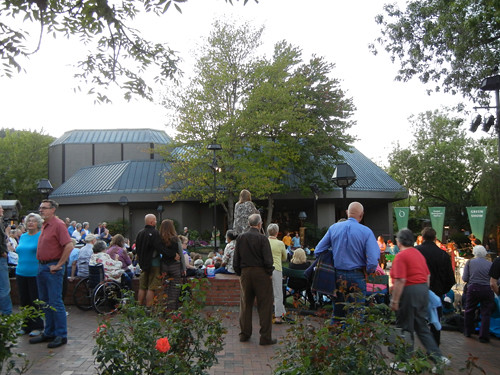
Oregon Shakespeare Festival, Ashland, Oregon _ 6710

Oregon Shakespeare Festival, Ashland, Oregon _ 6422

Our first play, Imaginary Invalid, was not by Shakespeare but Molière - a typical early French court farce.  Unfortunately, the "adopters" and director turned it into a physical slapstick.  Beyond that, they managed to inject some body function jokes, in block letters, what Molière hinted at, therefore relieving the imagination requirement from the audience, hence robbed the audience's realization process, which would be more engaging than force feeding.  Worst of all, they invented some physical deformities for the sake of laughing at these deformities most cruelly.  I had described this play in my previously blog extensively and my curious readers can find my vent there: Illusion versus Reality, From Bake Sale in Berkeley to Molière at Oregon Shakespeare Festival.
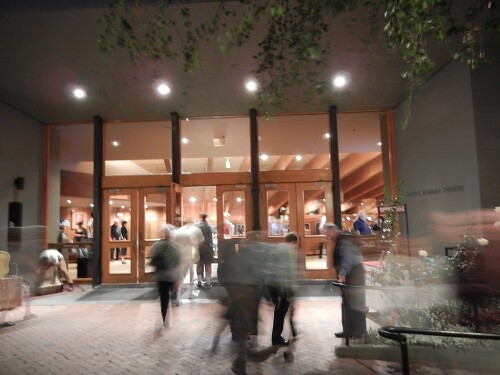
Angus Bowmer Theatre, Oregon Shakespeare Festival _ 5964
Angus Bowmer Theatre, where Molièr's Imaginary Invalid was played

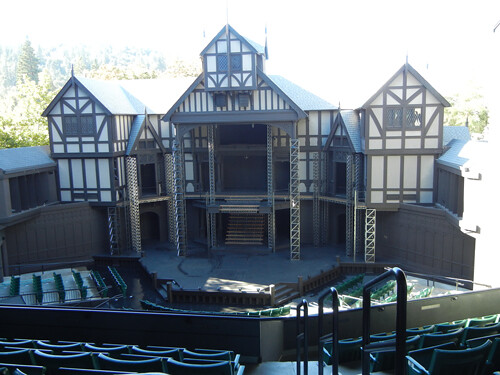
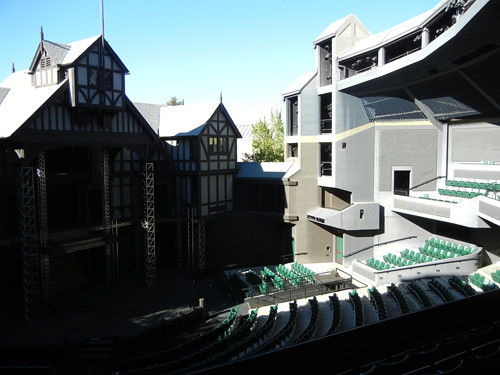
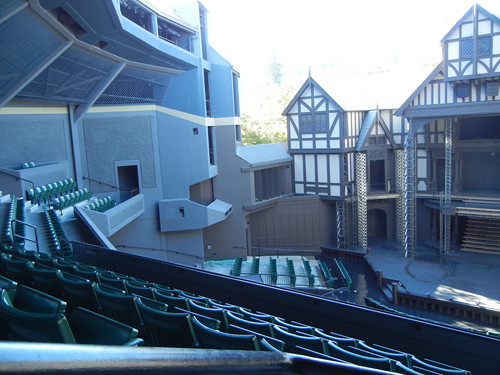
Next day, we are to see Shakespeare's Henry IV, Part 2 in the Elizabethan Theater. The theater was open during the day and we entered onto the balcony, while the backstage tour participants were in the orchestra seats listening to the tour guide.

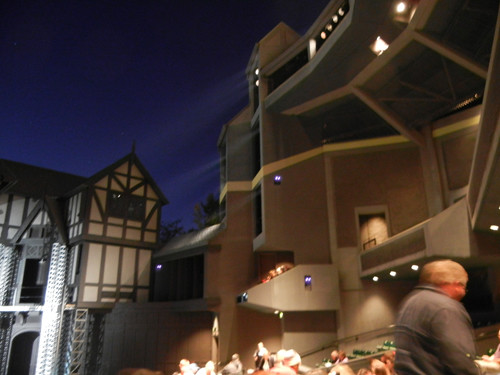
The corridor of the theater had a good view of the hills in the distance but it was the inside of the theater which provided most fascinating view, with its Tudor style half-timbered structures behind the thrust stage.  In contrast to the Elizabethan Globe Theatre in London, the stage in Ashland is below the sight line, instead of higher than the center.  In the Globe, the middle of the theater was for standing audience only while the one in Ashland was furnished with seats.  However, that was just details.  The spirit was obviously Elizabethan or "Jamesian" (since Shakespeare wrote most his plays in the period when James I was reigning England, succeeding Elizabeth I). 
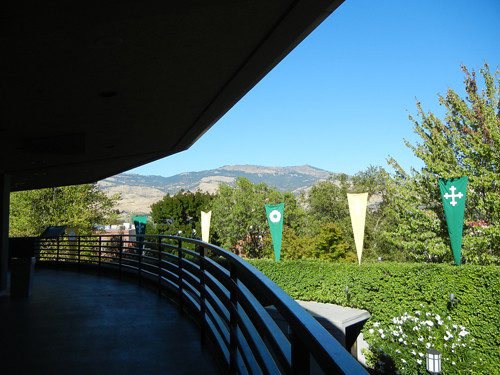
Oregon Shakespeare Festival, Ashland, Oregon _ 6390

Oregon Shakespeare Festival, Ashland, Oregon _ 6379

Oregon Shakespeare Festival, Ashland, Oregon _ 6386

Oregon Shakespeare Festival, Ashland, Oregon _ 6381 

Oregon Shakespeare Festival, Ashland, Oregon _ 6388

At night, the theater looked really magical, with the starry night above the opening sky.  Shakespeare's famous play was a difficult one to follow and stage, despite the moving scene of the reconciliation between Henry IV and Prince Hal, and the enormously popular Sir John Falstaff.  The distance of the English history and unfamiliarity of the Elizabethan vulgar expressions contributed to the issues, and that, I suspect, goaded the creative team in Ashland to ham up the rustic and sexual innuendos. But it was a necessary compromise, since we otherwise simply would fail to respond.  Rougher than it should be but definitely less awful than the previous night.  Prince Harry was good, so was Falstaff and the King was quite excellent.
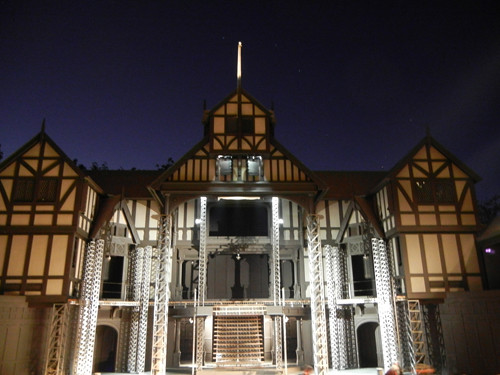
Oregon Shakespeare Festival, Ashland, Oregon _ 6439

Oregon Shakespeare Festival, Ashland, Oregon _ 6432

The last of our three plays was the very familiar Julius Caesar in the New Theater, a small arena style space, without the fourth wall.

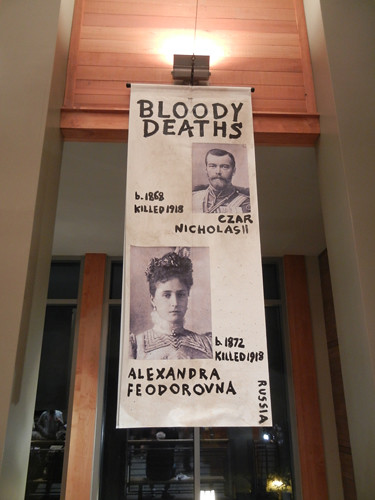
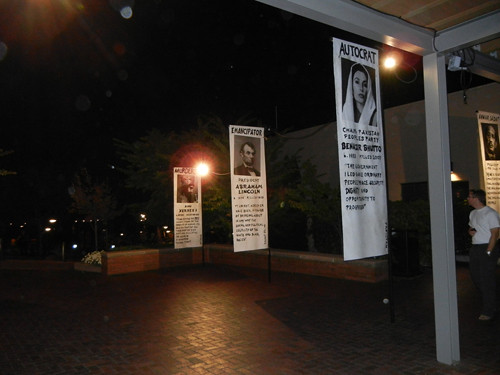
Before the show, the stage was set at the entrance and the lobby, with picture posters of many assassinated political figures, and quotations for and against them on two sides of the posters.
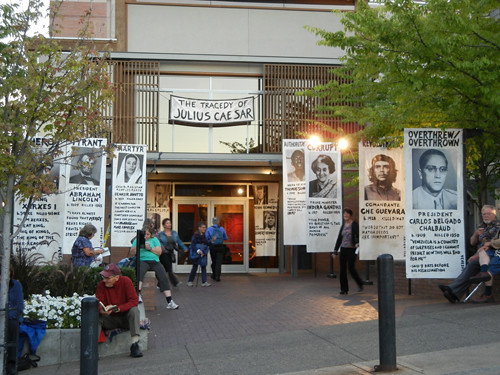
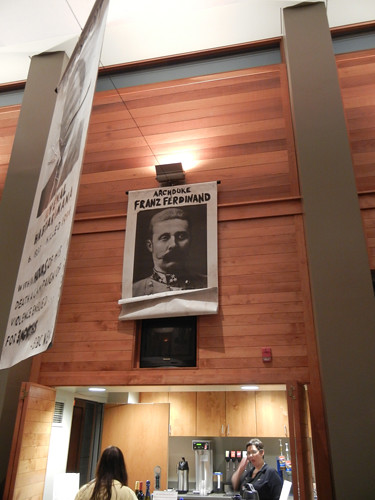
Oregon Shakespeare Festival, Ashland, Oregon _ 6706

Oregon Shakespeare Festival, Ashland, Oregon _ 6739

Oregon Shakespeare Festival, Ashland, Oregon _ 6741

Oregon Shakespeare Festival, Ashland, Oregon _ 6746

Once inside, we saw actors in modern dress roaming around in the center of the "arena" freely and chatted with audience.  Then the actress Vilma Silva introduced herself as the one to play Caesar and invited the audience to cheer whenever she raised her arms in triumphant V.  It was a very bloody, brutal and in-your-face production.  The ghost of Caesar became omnipresent after his/her murder.  It was a viscerally exciting production and had good performances from the cast.

I wondered if it was gimmicky to have a female actor play Caesar, or have the soothsayer speaking Japanese.  However, the performances won me over.  Considering those posters featuring assassinated from all over the world, it was apparent that the producer wanted to present this as a universal statement and summary.  Granting that we have long been accustomed to have black or Asian actors playing white characters or vice versa, only a female Caesar could take us out of the preconception that we were watching that particular character, Julius Caesar.  People could argue if this was necessary or not.  But as presented from this particular angle, it worked exceedingly well.

After the show, we walked by a window display of the history of the Festival and its theaters:
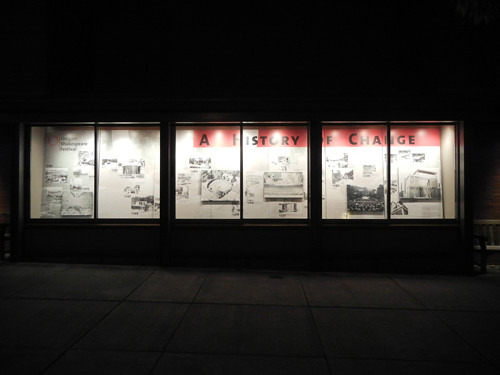
Oregon Shakespeare Festival, Ashland, Oregon _ 6727

Three very different plays, three theaters, three styles.  It did get better.


Related articles:
--> Coastal Northern California and Wine Country - Oregon Trip, Part 11 (The End)

--> Arcata, California - Oregon Trip, Part 10 
--> Idyllic Parks and Cute Animals in Ashland - Oregon Trip, Part 9
--> Art in Ashland - Oregon Trip, Part 8
--> Natural Bridge and Crater Lake, Oregon - Oregon Trip, Part7
--> It Got Better - Three Plays at Oregon Shakespeare Festival - Oregon Trip, Part 6
--> Ashland Springs Hotel - Oregon Trip, Part 5
--> Ashland, Oregon - Oregon Trip, Part 4
--> A Night at McCloud, California - Oregon Trip, Part 3
--> Burney Falls in McArthur-Burney Falls Memorial State Park, Shasta County, California - Oregan Trip, Part 2
--> Sundial Bridge at Turtle Bay, Redding, California - Oregon Trip, Part 1

Sunday, October 23, 2011

Ashland Springs Hotel - Oregon Trip, Part 5

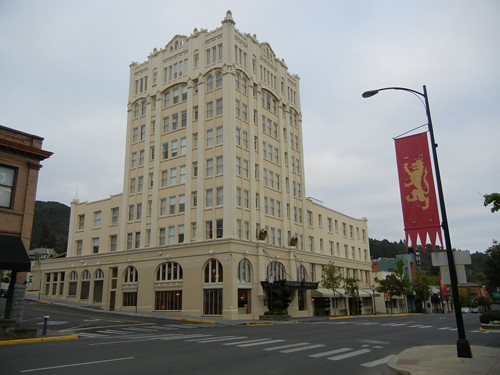
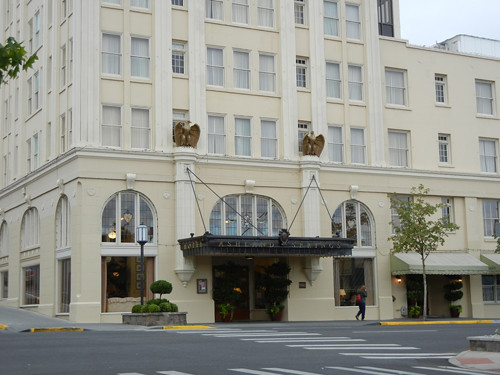
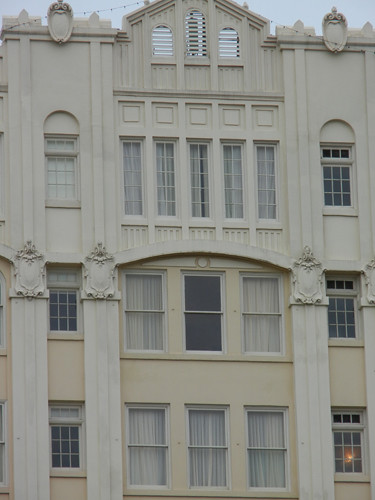
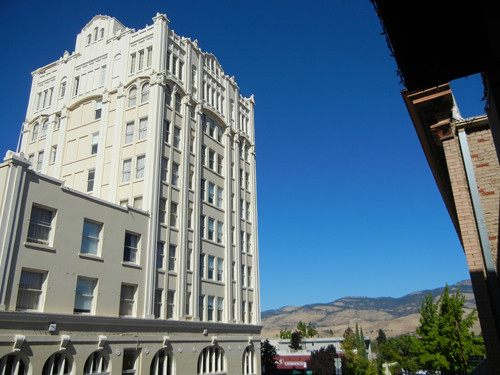
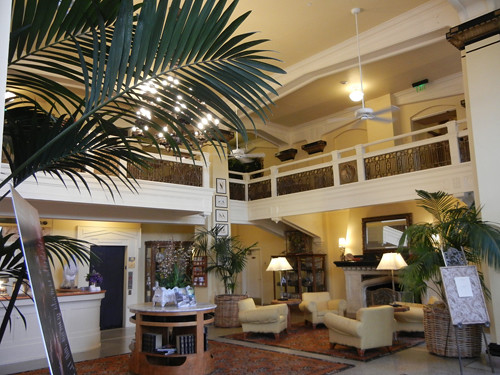
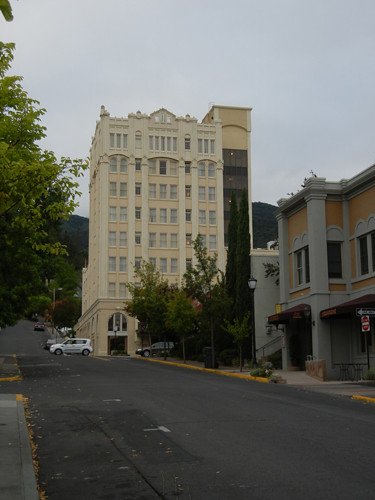
We stayed three nights in Ashland Springs Hotel for the Oregon Shakespeare Festival.  This hotel was a historical landmark building with a very grand looking and dominated the skyline of the city.

Ashland Springs Hotel, Ashland, Oregon _ 6048

Ashland Springs Hotel, Ashland, Oregon _ 6059

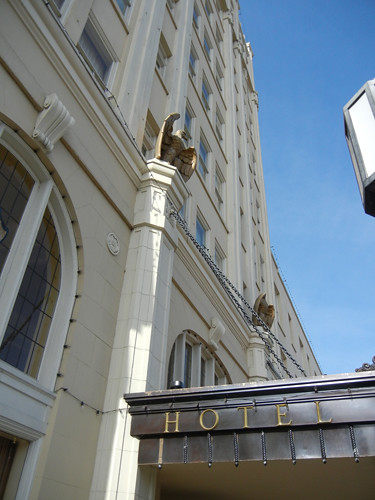
Ashland Springs Hotel, Ashland, Oregon _ 6056

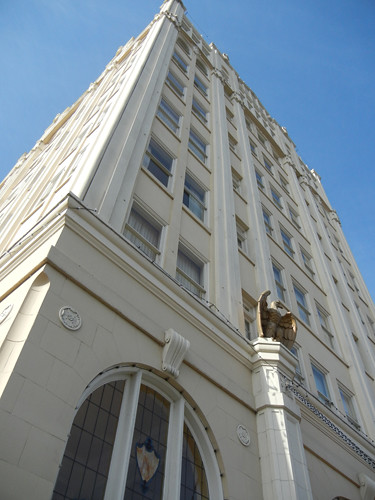
It had classic facade and understated architectural details on all sides.

Ashland Springs Hotel, Ashland, Oregon _ 6765

Ashland Springs Hotel, Ashland, Oregon _ 6766

Ashland Springs Hotel, Ashland, Oregon _ 6051

Ashland Springs Hotel, Ashland, Oregon _ 6107

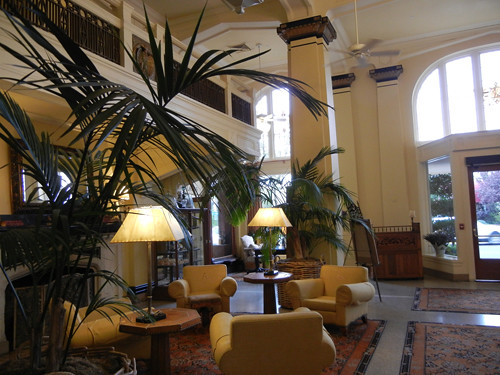
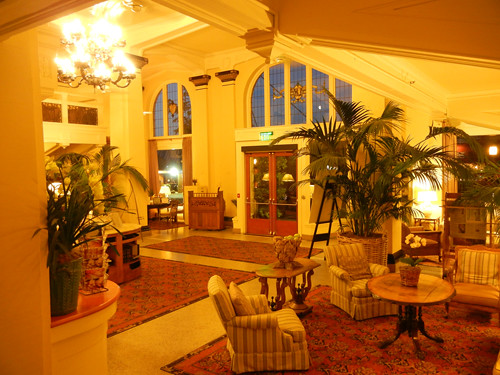
The lobby was just as impressive as the exterior and the breakfast and late evening after show snacks were served on the mezzanine with the view of the grand lobby:

Ashland Springs Hotel, Ashland, Oregon _ 6079

Ashland Springs Hotel, Ashland, Oregon _ 6725

Ashland Springs Hotel, Ashland, Oregon _ 6076

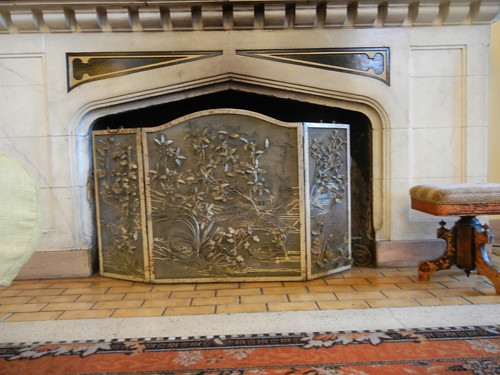
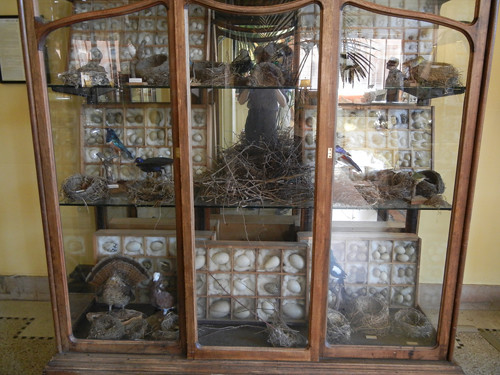
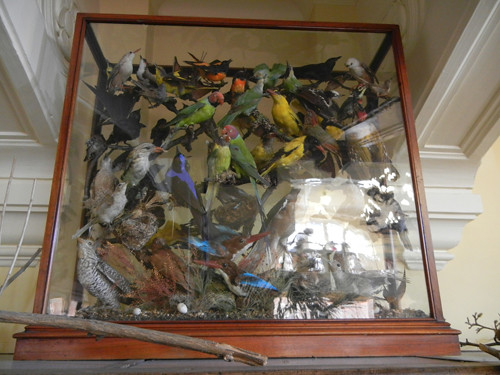
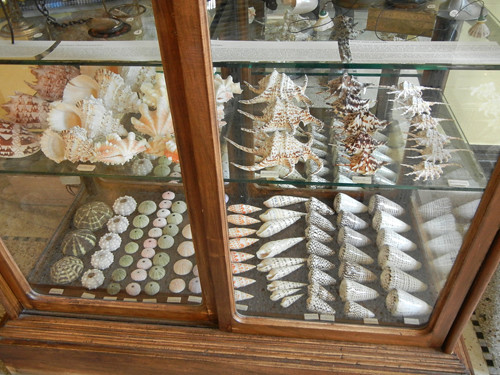
There were many interesting curio showcases in the lobby, along with other wonderful furniture such as the fireplace:

Ashland Springs Hotel, Ashland, Oregon _ 6702

Ashland Springs Hotel, Ashland, Oregon _ 6753

Ashland Springs Hotel, Ashland, Oregon _ 6756

Ashland Springs Hotel, Ashland, Oregon _ 6758

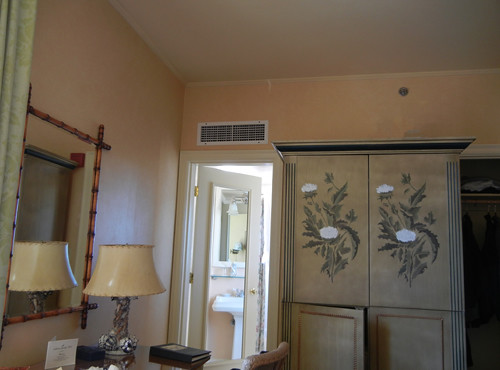
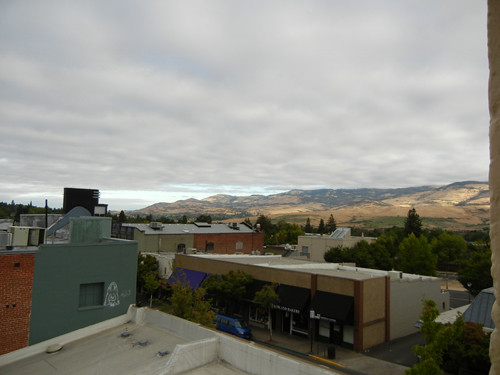
Our room was not big, enough to move about and nicely decorated with a sliver view of the street and rolling hills in the distant.

Ashland, Oregon _ 5927

Ashland, Oregon _ 6086

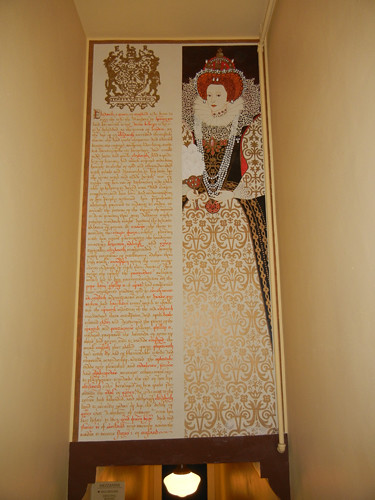
If one temporarily forgot that this is the Bard's hotel, this wallpaper on the lobby surely would have reminded the guest otherwise:

Ashland Springs Hotel, Ashland, Oregon _ 6723

We had heard that the hotel was somehow connected to the Scientology organization but other than this little booklet, sitting along a Bible in the drawer, we could not tell it from any other professional hotels:

Ashland Springs Hotel, Ashland, Oregon _ 6747

It was a nice stay.  People who want to stay there could also investigate some package deals they had with the Oregon Shakespeare Festival.


Related articles:
--> Coastal Northern California and Wine Country - Oregon Trip, Part 11 (The End)

--> Arcata, California - Oregon Trip, Part 10
--> Idyllic Parks and Cute Animals in Ashland - Oregon Trip, Part 9
--> Art in Ashland - Oregon Trip, Part 8
--> Natural Bridge and Crater Lake, Oregon - Oregon Trip, Part7 
 --> It Got Better - Three Plays at Oregon Shakespeare Festival - Oregon Trip, Part 6
--> Ashland Springs Hotel - Oregon Trip, Part 5
--> Ashland, Oregon - Oregon Trip, Part 4
--> A Night at McCloud, California - Oregon Trip, Part 3
--> Burney Falls in McArthur-Burney Falls Memorial State Park, Shasta County, California - Oregan Trip, Part 2
--> Sundial Bridge at Turtle Bay, Redding, California - Oregon Trip, Part 1
Monday, October 3, 2011

Illusion versus Reality, From Bake Sale in Berkeley to Molière at Oregon Shakespeare Festival


The contrasts between illusions and realities are too stark to believe, yet, due to people's follies, they can often surpass the widest imaginations.

The Americans, who don't want the government to tax the super-rich more, because they had imaged that they belong to that most exclusive club, or that their grandsons might join it one day, while suffering the ever greater income inequality, is the prime example of that folly.

Last Tuesday, 26 September 2011, two such events took place in my immediate sphere, one in the place I live, Berkeley, California, and the other, on the stage of Angus Bowmer Theatre, Ashland, Oregon, as part of the Oregon Shakespeare Festival 2011, which I was visiting for the first time.

The former was a widely reported "bake sale" on the campus of University of California, Berkeley, - "Increase Diversity Bake Sale" hosted by the Berkeley College Republicans, who claimed that the minorities pay smaller share of tuition and fees to the university, and to the society, while white men shoulder the biggest burden.  In regardless if this sale was a racist, or sexist, event, their argument was full of holes.

The easiest argument is that the inequality between male and female workers - not just the costs but their income as well.  Let's look at the chart below (source: Wikepedia):


In every ethnic group in the US, men make way more than women.  This is not due to the nature of the jobs men or women hold.  For same jobs, men make more than their female counterparts.  In 2009, women's median weekly earnings were lower than men's median weekly earnings in all industries:


Therefore, the $0.25 off for all women did not reflect reality.  Instead, someone argued, white men need to pay way less than $2.00 to reflect the reality that their wealth-expense ratio was way greater than any other groups mentioned in this Bake Sale:


image source: L.A. Times

If the right-wing Republican student groups had their skewed illusions, so did the left.  On the same day of the Bake Sale, I arrived in Ashland, Oregon for the Oregon Shakespeare Festival.  That night, I attended a performance of a new adaptation of Molière's "Imaginary Invalid" (Le Malade imaginaire) at the Angus Bowmer Theatre.

Oregon Shakespeare Festival _ 5964
Angus Bowmer Theatre

The play was heavily re-written and many contemporary references were thrown in.  The adapters, Oded Gross and Tracy Young, with the latter as director as well, changed Molière's naughtily humorous comédie-ballet into a grossed-out farcical musical.  Not entirely inappropriate.  However, the new version significantly changed one of the daughters (Louison) of the protagonist, from a healthy ten year old to an old maid with a hemp and pigeon-toed.  The adapters and director also gave another character, young Thomas Diaforious, a large belly and so they could heap endless humiliating jokes upon these two helpless characters, and every time they were ruthlessly laughed at, the audience roared with approvals.  I, however, winced every time.

In case my readers mistake the Festival and the audience for adherents of social Darwinism, I need to point out that they took great pride in their progressiveness - the adaptation made many references to the health care reform and pined for a public option, in ways not entirely inappropriate but utterly gratuitous, and the audience gave such references most hearty cheers and applauds.

Therefore, emerged the great divide of the illusion and the reality.  In reality, the creative team of this play, and the audience, behaved as the most heartless and cruel gang; yet, they congratulated themselves as the most compassionate.  It was beyond sickening.

In the next night, I saw Shakespeare's Henry IV, Part II, in which Sir John Falstaff and the gaggle of other tavern dwellers were laughed at constantly.  But, they were laughed at because of their "bad" deeds, and their being "bad" persons; which here, in the updated Molière, poor Louison and the Thomas, were laughed at purely for their physical deformity which did not grow out of their fault at all.  Through Thomas's mouth, we learned that he was not even a glutton, like Falstaff, rather he absorbed fat in an abnormal rate.

I am not a prude.  I am not allergic to comedy and farce.  I enjoy great farces as much as grand tragedies like Julius Caesar, which I saw three days later and was deeply moved and excited by it, and I will discuss it later, and appreciate the difficulties in staging a comedy.  I am also familiar with the idiom of commedia dell'arte, and can tolerate some crude jokes, like the endless body function jokes employed here to wring laughter out the guileless audience.  But laughing at weak characters' physical weakness really made me nauseated.

In the end, I was deeply offended by the heartless and the crassness of the production team and detested this update very much, in contrast to the uproarious approvals from the majority audience members who gave it an enthusiastic standing ovation.

There are two well-known hunchbacks in literature - Verdi's Rigoletto in the eponymous opera (based on Victor Hugo's Le roi s'amuse) and Quasimodo in Hugo's Notre Dame de Paris.  Rigoletto was a twisted character, but Verdi did not dwell on his physical deformity, rather, it was the deformity of his soul Verdi concentrated upon.  Being compassionate, Verdi presented Rigoletto as a passionate and selfless father, thus redeemed him from condemnation.  Hugo did not shy away from describing Quasimodo's ugliness but he used this physical monstrosity to offset his inner kindness.  Here, the adapters (not Molière), invented the physical deformities so as to invite the audience to laugh at them for no other reason other than being deformed.  Progressive?  No.  Regressive for sure.

On the OSF's official website, it stated such about the play, "set in the 1960s, this satiric comedy will be best enjoyed by playgoers 13 and up who can handle the potty humor, yucky medical remedies, and a few instances of suggestive gesture, innuendo and costuming."

I think it would be most sensible to require playgoers to be also 15 and below to enjoy the potty humor, yucky medical remedies, and a few instances of suggestive gesture, innuendo and costuming.