Showing posts with label Xianyang. Show all posts

Tuesday, October 4, 2016

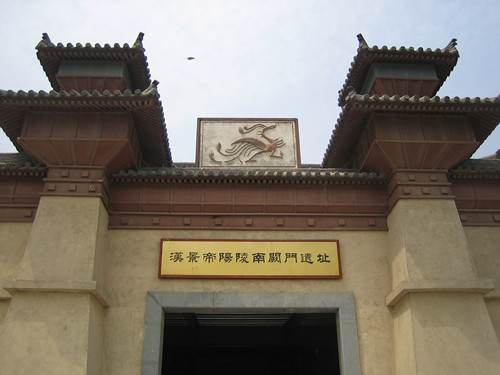
My Favorite Sculptures at Han Yangling (Han Dynasty Yang Tomb) in Xianyang, Shaanxi, China

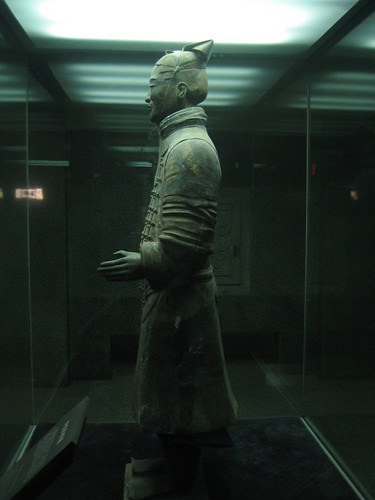
The most famous burial ground in China, must be that of the First Emperor of Qin Dynasty, who employed a gigantic terracotta army to guard him in the afterlife.

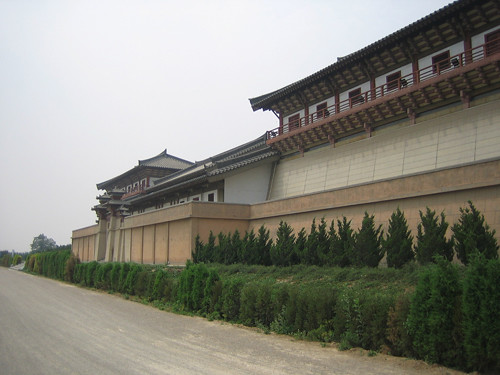
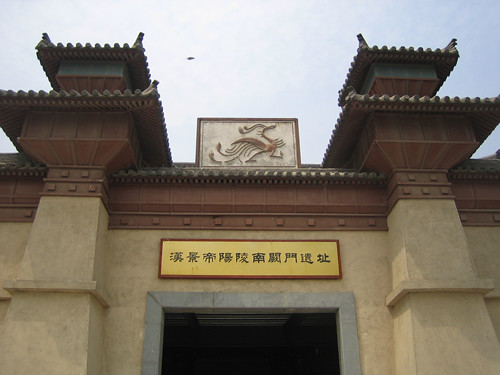
Han Yangling (Han Dynasty Yang Tomb) in Xianyang, China _ IMG_4477

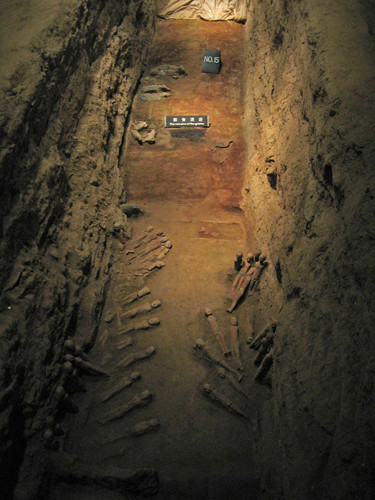
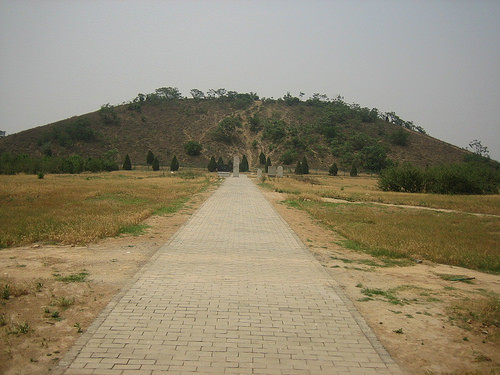
IMG_6015 - Emperor Jing's Tomb, Han Dynasty, Xianyang, China, 2007

IMG_6010 - Emperor Jing's Tomb, Han Dynasty, Xianyang, China, 2007

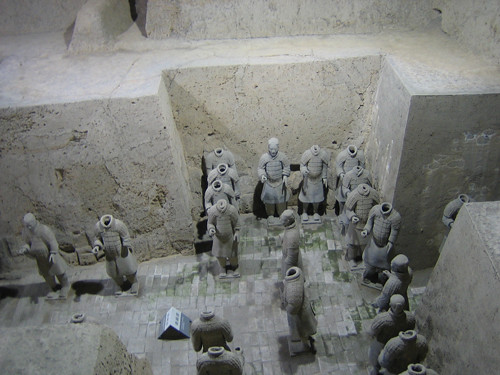
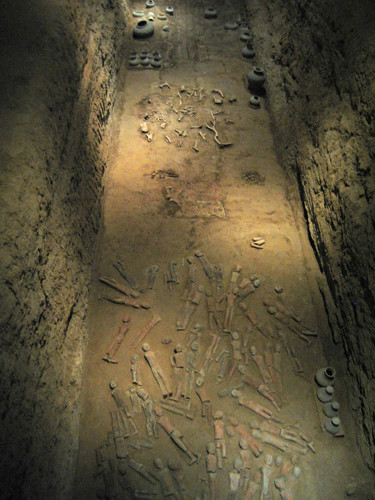
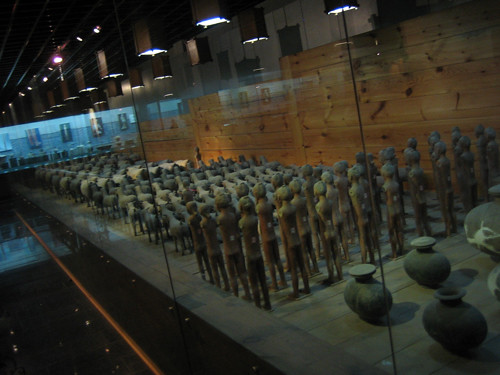
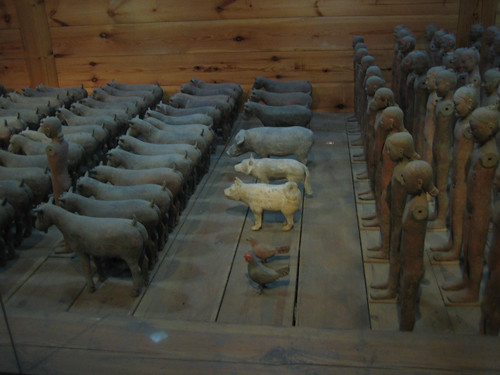
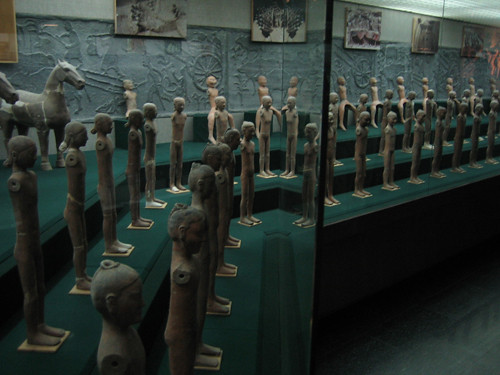
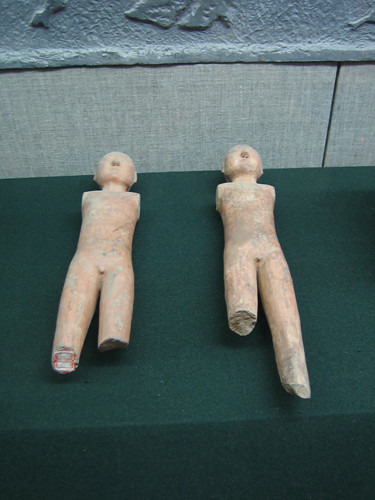
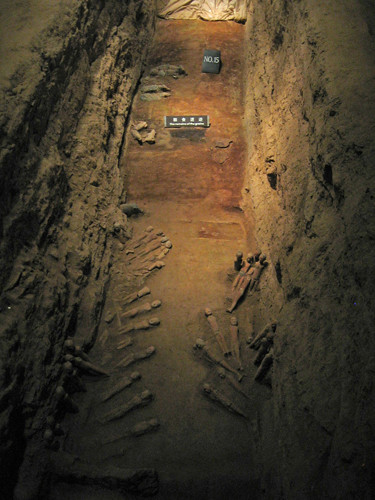
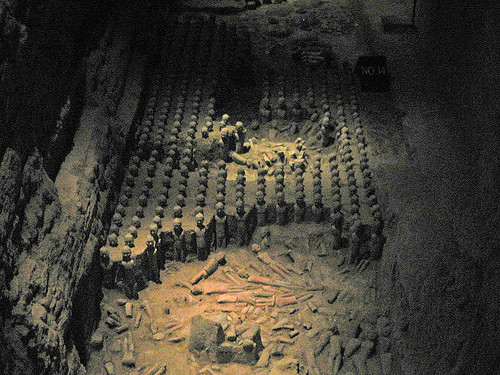
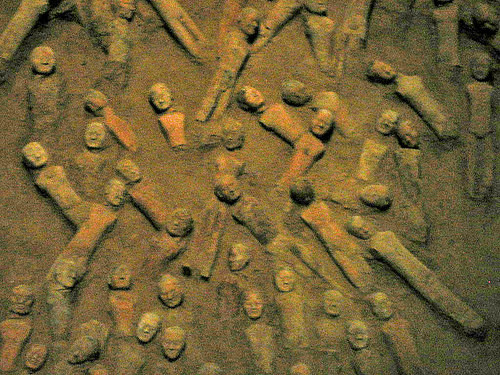
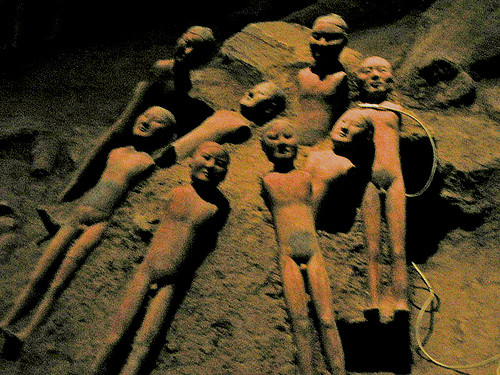
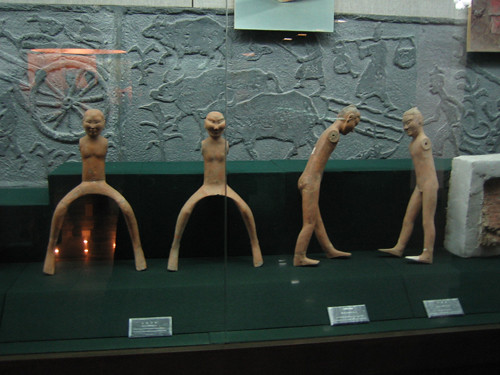
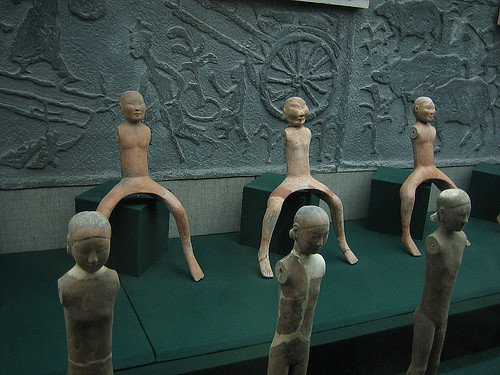
In the ensuing Han Dynasty, one of the emperors employed an army of smaller scale and smaller statue. Instead of human-sized terracotta warriors, this so-called Jing Emperor could only afford to have earthen ware torso armies, with wooden arms, which by now have completely rotten away, thus this army of cripples of one-third of human size.  A pitiful and creepy looking army.

IMG_5919_m - Earthenware ''sacrifices'' in Emperor Jing's Tomb, Han Dynasty, Xianyang, China, 2007

Han Yangling (Han Dynasty Yang Tomb) in Xianyang, China _ IMG_5922_mod

Han Yangling (Han Dynasty Yang Tomb) in Xianyang, China _ IMG_4437_mod

Han Yangling (Han Dynasty Yang Tomb) in Xianyang, China _ IMG_4441_mod

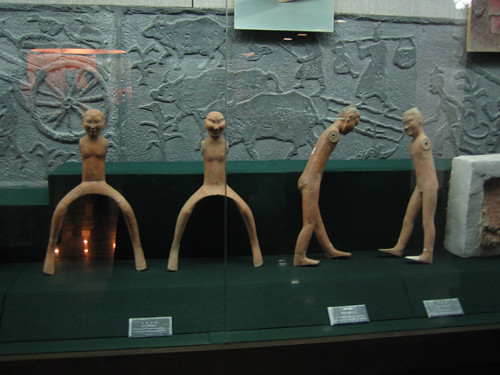
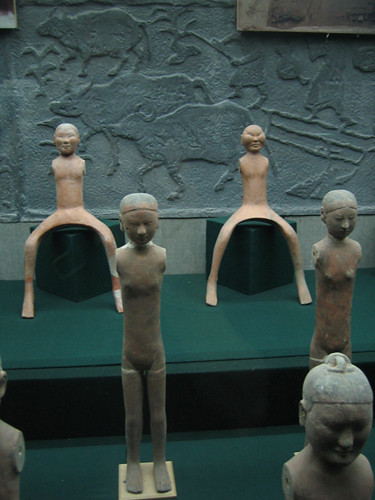
The most memorable figures are those riders sans horses, whose arched bow-shaped legs and the perpendicular torso formed a strange looking arrow, and the "arrow-point", the round head with a grinning face, completed this strange spectacle, small in stature, but large in impact.

Earthenware ''sacrifices'' in Emperor Jing's Tomb, Han Dynasty, Xianyang, China, 2007 _ IMG_6064

Han Yangling (Han Dynasty Yang Tomb) in Xianyang, China _ IMG_6158

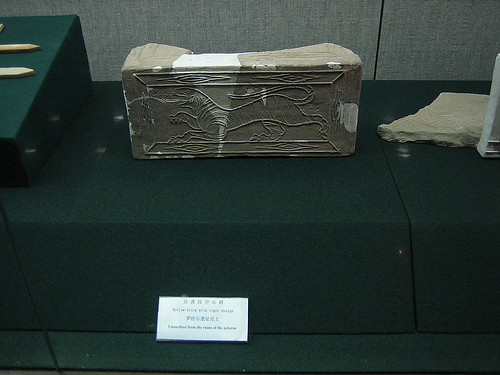
The second amazing artifact was a hollow brick with a white tiger relief.  The fluid and delicate beauty of the noble beast was incredible and the accomplishment of the artist/artisan was of the highest order.

White Tiger Hollow Brick, Han Yangling (Han Dynasty Yang Tomb) in Xianyang, China _ IMG_6023


My Favorite Museum Collection Series
>> My Favorite Museum Collection Series 138: My Favorite Paintings at New York Museum of Modern Art (MOMA)
<< My Favorite Museum Collection Series 136: My Favorite Calligraphy and Monument at Great Mosque of Xi'an, China

List of My Favorite Artworks in the Museums I've Visited

Other Related posts on Art · 文化 · Kunst:
- Last Chance to See Terracotta Warriors in San Francisco Asian Art Museum
- Ruins in Sanxingdui (Three-Star Mound) and Jinsha (Gold Sands), Sichuan, China
- Treasure in Liaoning Museum, Shenyang, China
- Art Gallery of Luxun Art Academy in Shenyang, China
- Visiting Four Universities in Austria and Italy
- Sunflower Seeds by Ai Weiwei at Tate Modern, London
- My Favorite Sculptures at Institut für Klassische Archäologie, Karl-Franzens-Universität Graz
- My Favorite Sculptures at Musei Civici degli Eremitani, Padova (Padua)

Wednesday, March 20, 2013

Famed Terracotta Warriors and Their Intriguing Successors

San Francisco Asian Art Museum is parading a small formation of eight famed terracotta warriors and two horses from the mausoleum of Qin Dynasty's first emperor, Qin Shihuang (259-210 BCE), in Xi'an, China.  The eight warriors are the the maximum number allowed to travel here en bloc and in this museum, it formed the core of the special exhibit "China's Terracotta Warriors: The First Emperor's Legacy" (February 22 - May 27).

Eight warriors can hardly represent the massive underground armies the crazed emperor assembled but they at least can provide a passing glimpse of that awesome and fearful spectacle.  Asian Art Museum informed us:
Imperial leader. Fearsome tyrant. Military genius. Avid anti-intellectual. Obsessive star-gazer. Enduring mystery. The First Emperor, Qin Shihuang (259-210 BCE) was all these things and more. His storied legacy is rich with enduring achievements, including the unification of China under centralized imperial rule, brilliant military systems and advanced engineering and assembly production. He is also reputed to have burned scores of books, buried scholars alive and achieved widespread domination through devastating bloodshed.

First unearthed in 1974, the underground burial complex of the First Emperor is a revelation for the ages, an astonishing discovery on par with Egypt’s mummies and elaborate tombs. Contemporary observers continue to be enthralled by his legacy, and it is through this ongoing interest that the First Emperor did indeed achieve immortality. This exhibition includes ten figures—a representative sample of the actual army, which is estimated to include more than 7,000 life-sized figures and over 10,000 weapons.
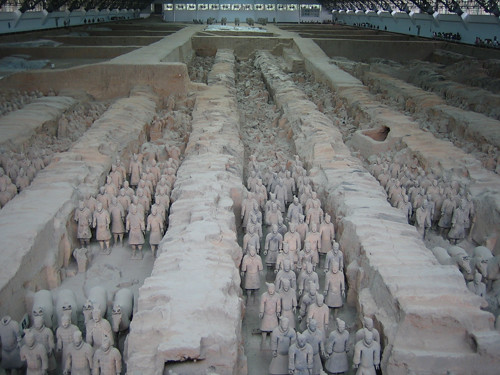
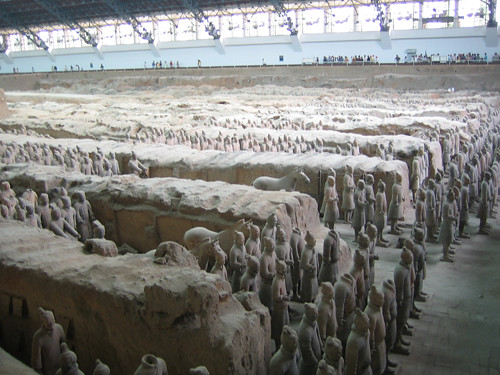
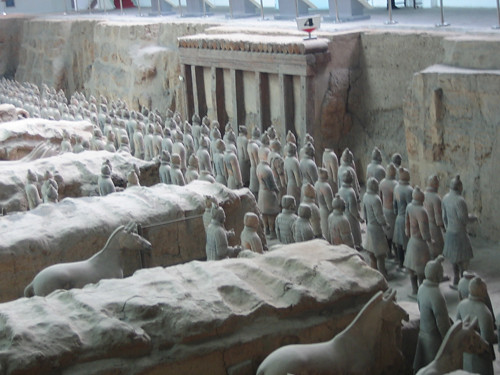
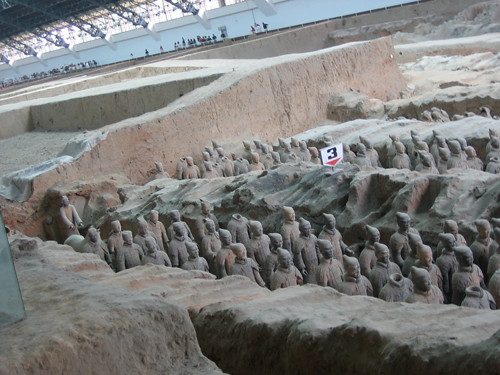
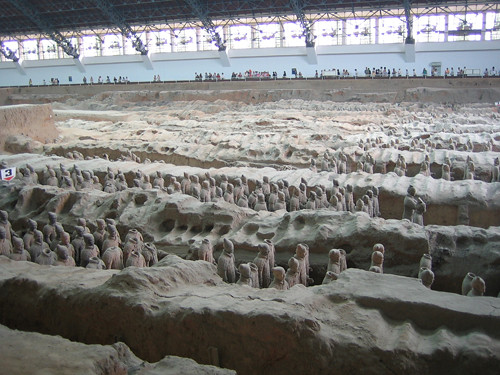
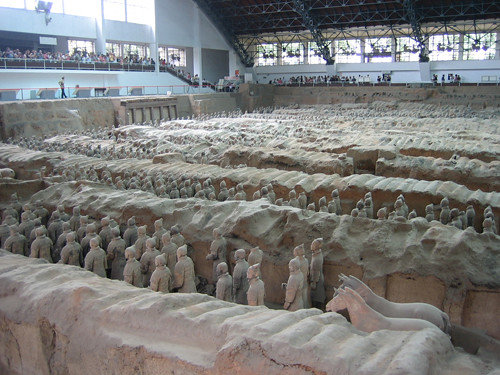
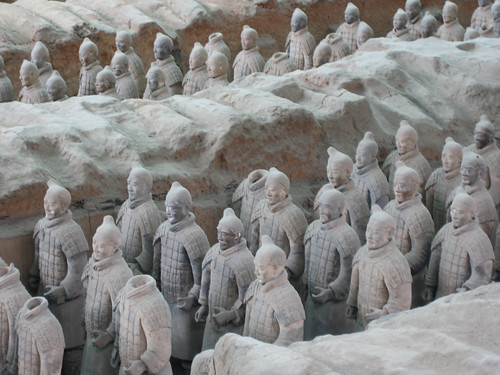
Bear in mind that the excavation sites and the half-buried warriors, horses, and chariots in Xi'an are only a portion of the vast mausoleum site, whose full extent has not been fully mapped out.  In 2007, I had the chance to visit the excavation site and those on display were truly astonishing, in their sheer numbers and the refinement and individuality of those warriors and horses, obviously modeled after real living creatures. They were also painted yet almost completely fainted with only traces of pigments remained, just like those ancient Greek marbles, and more satisfyingly beautiful to me.  Below are sample pictures I took during that trip:
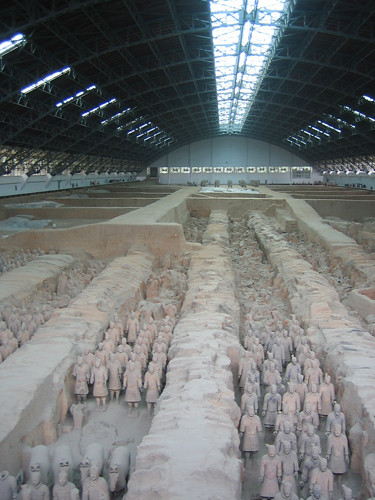
IMG_4944 - Terracotta Warriors in Qin Shi Huang's Tomb, Xi'an, China, 2007

IMG_4945 - Terracotta Warriors in Qin Shi Huang's Tomb, Xi'an, China, 2007

IMG_4960 - Terracotta Warriors in Qin Shi Huang's Tomb, Xi'an, China, 2007

IMG_4968 - Terracotta Warriors in Qin Shi Huang's Tomb, Xi'an, China, 2007

IMG_4970 - Terracotta Warriors in Qin Shi Huang's Tomb, Xi'an, China, 2007

IMG_4971 - Terracotta Warriors in Qin Shi Huang's Tomb, Xi'an, China, 2007

IMG_5016 - Terracotta Warriors in Qin Shi Huang's Tomb, Xi'an, China, 2007

IMG_5021 - Terracotta Warriors in Qin Shi Huang's Tomb, Xi'an, China, 2007

IMG_5050 - Terracotta Warriors in Qin Shi Huang's Tomb, Xi'an, China, 2007

IMG_5049 - Terracotta Warriors in Qin Shi Huang's Tomb, Xi'an, China, 2007

IMG_5048 - Terracotta Horses in Qin Shi Huang's Tomb, Xi'an, China, 2007

IMG_5034 - Terracotta Warriors in Qin Shi Huang's Tomb, Xi'an, China, 2007

Despite that I have seen them in situ, I still plan to visit Asian Art Museum and for those who haven't seen them in Xi'an, I strongly encourage you to take the advantage of inspecting them up and close, more so than you could do in Xi'an.

The mausoleum in Xi'an was amazing yet it was topped a few days later in Xianyang, a smaller city nearby, in the same Shaanxi Province.  There, I visited the mausoleum of an emperor from the next dynasty, Han, Emperor Jing of Han (188 BC – 141 BC).
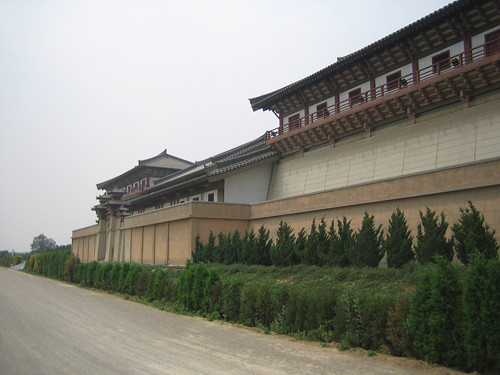
IMG_6015 - Emperor Jing's Tomb, Han Dynasty, Xianyang, China, 2007

IMG_6010 - Emperor Jing's Tomb, Han Dynasty, Xianyang, China, 2007

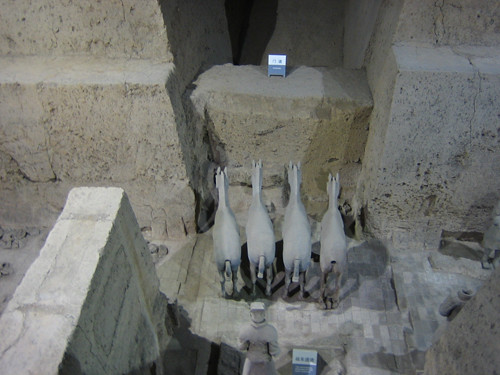
Either because Han Dynasty was less prosperous due to long drawn-out wars, or its emperors were less megalomaniac, none of its emperors' tombs or mausoleum match the scale of the "First Emperor's".  Even the underground guards were not really warriors and war horses, but court personnel and domesticated animals, and in a much reduced scales, about 1/3 or 1/4 of the real size, as seen in Emperor Jing's mausoleum in Xianyang.  Emperor Jing of Han was an important figure in Chinese history.  Wikipedia described his thus:
Emperor Jing of Han (188 BC – 141 BC) was an emperor of China in the Han Dynasty from 156 BC to 141 BC. His reign saw the limit and curtailment of power of feudal princes which resulted in the Rebellion of the Seven States in 154 BC. Emperor Jing managed to crush the revolt and princes were thereafter denied rights to appoint ministers for their fief. This move consolidated central power which paved the way for the glorious and long reign of his son Emperor Wu of Han.
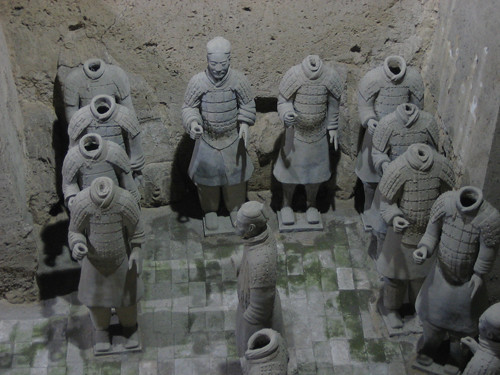
Once again, the excavated site was only a small portion of the whole burial ground.  Even so, it was impressively huge, with numerous small doll figurines half-buried.  Visitors were allowed to walk along transparent walkways and inspect those artifacts, as undisturbed as possible. 
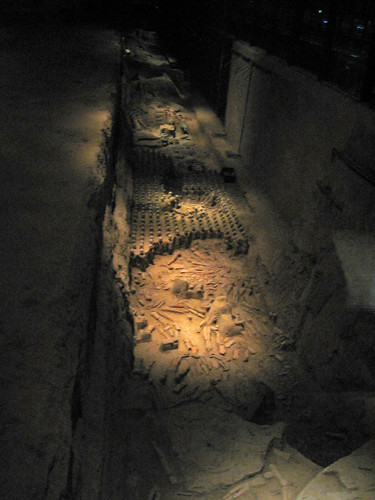
IMG_5920_m - Earthware ''sacrifices'' in Emperor Jing's Tomb, Han Dynasty, Xianyang, China, 2007

IMG_5919_m - Earthware ''sacrifices'' in Emperor Jing's Tomb, Han Dynasty, Xianyang, China, 2007 IMG_5916_m - Earthware ''sacrifices'' in Emperor Jing's Tomb, Han Dynasty, Xianyang, China, 2007

We were also able to see some of those figurines and animals in display cases with better lighting.  Those doll figurines had earthenware torsos and their wooden arms had rotten away, made them rather creepy, and I praised them over the full-sized terracotta warriors for the exoticism emitted from these mutilated figurines below:
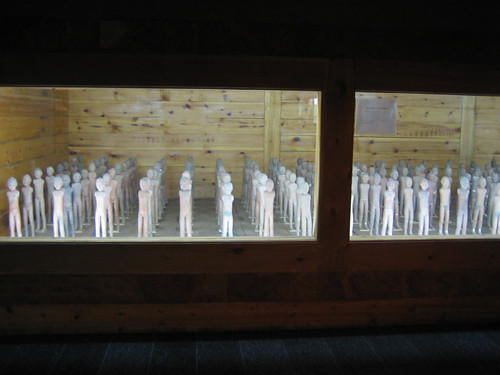
IMG_6045 - Earthware ''sacrifices'' in Emperor Jing's Tomb, Han Dynasty, Xianyang, China, 2007

IMG_6133 - Earthware ''sacrifices'' in Emperor Jing's Tomb, Han Dynasty, Xianyang, China, 2007

IMG_6130 - Earthware ''sacrifices'' and domestic animals in Emperor Jing's Tomb, Han Dynasty, Xianyang, China, 2007

IMG_6088 - Earthware ''sacrifices'' in Emperor Jing's Tomb, Han Dynasty, Xianyang, China, 2007

IMG_6064 - Earthware ''sacrifices'' in Emperor Jing's Tomb, Han Dynasty, Xianyang, China, 2007

IMG_6081 - Earthware ''sacrifices'' in Emperor Jing's Tomb, Han Dynasty, Xianyang, China, 2007 IMG_6026 - Earthware ''sacrifices'' in Emperor Jing's Tomb, Han Dynasty, Xianyang, China, 2007


Related posts on Art · 文化 · Kunst
- Last Chance to See Terracotta Warriors in San Francisco Asian Art Museum
- Weep for Ancient City Walls of Xi'an
- Ruins in Sanxingdui (Three-Star Mound) and Jinsha (Gold Sands), Sichuan, China