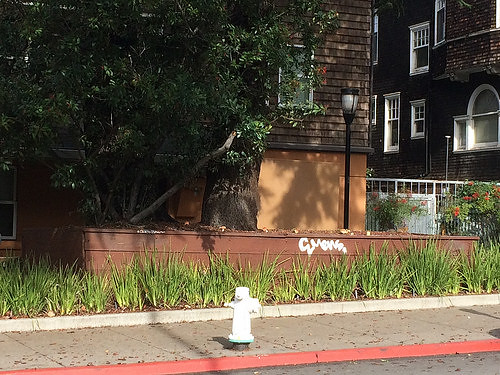
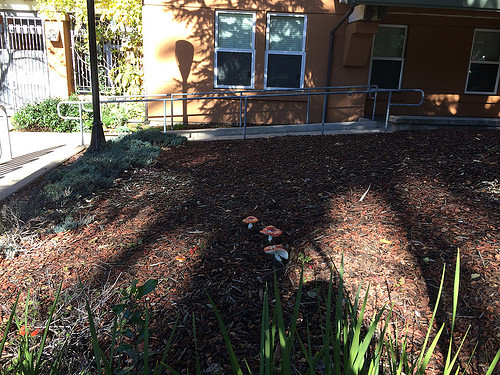
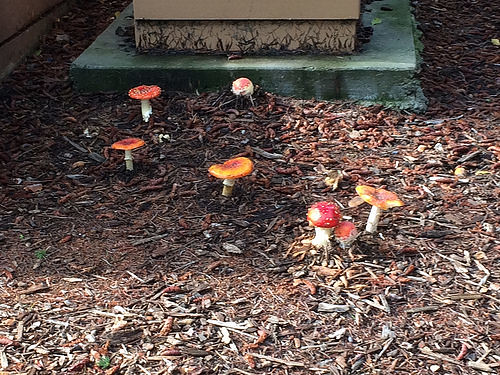
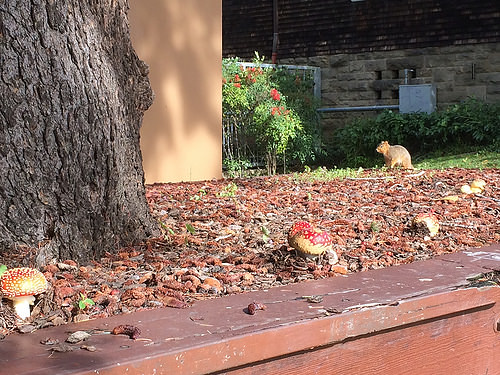
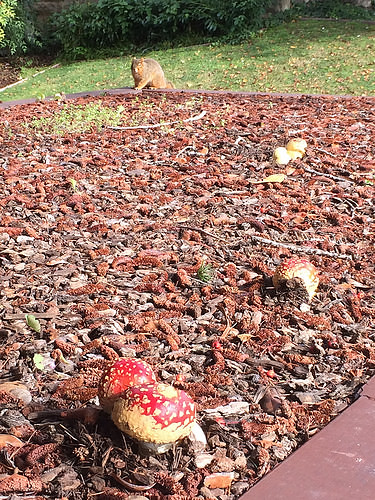
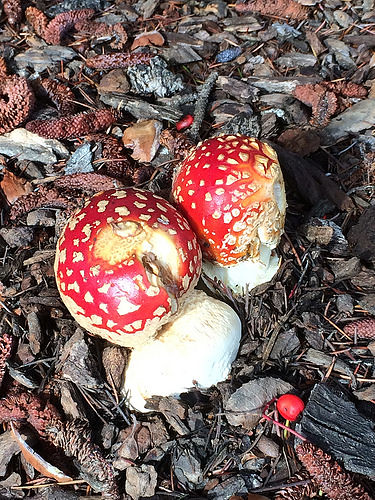
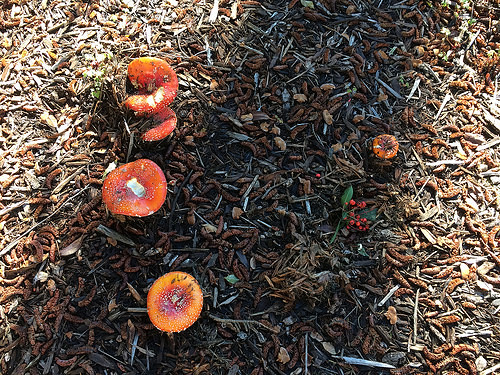
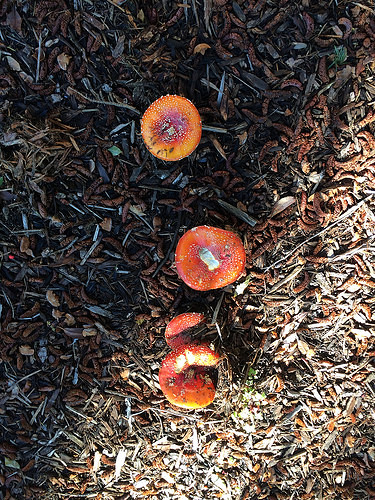
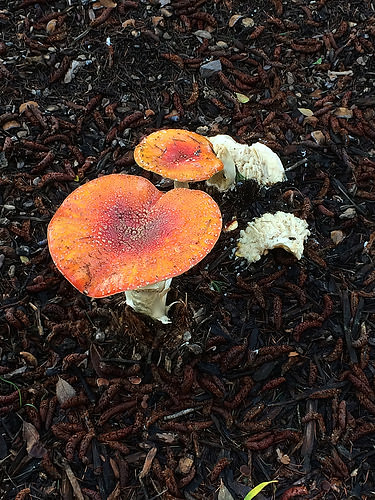
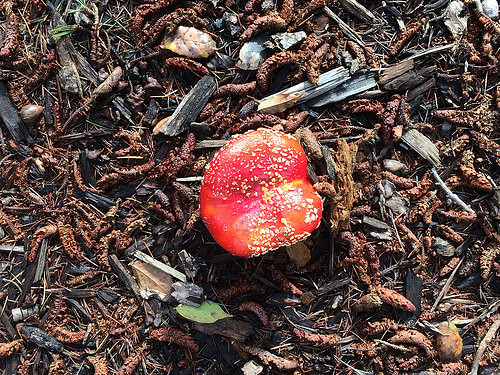
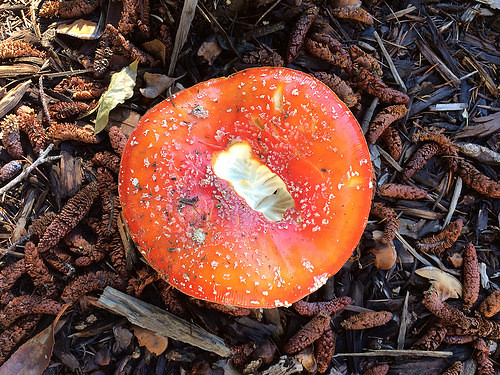
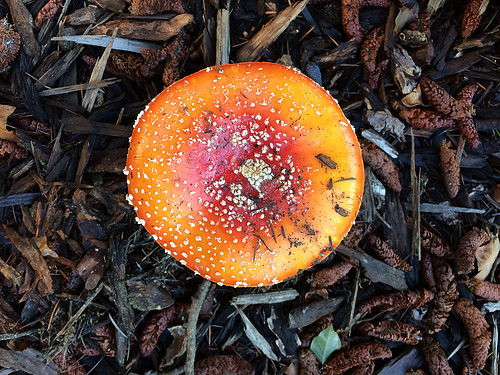
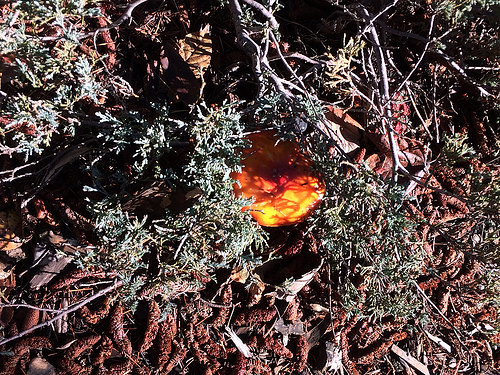
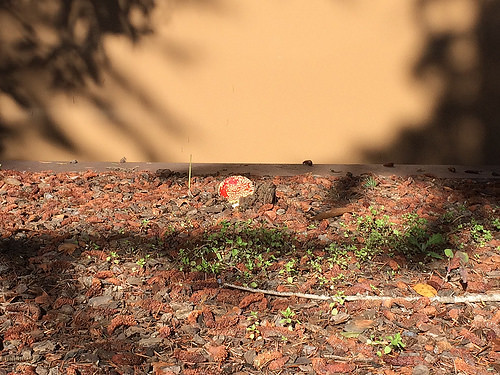
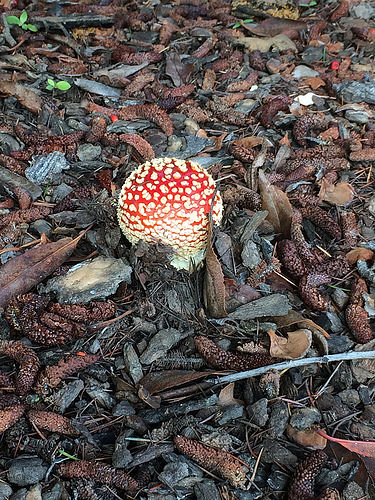
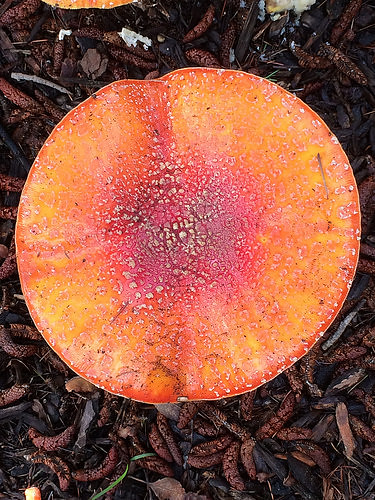
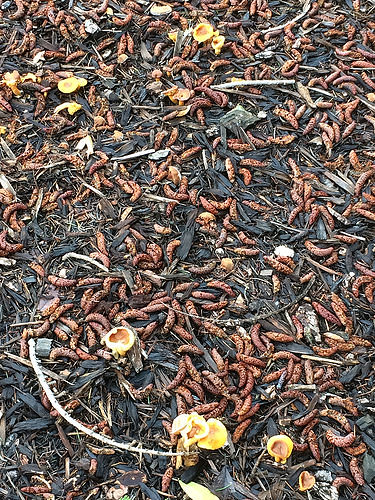
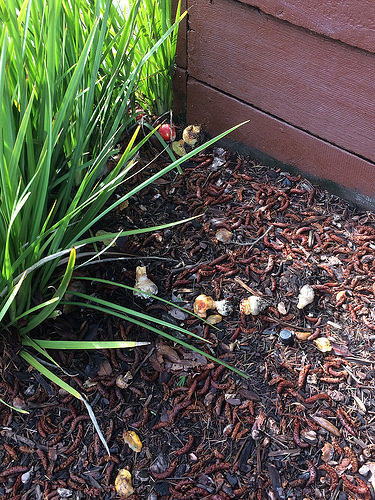
Recent pouring rain storms in San Francisco Bay Area, though inconvenient for many commuters, were more than welcome by the residents, because California had been suffering persistent drought for years. Further more, the moist weather brought out many unexpected colorful mushrooms in some unexpected places, such as this cluster of Amanita muscaria I saw near an apartment compound of University of California, Berkeley.
They might be poisonous, but they were wonderful to behold.
My only trip to the incredibly beautiful Yosemite National Park in last October left me great memories.
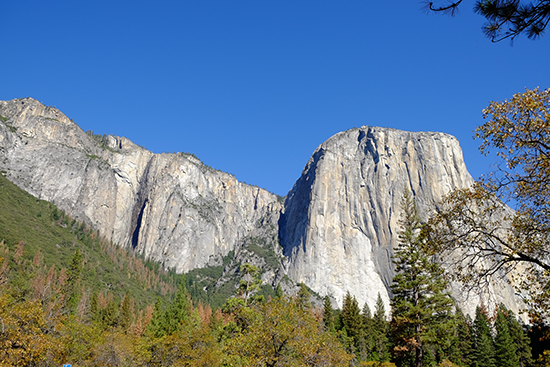
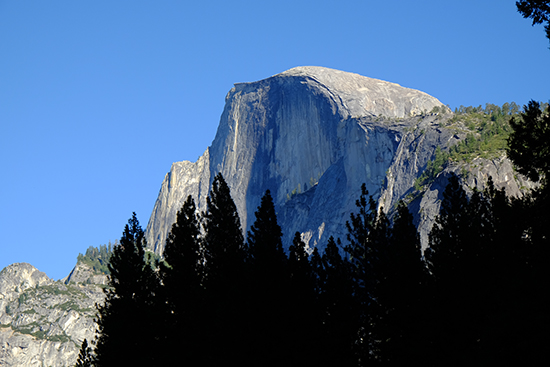
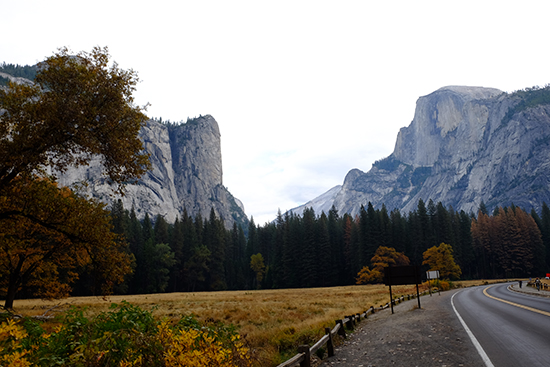
Day 1 was a crisp late autumn day, brilliant sunlight contrasted dramatically or drastically with rather dry and forbidding rocks surrounding the Yosemite Valley. All those famed rocks looked appropriately imposing and impersonal.
El Capitan
North Dome
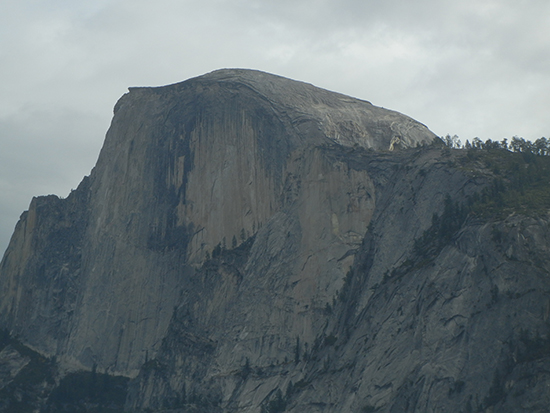
Half Dome
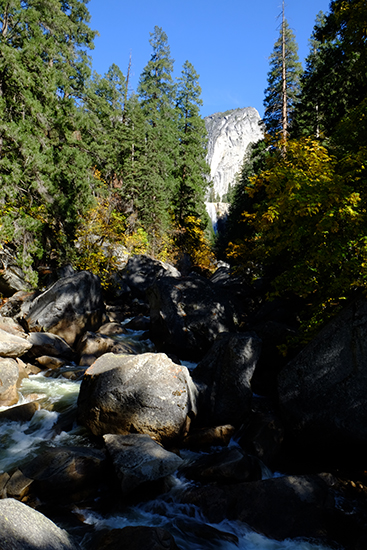
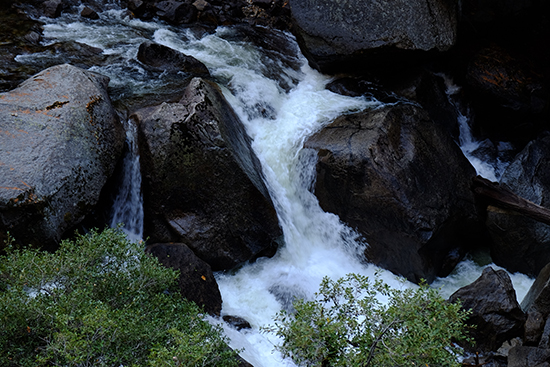
After viewing some rocks from nearby or afar, we hiked the John Muir Trail then the lower part of Mist Trail and saw the lovely Vernal Falls, and the rushing water downstream. Clear day, and no mist.
A partial view of the Vernal Falls
Downstream from Vernal Falls
John Muir Trail / Mist Trail
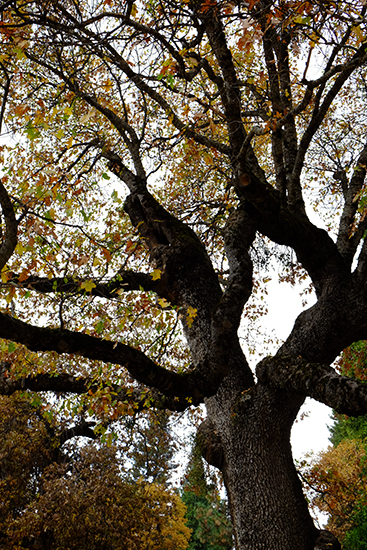
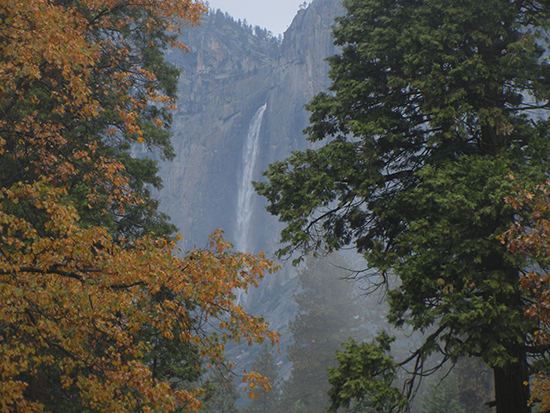
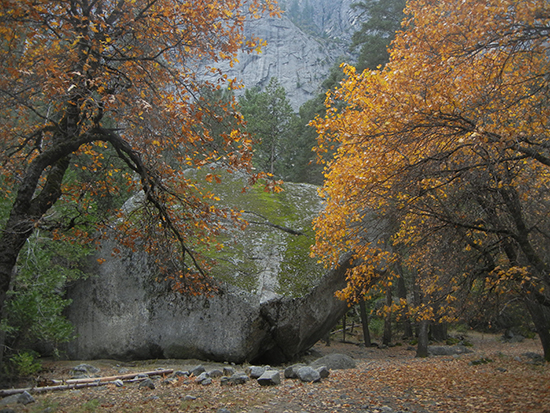
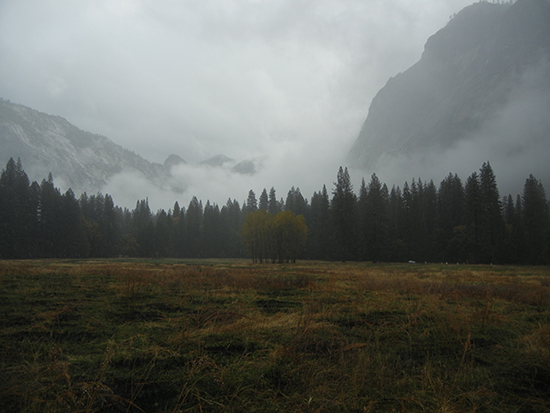
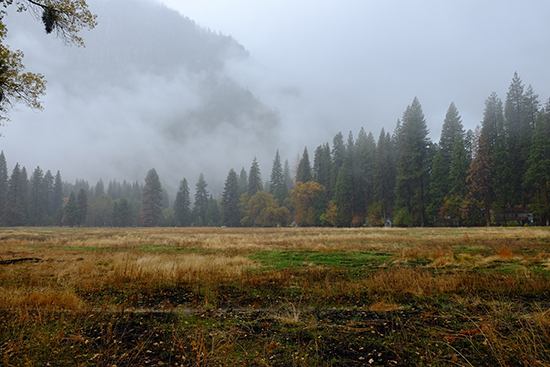
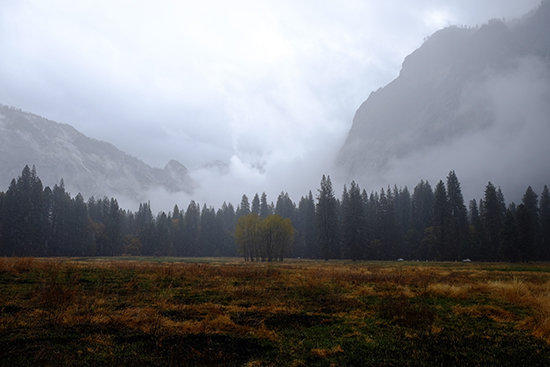
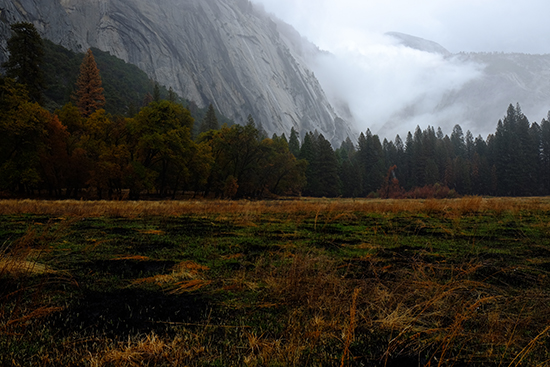
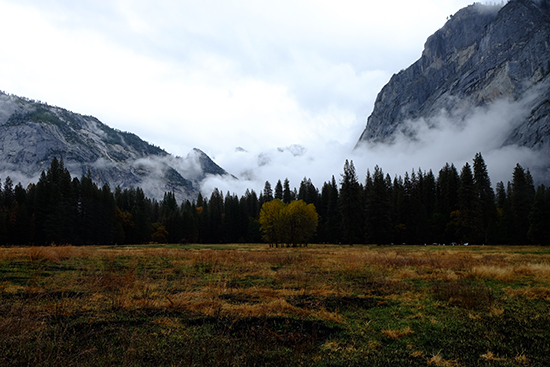
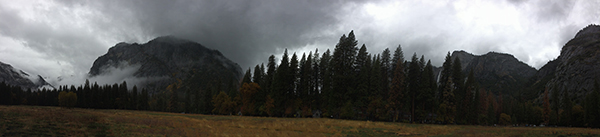
Day 2 was misty and rainy, and the wetness in the air completely changed the atmosphere and rendered the everything in the Valley saturated, vibrant and inviting. The overcast made contrasts less harsh and even rocks looked more approachable.
We didn't get chance to join the tour of Glacier Point to see the Valley
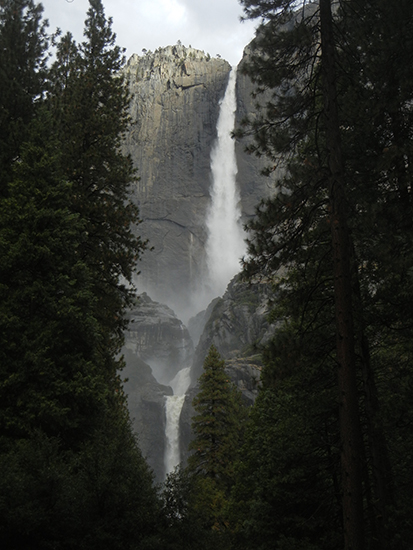
from high up on Day 2, so we took our leisurely time to see the picturesque Yosemite
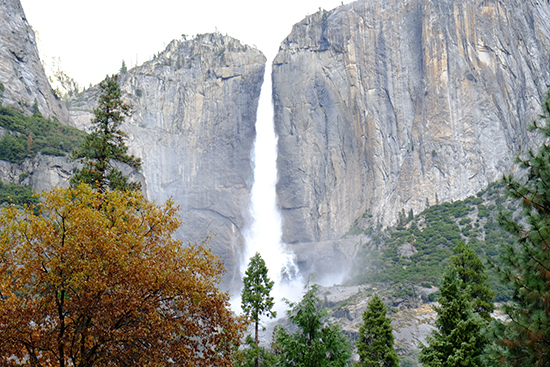
Falls.
Yosemite Falls
Near Yosemite Falls
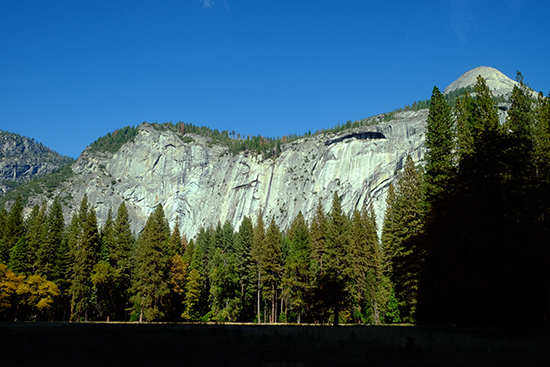
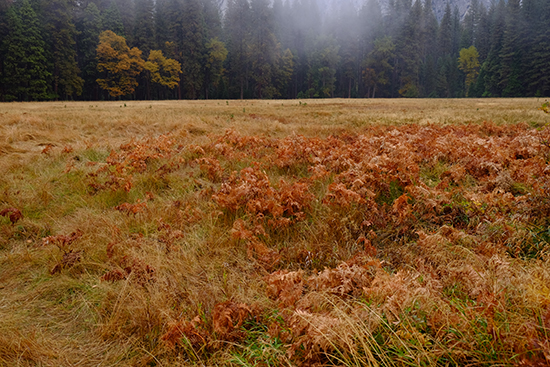
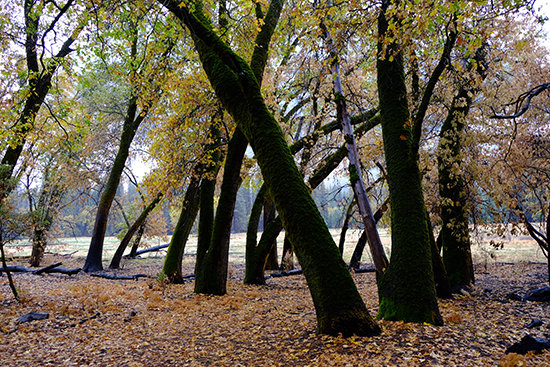
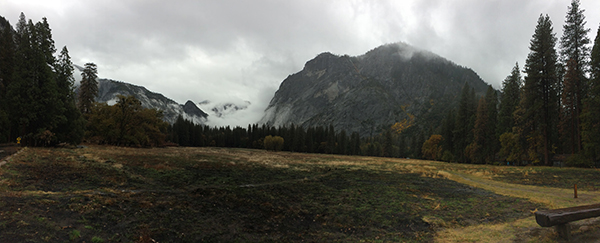
We stumbled upon a spot with enchanting view of the facing off North Dome and Half Dome, rising majestically above a magical meadow or rich fall colors.
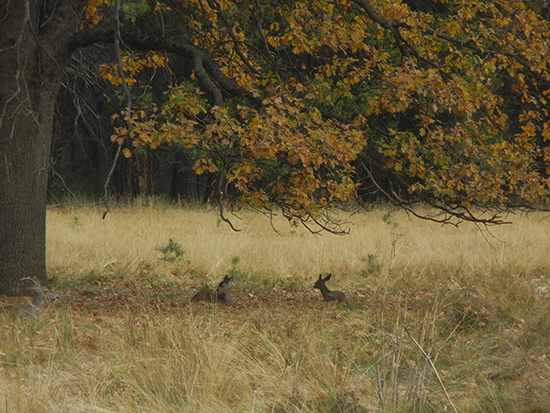
Underneath one of the large trees in the meadow, two fawns sat peacefully, lending more sense of tranquility and harmony.
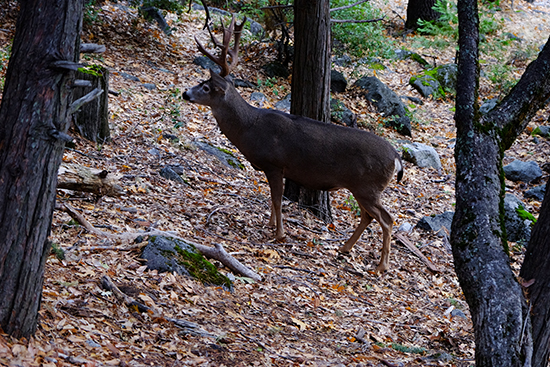
Lovely they were, more impressive was an adult buck we saw early on, near the Yosemite Falls, sauntering around proudly of his grounds.
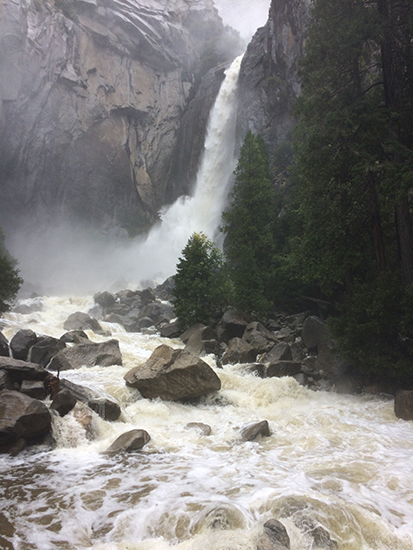
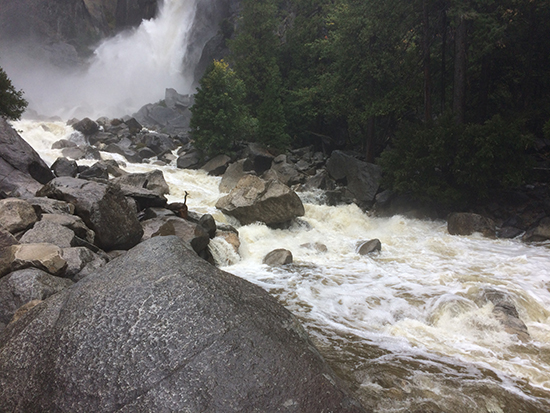
There was a huge storm at night and day 3 began with a roaring sound we heard in our lodge and soon we saw that the Yosemite Falls had swelled to frightening forces.
The water flow was truly fast and furious and everyone cautiously moved about in the thick clouds of mist near the rushing river below the mighty falls.
Later on, I went to another large meadow near Majestic Hotel, formerly known as Ahwahnee, and wandered about the achingly beautiful place, like possessed.
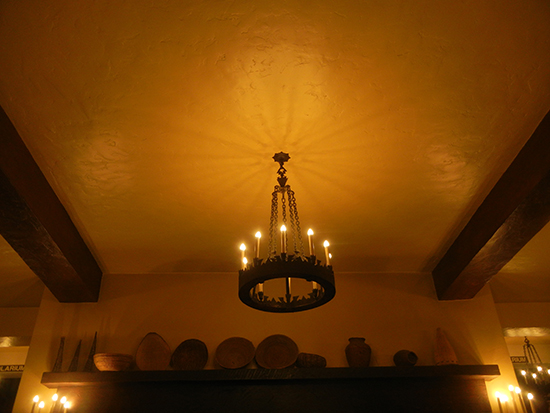
We had wonderful dinner and lunch at the Majestic Hotel, part of the more rustic fixtures of the building left me more impression than the more obviously luxuriant part.
The Blanton Museum of Art of the University of Texas at Austin was a wonderful museum showcasing collection with impressive depth and breadth.
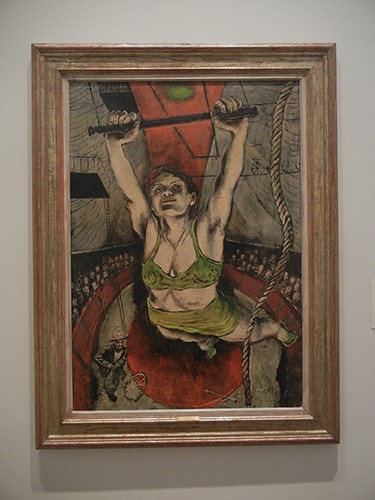
A painting, Woman on Trapeze (1946), by German-born American painter Karl Zerbe (1903-1972) was among one of my favorites there, depicting a circus act, a popular subject in early 20th century, but his woman on trapeze was a different specie from other circus troupers recorded by Picasso, who had left us a considerable volume of his observations and thoughts on that particular group of people. Though tinged with desolation and pensiveness, the Spaniard's circus players were often graceful in forms and poses, often seen resting and meditating between acts, and at most practicing as if for self-amusement, and they congregate in packs; the German artist's circus performer was caught at her most strenuous moment, and despite her lovely dress, her determined and concentrated face with slightly twisted facial features, her perspective-distorted large hands, fearful shadows on her face, her flying away legs, all contributed to a sense of danger and instability, and her corpse like
pale skin, muted further by streaks of dark shadow, conspired to make her look
surreal. And she was all alone. The audience, in horseshoe seats, behind circular red panels, was seen as faceless mass; a single bicyclist, parked in the edge of the central stage, paid no apparent heed to the swinger in the air. A thick rope, slightly curved leftwards, in parallel to her swinging body, counterbalancing her slightly right-curving shape, managed to augment the sense of instability and transience. Though silent, this woman, seemed to be the personification of a barely contained scream, insistent, somewhat helpless, and angry. Though pretty to behold, this painting was terrifying.
Woman on Trapeze, 1946, Karl Zerbe
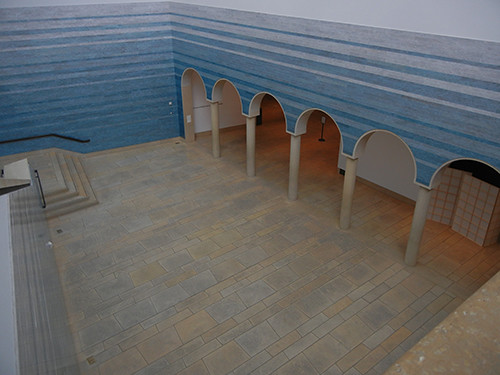
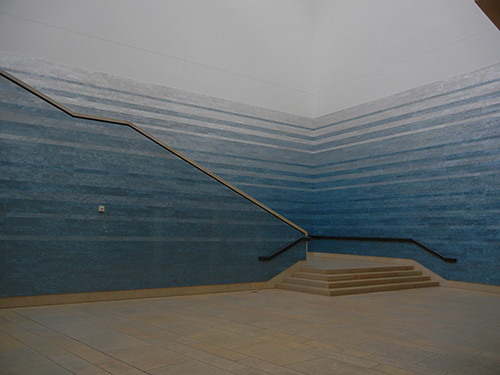
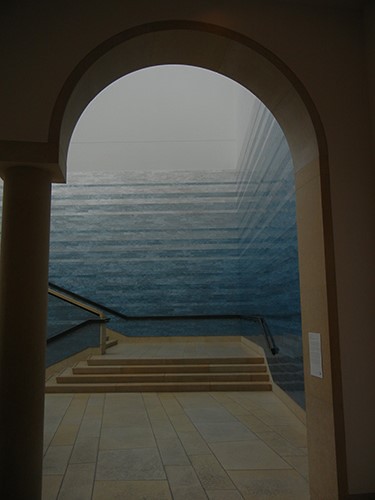
My second favorite, the raison d'être for my visit to this museum, was a site-specific installation by Teresita Fernández (born 1968), Stacked Waters (2009), tiles on the four walls of a large rectangular hall with some loggia arches at the base of one of the long walls, and it was as becalming as Woman on Trapeze was disturbing.
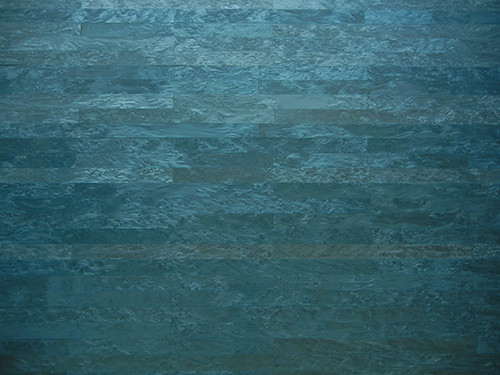
Detail of Stacked Waters, 2009, Teresita Fernández
Upon close inspection, those tiles had a look of shining plastic, with patterns of swirling clouds or waves, or like a glimpse of deep sea or the germinating universe. Those tiles, banded together to form horizontal layers in alternately greenish blue and various shades
of pale gray colors, and as a whole, looked like cross-section of geological
deposits, but with candy-like luminosity. Liquid deposits. Those layers also had different heights, with darker layers grew taller as they approached to the base of the walls, created a vision of gradually settling down, yet never completing such process.
Surrounded by such four shimmering walls, one felt breathless, as if immersed in the depth of cool and hushing water, soundless, motionless, and one would finally be deeply moved, as if some truth of universe had been revealed in front of the incredulous eyes.
It was wonderful to be there alone, to feel the refreshing emptiness; and it was great to be with other visitors, friends or strangers alike, to see how people glad about, like oblivious fish, utterly at home, yet strangely out of place, and utterly entranced.




 Posts
Posts


