Tuesday, June 18, 2013

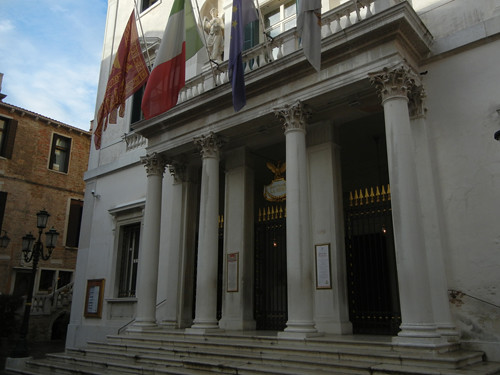
Teatro La Fenice di Venezia (La Fenice Theatre in Venice)


DSCN1346 _ La Fenice, Venezia, 13 October

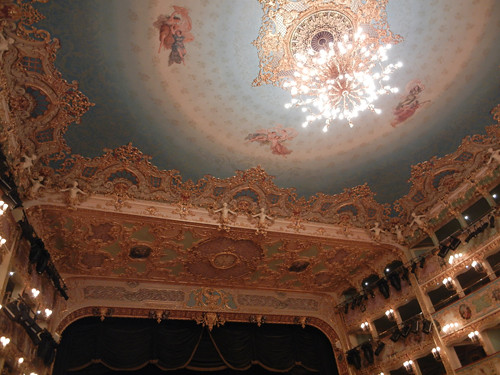
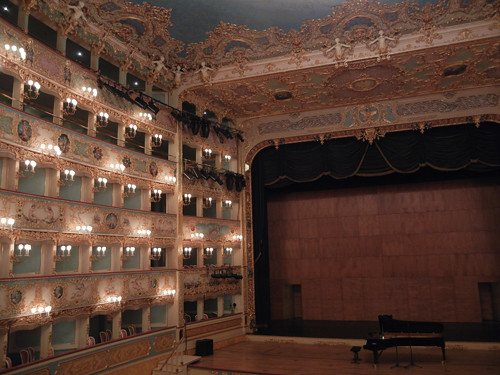
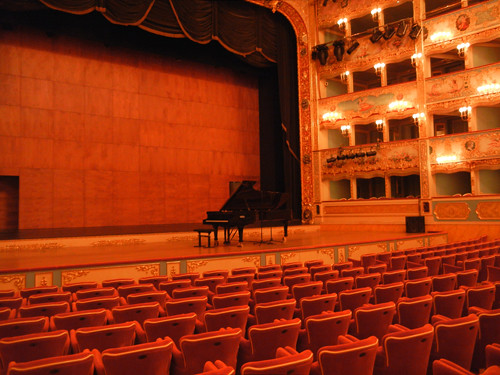
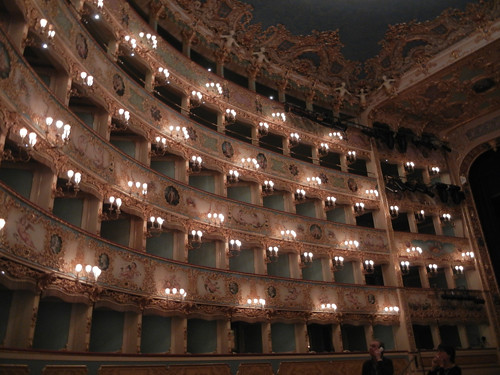
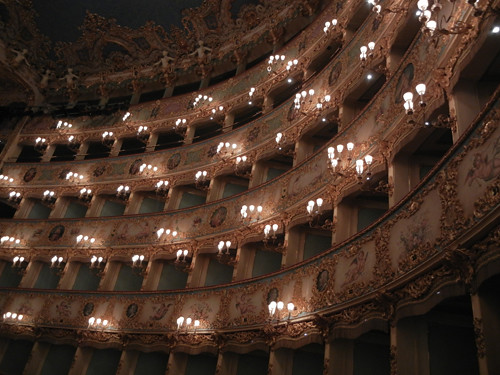
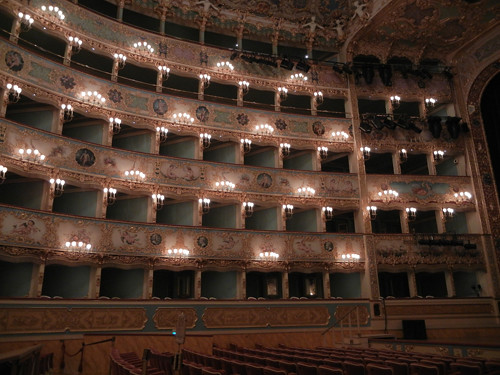
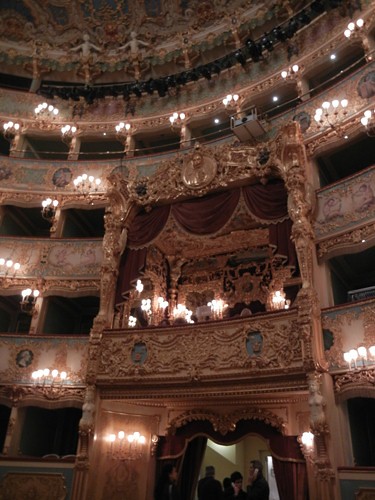
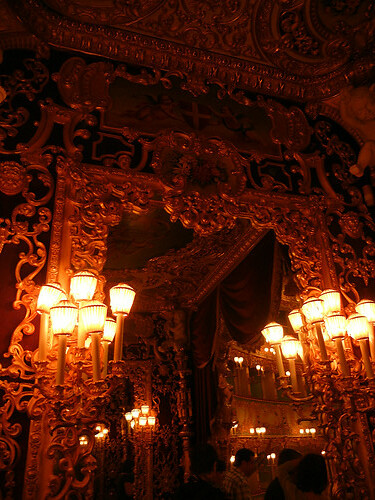
Venice itself is a museum and treasure box. From every angle, one sees something astonishingly beautiful, if somewhat aged and tired looking, though the charm of Venice does reside much in the apparent ancientness.  The main opera house in Venice, Teatro La Fenice di Venezia, however, does not attract one's attention with a flamboyant or stories exterior; it's a rather subdued classical structure, solid and unpretentious, and one hardly expects to encounter the remarkably exuberant Rococo beauty inside.

La Fenice (The Phoenix), dating back to late 18th century, was aptly named because it indeed re-emerged several times from fire and ashes, with the latest devastating fire taking place in 1996 and rebuilt subsequently from 2001 through 2003.

Quoting Wikipedia, "La Fenice was rebuilt in 19th-century style on the basis of a design by architect Aldo Rossi and using still photographs from the opening scenes of Luchino Visconti's 1954 film Senso, which was filmed in the house, in order to obtain details of its design. It reopened on 14 December 2003 with an inaugural concert of Beethoven, Wagner, and Stravinsky. The first opera production was La traviata in November 2004."

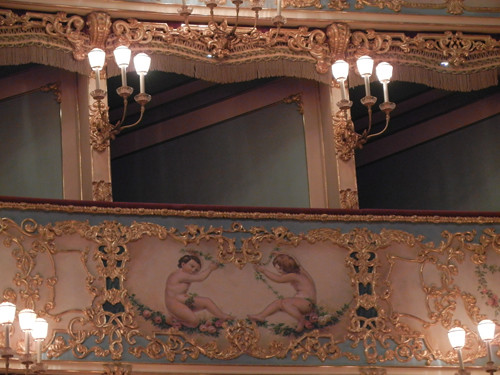
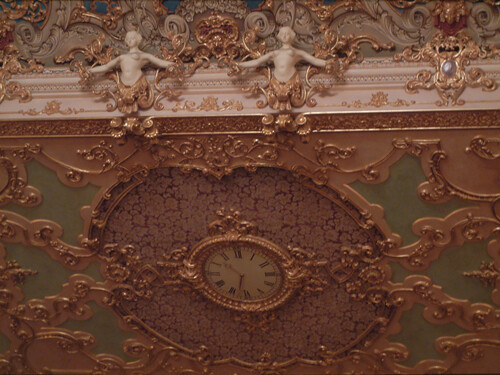
When I returned to Venice in October 2012, there was no performance scheduled in La Fenice then, so I took solace in touring the theater - a self-guided tour, with no entry time and duration constraints.  For an extra fee, visitors were allowed to take photos and videos of the pale green and gold color schemed auditorium, breath-taking for its almost too ornate, extremely detailed yet subtle beauty.  Words fail me here so I'll let the image to speak instead:
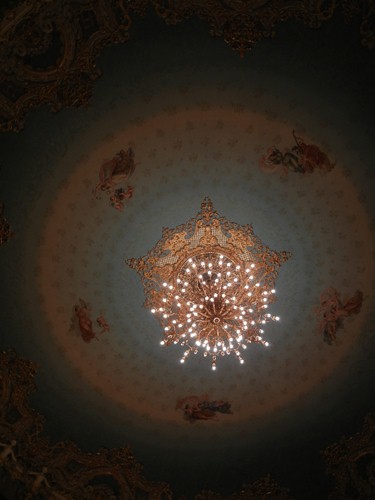
DSCN1407 _ La Fenice, Venezia, 13 October

DSCN1402 _ La Fenice, Venezia, 13 October

DSCN1430 _ La Fenice, Venezia, 13 October

DSCN1403 _ La Fenice, Venezia, 13 October

DSCN1399 _ La Fenice, Venezia, 13 October DSCN1400 _ La Fenice, Venezia, 13 October

DSCN1406 _ La Fenice, Venezia, 13 October

DSCN1411 _ La Fenice, Venezia, 13 October

DSCN1408 _ La Fenice, Venezia, 13 October

DSCN1404 _ La Fenice, Venezia, 13 October

DSCN1440 _ La Fenice, Venezia, 13 October


Below are images from two smaller halls, ideal for intimate recitals; though smaller and less elaborate, they were no less beautiful.
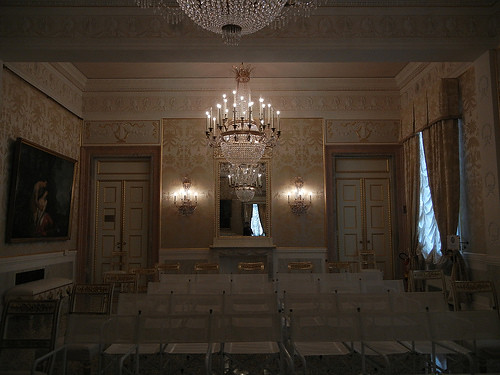
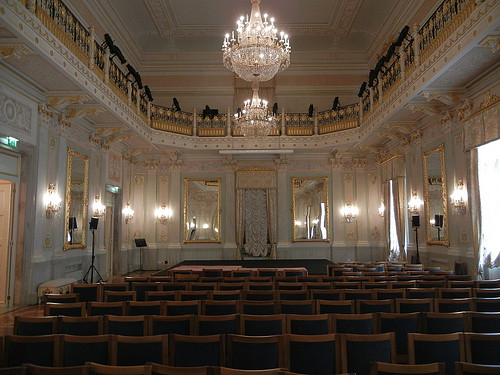
DSCN1477 _ La Fenice, Venezia, 13 October

DSCN1465 _ La Fenice, Venezia, 13 October


Related posts on Art · 文化 · Kunst
- Famed Palaces and Houses (Ca') in Venice
- Il Ghetto di Venezia and Museo Ebraico (Jewish Museum) in Venice
- Bridges in Venice, Italy
- San Giorgio Maggiore, Il Redentore, Scuola e Chise Grande di San Rocco, Venezia
- Magical Piazza San Marco in Venice
- Gondolas in Venice, Italy
- Boy With Frog Sculpture and Punta della Dogana, Venice
- Bus Ride From Graz, Austria to Venice, Italy
- Magnificent Churches in Vienna
- Christopher Wheeldon's Brilliant Cinderella at San Francisco Ballet
- Theater Experiences in Wien (Vienna)

Label: Italy, Austria and Italy Trip 2012

Saturday, June 15, 2013

"Diptych - Dawn" Won Another Award

ArtSlant, the largest art presence online just announced its 5th 2013 Showcase award winners and I was honored again, with my new painting "Diptych - Dawn"!

ArtSlant Screenshots - Diptych - Dawn

Ribbon32px
5th 2013 Showcase Winner

Category: painting

The ArtSlant Prize is a Showcase Series designed to exhibit and promote talented artists from around the world. The Showcase has six rounds per year, and in each round artists may enter one image and compete for different stages of winning status. 

The jurors are:  Darren Jones - Artist, Writer, Curator, New York; Neysa Page-Lieberman - Director & Curator in the Department of Exhibition and Performance Spaces, Columbia College, Chicago; and Deb Klowden Mann - Gallery KM, Los Angeles.

You may see my other awards listed on Flickr

Wednesday, June 12, 2013

New Presentations of My Yearly Artworks

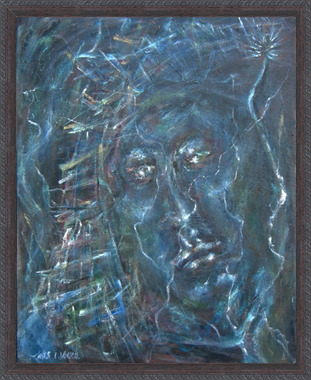
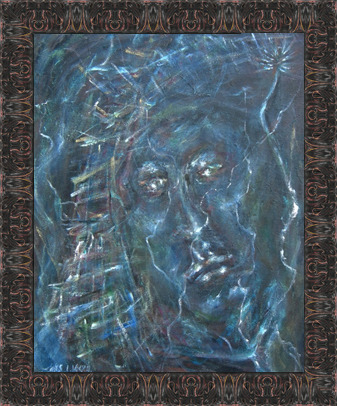
For quite a while, I've been thinking of presenting my works in a more finished fashion, with all my works framed.  However, it is a costly endeavor to frame all my works; and if a work is sold, the buyer might want to put a new frame to suit his or her own taste, so I settled with virtual framing.

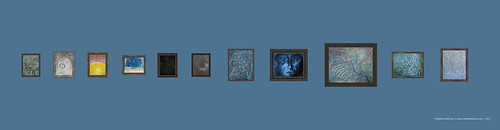
Working backwards, I started with current year and last years' outputs.  For each work, I framed it with at least two kind frames and then chose one set of them to be incorporated into a long scroll, so as to present those works created in one single year in a setting almost like a gallery or museum.

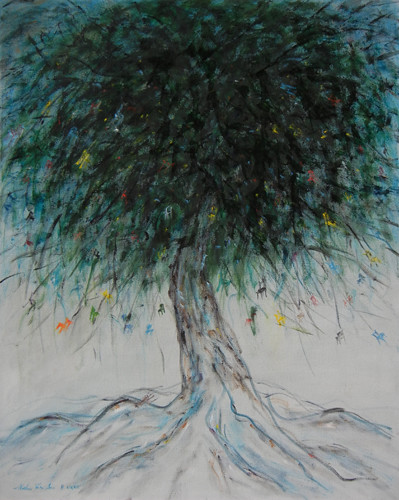
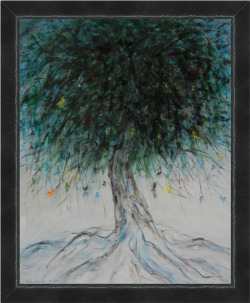
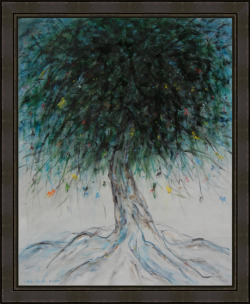
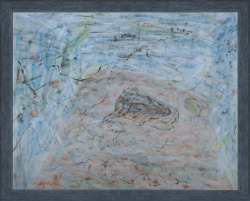
Below are three paintings and their alternative frames:

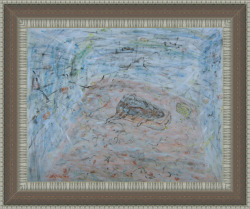
Heavenwards / 向天 / Zum Himmel


Congregation / 聚會 / Gemeinde


Last Trip - A Dream / 最后的旅程 - 一个梦 / Letzte Reise - Ein Traum


And the final assembly of my paintings and installations completed in 2013 and 2012 are:

9 Paintings and 3 Installations Completed in 2013
2013

11 Paintings Completed in 2012 
2012


Related posts on Art · 文化 · Kunst:
- First Painting Completed in 2013
Unexpected Successes of "Stringed White Dresses - An Installation"
"White Dress" Series Continues - A New Drawing and a New Painting
- 2012 Recapitulation - Video Presentation of Paintings Completed in 2012
- Revolutionary Way to Shop for Clothes. What About Frames?
- Before and After - A Painting Framed
- Baby's New Clothes

Sunday, June 9, 2013

Niobe - An Installation

I have always been drawn to tragic stories, particularly those of cosmic grandeur, often with Greek origins.  The legend of Niobe, a proud princess and mother of fourteen children, seven sons and seven daughters (the Niobids), who boasted of her large family and jeered at goddess Leto, who had only two children, the twins Apollo and Artemis, resulting in unbearable tragedy, was one of my favorites.

Gods were not to be mocked at and the offended Leto sent her children to revenge her honor.  Apollo and Artemis started to shoot arrows and killed Niobe’s sons and daughters one by one.  Niobe’s plea to spare at least one daughter came too late, and none of her fourteen children were spared.  The loss was so great, the grief so heavy, that Niobe turned into stone, yet even the stone continued to weep tears.


The Weeping Rock in Mount Sipylus, Manisa, Turkey, has been associated with Niobe's legend since Antiquity, Source: RKTanitim

Since I started my “White Dress” series, I have been exploring the expressive possibilities of this motif and the results often took me by surprise, and further fanned my curiosity, and wanted to probe ever further.

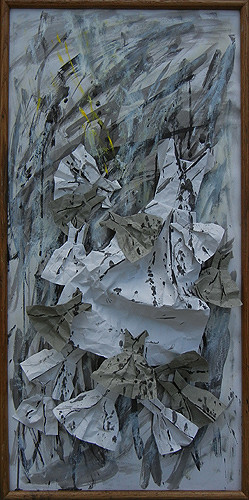
Though my recent well-received “Stringed White Dresses – An Installation” was a success, I felt that the origami dresses in that installation were too prim, too orderly.  I wanted to create something more chaotic.  For the composition, I imagined a large dress, like a queen bee, surrounded by smaller ones; this fit the Niobe story perfectly.
After several attempts, I decided on the sizes of the dresses and chose white dresses to represent female and grey to represent male characters.  Before I folded the origami dresses, I crumpled the paper to give them a more lively look.  I put black ink and brown wash on paper to create the chaos in the background, some areas were covered with white oil wash to enrich the texture and to give more contrast to the dresses taped over the drawing paper, and finally some yellow oil streaks to suggest the ungodly gods’ touches.

To finish the entire assemblage, I pinned the little daughter Niobe tried to save onto her with a needle. Finally, I freely splashed black ink over the ensemble, and that constituted my final touch.


Niobe / 尼俄柏 / Niobe


Other Related posts on Art · 文化 · Kunst:
- Unexpected Successes of "Stringed White Dresses - An Installation"
- "White Dress" Series Continues - A New Drawing and a New Painting
- One More Painting Featuring White Dress
- My Next Show - Prince Street Gallery, Chelsea, New York
- White Dresses - First Painting Finished in 2011

Thursday, June 6, 2013

Lovely Sight at Berkeley Art Museum (BAM)

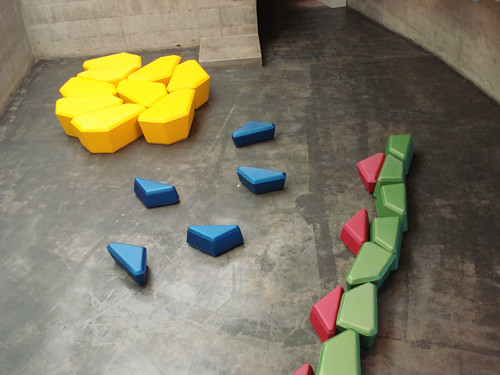
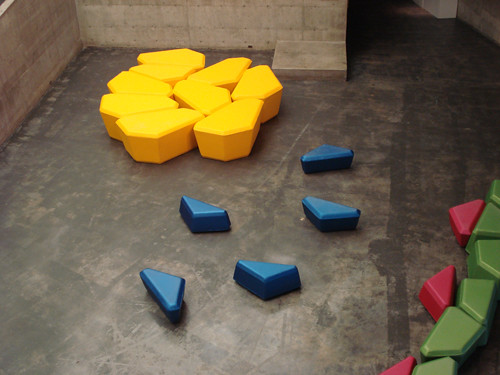
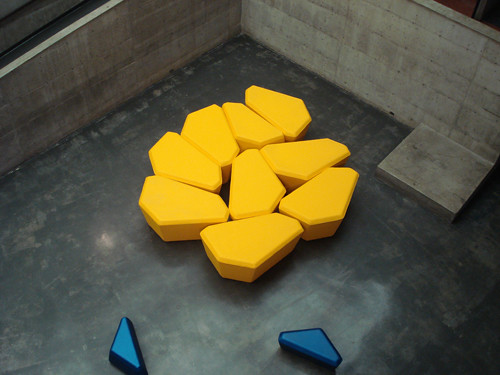
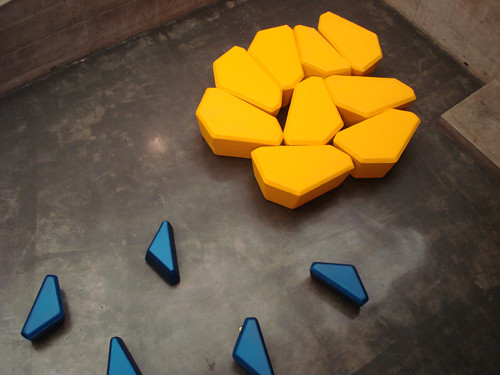
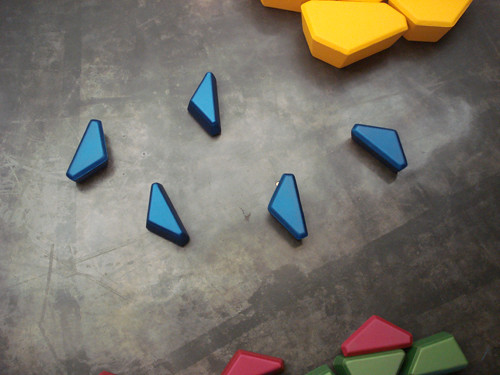
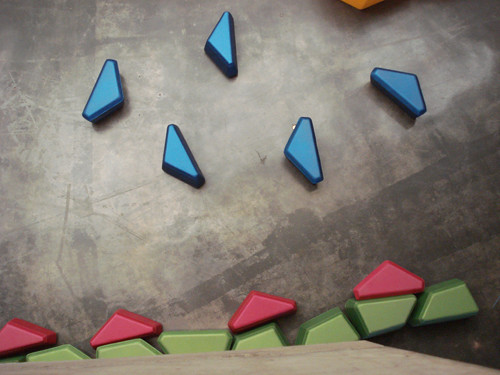
Today, I stopped by Berkeley Art Museum (BAM) of University of California, Berkeley and saw some colorful chairs on the ground floor and they are absolutely enchanting, against the dull cement floor:

Berkeley Art Museum _ DSC08764

Berkeley Art Museum _ DSC08765

Berkeley Art Museum _ DSC08760

Berkeley Art Museum _ DSC08763

Berkeley Art Museum _ DSC08761

Berkeley Art Museum _ DSC08762

Other Related posts on Art · 文化 · Kunst:
- Recent Exhibitions at Berkeley Art Museum
- In Berkeley Art Museum, California
- Silke Otto-Knapp at Berkeley Art Museum
- Getting Ready for Barry McGee at Berkeley Art Museum

Wednesday, June 5, 2013

My Favorite Paintings at Église Saint-Sulpice, Paris

Old European churches are often art treasure troves and Église Saint-Sulpice in Paris is just on of such amazing institutions. 

According to Wikipedia, at 113 metres long, 58 metres in width and 34 metres tall, it is only slightly smaller than Notre-Dame and thus the second largest church in the city. It is dedicated to Sulpitius the Pious. During the 18th century, an elaborate gnomon (part of a sundial that casts the shadow), the Gnomon of Saint-Sulpice, was constructed in the church.

Many people learned of this cathedral through Dan Brown's bestseller, The Da Vinci Code, while I through a French opera, Jules Massenet's Manon. In both works, pivotal scenes took place in this cathedral, therefore it earned a few paragraphs before I narrate on my favorite paintings it housed.

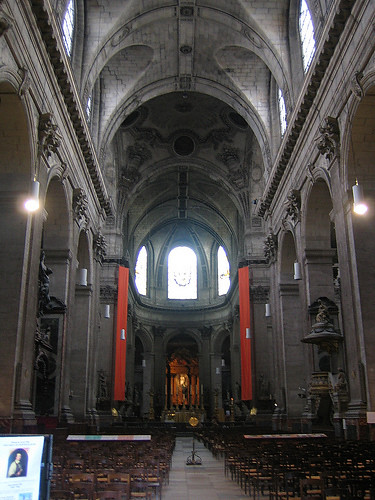
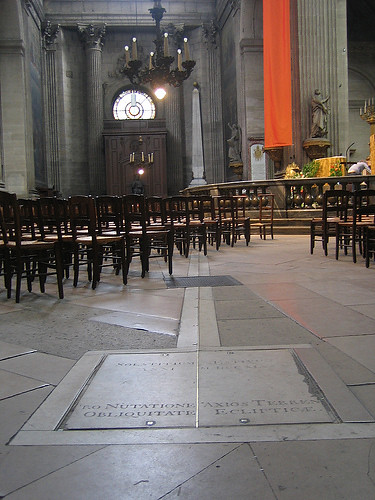
Saint-Sulpice, Paris, June 2008 - IMG_8115 The gnomon, Saint-Sulpice, Paris, June 2008 - IMG_8142

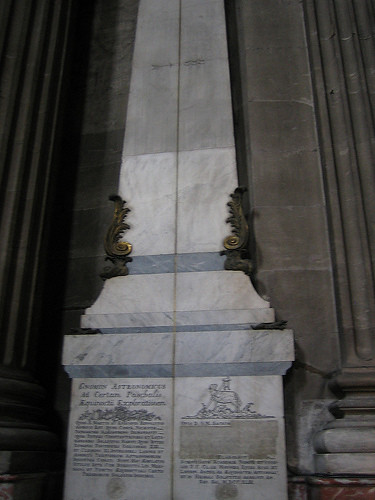
The above pictures showed the interior of the church and the gnomon (in the background) and the brass line on the floor.  You can see the detail of the gnomon in the larger picture below:

Saint-Sulpice, Paris, June 2008 - IMG_8123

Constructed by the English clock-maker and astronomer Henry Sully, the gnomon was also used for various scientific measurements: This rational use may have protected Saint-Sulpice from being destroyed during the French Revolution.

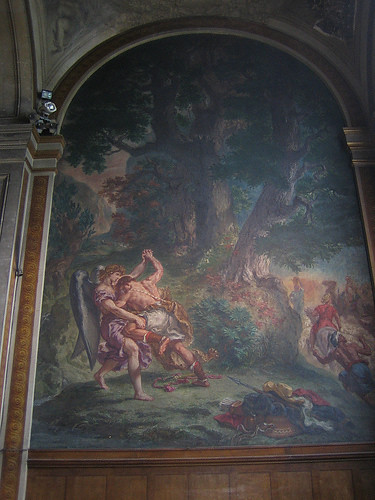
The sight of this gnomon in the obelisk shape was unusual but it couldn't hold my interest long and soon I wandered away to see many magnificent stained glasses and then, in the Chapel of the Holy Angels, some unforgettable mural paintings by Eugène Delacroix, who painted scenes from The Bible, in the effort to repair the extensive damages the church suffered during the Revolution.  

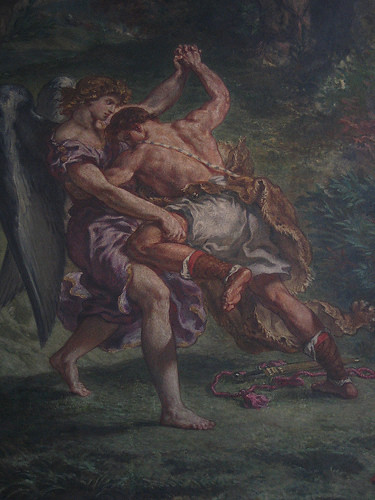
My favorite mural there was the Jacob Wrestling with the Angel, dynamic in composition, romantic in scene setting and the result was both somewhat unsettling and absolutely beautiful.

Jacob Fights with the Angel, Eugène Delacroix, Saint-Sulpice, Paris, June 2008 - IMG_8145

Jacob Fights with the Angel (Detail), Eugène Delacroix, Saint-Sulpice, Paris, June 2008 - IMG_8151

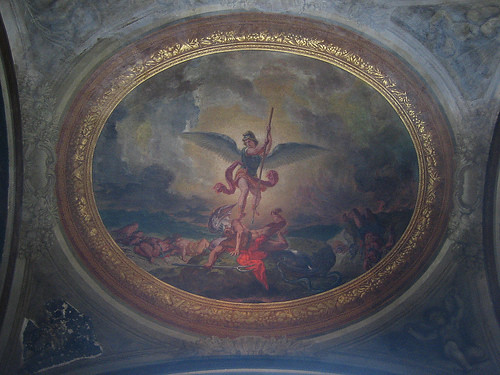
My second favorite painting in Saint-Sulpice was St Michael defeats the Devil, again by Delacroix.  This painting had the similar atmosphere and dynamism as Wrestling.  The major difference was that St Michael was mounted on the ceiling therefore the St Michael's triumph was presented as a brilliant celestial vision and his victory had a cosmic feeling versus the more intimate and personal one of the Wrestling.  The colors in this painting was more brilliant and the Archangel occupied the absolute center of the painting, being the unchallenged center focus of this celebratory and lovely painting.

St Michael defeats the Devil, Saint-Sulpice, Paris, June 2008 - IMG_8148

My Favorite Museum Collection Series

>> My Favorite Museum Collection Series 67: My Favorite Sculptures in Basilique Saint-Denis (Paris)
<< My Favorite Museum Collection Series 65: My Favorite Sculptures in Jardin du Luxembourg, Paris

List of My Favorite Artworks in the Museums I've Visited


Other Related posts on Art · 文化 · Kunst:
- Grand Palais in Paris
- Musée de Cluny - Musée national du Moyen Âge, Paris
- Travel Inspired Paintings
- Get Ready for the Treasures from Musée d’Orsay
- Picasso: Masterpieces from the Musée National Picasso, Paris - De Young Museum, San Francisco
- Birth of Impressionism at De Young Museum, San Francisco