Last month, a friend invited me to see her teenager son starring as Stanley Kowalski in the seminal American play, A Streetcar Named Desire, in his Oakland School for the Arts production. Since I've seen this amazing young actor and his school mates' performance before, I did not have much trepidation on their behalves. Even so, it was still quite ambitious for high school actors and their teacher to tackle this overtly emotional operatic piece.
Yet, I was gladly satisfied and quite moved by their performance - a performance was quite vivid, natural, honest and moving. If here or there one wished for a bit more display of emotion or chemistry, it was not the fault of their young age - those "shortcomings" could be as easily encountered in a full-fledged professional troupe. It was simply the challenge to portray the incredibly emotional and unstable characters, the challenge many adult and more experienced actors had often than not failed to wrestle to the ground. I also truly appreciated the rather understated, less melodramatic portrayals, a relief from common fault often seen in a Tennessee Williams' play. Most impressive was that those actors matched each other well, particularly amongst the well-balanced central quartet, with the appropriate focus on Blanche.
The young actors had pledged not to watch the famous film so as not to ape the inimitable Marlo Brando and Vivian Leigh, et al., therefore, breathed their and their teacher's own readings into these roles. I was particularly startled and impressed, positively, by the young actress' reading of that famous line of Blanche: "I don't want realism. I want magic!"
This line could be read many ways and here, her exclamation was a desperate attempt to stay afloat and a protestation against her foreseen doom. That contrasted greatly with another "A Streetcar Named Desire" I saw on stage in 1998, an operatic adaptation by San Francisco Opera, composed by André Previn, to the libretto (a condensation of the play) by Philip Littell, starring the American star soprano, Renée Fleming.
Previn's music for this operatic Streetcar was a meandering train wreck and I was terribly bored by the obvious musical and dramatic gestures provided by the composer and his diva. Previn constructed "I want magic" as a concert diva showpiece and when golden-voiced but always dramatically noncommittal Fleming sang it, it sounded like a willful five-year-old girl telling her mommy that she didn't want to know that Santa Claus is not real, that fairies do not exist. Rather, she "wants magic". It had neither fragility, tragedy, grandeur, doubt or delusion, therefore, a dramatic dead spot, and emotionally false, became a parody of a self-conscious diva prancing, however gracefully, in front of a gilded mirror.
Below is a segment of Fleming performing "I want magic!" in a concert and however lovely she sounded, it was dramatically false and even coy, from this lovely singer:
Related posts on Art · 文化 · Kunst:
- Theater Experiences in Wien (Vienna)
- Mark Rothko and "Red" at Berkeley Repertory Theatre
- Funny Theater, Not Textbook - David Henry Hwang's Chinglish at Berkeley Repertory Theatre
- Princess Turandot
- High Romanticism - German Tenor Jonas Kaufmann's Recital in Berkeley
- Angelic Voice - Philippe Jaroussky at Hertz Hall, UC Berkele
Tuesday, March 26, 2013


Saturday, March 23, 2013
Stringed White Dresses - The Process of a New Installation
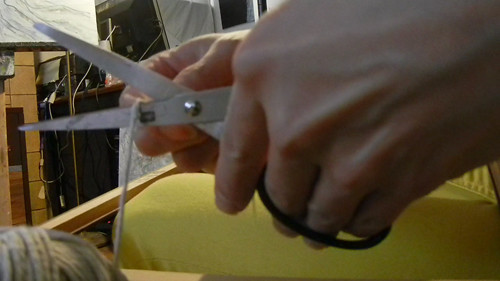
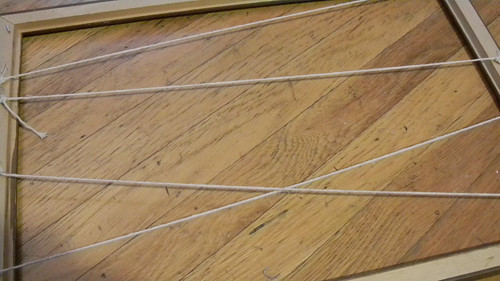
Lately, I was inspired and several exciting ideas propelled me to work diligently to complete one installation last Friday. I documented the last stage of the process - painting background, wiring strings to the frames and final assembling, including the paper origami white dresses folded before. Below are several pictures and an edited, composite video of this final dash, all recorded on Friday, 22 March 2013:
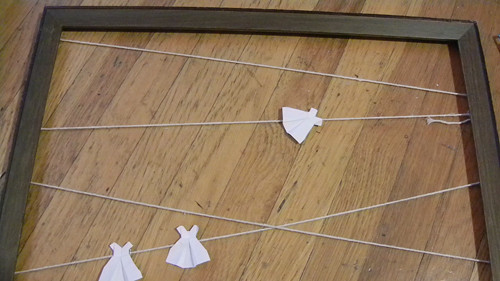
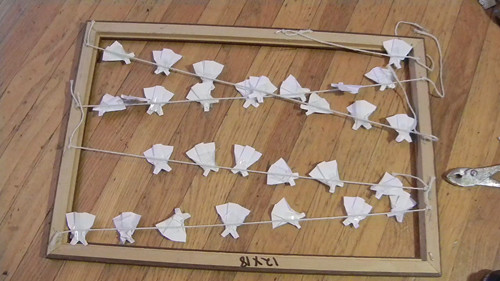
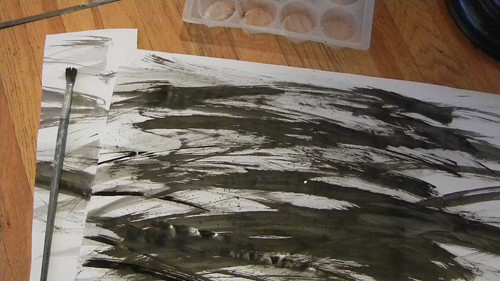
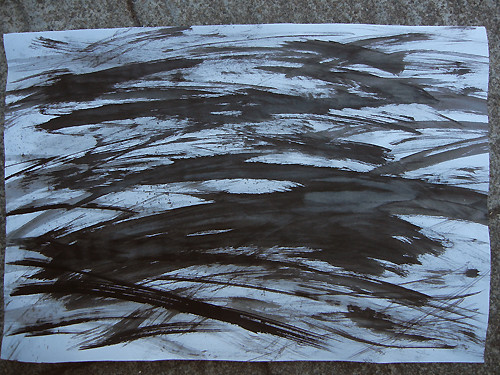
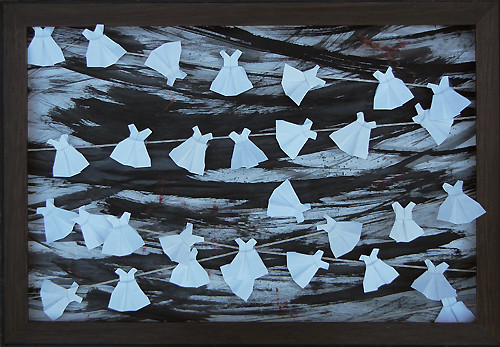
Stringed White Dresses - An Installation
Paper, Cotton Strings, Ink and Oil on Paper, Wooden Frames
20" x 14"
Related posts on Art · 文化 · Kunst:
- Unexpected Successes of "Stringed White Dresses - An Installation"
- Pomona Valley Review, Issue 7 Published with My Paintings and Installation
- Congregation - My New Art Installation
- A New Installation - Chairs Installation, November 2012 - Making Art With Mother in China
- Paper Boats, Chairs Installations and More
Stringed White Dresses - An Installation
Paper, Cotton Strings, Ink and Oil on Paper, Wooden Frames
20" x 14"
Related posts on Art · 文化 · Kunst:
- Unexpected Successes of "Stringed White Dresses - An Installation"
- Pomona Valley Review, Issue 7 Published with My Paintings and Installation
- Congregation - My New Art Installation
- A New Installation - Chairs Installation, November 2012 - Making Art With Mother in China
- Paper Boats, Chairs Installations and More
Wednesday, March 20, 2013
Famed Terracotta Warriors and Their Intriguing Successors
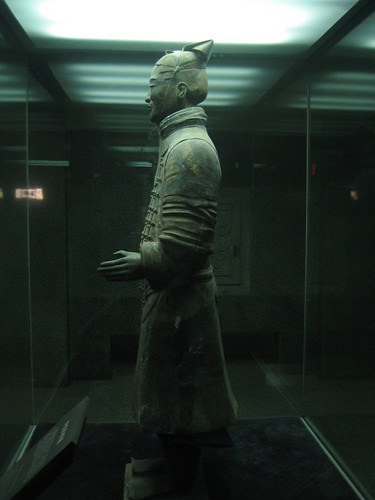
San Francisco Asian Art Museum is parading a small formation of eight famed terracotta warriors and two horses from the mausoleum of Qin Dynasty's first emperor, Qin Shihuang (259-210 BCE), in Xi'an, China. The eight warriors are the the maximum number allowed to travel here en bloc and in this museum, it formed the core of the special exhibit "China's Terracotta Warriors: The First Emperor's Legacy" (February 22 - May 27).
Eight warriors can hardly represent the massive underground armies the crazed emperor assembled but they at least can provide a passing glimpse of that awesome and fearful spectacle. Asian Art Museum informed us:
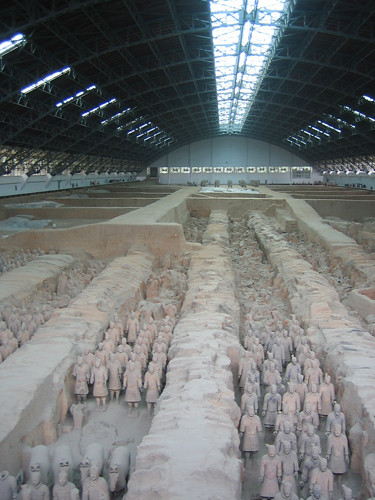
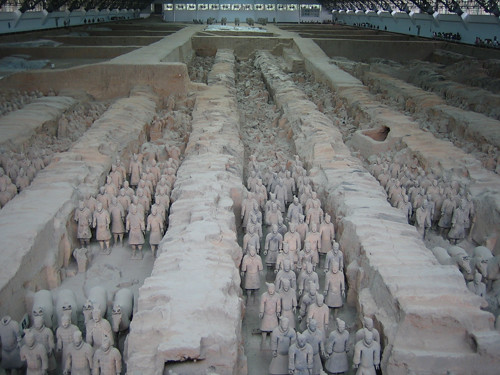
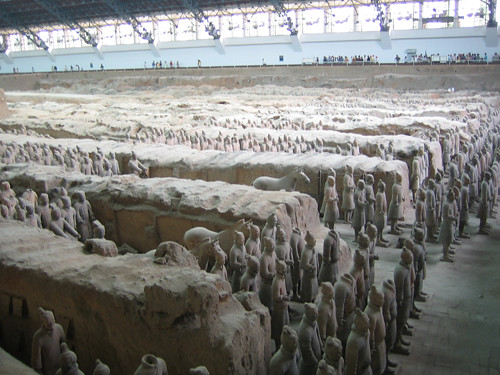
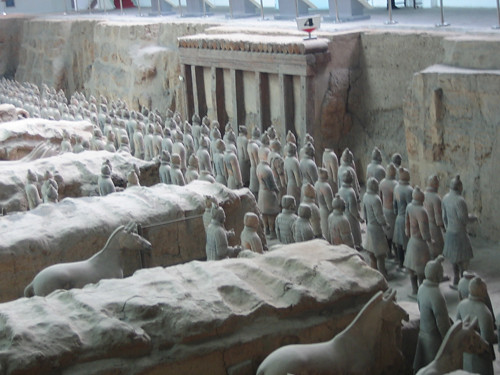
Despite that I have seen them in situ, I still plan to visit Asian Art Museum and for those who haven't seen them in Xi'an, I strongly encourage you to take the advantage of inspecting them up and close, more so than you could do in Xi'an.
The mausoleum in Xi'an was amazing yet it was topped a few days later in Xianyang, a smaller city nearby, in the same Shaanxi Province. There, I visited the mausoleum of an emperor from the next dynasty, Han, Emperor Jing of Han (188 BC – 141 BC).
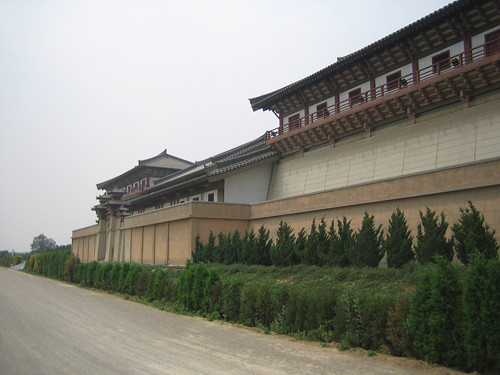
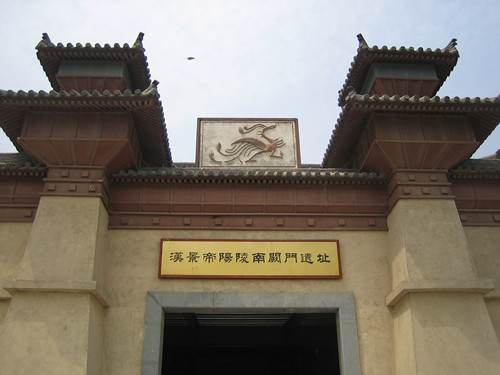
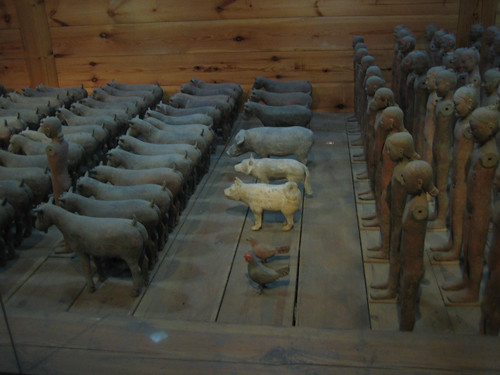
Either because Han Dynasty was less prosperous due to long drawn-out wars, or its emperors were less megalomaniac, none of its emperors' tombs or mausoleum match the scale of the "First Emperor's". Even the underground guards were not really warriors and war horses, but court personnel and domesticated animals, and in a much reduced scales, about 1/3 or 1/4 of the real size, as seen in Emperor Jing's mausoleum in Xianyang. Emperor Jing of Han was an important figure in Chinese history. Wikipedia described his thus:
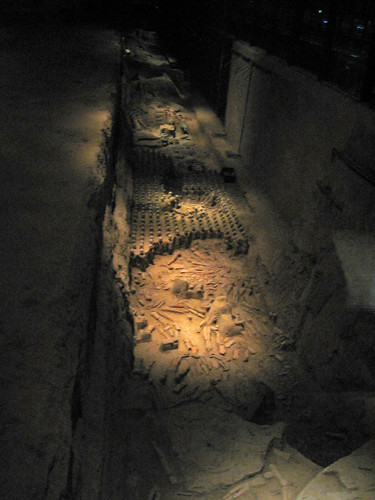
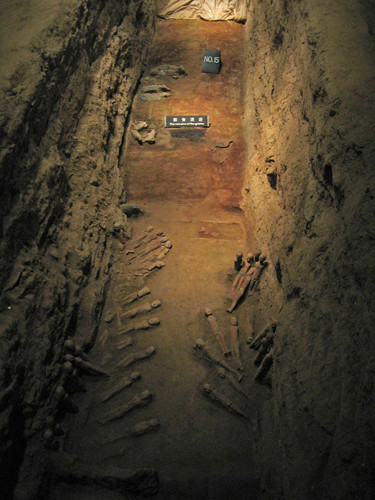
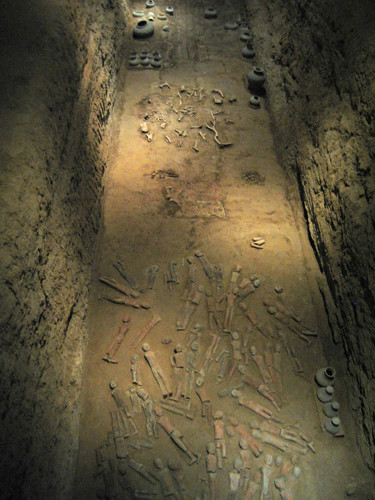
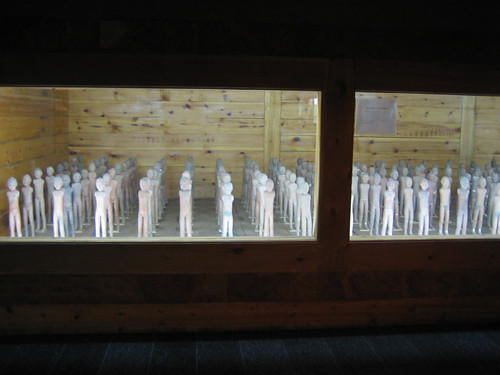
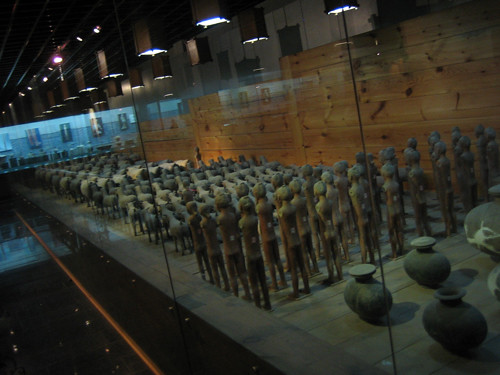
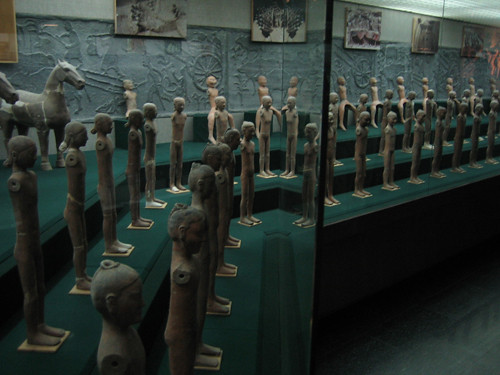
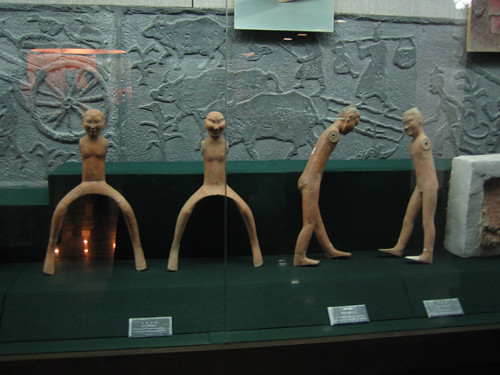
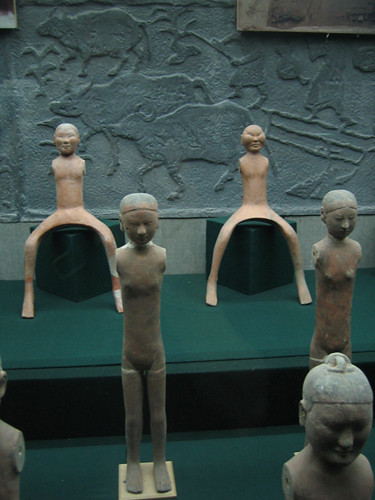
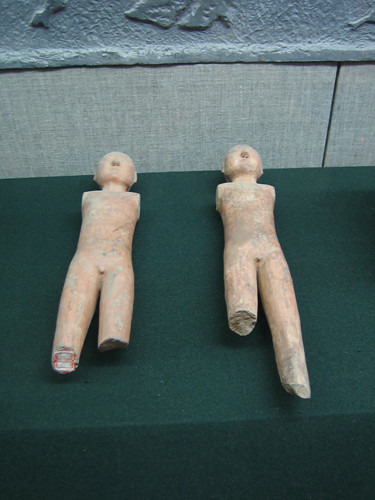
We were also able to see some of those figurines and animals in display cases with better lighting. Those doll figurines had earthenware torsos and their wooden arms had rotten away, made them rather creepy, and I praised them over the full-sized terracotta warriors for the exoticism emitted from these mutilated figurines below:
Related posts on Art · 文化 · Kunst:
- Last Chance to See Terracotta Warriors in San Francisco Asian Art Museum
- Weep for Ancient City Walls of Xi'an
- Ruins in Sanxingdui (Three-Star Mound) and Jinsha (Gold Sands), Sichuan, China
Eight warriors can hardly represent the massive underground armies the crazed emperor assembled but they at least can provide a passing glimpse of that awesome and fearful spectacle. Asian Art Museum informed us:
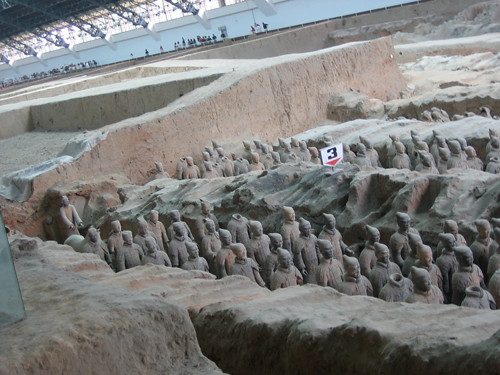
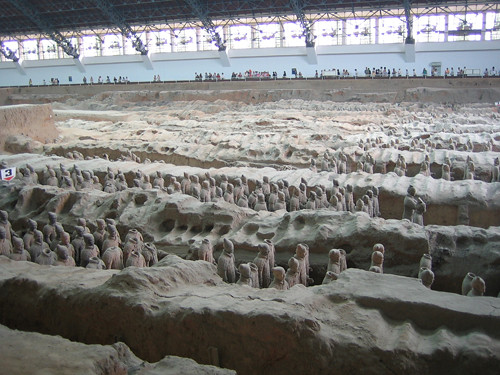
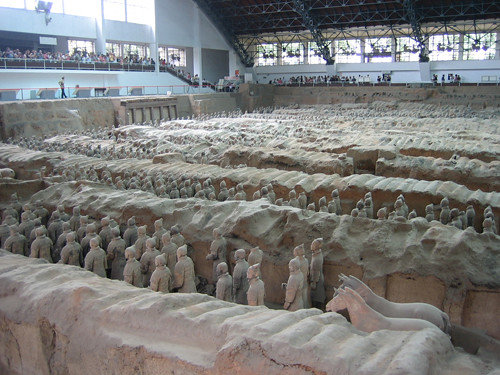
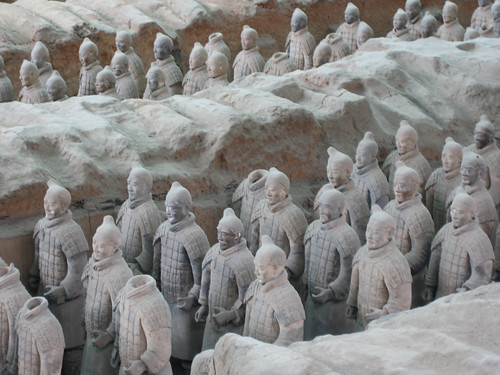
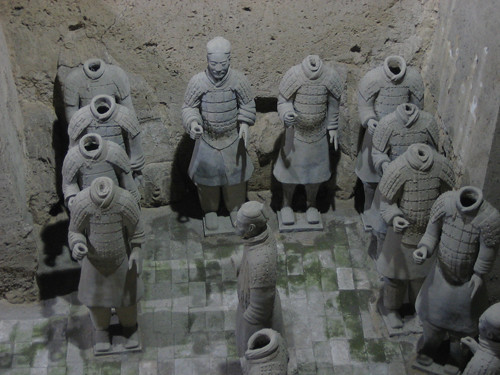
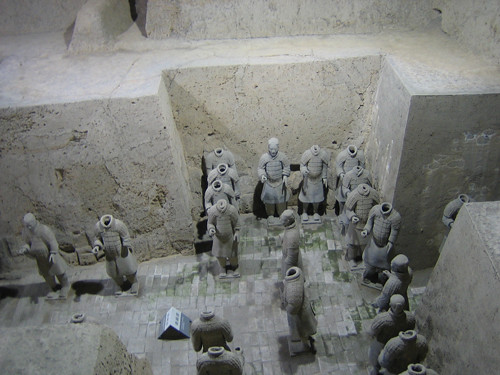
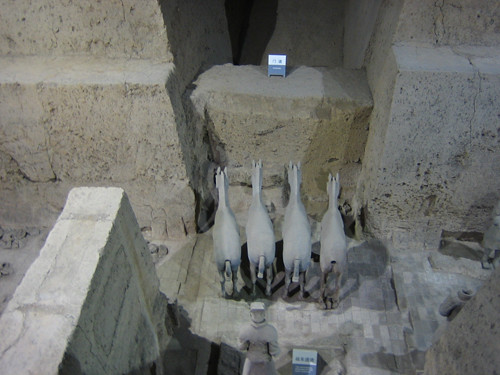
Imperial leader. Fearsome tyrant. Military genius. Avid anti-intellectual. Obsessive star-gazer. Enduring mystery. The First Emperor, Qin Shihuang (259-210 BCE) was all these things and more. His storied legacy is rich with enduring achievements, including the unification of China under centralized imperial rule, brilliant military systems and advanced engineering and assembly production. He is also reputed to have burned scores of books, buried scholars alive and achieved widespread domination through devastating bloodshed.Bear in mind that the excavation sites and the half-buried warriors, horses, and chariots in Xi'an are only a portion of the vast mausoleum site, whose full extent has not been fully mapped out. In 2007, I had the chance to visit the excavation site and those on display were truly astonishing, in their sheer numbers and the refinement and individuality of those warriors and horses, obviously modeled after real living creatures. They were also painted yet almost completely fainted with only traces of pigments remained, just like those ancient Greek marbles, and more satisfyingly beautiful to me. Below are sample pictures I took during that trip:
First unearthed in 1974, the underground burial complex of the First Emperor is a revelation for the ages, an astonishing discovery on par with Egypt’s mummies and elaborate tombs. Contemporary observers continue to be enthralled by his legacy, and it is through this ongoing interest that the First Emperor did indeed achieve immortality. This exhibition includes ten figures—a representative sample of the actual army, which is estimated to include more than 7,000 life-sized figures and over 10,000 weapons.
Despite that I have seen them in situ, I still plan to visit Asian Art Museum and for those who haven't seen them in Xi'an, I strongly encourage you to take the advantage of inspecting them up and close, more so than you could do in Xi'an.
The mausoleum in Xi'an was amazing yet it was topped a few days later in Xianyang, a smaller city nearby, in the same Shaanxi Province. There, I visited the mausoleum of an emperor from the next dynasty, Han, Emperor Jing of Han (188 BC – 141 BC).
Either because Han Dynasty was less prosperous due to long drawn-out wars, or its emperors were less megalomaniac, none of its emperors' tombs or mausoleum match the scale of the "First Emperor's". Even the underground guards were not really warriors and war horses, but court personnel and domesticated animals, and in a much reduced scales, about 1/3 or 1/4 of the real size, as seen in Emperor Jing's mausoleum in Xianyang. Emperor Jing of Han was an important figure in Chinese history. Wikipedia described his thus:
Emperor Jing of Han (188 BC – 141 BC) was an emperor of China in the Han Dynasty from 156 BC to 141 BC. His reign saw the limit and curtailment of power of feudal princes which resulted in the Rebellion of the Seven States in 154 BC. Emperor Jing managed to crush the revolt and princes were thereafter denied rights to appoint ministers for their fief. This move consolidated central power which paved the way for the glorious and long reign of his son Emperor Wu of Han.Once again, the excavated site was only a small portion of the whole burial ground. Even so, it was impressively huge, with numerous small doll figurines half-buried. Visitors were allowed to walk along transparent walkways and inspect those artifacts, as undisturbed as possible.
We were also able to see some of those figurines and animals in display cases with better lighting. Those doll figurines had earthenware torsos and their wooden arms had rotten away, made them rather creepy, and I praised them over the full-sized terracotta warriors for the exoticism emitted from these mutilated figurines below:
Related posts on Art · 文化 · Kunst:
- Last Chance to See Terracotta Warriors in San Francisco Asian Art Museum
- Weep for Ancient City Walls of Xi'an
- Ruins in Sanxingdui (Three-Star Mound) and Jinsha (Gold Sands), Sichuan, China
Sunday, March 17, 2013
Before and After - A Painting Framed
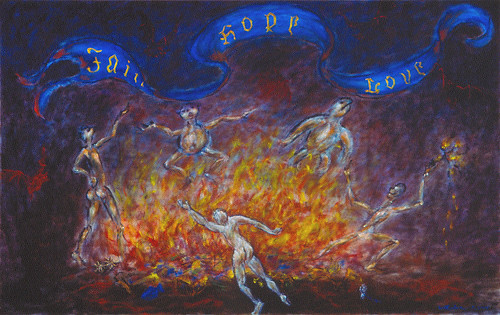
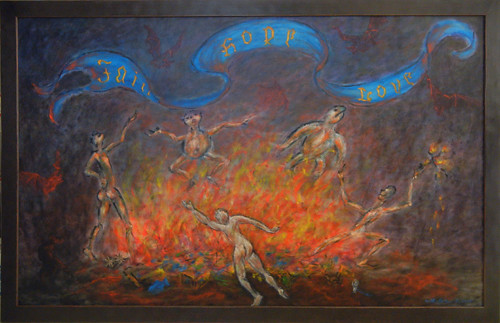
Once in a long while, I would be ready to fork out some money to have one of my paintings framed professionally. Framing a painting is no trivial matter - it requests no trivial amount of money, and it requests serious deliberation on choosing the right ones. A painting is like a person, whose look and impression can morph drastically with the clothes. Clothes can flatter or debase a person and a frame can do the same to a painting.
My philosophy regarding frames is to do no harm. The frames are to harmonize with the work but not to take the viewer's attention away from the piece, unless we want to hide some defects, imaginary or real, from the viewers. I generally stay away from too ornate and heavy frames, which often dwarf the relatively small pieces we produce in the modern days, for modest settings. Simple, in tune, and improve subtly.
Below is the painting I just took back from a framer. Though the snap shot of the framed work does not quite match, color wise, the professionally done photo, one can still see the effect of this set of frames:
Other Related posts on Art · 文化 · Kunst:
- New Presentations of My Yearly Artworks
- First Painting Completed in 2013
- Unexpected Successes of "Stringed White Dresses - An Installation"
- "White Dress" Series Continues - A New Drawing and a New Painting
- 2012 Recapitulation - Video Presentation of Paintings Completed in 2012
- Revolutionary Way to Shop for Clothes. What About Frames?
- Baby's New Clothes
My philosophy regarding frames is to do no harm. The frames are to harmonize with the work but not to take the viewer's attention away from the piece, unless we want to hide some defects, imaginary or real, from the viewers. I generally stay away from too ornate and heavy frames, which often dwarf the relatively small pieces we produce in the modern days, for modest settings. Simple, in tune, and improve subtly.
Below is the painting I just took back from a framer. Though the snap shot of the framed work does not quite match, color wise, the professionally done photo, one can still see the effect of this set of frames:
Other Related posts on Art · 文化 · Kunst:
- New Presentations of My Yearly Artworks
- First Painting Completed in 2013
- Unexpected Successes of "Stringed White Dresses - An Installation"
- "White Dress" Series Continues - A New Drawing and a New Painting
- 2012 Recapitulation - Video Presentation of Paintings Completed in 2012
- Revolutionary Way to Shop for Clothes. What About Frames?
- Baby's New Clothes
Thursday, March 14, 2013
Beautiful Spring Time
Though the evening chill still visits us time to time, it is definitely spring time in Berkeley, California now. I'm utterly enchanted by the blooms everywhere - yellow, white, pink and red, etc.
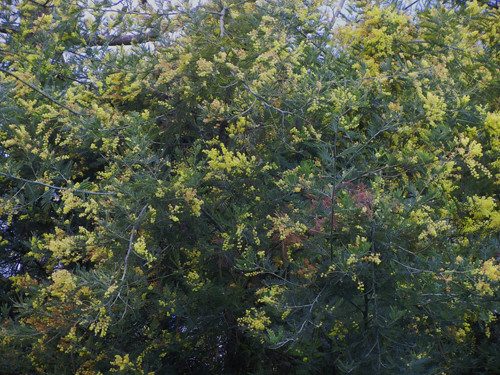
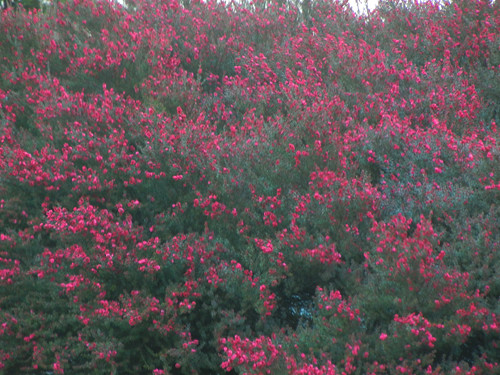
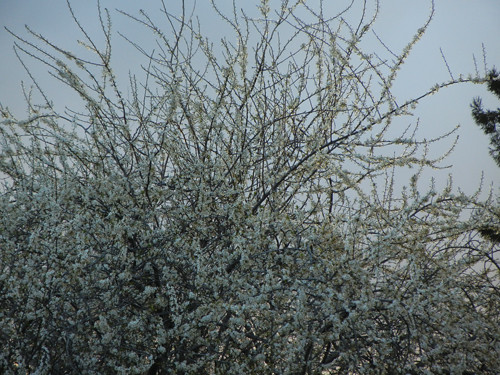
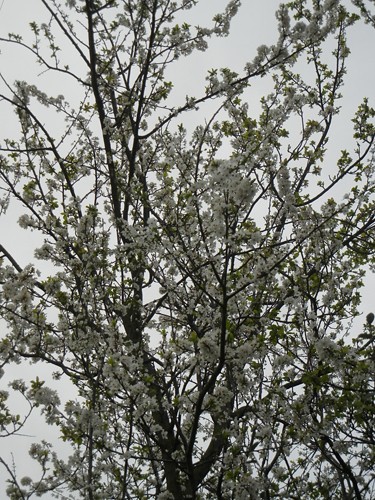
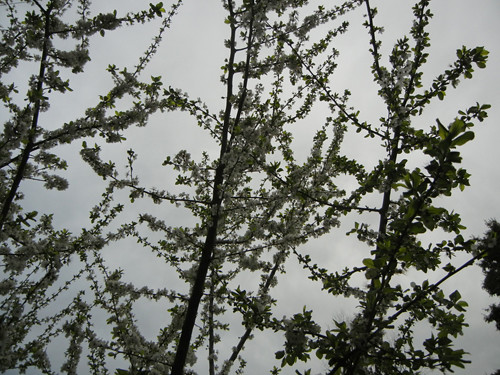
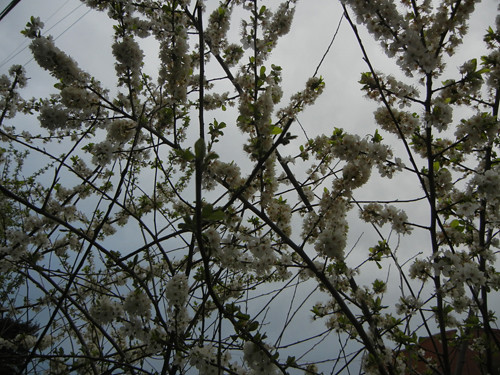
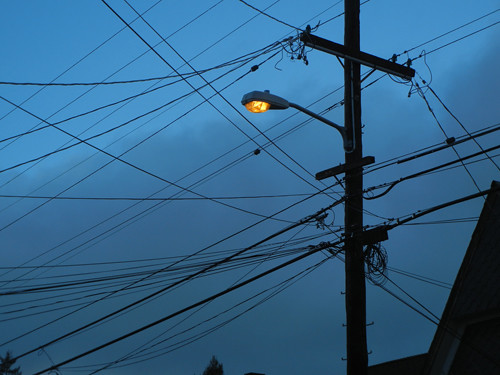
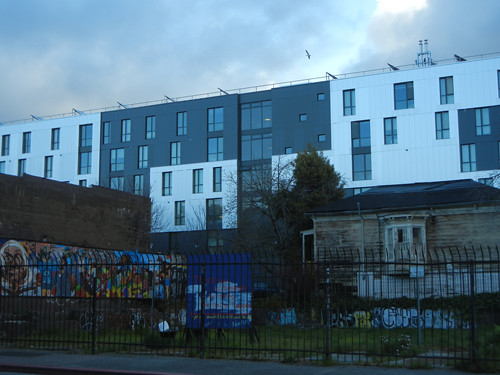
The few white blooms above were shot in a somewhat foggy day but even so, the sense of spring was palpable. Of course, even in spring time, there will be storms and storms and clouds can be beautiful, even in the forbidding urban setting like the two snap shots below:
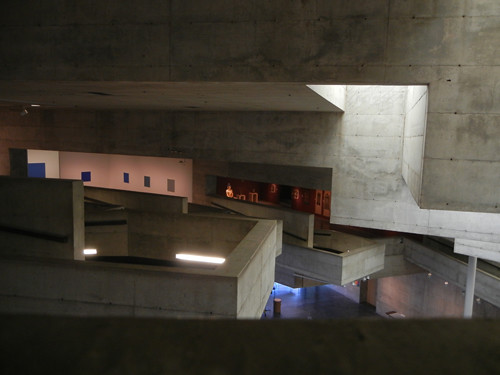
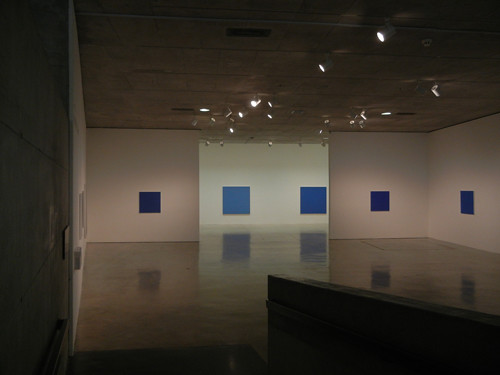
Since I'm back to the urban landscape from nature, I'll include two more pictures from the Berkeley Art Museum, though industrial looking, the soft lighting echoed the spring outside the concrete walls.
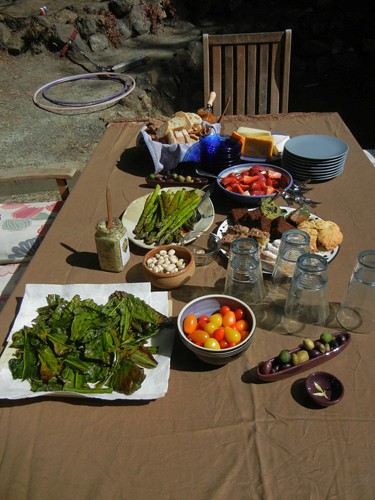
Finally, below picture was a picnic I had last weekend, with my friends from my book group. Marvelous luncheon.
The few white blooms above were shot in a somewhat foggy day but even so, the sense of spring was palpable. Of course, even in spring time, there will be storms and storms and clouds can be beautiful, even in the forbidding urban setting like the two snap shots below:
Since I'm back to the urban landscape from nature, I'll include two more pictures from the Berkeley Art Museum, though industrial looking, the soft lighting echoed the spring outside the concrete walls.
Finally, below picture was a picnic I had last weekend, with my friends from my book group. Marvelous luncheon.
Tuesday, March 12, 2013
Video Presentation of Oil Painting "Black Woods"
Time to time, I feel the impulse to focus on a particular painting, to tell my viewers what was the story behind, such as "Progression", "Dissonance", "Liberation Road" and "The Song of Orpheus", all of them I had made video presentations to give views of these works from multiple angles.
"Black Woods" video below, however, demonstrated the progress of this semi-representational and I hope that seeing the process of layers of upon applied upon layers prove interesting, at least not boring for my viewers.
Video Presentation of Black Woods (2010):
>> Video presentations of paintings and drawings, Part XXIX: 2003 Recapitulations - Video Presentation of Paintings
<< Video presentations of paintings and drawings, Part XXVII: 2004-05 Recapitulations - Video Presentation of Paintings
List of Video Presentation of My Artworks
"Black Woods" video below, however, demonstrated the progress of this semi-representational and I hope that seeing the process of layers of upon applied upon layers prove interesting, at least not boring for my viewers.
Video Presentation of Black Woods (2010):
>> Video presentations of paintings and drawings, Part XXIX: 2003 Recapitulations - Video Presentation of Paintings
<< Video presentations of paintings and drawings, Part XXVII: 2004-05 Recapitulations - Video Presentation of Paintings
List of Video Presentation of My Artworks
Subscribe to:
Posts (Atom)

 Posts
Posts


