Showing posts with label Concert. Show all posts

Wednesday, November 29, 2017

Classical Concert in Shenyang, China - Ying String Quartet, Eastman School of Music


DSCN3331 - Shengjing Grand Theatre, Shenyang

DSCN1148 - Shengjing Grand Theatre, Shenyang

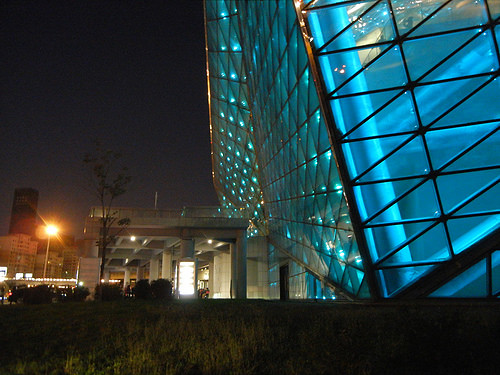
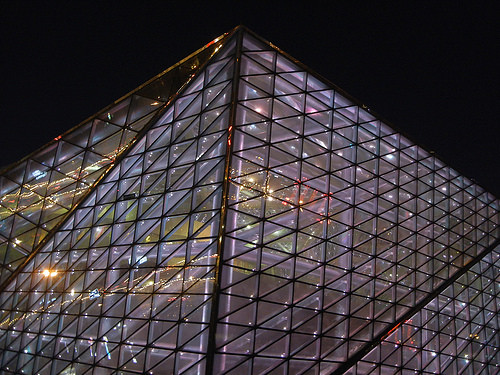
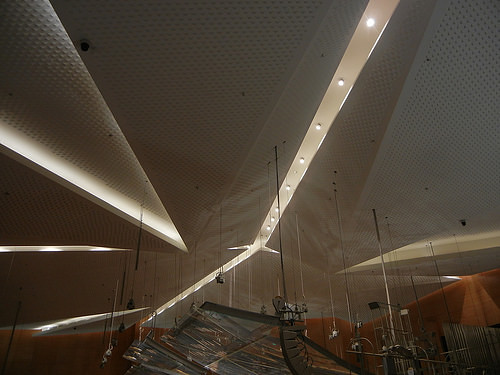
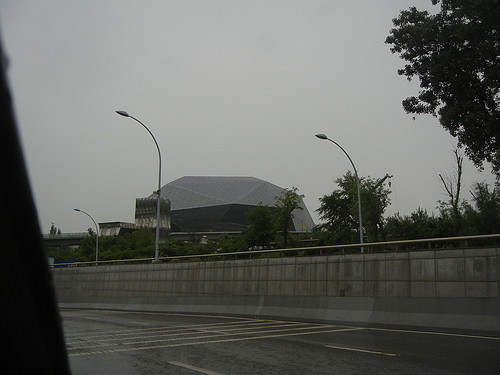
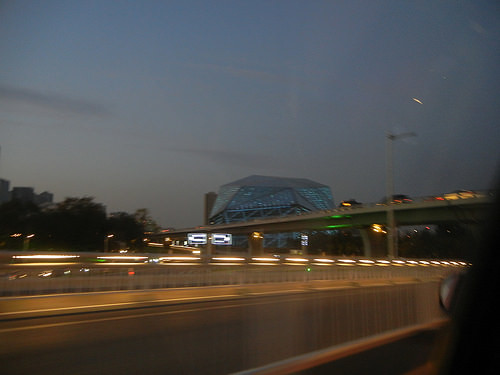
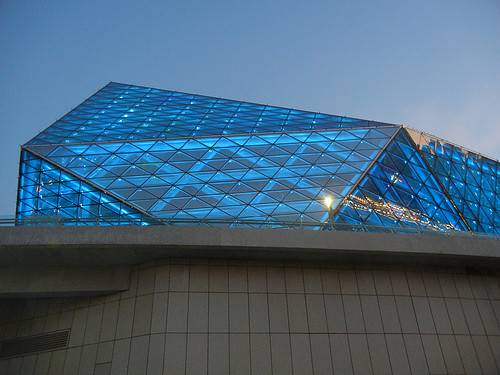
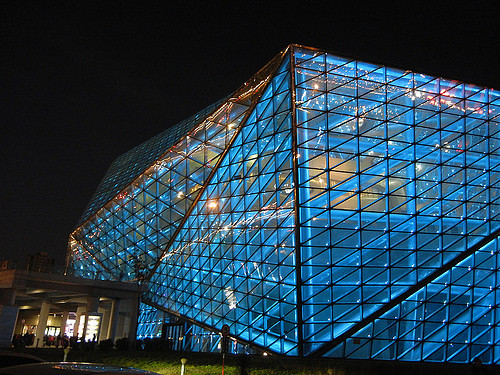
Three years ago, my hometown Shenyang, Manchurian city in northeastern China, opened a new complex for performing arts - Shengjing Grand Theatre, which consisted of an 1800-seat opera house, a concert hall, and a multiple-functional playhouse. During day time, the diamond shaped dark complex looked like a squatting tortoise; when the night arrived, the many lights dotting its transparent surfaces gave it a look of a giant gemstone, though the constant shifting of the colors of those lights was rather cheeky.
DSCN1151 - Shengjing Grand Theatre, Shenyang

DSCN1161 - Shengjing Grand Theatre, Shenyang, China

DSCN1169 - Shengjing Grand Theatre, Shenyang

DSCN1159 - Shengjing Grand Theatre, Shenyang

In October 2017, I had an opportunity to attend a chamber music concert in the concert hall situated on the 7th floor of the complex.

DSCN1211 - Shengjing Grand Theatre, Shenyang

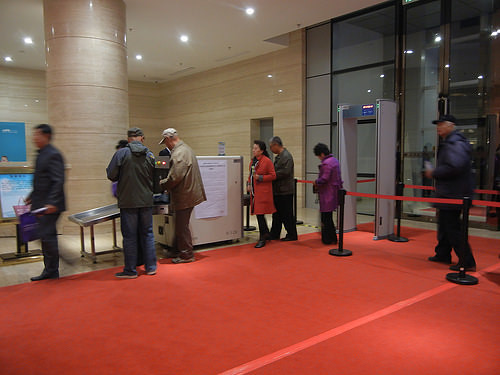
Once having entered the complex, audience members had to go through security check — apparently the common practice in China now, in most public places, such as theaters, train terminals and subway stations.
DSCN1171 - Shengjing Grand Theatre, Shenyang

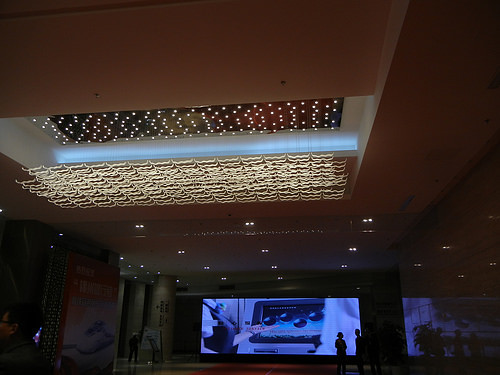
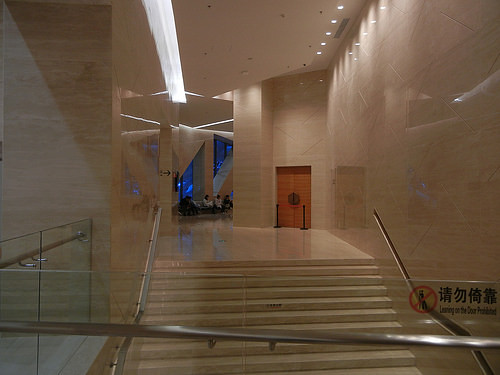
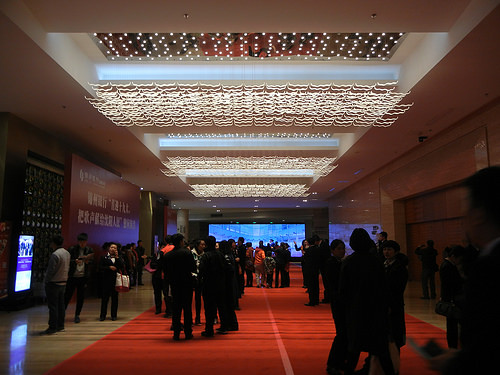
The front lobby was simple and traditional — welcoming without overwhelming.
DSCN1209 - Shengjing Grand Theatre, Shenyang

DSCN1173 - Shengjing Grand Theatre, Shenyang

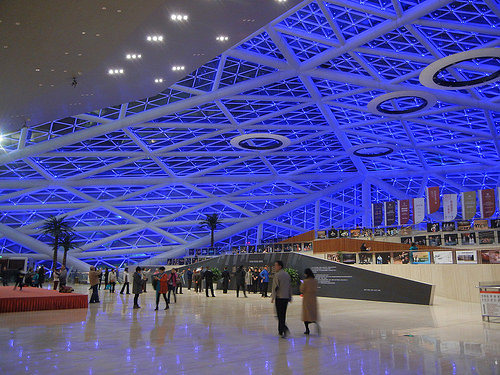
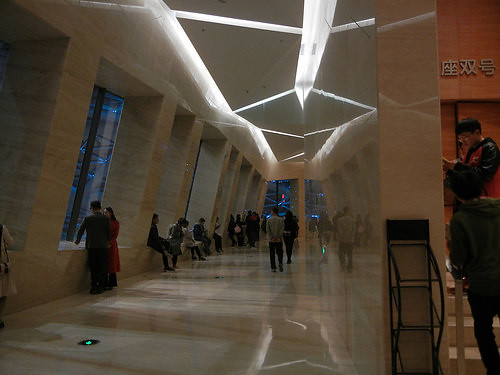
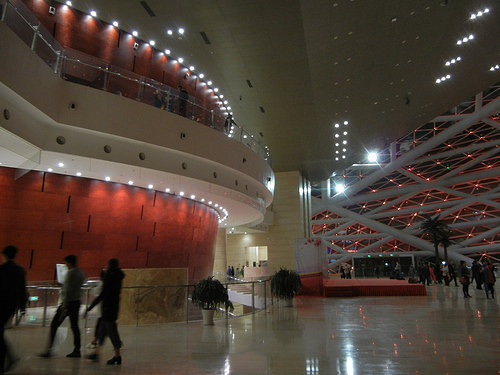
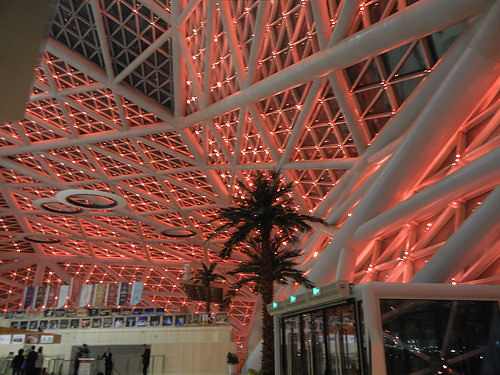
On the second floor, the odd-shaped and vast lobby, sandwiched between the curved wall of the opera house and the trusst structure of the transparent outer shell, was pleasantly airy and intriguing, enticing theater goers to gawk and socialize.
DSCN1188 - Shengjing Grand Theatre, Shenyang

DSCN1182 - Shengjing Grand Theatre, Shenyang

DSCN1191 - Shengjing Grand Theatre, Shenyang

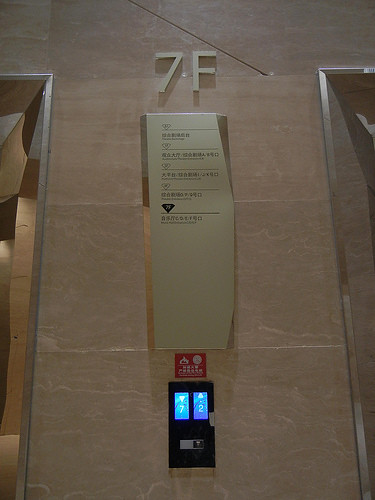
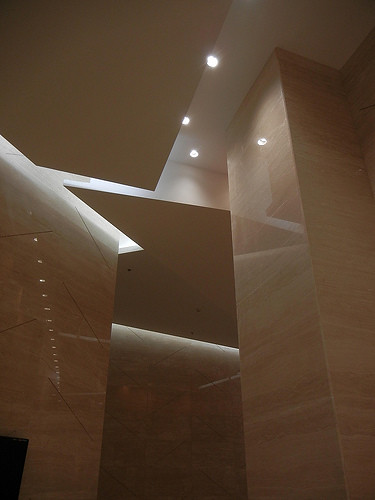
The 7th Floor was very subdued and had an atmosphere of modern day church, preparing audience for an experience of near spirituality.
DSCN1205 - Shengjing Grand Theatre, Shenyang DSCN1217 - Shengjing Grand Theatre, Shenyang

DSCN1219 - Shengjing Grand Theatre, Shenyang

DSCN1196 - Shengjing Grand Theatre, Shenyang

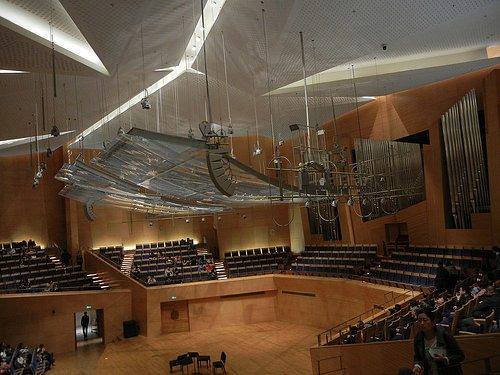
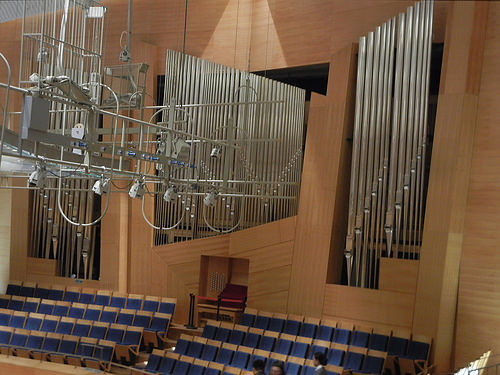
The arena-styled Concert Hall had only one floor; apparently, the designer and management were convinced that more seats were not needed for this industrial city, which could boast only rather modest history of classical music.
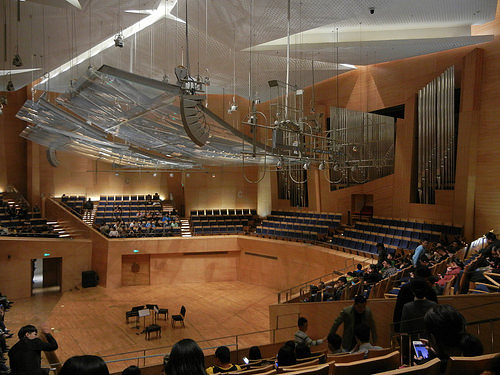
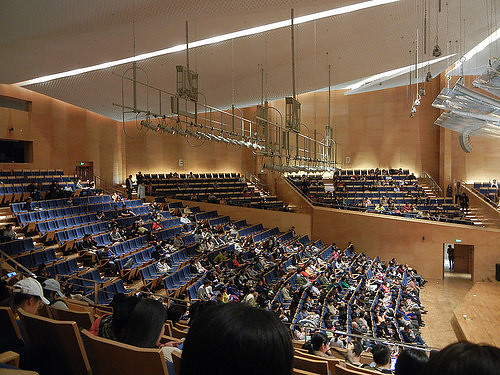
DSCN1235 - Concert Hall, Shengjing Grand Theatre, Shenyang, China

DSCN1236 - Concert Hall, Shengjing Grand Theatre, Shenyang, China

DSCN1230 - Shengjing Grand Theatre, Shenyang

DSCN1231 - Shengjing Grand Theatre, Shenyang

DSCN1228 - Shengjing Grand Theatre, Shenyang

The concert I attended was performed by Ying String Quartet from the excellent conservatory in the USA — Eastman School of Music, University of Rochester. All the performers were faculty members from the music school and each taught the instruments they performed.

The theater provided no information as what the program was, neither online, nor inside the theater, and the ushers were of no help either, though they did know the length of the performance.
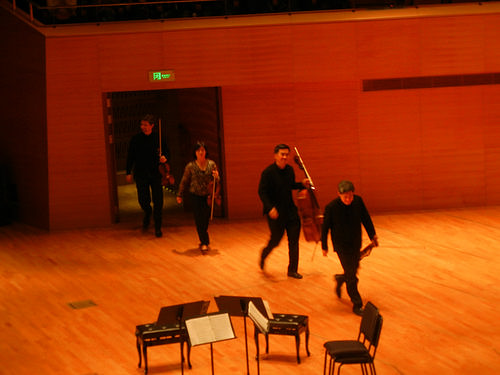
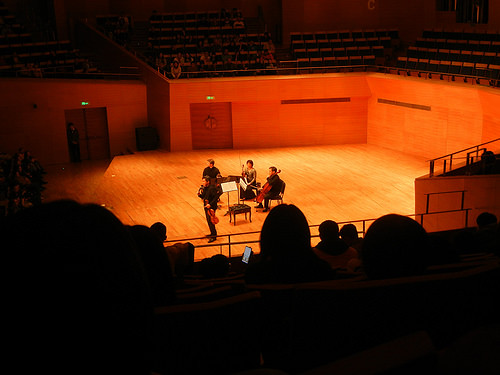
DSCN1237 - Shengjing Grand Theatre, Shenyang

DSCN1234 - Shengjing Grand Theatre, Shenyang

Once on stage, the viola player introduced themselves and the program - string quartets by Borodin, Ravel, and Dvořák. The speaker spoke only in English and no translation was provided; though many audience members seemed understood well and responded at the right timing. Not everyone understood English for sure, including my parents, who was left in the dark, but applauded politely when cued.

The acoustic of the hall proved excellent, with good combination of clarity, warmth, and immediacy. The hall was barely half-full and many people played their mobile phone, during the performance, taking photos or videos of the performance, sometimes even selfies, or just chatting with friends.

For the encore, gratefully, Tchaikovsky String Quartet No. 1 Op. 11 - II. Andante cantabile movement was performed, instead of gratuitous local flavored offerings, and cemented a night of solid music making.


Related posts on Art · 文化 · Kunst
- Festive San Francisco City Hall and Opera House
- Lunar New Year Time in Shenyang, China
- San Francisco Opera's New "Werther"
Britten's War Requiem at San Francisco Symphony 
- Nederlands Dans Theater in Berkeley
- Walt Disney Concert Hall Tour
- Theater Experiences in Wien (Vienna)
- Christopher Wheeldon's Brilliant Cinderella at San Francisco Ballet
- Three-Course Cultural Feast - Tetzlaff, Amour and Nijinsky
- High Romanticism - German Tenor Jonas Kaufmann's Recital in Berkeley
- Angelic Voice - Philippe Jaroussky at Hertz Hall, UC Berkeley
- Operas in Concert Hall
- Part 1, Das Rheingold - Premiere of Wagner's Ring Cycle at San Francisco Opera

Tuesday, December 24, 2013

Partial Messiah and 12 Celli Concert in Hertz Hall, UC Berkeley


DSCN6874 _ Ornate Organ, Hertz Hall, UC Berkeley
Ornate Organ, Hertz Hall, UC Berkeley

I often attended Noon Concert Series at Hertz Hall, University of California, Berkeley, and near the end of the semester, in December, I was able to attend two outstanding concerts - Messiah (Händel), Part I out of III plus the Chorus: Hallelujah, and a concert by the group of 12 cellists from the UC Berkeley Symphony, named 12 Celli.

That concert was my first attendance of a live performance of Messiah (HWV 56), one of the most frequently performed choral works in Western music, by the great German born composer Georg Friedrich Händel.  The University chorus and chamber chorus and the UC Symphony Orchestra, performed wonderfully and at the eve of Christmas, it is fitting for me to post some images taken from before the performance and during the curtain calls at that concert:

DSCN7524 _ Messiah, Part 1, Hertz Hall, UC Berkeley, 4 December 2013

DSCN7525 _ Messiah, Part 1, Hertz Hall, UC Berkeley, 4 December 2013

DSCN7526 _ Messiah, Part 1, Hertz Hall, UC Berkeley, 4 December 2013

DSCN7528 _ Messiah, Part 1, Hertz Hall, UC Berkeley, 4 December 2013

DSCN7529 _ Messiah, Part 1, Hertz Hall, UC Berkeley, 4 December 2013

DSCN7538 _ Messiah, Part 1, Hertz Hall, UC Berkeley, 4 December 2013

DSCN7535 _ Messiah, Part 1, Hertz Hall, UC Berkeley, 4 December 2013

DSCN7532 _ Messiah, Part 1, Hertz Hall, UC Berkeley, 4 December 2013

DSCN7533 _ Messiah, Part 1, Hertz Hall, UC Berkeley, 4 December 2013

~~~~~~~~~~~~~

The 12 Celli concert featured twelve young cellists playing three modern pieces and one piece dated 1920.  The 1920 piece, for 12 cellist, had the most conventional cello sound but to me least interesting; while the three pieces composed from 2010 through 2012 for performers ranging from six to eight, created sound sphere beyond the familiar mellow and comforting timbre of cello and wonderfully diverse, defying my preconception of what the sounds a dozen of same instruments could make.

The performance was very captivating and I appreciated what the sounds cello or celli could produce much more. Below are some snap shots of those young musicians at their curtain calls:

DSCN0099 _ 12 Celli Concert, Hertz Hall, UC Berkeley, 11 December 2013

DSCN0096 _ 12 Celli Concert, Hertz Hall, UC Berkeley, 11 December 2013

DSCN0094 _ 12 Celli Concert, Hertz Hall, UC Berkeley, 11 December 2013


Related posts on Art · 文化 · Kunst
- California Memorial Stadium of UC Berkeley
- Foggy and Sunny Day in Berkeley
- One Fine Day in Berkeley
- Spring Festival (Lunar New Year) Time in Berkeley
- New East Span of San Francisco Bay Bridge
- Natural Beauty in Berkeley

Saturday, June 16, 2012

Operas in Concert Hall

I just booked ticket to see a semi-staged concert performance of Béla Bartók's Duke Bluebeard’s Castle at San Francisco Symphony (SFS), and Liszt's Piano Concerto No. 1, and am anticipating an exciting night in the symphony hall.  Below is a video clip featured on SFS's website, documenting the preparation for this production.


Opera, as an art genre, often boasts being the form has it all - music, drama, costume, scenery, and dance, etc.  However, an over-produced, stuffy production can suffocate drama and music, the essence of operas. 

Sometimes, symphonic orchestras would stage operas with reduced scenery, costume and staging, due to the constraint nature of the symphonic halls and often, such particular constraints could force the singers to rely on their body languages, facial expressions, and above all, their voices to convey meanings, and force the viewer/listener to concentrate on music instead of scenery.  I had the good fortune of attended several semi-staged opera productions and one concert performance (without any scenery, prop or costume appropriate to the characters) - Wagner's Der fliegende Holländer (The Flying Dutchman), Stravinsky's Oedipus Rex, The Nightingale, Beethoven's Fidelio, and Zemlinsky's Eine florentinische Tragödie (A Florentine Tragedy), presented by the SFS and nearly all of them left an indelible impressions on me. 

All of them except for Zemlinsky opera (in concert form), were staged with great economy and intensity and the confinement of the smaller stage often heightened the drama.  It helped to have great conductors on podium - all those performances were conducted by SFS's music director Michael Tilson Thomas, with the exception of the Florentine Tragodie, which was conducted by another wonderful conductor James Conlon, current music director at Los Angeles Opera.  It also helped that the orchestra was first rate one.  I was equally grateful for the concert performance of Eine florentinische Tragödie, simply because it is so rarely performed and a chance to hear it alive was something to be happy about.  Without the proper costume, the singers still were able to interact and created credible human drama and dramatic situations.  The tiny unsatisfactory memory was from Fidelio, where awkward narratives replaced the original spoken dialogues, and this marred the otherwise excellent music performance.

All said, I do enjoy marvelous productions which fully take advantage of opera house stage machinery, when done for dramatic purposes, and do not compete with or overwhelm music and drama.  I have enjoyed many wonderful productions at San Francisco Opera (SFO), where the stage is more equipped to present technically challenging productions, such as The Cunning Little Vixen, Eugene Onegin, Billy Budd, Così fan tutte, Werther, Tannhäuser, Il Barbiere di Siviglia (The Barber of Serville), and Věc Makropulos (The Makropulos Case).

Of course, the operas themselves had to be good.  Sometimes, an hyper-produced production was really a desperate attempt to salvage a hopelessly inert and lackluster work, or even a musically satisfying but dramatically static ones.

Speaking of operas with some dramatically weakness, I realized that I have forgotten that I did see one more concert opera at SFS, A Flowering Tree by John Adams, conducted by the composer himself.  The opera had gorgeous music but the story was narrated by a storyteller, told instead of shown, which somewhat took the wind out of the dramatic sail. 

Therefore, an excellent all-around work must be the foundation of a great night at theater, and Duke Bluebeard’s Castle is a true 20th century masterpiece and I must thank SFS for its adventurous operative effort.

San Francisco Opera Ring Cycle  2011 Götterdämmerung _  3715
San Francisco Opera House and the Symphony Hall

Sunday, October 30, 2011

Angelic Voice - Philippe Jaroussky at Hertz Hall, UC Berkeley

Philippe Jaroussky,
2011 Misteria Paschalia Festival,
Kraków Philharmonic
French countertenor Philippe Jaroussky joined Apollo's Fire, a Baroque orchestra founded in 1992 and based in Cleveland, for a concert of music by Handel and Vivaldi this afternoon as a Cal Performances presentation at Hertz Hall, University of California, Berkeley, in a journey through the gamut of human emotions, as experienced through the roles created for the great castrato singers of the 18th century.

The program included: Handel: Chaconne from Terpsichore (Il pastor fido) • Arias from Oreste, Imeneo, Il Parnasso in Festa and Ariodante • Handel/arr. Sorrell: Prelude in A major for Solo Harpsichord • Vivaldi: Violin Concerto in E-flat major, Op. 8, No. 5, "Tempesta di Mare" • Arias from Catone in Utica, Giustino and Tito Manlio • Vivaldi/arr. Sorrell: Concerto Grosso "La Follia" ("Madness") • Allegro from Concerto Grosso in D major.

Cal Performances is often praised for presenting local debut performances by top talents from all over the world, especially the recital series of classical music, such as mezzo-soprano Cecilia Bartoli, and tenor Jonas Kaufmann. Last year, I attend the more heroic voiced Kaufmann recital at the larger Zellerbach Hall, the more ethereal voiced Jaroussky graced us at the more intimate Hertz Hall. 

Jaroussky had been singing in the Baroque repertoire for a long time and has long been praised highly for his angelic voice and his keen musicality.  His performance in Hertz Hall confirmed such reputation and I state again that I had never heard a sweeter voice before.

More crucially, unlike the reputation associated with the voice type of countertenor, Jaroussky had good amount of coloration at his disposal therefore his sing was never monotonous or glassy.  His agile voice was very impressive in the Handel and Vivaldi's pyrotechnics but he was also able to invest the music with true emotions, firm and focused tone, and wonderful flexibilities.  He was also able to connect with audience in an immediate way and any doubts due to the unfamiliarity with Baroque era dissipated as soon as he let his voice ripple through the hall.

All of his offerings - seven announced arias and three encores (The three encores were an aria by Porpora, "Venti, turbini" from Händel's Rinaldo, and "Ombra mai fu" from Händel's Serse) were of highest quality but I enjoyed the most was the slow and soulful music such as the Handel recitative and aria Ho perso il caro ben for Orfeo from Il Parnasso in Festa, mourning the death of his beloved Euridice and the romance encore.  He simply convinced me that Orfeo should sound just like him, nuance after nuance.

He was full of grace, not only in his bearings but in his willingness to share the stage.  The Apollo's Fire treated the delighted audience several music in various emotions and was greeted just as enthusiastically. 

Philippe Jaroussky at Hertz Hall, 30 October 2011 _ 0615

Pity that San Francisco Opera never saw fit to engage starts like Bartoli, Kaufmann and Jaroussky.  Would it be nice to have a Vivaldi opera staged for the talents like Jaroussky and Bartol?


Philippe Jaroussky - Opium (Mélodies Francaises) - EMI Classics


Philippe Jaroussky - Carestini: Story of a Castrato - EMI Classics

Saturday, July 4, 2009

A Memorable Chamber Music Concert

A Memorable Chamber Music ConcertLast night, in Chamber Arts House in Berkeley, I attended a chamber music concert given by Quartette d’Accord, which consisted 14 to 15 years old Lukas Whaley-Mayda (cello), Alia Welsh (violin/viola), June Park (violin/viola) and Nicolas Locatelli (violin).

The program included movements from String Quartets by J. Haydn, A. Dvorak, D. Shostakovich, C. Debussy and I. Andraisov (Armenian). The concert was marked by the deep commitment of these talented young musicians and extreme emotional intensity. The charismatic adviser of the group, Erika Miranda, explained the reason behind the switching seat amongst violinists and violists. By truly mastering different parts of the music, the young musicians can truly understand the quartet music as a whole piece. All the pieces they performed were of great interests, particularly those by Shostakovich and Debussy. Though only the first two movements of the No. 8 String Quartet by Shostakovich were performed, it was almost too much to bear. The very first chord sounded to me like the rending of a piece of enormous fabric, accompanied by plunging devastation. The weeping and heart rending persisted through out the two brief movements, brought me to the edge of the seat and the brink of weeping myself. It was stunning.

The piece by Debussy was utterly different. It was like montages of slowly blooming flowering here and there, scintillating and hard to pin-down.

Once I returned home, I played Fitzwilliam String Quartet recording of Shostakovich’s No. 8 in its entirety. As if to proof the point I made on yesterday’s blog entry Digital Rembrandt, listening to must recordings would never be able to re-create the spiritual, emotional and even physical reactions as one listens to music in concert halls and opera houses, the recording by the mature musicians didn’t hit me with the same ferocity and emotional charge as the music being played live a few feet away from me. Music played live penetrates into one’s burning vein and beats with one’s heart and soul.

Bravi, Lukas, Alia, June and Nicholas.