Showing posts with label Literature. Show all posts

Thursday, April 13, 2017

My Featured Painting "Arabesque"

The medium or media we choose to convey our deepest feelings and expressions, etc., however competent, can never fully convey the whole complicated concepts our brain formed mysteriously, thus the endless striving to meet the challenge, to do a better job still in the next given opportunity, thus the hunger to develop and grow as an artist, be it visual, musical compositional or a writing kind.

It also occurs often enough that one form of artistic creation, spurs on the re-interpretation with another media of either the whole story or a fleeting moment, not necessarily to prove a better job can be done; rather, to add another dimension to the engaging concept while hoping to complement the original.
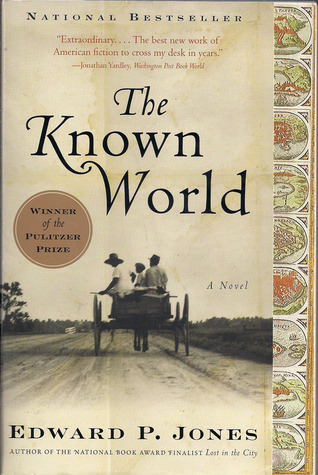
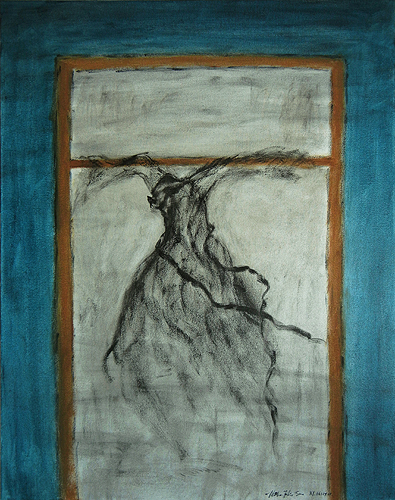
I have been stimulated, on multiple occasions, by novels I read, sometimes the whole atmosphere of the book, such as Blindness by José Saramago, or sometimes, just a specific passage which may not even be pivotal in the whole scheme, such as my newly completed oil painting, Arabesque, inspired by a passage from The Known World by Edward P. Jones: "... looked over at the open chiffarobe [sic], whose door was broken and so would never close properly, looked at the black dress hanging there. It seemed to have its own life, so much life that it could have come down and walked over and placed itself over her body. Fastened itself."

Arabesque / 阿拉伯風 / Arabeske, Oil on Canvas, 28" x 22", Completed in 2013
Arabesque / 阿拉伯風 / Arabeske
Oil on Canvas
28" x 22"
Completed in 2013

I actually was quite stirred by the passage and the image just flooded into my mind. Incidentally, this painting also fell into a painting scheme of mine - I have been working on a series of "White Dresses", which I saw as both liberated and restricted, at once individual and impersonal, simultaneously beautiful and sinister. Now it started the companion series "Black Dress".


9 Paintings and 3 Installations Completed in 2013 (part 1 of 2)


Originally posted on matthewfelixsun.com

Other Related posts on Art · 文化 · Kunst:
- My Featured Painting "Cascades"
- My Featured Painting "Origin"
- Featured Painting - Remembrance
- My Featured Painting "Apprehend"
- Featured Painting “Mirage” – A World of Ambiguity
- Featured Painting – “Forest Within” – When Reality Met Illusion
- Featured Painting: The March of Time
- My Featured Painting "Minotaur" 

Thursday, September 24, 2015

Featured Painting "Siege"

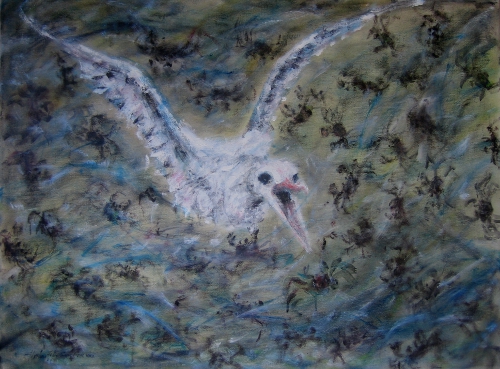
My painting, "Siege", currently on view at Berkeley's Arts Passage, in an exhibition titled "Today's Artists Interact with Major Art Movements from the Renaissance to the Present", is an almost terrifying work, depicting a wounded seabird being swamped by relentless, aggressive crabs. The painting was inspired by literature, which has played important role in my art making process, as documented in this guest blog on Superstition Review: "Literature Inspired Paintings".

Siege / 圍攻 / Belagerung  
Siege
Oil on Canvas
18" x 24"
Completed in 2010

While reading the novel Europe Central by William T. Vollman, I responded strongly to a passage (page 497): "Have you ever seen an injured bird at the seashore? Here come crabs from nowhere - they wait under the sand - and ring it round, cautiously at first, before you know it, the first crab has leapt onto the broken wing and pinched off a morsel. The bird struggles, but here come other crabs in a rush."

That passage, to me, summarized the helplessness of the Europe during World War II, which, viewed through historical magnifier, constitutes the distilled essence of human suffering. The image conjured up by Vollman was translated onto canvas by my paint brush has made fairly strong impression on viewers.

Originally posted on matthewfelixsun.com

Other Related posts on Art · 文化 · Kunst:
- Featured Painting "Progression"
- Featured Painting "Liberation Road"
- My Featured Work - Portrait Painting "Grandma"
- Featured Oil Painting “Father and Son”
- Featured Oil Painting "The Triumph of Saint George"
- Video Presentation of Oil Painting "Progression"

Wednesday, April 2, 2014

My Favorite Artworks at Maison de Victor Hugo, Paris

After visiting Balzac's former residence, a trip to Maison de Victor Hugo, Paris was in order and there, in the crazily decorated old flat in a fashionable building with a lovely courtyard in Le Marais district, I was amused by some quite idiosyncratic decorations and odd collections. 

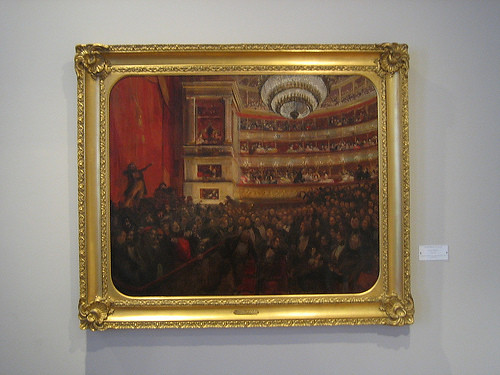
Amongst such clutters, several sculptures, paintings and prints stood out and my two favorites there were a bust of Hugo and a painting depicting the battle between classists and romanticists during the performance of his play, Hernani.

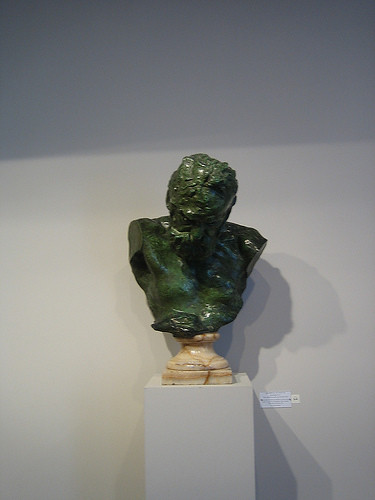
The Victor Hugo, buste héroïque was once again by the great French sculptor Auguste Rodin (1840-1917).  This bronze sculpture presented the triangle-shaped bust of a lean and brawny Hugo, without clothes and stripped of his arms, precariously perched on a small marble stand.  Head bent down, he was lost in his own thoughts, not dissimilar to Le Penseur, the most celebrated work by Rodin.

IMG_8803 _ Victor Hugo, buste héroïque, Auguste Rodin, 1902 (2), 1908, Bronze, Maison de Victor Hugo, Paris, 2008
Victor Hugo, buste héroïque, Auguste Rodin (1840-1917), 83 x 56 x 65 cm, 1902 (2), 1908, Bronze (fonte Alexis Rudier)

The painting, Performance of 'Hernani' by Victor Hugo in 1830, aka, The Battle of Hernani, by Paul Albert Besnard was quite virtuosic in depicting an animated crowd scene; if its artistic value was not the most accomplished, it did command viewers' attention and was hard to forget, and that made it a wonderful work. 

Hernani was Hugo's romantic play, during its premiere, in anticipating attacked from the classists, Hugo enlisted the support of fellow romanticists to combat the opposition and indeed the play had caused fights amongst the audience.  It was one of the watershed moment of the course of artistic development.  The painting captured the maniac atmosphere of that significant moment wonderfully. 

IMG_8800 _ Performance of 'Hernani' by Victor Hugo in 1830, Paul Albert Besnard, Maison de Victor Hugo, Paris, 2008
Performance of 'Hernani' by Victor Hugo in 1830, Paul Albert Besnard


My Favorite Museum Collection Series
>> My Favorite Museum Collection Series 73: My Favorite Artworks at Musée National Eugène Delacroix, Paris

<< My Favorite Museum Collection Series 71: My Favorite Artworks in La maison de Balzac, Paris

List of My Favorite Artworks in the Museums I've Visited


Other Related posts on Art · 文化 · Kunst:
- My Favorite Paintings at Musée Marmottan Monet
- My Favorite Sculptures at Musée Rodin, Paris
- Revisiting Norton Simon Museum in Pasadena
- My Favorite Paintings from Musée Picasso, Paris
- The Museum of Modern Art, New York City
- My Favorite Sculptures at Cimetière du Père-Lachaise, Paris
- Fifteen Authors Influenced Me Most and Watching Shakespeare in China
- Swiss Author and Dramatist Friedrich Dürrenmatt
- Molotov's Magic Lantern: A Journey In Russian Histoy by Rachel Polonsky and Some Journeys of My Own
- Review of "As Above, So Below" by Rudy Von B. Rucker

Saturday, March 29, 2014

My Favorite Artworks in La maison de Balzac, Paris

Honoré de Balzac was the first French author I encountered via his immortal Le Père Goriot, when I was still in elementary school, therefore I had a great affection for this great novelist and societal historian.

In 2008, when I returned to Paris, I made my way to his former residence, La maison de Balzac, in the western edge of the city, near Musée Marmottan Monet and Jardins du Ranelag in its vicinity. Balzac rented the top floor of that rather modest house, from 1840-1847 under his housekeeper's name (Mr. de Breugnol), evading his creditors from the city.

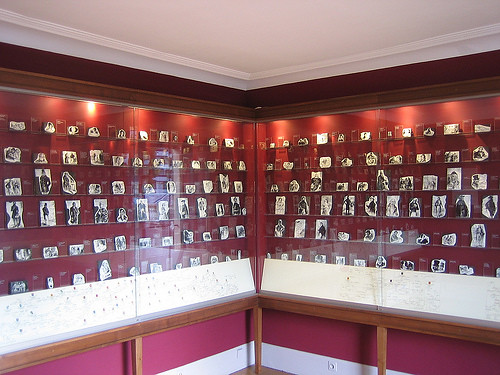
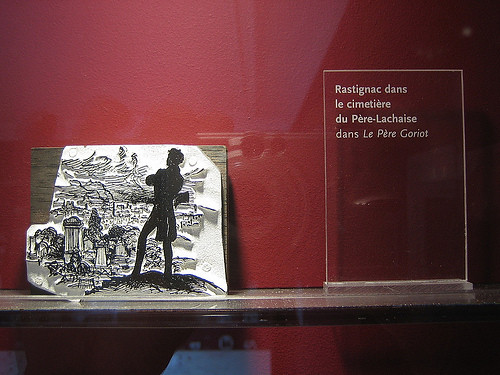
I loved Balzac's keen and cutting observation of the colorful characters populated the brutal society in Paris and provinces, and was delighted to see a roomful print blocks of main characters from his enormous, though unfortunately unfinished, La Comédie humaine.  Amongst those characters, my favorite had always been Eugène de Rastignac, a charming and innocent lad from province to a roguish and cynic though not without redeeming qualities, featured in several of his novels in this series.

Print blocks of characters from La Comédie humaine by Honoré Balzac, Le maison de Balzac, Paris, 2008
Print blocks of characters from La Comédie humaine by Honoré Balzac

In the block below, Rastignac, after having buried the self-sacrificing Père Goriot, swore to fight with the corrupted city and its high society, before he jumped into the battle headlong, by joining his mistress, the younger daughter of Père Goriot, Delphine, Baroness de Nucingen.  It was the moment of truth and resolution, a moment of leaping from innocence to corruption.  The image was an utterly bleak and most biting assessment of the glittering Paris and its dazzling society.

IMG_8879 _ Eugène Rastignac dans le cimetière du Père-Lachaise dans Le Père Goriot, a main character from La Comédie humaine by Honoré Balzac, Le maison de Balzac, Paris, 2008
Eugène de Rastignac dans le cimetière du Père-Lachaise dans Le Père Goriot

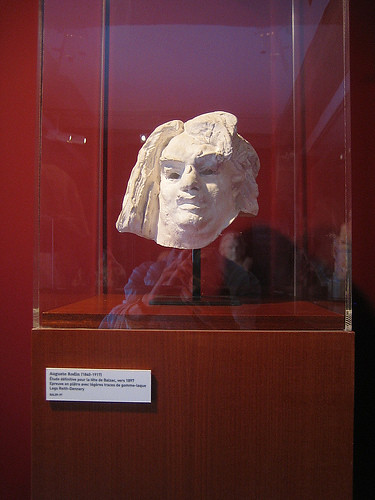
My second favorite artwork there was a definitive study of a head sculpture of the novelist by Auguste Rodin, made around 1897 - Étude définitive pour la tête de Balzac.  Behind exuberant air of the novelist, Rodin captured his sharp gaze and presented him as simultaneously sagely and clownish, embodying the broad spectrum of his oeuvre and his epoch. 

Sculpture of Honoré Balzac, Le maison de Balzac, Paris, 2008
Étude définitive pour la tête de Balzac, vers 1897, Auguste Rondin


My Favorite Museum Collection Series
>> My Favorite Museum Collection Series 72: My Favorite Artworks at Maison de Victor Hugo, Paris

<< My Favorite Museum Collection Series 70: My Favorite Sculptures in Jardins du Ranelag, Paris

List of My Favorite Artworks in the Museums I've Visited


Other Related posts on Art · 文化 · Kunst:
- My Favorite Paintings at Musée Marmottan Monet
- My Favorite Sculptures at Musée Rodin, Paris
- Revisiting Norton Simon Museum in Pasadena
- My Favorite Paintings from Musée Picasso, Paris
- The Museum of Modern Art, New York City
- My Favorite Sculptures at Cimetière du Père-Lachaise, Paris
- Fifteen Authors Influenced Me Most and Watching Shakespeare in China
- Swiss Author and Dramatist Friedrich Dürrenmatt
- Molotov's Magic Lantern: A Journey In Russian Histoy by Rachel Polonsky and Some Journeys of My Own
- Review of "As Above, So Below" by Rudy Von B. Rucker

Tuesday, December 10, 2013

"Arabesque" and Other Paintings Inspired by Literature

The medium or media we choose to convey our deepest feelings and expressions, etc., however competent, can never fully convey the whole complicated concepts our brain formed mysteriously, thus the endless striving to meet the challenge, to do a better job still in the next given opportunity, thus the hunger to develop and grow as an artist, be it visual, musical compositional or a writing kind.

It also occurs often enough that one form of artistic creation, spurs on the re-interpretation with another media of either the whole story or a fleeting moment, not necessarily to prove a better job can be done; rather, to add another dimension to the engaging concept while hoping to complement the original.

I have been stimulated, on multiple occasions, by novels I read, sometimes the whole atmosphere of the book, such as Blindness by  José Saramago, or sometimes, just a specific passage which may not even be pivotal in the whole scheme, such as my newly completed oil painting, Arabesque, inspired by a passage from The Known World by Edward P. Jones: "... looked over at the open chiffarobe [sic], whose door was broken and so would never close properly, looked at the black dress hanging there.  It seemed to have its own life, so much life that it could have come down and walked over and placed itself over her body.  Fastened itself."

Arabesque / 阿拉伯風 / Arabeske
Arabesque, Oil on Canvas, 28"x22", 2013

I actually was quite stirred by the passage and the image just flooded into my mind.  Incidentally, this painting also fell into a painting scheme of mine - I have been working on a series of "White Dresses", which I saw as both liberated and restricted, at once individual and impersonal, simultaneously beautiful and sinister.  Now it started the companion series "Black Dress".

~~~~~~~~~~~~

Looking back to my paintings inspired by literature, my Grandma remains my best creation, which was inspired by few scattered descriptions of the protagonist's peasant grandmother at various phases of her long life by Günter Grass in his fantastic novel The Tin Drum (Die Blechtrommel) - her many layers of skirts, her peeling potatoes, the heated bricks she used to keep warm, again, underneath her layers of skirts.

Grandma / 祖母 / Oma
Grandma, Oil on Canvas, 40"x30", 2003

Grass's The Tin Drum also moved me to create another painting with his depiction of nightmarish book burning by the Nazis' - The Devil's Dance.  The archaic scroll with the proclamation of "Faith, Hope, and Love", I hope, echoed the perverse scene in the book.

Devils' Dance / 魔鬼的舞蹈 / Teufels Tanz
The Devils' Dance, Oil on Canvas, 30"x48", 2004

~~~~~~~~~~~~

My painting Blindness, based on José Saramago's eponymous masterpiece, (originally in Portuguese: Ensaio sobre a cegueira, meaning Essay on Blindness), didn't depict any particular passage of the book; rather, I tried to capture a sense of displacement and bewilderment. 

Blindness / 失明 / Blindsein
Blindness, Oil on Canvas, 36"x48", 2006 

~~~~~~~~~~~~
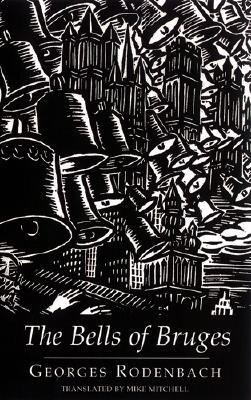
Similarly, the atmospheric novel, The Bells of Bruges (Le Carillonneur) by George Rodenbach, which led me through the unforgettable medieval city Bruges, Belgium, aided with my wonderful memory of meandering through the cobble-stoned narrow streets, propelled me to try to capture the stillness of the city frozen in the past, and underneath its calmness, as in any living place, the unquenchable quest for life's essence.  Nothing was more relevant than history.

Bruges, Impression / 布魯日,印象 / Brügge, Eindruck
Bruges, Impression, Oil on Canvas, 24"x30", 2009

~~~~~~~~~~~~

Now, back to the specific.  I responded strongly to a passage in Europe Central by William T. Vollmann: "Have you ever seen an injured bird at the seashore?  Here come crabs from nowhere - they wait under the sand - and ring it round, cautiously at first, before you know it, the first crab has leapt onto the broken wing and pinched off a morsel.  The bird struggles, but here come other crabs in a rush."

This passage, to me, summarized the helplessness of the Europe during World War II, which, viewed through historical magnifier, the distilled essence of human suffering. 

Siege / 圍攻 / Belagerung
Siege, Oil on Canvas, 18"x24", 2010

~~~~~~~~~~~~

Below is a video compilation of these paintings and their respective inspirations:


>> Video presentations of paintings and drawings, Part XXXII: 2013 Recapitulations - Video Presentation of Paintings & Installations
<< Video presentations of paintings and drawings, Part XXX: A New Video of "Liberation Road"

List of Video Presentation of My Artworks

Related posts on Art · 文化 · Kunst: 
- A New Installation/Mixed Media Work Completed
- A Still Life Painting, Two Pears, Completed
- New Painting "Lantern" Completed
- Painting "Surveying" Completed
- Niobe - An Installation
- Unexpected Successes of "Stringed White Dresses - An Installation"
- Stringed White Dresses - The Process of a New Installation
- One More Painting Featuring White Dress
- White Dresses - First Painting Finished in 2011
Saturday, June 1, 2013

Devastating Novel "The Land of Green Plums" by Herta Müller

Herta Müller in 2007
Amrei-Marie unter
cc-by-sa3.0 und GFDL
Recently I read a devastating novel, The Land of Green Plums, by Romanian-born German writer Herta Müller (17 August 1953-), and have been haunted by the unbearable hard life she depicted unflinchingly ever since.  The original title, however, was Herztier, Heart Animal, or Heart Beast as the phrase translated by Michael Hofmann for Picador Book.  Besides being a novelist, Müller is also a poet, essayist and she was the recipient of the 2009 Nobel Prize in Literature. Born in Niţchidorf, Timiş County in Romania and her native language is German.[wikipedia]

The novel was set at the height of Ceauşescu's reign of terror and a mere daily existence was a heroic struggle, particularly for intellectuals.  The green plums were referring to omnipresent surveillance agents who chewed on those plums constantly.  Heart Animal was a living presence inside an individual the state was striving to stamp out like wildfire.  The stories she told was intentionally episodic and not always coherent and logical, thus she created a hallucinatory atmosphere and a nightmarish living environment one could not escape from.  The novel impressed me  most by its accurate depiction of seemingly inconsequential but cumulatively enormous burdens the state imposed upon individuals.  The book was a devastating read, particularly for people like me who grew up under the similar circumstances, if not as severe, and have close relatives and friends suffering the similar oppressions even now, more so than I had ever experienced, as the political situation in China gets more insufferable as the Communist Party's legitimacy gets shakier and the totalitarian regimes get lonelier.

The Land of Green PlumsThe language Müller employed was halting and haunting yet deceptively simple, and the images she conjured up hallucinatory, the morals clear, through tortuous paths. I have to quote some passages from the translated version, which would eloquently correlate all the points I just made.

Its preface was a poem by Gellu Naum (August 1, 1915 – September 29, 2001) was a prominent Romanian poet, dramatist, novelist, children's writer, and translator.[wikipedia]
   Everyone had a friend in every wisp of cloud
   that's how it is with friends where the world is full of fear
   even my mother said, that's how it is
   friends are out of the question
   think of more serious things                                             
                                     
                                        - Gellu Naum
On Page 94, Müller wrote:
I have been interrogated by Captain Pjele on his own without the dog Pjele. Maybe the dog Pjele was having a break, to eat or sleep. Maybe the dog Pjele was off in one of the building's many hidden rooms being trained, either learning something new or practicing something he already knew, while Captain Pjele was interrogating me. Maybe the dog Pjele was with the man and the canvas bag, on the tail of someone else in the street. Maybe with a different man and no canvas bag. Maybe the dog Pjele was following Kurt while Captain Pjele was interrogating me. How many men were there, and how many dogs? As many as a dog has hairs.
On Pages 121-122:
If Frau Margit spent too long reading and ate too many wafer scraps, her stomach would get so holy that she would belch as she peeled the potatoes, and then she would swear even more. Since I've known Frau Margit, holy for me means a dry, whitish crackling in the mouth that makes you belch and swear.
Finally, on Page 177:
On her wrist she had one of my father's dead wristwatches. Why do you wear if, I asked, if it doesn't work? Nobody can see that, she said, and you have one too. Mine works, I said, otherwise I wouldn't be wearing it. If I wear a watch, it makes me feel more secure, she said, even if it's not working. Then why ask me what time it is? I said.

Because that's all I can talk to you about, said Mother.
It was a most memorable book, beautiful and repulsive simultaneously.


The Orphan Master's Son


Ashamed of Oneself - Reading Book "Never Let Me Go"
- Molotov's Magic Lantern: A Journey In Russian History by Rachel Polonsky and Some Journeys of My Own
- David Malouf's Ransom
- Review of "As Above, So Below" by Rudy Von B. Rucker
- Banned Books in Mao's China

Thursday, February 9, 2012

Onegin, Werther and Other Seminal (Yet Obscure) Works in World Literature


Roxana Constantinescu as
Charlotte and James Valenti as
Werther at the MN Opera.
Photo by Michal Daniel.
Source: Aisle Say Magazine
Recently, I came across an opera review on Aisle Say Twin Cities, the Minneapolis/St. Paul branch of Aisle Say Magazine, which hosts theater reviews across the country.  It summarized the synopsis of the opera as such:
Werther (pronounced ver-TAIR) was such a hit in Goethe's day that Massenet's 1892 operatic adaptation could be likened to the movie version of Harry Potter or Lord of the Rings. The original publication of the book inspired devoted readers to dress up as Werther, and a rash of copycat suicides led authorities to worry about "Werther Fever." The story, so deeply resonant in the minds of 18th- and 19th-century European readers and viewers, tells of young love kept apart by duty and tradition. In a nutshell: Werther – a brooding young man who modern audiences would call "emo" – sees Charlotte at a ball and falls madly and instantly in love with her. Charlotte, however, has promised her dying mother that she would marry Albert. Unable to cope with his heartbreak – sorry for the spoiler – Werther shoots himself.
This is rather surprising that a caution of spoiler.  Don't we all know of the basic storyline of Die Leiden des jungen Werthers (The Sorrow of the Young Werther) by Goethe?  Don't we all know that Werther shot and killed himself in the seminar novel of the world literature?  Is the spoiler alert really needed?

This reminded me a ballet performance of "Onegin" by Eifman Ballet I attended a few years ago, at Cal Performances in Berkeley, California.  During a pivotal scene, the heroine Tatiana wrote love letter to the protagonist, Eugene Onegin.  The innovative choreographer Boris Eifman kept the ballerina accompanied by the reading of the letter, in Alexandr Pushkin's original Russian poetry.  The old gentleman sat next to me kindly whispered to me the English translations, unaware of the fact that I had been very familiar with the story and though I couldn't understand the reading verbally, I knew every nuances of the letter and the movement of the dancer.


Even when I was a child, in Mao's China, I knew of the stories of Eugene Onegin and the young Werther.  I remember vividly the cover of the copy of Die Leiden des jungen Werthers (in Chinese translation, in traditional characters) my father kept on his bookshelf.  Years later, I read both books in English translations and have seen various reincarnations of them - films, dances, operas, etc.  They were so familiar to me that I often forget that despite the supremely importance of these two literature works, many people in the U.S. still have no idea what they are and what they are about.

Cover of the first edition, 1925
Source: wikipedia
To me, the comparative American literature is The Great Gatsby by F. Scott Fitzgerald.  I truly hope that most Americans know of the book and know of the story plot and need to spoiler alert for this the most American literature.  Would this be as obscure as other seminal works of world literature?


Saturday, October 9, 2010

Chinese Nobel Prize Complex

Mr. Liu Xiaobo
The up-and-coming China and Chinese people are so proud of themselves and eager to prove that they are successful, that they crave to be in all the elite clubs and have celebrated admission to each -- from nuclear weapons, first Olympian champion, first astronauts, their first hosting of Olympic Game and World Expo -- except for one, which is a curious case.

China and the Chinese people have longed for a Chinese citizen to win a Nobel prize for a long time. In the past, several winners were of Chinese descent, but most of them were citizens of other countries, including the 2000 Literary Laureate, Mr. Gao Xingjiang, who wrote in Chinese but was French citizen. Most interestingly, even though China and most Han Chinese people fervently claimed that Tibet is inseparable part of China, they didn't count the 1989 Peace Prize winner Dalai Lama as Chinese Laureate. The Dalai Lama has no citizenship other than Chinese. He doesn’t travel on any passport, instead relying on papers that give his status as a refugee.

In recent years, Chinese media reported Nobel Prize winners with great fanfare as they were announced
. This year, after reporting prizes in Physics, Medicine, and Chemistry, they suddenly went mum. When the Nobel Peace Prize for 2010 was announced, recognizing the jailed Chinese dissent, Liu Xiaobo, "for his long and non-violent struggle for fundamental human rights in China", the Chinese media reported nothing. Relevant segments from CNN, NHK and BBC broadcasts were blackened out as well. The 2010 Nobel Peace Prize had apparently been "harmonized", as cynical Chinese citizens would call it. To build a harmonious society is the predominant slogan championed by Chinese government. On surface, it promotes equality. In reality, it is used as an excuse to stamp out opposition and dissent of all kinds.

To make the whole episode in China more farcical, the Chinese government warned the Norwegian government before the award was announced, and protested afterwards, in an attempt to bully the Norwegian government into intervening to prevent the Nobel Foundation from awarding the Peace prize to Mr. Liu. The concept of an independent organization apparently doesn't exist there.


Jingwei Filling Up the Sea / 精衛填海 / Jingwei Ausfüllen des Meeres
Jingwei Filling Up the Sea / 精衛填海 © Matthew Felix Sun

From this myth comes the Chinese expression 精卫填海 ("Jingwei filling the sea") meaning a symbol of dogged determination and perseverance in the face of seemingly impossible odds. - Wikipedia

Saturday, August 28, 2010

"Siege" Completed

A passage about a fight between a wounded seabird and innumerous little armored crabs on the beach in "Europe Central" by William Vollman touched me very much and propelled me to visualize this epical fight. The wounded noble bird being overwhelmed by numerous small but lethal enemies represents, to me, a metaphor of our epoch, if I can presume to compare human species to the noble bird.

After months's labor, "Siege" is finished:

Siege / 圍攻 / Belagerung

Siege
Oil on Canvas
18" x 24"
Completed in 2010

© Matthew Felix Sun
www.matthewfelixsun.com

Part of Matthew Felix Sun's Apocalypse Series

Saturday, March 28, 2009

Two Newly Finished Paintings

I just finished two paintings on Thursday and Friday respectively, after a six-month drought. The one I finished on Thursday (Bruges, Impression) is a painting inspired by my memory of Bruges, Belgium and a 1897 novel The Bells of Bruges (Le Carillonneur) by Georges Rodenbach. The one finished the day after (Progression) was a portrait half-surrounded by collage of familiar iconic images. Previously, I published the images of these paintings at near finished stages on March 9, 2009.

During last a couple weeks, I carefully evaluated these paintings, slowly inching towards the finish-line, so as not to ruin them at the last moment - disaster has struck before. Little by little, I fine tuned the color balances and a certain small details without altering the composition. Finally, I judged that I could not add anything more to them, thus I determined that they were finished. Excitedly but carefully, I signed and dated them. Voilà!


Bruges, Impression


Progression

Tuesday, March 17, 2009

Literature Inspired Paintings

For me, what to paint is very crucial - unless it's a commissioned work, I often wrack my brain to come up with a right idea. Sometimes, an image comes to my mind like a flashlight, and sometimes a concept precedes an image. Sometimes, I dream of something hard to pin down and sometimes a great work of literature serves as seed and soil for my work to develop.

I have painted two paintings directly inspired by books I read.

I was deeply moved by passages in The Tin Drum (Die Blechtrommel) by Günter Grass, depicting the grandmother of the protagonist. In the early part of the book, in her layers and layers of earth-colored skirts, she worked in the fields, and squatted to rest just before her future husband found shelter from hot pursuers underneath her skirts. She was a young woman then. Later on in the book, as an old woman, she was sitting again, this time in a market selling roasted potatoes, with a hot brick underneath her skirts in order to stay warm. These vivid images inspired me to create a sitting woman, old, against a forbidding landscape: immobile, sad yet touching, displaying her knobby hands like weapons, ready to punch at anything harsh life throws at her.


My painting "Blindness" was inspired by Blindness (Portuguese: Ensaio sobre a cegueira, meaning Essay on Blindness) by José Saramago -- no one scene, but the novel as a whole. I was touched by the sudden breakdown of social order and surface nicety due to an unexpected and inexplicable epidemic. The book brought to imaginative life the core of my belief that human beings are capable of anything - evil or angelic. I tried to capture the bleakness I felt after reading the book, instead of attempting to illustrate any particular passages.