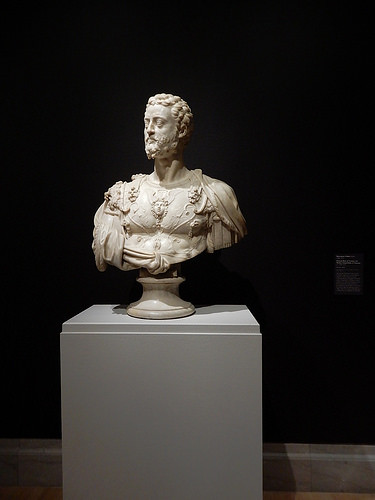
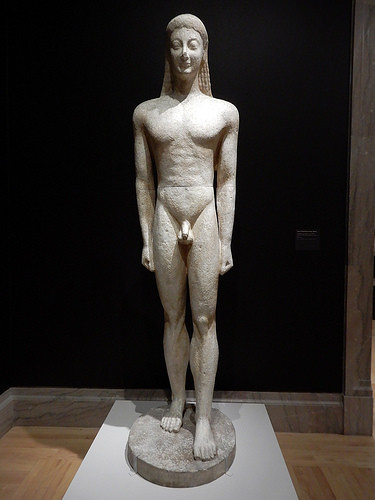
Showing posts with label Greek. Show all posts

Saturday, December 30, 2017

"Gods in Color" Exhibition at Legion of Honor Museum, San Francisco

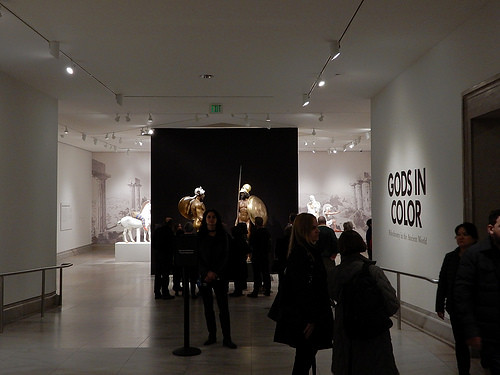
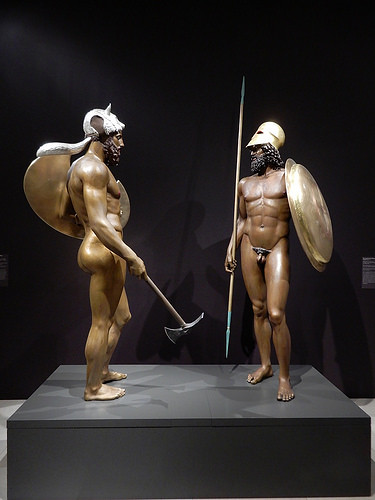
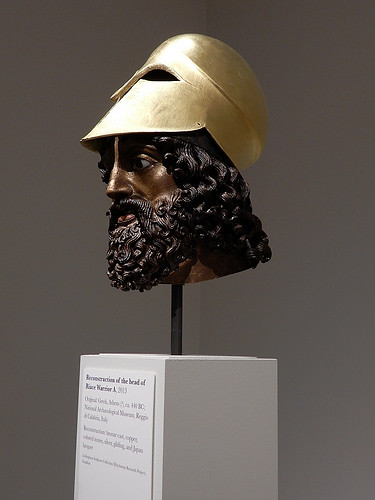
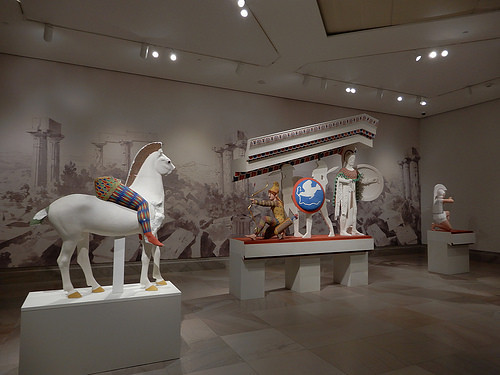
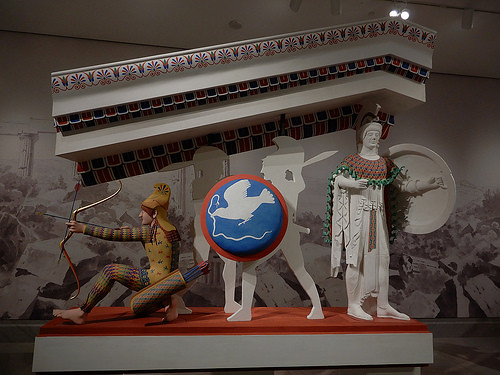
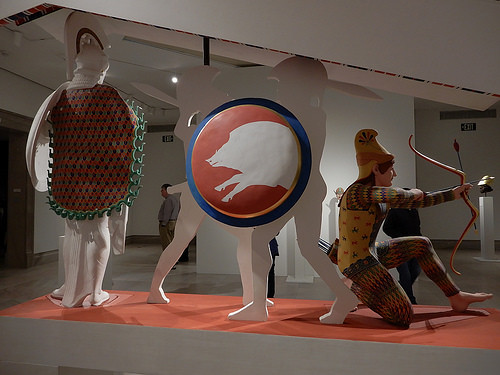
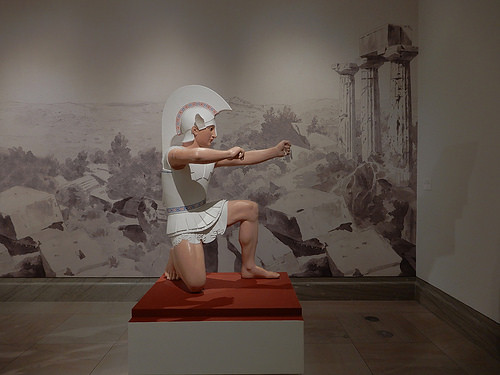
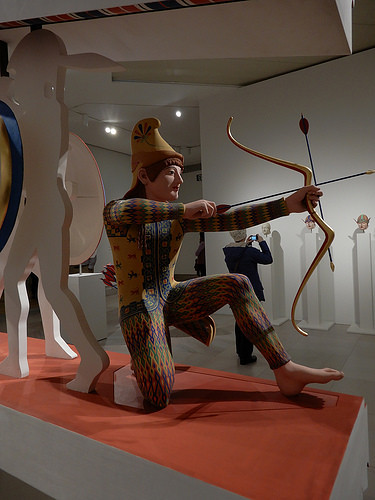
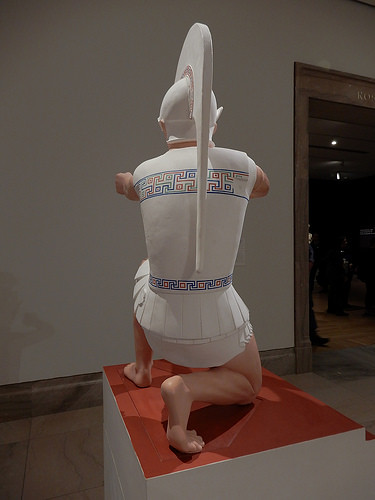
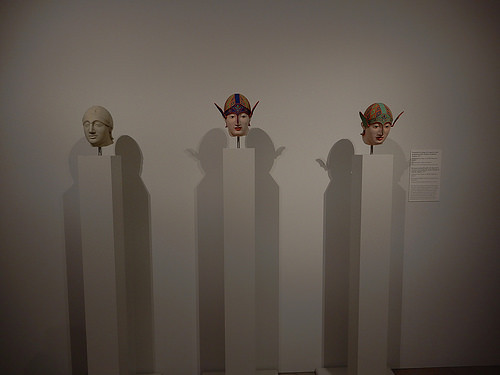
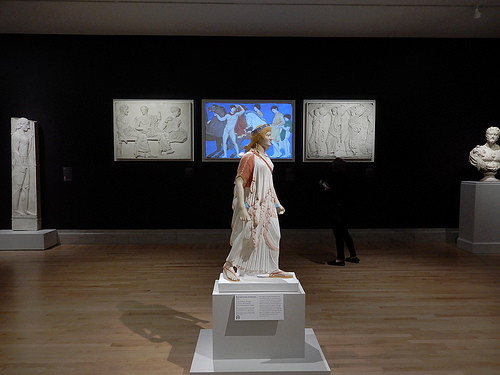
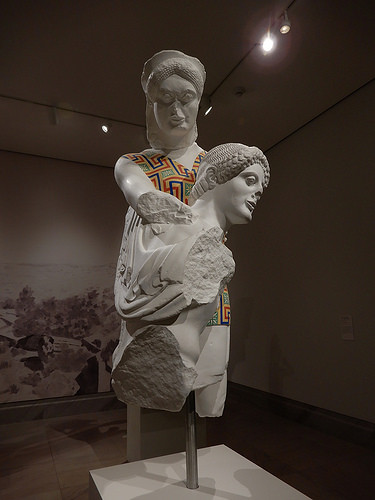
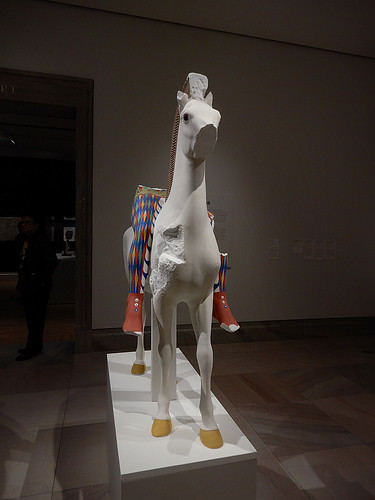
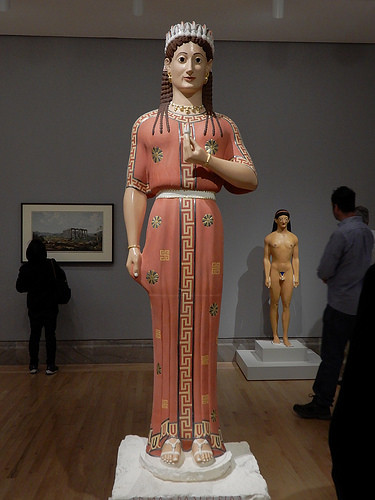
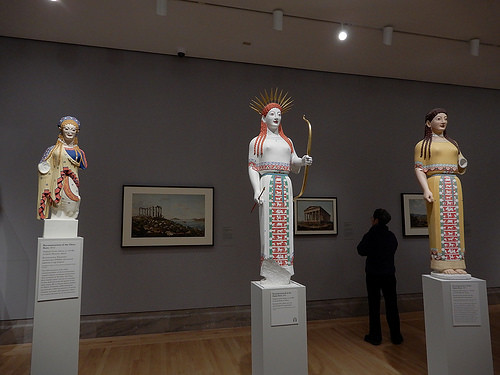
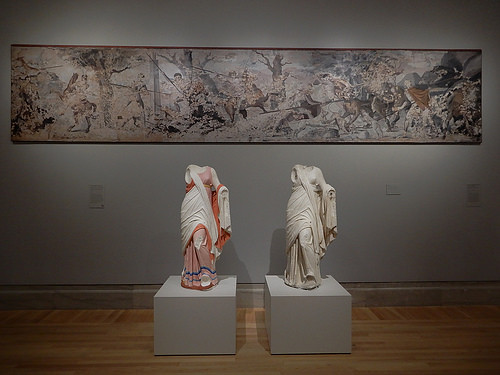
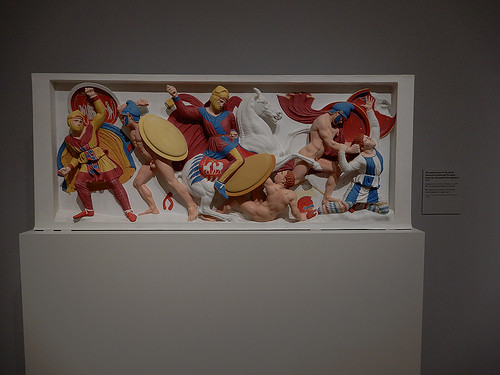
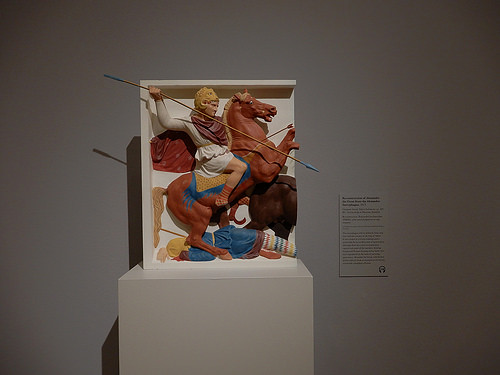
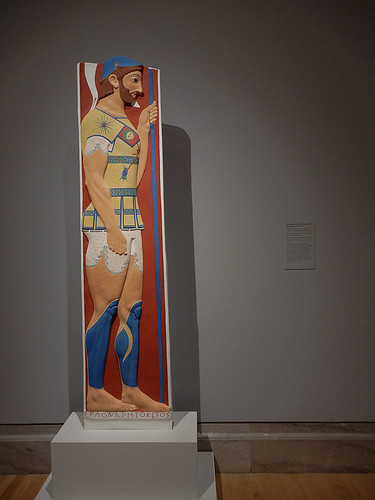
A quite unique exhibition titled Gods in Color: Polychromy in the Ancient World (October 28, 2017 – January 7, 2018), in San Francisco's Legion of Honor Museum, allowed viewers to explore classical sculpture "restored" in their original vibrant colors.

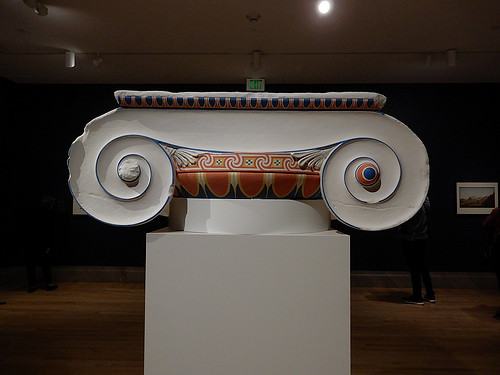
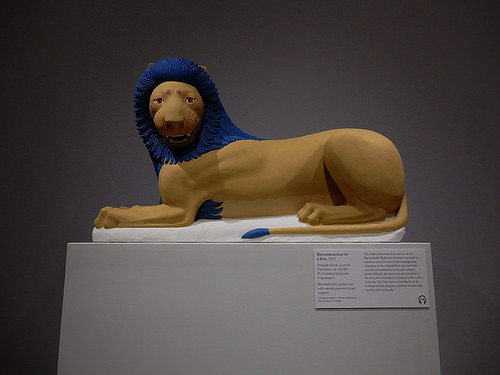
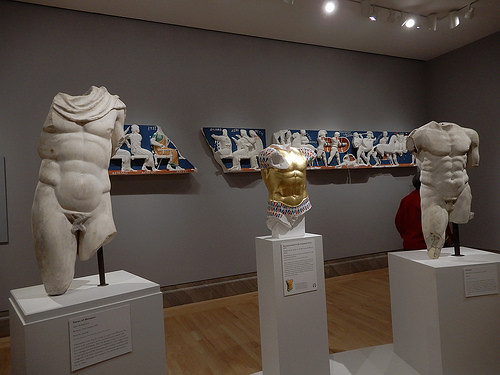
According to the exhibit, some ancient artifacts still retained their original colors, while some colors were determined through chemical analyses to identify numerous preserved elements of bronze polychromy. "Ancient sculpture and architecture from Greece and Rome will be revealed as intended—garishly colorful, richly ornamented, and full of life—along with original sculpture from the Near East, Egypt, Greece, and Rome..."

DSCN9991 _ Gods in Color

DSCN0008 _ Gods in Color

DSCN0011 _ Gods in Color

To the thoroughly conditioned modern eyes, the idealized beauty of antiquities of purity, was wildly disrupted by bursts of bright and gaudy colors, if not violated. To be fair, when sculptures were yanked out of their natural settings, pure ones were easily to appreciate than multicolored ones, which might be more in harmony with sumptuous and brilliant settings of the origins.

DSCN9992 _ Gods in Color

DSCN9993 _ Gods in Color

DSCN0018 _ Gods in Color

DSCN9995 _ Gods in Color

DSCN0019 _ Gods in Color DSCN0020 _ Gods in Color

DSCN9996 _ Gods in Color

DSCN0023 _ Gods in Color

DSCN9994 _ Gods in Color DSCN9997 _ Gods in Color

DSCN0012 _ Reconstruction of an Ionic capital, Agora of Athens, 2016 (c 430BC) -Gods in Color

DSCN0024 _ Reconstruction of a lion, 2012 (c 550BC) - Gods in Color
Reconstruction of a lion, 2012 (c 550BC)

DSCN0027 _ Torso of Hermes 2nd C., Recon. B of the Cuirassed Torso, 2005 (c 470BC), Herakles - Gods in Color
Torso of Hermes 2nd C., Recon. B of the Cuirassed Torso, 2005 (c 470BC), Herakles

DSCN0030 _ Gods in Color

DSCN0034 _ Chois Kore, 2012 (c 520BC), B of the Peplos Kore, 2005 (c 330BC), C of the Peplos Kore - Gods in Color

DSCN0037 _ Gods in Color

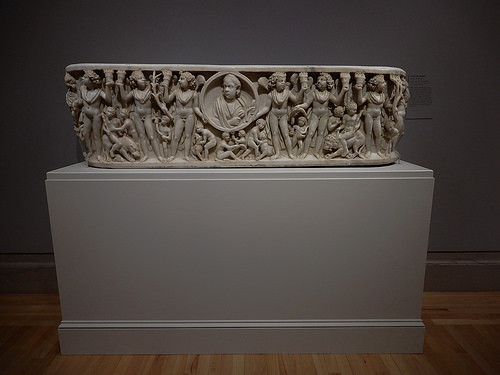
DSCN0048 _ Scarcophgus - Gods in Color
Alexander Sarcophagus

DSCN0039 _ Recon. of the battle betwn Greeks & Persians from Alexander Scarcophgus, 2007 (c320BC) - Gods in Color

DSCN0040 _ Recon. of Alexander the Great from the Alexander Sarcophagus, 2013 (c 320BC) - Gods in Color

DSCN0035 _ Gods in Color

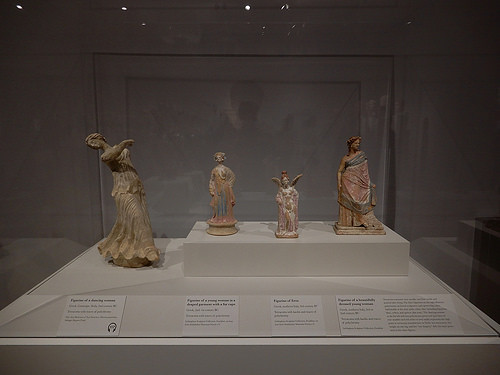
DSCN0041 _ Figurine, 2nd C BC, Figurine, 2nd-1st C BC, Figurine of Eros, 3rd C BC, Figurine, 3rd or 2nd C BC - Gods in Color
Figurine, 2nd C BC, Figurine, 2nd-1st C BC, Figurine of Eros, 3rd C BC, Figurine, 3rd or 2nd C BC

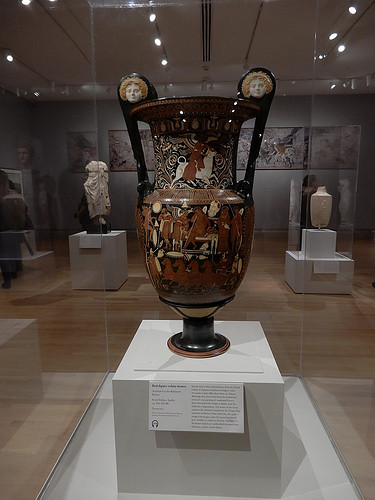
DSCN0042 _ Red-figure volute krater, c 330-320 BC - Gods in Color
Red-figure volute krater, c 330-320 BC

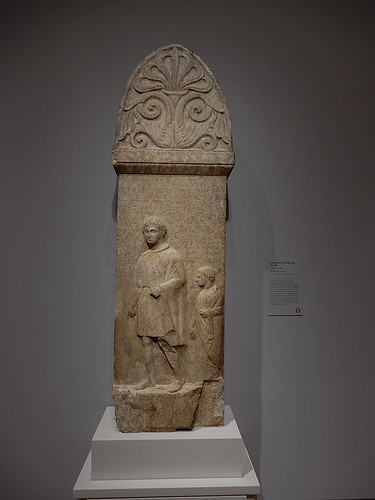
DSCN0047 _ Funerary lekythos with a young woman, c 375BC - Gods in Color DSCN0043 _ Grave stele of Poseides and his wife, c 275BC - Gods in Color
Funerary lekythos with a young woman, c 375BC - Gods in Color (l) & DSCN0043 _ Grave stele of Poseides and his wife, c 275BC (r)

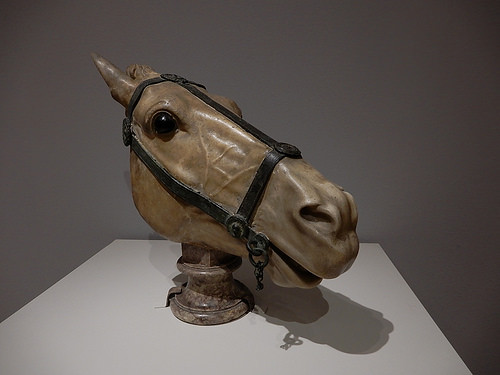
DSCN0046 _ Head of a horse, c 1st C BC - 1st C - Gods in Color

DSCN0015 _ Gods in Color

DSCN0014 _ Gods in Color DSCN0016 _ Gods in Color

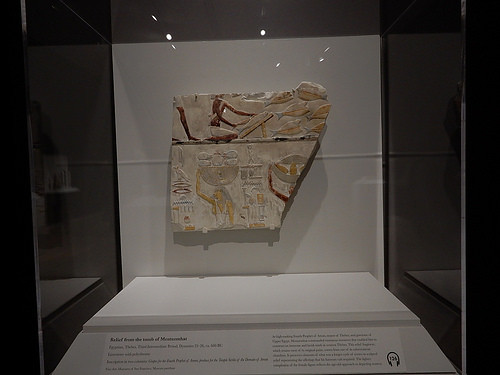
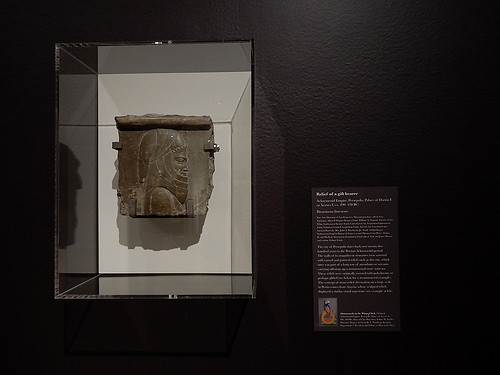
The exhibition also included a collection of Egyptian, Assyrian, and Persian antiquities, illustrating a range of painted colors, which are still visible on some of the artifacts.

DSCN0049 _ Relief from the tomb of Mentuemhat, C 660BC - Gods in Color
Relief from the tomb of Mentuemhat, C 660BC

DSCN0050 _ Relief of a gift bearer, c 490-470BC - Gods in Color
Relief of a gift bearer, c 490-470BC

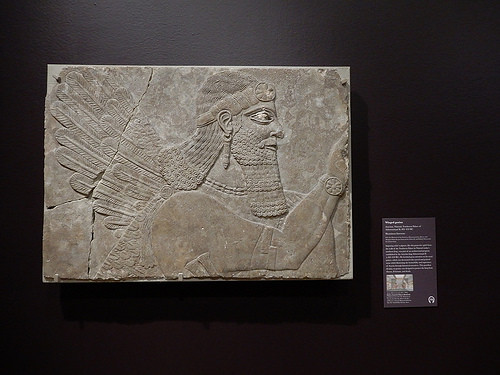
DSCN0051 _ Winged genius, 883-859BC - Gods in Color
Winged genius, 883-859BC

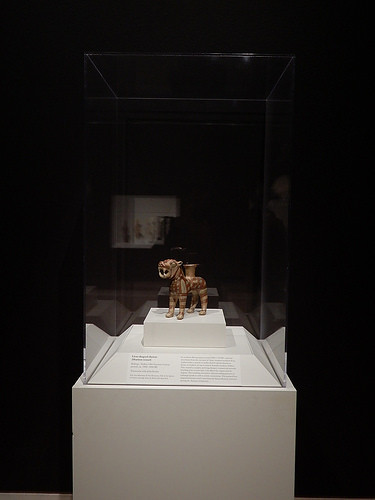
DSCN0053 _ Gods in Color DSCN0052 _ Lion-shaped rhyton (libation vessel), c 1900-1800BC - Gods in Color
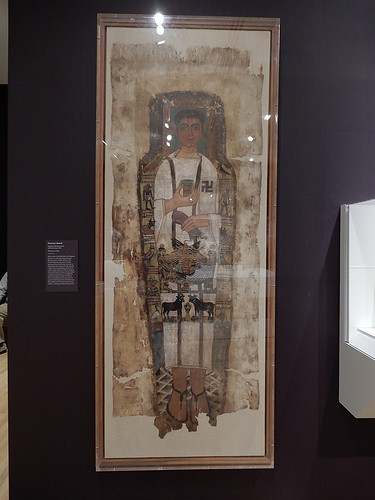
Egypto-Roman painted linen burial shroud (l) & Lion-shaped rhyton (libation vessel), c 1900-1800BC (r)

At the end of the show, samples of intensely colored pigments employed by the ancient people concluded this fascinating exhibition.


Other Related posts on Art · 文化 · Kunst:
- Exhilarating Exhibition - Pierre Bonnard: Painting Arcadia at Legion of Honor Museum, San Francisco
- My Favorite Paintings at Museum of Legion of Honor, San Francisco
- Birth of Impressionism at De Young Museum, San Francisco
- Van Gogh, Gauguin, Cézanne and Beyond: Post-Impressionist Masterpieces from the Musée d’Orsay at De Young Museum, San Francisco
- Venetian Masterpieces from Vienna at De Young Museum
- Post-Impressionism Masterpieces from the Musée d’Orsay, De Young Museum, San Francisco 2010-11
- Get Ready for the Treasures from Musée d’Orsay


Tuesday, March 15, 2016

My Featured Painting "Minotaur"

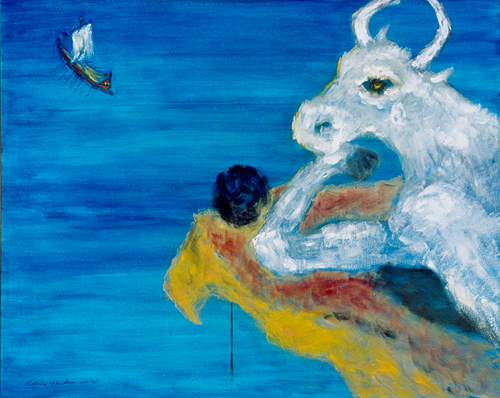
I often found the Minotaur legend disturbing and strangely moving. Minotaur, the bull-headed monster, resided in the labyrinth built on the command of King Minos of Crete, subsisted on tributes of young boys and girls, and was finally slain by the Athenian hero Theseus, who invaded his lair as one of the new sacrifices.

The strangest aspect of the legend was that Minotaur had a head of a bull, which was not a natural carnivore, therefore it would not be far-fetched to imagine how sickened he was by his own savagery, thus I treated this subject in my oil painting, Minotaur.

My Minotaur was not a personification of usual monstrosity; rather, a sensitive being, trapped by his monstrous nature beyond his own control, he eagerly awaited his slayer/liberator, so as to rid himself of the misery.

Minotaur / 牛頭怪 / Minotaur  
Minotaur / 牛頭怪 / Minotaur
Oil on Canvas
24" x 30"
Completed in 2005

There, a hoof under his chin, my Minotaur pensively watched from a precipice the approaches of the Athenian boat, while holding the ball of threads, to be given to Theseus later by the willing princess Ariadne as means to aid his existing from the foul maze after the deed.

A large tear oozed out of his eye but it was not a bitter tear, rather a willing resignation and submission.

Originally posted on matthewfelixsun.com

Other Related posts on Art · 文化 · Kunst:
- Featured Painting "Progression"
- Featured Painting "Liberation Road"
- My Featured Work - Portrait Painting "Grandma"
- Featured Oil Painting “Father and Son”
- Featured Oil Painting "The Triumph of Saint George"
- Video Presentation of Oil Painting "Progression"

Tuesday, July 21, 2015

Review: Homeric Epic Noval "Oedipus on the Road" by Henry Bauchau

Oedipus on the RoadOedipus on the Road by Henry Bauchau
My rating: 5 of 5 stars

This relatively short novel by Henry Bauchau, translated to English by Anne-Marie Glasheen from French, Oedipus sur la route, traces the eventful journey of the exiled Oedipe and his devoted daughter Antigone, from Thebes to Athens - a journey was as perilous as fantastic and marvelous, filled with discoveries of the past, present, the future, of other people and themselves.

This book is not a historical novel or a pictorial travelogue; rather, it is a journey of larger-than-life characters and their companions at different stages of their journey, full of wonder, discovery and quest, both externally and internally, and much more than a simple deconstruction of a well-known myth. These characters, in search of truth and destiny, struggled against themselves and the elements, and after much suffering and misery, through unyielding determination and mutual love, arrived at their unknown destinies and achieved eternity, while fulfilling their unknown mysterious duties destined for them, gradually revealed in the course of their self-discoveries and their growths, as human beings, and incredibly, but amazingly, as artists.

The language of the book, including dialogues and inner thoughts of characters from all social extractions, are formal, elegant and often wise; yet I willingly and easily surrendered myself to such artistic decision.

Reading their adventures, I felt very privileged to be allowed to accompany them on their winding paths and I have never felt so sad when their journey came to an end, for I have fallen in love even more with the stubborn and unpredictable Oedipus and the timid yet courageous Antigone, two classical characters always close to my heart.

A marvel of an epic in the Homeric fashion.


View all my reviews


Other Related posts on Art · 文化 · Kunst:

- Book Review "Kristin Lavransdatter" by Sigrid Undset
- Devastating Novel "The Land of Green Plums" by Herta Müller
- "Prague", St. Stephen's Day, Richard Diebenkorn and James Turrell 
Ashamed of Oneself - Reading Book "Never Let Me Go"
- Molotov's Magic Lantern: A Journey In Russian History by Rachel Polonsky and Some Journeys of My Own
- David Malouf's Ransom
- Review of "As Above, So Below" by Rudy Von B. Rucker
 

Thursday, October 3, 2013

Getty Villa in Los Angeles (Malibu)


DSCN7218 _ Getty Villa, July 2013

DSCN7231 _ Getty Villa, July 2013

DSCN7229 _ Getty Villa, July 2013 In July, I visited Los Angeles for the second time.  During my first LA trip, I visited Getty Center and this time, for my first museum stop, I opted for its sister museum, the Getty Villa, an educational center and museum dedicated to the study of the arts and cultures of ancient Greece, Rome, and Etruria, located in Malibu.  Its excellent collection completely justified its great fame.

Before we dived into exhibition, in the central courtyard, which contained an amphitheater, we were confronted by a gigantic metal wheel, with many concentric circles and spokes, and just above the center of the wheel, a small chair, at a terrifying height, all sitting squarely in the center stage.  The wheel turned out to be the set for the Greek play, Prometheus Bound, attributed to Aeschylus.  Too bad that the performances wouldn't start after we'd left Los Angeles. It would have been a wonderful night.

DSCN7234 _ Getty Villa, July 2013

DSCN7250 _ Getty Villa, July 2013

DSCN7253 _ Getty Villa, July 2013

Going into the villa, we briefly admired its pleasant proportion and muted decor but the villa itself was only a diversion for the collections were the real deals.

DSCN7254 _ Getty Villa, July 2013 DSCN7258 _ Getty Villa, July 2013

The first group of exhibitions consisted of Greek amphora and other kind vessels of different styles and functions and from different regions.  I was no expert in that field and didn't try to comprehend all the subtleties; rather, I recorded whatever took my fancy:

DSCN7261 _ Wine Cup with Eyes, Greek, c. 520 B.C., Getty Villa, July 2013

DSCN7262 _ Fluted Ritual Vessel, Greek, c 300 B.C., Getty Villa, July 2013 DSCN7293 _ Getty Villa, July 2013

DSCN7269 _ Roundel with Dionysos, Greek, 150-125 B.C., Getty Villa, July 2013

Next, we came upon some impressive statues of gods and goddesses:

DSCN7275 _ Getty Villa, July 2013 DSCN7278 _ Getty Villa, July 2013
Marbury Hall Zeus, Roman, A.D. 1 - 100 

DSCN7295 _ Getty Villa, July 2013 DSCN7279 _ Venus Genetrix, Roman, A.D 100-200, Getty Villa, July 2013
Marbury Hall Zeus (left) and Venus Genetrix, Roman, A.D. 100-200

DSCN7284 _ Head of Athena, Greek, 160-150 B.C., Getty Villa, July 2013 DSCN7286 _ Head of Apollo, Roman, A.D. 175-200, Getty Villa, July 2013
Head of Athena, Greek, 160-150 B.C. (l) & Head of Apollo, Roman, A.D. 175-200 (r)

DSCN7288 _ Head of Hermes, Roman, Getty Villa, July 2013
Head of Hermes, Roman

DSCN7290 _ Statuette of a Fertility Goddess, Greek, Getty Villa, July 2013 DSCN7297 _ Getty Villa, July 2013
Statuette of a Fertility Goddess, Greek (left)

Move on to next section, we saw more vessels, richer and more decorative; but again, I only responded to whatever touched or pleased me:

DSCN7302 _ Getty Villa, July 2013

DSCN7310 _ Getty Villa, July 2013

DSCN7307 _ Handle in the Shape of Triton, Greek, 100-50 B.C., Getty Villa, July 2013

DSCN7300 _ Getty Villa, July 
2013

Next, we entered a reconstructed shrine or temple - a hall full of columns and in the niches, statues of gods, goddesses, and nymphs:

DSCN7328 _ Getty Villa, July 2013

DSCN7313 _ Getty Villa, July 2013 DSCN7320 _ Getty Villa, July 2013

DSCN7314 _ Enthroned Zeus, Greek, c. 100 B.C., Getty Villa, July 2013 DSCN7324 _ Winged Feline, Tartesian, 700-575 B.C., Getty Villa, July 2013
Enthroned Zeus, Greek, c. 100 B.C. (l) & Winged Feline, Tartesian, 700-575 B.C. (r)

In the next shrine, for the Roman sculpture, Lansdowne Herakles, we encountered some of the most memorable and smoothly executed works, though somewhat plastic, however impressive they were:

DSCN7355 _ The Lansdowne Herakles, Roman, c. A.D. 125, Getty Villa, July 2013

DSCN7356 _ The Lansdowne Herakles, Roman, c. A.D. 125, Getty Villa, July 2013 DSCN7353 _ The Lansdowne Herakles, Roman, c. A.D. 125, Getty Villa, July 2013
The Lansdowne Herakles, Roman, c. A.D. 125

DSCN7354 _ Getty Villa, July 2013 DSCN7357 _ Leda and the Swan, Roman, A.D. 1 - 100, Getty Villa, July 2013
Leda and the Swan, Roman, A.D. 1 - 100 (r)

In the next section, several sirens gave me great delight:

DSCN7362 _ Sirens, Getty Villa, July 2013 DSCN7360 _ Sirens, Getty Villa, July 2013
Sirens

We then moved on to another part of the vast villa, which contained much funeral artifacts, with an imposing Venus thrown in:

DSCN7380 _ Fragmentary Wine Cup with Achilles, Greek, c 490 B.C., Wine  Cup with the Suicide of Ajax, Greek, c. 490 B.C., Getty Villa, July 2013 DSCN7390 _ Lidded Storage Jar with the Blinding of Polyphemos, Etruscan, 650-625 B.C., Getty Villa, July 2013
Fragmentary Wine Cup with Achilles, Greek, c 490 B.C., Wine  Cup with the Suicide of Ajax, Greek, c. 490 B.C. (l) & Lidded Storage Jar with the Blinding of Polyphemos, Etruscan, 650-625 B.C. (r)

DSCN7386 _ Sarcophagus with Scenes from the Life of Achilles, Roman, A.D. 180-220, Getty Villa, July 2013
Sarcophagus with Scenes from the Life of Achilles, Roman, A.D. 180-220

DSCN7382 _ Getty Villa, July 2013

DSCN7388 _ Venus, Roman, A.D. 100-200, Getty Villa, July 2013 DSCN7385 _ Venus, Roman, A.D. 100-200, Getty Villa, July 2013
Venus, Roman, A.D. 100-200

Then we spent some time outdoors, to enjoy the view of a large reflection pool and an enchanting intimate garden:

DSCN7425 _ Getty Villa, July 2013

DSCN7402 _ Getty Villa, July 2013

DSCN7569 _ Silence Riding a Wineskin DSCN7403 _ Getty Villa, July 2013
Silence Riding a Wineskin (l)

DSCN7443 _ Getty Villa, July 2013 DSCN7422 _ Getty Villa, July 2013

DSCN7438 _ Getty Villa, July 2013

DSCN7423 _ Getty Villa, July 2013

DSCN7424 _ Getty Villa, July 2013 DSCN7431 _ Bust of a Youth, Reproduction of a Roman sculpture from the 1st Century AD, Getty Villa, July 2013
Bust of a Youth, Reproduction of a Roman sculpture from the 1st Century AD (right)

DSCN7470 _ Getty Villa, July 2013

Then we went to another section with more burial artifacts, amongst more sculptures of gods and goddesses - by then I totally lost track of grouping principles, such as the periods and styles of those wonders:

DSCN7464 _ Sarcophagus Panel with Medusa and Theater Masks, Getty Villa, July 2013
Sarcophagus Panel with Medusa and Theater Masks

DSCN7448 _ Getty Villa, July 2013
Sarcophagus

DSCN7455 _ Getty Villa, July 2013

DSCN7449 _ Herm of Dionysos, Greek, 100-50 B.C., Getty Villa, July 2013 DSCN7450 _ Head of a Young Bacchus, Roman, A.D. 1-50, Getty Villa, July 2013
Herm of Dionysos, Greek, 100-50 B.C. (l) & Head of a Young Bacchus, Roman, A.D. 1-50 (r)

DSCN7457 _ Wall Fragment with a Muse, Getty Villa, July 2013 DSCN7463 _ Getty Villa, July 
2013
Wall Fragment with a Muse (left)

Then we were in a room with predominantly Roman artifacts, including emperors and empresses, mixed with other Greek objects:

DSCN7495 _ Getty Villa, July 2013

DSCN7483 _ Getty Villa, July 2013 DSCN7477 _ Getty Villa, July 2013

DSCN7489 _ Bust of a Woman, Roman A.D. 140-150, Getty Villa, July 2013 DSCN7490 _ Head of Julia Titi, Roman, c. A.D. 90, Getty Villa, July 2013
Bust of a Woman, Roman A.D. 140-150 (l) & Head of Julia Titi, Roman, c. A.D. 90 (r)

DSCN7497 _ Torso of a Man Wearing Armor, Roman, A.D. 83-85, Getty Villa, July 2013 DSCN7498 _ Getty Villa, July 2013
Torso of a Man Wearing Armor, Roman, A.D. 83-85 (l)

DSCN7508 _ Getty Villa, July 2013

DSCN7505 _ Getty Villa, July 2013 DSCN7503 _ Head of a Man, Roman, 100-1 B.C., Getty Villa, July 2013
Head of a Man, Roman, 100-1 B.C., Getty Villa, July 2013

DSCN7522 _ Victorious Youth, Greek, 300-100 B.C., Getty Villa, July 2013 DSCN7510 _ Victorious Youth, Greek, 300-100 B.C., Getty Villa, July 2013 DSCN7520 _ Victorious Youth, Greek, 300-100 B.C., Getty Villa, July 2013
Victorious Youth, Greek, 300-100 B.C.

DSCN7528 _ Torso of an Athlete, Roman, c. A.D 100, Getty Villa, July 2013 DSCN7527 _ Getty Villa, July 2013
Torso of an Athlete, Roman, c. A.D 100 (l)

DSCN7532 _ Wine Cup with a Man and a Youth Kissing, Greek, 510-500 B.C., Getty Villa, July 2013
Wine Cup with a Man and a Youth Kissing, Greek, 510-500 B.C.

DSCN7533 _ Relief Fragment with a Horse and Rider, Greek, c. 500 B.C., Getty Villa, July 2013
Relief Fragment with a Horse and Rider, Greek, c. 500 B.C.

DSCN7486 _ Grave Monument of a  Girl, Roman, A.D. 120-140, Getty Villa, July 2013
Grave Monument of a  Girl, Roman, A.D. 120-140

DSCN7491 _ Relief with Antiochos and Herakles, Greek, Getty Villa, July 2013
Relief with Antiochos and Herakles, Greek

DSCN7488 _ Gravestone of Myttion, Greek, Getty Villa, July 2013 DSCN7473 _ Getty Villa, July 2013 DSCN7475 _ Gravestone of Mynnia, Greek, c. 370 B.C., Getty Villa, July 2013
Gravestone of Myttion, Greek (l), Gravestone of Mynnia, Greek, c. 370 B.C. (r)

Then there were more daily objects and curiosities on display in the following rooms:

DSCN7480 _ Vessels for Scented Oil - Herding Scenes, Greek, c. 580 B.C. and Veiled Woman, Greek, 575-550 B.C., Getty Villa, July 2013
Vessels for Scented Oil - Herding Scenes, Greek, c. 580 B.C. and Veiled Woman, Greek, 575-550 B.C.

DSCN7479 _ Vessels for Scented Oil, Greek or Roman, 100 B.C.- A.D. 25, Getty Villa, July 2013
Vessels for Scented Oil, Greek or Roman, 100 B.C.- A.D. 25

DSCN7494 _ Getty Villa, July 2013

DSCN7493 _ Getty Villa, July 2013

DSCN7492 _ Getty Villa, July 2013

The final section featured some impossibly ancient artifacts, such as ancient Greek Apollo and Cypriot earthenware:

DSCN7536 _ Getty Villa, July 2013 DSCN7538 _ Getty Villa, July 2013
Apollo

DSCN7535 _ Folding Tripod with Horses, Getty Villa, July 2013 DSCN7541 _ Wall Fragment with a Woman and a Leopard, Roman, Getty Villa, July 2013
Folding Tripod with Horses

DSCN7544 _ Getty Villa, July 2013

DSCN7534 _ Getty Villa, July 2013

DSCN7550 _ Harp Player, Early Cycladic, 2700-2300 B.C., Getty Villa, July 2013
Harp Player, Early Cycladic, 2700-2300 B.C. 

DSCN7559 _ Getty Villa, July 2013 DSCN7549 _ Bowl with Scenes of Daily Life, Early Cypriot, 2000-1900 B.C., Getty Villa, July 2013 DSCN7560 _ Getty Villa, July 2013
Bowl with Scenes of Daily Life, Early Cypriot, 2000-1900 B.C. (middle)

At the end of viewing the permanent collections, we also had the wonderful opportunity to see a special exhibit: Sicily: Art and Invention between Greece and Rome, which presented 145 objects that bear witness to the athletic and military victories, religious rituals, opulent lifestyles, and intellectual attainments that shaped Classical culture at its peak and included the amazing Statue of a Youth (the Mozia Charioteer), 470-460 B.C., Sikeliote (Sicilian Greek), with remarkable marble curving representing soft, wrinkled drapery over hard and muscled body (see detail below):

The Motya Charioteer, made by a Greek sculptor in Sicily, about 460-450 BC, found in 1979 on the Sicilian island of Motya (Mozia),  Winning at the ancient Games, British Museum
Courtesy of Carole Raddato on Flickr

The Motya Charioteer, made by a Greek sculptor in Sicily, about 460-450 BC, found in 1979 on the Sicilian island of Motya (Mozia),  Winning at the ancient Games, British Museum
Courtesy of Carole Raddato on Flickr


Related posts on Art · 文化 · Kunst
- LACMA - Los Angeles County Museum of Art
- Revisiting Norton Simon Museum in Pasadena
- "Prague", St. Stephen's Day, Richard Diebenkorn and James Turrell
- Urs Fischer Exhibit at MOCA, Los Angeles
- My Favorite De Young Museum Collections
- "Renoir in the 20th Century" - Los Angeles County Museum of Art
- "Up in the Air" and Milling about in the Airport


Label: Los Angeles, Los Angeles Trip 2013