Showing posts with label Rubens. Show all posts

Saturday, May 3, 2014

My Favorite Drawing and Painting in Musée Cognacq-Jay, Paris

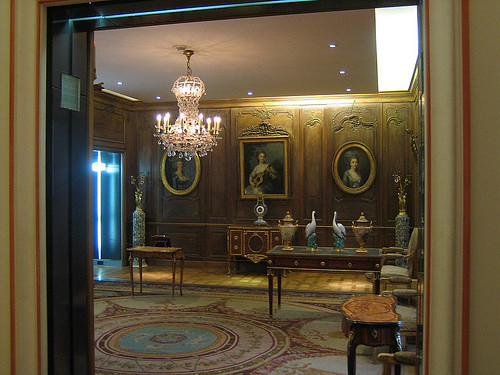
Wandering in Marais district of Paris, during my 2008 trip, I stumbled upon a small museum, the Musée Cognacq-Jay, located in Hôtel Donon, and saw some wonderful paintings and drawings by the likes of Watteau, Tiepolo, Rembrandt, Rubens, Cézanne and Degas, amongst decorative art displayed in twenty paneled rooms (four floors) in the styles of Louis XV and Louis XVI. "The collection was formed between 1900–1925 by Théodore-Ernest Cognacq (1839–1928) and his wife Marie-Louise Jay (1838–1925), founders of La Samaritaine department store." [source: wikipedia]

IMG_8980 - Musée Cognacq-Jay, Paris, 2008

What interested me most were works by Antoine Watteau, and my favorite was a study, titled Etudes de deux figures de femmes (Study of two female figures).  The line drawing was fluid, with just enough detail to give the figure a three-dimensional modeling, without overwhelming the figure with large hatching, therefore losing the trademark delicacy of the artist.  The figures were either aristocrats or actresses caught in their moonlit performances, a favored setting by this peculiar painter.

IMG_8970 - Etudes de deux figures de femmes Antoine Watteau, Antoine Watteau, Musée Cognacq-Jay, Paris, 2008
Etudes de deux figures de femmes, Antoine Watteau

My second favorite was an oil painting, a portrait of Gaspard Gevartius (an Antwerp city clerk) by Peter Paul Rubens.

IMG_8984 - Gaspard Gevartius, Peter Paul Rubens, Musée Cognacq-Jay, Paris, 2008
Gaspard Gevartius, Peter Paul Rubens

This painting is very similar to another portrait of Gevartius by Rubens, collected in Antwerpen Koninklijk Museum voor Schone Kunsten. Instead of giving him a writing table, a bust on the table represents the Roman emperor Marcus Aurelius, a source of inspiration to Gevartius on whom he also wrote an unpublished book, as seen in the Antwerp painting, this more intimate piece in Paris focused solely on the sitter's bust.  The sharp features were rendered meticulously, and the rather serious, dark or even gloomy portrait was enlivened by the rosy cheeks of the sitter and his white ruff, which though elaborate, didn't compete with the face, rather it became a clever framing device, and draw viewer's eye upwards towards the sitter's intelligent face. Here, intimacy trumps grandeur.

My Favorite Museum Collection Series
>> My Favorite Museum Collection Series 77: My Favorite Artworks in Panthéon, Paris
<< My Favorite Museum Collection Series 75: My Favorite Sculptures in le Jardin des Tuileries

List of My Favorite Artworks in the Museums I've Visited  


Other Related posts on Art · 文化 · Kunst:
- My Favorite Sculpture and Painting at Musée d'Art moderne de la Ville de Paris
- My Favorite Sculptures in les Jardins du Ranelag, Paris
- Pieter Paul Rubens (June 28, 1577 – May 30, 1640)
- My Favorite Paintings at Antwerpen Koninklijk Museum voor Schone Kunsten (Antwerp Royal Museum of Fine Arts)
- My Favorite Paintings in Cathedral of Our Lady, Antwerp (Antwerpen), Belgium
- My Favorite Paintings at the Wallace Collection, London
- My Favorite Paintings at Museum of Legion of Honor, San Francisco
- Revisiting Norton Simon Museum in Pasadena


Friday, January 25, 2013

My Favorite Paintings at Antwerpen Koninklijk Museum voor Schone Kunsten (Antwerp Royal Museum of Fine Arts)

My day trip to Antwerp, after the Cathedral of Our Lady, where we saw amazing Rubens panels, included Rubens' House and the grand Koninklijk Museum voor Schone Kunsten (Antwerp Royal Museum of Fine Arts), which boasted some masterpiece paintings of several centuries.

My favorite painting in this museum was a fifteen century painting, Madonna Surrounded by Seraphim and Cherubim, a stylish, otherworldly, actually very strange presentation of the Virgin, the Child and some strangely devilish red Seraphim, juxtaposed with equally sinister deep ultramarine blue Cherubim. All the figures were highly stylized and looked like plastic dolls, almost ghoulish; yet with very precise and delicate lines, Maria and Jesus, with their perfectly rounded head and her breasts, one of which exposed, were ultimately quite subtly ravishing, pale, pensive, accepting, frail yet steely,  Their tone of pearl gray, brilliantly set off against the elements meant to be supportive and comforting but here not without an under current of menace. Utterly unforgettable.


Madonna Surrounded by Seraphim and Cherubim
Jean Fouquet
1452, oil on panel, 94.5 x 85.5 x 1.2 cm

My second favorite painting there was another strange piece - this time it was the situation but not the presentation - Venus Frigida by Peter Paul Rubens, whose figures were just his usual Rubenesque, confident and glowing, even in distress.


Venus Frigida (Frozen Venus)
Peter Paul Rubens
1614, oil on panel, 145.1 x 185.6 x 38 cm


Here, the love goddess Venus and her son Cupid, stripped of their protections, shivered in the cold, with their naked bodies exposed to the cruel element.  Her back to the viewer, showing us her rather muscular physic and he hovering underneath her gauzy veil, shrank to a cute ball, on top of her discarded arrows.  It was a funny situation and I wanted to laugh out loud ticked by the sight of the suffering Cupid, cuter than usual, but her accusing eyes stopped me from being insensitive.  Even a goddess with a muscular back, she was suffering and it called for compassion.  A satyr approached them, with his cornucopia filled with delicacies.  Perhaps, as a follower of Bacchus, he was trying to reignite the fire of life in the them; or he was about to take advantage of the vulnerable two.  Venus's turned away head might be a rebuke to his advancement.  His dark and untidy appearance dramatically contrasted to the refined shapes of Cupid and Venus, adding spices to the drama, so did the stormy dark landscape to the left and the bare tree trunks to the right.


My Favorite Museum Collection Series

>> My Favorite Museum Collection Series 61: My Favorite Paintings at Musée de l'Orangerie, Paris  
<< My Favorite Museum Collection Series 59
My Favorite Paintings in Cathedral of Our Lady, Antwerp (Antwerpen), Belgium


List of My Favorite Artworks in the Museums I've Visited  

Saturday, January 19, 2013

My Favorite Paintings in Cathedral of Our Lady, Antwerp (Antwerpen), Belgium

We had only a day trip to Antwerp, whose art scene was dominated by the great Flemish painter Peter Paul Rubens.  In one of several stops, the Cathedral of Our Lady (De Kathedraal), we saw several of his great panels.  Most ambitiously conceived and marvelously executed were two triptychs, which were my favorites in this great house of worship and temple of art.

Both triptychs depicted the crucial moment of Jesus's life cycle - The Elevation of the Cross (1610) and The Descent from the Cross (1612-1614) - moment before and after his death - the subject matters hardly need explain.


The Elevation of the Cross (1610)


The Descent (Deposition) from the Cross (1612-1614), Visitation (Left), Presentation (Right)

The most impressive aspect of these panels was the dynamism of the central panels.  Everything, everyone was animated, on the move, actively engaged in a vivid, moving drama.  It seemed that subtracting any muscle would have caused the collapse of the whole mass of people and object centering on the passive and immobile Jesus.  There were large swaths of colors surrounding the parlor of Jesus.  Another wonderful contrast of the artistic decision.  Rubens' figures were fully modeled and differentiated and characterized.  One felt that one could tell who they were and what they had done and what they were to become. 

There were some continuity between these two triptychs - both Jesus or Jesus and his throe cut across the enormous panels diagonally, adding the sense of dynamism.  Unsettled.  Dangerous.  The side panels of "Elevation" were the continuation of the central panel, sad and moving, while the side panels of "Descent", both calm and happy, described before and after Jesus's birth - the Visitation and the Presentation, adding poignancy to his agonizing death.

As a renown colorist, Rubens gave us a combustion of varied yet subtly harmonized colors.  The achievement of his through these two triptychs alone were monumental.


My Favorite Museum Collection Series

>> My Favorite Museum Collection Series 60: My Favorite Paintings at Antwerpen Koninklijk Museum voor Schone Kunsten (Antwerp Royal Museum of Fine Arts)
<< My Favorite Museum Collection Series 58: My Favorite Sculpture and Painting at Church of Our Lady, Bruges


List of My Favorite Artworks in the Museums I've Visited

Monday, August 20, 2012

My Favorite Paintings in the Courtauld Gallery at Somerset House, London

London's museum and galleries are astonishingly rich, way beyond the most prominent the British Museum and the National Gallery.  The somewhat lesser known gallery, the Courtauld Gallery at Somerset House, London, had a rich collections of Renaissance, Baroque, Impressionism, Post-Impressionism and 20th Century works, many of them iconic.

My favorite paintings there were seminal ones - one was A Bar at the Folies-Bergère, 1881-2, by Edouard Manet, and was dated as 1882; and the other one was a striking triptych by Peter Paul Rubens, The Visitation (left panel), The Descent from the Cross (center panel), and The Presentation in the Temple (right panel).  The former one was intimate and still and the other public and dramatic. 

A Bar at the Folies-Bergère, 1881-2, Edouard Manet, The Courtauld Gallery, London - 500
A Bar at the Folies-Bergère, 1881-2, Manet, Edouard, Date 1882

A Bar at the Folies-Bergère, 1881-2, Edouard Manet, The Courtauld Gallery, London

Amongst the artists often grouped together as Impressionists, I am very partial to Manet.  I appreciate him very much because he was not merely chasing a certain detached natural effects, rather, he dived deep into human psyche and that meant much more for me.  I also love the way he handled dark colors, particularly that of black, which was a true color under his brushes, instead of devoid of color in a minor hands.  His characters, elegant, lovely, but often a bit detached and melancholic, a forerunner of Edward Hopper.

In this lovely painting, in the Folies-Bergère, Paris's first music hall, had a notorious reputation as a place for men to pick up prostitutes.  One could see that the barmaid, resigned herself to the scrutinizing gazes from patrons, who we could see on the large mirror behind the pensive barmaid.  Manet also presented the back of her, through some optical trickery, and the customer she was serving.  She slim figure, tightly laced up, presented her like one of the wine bottles being offered to the patrons.  She was there, but also far away.  That absence drew us in, so did the impossible relationship between she and the mirror reflecting her back.  It perhaps was not scientifically accurate, but it gained much more through such "imperfection".


Triptych, 1611-1613, Oil on panel, Peter Paul Rubens
The Visitation (left panel), Height: 83.2 cm; Width: 30.3 cm
The Descent from the Cross (center panel), Height: 115.2 cm; Width: 76.2 cm
The Presentation in the Temple (right panel), Oil on panel Height: 83 cm; Width: 30.4 cm

The triptych above by Rubens was startlingly spectacular and emotionally charged, verged on hysteria.  The paintings were resolutely catholic and was saved from being vulgar and sentimental by the master's somber coloration and the restrain from the side panels, particularly the Visitation, which was almost charming, if one overlooked the looming storm in the background and the scarlet robe Mary wore. 


Triptych: The Visitation (left panel) and The Presentation in the Temple (right panel)

The crowning achievement of this triptych was the amazing grouping of the central characters - each had their very individual way of coping with the tragic event and the glistering twisted body of Jesus was powerful and godlike, even in its death agony.  Its weight, sliding down from the shroud, demonstrated vividly by the supporting John, whose back-bending body added intensity to the drama and his scarlet robe echoed that of Mary's in the Visitation.  Mary herself, mirrored herself in the Presentation almost in the same pose and same robe, though much softer and more worn, with much less brilliance in its color, a mother in deep sorrow, in contrast to the mother of the new born. 


Triptych: The Descent from the Cross (center panel)


My Favorite Museum Collection Series

>> My Favorite Museum Collection Series 47: My Favorite Paintings at Tate Modern Gallery in London
<< My Favorite Museum Collection Series 45: My Favorite Paintings at the Wallace Collection, London


List of My Favorite Artworks in the Museums I've Visited

Sunday, June 28, 2009

Pieter Paul Rubens (June 28, 1577 – May 30, 1640)

Yesterday, I observed the death of a genius - Michael Jackson, today I want to honor the birth of another - Pieter Paul Rubens (June 28, 1577 – May 30, 1640), whose name was employed by some art historians to describe the epoch he belonged to - the Age of Rubens.

Rubens was introduced to me early on, along with other old masters, such as da Vinci, Titian and Rembrandt, primarily through well-produced large format calendars. Those were the only chances I had to behold decent reproductions of seminal western artworks.

Many years later, not only have I accumulated many prints and books featuring those artworks, but I also had many opportunities to view these miracles with my naked eyes.


His staggering series - The Marie de' Medici Cycle, a series of twenty-four paintings commissioned by Marie de' Medici, wife of Henry IV of France, with twenty-one of the paintings depict Marie's own struggles and triumphs in life and the remaining three are portraits of herself and her parents, occupied a gigantic hall in the Louvre. They were such Herculean works that it took monumental concentration and Stamina to view the entire cycle in one go. Every time I went back to the Louvre, I would seek them out to admired and contemplate. This series is particularly fascinating since the life and achievement of the heroine was rather pallid.

In a large cathedral in Antwerp, I had seen his great Passion altar pieces, which somehow survived the Iconoclasm. Even a non-religious person as I, was deeply moved by his stunning composition and execution. Yet, since most of his work were only sketched by him, and subsequently executed by many assistants and apprentices, his cartoons for such paintings and tapestries were even more valued by many, including me, who appreciate the lucidity of these supposedly rough and unfinished works.


He was a successful diplomat and shrewd businessman and his villa - Rubenshuis in Antwerpen was a happy testament that financial success could be avail to a true great artist, however rarely.


On his birthday, 28 June, I remember the titan of the past.