What I enjoyed most at Norton Simon Museum in Pasadena near Los Angeles were paintings by masters old and relatively new.
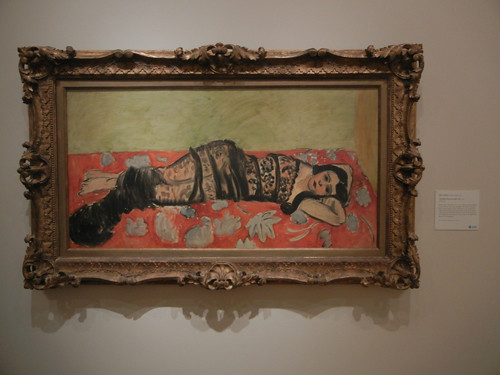
My favorite painting was The Black Shawl (Lorette VII) (1918) by Henri Matisse. This Matisse was striking with his surprising color harmony, his usual motifs of exaggerated flowery patterns, and the strange sensuality he achieved. The lying figure, Lorette, we assumed, in her provocative yet pensive pose, looked like mermaid or a siren, thanks to her form-fitting sheen black gown laced with bold floral patterns resembling large scales, and an extra length of fabric around her bare feet, like a tumbling tail. The figure in black really stood out on the pale red bedding, covered with large pale green leafy patterns, whose color reflected on the slightly more yellow tinged walls wrapping around her bed and thrusting the sitter to the viewer. The siren, looking directly into the viewer, had a sad expression on her face, slightly accusative, for neglect, or boredom, perchance? One could easily imagine this Lorette as being in a harem. A strange work of understated and seductive beauty, and enigmatic sentiment.
The Black Shawl (Lorette VII), 1918, Henri Matisse (1869-1954)
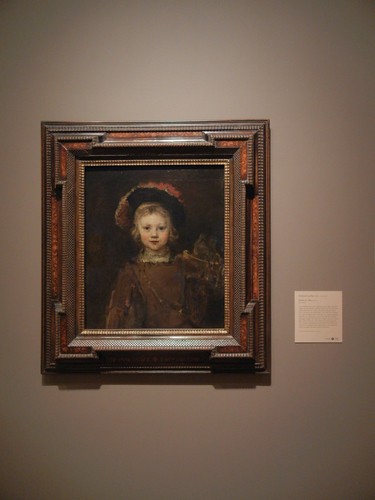
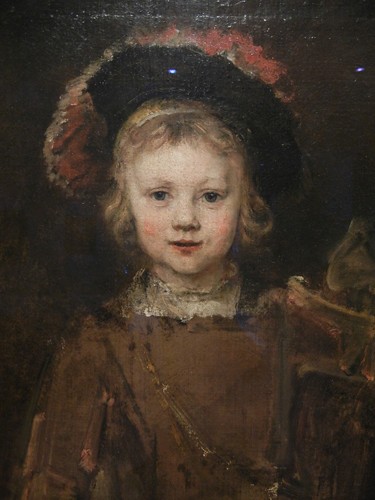
My second favorite was a portrait by Rembrandt van Rijn of his son Titus as a little boy, titled as Portrait of a Boy (1655-60). This unnamed boy, in his brown tunic, big black velvet hat with red feathery or flowery decoration, small band of white laced collar, with his soft blond hair, pink cheeks, gentle smile, was most angelic, adorable, and somewhat worrisomely vulnerable. The love, adoration, and worry from the doting father was most evident and touching.
Portrait of a Boy, 1655-60, Rembrandt van Rijn (1606-1669)
I was lucky enough to be able to visit the Broad Museum in Los Angeles shortly after it opened its doors. It was the manifestation of the mind-boggling concentration of wealth in this country; it also argued for the continuation of patronage system even in our era, and more favorably, the vital importance of educating supremely wealthy patrons, the eventually arbiters of fine art.
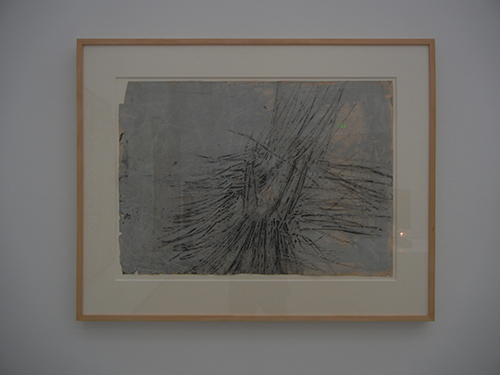
The Broad Museum truly impressed visitors with its glittering contemporary art collections. My favorite was Untitled [New York City] (1953) by Cy Twombly. This 1953 piece, in contrast to Twombly's usual repetitive cursive inscriptions, mimicking chalk on green blackboard, was more painterly, but was just as hypnotic, largely due to the numerous thin black lines crisscrossing over three three "pillars", which dominated the pale gray/white canvas. Those heavily outlined pillars were encircled with horizontal rings of various sizes, angles and heights, and those rings enmeshed with aforementioned thin wires, thus added texture and even mystery to the painting, so as some drippings over those pillars. Despite the limitation of colors and the similarity of shapes, those pillars and rings were not monotonous, due to some obvious variations — the first pillar was encircled by an additional ring plus an additional heavy vertical line drawn down from the lower ring, the middle one had a blunter tip, while and last one had a sharply angled tip. These pillars were also unevenly spaced and angled, and such unevenness helped to create some sense of movement, imbalances, and dynamics. Finally, those pillars did resemble some wounded and bleeding fingers, and this was just my own perception.
Untitled [New York City], 1953, Cy Twombly
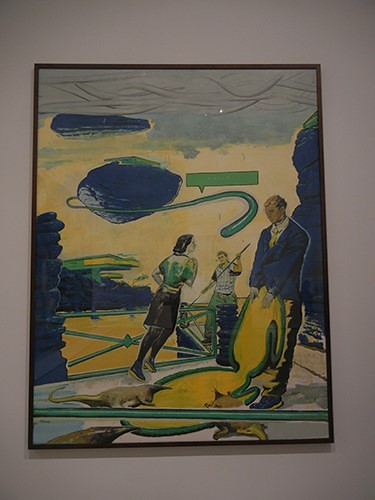
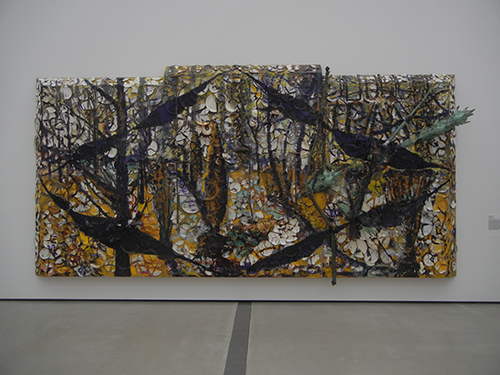
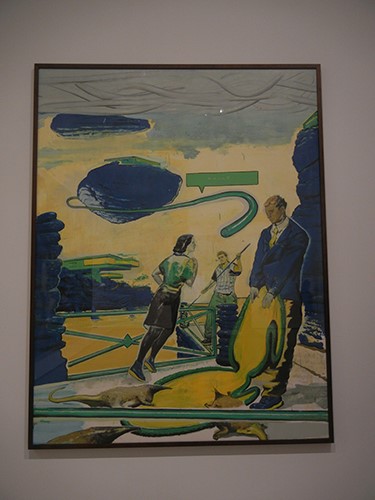
My second favorite was Falle (Trap) (2001) by Neo Rauch, a German artist hailed from Leipzig. This painting was also somewhat an departure — instead of the artist's typical combusting array of saturated colors, Falle was essentially a bi-tonal piece, dominated by pale yellow background and some large patches in deep navy blue, modulated by a few small thin stretches of bright green over some pipes and hoses, and a cartoon callout. The objects of this painting was a seemingly daily routine — a well dressed and groomed man holding something like a deformed trampoline, with two or thee small dogs or cats either pulling the trampoline or feeding off it; a woman leaning over away from the viewer, at the point of tipping over metal rail, towards a casually dressed man, who was holding a pole as if rowing, though he was on solid ground, or it seemed. A heart-shaped deep blue object hovered in the sky, with a long green
tube attached to it, like an aircraft readying to suck up more
petroleum. Everything we saw was ambiguous in situation or intention, and was to pin down. Perhaps, that comfortable suburbian life was the trap. In the subject matter, this painting was consistent with his oeuvres —
some seemingly mundane setting and activities in nondescript suburbia,
actually fostered something alienating, disturbing and even sinister.
The relatively modest Museum of Contemporary Art (MOCA) in Los Angeles didn't overwhelm people with blockbuster pieces, as other Museums in Los Angele often did, yet it invited conversation and thoughts with some austere pieces.
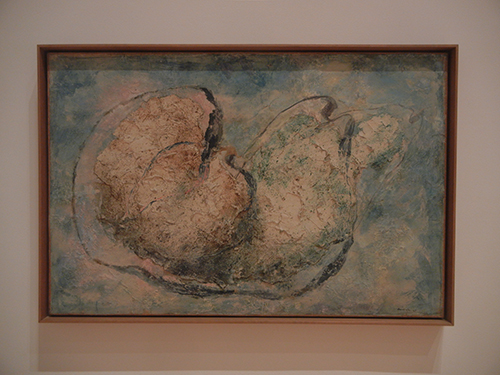
My favorite was a mixed media on paper titled Dêpouille (Skin or Human Remains) (1945) by French artist Jean Fautrier (1898-1964). The strongest impression of this abstract piece was the understated, appealing palette, which consisted of pale brownish yellow and red, underneath some intermittent light blue wash. The main object, occupying almost the entire paper, shaped like a giant pearl upon its irregular shaped mother shell. Yet, once the title sank in, this amorphous object took on a sinister meaning and darker tone, and the imagined sheen of a piece of jewel morphed into rough and cracked mass, symbol of the degeneration of bodies.
Dêpouille (Skin or Human Remains), 1945, Mixed media on paper mounted on linen, Jean Fautrier (1898-1964)
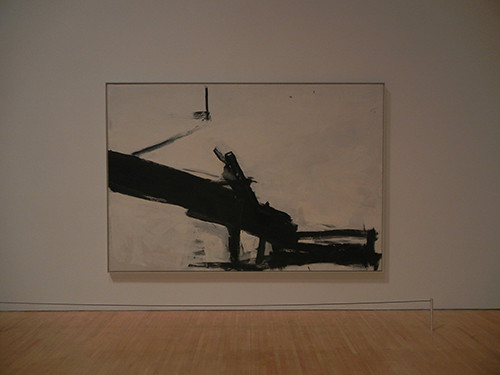
At first glance, Franz Kline (1910-1962)'s 1956 oil painting, Monitor, was a pure abstract piece, consisted only white and black paints. The wet over wet effect of the merge and interplay of these sharply contrasted colors was both dramatic and subtle. The boldness of the gigantic central black "beam" also contrasted wonderfully to a very thin dark stroke, fading into far distance, and aided by a small pole at the end of that disappearing stroke, thus added more focal interest to these ever entangled and extending objects, instantly a broad space was opened up for the viewer. After the dramatic impact of the high contrast had dissipated, I realized that one of those protruding object in the center of the canvas was actually indeed a traffic or security monitor, atop of a huge horizontal beam, pointing to unseen and perhaps unaware people, beyond the edge of the canvas. Beautiful and disturbing.
Monitor, 1956, Oil on Canvas, Franz Kline (1910-1962)
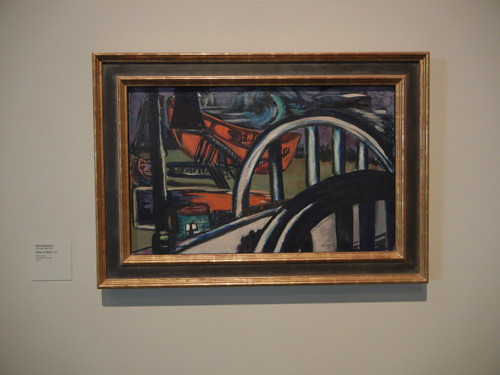
What I enjoyed most at Los Angeles County Museum of Art (LACMA) were paintings from modern German masters. My favorite was Bridge and Wharf (1945) by Max Beckman. This was a typical mature Beckmann in his most probing mold. This landscape confronted us with a section of a massive industrial bridge, bold and strong chrome colored beams imprisoned by thick black outlines, chilly looking, partially blocking the view of a narrow wharf, in which haphazardly moored ships of various sizes, shapes and placements. Behind this chaotic yet impressive tableau, there was an almost angry leaden sky, whose pale purple color, together with muted earth brownish green over the static water in the central strip of the canvas, heightened the brightness of the colors in the wharf, predominantly rich red on the bodies of some ships, and on an edge of a boat a small patch of thalo green, which also lent its special chilling allure to some celestial elements in the sky. All those bright colors were also boldly outlined, similar to those beams of the bridge, with massive black strokes, which bound together the diverse elements and colors with its inexhaustible reaches like slithering arms of a giant octopus. A beautiful rendition of a disrupted world.
Bridge and Wharf, 1945, Max Beckmann (1884-1950)
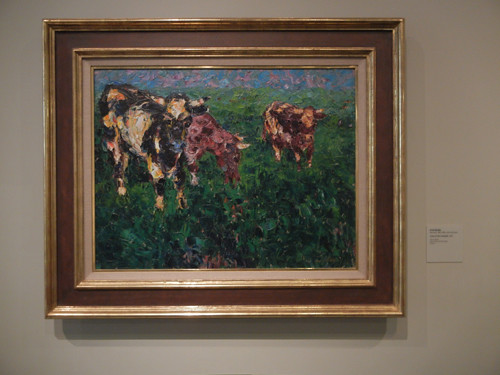
Cows in the Lowland (1909) by Emil Nolde was an apparently idyllic pastoral world, with several cows gazing in a lovely meadow; yet, nothing was as apparent as it was — dark grass, unnaturally colored noble beasts, scattered flowers, a wall of light pink and blue sky, all in heavy impasto and painted with determined palette knife, verging toward disintegration, and formed a world in the shadow of hallucination and madness. A prophetic work.
What I found most interesting at J. Paul Getty Museum - Getty Center in Los Angels were European paintings, and my top choice was Portrait of the Marquesa de Santiago (1804) by Spanish painter Goya — a formal portrait of an aristocratic lady in dramatically contrasting black dress with golden braids, pink shoes, and white lacy mantilla, with provocatively exaggerated makeup, standing atop a hill, a closed fan in hand, and holding herself like a seasoned stage trooper.
Goya employed broad and quick brushstrokes to establish her black dress and rustic cottages in the low lying village at distance, seen behind tilting ground, which, along with stormy sky, contributed to establish a personality prone to self-dramatization. Despite Goya's loose brushstrokes, this full length portrait was still very realistic, though the sitter's face was curiously
plastic and devoid of personality. Maybe Goya did capture his sitter rather too well.
I was also very impressed by Edvard Munch's Starry Night (1893), whose sweeping atmospheric sky, mysteriously-shaped mound and other objects on the shore, and the mirror-like glinty sea, often basked in a blue wash, gave us a sense what the beginning of everything might have looked like, and we were in the presence of some celestial phenomenon recorded with quick brushstrokes and varying thickness of paints of blue, green, maroon, and brilliant white, interlaced with some eloquent patches of almost naked canvas, where the paints thinned out. Altogether, those loosely applied pigments and vaguely suggested elements not only generated a shimmering atmosphere, but gyrating slow movements as well, and the viewers were dazzled by that.
For better or worse, it must be a sign that we are living in a new Gilded-Age when families are racing to build museums to showcase their phenomenal personal holdings. One of the new ones I reported a while ago was the Anderson Collection in Stanford; last month, a brand new Broad Museum opened its door in Downtown Los Angeles, and soon, a Fisher Wing will be added to San Francisco Modern Art Museum.
The Broad is a new contemporary art museum built by philanthropists Eli
and Edythe Broad on Grand Avenue in downtown Los Angeles. The museum,
which is designed by Diller Scofidio + Renfro in collaboration with
Gensler will offer free general admission. The museum will be home to
the nearly 2,000 works of art in the Broad collection, which is among
the most prominent holdings of postwar and contemporary art worldwide.
With its innovative “veil-and-vault” concept, the 120,000-square-foot,
$140-million building will feature two floors of gallery space to
showcase The Broad’s comprehensive collection and will be the
headquarters of The Broad Art Foundation’s worldwide lending library. [source: Broad Museum website]
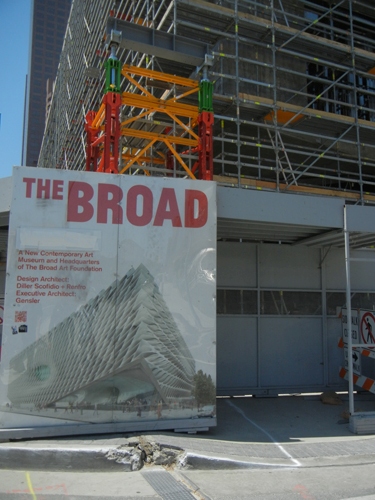
The Broad under Construction, 2013
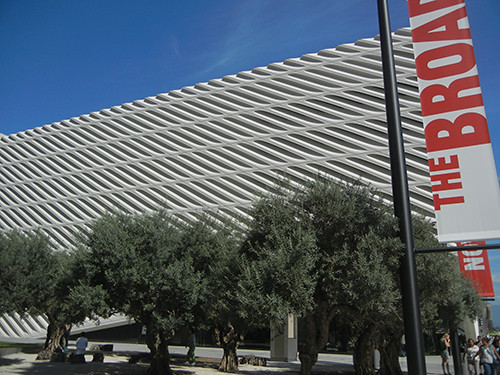
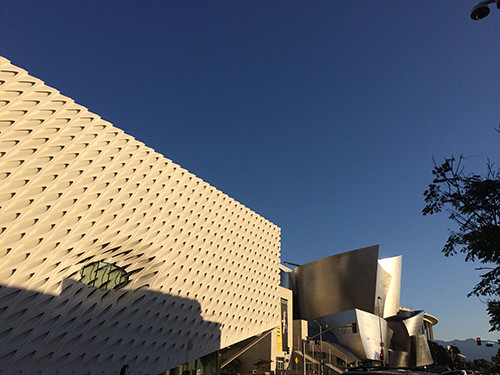
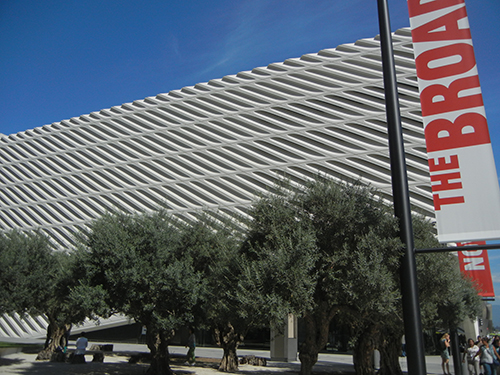
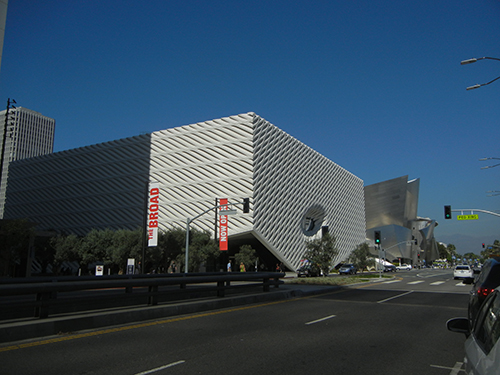
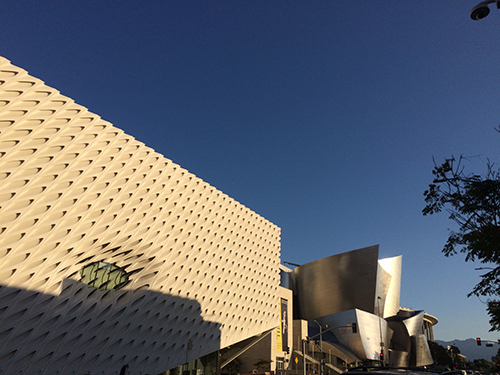
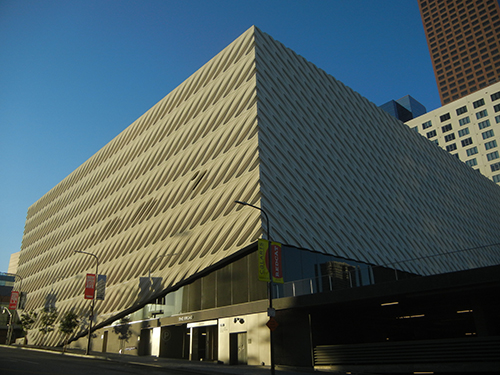
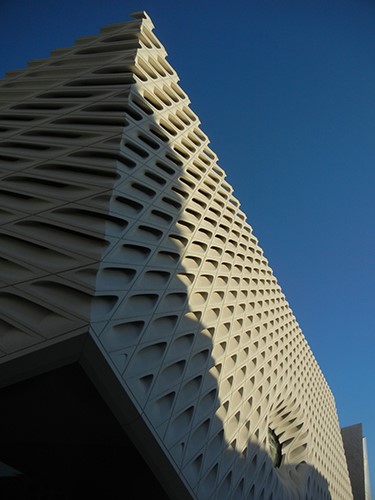
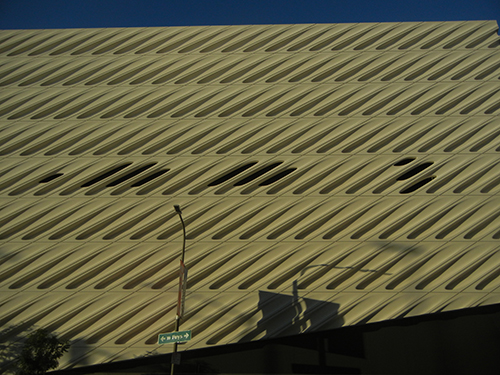
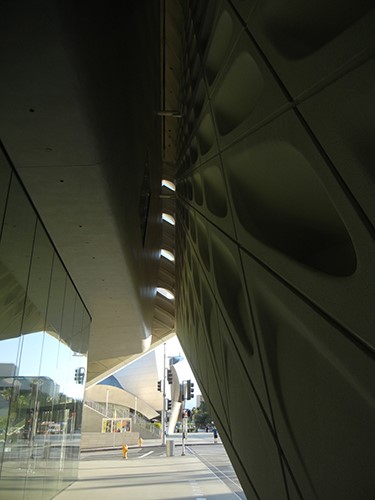
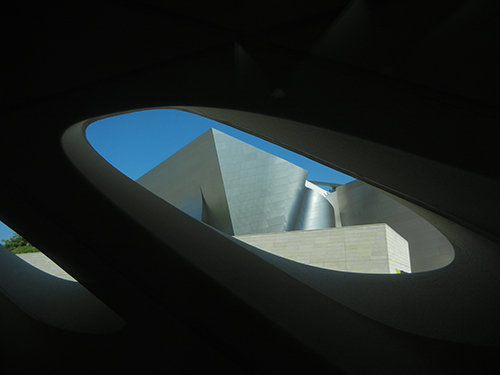
Early October, I had a chance to visit this newly opened museum. I had been wondering about that structure since 2013 when I saw the enormous building under construction, next to Frank Gehry's Walt Disney Symphony Concert Hall in Downtown Los Angeles. Now, the completed building shone under the bright sun and it's orderly, elegant, somewhat muted exterior complimented well to the metallic and dynamic Disney hall at its side.
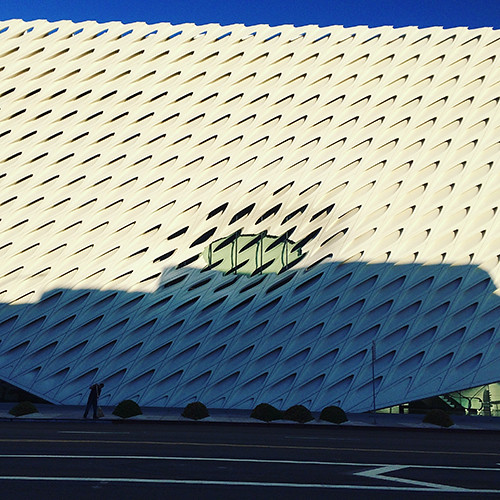
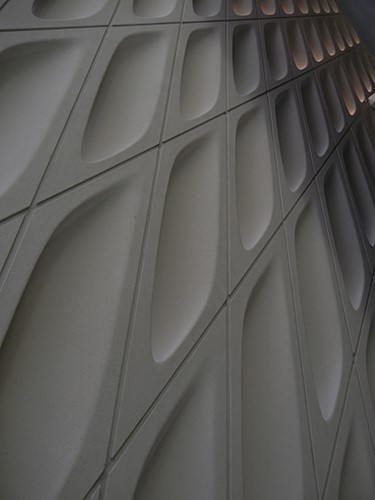
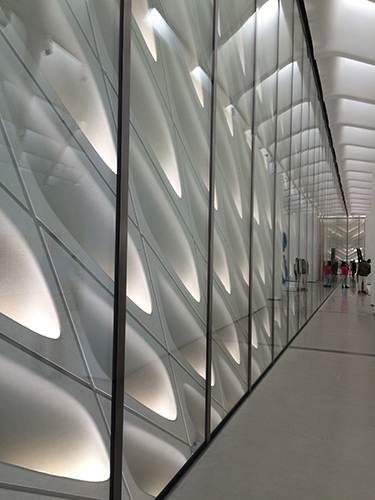
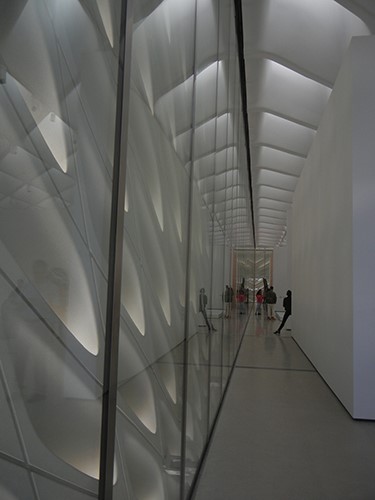
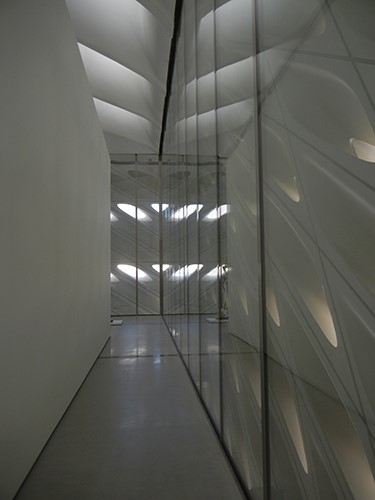
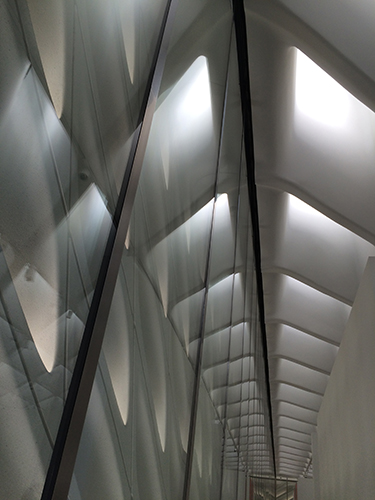
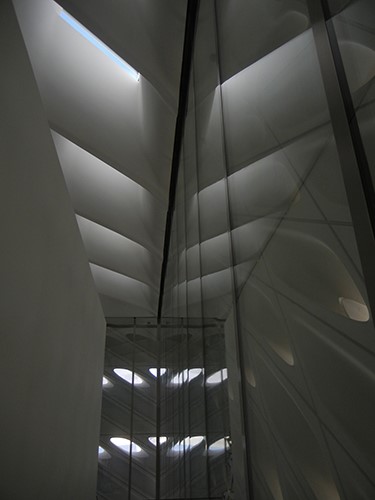
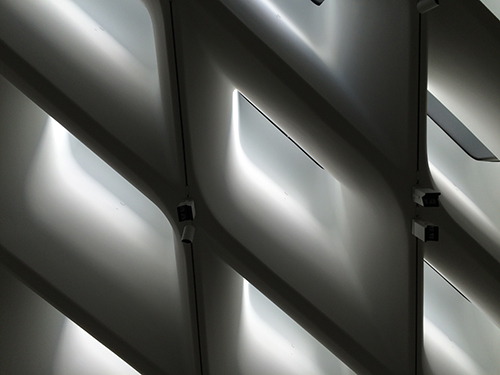
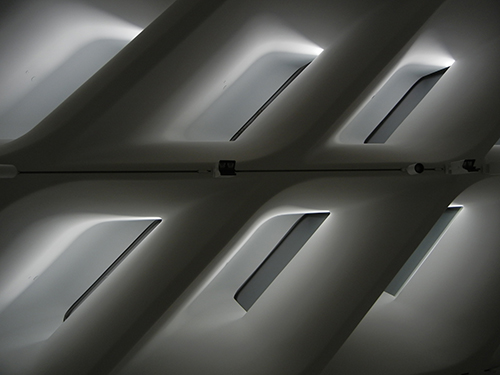
There was a pathway behind the front "panel", where one had a good view of the museum through windows and a "behind the scene" view of the intricately patterned façade.
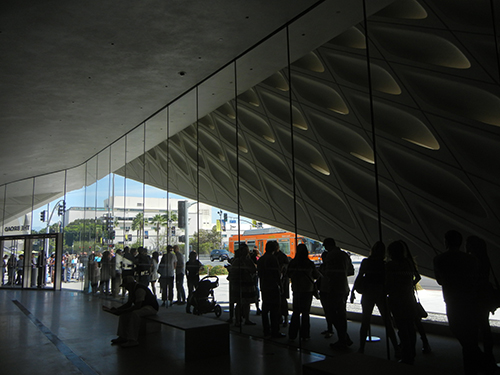
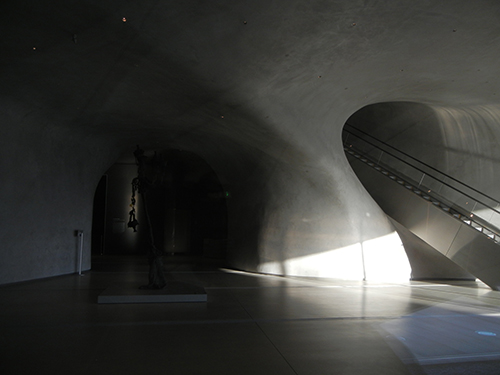
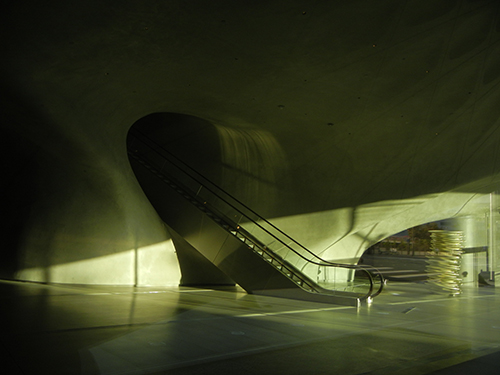
The front lobby was very playful. In contrast to the square and orderly exterior, the lobby was molded like an gigantic cave, organic and ever morphing, and a little bit threatening, like a haunted house.
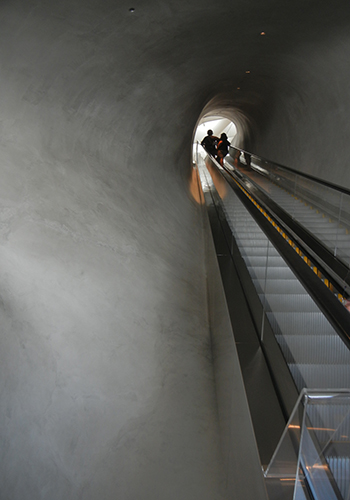
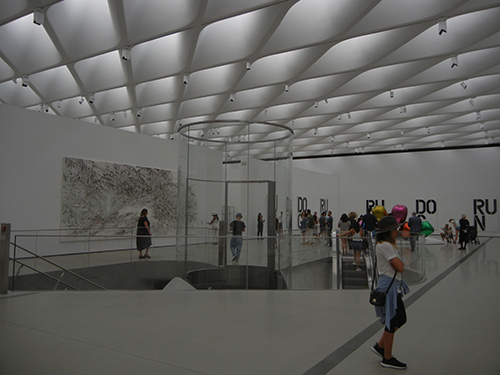
There were three levels in the building, where the first and third were exhibition spaces while the second contained offices, boardroom and educational center. Taking the escalator, I willingly allowed myself wallowed by the dark tunnel and arrived at a brightly lit exhibition space, which contrasted dramatically to the dark and mysterious front lobby behind me.
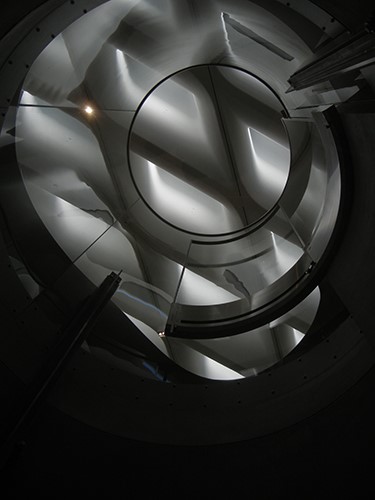
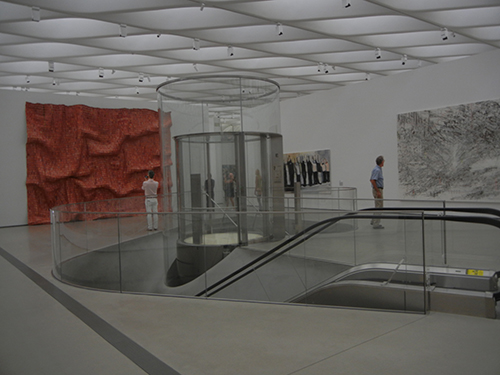
Escalator and tubular elevator
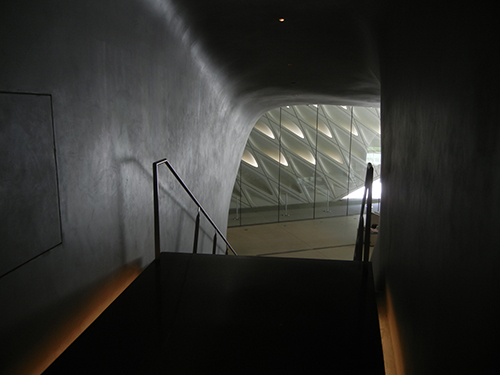
Staircase
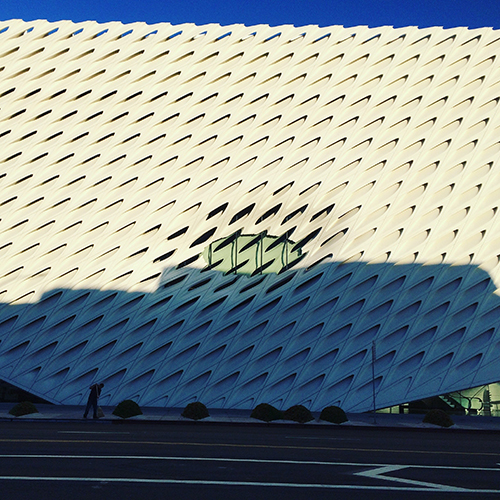
Before I concentrated on the art, I looked around and admired the building from many angles.
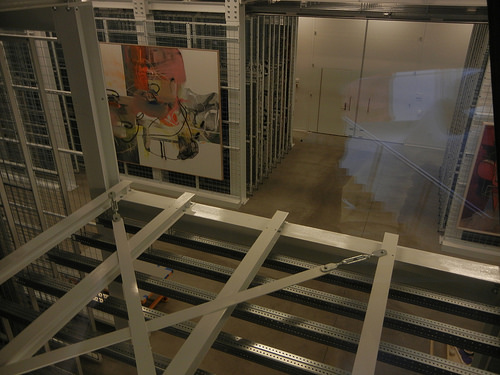
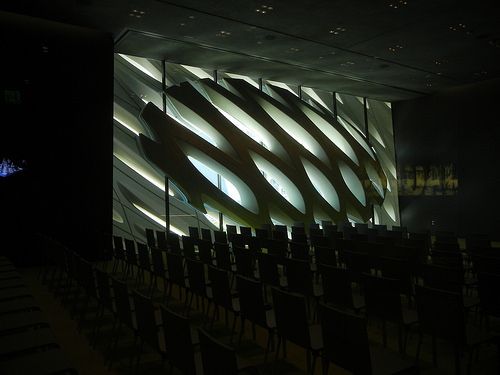
On the second floor, visitors had a "backstage" peep of the vast collections not being on display at the moment, and the inverted bulge at the conference room was that central oval on the front façade:
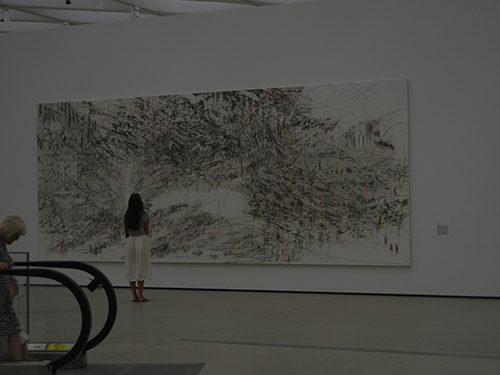
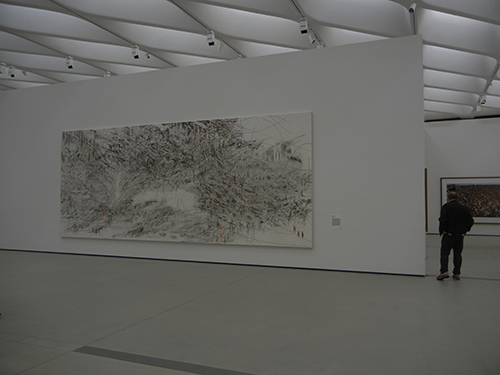
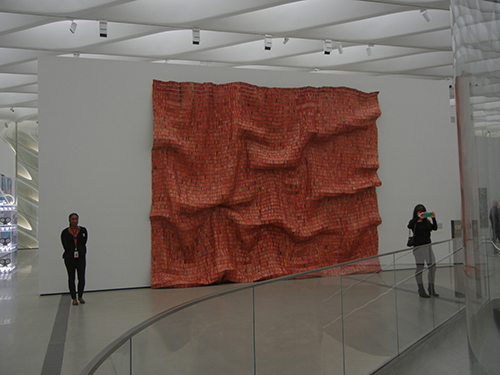
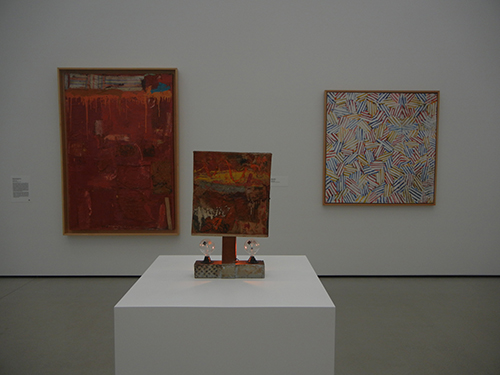
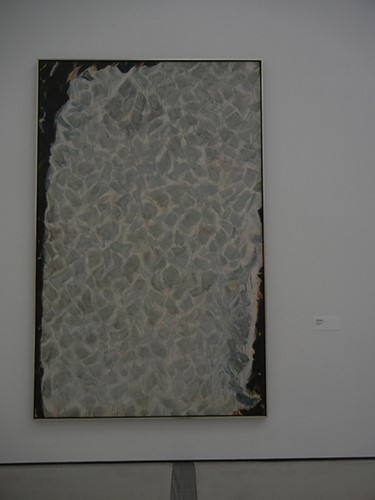
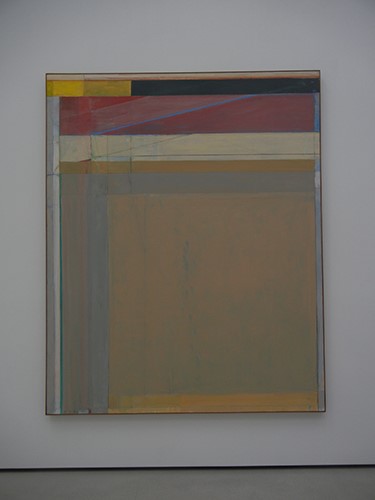
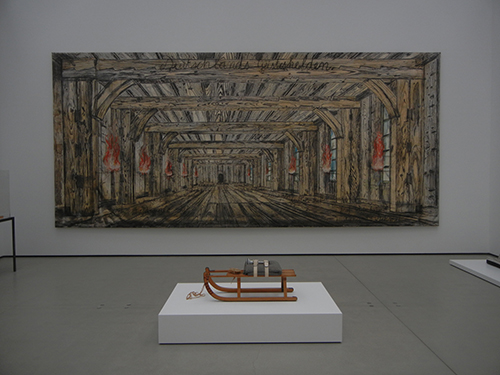
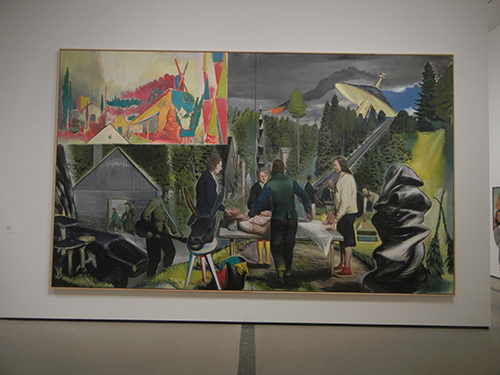
The Broad had an impressive array of artworks on display. Below are some of my favorites, by artists such as Julie Mehretu, El Anatsui, Robert Rauschenberg, Cy Twombly, Anselm Kiefer, William Kentridge and Neo Rauch:
Cairo, 2013, Julie Mehretu
Red Block, 2010, El Anatsui
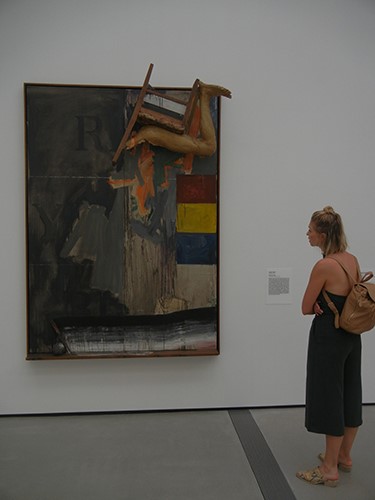
Untitled, 1954; Combine, 1954, Robert Rauschenberg; Untitled, 1975, Jasper Johns
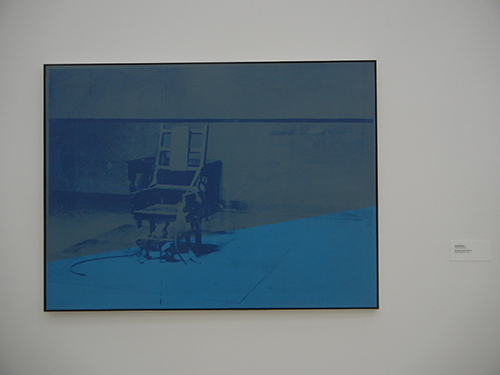
Big Electric Chair, 1967-68, Andy Warhol
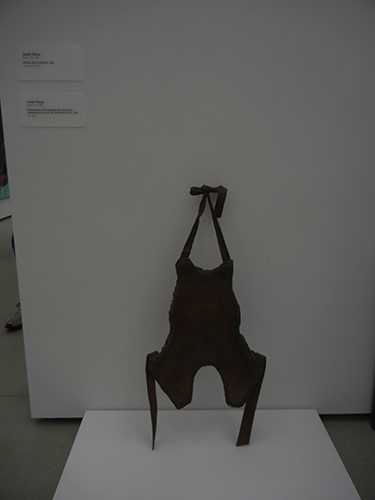
Watchman, 1964, Jasper Johns & Rückenstütze eines feingliederigen Menschen (Hasentypus) aus dem 20. Jahrhundert p. Chr., 1972, Joseph Beuys
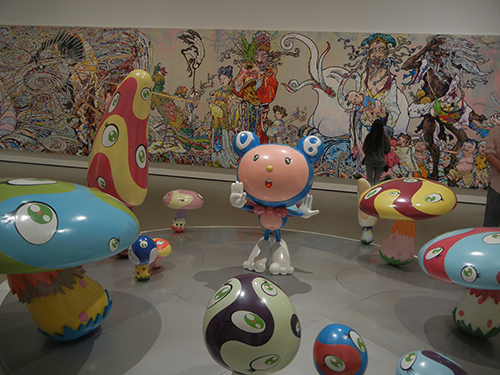
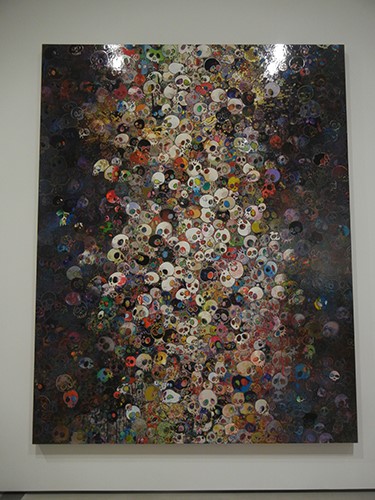
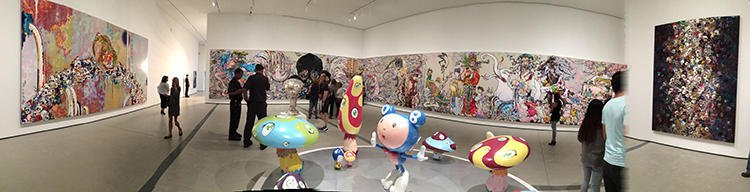
Some are not necessarily my favorite but their presence was hard to ignore, such as the works by Takashi Murakami:
DOB in the Strange Forest (Blue DOB), 1999, Takashi Murakami
End of Line, 2011, Takashi Murakami
Front: DOB in the Strange Forest (Blue DOB), 1999
Back: Of Chinese Lions, Peonies, Skulls, And Fountains, 2011, In the Land of the Dead, Stepping on the Tail of a Rainbow, 2014, End of Line, 2011, Takashi Murakami
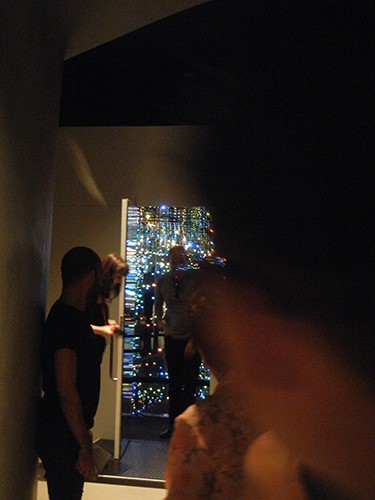
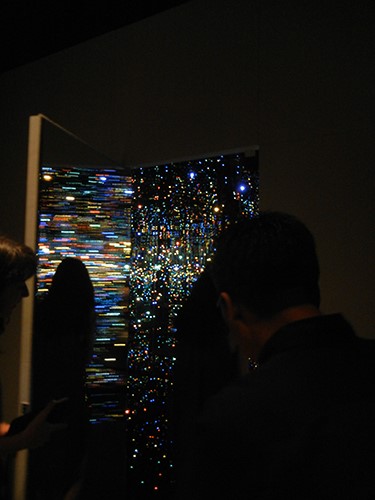
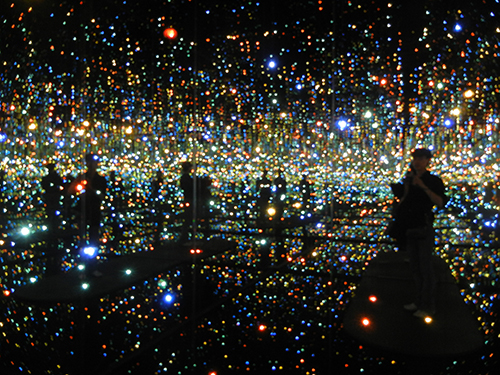
One of the special installation was the "Infinity Mirrored Room", 2013, Yayoi Kusama. Using numerous LED lights and mirrors, the artists created an infinite universe within a confine of such dimensions: 113 1/4 x 163 1/2 x 163 1/2 in. (287.66 x 415.29 x 415.29 cm).
Visitors could sign on to visit the room once entered the Museum. My wait to visit it was about two hours. Each visitor was given about 30 or 35 seconds alone inside the room - a staff timed her iPad at the entrance to the room. Below are some stills and video I shot while waiting and inside the room. By the time I left the room, the sign up sheet for that Mirrored Room was closed for the day.
Entrance to the Infinity Mirrored Room, 2013, Yayoi Kusama
Infinity Mirrored Room, 2013, Yayoi Kusama
Another standout installation was a nine-channel HD video projection, titled "The Visitors", 2012, by Ragnar Kjartnsson. Inside a large long U-shaped room, along the wall there were multiple screens and speakers, with certain distance from one another, and each of such sets featured different instrumental player(s) and they created a disorienting yet harmonious cacophony when visitors wandered from screen to screen, one sound fading and another emerging, mixing and replacing.
Excerpt from "The Visitors", 2012, Ragnar Kjartansson
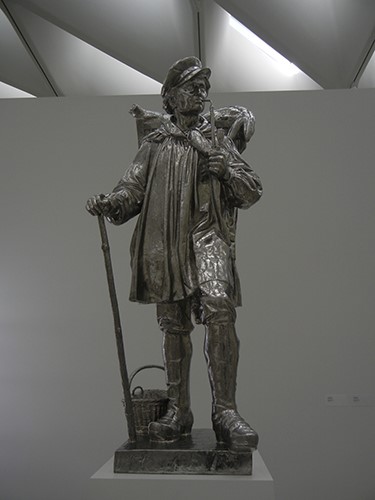
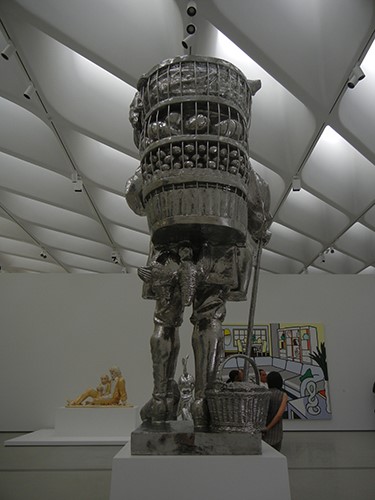
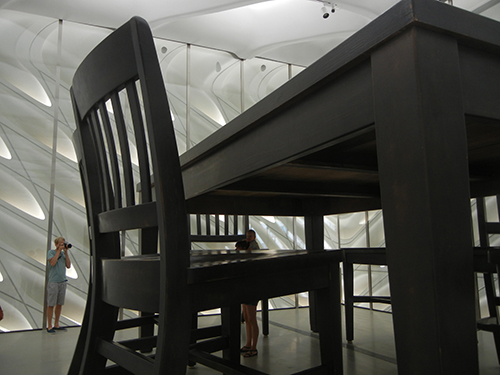
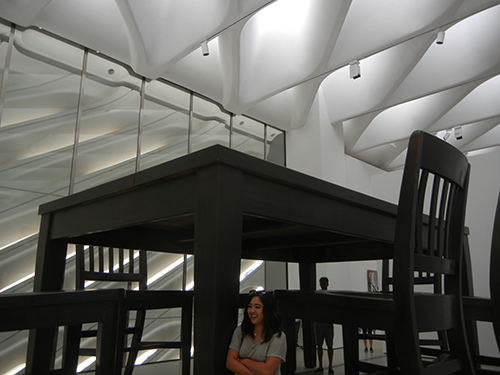
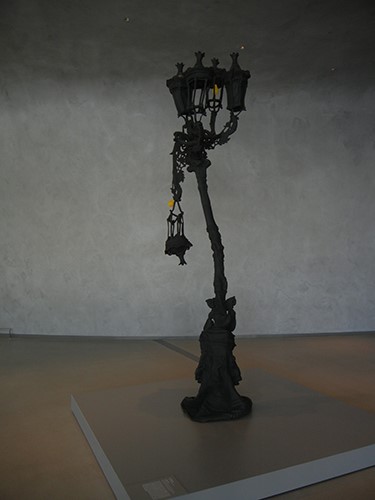
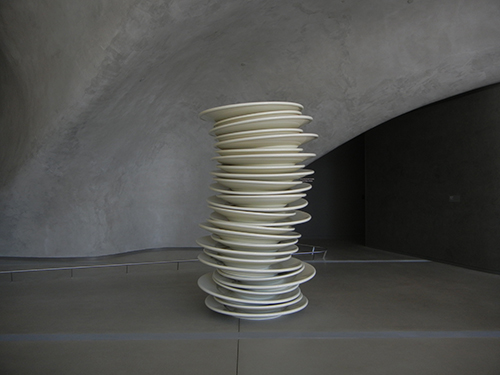
After the strong sonic stimulation, it was welcome to be with silent and whimsical sculptures by Urs Fischer and Robert Therrien, both adding the strange sense of living and breathing to the front lobby, where they stood and guarded.


![DSCN0349 _ Untitled [New York City], 1953, Cy Twombly, Broad Museum, LA](https://c1.staticflickr.com/6/5700/21606588184_3b4ac31848.jpg)




![DSCN0349 _ Untitled [New York City], 1953, Cy Twombly, Broad Museum, LA](https://farm6.staticflickr.com/5700/21606588184_8241f228e4_o.jpg)
![DSCN0350 _ Nini's Painting [Rome], 1971, Cy Twombly, Broad Museum, LA](https://farm6.staticflickr.com/5633/22203249716_6611a9c228_o.jpg)
![DSCN0351 _ Untitled [Bolsena}, 1969, Untitled [Rome], 1987, Leaving Paphos Ringed with Waves [III], 2009, Cy Twombly, Broad Museum, LA](https://farm6.staticflickr.com/5822/22041585518_43d7107412_o.jpg)
![IMG_1351 _ Untitled, 2006, The Rose [V], 2008, Cy Twombly,](https://farm1.staticflickr.com/737/21608276643_5b0c6b19f1_o.jpg)
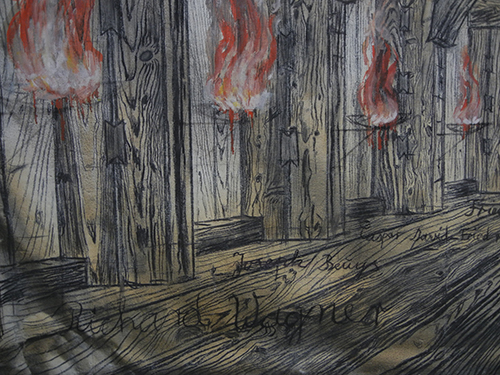
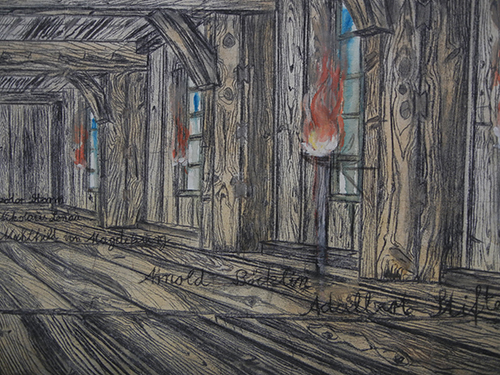
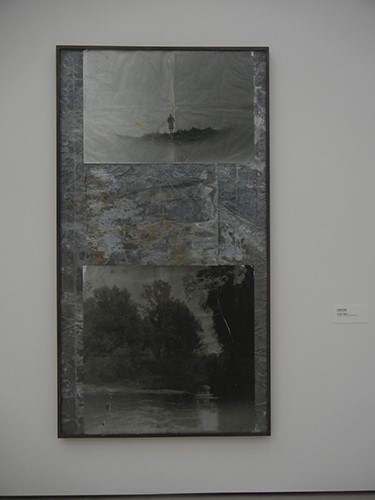
![DSCN0359 _ Am Rhein [detail], 1968-91, Anselm Kiefer, Broad Museum, LA](https://farm6.staticflickr.com/5797/21608300833_0311f10050_o.jpg)
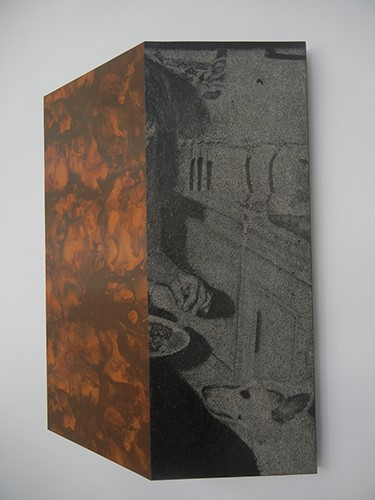
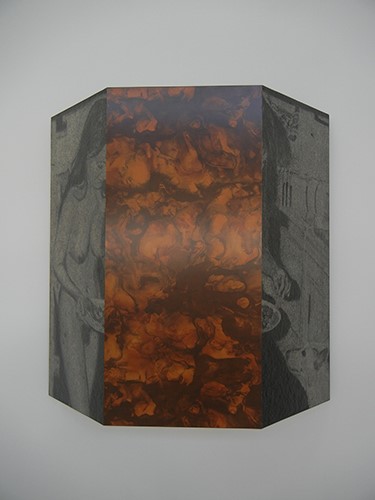

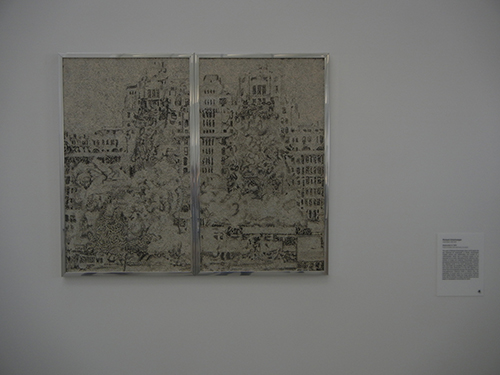
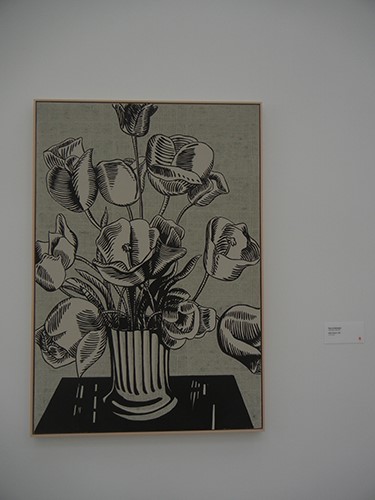
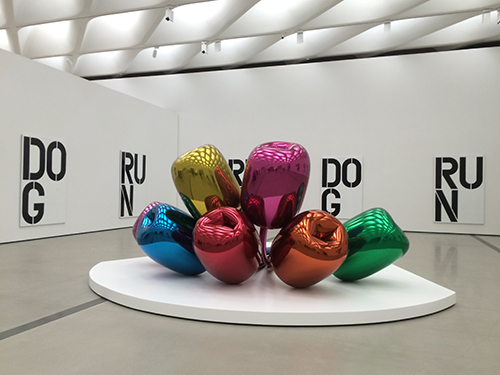
![DSCN0387 _ Balloon Dog [Blue], 1994-2000, Rabbit, 1986, Jeff Koons, Broad Museum, LA](https://farm6.staticflickr.com/5749/22042447459_d109525341_o.jpg)


 Posts
Posts


