Showing posts with label Rodin. Show all posts

Thursday, January 11, 2018

Klimt & Rodin Exhibition at Legion of Honor Museum, San Francisco

Legion of Honor Museum in San Francisco is presenting a major survey of Austrian painter Gustav Klimt, Klimt & Rodin: An Artistic Encounter (October 14, 2017 – January 28, 2018), which focuses on a selection of Klimt's paintings in his most celebrated intricate and elaborate style (closely associated with Vienna Secession), and more works in the styles more subdued and subtle, and not immediately reminding viewers of him, along with several sensual and impactful works by his contemporary, the French sculptor Auguste Rodin.

According to the program notes, Rodin and Klimt met in 1902, "while Klimt, the president of the Vienna Secession, was still developing his signature style, Rodin was at the peak of his international fame."

"Approximately 25 sculptures and works on paper by Rodin from the Museums' collection provide visual dialogues with the works by Klimt. The exhibition is thematically arranged around the Vienna Secession, Rodin's 1901 exhibition in Vienna, Rodin’s 1902 visit to Vienna, Klimt's landscapes and Rodin's surfaces, and the depiction of women—for both artists an eternal source of inspiration—exploring shared touch points and developments in the two artists' practices throughout."

To me, the connection between these two giants was not obvious, therefore, I will report their works separately. First Gustav Klimt.
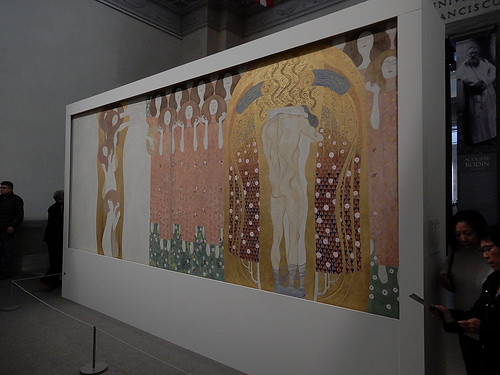
One of the most eye-catching pieces on display was a replica of a portion of the Beethoven Frieze, which was painted for the 14th Vienna Secessionist exhibition, and is now on permanent display in the Vienna Secession hall, and it was an important signpost for a new style, and a new epoch.
 

DSCN9940 _ Beethoven Frieze (reproduction), Klimt, 1902 - Klimt & Rodin
Beethoven Frieze (reproduction), 1902

Next were several ornate and disturbing works, centering on Nuda Veritas, which features a poem by Schiller. Noteworthy was a Secession Exhibition poster — superficially beautiful; innately profound.
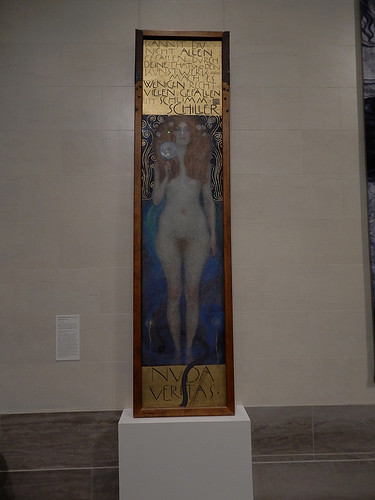
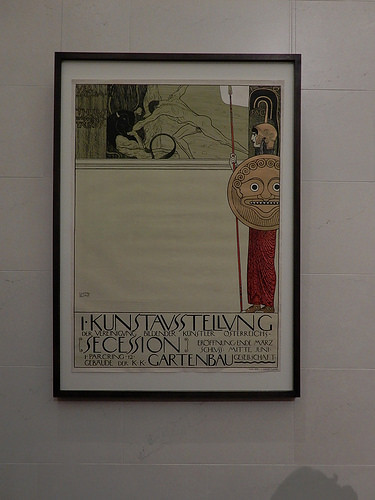
DSCN9982 _ Nuda Veritas, Klimt, 1899 - Klimt & Rodin DSCN9985 _ Klimt - Klimt & Rodin
Nuda Veritas, 1899 (l) & Secession Exhibition Poster by Klimt (r)

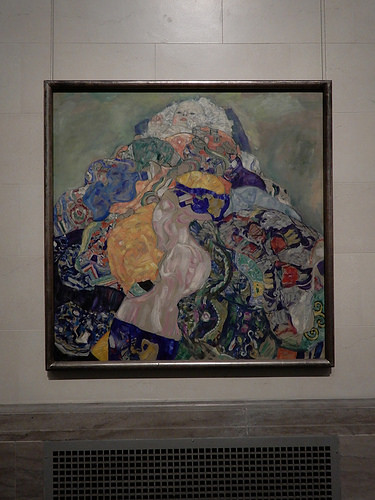
Klimt's The Virgin and The Baby were the epitomes of his most renown style — bold colors, monumental composition, sensual/disturbing themes, and intricately details. It was grateful to see these works.
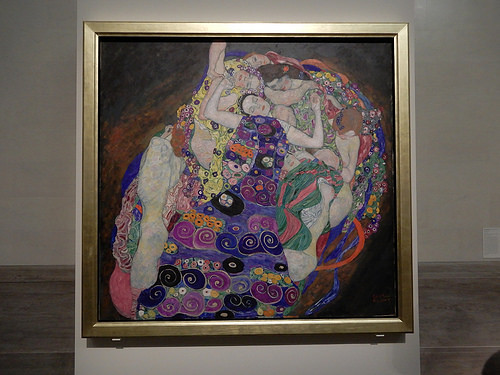
DSCN9935 _ The Virgin, Klimt, 1913 - Klimt & Rodin
The Virgin, 1913

DSCN9933 _ The Baby, Klimt, 1917 - Klimt & Rodin
The Baby, 1917

Following up was a Another glossy painting, whose over-polished style rendered it almost purely decorative.
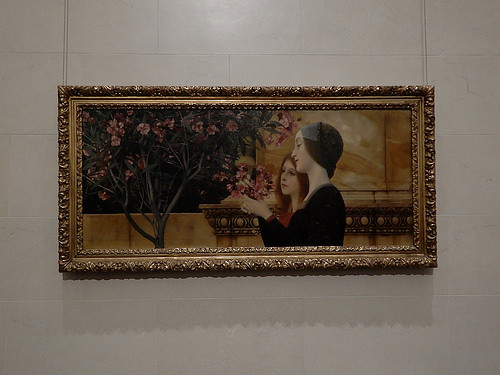
DSCN9984 _ Klimt, Klimt & Rodin

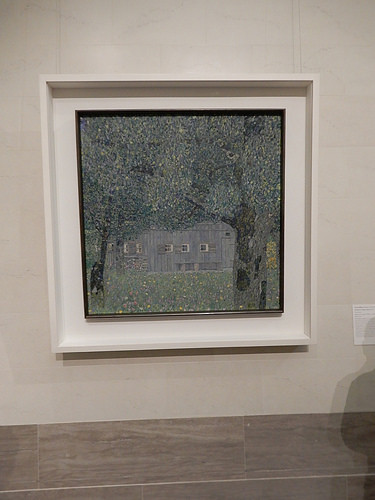
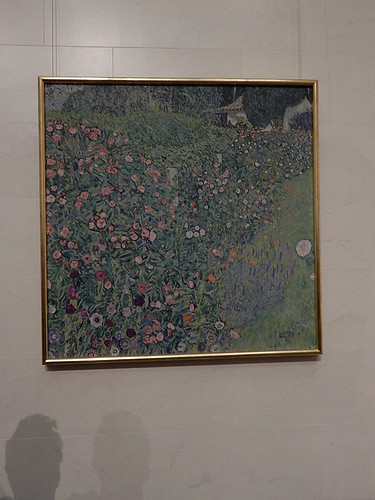
Moving to less familiar ground, and we saw several very interesting landscapes by Klimt, which resembled rather the works of his another contemporary, Egon Schiele, in the tightly intertwined patterns and somewhat twisted psyche.
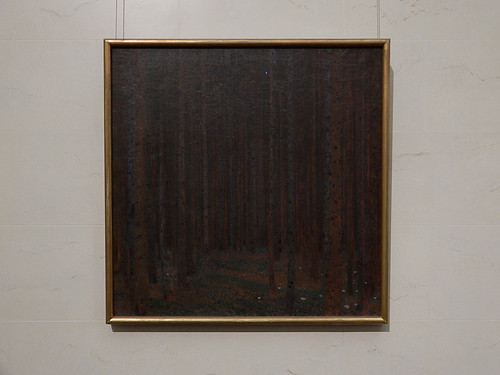
DSCN9947 _ Pine Forest I, Klimt, 1901 - Klimt & Rodin
Pine Forest I, 1901

DSCN9952 _ Farmhouse in Upper Austria, Klimt, 1911 - Klimt & Rodin DSCN9956 _ A Garden in Italy, Klimt, 1913 - Klimt & Rodin
Farmhouse in Upper Austria, 1911(l) & A Garden in Italy, 1913 (r)
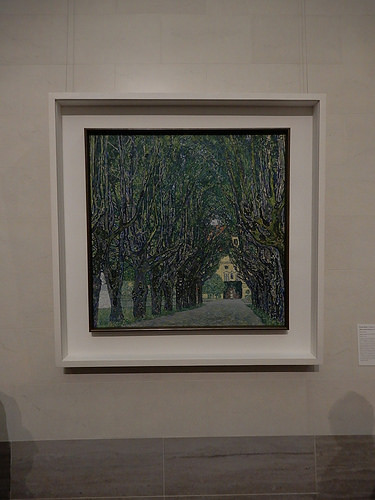
DSCN9954 _ Allée at Schloss Kammer, Klimt, 1912 - Klimt & Rodin
Allée at Schloss Kammer, 1912

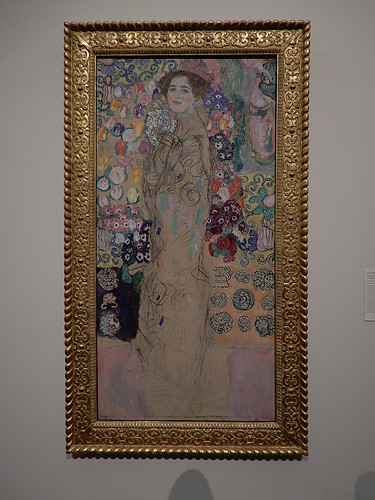
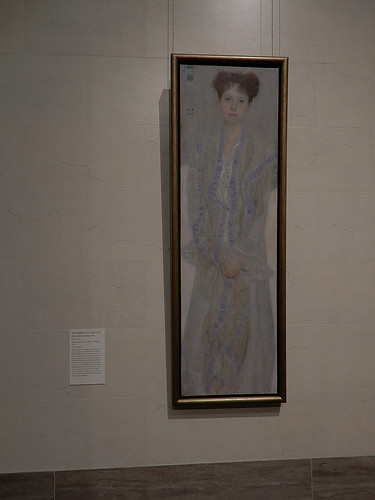
Several other portraits were also very interesting, either because they did challenged our impression of Klimt, or because the unfinished states of these works. Several pieces called French artist Henri de Toulouse-Lautrec to mind.
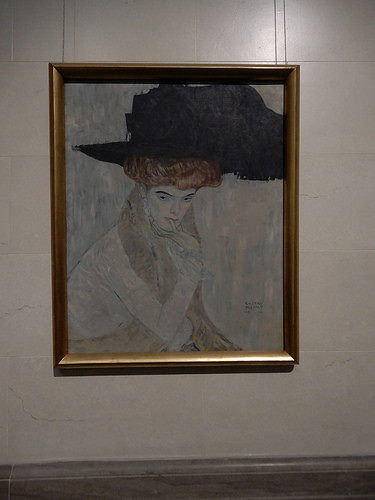
DSCN9931 _ The Black-Feathered Hat, Klimt, 1910 - Klimt & Rodin
The Black-Feathered Hat, Klimt, 1910

DSCN9960 _ Portrait of Ria Munk III, Klimt, 1917 - Klimt & Rodin  DSCN9969 _ Portrait of Gertrud Loew, Klimt, 1902 - Klimt & Rodin
Portrait of Ria Munk III, 1917 (l) & Portrait of Gertrud Loew, 1902 (r)
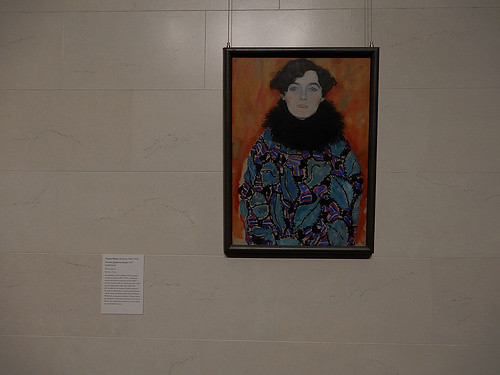
DSCN9966 _ Portrait of Johanna Staude, Klimt, 1917 (unfinished) - Klimt & Rodin
Portrait of Johanna Staude, 1917 (unfinished)
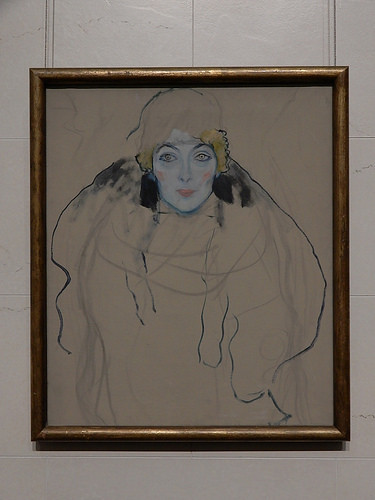
DSCN9964 _ Portrait of a Lady, Klimt, 1917 (unfinished) - Klimt & Rodin
Portrait of a Lady, 1917 (unfinished)

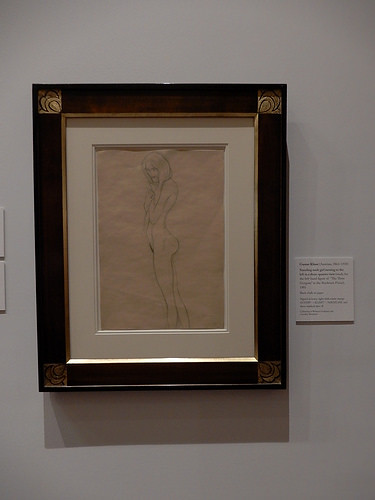
Finally, there was a pastel-hued portrait, recalling John Singer Sargent's rather manicured society ladies, and a nude study, whose economic lines were more eloquent than the elaborate dress of the society lady.
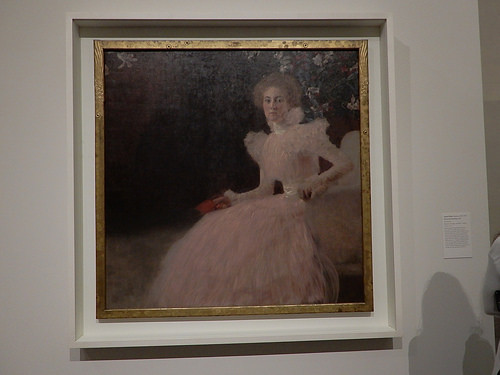
DSCN9975 _ Portrait of Sonja Knips, Klimt, 1898 - Klimt & Rodin
Portrait of Sonja Knips, 1898

DSCN9987 _ Standing nude girl turning to 
the left in a 3-quarter view, Klimt, 1901 - Klimt & 
Rodin
Standing nude girl turning to the left in a 3-quarter view, 1901

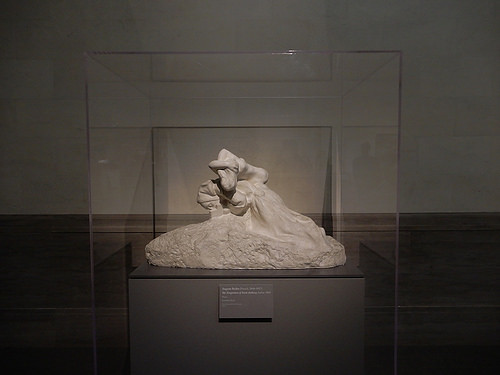
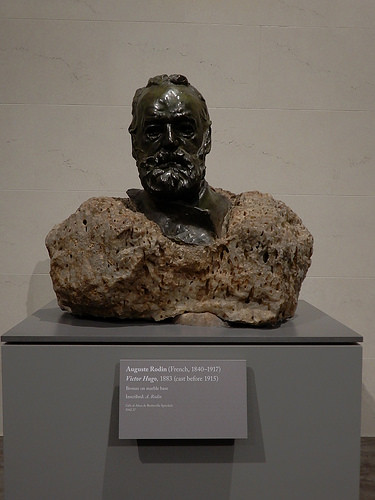
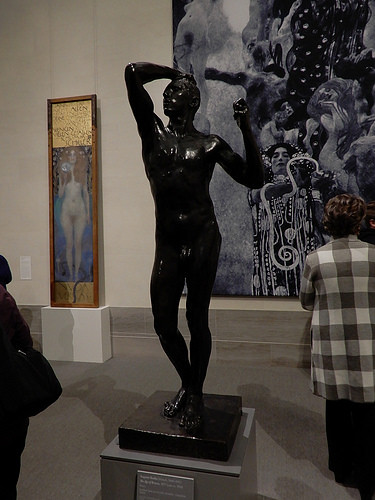
Though Rodin's works were generally more monumental in scale and topic, the deft mixture of certain sensuality and seriousness could be found in both Klimt and Rodin, and some arabesque poses in Rodin were not dissimilar to the intricate details of Klimt.
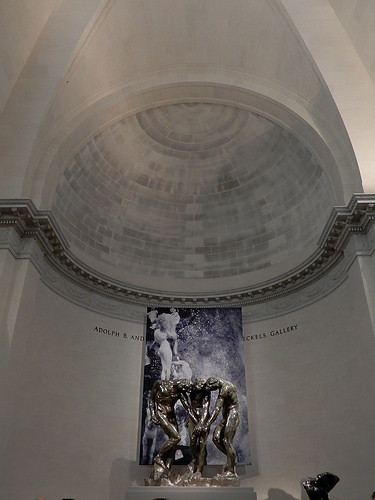
DSCN9937 _ The Gates of Hell (Partial), Klimt & Rodin
The Gates of Hell (Partial)

DSCN9941 _ The Temptation of St Anthony, Rodin, before 1900 - Klimt & Rodin
The Temptation of St Anthony, before 1900
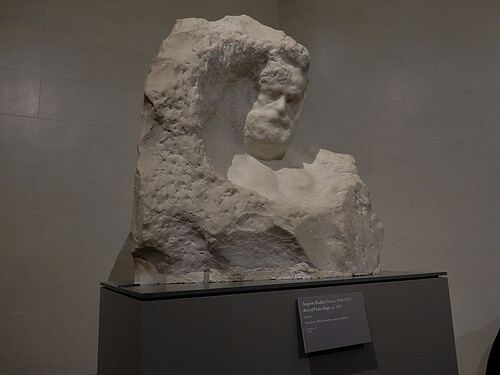
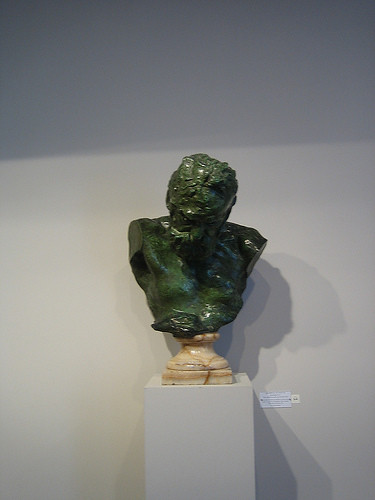
DSCN9977 _ Bust of Victor Hugo, Rodin, ca. 1917 - Klimt & Rodin
Bust of Victor Hugo, ca. 1917

DSCN9951 _ Victor Hugo, Rodin, 1883 - Klimt & Rodin
Victor Hugo, 1883

DSCN9971 _ The Age of Bronze, Rodin, c 1914 - Klimt & Rodin
The Age of Bronze, ca. 1914

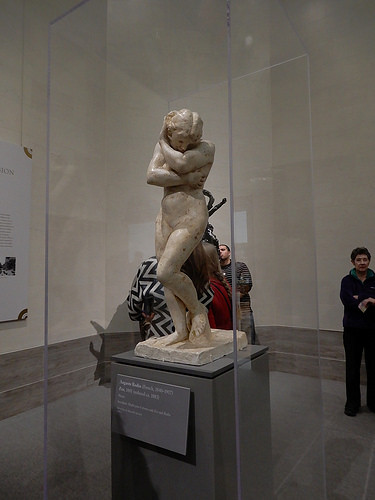
DSCN9973 _ Eve, Rodin, 1881 - Klimt & Rodin
Eve, 1881

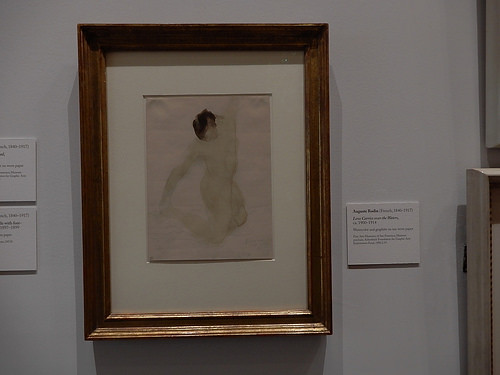
DSCN9986 _ Love Carries over the Waters, Rodin, ca. 1900-14 - Klimt & Rodin
Love Carries over the Waters, ca. 1900-14


Other Related posts on Art · 文化 · Kunst:
- "Gods in Color" Exhibition at Legion of Honor Museum, San Francisco
- Exhilarating Exhibition - Pierre Bonnard: Painting Arcadia at Legion of Honor Museum, San Francisco
- My Favorite Paintings at Museum of Legion of Honor, San Francisco
- Birth of Impressionism at De Young Museum, San Francisco
- Van Gogh, Gauguin, Cézanne and Beyond: Post-Impressionist Masterpieces from the Musée d’Orsay at De Young Museum, San Francisco
- Venetian Masterpieces from Vienna at De Young Museum
- Post-Impressionism Masterpieces from the Musée d’Orsay, De Young Museum, San Francisco 2010-11

Wednesday, April 2, 2014

My Favorite Artworks at Maison de Victor Hugo, Paris

After visiting Balzac's former residence, a trip to Maison de Victor Hugo, Paris was in order and there, in the crazily decorated old flat in a fashionable building with a lovely courtyard in Le Marais district, I was amused by some quite idiosyncratic decorations and odd collections. 

Amongst such clutters, several sculptures, paintings and prints stood out and my two favorites there were a bust of Hugo and a painting depicting the battle between classists and romanticists during the performance of his play, Hernani.

The Victor Hugo, buste héroïque was once again by the great French sculptor Auguste Rodin (1840-1917).  This bronze sculpture presented the triangle-shaped bust of a lean and brawny Hugo, without clothes and stripped of his arms, precariously perched on a small marble stand.  Head bent down, he was lost in his own thoughts, not dissimilar to Le Penseur, the most celebrated work by Rodin.

IMG_8803 _ Victor Hugo, buste héroïque, Auguste Rodin, 1902 (2), 1908, Bronze, Maison de Victor Hugo, Paris, 2008
Victor Hugo, buste héroïque, Auguste Rodin (1840-1917), 83 x 56 x 65 cm, 1902 (2), 1908, Bronze (fonte Alexis Rudier)

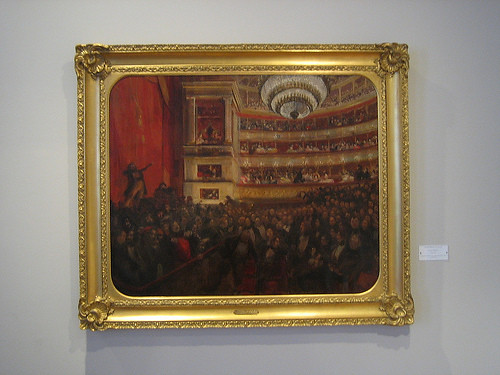
The painting, Performance of 'Hernani' by Victor Hugo in 1830, aka, The Battle of Hernani, by Paul Albert Besnard was quite virtuosic in depicting an animated crowd scene; if its artistic value was not the most accomplished, it did command viewers' attention and was hard to forget, and that made it a wonderful work. 

Hernani was Hugo's romantic play, during its premiere, in anticipating attacked from the classists, Hugo enlisted the support of fellow romanticists to combat the opposition and indeed the play had caused fights amongst the audience.  It was one of the watershed moment of the course of artistic development.  The painting captured the maniac atmosphere of that significant moment wonderfully. 

IMG_8800 _ Performance of 'Hernani' by Victor Hugo in 1830, Paul Albert Besnard, Maison de Victor Hugo, Paris, 2008
Performance of 'Hernani' by Victor Hugo in 1830, Paul Albert Besnard


My Favorite Museum Collection Series
>> My Favorite Museum Collection Series 73: My Favorite Artworks at Musée National Eugène Delacroix, Paris

<< My Favorite Museum Collection Series 71: My Favorite Artworks in La maison de Balzac, Paris

List of My Favorite Artworks in the Museums I've Visited


Other Related posts on Art · 文化 · Kunst:
- My Favorite Paintings at Musée Marmottan Monet
- My Favorite Sculptures at Musée Rodin, Paris
- Revisiting Norton Simon Museum in Pasadena
- My Favorite Paintings from Musée Picasso, Paris
- The Museum of Modern Art, New York City
- My Favorite Sculptures at Cimetière du Père-Lachaise, Paris
- Fifteen Authors Influenced Me Most and Watching Shakespeare in China
- Swiss Author and Dramatist Friedrich Dürrenmatt
- Molotov's Magic Lantern: A Journey In Russian Histoy by Rachel Polonsky and Some Journeys of My Own
- Review of "As Above, So Below" by Rudy Von B. Rucker

Sunday, November 27, 2011

Second Thoughts on the Sculpture "The Blind" by Lorado Taft

On 17 November, I shared my thoughts the "Rodin and America" exhibit at Cantor Art Center, Stanford University.  I was profoundly moved by a sculpture named "The Blind" by American sculptor Lorado Taft; this sculpture reminded me the novel "Blindness" (The City of Blind) Jose Saramago:

The Blind, Lorado Taft, Cantor Art Museum, Stanford University, California _ 0668

I was very happy to have the chance to see it again last Friday, and was able to spend more time to inspect this work more closely at leisurely pace.

Indeed, the second viewing had revealed many details I didn't take notice at the time when I was blown away by the weighty and dramatic mass as a whole.

Now, I noticed the modulations of the rhythmic lines of the group, the individualism of the faces, etc.  I suddenly saw then, that in the middle of this group of blind people, a child, rested on his mother's shoulder and hands, were not blind.  He obviously represented hope and future here.  The open arms of the man behind him emphasized on the importance of this baby.  The baby's right arm stretched out, in a pose could be constructed as blessing, such as baby Jesus does, or like that of the command of Chairman Mao.

Suddenly, this details completely changed my perception of this work.  It became very sentimental and lost a great amount of gravity.  I believe that the work was created in 1907-08, before the "Great War".  I wonder if it were created after World War One, if the sculptor would not impose his optimism upon this group of down-trodden people.  Maybe not.  Or Maybe yes.  Americans are by nature optimistic, almost pathologically so.

The Blind, Lorado Taft, Cantor Art Museum, Stanford University, California _ 0660

I am so disappointed by the artist's failure to be more profound and moving.  What a missed opportunity!

Related article: Rodin and Richard Serra in Cantor Art Center, Stanford University

Thursday, November 17, 2011

Rodin and Richard Serra in Cantor Arts Center, Stanford University

Cantor Art Museum, Stanford University, California _ 0674 Cantor Art Museum, Stanford University, California _ 0653

Two weeks ago, before I went to Palo Alto for the opening of "Scapes" juried exhibit at Pacific Art League, which included my painting "Lake", I stopped by the Cantor Arts Center at Stanford University briefly.

I had visited the museum many times, including accompanying my visiting parents from China, and saw many wonderful permanent collections and special exhibit.  This time, since I had little time, I was really only skipping along the surface; even so, I still managed to record many amazing pieces.

Cantor Art Museum, Stanford University, California _ 0655

Cantor Art Museum, Stanford University, California _ 0658

The special exhibit was "Rodin and America: Influence and Adaptation" (through 1 Jan 2012), which juxtaposed many sculptures, sketches and works in other media by Auguste Rodin and other American artists under his influences.  The work I admire most was Lorado Taft's extremely dramatic "The Blind", which predated Jose Saramago's Blindness (The City of Blind):

Cantor Art Museum, Stanford University, California _ 0660

Cantor Art Museum, Stanford University, California _ 0668

After that, I did see some of its famous Rodin collections:

Cantor Art Museum, Stanford University, California _ 0669

I was mostly enchanted by the "Spirit of Eternal Repose", a 1898 Plaster work:

Cantor Art Museum, Stanford University, California _ 0719

Cantor Art Museum, Stanford University, California _ 0715

Cantor Art Museum, Stanford University, California _ 0725
Other sculptures stood out are:

Cantor Art Museum, Stanford University, California _ 0671
Horse, bronze, Deborah Butterfield

Cantor Art Museum, Stanford University, California _ 0700
Untitled, 1989, Welded and rusted steel and rubber, Mark Lere

Cantor Art Museum, Stanford University, California _ 0706
Granite Circle, Richard Long (on the balcony)

I didn't have much time therefore only looked permanent painting collections very quickly and these are Admirable paintings inside the museums are:

Cantor Art Museum, Stanford University, California _ 0709
Front: Pink Companion, 1991, Cedar and graphite, Ursula von Rydingsvard; Left: Angel, 1983, Oil on Canvas, Sean Scully; Right: Untitled #14, 1969, John McLaughlin

Cantor Art Museum, Stanford University, California _ 0678
Rodin and the Dancing Body: Tracing a Lineage

Cantor Art Museum, Stanford University, California _ 0704
Man with Hand to Face #2, 1960, Oil on canvas, Nathan Oliveira

Cantor Art Museum, Stanford University, California _ 0707
Window, 1967, Oil on Canvas, Richard Diebenkorn

Then, there would always be the meditative "Stone River" by Andy Goldsworthy:

Cantor Art Museum, Stanford University, California _ 0727

Stone River, Andy Goldsworthy, Cantor Art Museum, Stanford University, California _ 0737

And the last, the new temporary addition to Cantor Art Center, the rusty steel sculpture "Sequence" by Richard Serra.  It was amazingly large, rustic yet sensual, almost echoed the Diebenkorn's "Window" (above):

Cantor Art Museum, Stanford University, California _ 0702

Cantor Art Museum, Stanford University, California _ 0696

Sequence, Steel, Richard Serra, Cantor Art Museum, Stanford University, California _ 0690

Sequence, Steel, Richard Serra, Cantor Art Museum, Stanford University, California _ 0665

Sequence, Steel, Richard Serra, Cantor Art Museum, Stanford University, California _ 0666

Then, yesterday, SFGate.com reported that Richard Serra's immense sculpture "Sequence", "the interlocking steel spirals - which are 13 feet tall and together weigh a whopping 235 tons - will reside come 2016 in the Howard Street gallery of SFMOMA's new wing [Fischer Collection]. And since the addition's ground floor will be clad in glass, the much-praised "Sequence" should be visible even when the museum is closed.

As for 'Sequence,' it's not far away if you want a peek before 2016: This summer it was installed outdoors at the Cantor Arts Center on the Stanford campus."

My time at Stanford this time was too short for me to enter into the swirls.  I definitely would get inside them before it moved to San Francisco.  It looked amazing on Stanford campus and it is intriguing to see how it looks in San Francisco Museum of Modern Art (SFMOMA).


Related article: Second Thoughts on the Sculpture "The Blind" by Lorado Taft