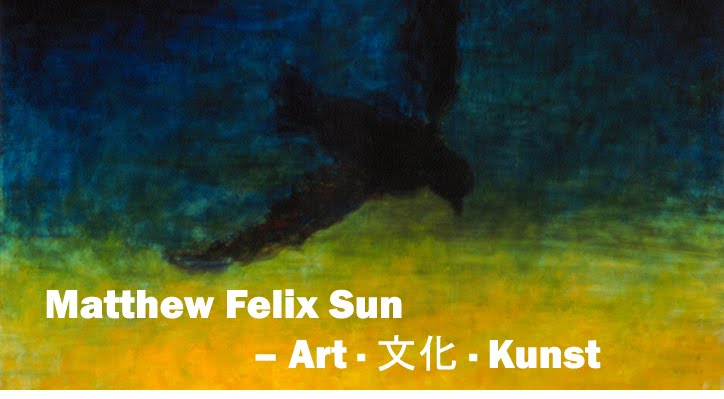
The first piece or pieces to greet the audience amazed us by the unusual shape of the wok(s). The ensemble had two framed pieces of different sizes, cut from the same and much larger painting. The square one on the right side, centering on two seated people at a picnic, was collected by Musée d'Orsay in Paris, titled 'Luncheon on the Grass, Central Panel' (1865–66), while the slender and tall panel on the left side, featuring back view of three people at the perimeter of the picnic, hailed from a private collection. What a fascinating family reunion. I also wondered where the "right" panel might be.
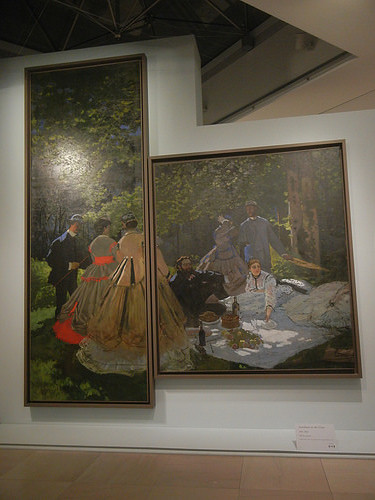
The rest of the exhibition was organized in chronological order, well suited to demonstrate the development of Monet as an artist. Here, I will largely follow this arrangement, with some re-grouping according to subject matters.
In the first room, we saw some landscapes, and one can see their affinity to the works by early French greats such as Corot, and Courbet. These landscape were much weightier and earthier than his more celebrated later pieces.
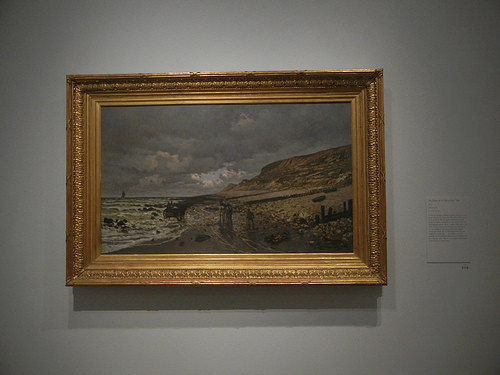
The Pointe de La Hève at Low Tide, 1865. Oil on canvas, Kimbell Art Museum, Fort Worth, Texas
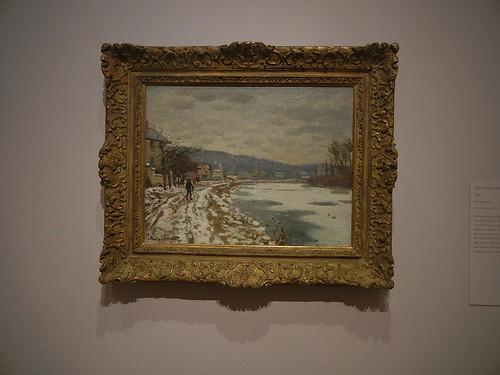
Next were some winter scenes, a genre quite different from typical impressionism works closely associated with often colorful domains under joyous and sunshine. However, even in winter, the shifting lights were clearly a main contributing factor to the sense of drama, though somewhat subdued.
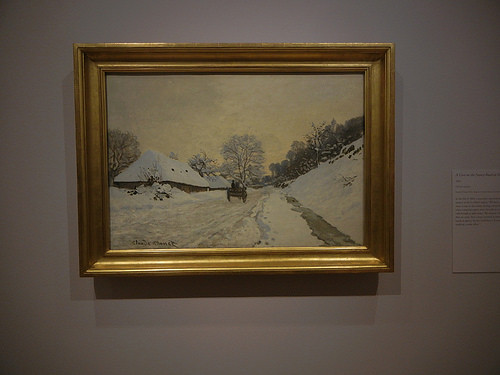
A Cart on the Snowy Road at Honfleur (1865), Musée d’Orsay
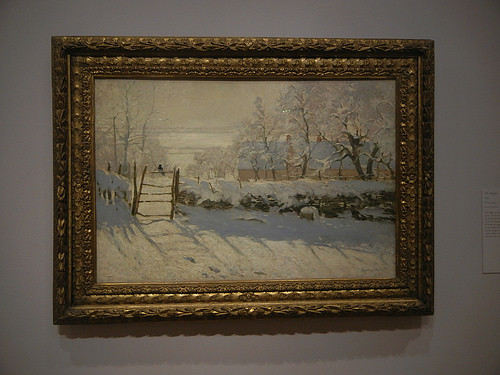
The Magpie (1869), Musée d’Orsay
There were some paintings depicting scenes in cities, painted while Monet visited the Netherlands and UK, and those works had similar characteristics of his early landscapes.
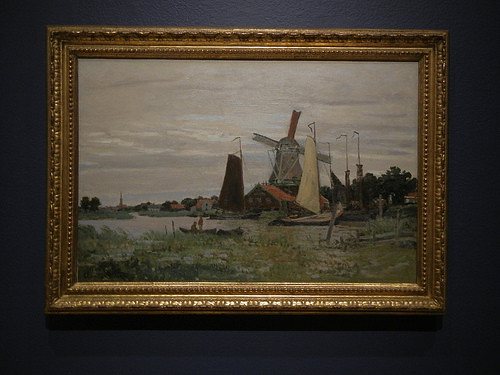
But, some of the brushstrokes Monet employed had become noticeably looser and more fluid.
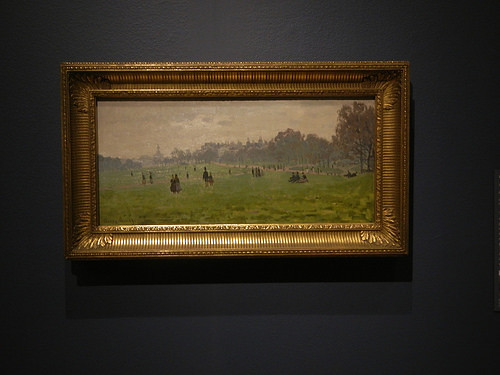
Hyde Park, 1871, Rhode Island School of Design, Providence
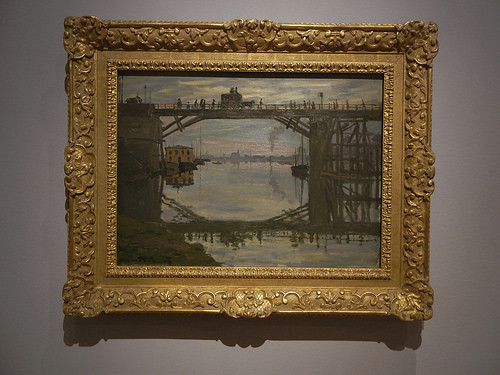
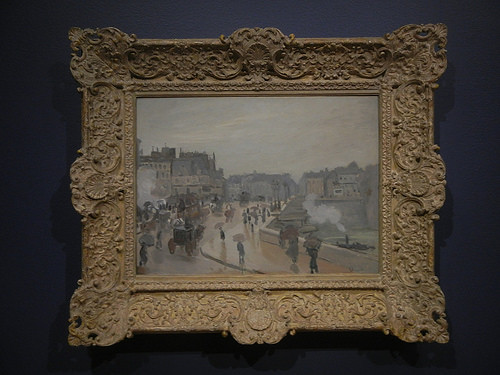
The Pont Neuf in Paris (1871), Dallas Museum of Art
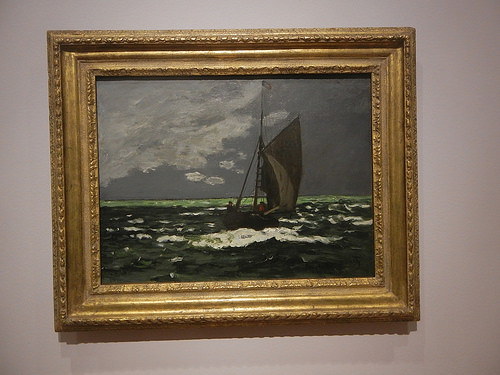
With water, Monet had his most solid footing, and the results were dynamic and engrossing. Immersed in a room full of such paintings, one felt the strong need to hold breath, in case the splashing water entered one's lungs.
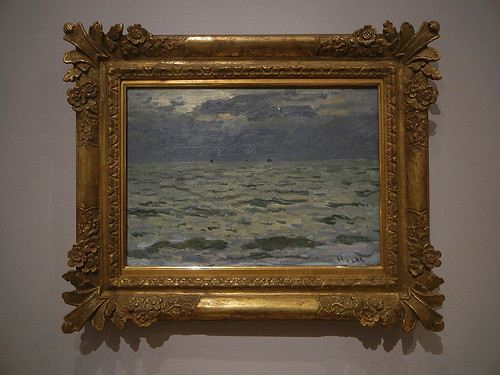
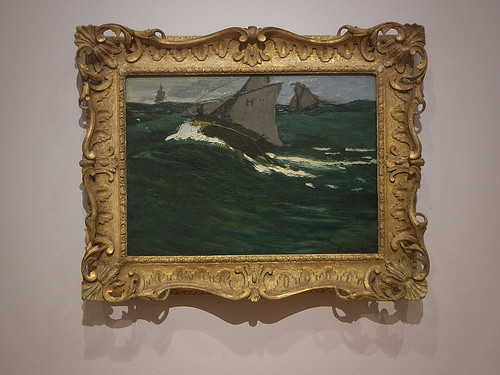
The Green Wave. (1886) The Metropolitan Museum of Art, New York
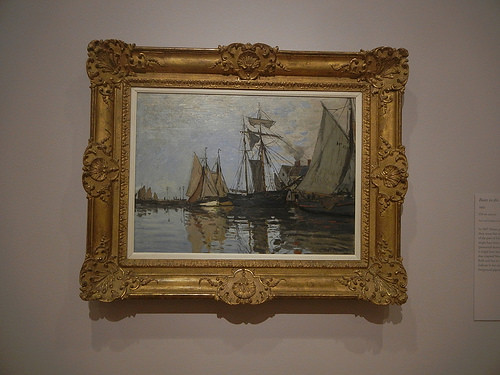
One of my favorite pieces in this show was the "Fishing Boat" below, which was rich in texture and subtle in tonal variances, and almost reached the state of abstract, which caused its rejection by an exhibiting salon, yet a virtue in the later era.
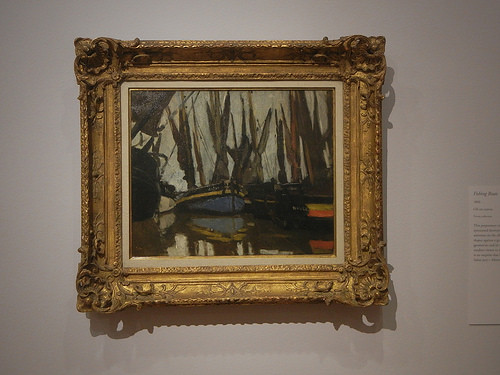
Fishing Boats
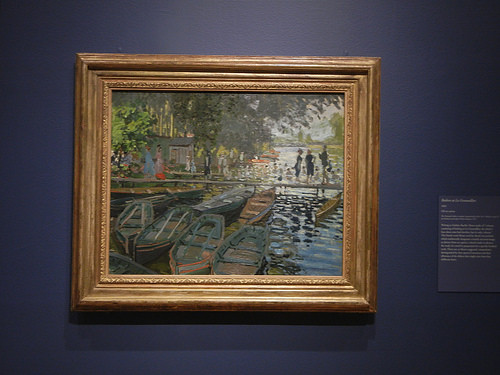
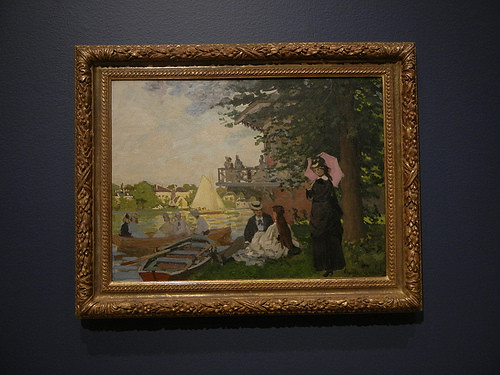
Monet's water scenes with people was always very interesting, especially the way he portrayed the slight melancholy, and the endlessly shifting patterns of water. His ability to depict still or slightly rippled water bodies was astounding, despite the fact that such way of painting had inevitably lost its novelty.
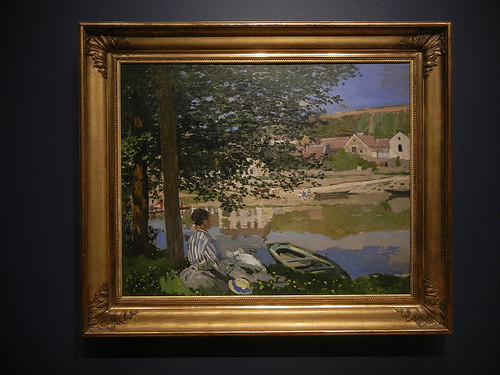
On the Bank of the Seine, Bennecourt (1868)
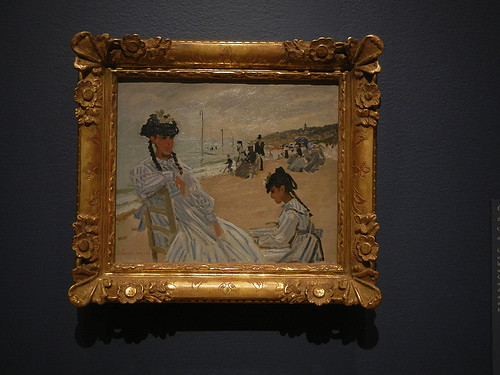
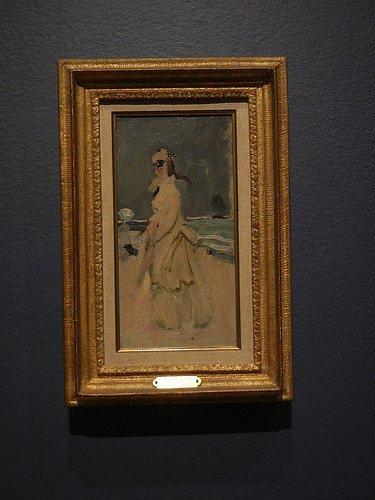
On the Beach in Trouville
Monet didn't frequently paint people as pure portraits — most of his people were immersed in outdoor or indoor settings, and became part of the fabrics — a few such pure portraits from his early period were included in the show, and I was very taken in by a portrait of Camille Monet, who stood in snow, in her bright red shawl, turned her upper torso slightly, and timidly or inquisitively peered into the closed French door. An intriguing scene, worthy of Chekhov or Ibsen.
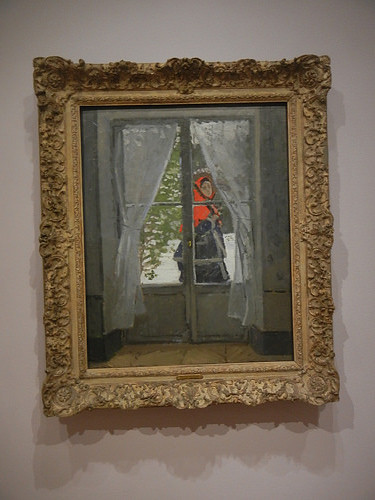
The Red Kerchief: Portrait of Camille Monet (ca. 1868-1873), Cleveland Museum of Art
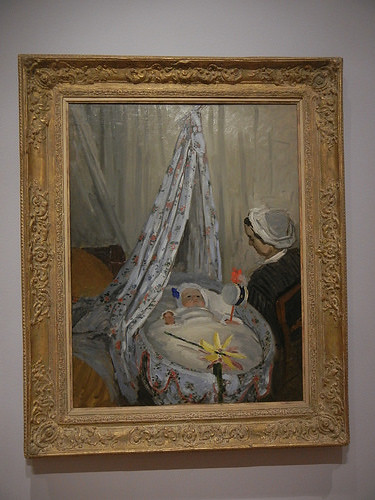
The Cradle—Camille with the Artist’s Son Jean (1867, National Gallery of Art, Washington, DC)
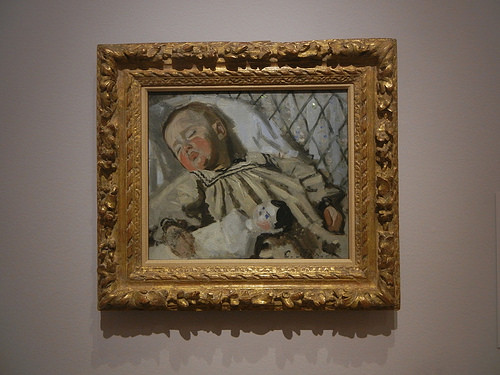
Jean Monet Sleeping (1867–1868, Ny Carlsberg Glyptotek, Copenhagen)
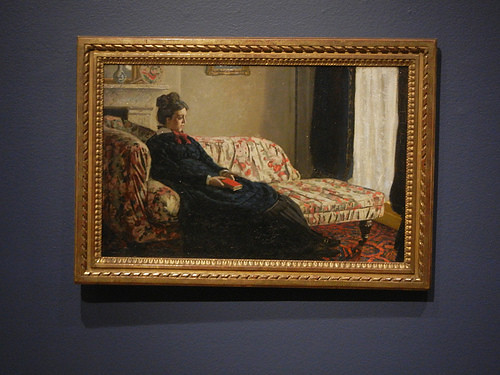
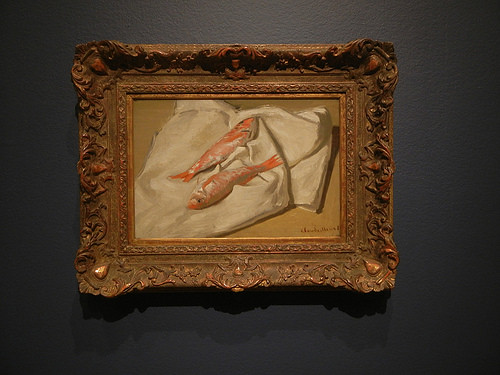
There were also some still life paintings in the exhibit, probably as answers to friendly challenges lobbed from some accomplished painters. Or rainy day consolations for the sun-obsessed Monet.
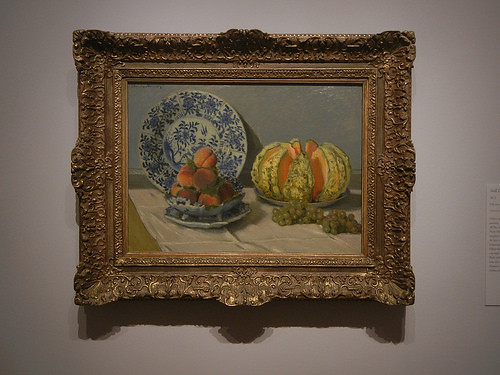
Still Life with Melon (1872, Museu Calouste Gulbenkian, Lisbon)
Other Related posts on Art · 文化 · Kunst:
- My Favorite Paintings at Musée Marmottan Monet
- My Favorite Paintings at Musée de l'Orangerie, Paris
- My Favorite Paintings from Musée d'Orsay, Paris
- My Favorite Paintings from Musée Picasso, Paris
- My Favorite Artworks at Musée National Eugène Delacroix, Paris
- Impressionism from National Gallery of Art (DC) in San Francisco
- Last Call - "The Girl With A Pearl Earring" in De Young Museum, San Francisco
- Modernism from the National Gallery of Art in De Young Museum, San Francisco


 Posts
Posts


